
What is Hydronic Heating? The Complete Melbourne Homeowner’s Guide for 2026
What if the very system keeping your family warm this winter is also the primary cause of your dry skin, irritated eyes, and seasonal allergies? In Melbourne, we’ve long accepted that ‘four seasons in one day’ means constant heater noise and dust circulating through every room. You likely feel the frustration of watching your energy bills climb while your home never quite reaches that perfect, even temperature. It’s a common struggle for local homeowners relying on outdated forced-air technology that struggles to keep up with Victorian winters.
This guide explains why hydronic heating is the gold standard for Melbourne’s unique climate, providing a silent and allergen-friendly warmth that traditional systems simply can’t match. You’ll learn how this investment can lower your long-term energy costs by approximately 35% according to recent efficiency benchmarks and create a healthier living space for your loved ones. We’ll walk through everything from the technical precision of condensing boilers to the lifestyle benefits of panel radiators, showing you how to add significant resale value to your property for the 2026 market.
Key Takeaways
- Understand why radiant warmth is the gold standard for Melbourne families, providing a silent, dust-free environment ideal for asthma and allergy sufferers.
- Discover the 2026 market shift toward high-efficiency electric heat pumps and how they compare to traditional gas boilers in Victorian properties.
- Learn how to customize your hydronic heating system with stylish European radiators or discreet underfloor solutions tailored to your home’s unique architecture.
- Explore why experts consider these systems a high-value asset that increases long-term property ROI and home comfort across Melbourne’s suburbs.
- Gain professional insights into calculating installation costs and system longevity to ensure you receive a comprehensive and accurate project quote.
Understanding Hydronic Heating in the Melbourne Context
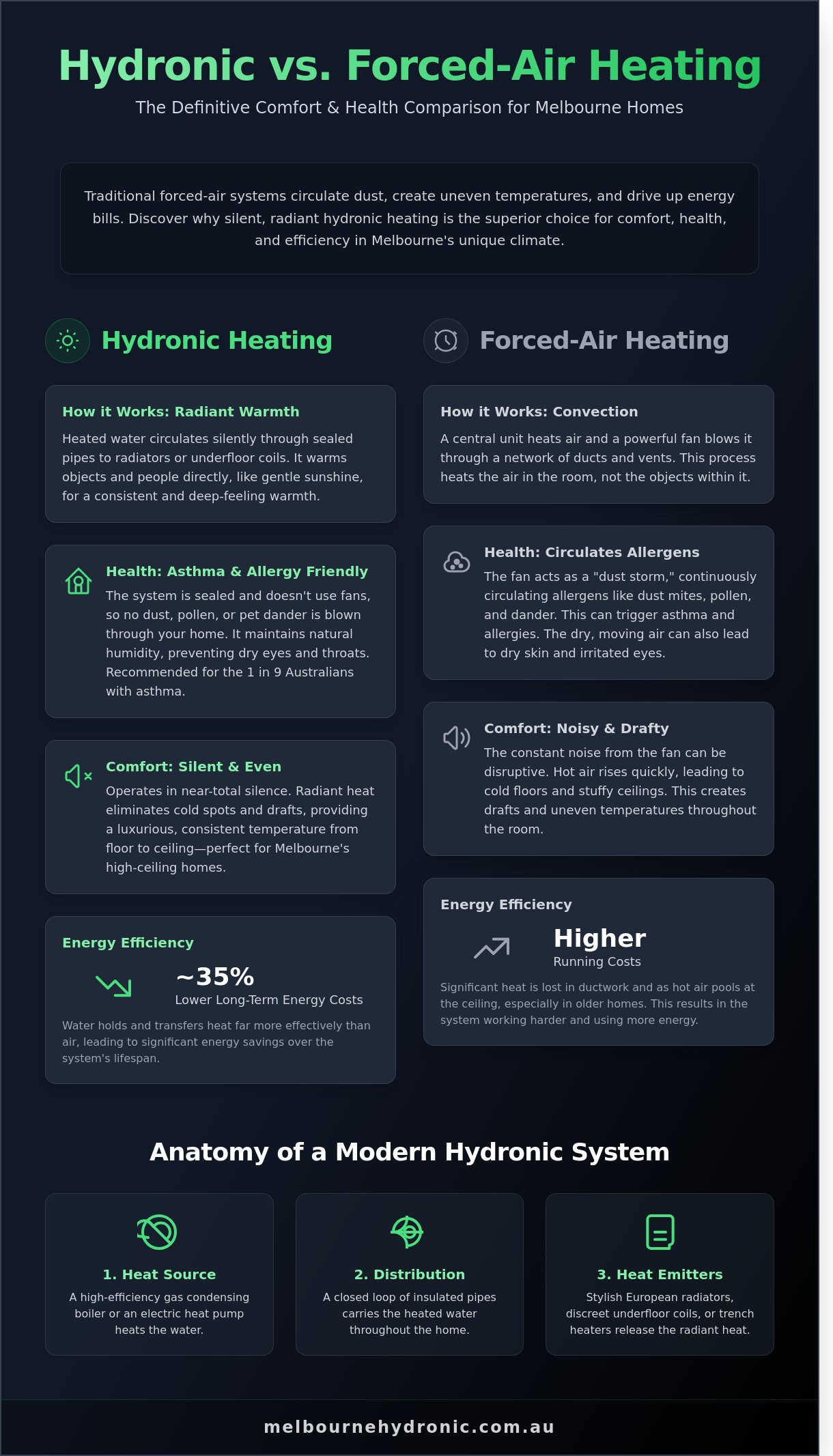
Melbourne’s weather is notoriously fickle, often swinging through four seasons in a single afternoon. To combat these sudden 15-degree temperature drops, homeowners need a system that offers more than just a blast of hot air. Hydronic heating is a sophisticated closed-loop system that circulates heated water through a network of pipes to provide consistent, silent warmth. It doesn’t rely on fans or noisy motors; instead, it uses the natural properties of water to transport energy efficiently throughout the home.
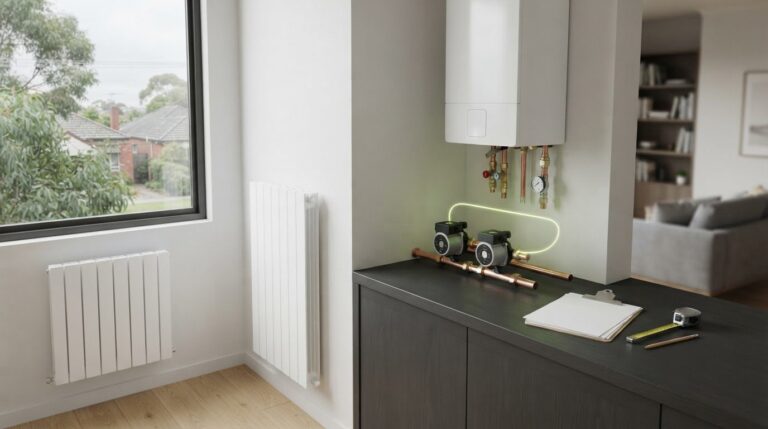
This system relies on three primary elements: a high-efficiency heat source (like a natural gas condensing boiler or a modern heat pump), insulated distribution piping, and emitters such as sleek wall panels or discrete underfloor coils. Understanding the technical foundation of What is Hydronics? helps clarify why this method is the preferred choice for premium European homes and, increasingly, modern Melbourne residences seeking long-term reliability.
The Core Principles of Radiant Warmth
Traditional heating methods rely on convection, which involves heating the air and blowing it into a room. This air quickly rises to the ceiling, leaving your feet cold and the room feeling drafty. By contrast, hydronic systems utilize radiant heat. This process warms objects and people directly, much like the natural warmth of the sun on a winter morning.
By heating the structure of the home itself, the system leverages thermal mass to maintain a steady temperature. In Melbourne’s iconic Victorian homes, where 3.6-meter ceilings are common, this is a game-changer. Radiant heat prevents warmth from pooling in the roof cavity, ensuring the living zone stays comfortable without wasting energy on empty space.
Why Melbourne Homeowners are Moving Away from Forced Air
Many residents are choosing to replace their old ducted heating in Melbourne because of air quality concerns. Forced air systems often act as a dust-storm, recirculating allergens, pet dander, and fine particles through every room. This is a significant health consideration, especially since roughly 1 in 9 Australians live with asthma.
Hydronic systems are completely sealed and don’t move air, which means they don’t move dust. They also maintain natural humidity levels, preventing the dry eyes and scratchy throats often caused by traditional vents. You won’t find cold spots or temperature layering here. Instead, you get a steady, luxurious envelope of warmth that operates in total silence, regardless of how hard the wind is howling outside in Port Phillip Bay.
The Health and Comfort Benefits: A Radiant Revolution
Choosing hydronic heating isn’t just a technical decision for your home; it’s a commitment to a healthier lifestyle. Unlike traditional forced-air systems that blast hot air, hydronic systems use water to transfer warmth through pipes to panel radiators or underfloor coils. This method provides a consistent, gentle heat that doesn’t strip the air of its natural moisture. In the fluctuating climate of Victoria, maintaining indoor humidity levels between 30% and 50% is crucial for preventing dry skin and irritated respiratory tracts during the colder months.
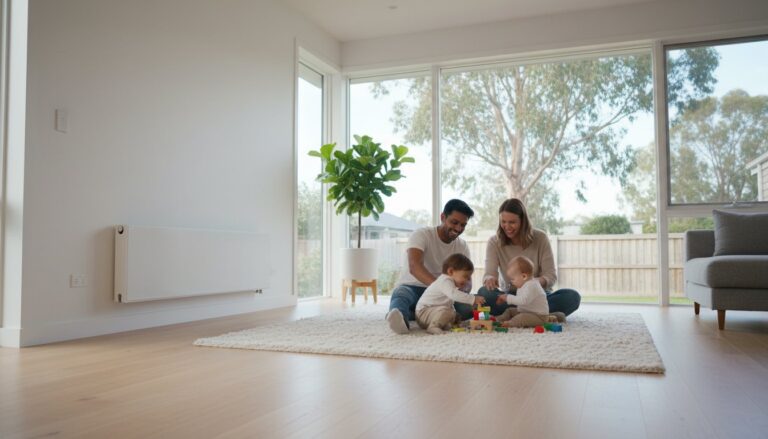
The psychological impact of a silent home is often overlooked. In busy Melbourne suburbs where traffic and urban noise are constant, your home should be a sanctuary. Hydronic systems operate with near-total silence because they don’t rely on high-velocity fans to push air around. Safety is another cornerstone of this technology. With no exposed flames, red-hot elements, or moving parts, it’s the safest choice for households with young children or pets who might otherwise be at risk around traditional heaters.
Asthma and Allergy-Friendly Heating
For the one in nine Australians living with asthma, traditional split-system units can be problematic. These systems rely on fans that circulate dust mites, pollen, and pet dander throughout every room. Because hydronic heating uses radiant heat, there’s zero air movement. This lack of turbulence means allergens stay settled on the floor rather than being inhaled. Health professionals frequently recommend this “still” heat for sensitive households. You can learn more about how Radiant Heating Benefits your indoor air quality by eliminating the distribution of airborne pathogens common in ducted systems.
Zoned Comfort: Mastering Your Home Environment
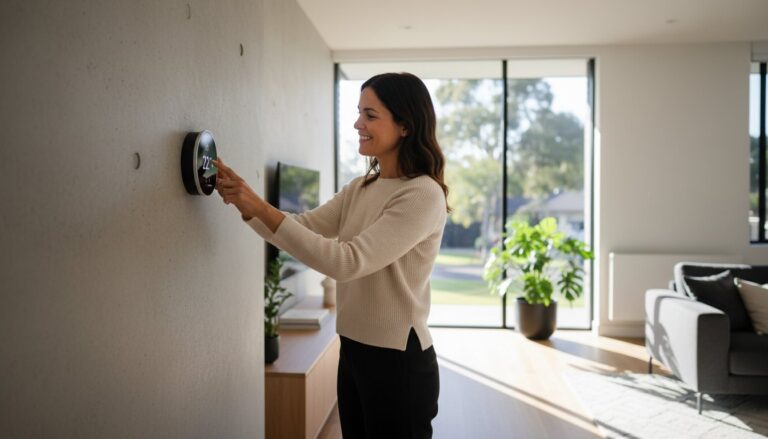
Precision is key to true luxury. Modern systems allow for sophisticated zoning, where individual thermostats give you total control over every room. You don’t have to heat the whole house just to stay warm in the lounge. Imagine the luxury of walking onto a warm floor during a freezing Mornington Peninsula winter morning. This level of control eliminates the frustrating ‘on-off’ temperature swings of gas ducted systems, which can see room temperatures fluctuate by up to 3 degrees Celsius in a single hour. If you’re ready to upgrade your living standards, our team at Melbourne Hydronic Heating can design a system tailored to your specific floor plan.
Heat Sources and Efficiency: Gas Boilers vs. Electric Heat Pumps
Melbourne’s home heating landscape is undergoing a massive transformation. Following the Victorian Government’s Gas Substitution Roadmap, new homes requiring a planning permit have been restricted from gas connections since January 2024. This policy shift means heat pump hydronic heating is rapidly becoming the standard for local homeowners looking toward 2026 and beyond. Choosing the right heat source isn’t just about warmth; it’s about future-proofing your property against rising energy tariffs and evolving environmental regulations.
While the heat source may change, the fundamental benefits of the system remain the same. These systems deliver a silent, dust-free warmth that doesn’t rely on blowing dry air around the room. As noted by the U.S. Department of Energy on Radiant Heating, these setups are often more efficient than baseboard or forced-air heating because they eliminate the energy losses associated with ductwork. For Melbourne residents, this translates to a healthier indoor environment and lower monthly bills.
Electric Heat Pumps: The All-Electric Future
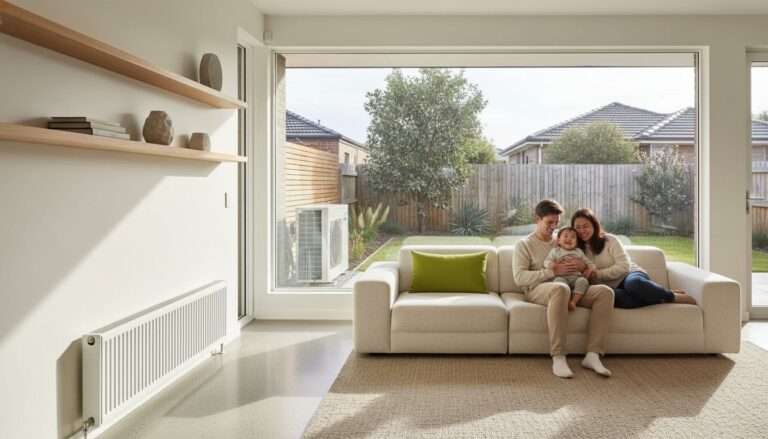
Air-to-water heat pumps represent the pinnacle of modern efficiency. These units sit outside your home and extract thermal energy from the Melbourne air, even when temperatures drop toward zero. By using a refrigerant cycle to upgrade this ambient heat, they can provide enough energy to warm your entire home. The Coefficient of Performance (COP) is the ratio of heat output to energy input. For example, a heat pump with a COP of 4.0 produces four units of heat for every one unit of electricity it consumes.
The real financial advantage appears when you pair hydronic heating with a solar PV system. By timing your system to pre-heat the home during daylight hours, you’re essentially using the sun to power your winter comfort. This synergy can reduce running costs by up to 60% compared to traditional electric heaters, making your home nearly self-sufficient. For homeowners who also want rapid cooling during Melbourne’s scorching summers, fan coils integrated into a hybrid hydronic system offer the ideal solution for year-round climate control.
Modern Gas Boilers: Efficiency for Today
Despite the shift toward electric, a high-efficiency boiler remains a practical and powerful choice for many existing Victorian properties. Retrofitting an older home with a heat pump sometimes requires significant electrical upgrades or larger radiator panels to account for lower water temperatures. In these cases, a modern condensing gas boiler is an excellent alternative. These units are incredibly compact, often no larger than a kitchen cupboard, making them ideal for narrow Melbourne townhouses where outdoor space is at a premium.
Condensing technology allows these boilers to achieve over 90% energy efficiency. They do this by capturing heat from the exhaust gases that older units would simply vent outside. This ensures you squeeze every possible bit of energy from your fuel. For homeowners in established suburbs with existing gas infrastructure, these systems provide a reliable, high-temperature hydronic heating solution that can be installed with minimal disruption to the home’s structure.
Designing Your System: Radiators, Floor, and Trench Solutions
Every Melbourne home has a unique thermal footprint. A Victorian terrace in Carlton requires a different approach than a minimalist new build in Brighton. Designing a hydronic heating system involves selecting emitters that complement your floor plan while maximizing energy efficiency. We focus on matching the right technology to your home’s specific heat loss profile and architectural constraints.
Hydronic Radiator Panels: Style Meets Substance
Modern hydronic heating panels offer a sophisticated blend of European aesthetics and high-performance thermal output. They’re the preferred choice for retrofitting multi-story Melbourne homes because installers can run pipework through ceiling cavities or under floorboards without major structural changes. You aren’t limited to standard white boxes; options include sleek designer vertical panels and Low Surface Temperature (LST) units that stay cool to the touch, making them ideal for nurseries or aged care environments.
Positioning is the key to performance. We strategically place panels under windows to create a thermal curtain. This setup neutralizes cold air as it enters the room, preventing drafts and ensuring the heat distribution remains consistent. In large living areas, we often use larger double-panel radiators to provide the necessary kilowatt output to keep the space comfortable even during a 5-degree Melbourne morning.
Underfloor and Trench Heating: The Seamless Look
For new slab-on-ground builds, underfloor heating remains the gold standard for “invisible” comfort. By circulating warm water through PEX piping embedded in the concrete, the entire floor becomes a radiant heat source. This creates a consistent heat profile where your feet stay warm and the air at head height remains fresh. It’s an ideal solution for allergy sufferers because it eliminates the dust circulation common with ducted systems.
Modern architecture frequently uses floor-to-ceiling glass, which creates a specific “glass wash” problem where cold air sinks rapidly off the window surface. To solve this, hydronic trench heating is the most effective tool. We install these units in a floor recess directly in front of the glass, covered by a flush-mounted grille. This barrier blocks the cold before it reaches the rest of the room. It’s a common requirement for Bayside homes where views are a priority, but heat loss through large panes can account for up to 40% of a room’s total energy waste.
Installation timelines vary significantly between these systems. Underfloor coils must be laid and pressure tested before the slab is poured, requiring early coordination with your builder. Trench systems and radiator panels offer more flexibility but still require precise rough-in plumbing during the framing stage. Planning these details early ensures your system integrates perfectly with your interior design.
Investing in Your Melbourne Home: Long-Term Value and ROI
Melbourne real estate experts consistently rank hydronic heating as a premium asset that significantly increases property desirability. In competitive markets like the Bayside area or the leafy eastern suburbs, a home with silent, dust-free warmth stands out to prospective buyers. It’s a “set and forget” investment that savvy investors look for because it signals a well-maintained, high-quality build. Unlike temporary heating solutions, these systems are integrated into the fabric of your home, providing a level of comfort that forced-air systems simply can’t match. When you choose this technology, you’re not just buying a heater; you’re upgrading your property’s permanent infrastructure.
The True Cost of Ownership
Smart homeowners look past the initial price tag to see the total cost over two decades. A standard split system usually lasts about 10 years before performance drops or components fail. In contrast, quality hydronic components are designed for a 25 to 30-year lifespan. When you calculate your hydronic heating quote, you’re essentially paying for nearly three lifecycles of a cheaper alternative in one go. This longevity makes it the most cost-effective choice for families planning to stay in their homes for the long term.
Energy efficient heating also slashes monthly overheads. In a typical four-bedroom Melbourne family home, hydronic systems can be up to 35% more efficient than traditional ducted gas heating. There are also “hidden” savings to consider regarding your family’s wellbeing. Because the system doesn’t circulate dust, pollen, or allergens, families often report fewer respiratory issues. Industry data suggests that the consistent, radiant heat can improve sleep quality by 15% compared to the fluctuating temperatures of noisy air-based heaters.
Getting Started with Melbourne Hydronic Heating
A successful installation depends entirely on professional design. A cookie-cutter approach fails because every home’s thermal envelope is different. During a first home consultation in Cheltenham or the Mornington Peninsula, our experts assess your floor plan, insulation levels, and window orientations. We don’t just sell radiators; we engineer a climate solution tailored to your specific lifestyle. This level of precision ensures every room reaches the perfect temperature without wasting energy or creating cold spots.
Transitioning to a warmer, healthier home is a structured and stress-free process. Once the bespoke design is finalised, our local Melbourne technicians handle the installation with minimal disruption to your daily routine. We’ll guide you through the system controls so you can enjoy the most comfortable winter you’ve ever experienced. It’s time to move away from dry skin and noisy fans toward a sophisticated, silent warmth.
Ready for a healthier home? Request your bespoke hydronic heating quote today.
Future-Proof Your Melbourne Home with Radiant Comfort
Investing in your home’s thermal comfort is a strategic decision that pays dividends in both family health and long-term property value. As Melbourne moves toward 2026, the shift toward energy-efficient electric heat pumps and high-performance gas boilers highlights a growing demand for sustainable, premium living solutions. You’re not just choosing a heater; you’re opting for a dust-free, allergy-friendly environment that traditional ducted systems can’t replicate. Our team has been family-owned and operated since 1990, providing over 30 years of local expertise to Victorian homeowners. We specialize in the technical precision required for both underfloor systems and designer radiators, ensuring your installation meets the highest European standards. Whether you’re retrofitting a classic home or designing a new build, Melbourne hydronic heating provides the silent, consistent warmth that defines modern luxury. It’s time to eliminate cold spots and enjoy a healthier indoor climate tailored to the unique Melbourne weather patterns.
Book a Professional Design Consultation with Melbourne’s Hydronic Experts
Your journey to a warmer, more efficient home starts with a simple conversation. We look forward to helping you create the perfect sanctuary for your family.
Frequently Asked Questions
Is hydronic heating more expensive to run than ducted gas heating?
Hydronic heating is typically 35% more cost-effective to run than traditional ducted gas systems. While ducted systems lose heat through leaky vents and ceiling cavities, hydronic setups use sealed pipes to move energy with minimal waste. Modern condensing boilers reach efficiency ratings of 90% or higher, significantly lowering your monthly energy bills. You’ll save money while enjoying a more consistent, silent warmth throughout your Melbourne home without the dry air.
Can I install hydronic heating in an existing Melbourne home (retrofitting)?
You can definitely retrofit hydronic heating into existing Melbourne residences, including Victorian terraces and weatherboard cottages. Our team installs wall-mounted panel radiators by running narrow pipes through floor spaces or wall cavities. This process avoids major structural changes and preserves your home’s character. It’s a popular choice for homeowners looking to replace aging, dusty ducted systems with a cleaner, allergen-friendly alternative that improves indoor air quality.
How long does a typical hydronic heating installation take in Melbourne?
A standard installation for a three-bedroom Melbourne home typically takes between 3 and 7 business days to complete. Smaller retrofits involving only a few radiators might wrap up in just 48 hours. Larger projects with underfloor piping or complex boiler setups require more time for pressure testing and balancing. We provide a detailed timeline after the initial site inspection to ensure your household routine remains largely undisturbed during the process.
Is hydronic heating safe for households with young children or pets?
Hydronic heating is the safest heating solution for families with toddlers and pets because it operates without exposed flames or forced air. Unlike ducted systems that blow dust and allergens around, this radiant heat method keeps the air still and healthy. It’s an ideal choice for children with asthma or respiratory sensitivities. The system’s silent operation also ensures that light sleepers and sensitive pets remain undisturbed throughout the night.
What is the best temperature to set for my hydronic system during a Melbourne winter?
We recommend setting your thermostat between 18°C and 21°C for the ideal balance of comfort and efficiency during a Melbourne winter. Every degree you increase the temperature can raise running costs by approximately 10%. Since hydronic systems provide radiant warmth that heats objects rather than just air, you’ll feel warmer at lower settings compared to ducted heating. Many residents find 19°C perfectly comfortable for living areas during the day.
Do hydronic radiators get hot enough to cause burns on contact?
Hydronic radiators don’t get hot enough to cause instant burns because their surface temperature usually stays around 60°C. While they feel quite warm to the touch, they won’t cause injury if a child or pet accidentally brushes against them. For high-risk environments like aged care or childcare centres, we can install Low Surface Temperature (LST) radiators. These specialized units keep the outer casing cool while still providing effective radiant heat for the room.
How often does a hydronic heating system require professional servicing?
You should book a professional service for your system every 12 to 24 months to maintain peak performance. Annual checks before the first Melbourne cold snap ensure your boiler operates safely and the water chemistry remains balanced. Regular maintenance prevents the buildup of magnetite, which can reduce efficiency by 15% over time. A well-maintained system can easily last 25 years or more, making it a sound long-term investment for your property. For comprehensive maintenance and repairs, consider scheduling professional hydronic heating service Melbourne to keep your system running at optimal efficiency and extend its lifespan.
Can I use my hydronic system for cooling during Melbourne’s summer?
Standard radiator systems can’t provide cooling, but you can achieve summer comfort by installing a reversible heat pump with fan coils units. This setup allows chilled water to circulate through the same network, absorbing heat from your rooms. While traditional underfloor heating in Melbourne isn’t suitable for cooling due to condensation risks on floor surfaces, modern hydronic technology offers versatile year-round climate control for Melbourne’s unpredictable weather patterns and extreme summer heat.