Ducted Heating in Melbourne: 2026 Guide to Forced Air vs. Radiant Comfort
Could the system designed to keep your family comfortable actually be the primary source of dust and rising allergens in your home? For many Melbourne residents, the first cold snap in May marks the beginning of a cycle involving noisy fans, uneven temperatures, and gas bills that can easily exceed A$2,800 per season. We often accept that traditional ducted heating is the only way to survive a Victorian winter, even as we watch the dust settle on our furniture and feel the air turn uncomfortably dry. It’s a compromise that many of us have lived with for decades, but heating technology has finally caught up to our expectations for a healthy lifestyle.
You deserve a home that feels like a sanctuary, not a wind tunnel. By comparing legacy forced air systems with modern hydronic alternatives, you’ll discover how to achieve a 25% increase in thermal efficiency while creating a silent, allergen-free environment for your family. This 2026 guide explores the long-term property value and health benefits of switching from turbulent air to the consistent, radiant warmth that Melbourne’s most energy-efficient homes now demand.
Key Takeaways
- Understand how the 2026 shift in Victorian gas pricing impacts your running costs and why electric heat pumps offer a superior Coefficient of Performance (COP).
- Discover why traditional ducted heating may be contributing to Melbourne’s high asthma rates by circulating dust, pet dander, and mold throughout your living spaces.
- Learn about the “silent comfort” of hydronic systems that eliminate noisy air vents while providing a healthier, dust-free environment for your family.
- Identify how your home’s specific architecture, such as ceiling height and floor type, dictates the most efficient way to combat the Melbourne winter.
- Compare the long-term value and aesthetic appeal of sleek European radiator panels against traditional floor and ceiling vents.
What is Ducted Heating and How Does it Work in Melbourne Homes?
Ducted heating is a central heating system that relies on a primary internal or external unit to warm your entire property. The process begins when a large fan draws air from inside your home through a return air grille. This air passes over a heat exchanger, gets warmed to your desired temperature, and then travels through a network of insulated flexible tubes. These ducts terminate at vents located in either the floor or the ceiling of each room. It’s the most prevalent heating method in Melbourne’s established housing stock, particularly in homes built between 1970 and 1995 where the infrastructure is already integrated into the floor joists or roof cavities.
The system operates on the principle of convection, which involves moving warmed air to circulate heat. This differs fundamentally from radiant heat, which warms surfaces and objects directly. Because Melbourne experiences “four seasons in one day,” homeowners often prioritize the rapid response time that ducted heating provides. When a cold front sweeps off Port Phillip Bay and drops the temperature by 8 degrees in twenty minutes, a forced-air system can restore comfort to a standard three-bedroom home in roughly 15 minutes. This speed is a primary reason why these systems remain a staple in the local market despite the growing popularity of radiant alternatives.
Gas Ducted Heating vs. Electric Reverse Cycle
The Victorian Government’s 2024 ban on gas connections for new residential builds has fundamentally changed the heating landscape. Traditional gas furnaces burn natural gas to heat a metal heat exchanger. In contrast, electric reverse cycle systems use heat pump technology to extract warmth from the outside air, even on a 5°C Melbourne morning. These electric systems are incredibly efficient, often delivering 300% to 400% efficiency by moving heat rather than creating it through combustion. Most modern electric installs are “add-on” capable, meaning the same ducted heating vents provide refrigerated cooling during our January heatwaves.
The Anatomy of a Ducted System
A typical installation features a central heater unit, usually mounted on the rooftop or tucked into a sub-floor crawl space to save room. The efficiency of the entire setup depends heavily on the “veins” of the system: the insulated ductwork. In older Melbourne properties, leaky or uninsulated ducts can result in a 25% loss of thermal energy before the air even reaches the vent. To combat this waste, 2026 standards emphasize advanced zoning. This allows you to shut off airflow to guest bedrooms or formal dining areas, focusing the warmth in the living room or upstairs master suite. Zoning is a critical feature for multi-story homes in suburbs like Balwyn or Brighton, where heat naturally migrates to the upper floors.
Gas vs. Electric Ducted: The 2026 Efficiency and Cost Battle
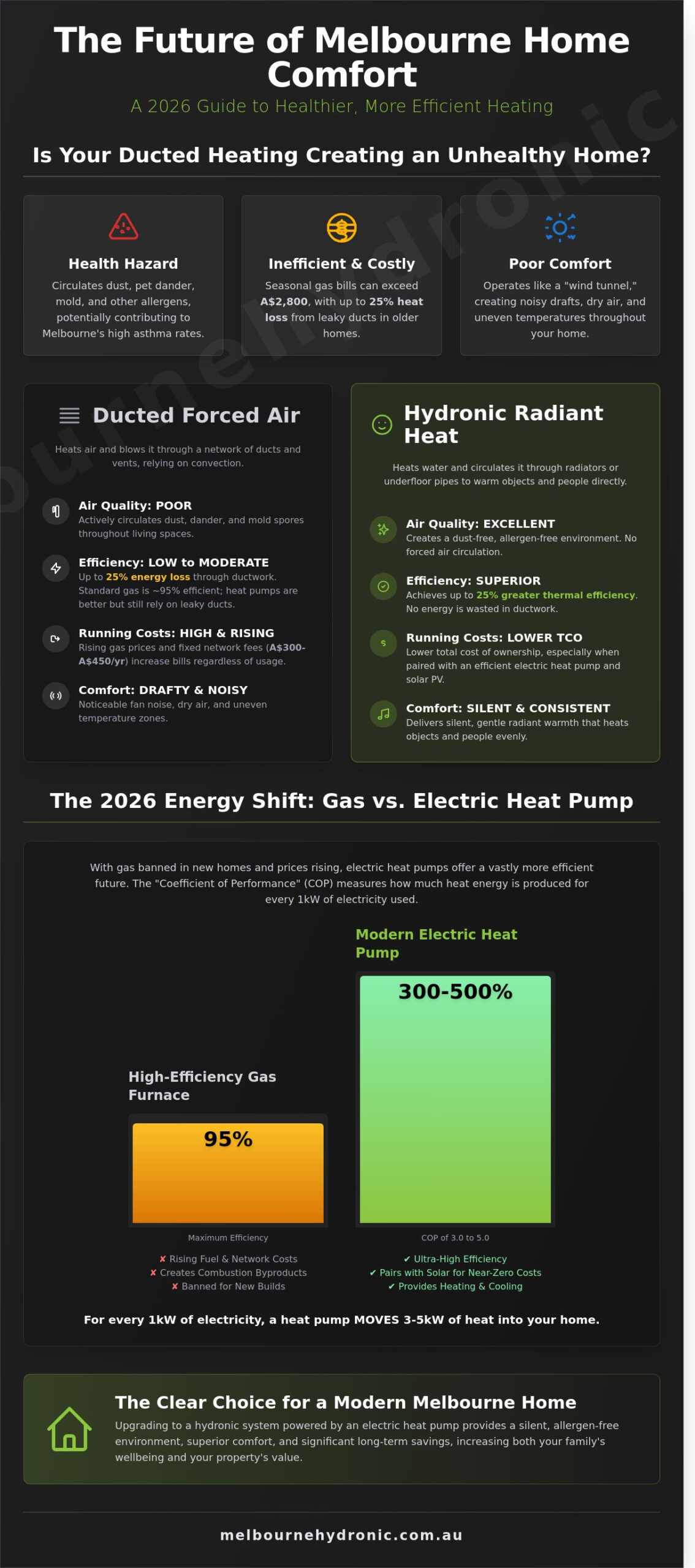
Melbourne’s energy landscape has shifted permanently. For decades, gas was the default choice for ducted heating across Victoria due to low running costs. In 2026, that logic no longer holds. Gas prices in Melbourne have climbed steadily, influenced by global export parity and aging infrastructure. Homeowners now face a “death spiral” in gas delivery; as more households electrify, the fixed costs of maintaining the gas network are shared among fewer customers, leading to higher daily supply charges. For a typical family home, these service fees can add A$300 to A$450 annually before you even turn the heater on.
Electric heat pumps have flipped the efficiency script. While a high-efficiency 6-star gas heater might reach 90% or 95% efficiency, modern electric units operate with a Coefficient of Performance (COP) between 3.0 and 5.0. This means for every 1kW of electricity consumed, the system delivers 3kW to 5kW of heat into your living spaces. When you integrate these systems with a 6.6kW or 10kW solar PV array, the operational costs can drop to near zero during daylight hours. You can find more details on system comparisons in the Australian Government’s guide to heating, which highlights how thermal performance impacts long-term savings.
Upfront costs for electric heat pumps remain higher than gas replacements, often starting around A$8,000 to A$12,000 for a whole-home installation. However, the 10-year total cost of ownership (TCO) tells a different story. Between the rising cost of gas and the ability to offset electric bills with solar, most Melbourne homeowners see a return on investment within five to seven years. If you’re planning your next upgrade, a professional system assessment can help determine the exact payback period for your property’s specific layout.
Is Gas Ducted Heating Still Viable?
Since January 1, 2024, the Victorian Government has prohibited gas connections in new residential developments requiring a planning permit. By 2026, this regulation has effectively made gas a legacy technology. A high-efficiency gas unit might still make sense if your home has an existing, high-quality duct network and your budget can’t accommodate the initial electric upgrade. It’s a short-term fix, however, as gas remains a combustible fuel that impacts indoor air quality and contributes to household emissions.
The Rise of Whole-Home Electric Heat Pumps
Modern air-to-air heat pumps are engineered for the Victorian climate. They extract ambient warmth from the outside air even when it’s a brisk 2°C in the Dandenongs. Unlike older models, 2026-era units feature inverter technology that reduces operational noise, though they still lack the silent, dust-free luxury of radiant panels. For those prioritizing health and silence, we recommend exploring our guide on energy efficient heating to see how hydronic alternatives compare to traditional forced-air ducted heating setups.
The Hidden Cost of Ducted Systems: Air Quality and Allergies
Melbourne holds a challenging reputation as one of the world’s asthma hotspots. Statistics from the National Asthma Council Australia indicate that 1 in 9 Australians suffer from asthma, and our choice of home climate control plays a significant role in managing these symptoms. While ducted heating is a common sight in Victorian suburbs, its impact on respiratory health is often overlooked until the first winter cold snap triggers a flare-up.
Forced-air systems operate by circulating air through a network of flexible tubes, often located in dusty roof cavities or damp subfloors. Over time, these ducts become reservoirs for dust, pet dander, and mold spores. When the fan kicks in, these particulates are blasted into your living spaces. You might notice a distinct “burnt dust” smell during the first few uses of the season. This isn’t just a quirk of the machine; it’s the physical result of dust particles carbonising against a high-temperature heat exchanger. Understanding how ducted heating works reveals that this circulation of air is a fundamental part of the design, making it difficult to keep your home’s air truly pristine.
Many homeowners rely on professional duct cleaning to solve this, but it’s often a temporary fix. Even with high-powered vacuums, reaching every corner of a complex duct network is nearly impossible. Particulate buildup begins again the moment the system is switched back on, meaning those with sensitive respiratory systems are constantly exposed to airborne triggers.
Forced Air vs. Radiant Heat: A Health Perspective
The primary issue with ducted heating is the creation of convection currents. This moving air doesn’t just transport dust; it also strips moisture from your environment, leading to dry eyes, irritated sinuses, and itchy skin. This is why 92% of modern European hospitals and premium luxury builds in Melbourne now prioritize radiant heat. Hydronic systems provide a silent, still warmth that doesn’t move air at all. By heating objects and people directly rather than blowing air, you eliminate the “dust storm” effect entirely, creating a sanctuary for allergy sufferers.
Maintenance Requirements for Healthy Air
Keeping a ducted system healthy requires rigorous upkeep. You’ll need to commit to annual filter changes and regular inspections to ensure your ductwork hasn’t developed holes. A single tear in the silver lining can cause the system to suck in unfiltered air from your crawlspace, introducing external pollutants directly into your bedroom. This stands in stark contrast to the low-maintenance nature of hydronic heating panels. These systems:
- Require no air filters to be cleaned or replaced.
- Have no internal fans to circulate allergens.
- Feature smooth surfaces that are easily wiped down during a standard cleaning routine.
- Operate with zero risk of cross-contamination from roof or floor cavities.
For families prioritizing long-term health, the shift from forced air to radiant panels represents a significant upgrade in daily life quality.
Why Melbourne Homeowners are Switching to Hydronic Heating
While ducted heating has been the standard for Victorian homes for decades, a significant shift is occurring in 2026. Local homeowners are increasingly moving toward hydronic systems to achieve what we call ‘silent comfort.’ Unlike traditional forced-air systems that rely on rattling vents and the constant drone of rushing air, hydronic heating operates in near-total silence. This lack of mechanical noise creates a peaceful domestic environment that ducted heating simply cannot match.
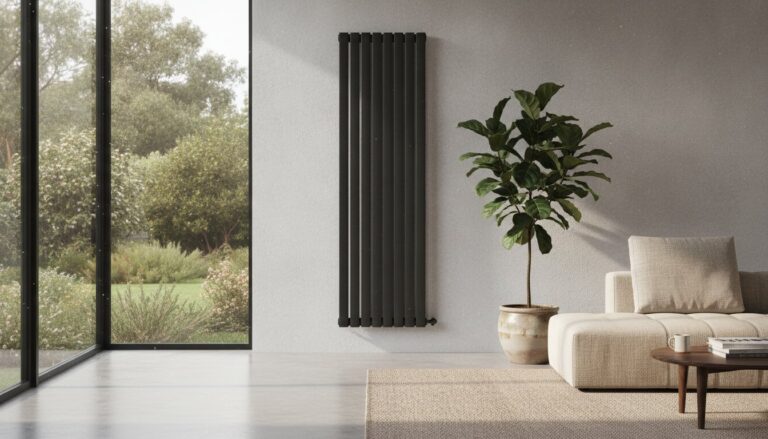
The aesthetic upgrade is equally compelling. Standard floor vents often collect dust, pet hair, and debris, becoming eyesores over time. Modern hydronic systems replace these with sleek, European-designed radiator panels that sit elegantly against the wall. For those in Bayside or the Mornington Peninsula, underfloor hydronic heating has become a hallmark of luxury. It provides a consistent thermal mass that keeps stone or tile floors warm to the touch, even when the Melbourne temperature drops to a brisk 4°C overnight.
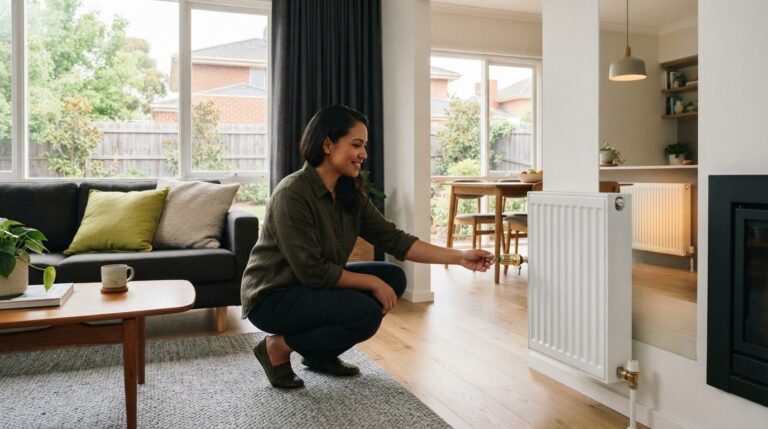
Precision zoning is the final piece of the puzzle. Most older systems heat the entire house regardless of which rooms are occupied. With a modern hydronic setup, you have total control. You can maintain a crisp 18°C in the bedrooms while keeping the main living area at a cozy 21°C. This targeted approach can reduce your annual energy consumption by as much as 25% compared to unzoned systems. For homeowners who also want rapid cooling capability alongside this radiant warmth, fan coils offer a hybrid hydronic solution that delivers both fast-acting temperature control and the dust-free comfort Melbourne families demand year-round.
Hydronic Trench Heating: The Invisible Alternative
Modern Melbourne architecture often features floor-to-ceiling glass to capture city or coastal views. Standard radiators aren’t always practical here. Hydronic trench heating solves this by sitting flush within the floor. These units create a powerful ‘heat curtain’ that rises in front of the glass. This thermal barrier stops cold downdrafts in their tracks, ensuring your living room stays warm without any visible equipment blocking your view.
Retrofitting Challenges and Solutions
You don’t need a new build to enjoy these benefits. In fact, over 60% of our projects involve heritage renovations in suburbs like Carlton and Middle Park. While installing pipes requires more precision than flexible hoses, radiator panels are often easier to integrate into Victorian or Edwardian cottages than bulky ceiling ducts. It’s important to view this as a ‘once in a lifetime’ investment. While a standard gas furnace might last 12 years, a high-quality hydronic system is engineered to perform for 30 to 50 years with minimal maintenance. This durability makes it the most cost-effective long-term heating solution on the Australian market.
Ready to experience a more refined way to stay warm this winter? Consult with our Melbourne hydronic experts to design your custom home heating system.
Choosing the Right System for Your Melbourne Property
Selecting a heating solution for your home requires more than just picking a brand. It involves a technical assessment of your building’s architecture and your family’s lifestyle. In 2026, Melbourne homeowners are moving away from generic installations toward precision-engineered comfort that prioritizes long-term efficiency.
- Ceiling Height: High ceilings create a “heat rise” trap. In homes with 3.5-meter voids, ducted heating often leaves the living zone chilly while wasting energy warming the ceiling space. Radiant heat warms objects and people directly, keeping the warmth at floor level where you actually live.
- Floor Construction: Your home’s foundation dictates your options. Concrete slabs act as ideal thermal masses for hydronic coils. If you have suspended timber floors common in older suburbs, radiator panels offer a more responsive solution that doesn’t require major structural alterations.
- Respiratory Health: With over 2.7 million Australians living with asthma according to 2023 AIHW data, air quality is a non-negotiable factor. Forced air systems circulate dust, pollen, and pet dander through vents. Hydronic systems provide a dust-free environment, making them the medically preferred choice for allergy sufferers.
- Resale Value: Energy efficiency is a top priority for 2026 buyers. A premium radiant system can increase a property’s market value by 3% to 5% compared to standard heating options, as it’s viewed as a permanent, high-end upgrade.
The Best Heating for New Builds vs. Renovations
For new Melbourne builds, underfloor hydronic heating remains the gold standard. It utilizes the concrete slab to store energy, providing consistent warmth for 24 hours a day with minimal fluctuations. If you’re renovating an older Victorian or Edwardian home, radiator panels are often the superior choice. They offer a rapid-response time, heating a cold room in roughly 15 to 20 minutes. Ensure your installer performs a formal heat load calculation to prevent inefficient over-cycling and high utility bills.
Consulting a Melbourne Specialist
Many general plumbers default to ducted heating because the installation is straightforward and requires less technical design expertise. A specialist contractor focuses on a design-led approach instead. They analyze your home’s insulation R-values and window orientations to create a bespoke system. This precision ensures you don’t pay for more energy than you need. To secure a high-performance system tailored to your specific floor plan, Book a consultation with Melbourne Hydronic Heating today.
Choosing the Right Warmth for Your Melbourne Lifestyle
Deciding between traditional ducted heating and modern radiant systems is a choice that affects your family’s health and your bank account for the next two decades. By 2026, the shift toward high-efficiency electric heat pumps is undeniable, as these units now reach 400% efficiency compared to the 90% peak of older gas furnaces. While forced air is a common standard, it often traps allergens and dust within your ductwork. Switching to hydronic heating eliminates these airborne particles, providing a 100% dust-free environment that’s essential for asthma sufferers. It’s a long-term investment; a quality hydronic setup typically lasts 25 years, nearly double the lifespan of standard forced-air alternatives.
At Melbourne Hydronic Heating, we bring over 30 years of Melbourne experience to every home. We’re a family-owned and operated team in Cheltenham, specializing in premium European hydronic technology to ensure your living space stays silent and cozy. Don’t settle for a dry, dusty environment when you can enjoy the luxury of consistent radiant heat. For comprehensive guidance on making the switch to a healthier, more efficient heating solution, explore our detailed Melbourne hydronic heating FAQ and homeowner’s guide to understand exactly how these systems can transform your winter comfort. Request a Professional Heating Consultation for Your Melbourne Home today. We’ll help you find a solution that’s perfectly tailored to your property’s needs.
Frequently Asked Questions
Is ducted gas heating being banned in Melbourne?
As of January 1, 2024, the Victorian Government banned new gas connections for all new homes and residential subdivisions that require a planning permit. While you can still repair or replace an existing gas unit in an older home, the state’s Gas Substitution Roadmap aims to transition most households to electric alternatives by 2045. Choosing an electric heat pump or hydronic system now avoids the rising costs of gas infrastructure and future-proofs your property value.
Which is cheaper to run: ducted air or hydronic radiators?
Hydronic radiators powered by a modern electric heat pump are typically 20% to 30% cheaper to run than traditional gas ducted heating. Heat pumps are incredibly efficient, often delivering 3 units of heat for every 1 unit of electricity consumed. Forced air systems lose roughly 10% to 15% of their thermal energy through duct leakage and heat dissipation in the roof space, making radiant heat a more cost-effective long-term solution.
Can I use my existing ducts for a new electric heat pump system?
You generally cannot use existing gas ducts for a new electric heat pump because heat pumps require 20% to 30% more airflow to heat a room effectively. Standard gas ductwork is often too narrow, which creates backpressure that can cause an electric system to overheat or fail prematurely. A technician must measure your current ducts; if they’re smaller than 300mm for main runs, you’ll likely need a full duct replacement to meet 2026 efficiency standards.
How often should I have my ducted heating serviced in Melbourne?
Energy Safe Victoria recommends that you have your ducted heating serviced by a licensed type A gasfitter every two years. A professional service, which costs between A$250 and A$450, is vital for detecting cracked heat exchangers that can leak carbon monoxide into your living spaces. Regular maintenance also removes dust buildup from the fan motor, which can improve your system’s energy efficiency by up to 15% during the winter months.
Is hydronic heating better for asthma than ducted heating?
Hydronic heating is a superior choice for asthma and allergy sufferers because it uses natural convection rather than blowing air. Forced air systems inevitably circulate dust mites, pet dander, and fine particulates through the vents, which can trigger respiratory issues. Because hydronic systems don’t rely on fans, they provide a 100% dust-free heat source that maintains healthy humidity levels and keeps the air in your Melbourne home still and clean.
What is the average cost to install ducted heating in a 4-bedroom home?
The average cost to install a high-efficiency gas system in a 4-bedroom home ranges from A$5,500 to A$9,000. If you’re looking for a whole-home electric reverse cycle system, prices typically start at A$11,500 and can reach A$19,000 depending on the number of zones and the unit’s star rating. These prices include the 2024 Victorian energy compliance certificates and the removal of your old unit.
How does zoning work in a ducted system?
Zoning works by using motorized dampers inside the ductwork to open or close airflow to specific rooms via a central controller. You can divide your home into 2 to 8 different zones, such as keeping the bedrooms off during the day and the living areas off at night. This precise control can reduce your annual energy consumption by up to 25% because you aren’t paying to heat empty spaces.
Can ducted heating also provide cooling in summer?
Standard gas heaters can’t cool your home, but you can add a refrigerated cooling coil to the system or install a reverse cycle heat pump. An “add-on” cooling unit uses the same heater fan and ductwork to distribute chilled air during Melbourne’s heatwaves. You must ensure your ducts are insulated to at least an R1.5 rating; otherwise, the cold air will cause condensation in your ceiling, leading to moisture damage and mould growth. Homeowners seeking a hydronic alternative that also delivers efficient cooling should explore how fan coils integrate heating and cooling into a single hybrid hydronic system without the allergen risks of traditional ducted air.