
Hydronic Heating Quote Melbourne: 2026 Cost & Installation Guide
Could your traditional ducted heating be the silent culprit behind your child’s morning asthma flare-ups and your skyrocketing winter energy bills? As gas prices in Victoria have climbed by more than 25% since early 2023, many local families are realizing that the old way of heating simply doesn’t meet today’s standards. You likely want a home that feels like a sanctuary, free from the dry, dust-heavy air that circulates through floor vents. Getting a professional hydronic heating quote melbourne is the first step toward a healthier, more sustainable lifestyle that prioritizes your family’s comfort and your long term savings.
We’ll guide you through every detail of a 2026 installation, from the technical precision of European panel radiators to the impressive ROI of modern electric heat pumps. You’ll learn exactly how to access current VEU rebates to secure a fixed price quote that eliminates financial surprises. This guide explains the installation process and shows how a silent, water-based system transforms your living space into a premium, allergy-friendly environment.
Key Takeaways
- Understand how Victoria’s transition away from gas influences your system choice, shifting the focus toward high-efficiency electric heat pumps for 2026.
- Learn how to secure an accurate, fixed-price hydronic heating quote melbourne by using architectural drawings to calculate specific heat loss for every room.
- Compare the upfront investment and long-term ROI of modern heat pumps versus traditional gas boilers under Melbourne’s latest energy pricing models.
- Discover the critical variables that dictate installation costs, from the R-ratings of your home insulation to the choice between radiator panels and underfloor heating.
- Find out how to leverage VEU rebates and professional engineering to create a dust-free, silent, and allergy-friendly environment in your home.
Why 2026 is the Year to Request a Hydronic Heating Quote in Melbourne
A professional hydronic heating quote melbourne homeowners receive today is far more than a simple price tag. It’s a comprehensive engineering design tailored to the unique thermal profile of your property. Unlike generic split systems or ducted air, a hydronic system requires precise calculations of water flow, pipe friction, and heat loss. To understand the technical foundation of these systems, it’s helpful to look at what hydronic heating is and how it utilizes liquid as a medium for heat transfer. In 2026, these designs have become the gold standard for Melbourne residents seeking permanent, high-performance climate control.
The local market has shifted significantly. Families are no longer just looking for warmth; they’re looking for health and long-term financial security. Investing in a hydronic heating quote melbourne specialist provides ensures your home meets the rigorous energy standards now expected in Victoria’s premium suburbs. Whether you’re renovating a heritage home in Bayside or building a modern retreat on the Mornington Peninsula, the move toward radiant heat is a move toward a more valuable, sustainable asset.
The Impact of Victoria’s Gas Phase-Out on Your Quote
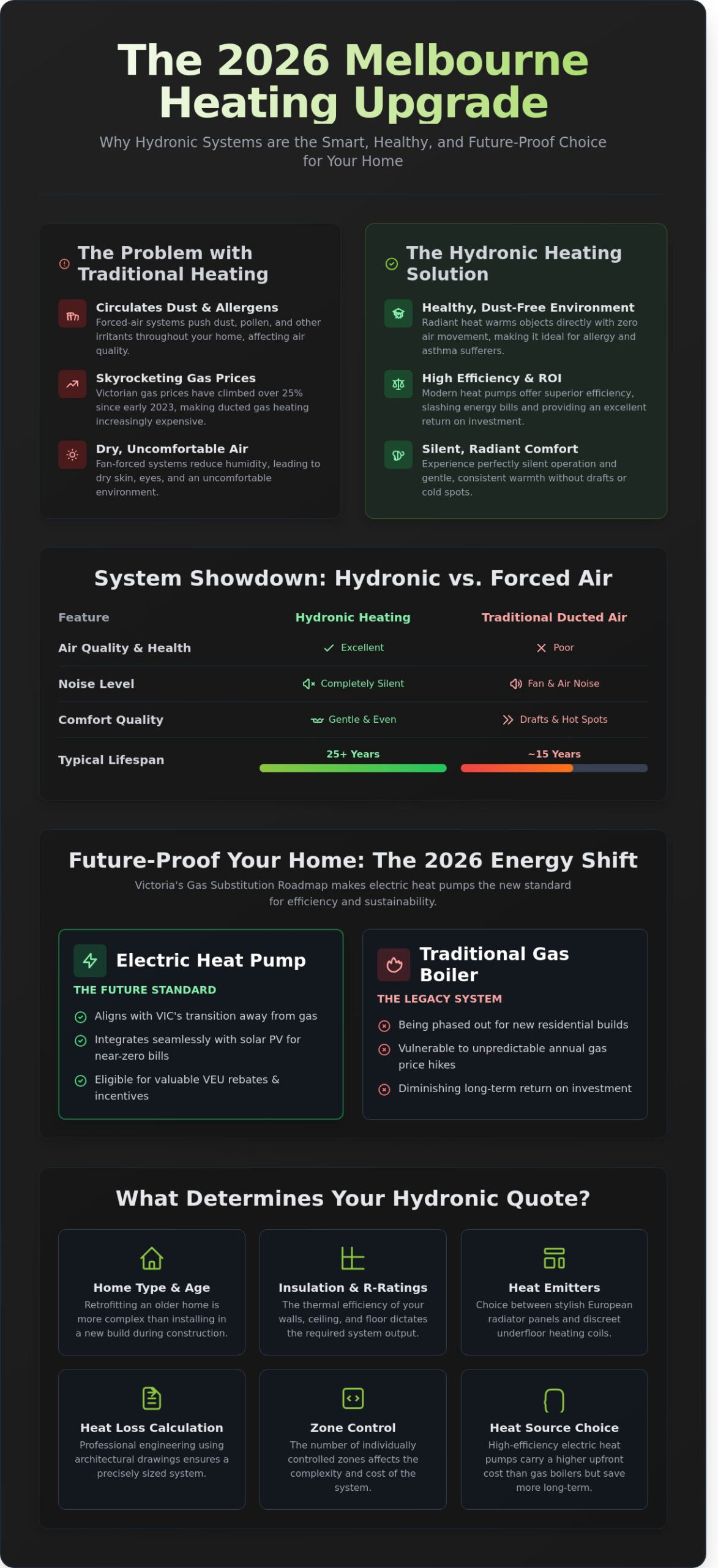
Victoria’s Gas Substitution Roadmap, which banned gas connections in new residential builds starting January 1, 2024, has reached a critical maturity point in 2026. Your quote will now likely focus on high-efficiency electric heat pumps rather than traditional gas boilers. This transition is essential for future-proofing your home against the 15% to 20% annual rise in gas tariffs seen over the last three years. By choosing energy efficient heating, you’re securing a system that integrates perfectly with solar PV arrays, delivering a superior return on investment through drastically lower monthly bills.
Silent Comfort: The Luxury of Radiant Heat
Traditional ducted heating systems rely on fans that circulate allergens and create cold drafts. Hydronic systems are different. They use natural convection and radiation to warm objects and people directly. This “silent comfort” is a primary reason why Melbourne families are upgrading. The health benefits are measurable. With roughly 1 in 5 Australians suffering from allergic rhinitis, a dust-free environment is a medical necessity for many. For homeowners seeking comprehensive information about creating an allergen-friendly environment, our Melbourne hydronic heating guide explains how modern systems eliminate respiratory irritation while providing silent comfort. Modern hydronic heating panels also offer an aesthetic edge, with slimline European designs that complement contemporary Melbourne interiors while providing:
- Zero air movement, which keeps humidity levels stable and prevents dry eyes or skin.
- Completely silent operation, ideal for bedrooms and home offices.
- Individual zone control, allowing you to heat only the rooms you’re using.
- A 25 year plus lifespan, nearly double that of most forced-air units.
Understanding the Variables: What Determines Your Melbourne Hydronic Quote?
Every home in Melbourne presents a unique engineering challenge. A hydronic heating quote melbourne homeowners receive reflects several physical and technical variables that go far beyond simple square meterage. A 3-bedroom Victorian cottage in Geelong requires a vastly different approach than a modern, open-plan Bayside build. Older homes often lack sub-floor insulation and feature high ceilings, requiring higher-output radiator panels to combat heat loss. Conversely, new builds are designed with thermal mass in mind, allowing for integrated systems that operate at lower temperatures.
Installation complexity remains a primary cost driver. Retrofitting an existing home involves navigating under-floor crawl spaces or carefully concealing pipework within walls. This labor-intensive process can add 15% to 20% to the total cost compared to a new build. In new constructions, we install the system during the “rough-in” stage, which is significantly more efficient. The choice of heat source also shifts the initial investment. While high-efficiency gas boilers have been the standard, many residents now opt for premium electric heat pumps. The Australian Government highlights the energy efficiency of different heating systems, noting that while heat pumps have a higher upfront cost, they offer superior long-term sustainability and lower running costs when paired with solar arrays.
Radiator Panels vs. Underfloor Heating Costs
The type of emitter you choose dictates both the price and the “feel” of the warmth. For a standard radiator system, expect to pay between A$1,400 and A$1,800 per installed panel in 2026. This includes the European-designed panel, high-quality valves, and expert labor. If you prefer the luxury of walking on warm tiles, slab heating for new Victorian builds typically ranges from A$65 to A$95 per square metre. For homes with floor-to-ceiling glass, we often recommend hydronic trench heating to eliminate cold downdrafts without obstructing your views.
The Role of Zoning and Controls
Zoning transforms a standard heating system into a precision-tuned comfort solution. By dividing your home into distinct thermal zones, you can heat the bedrooms only at night and the living areas during the day. This method reduces energy consumption by up to 30% compared to whole-house heating. Managing these zones requires a high-quality thermostat for every area. Integrating smart home controls adds roughly A$500 to A$1,200 to your quote. It’s a worthwhile investment that allows for mobile app management, ensuring your home is warm before you arrive. This dust-free, silent technology isn’t just about heat; it’s about a healthier living environment. If you’re ready to see how these variables apply to your floor plan, you can request a tailored assessment from our local experts.
The 2026 Efficiency Showdown: Heat Pump vs. Gas Boiler Quotes
In 2026, securing a hydronic heating quote melbourne homeowners can rely on means choosing between two distinct technologies. The initial investment for an electric heat pump system typically ranges from A$13,500 to A$19,000 for a standard three bedroom home. In contrast, a premium European gas boiler installation often sits between A$7,500 and A$10,500. While the upfront gap remains visible, the long term return on investment has shifted heavily toward electricity. With Victorian gas prices projected to rise by 15% by the end of 2026, the operational savings of heat pumps have never been more compelling.
Running costs are where the showdown is won. A modern gas boiler operates at roughly 90% to 95% efficiency. However, an electric heat pump achieves a Coefficient of Performance (COP) of 3.8, meaning it turns 1kWh of electricity into 3.8kWh of heat. This efficiency is vital as Melbourne moves away from fossil fuels. According to this Australian Government guide to heating and cooling, selecting a system with high thermal mass and efficiency is the most effective way to manage rising energy bills. For households with existing solar arrays, the math is even simpler. A 6kW solar system can often cover 70% of a heat pump’s daytime energy needs, making your winter comfort almost free to maintain.
Longevity also plays a role in your quote. Gas boilers generally require replacement every 12 to 15 years due to internal combustion wear. Modern heat pumps are engineered for a 20 year lifespan with minimal moving parts. This durability, combined with the removal of the annual A$300 gas connection fee, ensures the higher initial price point pays for itself within 6 to 8 years for the average Melbourne family.
Electric Heat Pumps: The Modern Melbourne Standard
Our team recommends electric heat pumps for 90% of all new 2026 quotes. These units represent the gold standard for healthy, allergen-friendly living because they don’t rely on combustion. When paired with hydronic fan coils, these systems provide a unique advantage: they can offer gentle, refrigerated cooling during a 38 degree Victorian summer. This dual functionality transforms your heating investment into a year round climate solution while reducing your home’s CO2 footprint by up to 2 tonnes per year.
When is Gas Still the Right Choice?
Gas remains a practical solution for specific retrofit scenarios where electrical infrastructure is a barrier. If your property has a limited 40-amp single-phase supply, a full heat pump conversion might trigger a A$4,000 switchboard and mains upgrade. In these instances, a high efficiency condensing boiler is the most cost-effective way to enjoy dust-free warmth. These systems require biennial professional servicing and carbon monoxide testing to ensure the safety and health of your household. Every hydronic heating quote melbourne residents request from us includes a detailed site audit to determine if your current electrical capacity can support the transition to electric.
Preparing for Your Consultation: A Pre-Quote Checklist for Melbourne Homeowners
Securing an accurate hydronic heating quote melbourne homeowners can trust requires more than a simple phone call. To ensure your 2026 installation remains on budget and performs at peak efficiency, you’ll need to provide specific data about your property’s thermal envelope. Start by gathering your architectural floor plans. These drawings allow our engineers to calculate the exact air volume of every room, ensuring we don’t undersize your boiler or heat pump. A 1:100 scale plan helps us provide a fixed-price quote that won’t fluctuate once the copper piping starts going in.
Your home’s insulation levels directly dictate the size of the system you need. Check your ceiling and wall R-ratings. A home with R5.0 ceiling batts and R2.5 wall insulation requires 30% less energy to maintain a steady 21°C compared to older, uninsulated dwellings. If you’re moving toward a sustainable 12kW+ heat pump system, check your electrical switchboard. These high-efficiency units often require a dedicated circuit or a 3-phase power upgrade, which can add A$1,200 to A$2,500 to your initial infrastructure costs if not planned for early.
Think about your priority zones. Hydronic systems excel at providing varied temperatures across different rooms. You might want a nursery kept at a constant 22°C for health and safety, while a home office only needs warmth during business hours. Identifying these high-use areas helps us design a zoned manifold system that slashes running costs by 15% by only heating the spaces you’re actually using. For homeowners who also want year-round temperature control, fan coils integrated into a hybrid hydronic system offer a compelling solution that delivers both rapid heating and efficient cooling through a single discreet unit.
Navigating Melbourne Rebates in 2026
The 2026 Victorian Energy Upgrades (VEU) program offers significant incentives for residents transitioning from old gas ducted heating systems to electric hydronic heat pumps. Eligible Melbourne households can access rebates that often exceed A$3,000, depending on the efficiency rating of the chosen unit. Solar Victoria also continues to offer A$1,000 rebates for heat pump hot water and heating upgrades. Our team at Melbourne Hydronic Heating manages the entire administrative process, ensuring your paperwork is submitted correctly to secure these government contributions without the stress.
Site Visit vs. Desktop Quote
While a desktop quote based on photos provides a starting point, it lacks the precision of a physical inspection. We’ve seen “ballpark” estimates change by 20% because a contractor didn’t account for subfloor access or existing pipework “sludge” in older systems. Our experts visit your Greater Melbourne property to inspect structural joists and electrical capacity. This thoroughness allows us to offer a fixed-price contract, protecting you from hidden costs and ensuring your new system provides the dust-free, allergen-friendly comfort your family deserves.
Ready to lock in your energy-efficient future? Request your fixed-price hydronic heating quote from our local experts today.
Securing Your Comfort: Requesting Your Melbourne Hydronic Heating Quote
Choosing a heating system is a 25-year commitment to your family’s well-being and home’s value. Our team brings over 30 years of local experience to every project. Since we started in 1994, we’ve remained a family-owned business based in Cheltenham. This matters because we don’t treat your home like a generic construction site. We understand that a hydronic heating quote melbourne homeowners receive must reflect the specific needs of our local climate and housing stock.
Our design-led approach sets us apart from standard plumbing services. We don’t rely on guesswork or “one size fits all” kits. Instead, our technicians perform precise heat loss calculations for every individual room. We account for ceiling heights, window orientations, and insulation levels. This ensures each panel radiator is perfectly sized to maintain a steady 21 degrees Celsius even when the Melbourne overnight temperature drops to 2 degrees. When you request your hydronic heating quote melbourne, our Cheltenham team provides a clear breakdown of every component, from the boiler capacity to the linear metres of piping required.
Post-installation support is where we truly protect your investment. A hydronic system is a premium asset that requires specialized care. We recommend a professional service every 24 months, which typically costs between A$280 and A$450. This routine maintenance prevents magnetite buildup and ensures your boiler continues to operate at its peak 95% efficiency rating. It’s the best way to avoid unexpected repairs and keep your energy bills at their lowest possible level for decades.
The Melbourne Hydronic Heating Difference
We’ve spent decades working inside the inner-north’s Edwardian terraces and the sprawling heritage homes of the Bayside suburbs. These buildings require a delicate, expert touch to integrate modern pipes without compromising architectural integrity. Our “dust-free” installation process is a non-negotiable standard for us. We use HEPA-filtered extraction systems to ensure your indoor air quality remains pristine during the install, which is vital for families living with asthma or allergies. You’ll experience transparent, honest communication from the initial site visit through to the final system handover.
Ready to Future-Proof Your Home?
The 2026 rebate landscape under the Victorian Energy Upgrades (VEU) program offers significant incentives for homeowners switching to high-efficiency electric heat pumps or condensing gas boilers. We recommend booking your consultation now to avoid the peak winter rush that typically begins in April. Our Cheltenham-based experts are ready to design a system that fits your lifestyle. Request your custom hydronic heating quote today and take the first step toward a silent, healthy, and energy-efficient home.
Secure Your Home’s Future Comfort Today
Investing in your home’s thermal efficiency isn’t just about surviving the next winter; it’s about future-proofing your lifestyle for decades. As we move into 2026, the shift toward high-efficiency heat pumps and VEU-accredited systems offers a clear path to lower energy bills and a smaller carbon footprint. You now understand how floor plan complexity and system choice impact your final investment. This makes it the ideal time to request a professional hydronic heating quote melbourne families rely on for a dust-free, allergy-friendly environment.
With 30+ years of local experience, our team specializes in installing premium technology tailored specifically for Victoria’s unique climate. Every A$1 spent on quality installation today saves significantly on long-term maintenance costs. As VEU accredited installers, we help you navigate available rebates while delivering a silent, luxurious heating solution that traditional split systems can’t match. Don’t let another chilly season catch you off guard while energy prices fluctuate. We’re ready to help you transform your house into a cozy, healthy sanctuary that stays warm through every cold snap.
Get Your Custom 2026 Hydronic Heating Quote
Frequently Asked Questions
How much does it cost to install hydronic heating in a 4-bedroom Melbourne home?
A standard 4-bedroom Melbourne home typically requires an investment between A$14,000 and A$23,000 for a full hydronic radiator system. This price includes a high-efficiency boiler or heat pump, 8 to 10 premium radiator panels, and professional installation by licensed technicians. Your final hydronic heating quote melbourne depends on whether you choose wall-mounted radiators or in-slab heating. In-slab systems for new builds often start at A$110 per square metre.
Can I get a hydronic heating quote based on my house plans before building starts?
You can absolutely receive a detailed quote based on your architectural drawings before construction begins. Providing your floor plans in PDF format allows our engineers to calculate precise heat load requirements for every room. We analyze window placements and ceiling heights to ensure your system’s perfectly sized. This proactive approach helps you integrate the installation costs into your initial building budget without surprises later.
Are there still government rebates available for hydronic heating in Victoria in 2026?
Yes, the Victorian Energy Upgrades (VEU) program continues to offer incentives for energy-efficient heating in 2026. Homeowners switching from old gas heaters to electric hydronic heat pumps can currently access rebates averaging A$2,400. These incentives focus on reducing carbon emissions and lowering household energy bills. We handle the paperwork to ensure you receive the maximum eligible discount on your premium installation.
How long does the quoting and installation process typically take?
The quoting process takes 48 to 72 hours once we have your floor plans or site measurements. For the installation itself, a standard retrofit in an existing home usually requires 4 to 6 business days. New build installations are split into two stages; the rough-in takes 2 days during the framing phase, and the final fit-off takes another 2 days once the home’s nearly finished.
Is a heat pump significantly more expensive to install than a gas boiler in 2026?
A hydronic heat pump costs approximately A$7,000 more than a traditional gas boiler to install in 2026. While the initial investment’s higher, heat pumps offer 300% to 450% efficiency compared to the 95% efficiency of top-tier condensing boilers. Most Melbourne families see a return on this investment within 6 years through significantly lower monthly utility bills, especially when paired with solar panels.
What information do I need to provide to get an accurate hydronic heating quote?
To provide an accurate hydronic heating quote melbourne, we need your property’s total floor area and the number of rooms requiring heating. Please specify if your home has a concrete slab or timber sub-floor, as this dictates the piping method. Details about your insulation levels and window glazing types also help us calculate the exact kilowatt capacity your system needs for peak performance during a Melbourne winter.
Does Melbourne Hydronic Heating provide quotes for the Mornington Peninsula and Geelong?
Melbourne Hydronic Heating provides comprehensive quoting and installation services across the entire Mornington Peninsula and the Geelong region. Our local technicians travel to coastal and regional areas daily to ensure every Victorian home can access allergen-friendly, dust-free warmth. We don’t charge extra travel fees for sites within 100 kilometres of the Melbourne CBD, making premium European heating technology accessible to more households.
Will installing hydronic heating require me to upgrade my electrical switchboard?
You’ll likely need a switchboard upgrade if you’re installing an electric heat pump, as these units require a dedicated 32-amp circuit. Traditional gas boilers generally run on a standard 10-amp power point and don’t necessitate electrical modifications. Our team assesses your current electrical capacity during the initial site visit to include any necessary wiring costs in your fixed-price quote so there aren’t hidden fees.