
Underfloor Heating in Melbourne: The Complete 2026 Homeowner’s Guide
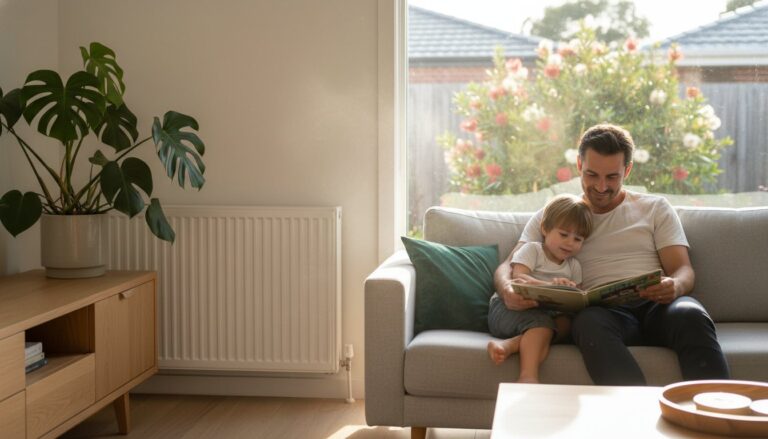
Imagine waking up on a typical 4-degree Melbourne morning in July and stepping out of bed onto a floor that feels like a warm hug. For many homeowners in suburbs like Camberwell or Brighton, the reality is usually a frantic dash across ice-cold tiles to find slippers. While traditional ducted systems often struggle to distribute heat evenly, underfloor heating offers a silent, invisible solution that warms your home from the ground up. It’s not just about luxury. It’s about reclaiming your living space from the biting Victorian chill without the noise or dry air of older technologies.
You likely agree that standard heating can be a nightmare for hay fever sufferers, especially when dusty vents circulate allergens through every room. With energy prices rising significantly over the last two years, running an inefficient system is no longer sustainable for the modern household. This guide will show you how to transform your home into a dust-free, energy-efficient sanctuary that provides consistent warmth without a single cold spot. We’ll break down the latest 2026 installation standards, compare the long-term savings of hydronic systems, and explain why this technology is the ultimate investment for a healthier, allergen-free life.
Key Takeaways
- Compare hydronic and electric systems to determine the most cost-effective solution for your home’s size and long-term running costs in Victoria.
- Discover how professional underfloor heating can reduce your energy consumption by up to 30% while effortlessly meeting the new 7-star energy rating standards.
- Understand the technical differences between in-slab and in-screed installation methods to choose the right approach for your specific Melbourne renovation or new build.
- Learn why radiant warmth creates a healthier, dust-free sanctuary by eliminating the allergen-circulating fans found in traditional convection heating.
- Identify the critical questions to ask your installer to ensure your system is custom-designed for the unique “four seasons in one day” climate of Melbourne and Geelong.
What is Underfloor Heating and Why is it Essential for Melbourne Homes?
Underfloor heating is a premium climate solution that transforms the very foundation of your home into a consistent, silent heat source. Unlike traditional convection systems that prioritize heating the air, this technology uses radiant heat to warm objects and people directly. When exploring What is Underfloor Heating, it’s clear that the primary advantage lies in its sophisticated distribution. It’s often called “invisible luxury” because it eliminates the need for bulky wall-mounted units or floor vents. This gives you total freedom over your interior design. For families in Victoria, this system provides a dust-free environment, making it the gold standard for those managing asthma or respiratory sensitivities.
How Radiant Heat Works
The science behind underfloor heating is based on the principle of radiant energy. Traditional ducted systems blow hot air that quickly rises to the ceiling, leaving your feet cold and wasting energy. Radiant systems distribute warmth evenly across the entire floor surface. This creates a vertical temperature profile that matches human biology; your feet stay warm while the air at head level remains fresh. It’s a more natural form of thermal comfort. Because there’s no turbulent air movement, you don’t lose heat through leaky ducts or poor circulation. This is a common issue in older Melbourne builds where heat loss can reach 25% in poorly insulated ducting.
The Melbourne Climate Advantage
Melbourne is famous for its “four seasons in one day” volatility. Whether it’s a biting 4°C morning in Geelong or a damp evening on the Mornington Peninsula, your home needs a system with high thermal mass to maintain stability. Underfloor systems excel here by holding heat long after the energy source is turned off. This prevents the sharp temperature drops typical of Victorian cold snaps. Many homeowners choose to integrate this with hydronic heating to achieve total home comfort. By 2026, energy efficiency standards in Australia have become stricter. These high-mass systems are now the most reliable way to keep your living spaces at a steady 21°C regardless of the outdoor chaos. The system acts as a thermal battery, soaking up heat and releasing it slowly to ensure your home doesn’t feel like an icebox the moment the sun goes down.
- Consistent Warmth: Eliminates cold spots and drafty corners.
- Space Saving: No radiators or vents to dictate furniture placement.
- Health Focused: No circulating dust, pollen, or allergens.
- Silent Operation: No noisy fans or clicking ductwork.
Hydronic vs. Electric Underfloor Heating: The 2026 Comparison
Choosing the right underfloor heating system for a Melbourne home involves balancing immediate renovation costs against decades of energy bills. While both systems provide the luxury of warm feet, they operate on entirely different principles. Electric systems use resistive heating cables or mats, while hydronic systems circulate heated water through a network of specialized pipes. For a standard 200-square-meter home, the choice you make today will dictate your comfort and household expenses for the next 30 years.
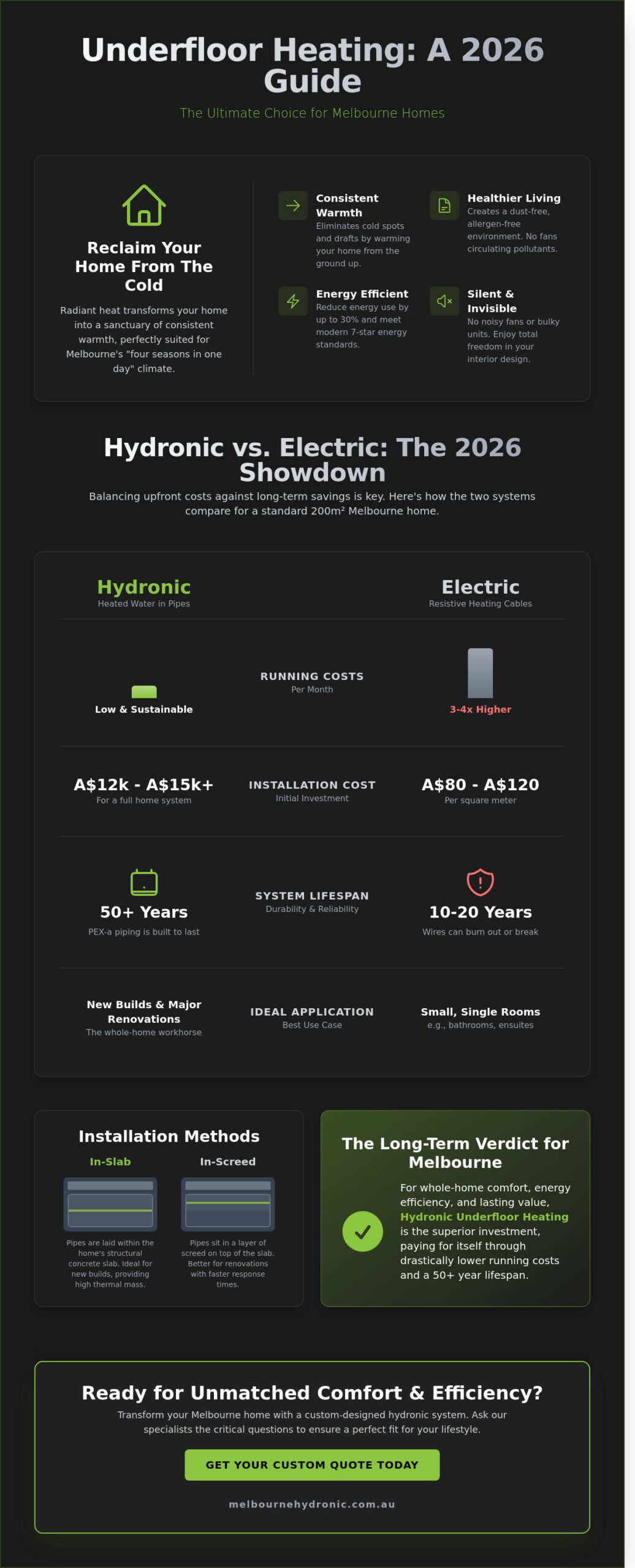
The financial breakdown is clear. Electric systems are significantly cheaper to install, often ranging from A$80 to A$120 per square meter. However, their running costs are roughly three to four times higher than hydronic alternatives. In the context of 2026 energy prices, using electricity to heat a large slab is rarely sustainable as a primary heat source. Hydronic systems require a larger upfront investment, often starting at A$12,000 to A$15,000 for a full home, but they pay for themselves through drastically lower monthly overheads and superior durability.
Hydronic Systems: The Whole-Home Workhorse
Hydronic systems are the preferred choice for new builds and major extensions in Melbourne. These systems use PEX-a piping, a high-density, cross-linked polyethylene that’s incredibly resilient. Unlike electric wires that can burn out or break with floor movement, PEX-a is designed to last 50 years or more, with most premium installations carrying a 30-year manufacturer warranty.
The real advantage in 2026 is energy flexibility. As Victoria continues its transition away from residential gas, hydronic systems are perfectly suited for electric heat pumps. These units are 300% to 400% efficient, meaning they produce four kilowatts of heat for every one kilowatt of electricity they consume. This makes hydronic heating the most eco-friendly and health-conscious way to warm a home, as it doesn’t circulate dust or allergens through fans.
Electric Systems: When to Choose Them
Electric underfloor heating still has a place in the modern Melbourne home, but its role is specialized. It’s an ideal “quick fix” for small-scale bathroom renovations where you can’t justify the plumbing required for a water-based system. Because the heating mats are only a few millimeters thick, they don’t significantly raise the floor height, making them perfect for retrofitting under tiles in a single ensuite.
The downside is the impact on your Victorian electricity bill. Even with a 5kW solar array, running electric coils across a large living area during peak winter periods is expensive. Most electric systems fail to provide enough thermal mass to act as a primary heat source in large, high-ceilinged rooms. They’re best treated as a secondary luxury rather than a total heating solution. If you’re looking for a permanent, high-performance upgrade for your entire property, it’s wise to consult a specialist in hydronic design to ensure your system meets the demands of the local climate.
The Installation Process: What to Expect in Melbourne
Every successful underfloor heating project begins with a bespoke heat loss calculation. We don’t use generic templates; a home in the windy Dandenong Ranges requires a different thermal output than a sheltered townhouse in Richmond. Our engineers analyze your home’s orientation, window sizes, and local microclimate to ensure the system performs even when Melbourne’s temperature drops to 2°C in July.
We primarily utilize two installation methods. In-slab installation places the hydronic pipes directly within the structural concrete slab, making it the gold standard for new builds. For renovations or retrofits, we use the in-screed method. This involves laying pipes on top of the existing slab and covering them with a thin layer of specialized screed. Central to both methods is the manifold. This component acts as the brain of your system, managing water flow to different zones. By zoning your home, you can keep the living room at a cozy 21°C while leaving guest rooms unheated, significantly reducing monthly energy consumption.
Step-by-Step Installation Journey
The process starts with site preparation and the installation of high-grade floor insulation. Without a minimum R-value of 1.2 to 2.5, your heat will escape into the ground rather than warming your feet. Next, we lay the pipework. Precision in spacing is non-negotiable; pipes are usually spaced 150mm to 200mm apart to ensure an even heat distribution without “cold spots.”
Before any concrete is poured, we conduct rigorous pressure testing at 6 bar for 24 hours. This ensures the system is 100% leak-proof. Finally, the system undergoes commissioning by a licensed central heating installation expert. We balance the flow rates and program your thermostats to match your daily routine, ensuring a seamless, dust-free heating experience from day one.
Best Flooring Pairs for Underfloor Heating
- Polished concrete and tiles: These are the ultimate thermal conductors. They heat up quickly and retain warmth long after the system shuts off.
- Engineered timber: This is a popular 2026 choice for Melbourne interiors. We use specialized floor sensors to keep the surface temperature below 27°C, which prevents the wood from warping or gapping.
- Carpet and vinyl: You can still enjoy underfloor heating with softer finishes. We look for carpets with a “tog rating” below 2.5 to ensure the heat can effectively penetrate the fabric and reach the room.
Choosing the right material ensures your system operates at peak efficiency. While stone and ceramic provide the fastest response times, modern thermostats allow us to calibrate the system for almost any high-quality floor finish found in premium Melbourne homes.
Calculating Energy Efficiency and Running Costs in Victoria
Investing in underfloor heating isn’t just a luxury choice for 2026; it’s a strategic move for energy conscious Melbourne homeowners. By heating from the ground up, these systems eliminate the heat layering common with split systems, where warmth pools at the ceiling while your feet stay cold. This radiant heat distribution allows you to lower your thermostat by 2 degrees without losing comfort, effectively reducing energy consumption by 20% to 30% compared to traditional forced-air heating. With Victoria’s 7-star energy rating requirements now standard for new builds, selecting a high-efficiency hydronic system is often the most reliable path to building compliance.
Melbourne’s climate is perfectly suited for solar integration. By pairing your floor heating with a solar PV array, you can use the sun’s energy during the day to “charge” your concrete slab. This thermal mass acts as a giant battery, releasing heat slowly throughout the evening when temperatures drop. Maintenance is another area where hydronic systems excel. Unlike split systems that require annual filter changes and have a 10 to 12 year lifespan, a well-installed hydronic system can last 30 years or more with minimal professional servicing, making it a permanent part of your home’s infrastructure.
Heat Pumps: The Future of Efficient Heating
The shift away from gas boilers is accelerating in 2026 as Melbourne moves toward all-electric homes. Modern air-to-water heat pumps are the gold standard for efficiency. They operate on the principle of Coefficient of Performance (COP). A COP of 4.0 means the system produces 4 units of heat for every 1 unit of electricity consumed. You can maximise this efficiency by using smart thermostats with weather compensation, which adjust the water temperature based on real-time outdoor conditions in Melbourne to prevent energy spikes.
Long-Term ROI for Melbourne Properties
A premium hydronic floor heating melbourne installation adds tangible value to your property. In the competitive real estate market, buyers increasingly prioritise dust-free, allergen-friendly environments over noisy, dry air systems. While a split system often needs replacement twice in a 25-year period, a hydronic setup remains a stable asset. For underfloor heating, ROI is defined as the sum of cumulative energy savings and the increase in property resale value minus the initial installation and maintenance costs over a 15-year lifecycle.
Choosing Your Melbourne Underfloor Heating Specialist
Selecting the right installer defines your home comfort for the next 30 years. Local experience in Melbourne and Geelong is a technical requirement, not just a preference. Our region’s unique soil conditions and rapid temperature shifts require a system designed for high thermal mass response. A specialist who understands the Victorian climate ensures your underfloor heating doesn’t just run, but operates at peak efficiency during a 2-degree July morning in Ballarat or a damp evening in Geelong.
Before you sign any contract, vet your installer with these specific questions:
- Do you provide a room-by-room heat loss calculation based on 2026 energy standards?
- Is your “design and supply” service handled in-house to ensure component compatibility?
- What specific manifold and pump brands do you use, and where is the local parts support?
- Can you provide examples of similar installs in heritage homes or modern builds?
A comprehensive design and supply service is vital. It eliminates the risk of “component mismatch” where pumps from one manufacturer don’t communicate perfectly with thermostats from another. Melbourne Hydronic Heating leverages over 30 years of local expertise to provide a single point of accountability. We’ve been refining these systems since the early 1990s, ensuring every pipe layout and boiler configuration is optimized for the specific architectural needs of Melbourne homes.
The Melbourne Hydronic Difference
We prioritize your family’s health. Our underfloor heating solutions are 100% dust-free and allergy-friendly. Unlike forced-air systems that circulate pollen and dust mites, hydronic heat radiates gently from the ground up. This makes it the gold standard for households managing asthma or respiratory sensitivities. Whether you’re retrofitting a Victorian terrace in Carlton or engineering a new slab in Torquay, we customize the pipe density to match your floor finish.
Our relationship doesn’t end when the screed dries. We provide ongoing support including power flushing to remove system sludge and annual servicing to keep your warranty intact. This proactive maintenance extends the life of your investment well beyond the industry average.
Next Steps for Your Home
Preparation is the key to an accurate quote. Before your consultation, gather your floor plans and details about your home’s insulation levels. Knowing your window glazing types and ceiling heights helps our engineers calculate the precise wattage required for each zone. This data-driven approach prevents you from overpaying for an oversized system or suffering with an underpowered one.
You can start by requesting a detailed hydronic heating system quote that outlines the expected energy performance for your specific floor plan. We’ll walk you through the integration of heat pumps or gas boilers to find the most cost-effective path for your lifestyle. Ready to feel the difference? Contact Melbourne Hydronic Heating for a consultation today and secure your home’s comfort for the seasons ahead.
Invest in Sustainable Warmth for Your Melbourne Home
Choosing the right heating system is a defining decision for your home’s long-term comfort and health. By prioritizing hydronic underfloor heating, you’re opting for a dust-free, allergen-friendly environment that traditional split systems can’t match. Modern heat pump technology ensures these systems operate with peak energy efficiency; they significantly lower Victorian energy bills compared to older gas or electric resistance models. This shift toward sustainable, silent warmth is now the standard for premium Melbourne living.
Melbourne Hydronic Heating brings 30+ years of local experience to every installation. We’re a family-owned and operated Victorian business specializing in energy-efficient heat pump technology designed for our unique climate. Our team ensures every technical detail is handled with engineering precision, providing you with a reliable system that adds genuine value to your property. You deserve a home that feels as good as it looks.
Get a Professional Underfloor Heating Quote for Your Melbourne Home
Take the first step toward a healthier, more energy-efficient lifestyle and enjoy the luxury of a warm home all winter long.
Frequently Asked Questions
Is underfloor heating expensive to run in Melbourne?
Hydronic underfloor heating is one of the most cost-effective ways to heat a Melbourne home, typically costing 20% to 30% less to run than traditional ducted gas systems. While Victorian electricity prices averaged 28 cents per kWh in 2024, hydronic systems using high-efficiency condensing boilers or heat pumps significantly lower monthly bills. These systems create a thermal mass in your floor that retains heat for hours after the system switches off.
Can I install underfloor heating under existing timber floors?
You can install underfloor heating under existing timber floors using specialized retrofit dry systems or ultra-thin heating mats. These systems add approximately 15mm to 20mm to your floor height, making them ideal for Victorian-era renovations where slab pouring isn’t an option. It’s crucial to ensure your timber is rated for temperatures up to 27°C to prevent warping or gapping over time.
How long does it take for underfloor heating to warm up a room?
Warm-up times vary between 30 minutes for thin electric mats and up to 24 hours for thick concrete slab hydronic systems. In a typical Melbourne winter, homeowners usually leave their hydronic systems on a low background setting throughout the season. This approach maintains a consistent temperature and avoids the high energy surge required to heat a cold slab from scratch every morning.
Does underfloor heating replace the need for radiators?
Underfloor heating serves as a complete primary heat source, effectively replacing the need for wall-mounted radiators in most modern Australian homes. Because the system heats the entire floor surface, it provides a more uniform warmth that eliminates cold spots. You’ll gain approximately 5% to 10% more usable wall space in your living areas by removing bulky radiator units or heater vents.
Is hydronic underfloor heating better than electric for a new build?
Hydronic systems are the superior choice for new Melbourne builds because they offer lower long-term operating costs and a healthier, dust-free environment. While electric systems are cheaper to install in a single bathroom, a hydronic setup powered by a heat pump can be up to 300% more efficient. This makes it the standard for 2026 energy-compliant homes looking to achieve high NatHERS star ratings.
What happens if a pipe leaks under the floor?
Modern PEX-a piping is designed to last over 50 years, and leaks are extremely rare once the system is pressure tested during installation. If a leak occurs due to accidental drilling, thermal imaging cameras pinpoint the exact location within a 10cm radius. This allows for a surgical repair of a single floor tile rather than ripping up the entire room, ensuring your home’s structure remains intact.
How often does a hydronic underfloor system need servicing?
You should schedule a professional service for your hydronic system every 12 to 24 months to ensure peak performance. Technicians check the water chemistry, clear any air locks, and inspect the manifold valves to prevent corrosion. Regular maintenance can extend the lifespan of your condensing boiler or heat pump by up to 10 years, protecting your initial investment in premium European technology.
Can underfloor heating be used for cooling in Melbourne summers?
Hydronic underfloor systems can provide radiant cooling during Melbourne’s 40°C summer peaks when paired with a reversible heat pump. By circulating chilled water at approximately 15°C to 18°C through the pipes, the system absorbs heat from the room without the noise or drafts of traditional air conditioning. This method reduces the ambient temperature by several degrees while maintaining a comfortable, allergen-friendly atmosphere.