Melbourne Hydronic Heating: The Ultimate 2026 Homeowner’s FAQ & Guide
Why does keeping your family warm during a Melbourne winter have to mean waking up with a scratchy throat and stinging, dry eyes? Many homeowners in suburbs from Essendon to Brighton accept that traditional ducted heating is a necessary evil, even if it leaves the back half of a modern open-plan extension freezing while the front rooms feel stifling. You aren’t alone if you dread that first winter energy bill or the constant, dusty hum of a noisy fan unit. We agree that your home should be a sanctuary of healthy, silent comfort, not a source of respiratory irritation.
This guide reveals why Melbourne Hydronic Heating is the premier choice for residents seeking a dust-free, allergen-friendly lifestyle in 2026. You’ll discover how to significantly lower your long-term running costs by pairing premium European panel radiators with the latest high-efficiency heat pumps or solar systems. We’ll walk you through the technical precision of installation, the benefits of radiant warmth, and how to eliminate cold spots in your home for good.
Key Takeaways
- Understand why silent, radiant warmth outperforms traditional forced-air systems in the unique Victorian climate.
- Learn how to eliminate the “dust cycle” to create a healthier, allergen-free environment for your family.
- Compare gas boilers against modern electric heat pumps to future-proof your melbourne hydronic heating system for 2026.
- Identify whether radiator panels or underfloor heating is the most efficient choice for your specific home structure.
- Discover how professional heat loss calculations and local expertise ensure maximum energy savings during the coldest months.
Why Melbourne Homeowners are Choosing Hydronic Heating in 2026
Melbourne’s winters are notorious for their damp, biting chill that seems to seep through even the best insulation. As we move into 2026, melbourne hydronic heating has transitioned from a luxury addition to a fundamental requirement for modern Victorian living. Unlike traditional systems that rely on fans and vents, hydronic heating uses water-filled pipes to deliver silent, radiant warmth. This method transforms your floors or wall-mounted panels into heat sources, creating a consistent thermal mass that keeps your home cozy without the noise or drafts associated with older technology.
Radiant vs. Forced Air: The Comfort Gap
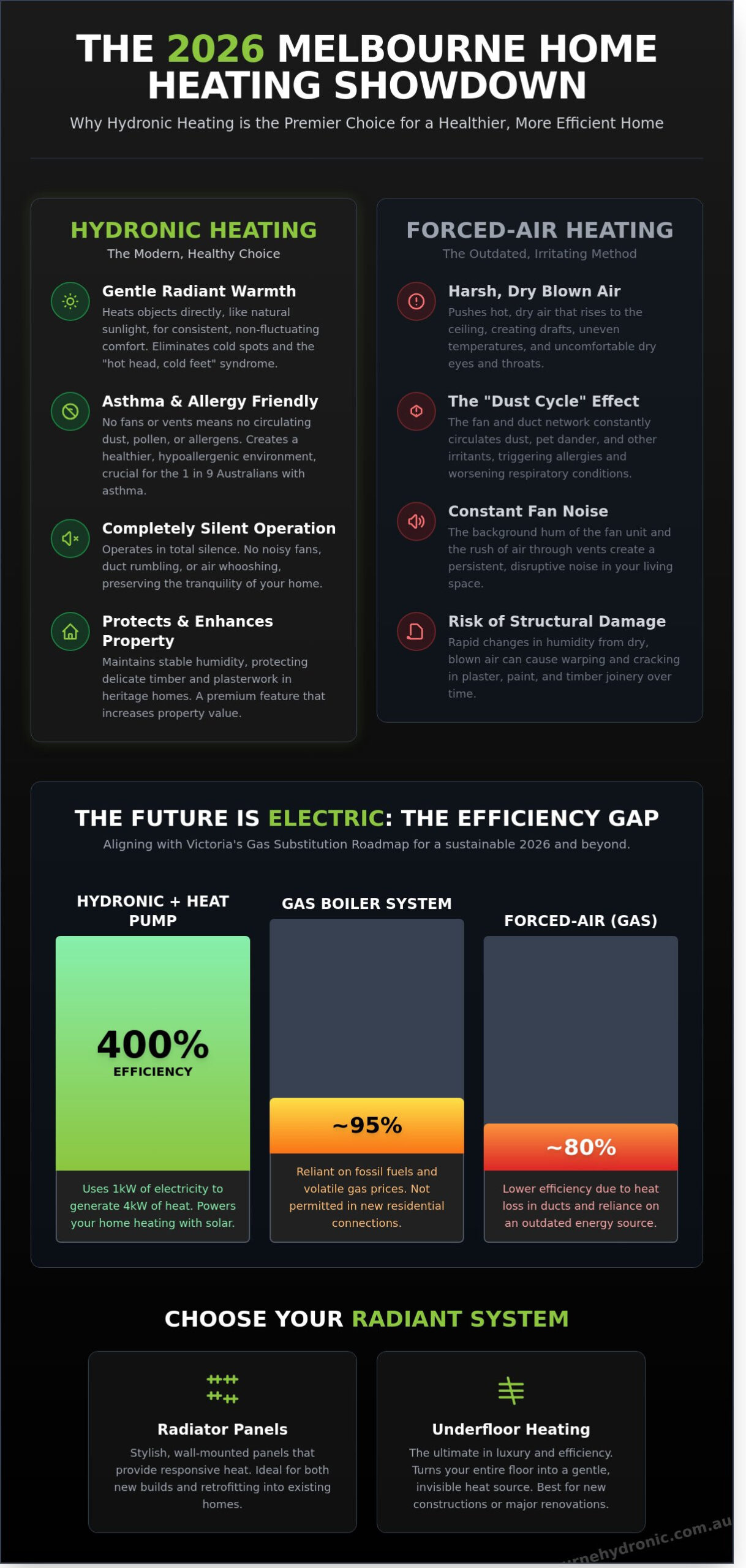
Standard split systems and ducted heaters often create a frustrating “comfort gap.” They push hot air to the ceiling, leaving your feet cold while drying out your skin and eyes. This air movement also circulates dust and allergens, which is a significant concern for the 2.7 million Australians living with asthma. Understanding how hydronic systems function helps explain why they feel so much better. Instead of heating the air, they warm the objects in the room. It’s a gentle, sun-like warmth that doesn’t fluctuate every time a door opens. For Melbourne’s heritage homes, this is particularly vital. The lack of forced air protects delicate period features, such as original timber joinery and ornate plasterwork, from the warping and cracking caused by rapid humidity changes.
The 2026 Energy Shift in Melbourne
The Victorian government’s commitment to the Gas Substitution Roadmap has fundamentally changed the local energy landscape. With the 2024 ban on new residential gas connections now firmly in effect, the 2026 homeowner is looking for high-performance electric alternatives. Modern hydronic systems are the gold standard for this transition. By pairing a system with an electric air-to-water heat pump, you can achieve efficiency ratings of up to 400%. This shift toward energy efficient heating allows residents to power their entire warmth strategy through solar arrays, drastically reducing carbon footprints and shielding households from volatile gas prices.
Beyond the immediate comfort, melbourne hydronic heating offers a substantial long-term return on investment. In Melbourne’s competitive real estate market, premium, health-focused heating is a major selling point. Properties equipped with silent, dust-free radiant systems often command higher prices because buyers recognize the durability and low maintenance costs of these systems. It isn’t just a utility; it’s an upgrade to the home’s infrastructure that pays dividends in both lifestyle quality and property value.
The Health Benefits: A Breath of Fresh Air for Melbourne Families
Melbourne often carries the heavy title of Australia’s asthma capital. With high pollen counts and fluctuating humidity, your indoor environment shouldn’t add to the respiratory burden. Traditional ducted systems rely on forced air, which creates a continuous “dust cycle” by blowing allergens, skin cells, and microscopic debris through every room. This constant movement of air makes it nearly impossible to maintain a truly clean living space during the colder months.
Choosing melbourne hydronic heating changes the fundamental physics of how your home stays warm. Instead of pushing air around, these systems use radiant heat to warm objects and people directly. This process keeps the air still, ensuring that dust stays on the floor where it can be cleaned, rather than suspended in the breathing zone of your family members.
Asthma and Allergy-Friendly Heating
Forced air systems act like a delivery network for pollen, pet dander, and dust mites. For the 11% of Australians living with asthma, these airborne particles are constant triggers for nighttime coughing and congestion. Because hydronic systems don’t use fans or vents, they’re the gold standard recommended by health professionals for respiratory health. This creates a hypoallergenic sanctuary, which is vital for newborns and sensitive family members who spend the majority of their time indoors during a Victorian winter. You’ll notice the difference in air clarity almost immediately after the first cold snap.
Consistent Comfort and Zoning
Achieving the perfect balance in a home requires more than just a blast of hot air. Modern radiant systems align with Australian government energy efficiency standards by providing heat that stays where you need it. You won’t experience the “hot head, cold feet” syndrome common in ducted homes, where heat rises to the ceiling and leaves the floor freezing. Instead, you get stable humidity levels that prevent the dry skin and irritated sinuses caused by parched, over-processed air.
Precision is key to this wellness. Using a high-quality thermostat allows for sophisticated room-by-room zoning. You can keep bedrooms at a crisp 18 degrees for optimal sleep quality while ensuring the nursery or living area remains at a steady 22 degrees. This level of control supports your body’s natural recovery cycles and overall daily wellness.
Beyond the physical health benefits, there’s the psychological impact of silence. Melbourne’s quiet suburban streets deserve a home environment to match. Hydronic systems operate with a near-silent hum, eliminating the intrusive rattling of vents and the sudden roar of a furnace. If you’re ready to transform your home’s atmosphere into a peaceful, healthy retreat, our specialists can evaluate your floor plan to design a system tailored to your family’s specific health needs.
Electric Heat Pumps: The Future of Melbourne Hydronic Heating
Victoria’s energy landscape changed forever on January 1, 2024, when the state government restricted gas connections for new residential developments. This shift has accelerated the rise of heat pump hydronic heating as the primary choice for energy-conscious homeowners. While gas boilers were once the standard, 2026 performance data shows that electric heat pumps offer a superior path to home comfort. A high-efficiency gas boiler might reach 95% efficiency, but a modern heat pump operates at 300% to 500% efficiency. This means for every unit of electricity used, you get three to five units of heat in return.
Choosing melbourne hydronic heating powered by electricity isn’t just about following regulations; it’s about superior operational economics. As gas prices continue to fluctuate, electricity remains a more stable energy source, especially when paired with local generation. These systems provide the same luxurious, dust-free warmth that hydronic systems are famous for, ensuring your family breathes clean air without the circulation of allergens or dry forced air.
How Heat Pumps Work in Cold Victorian Winters
A common misconception is that heat pumps fail when the temperature drops toward zero. Modern “Air-to-Water” technology is specifically engineered to extract heat from ambient air even in temperatures as low as -20°C. Since Melbourne rarely sees temperatures below freezing, these units operate well within their comfort zone. The key is the Coefficient of Performance (COP). On a typical 7°C Melbourne morning, a premium heat pump maintains a high COP, delivering consistent warmth to your floor coils or radiator panels without breaking a sweat. It’s a reliable, whisper-quiet solution for the local climate.
Maximizing Your Solar Investment
If your roof is fitted with solar PV panels, you’re sitting on a goldmine of free energy. By running your melbourne hydronic heating system during peak daylight hours, you can “charge” your home’s thermal mass. Whether you have a concrete slab or high-quality European panel radiators, the system stores that heat to keep you warm long after the sun goes down. This strategy allows you to decouple from the gas grid entirely, saving you roughly A$300 to A$450 annually in fixed gas connection fees alone. It’s a strategic move that future-proofs your property for the 2030s, increasing resale value while providing the ultimate in sustainable luxury.
Panels or Underfloor? Selecting the Right System for Your Property
Choosing the right configuration for your melbourne hydronic heating system depends heavily on your property’s existing structure or your architectural plans. If you’re living in one of Melbourne’s iconic Victorian or Edwardian homes built on stumps, installing pipework beneath the floorboards is a straightforward process. This makes radiator panels the logical choice for retrofitting. For those building on a concrete slab, you have the opportunity to embed heating coils directly into the foundation, creating a massive heat reservoir that stays warm for hours.
Multi-story properties often require a hybrid approach to balance comfort and responsiveness. We frequently install underfloor systems on the ground level to handle the heavy lifting of open-plan living areas, while using panels upstairs where bedrooms require faster temperature adjustments. Assessing your home’s thermal mass and subfloor access is the first step in engineering a system that won’t just look great, but will also slash your energy bills. For homeowners who also want integrated cooling alongside their hydronic warmth, fan coils offer a powerful hybrid solution that delivers both rapid heating and high-efficiency cooling through a single discreet unit.
Hydronic Radiator Panels: Style and Speed
Hydronic heating panels are the fastest way to bring a freezing room up to a comfortable temperature. While floor systems can take several hours to reach peak warmth, a radiator panel begins radiating heat within 20 to 30 minutes. This responsiveness is vital for Melbourne’s unpredictable weather shifts. You don’t have to sacrifice your interior design for warmth, either. Homeowners can choose from several styles:
- Traditional Cast Iron: Perfect for heritage restorations in suburbs like Carlton or Fitzroy.
- Modern Steel Panels: Sleek, minimalist European designs that sit flush against the wall.
- Vertical Radiators: An excellent space-saving solution for rooms with limited wall real estate.
Safety is a primary concern for many families. These panels utilize safe-to-touch technology, meaning they never reach the scorching temperatures of old-fashioned electric or steam heaters. They’re designed to be warm enough to heat the air but cool enough to prevent accidental burns, making them the preferred choice for nurseries and playrooms.
Slab and Trench Solutions
There’s a specific kind of luxury in walking across a warm tiled floor on a 5-degree Geelong winter morning. Underfloor hydronic systems provide a consistent, “feet-up” warmth that air-based systems simply can’t match. Because the heat rises evenly across the entire floor surface, you won’t encounter the cold spots typical of ducted heating. This method is exceptionally efficient for new builds where the insulation is already optimized to retain every watt of energy.
Modern architectural designs often feature floor-to-ceiling glass, which can lead to significant heat loss. This is where hydronic trench heating becomes the ultimate “invisible” solution. By installing the heating elements in a discreet trench inside the floor perimeter, we create a thermal curtain of warm air that rises in front of the glass. This effectively blocks cold downdrafts before they enter the room. Combining these technologies ensures your melbourne hydronic heating investment provides total climate control without compromising your home’s aesthetic.
Ready to design a heating system tailored to your home’s unique layout? Request a professional consultation and quote from our local specialists.
Planning Your Installation with Melbourne’s Local Experts
Choosing a heating system isn’t just about the hardware; it’s about the engineering behind it. Since 1990, our team has navigated the Victorian plumbing industry, bringing over 30 years of local expertise to every project. Melbourne’s climate is unique, with rapid temperature shifts that require a responsive, well-calculated system. We don’t just install radiators; we design thermal solutions that account for the specific heat loss of your property. This level of precision ensures your home stays warm without wasting energy or money.
The Design and Quote Process
A generic “off-the-shelf” quote doesn’t work for melbourne hydronic heating because every home has different thermal properties. When you request a hydronic heating quote in Melbourne, we look at your window orientations, ceiling heights, and insulation levels. For heritage builds in suburbs like Carlton or Fitzroy, we assess existing pipework routes to preserve architectural integrity. Modern builds in Geelong require different considerations, often focusing on slab heating or sleek panel radiators. Our site visits ensure we calculate the exact BTU (British Thermal Unit) requirements so you don’t overspend on energy.
During a professional installation, you can expect a methodical approach:
- Site Assessment: Identifying the most efficient routes for copper or multilayer pipes.
- System Commission: Testing every radiator and manifold to ensure balanced water flow.
- User Education: Walking you through your thermostat settings for maximum efficiency.
The Melbourne Hydronic Heating Difference
We’ve served Melbourne families for over three decades. Our commitment involves using premium European components, like Baxi boilers or DeLonghi radiators, which are built to last in Australian conditions. A professional installation concludes with a rigorous system commission, ensuring every valve is balanced for even heat distribution. To protect your investment, we emphasize regular maintenance. This includes power flushing, a process that removes sludge and debris from the pipes. Without it, system efficiency can drop by 15% within a few years due to magnetite buildup.
Our focus remains on your health and comfort. By providing a dust-free, silent heating solution, we improve the indoor air quality of your home. It’s a premium choice for families who value a healthy living environment. When you partner with reliable melbourne hydronic heating experts, you’re not just buying a heater; you’re investing in a lifetime of silent, allergen-friendly warmth that adds significant value to your property.
Future-Proof Your Home with Sustainable Warmth
Choosing the right system for 2026 involves more than just picking a brand. It’s about integrating health, efficiency, and long-term value into your living space. Melbourne hydronic heating stands out as the premier choice for families seeking a dust-free and allergen-friendly environment. By utilizing advanced electric heat pumps and premium European-designed radiator panels, you reduce your carbon footprint while enjoying silent, consistent heat. Our family-owned business leverages over 30 years of specialist experience in Melbourne and Geelong to deliver systems that handle the unique Victorian climate with ease. We focus on technical precision and local expertise, ensuring every installation meets the highest standards of engineering. You don’t have to settle for dry air or noisy fans when you can have a system built on three decades of proven reliability. Let’s create a sanctuary that keeps your family healthy and warm for years to come.
Get a Custom Hydronic Heating Quote for Your Melbourne Home
Your journey to a more comfortable, energy-efficient home starts with a conversation with our local experts today.
Frequently Asked Questions
Is hydronic heating more expensive to run than ducted heating in Melbourne?
Hydronic heating is typically 20% to 35% more cost-effective to operate than traditional gas ducted systems. While ducted units lose significant heat through leaky roof vents and uninsulated ceiling spaces, hydronic systems transfer energy through sealed pipes. High-efficiency condensing boilers achieve 95% energy ratings. If you choose a modern heat pump, you’ll see even higher efficiency rates, often reaching 400% for every unit of electricity consumed.
Can I install hydronic heating in an existing Melbourne house without ripping up floors?
You can definitely install melbourne hydronic heating in an existing home without disturbing your floorboards or tiles. We achieve this by installing stylish wall-mounted panel radiators. Our technicians run the pipework through the subfloor or ceiling cavity, connecting each room to the central boiler or heat pump. This retrofit process preserves your home’s character while providing a premium heating solution that doesn’t require major structural renovations.
How long does a typical hydronic heating installation take in a Melbourne suburb?
A standard installation for a three-bedroom Melbourne home typically takes between 3 and 5 business days. The first 48 hours usually involve laying the pipework and mounting the radiators or installing the manifold. Our team then spends the final 2 days connecting the heat source and commissioning the system for peak performance. Larger multi-storey projects or complex underfloor installations might extend this timeline to 10 days of onsite work.
Is hydronic heating safe for families with young children and pets?
Hydronic heating is the safest choice for families because it eliminates the risks associated with exposed flames or scorching air. Modern panel radiators operate at a surface temperature that’s warm to the touch but won’t cause burns on contact. There aren’t any fast-moving fans or floor grates where small fingers or paws can get caught. It’s a silent, gentle warmth that creates a secure environment for every family member.
Does hydronic heating require a lot of maintenance in the Victorian climate?
These systems require very little maintenance compared to other heating methods. We recommend a professional service once every 12 months, ideally before the cold Victorian winter begins in May. This annual check includes testing the system pressure, checking the boiler or heat pump components, and ensuring the corrosion inhibitor levels are correct. A well-maintained system prevents the build-up of magnetite, which can reduce efficiency by 15% over time.
Can I use my existing solar panels to power a hydronic heat pump?
You can use your existing solar PV array to power a hydronic heat pump, which significantly reduces your winter energy bills. Most Melbourne households with a 5kW or larger solar system generate enough daytime power to offset a large portion of the heat pump’s electricity requirements. By pairing melbourne hydronic heating with renewable energy, you transition your home toward a carbon-neutral future while enjoying consistent, radiant warmth throughout the day and night.
Why is hydronic heating better for people with asthma and allergies?
Hydronic heating is the gold standard for respiratory health because it uses radiant heat rather than blowing air. Traditional ducted systems circulate 100% of the dust, pet dander, and allergens present in your home through the vents. Since hydronic systems don’t use fans, they keep the air still and clean. This dust-free approach is a primary reason why 1 in 9 Australians with asthma find relief after switching to radiant heat.
What is the lifespan of a hydronic heating system compared to a split system?
A high-quality hydronic system lasts between 25 and 35 years, which is more than double the lifespan of a standard split system. While air conditioners often need replacing after 10 or 12 years due to mechanical wear, hydronic components are built for longevity. European-manufactured radiators and boilers are engineered for durability. This long-term reliability makes the initial investment much more cost-effective when you calculate the total cost of ownership over three decades.