Thermo Pump Heating in Melbourne: The 2026 Homeowner’s Guide
Could your current heating system be the silent culprit behind those winter allergies and soaring utility bills? In 2024, energy prices in Victoria surged by as much as 25 percent, leaving many families searching for a cleaner, more affordable alternative to traditional gas. If you’re tired of the dry, dust-filled air from old ducted units, thermo pump heating offers a sophisticated solution that prioritizes both your health and your wallet.
We know it’s frustrating to watch gas prices climb while your home’s air quality suffers. You deserve a sanctuary that’s both whisper-quiet and environmentally responsible. This 2026 guide shows you exactly how to transition to high-efficiency hydronic systems that pair perfectly with your existing solar panels. We’ll walk through the technical precision of heat pump technology and explain why it’s the gold standard for creating a dust-free, luxury environment in Melbourne and Geelong.
Key Takeaways
- Understand why Melbourne is transitioning away from gas and how air-to-water technology is becoming the new standard for sustainable, future-proof home comfort.
- Debunk common myths regarding cold-weather efficiency and learn how modern systems maintain peak performance even during the frostiest Victorian mornings.
- Compare the long-term financial savings of thermo pump heating against rising gas prices while significantly reducing your household’s carbon footprint.
- Navigate the latest Victorian government rebates and Solar Victoria incentives to help offset your transition to a high-efficiency electric hydronic system.
- Discover the health benefits of a dust-free, allergy-friendly home environment powered by premium European-engineered components and local expertise.
What is Thermo Pump Heating and Why is Melbourne Switching?
Thermo pump heating is a sophisticated technology that extracts thermal energy from the outside air to warm your home’s water-based heating circuit. While often referred to as an air-to-water heat pump, the term highlights its role as a thermal energy mover rather than a traditional furnace. Unlike old gas boilers that create heat through combustion, these systems harvest existing warmth from the atmosphere, even when Melbourne temperatures drop toward freezing during a July cold snap.
Melbourne’s residential landscape is changing fast. Since the Victorian Government restricted gas connections for new home permits starting January 1, 2024, the “Electrification of Melbourne” has moved from a trend to a mandatory standard for many. Homeowners are looking for sustainable alternatives that don’t rely on fossil fuels. Melbourne Hydronic Heating has spent 30 years guiding local families through these transitions, ensuring every installation meets the unique demands of our southern climate while maintaining the highest levels of comfort.
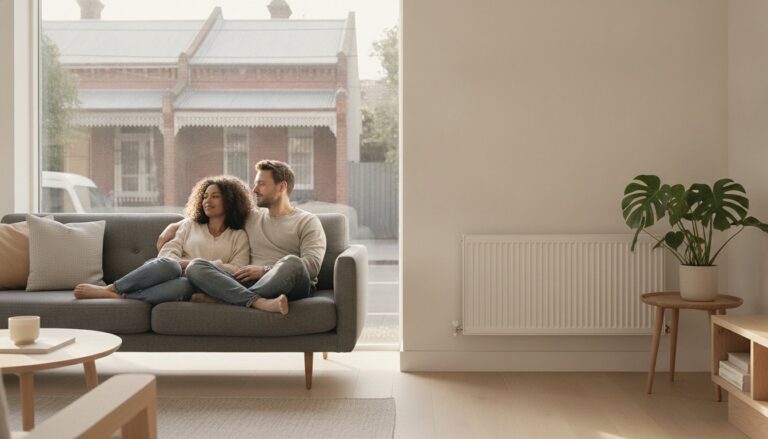
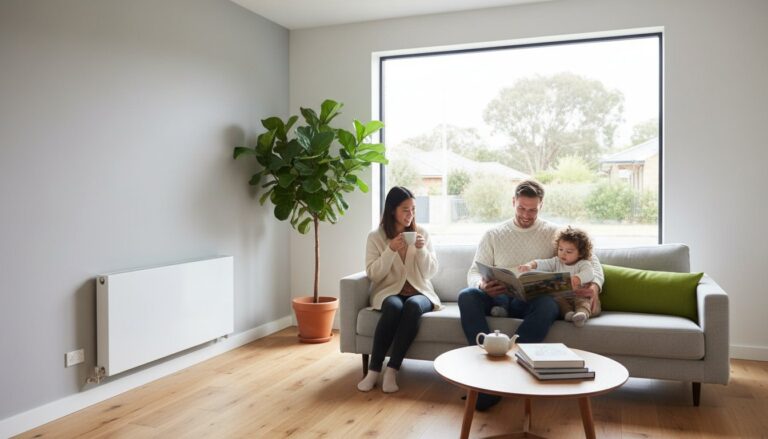
Health is a primary driver for this switch. Traditional ducted systems act like giant fans, blowing dust, pollen, and allergens throughout your living spaces every time the thermostat kicks in. In contrast, a hydronic thermo pump heating system relies on radiant heat. It’s a silent, dust-free process that doesn’t aggravate asthma or hay fever, making it the gold standard for healthy indoor environments in modern Victorian homes.
The Science of Moving Heat
Understanding how heat pumps work is simpler than it sounds. The system uses a refrigeration cycle, essentially operating like your kitchen fridge but in reverse. It absorbs heat from the outside air, compresses a refrigerant to increase its temperature, and transfers that heat into your home’s water circuit. The Coefficient of Performance (COP) is the ratio of energy in versus heat out. While a standard electric heater has a COP of 1.0, modern thermo pumps can produce 3kW to 5kW of heat for every 1kW of electricity used, providing a massive boost in efficiency.
Hydronic Integration: Radiators and Floors
Integrating this technology involves connecting the outdoor unit to your hydronic heating panels or underfloor pipes. You’ll need to choose between high-temperature and low-temperature models based on your home’s layout. Low-temperature units are exceptionally efficient and serve as the perfect partner for underfloor heating, where the water only needs to reach about 35 to 45 degrees Celsius. If you’re retrofitting a home with existing radiators, high-temperature thermo pumps are designed to reach the 60 to 70 degree levels required for those systems without losing their performance edge.
How Thermo Pumps Perform in Melbourne’s Cold Winters
A common myth suggests that thermo pump heating fails when temperatures drop toward zero. This isn’t true for modern European-engineered systems. In Melbourne, where overnight lows occasionally hit 0°C or 2°C, high-quality air-to-water units maintain a Coefficient of Performance (COP) of around 2.5 to 3.0. This means the system still delivers three times more energy than it consumes. Even on the frostiest mornings in the Dandenongs or the Yarra Valley, these units extract enough ambient heat from the air to keep your home perfectly warm.
You might notice your unit occasionally pausing; this is a standard defrost cycle. It prevents ice build-up on the heat exchanger. Professional sizing is vital for Geelong and Melbourne climates to ensure the unit doesn’t overwork during these cycles. Using Melbourne’s crisp, sunny winter days is a smart strategy. You can program your system to pre-heat during peak solar production, effectively storing energy for the evening. This synergy is often supported by Victorian Government hot water rebates, which help offset the initial transition to sustainable technology.
Air-to-Water vs. Ground Source
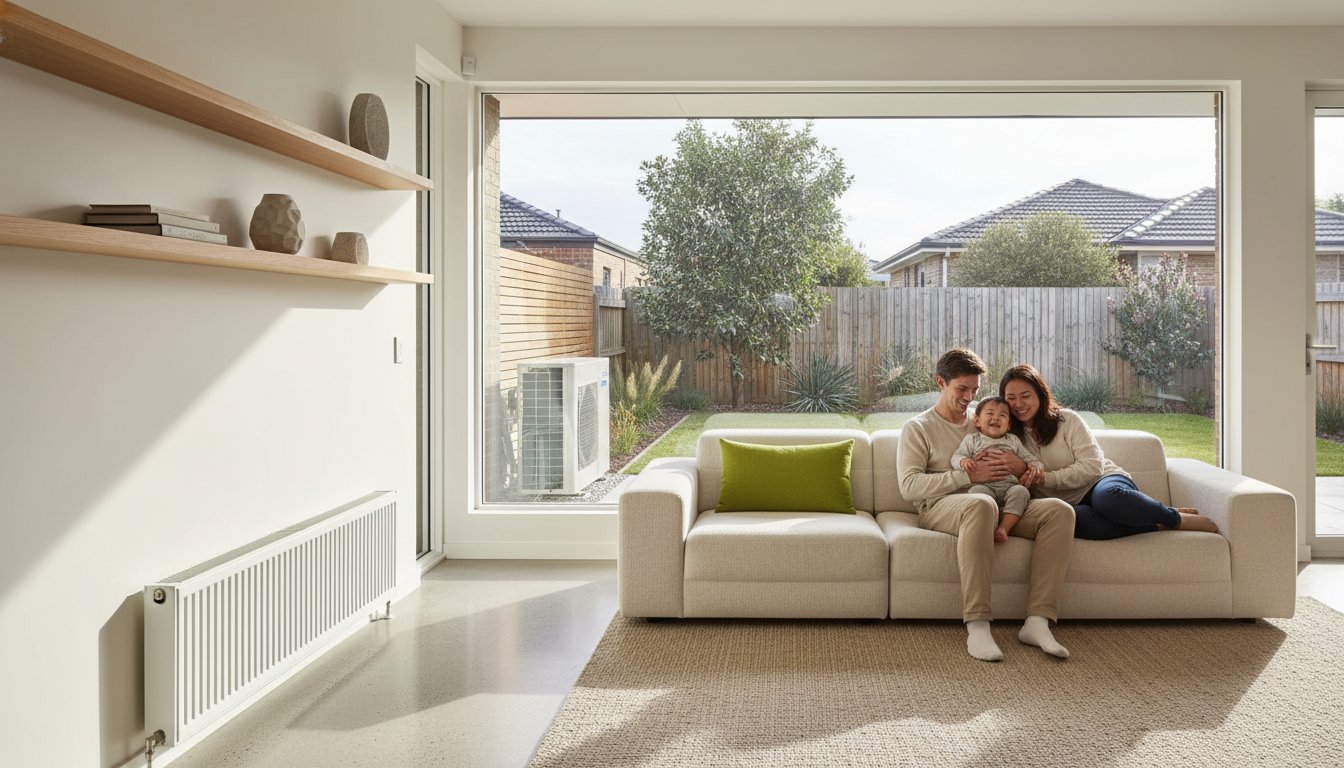
Most Melbourne residential retrofits favor air-to-water systems. Ground source pumps offer incredible stability but require extensive excavation that most suburban blocks can’t accommodate. Modern air-to-water units are compact and designed for tight side-passages. Noise is no longer a barrier. Premium European models now operate at roughly 45 to 50 decibels, which is quieter than a standard conversation. This ensures you maintain your comfort without disturbing the neighbors.
The Role of Thermal Storage
A buffer tank is the heart of a high-performing hydronic system. It prevents the heat pump from “short cycling,” which extends the lifespan of the compressor. When paired with underfloor heating, the concrete slab acts as a massive thermal battery. This thermal mass holds heat for hours, smoothing out the spikes caused by Melbourne’s volatile weather shifts. It provides a steady, dust-free warmth that improves indoor air quality for families with asthma or allergies. If you want to optimize your home’s energy profile, you can consult with our local experts to find the right configuration for your property.
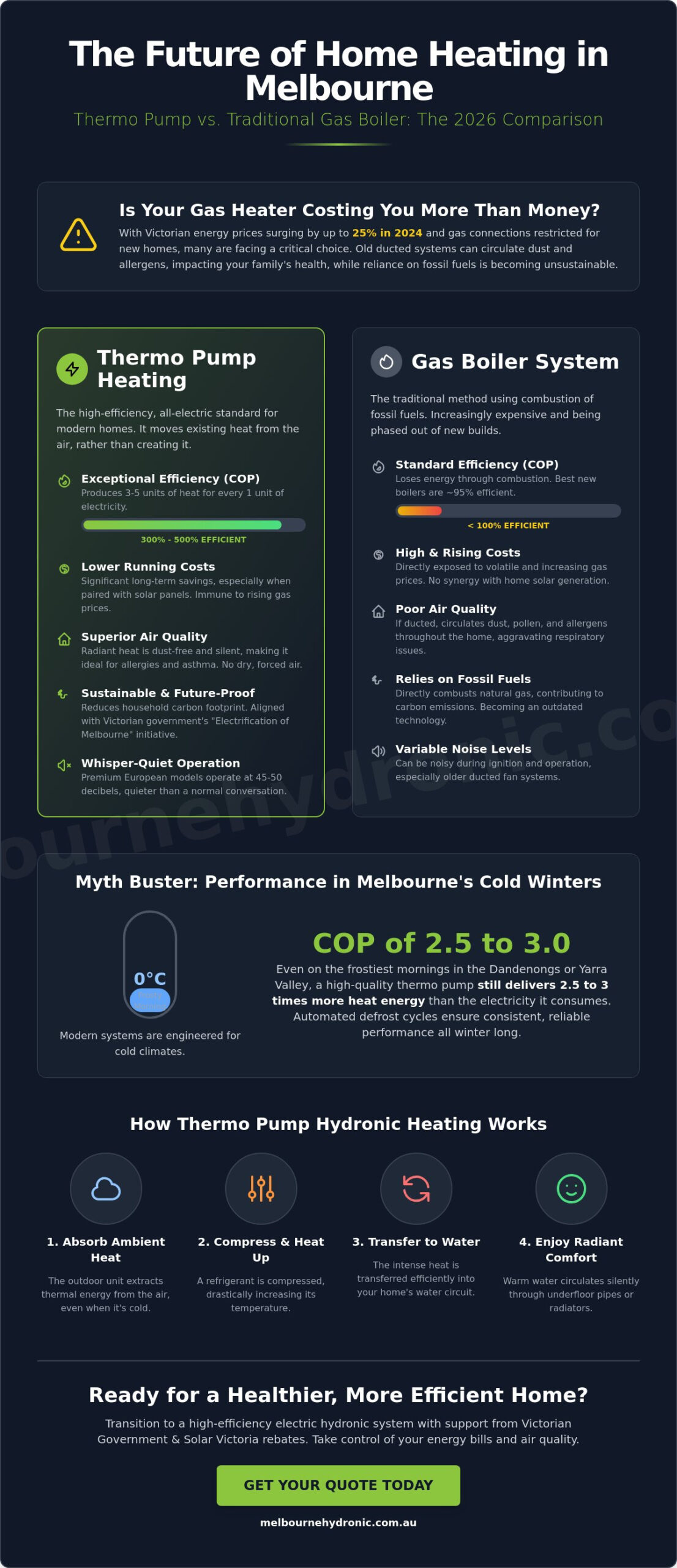
Thermo Pump vs. Gas Boiler: The 2026 Comparison
Choosing between a gas boiler and a modern thermo pump heating system in 2026 is no longer just a matter of preference; it’s a strategic decision for your home’s value. Since the Victorian government began phasing out residential gas connections in 2024, the infrastructure for fossil fuels has become a liability. A high-quality thermo pump can reliably serve a Melbourne home for 15 to 20 years. In contrast, gas boilers often face significant component degradation after 10 or 12 years because of the intense heat and corrosive byproducts of combustion. By making the switch now, you’re investing in a system that aligns with Australia’s 2030 emissions reduction targets while avoiding the inevitable “stranded asset” status of gas appliances.
The transition also addresses what experts call the “Health Tax.” Traditional ducted gas heating or aging boilers can contribute to poor indoor air quality. Thermo pump heating operates through a sealed hydronic circuit, meaning there’s no air being forced through dusty vents. This creates a sanctuary for families dealing with asthma or seasonal hay fever. You aren’t just paying for heat; you’re paying for a dust-free, allergy-friendly environment that keeps your family’s respiratory health a priority during the damp Melbourne winters.
Operational Costs in Victoria
Energy prices in 2026 have shifted the math in favor of electrification. Gas prices in Victoria have climbed steadily, often exceeding A$0.04 per megajoule. Meanwhile, electricity remains more manageable, especially for homes with solar arrays. A thermo pump is roughly 400% efficient, meaning it turns 1kW of electricity into 4kW of heat. To get the same warmth from gas, you’d need to burn significantly more energy. Smart homeowners now use off-peak electricity rates to “pre-heat” their thermal mass, such as concrete floors, which can slash running costs by 30% compared to standard peak-time heating. Before we install any new pump, we perform a comprehensive power flush. This removes the “black sludge” or magnetite from your old pipes, ensuring your new system doesn’t get clogged and maintains its high efficiency from day one.
Maintenance and Servicing
Maintaining a high-performance system is straightforward but essential. A professional hydronic heating service in Melbourne for a thermo pump focuses on different components than a gas technician would. Instead of checking for carbon monoxide leaks and burner cracks, we focus on the outdoor unit’s health. We ensure the refrigerant levels are precise and the outdoor coils are free from debris like leaf litter or dust. These annual checks are mandatory to keep your manufacturer warranty valid and ensure the unit operates at its peak COP (Coefficient of Performance). A system that isn’t cleaned annually can lose up to 15% of its efficiency, leading to higher bills and unnecessary wear on the compressor.
Planning Your Installation: Rebates and Sizing
Transitioning to thermo pump heating requires more than just picking a unit off a shelf; it’s a technical upgrade that rewards precision. In Melbourne, the current shift toward full-home electrification means significant financial support is available for those moving away from gas. However, the installation’s success depends entirely on the preparation phase. You’ll need to balance government incentives with a rigorous technical assessment of your property’s specific thermal needs.
Accessing Victorian Government Rebates
The Victorian Energy Upgrades (VEU) program is the primary vehicle for reducing your capital outlay. This program works through Victorian Energy Efficiency Certificates (VEECs), which are generated when you replace inefficient gas appliances with high-efficiency electric alternatives. To claim these, you must work with an Accredited Provider. Since 2023, the Victorian government has increased the focus on heat pump technology, making it one of the most supported upgrades in the state.
Beyond the VEU, Solar Victoria offers specific rebates for heat pump hot water systems, often providing up to A$1,000 for eligible households. To ensure you don’t miss out, follow these steps:
- Verify your installer is an Accredited Provider under the VEU framework.
- Ensure the specific thermo pump heating model is listed on the VEU Register of Prescribed Products.
- Obtain a Certificate of Electrical Safety and a VBA Compliance Certificate after the job is finished.
- Keep evidence of the decommissioned gas system to prove the energy savings.
Sizing Your System for Melbourne Homes
Don’t guess the capacity of your unit. A professional heat load calculation is non-negotiable for a premium hydronic system. If a system is too small, it won’t maintain a comfortable 20°C during a 5°C Melbourne July morning. Conversely, an oversized unit leads to short-cycling. This occurs when the unit reaches the target temperature too quickly and shuts down, only to restart minutes later. This cycle wears out the compressor prematurely and creates spikes in your electricity usage.
A specialist will analyze your home’s thermal envelope, factoring in ceiling heights, the R-value of your existing insulation, and window orientations. A Carlton terrace with single-glazed windows has vastly different requirements than a modern, north-facing build in Glen Iris. We also look at the role of smart thermostats, which allow for granular control over multi-zone hydronic systems. This ensures you aren’t wasting energy heating guest rooms or storage areas.
A typical installation usually spans 3 to 7 days, depending on whether we are retrofitting premium radiators or laying new underfloor coils. We manage the process with surgical precision to minimize disruption to your daily life.
Ready to upgrade your home’s comfort? Contact Melbourne Hydronic Heating for a professional heat load assessment today.
Why Melbourne Hydronic Heating for Your Thermo Pump Upgrade?
Choosing a heating system is a 20 year commitment for your property. Since 1996, we have spent three decades perfecting the art of bespoke hydronic heating for Victorian families. We don’t just install generic units; we engineer comfort. Our team sources the world’s most efficient thermo pump heating systems from European manufacturers who lead the industry in COP (Coefficient of Performance) ratings. This ensures your home stays at a steady 21 degrees Celsius even when Melbourne temperatures drop to 2 degrees in the middle of July.
Our “Allergy-Friendly” guarantee is a cornerstone of our service. Traditional ducted systems move air, dust, and allergens around your living spaces. In contrast, our radiant heat systems provide a completely dust-free environment. This is a vital health consideration for the 2.7 million Australians currently living with asthma. By focusing on healthy, silent warmth, we transform the air quality of your home while reducing your carbon footprint.
Our Design-First Approach
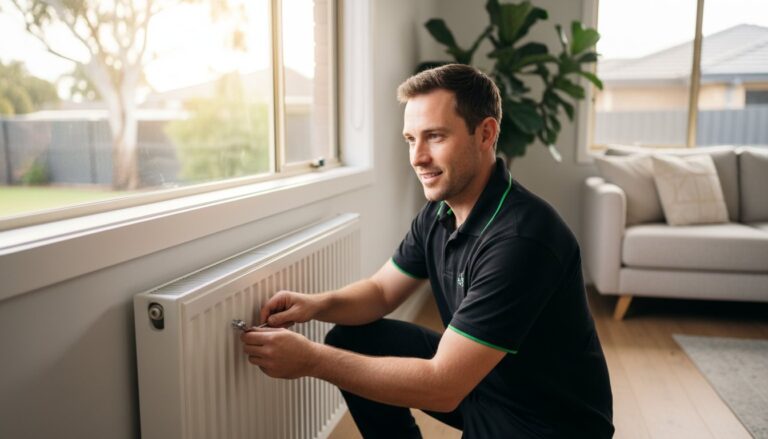
Every Melbourne home has a unique thermal profile. We reject “cookie-cutter” installations because a Victorian terrace in Carlton requires a different strategy than a modern, glass-heavy build in Geelong. Our engineers integrate elegant radiator panels, heated towel rails, and discreet trench heating to suit your specific architecture. During installations in existing homes, we use specialized piping techniques to minimize disruption. We frequently complete complex retrofits with 0% damage to existing flooring or cabinetry, ensuring your home’s aesthetic remains intact.
Local Support and Warranty
We are a family-owned business deeply rooted in the local community. You aren’t calling an overseas call center when you need assistance. Our rapid-response repair service covers all Victorian clients, ensuring that help is never more than a few hours away. We provide comprehensive long-term maintenance to keep your thermo pump heating system running at peak efficiency for decades. This local accountability is why 85% of our new business comes from word-of-mouth referrals within the Melbourne area.
It’s time to future-proof your home with a system that combines luxury with sustainability. Book a consultation with our expert design team today to start your journey toward a warmer, healthier home.
Secure Your Home’s Comfort for 2026 and Beyond
Switching to thermo pump heating isn’t just about staying warm during those biting July mornings in Melbourne; it’s a strategic investment in your family’s health and long-term energy independence. By moving away from traditional gas and embracing advanced electric heat pump technology, you can access significant Victorian Energy Upgrade (VEU) rebates that lower your initial investment while slashing annual running costs. You’ll enjoy a silent, dust-free environment that’s ideal for asthma sufferers, because these premium hydronic systems don’t circulate allergens or dry out the air like old-fashioned ducted units.
Melbourne Hydronic Heating brings over 30 years of local experience to every installation across Melbourne and Geelong. Our specialists understand the technical precision required to size a system perfectly for your specific floor plan and insulation levels. We’re here to help you navigate the transition to a sustainable, allergy-friendly future with confidence and ease. It’s time to experience the luxury of consistent, radiant warmth tailored specifically for the Victorian climate.
Request a Professional Thermo Pump Consultation for Your Melbourne Home
Frequently Asked Questions
Is a thermo pump the same as a reverse cycle air conditioner?
No, they’re different systems even though they use similar technology. A reverse cycle air conditioner blows heated air into your rooms, which can circulate dust and allergens. In contrast, a thermo pump heating system warms water and circulates it through floor pipes or radiator panels. This creates a silent, dust-free environment that’s much healthier for Melbourne families dealing with asthma or hay fever.
How much can I save on my heating bills by switching to a thermo pump in Melbourne?
You can reduce your energy consumption by 300% to 400% compared to traditional electric plug-in heaters. According to data from the Victorian Energy Upgrades program, Melbourne homeowners who switch from gas to a high-efficiency thermo pump heating system save between A$450 and A$1,200 annually. These savings are even higher if you’ve already installed a solar PV system on your roof.
Will I need to replace my existing radiator panels to use a heat pump?
You might not need to replace them, but we’ll need to calculate their heat output at lower temperatures. Thermo pumps usually run at 45 to 55 degrees Celsius, while old gas boilers run at 70 degrees. To get the same warmth, you may need to install larger premium panels or add a few extra radiators to ensure your home stays cozy during a 5-degree Melbourne winter night.
What is the best location for the outdoor thermo pump unit?
The unit needs at least 300mm of clearance from walls and 2 metres of open space in front of the fan to breathe properly. It’s best to place it on a concrete slab at the side of your house away from bedroom windows. Keeping the unit within 15 metres of your indoor plumbing manifold ensures the system operates at peak efficiency without losing heat through the pipes.
Are there council permits required for installing a heat pump in Melbourne?
Most residential installations don’t require a planning permit if the unit sits at ground level and complies with EPA Victoria noise regulations. However, rules change if you’re in a heritage-protected zone in places like Boroondara or Yarra. If you live in a multi-unit development, you’ll likely need body corporate approval before we start the installation process.
How long does a thermo pump hydronic system last?
A well-maintained thermo pump heating system typically has a lifespan of 15 to 20 years. This longevity makes it a much more stable investment than cheap split systems that often fail after a decade. Because the water in the pipes is treated with corrosion inhibitors, the internal infrastructure of your home can last for 30 years or more with minimal professional attention.
Can I use a thermo pump for both floor heating and domestic hot water?
Yes, you can install an integrated system that manages both your underfloor heating and your daily hot water needs. These dual-purpose units are becoming the standard for Melbourne renovations in 2026 because they save space and reduce installation costs. It’s a proactive way to remove gas from your home entirely while maintaining a luxury lifestyle.
Does the Victorian government still offer rebates for heat pumps in 2026?
Yes, the Victorian government continues to provide financial incentives through the Solar Victoria program to meet state carbon-reduction targets. Eligible households can currently access rebates of approximately A$1,000 for upgrading old, inefficient systems to modern thermo pump heating. We recommend checking the current Solar Victoria portal as these figures are adjusted quarterly based on program demand.