
Heat Pump or Gas Boiler? The Best Choice for Melbourne Homes in 2026
What if that reliable blue flame is actually the biggest hurdle to a cost-effective home? With the Victorian Government’s Gas Substitution Roadmap already phasing out new gas connections, many Melbourne homeowners are stuck wondering whether a heatpump or gas boiler is the smarter investment for 2026. You probably feel the pressure of rising daily supply charges, which have jumped by roughly 15% in some Victorian networks since early 2023. It’s natural to worry if a heat pump can truly handle a frosty 5°C morning in Toorak without sending your electricity bill into orbit.
We agree that choosing a heating system shouldn’t feel like a gamble with your comfort or your savings. You want a warm, allergy-friendly environment that doesn’t circulate dust or allergens through your living spaces. This guide provides a definitive, data-backed comparison of these two technologies specifically for the unique Melbourne climate and current energy regulations. We’ll examine installation costs, operational efficiency, and the long-term health benefits of hydronic heating to ensure your home remains a sanctuary of silent, sustainable luxury.
Key Takeaways
- Navigate the 2026 Victorian energy landscape to understand how new gas connection regulations impact your long-term home heating strategy.
- Evaluate the financial reality of a heatpump or gas boiler by comparing running costs in A$ and the potential for near-zero bills through solar PV integration.
- Gain expert insight into how Melbourne’s unique winter humidity affects system efficiency and defrost cycles to ensure your home stays perfectly warm.
- Learn how to assess your existing radiator panels and internal footprint for a seamless transition to modern, high-efficiency hydronic technology.
- Discover why 90% of Melbourne renovations are moving toward electric solutions to achieve a silent, dust-free, and allergen-friendly living environment.
The 2026 Melbourne Heating Dilemma: Heat Pump vs. Gas Boiler
Choosing between a Heatpump or gas boiler for your Melbourne home used to be a simple matter of looking at your existing connections. By 2026, this decision has transformed into a strategic investment in your property’s long-term value and your family’s daily comfort. Gas boilers rely on combustion to heat water rapidly for radiators or floor coils. In contrast, electric heat pumps extract ambient heat from the outside air. You can explore the scientific principles of how heat pumps work to see why they’re often compared to a refrigerator running in reverse. For Bayside and Mornington Peninsula residents, the 2026 deadline marks a shift in how we view home energy, as older gas infrastructure begins to show its age against modern, sustainable alternatives.
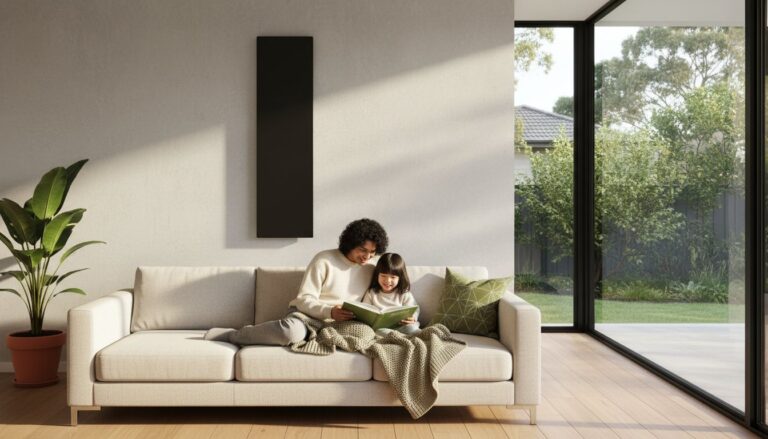
Hydronic heating remains the gold standard for Melbourne’s unique climate. Unlike forced-air systems that circulate dust and allergens, hydronic systems provide a gentle, radiant warmth. It’s a silent, “dust-free” solution that creates a healthier indoor environment, especially for families managing asthma or hay fever. Whether you choose a Heatpump or gas boiler, the delivery method through premium European-style radiators or underfloor piping ensures a consistent temperature that ducted systems simply can’t replicate.
The Gas Landscape in Victoria
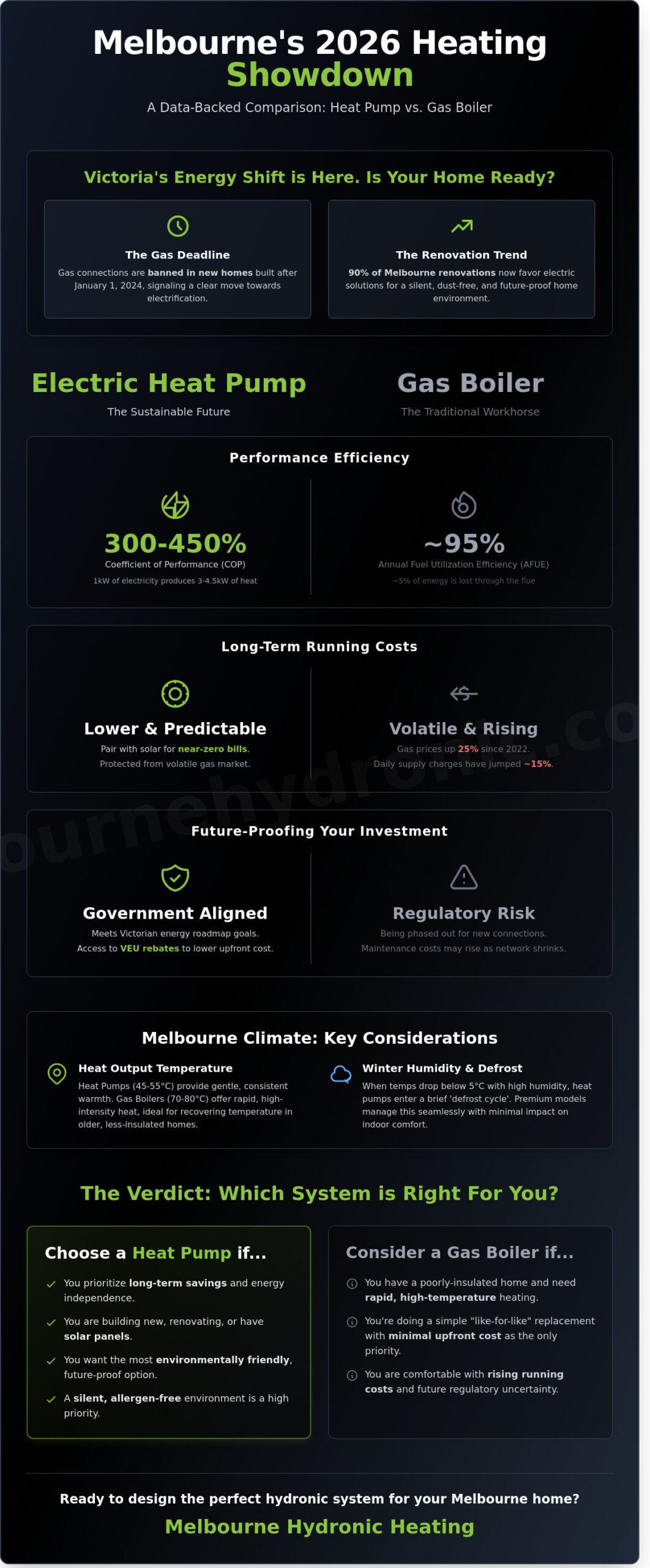
The Victorian Government’s Gas Substitution Roadmap, updated in December 2023, has significantly altered the residential energy market. New homes built after January 1, 2024, are already prohibited from gas connections, making 2026 a critical year for owners of existing properties considering a renovation. Gas pricing in Melbourne has seen a 25% increase since 2022, and as more households switch to electric, the cost of maintaining the aging gas network will fall on fewer consumers. Current Victorian Energy Upgrades (VEU) incentives provide thousands of dollars in rebates for those moving away from fossil fuels, casting doubt on the long-term financial viability of traditional gas boilers.
The Rise of the Electric Heat Pump
Modern electric heat pumps are now the default specification for high-end new builds in Cheltenham and Sorrento. They offer an incredible efficiency rate of 300% to 400%, meaning for every kilowatt of electricity used, you get up to four kilowatts of heat. This efficiency makes them the most environmentally responsible choice for Melbourne’s future. We’ve seen technology overcome the old “noise” and “cold weather” myths. Today’s premium CO2 heat pumps operate efficiently even when Melbourne mornings dip to 2°C and run at sound levels below 48 decibels. They offer a quiet, reliable, and future-proof heart for your home’s hydronic system.
Performance Comparison: Efficiency in the Melbourne Climate
Choosing between a Heatpump or gas boiler requires a clear understanding of how these systems interact with Melbourne’s unique weather patterns. High-efficiency gas boilers are high-temperature champions, typically heating water to 70°C or 80°C. This allows for rapid room recovery, which is vital in uninsulated Victorian-era homes found in suburbs like Carlton or Fitzroy. Modern heat pumps operate differently. They are low-temperature systems, usually capped at 45°C to 55°C for maximum efficiency. While they provide a more consistent, gentle warmth, they require larger radiator panels or underfloor piping to deliver the same thermal output as a gas-fired system.
Efficiency Metrics: COP vs. AFUE
We measure gas boiler performance using the Annual Fuel Utilization Efficiency (AFUE) rating. A top-tier condensing gas boiler achieves about 95% AFUE, meaning 5% of the energy escapes through the flue. Heat pumps use a different scale called the Coefficient of Performance (COP). A COP is the ratio of heat delivered to electricity consumed. While a gas boiler is technically less than 100% efficient, a heat pump often reaches 300% to 450% efficiency because it moves heat rather than creating it. You can explore various energy-efficient heating and cooling systems to see how these benchmarks compare across different Australian climates.
Winter Reliability in Greater Melbourne
Melbourne’s winter humidity often stays above 75% during June and July. When overnight temperatures drop below 5°C, this moisture can freeze on the heat pump’s external coils. The system then enters a “defrost cycle” to melt the ice, which can briefly interrupt the heating flow. To prevent cold spots during these cycles, we install buffer tanks that act as a thermal battery, keeping your home at a steady 21°C. Gas boilers aren’t affected by humidity, but they carry different responsibilities. Energy Safe Victoria recommends a professional safety service every 24 months to check for carbon monoxide leaks, whereas heat pumps are generally safer and require simpler annual maintenance of the fans and coils.
The “Comfort Factor” is where many homeowners notice the biggest shift. Gas systems provide a “hot” heat that you can feel standing near a radiator. Heat pumps offer a “soft” heat that maintains a stable ambient temperature without the aggressive cycling of older units. This dust-free and allergy-friendly approach to climate control is a significant health benefit for families. Because heat pumps have less “spare” capacity than gas boilers, system sizing is critical. An undersized unit will struggle when the Antarctic winds hit Port Phillip Bay. If you’re planning a renovation, it’s wise to consult with a hydronic specialist to perform a room-by-room heat loss calculation before making your final decision.
Running Costs and ROI: The Financial Reality for Victorians
Deciding between a heatpump or gas boiler in 2026 requires a look beyond the initial invoice. For a standard 3-bedroom home in Melbourne, the operational landscape has shifted. While a gas boiler used to be the default for low running costs, the 25% increase in Victorian gas prices since 2022 has changed the math. Today, a high-efficiency heat pump delivers the same warmth for roughly one-third of the energy input. This efficiency isn’t just a technical win; it’s a direct saving on your monthly utility bill.
Energy Pricing in Melbourne
The Victorian energy market is moving away from fossil fuels, making gas an increasingly expensive luxury. If you maintain a gas connection solely for heating, you’re paying between A$300 and A$450 every year just in daily supply charges before you even turn the heater on. Disconnecting from the gas grid entirely removes this fixed cost. Smart homeowners now leverage off-peak electricity rates to pre-heat their homes at 4:00 AM, using the thermal mass of the house to stay warm through the morning peak without the high costs. This strategy makes the choice between a heatpump or gas boiler clear for those focused on long-term stability.
- Daily Supply Charges: Savings of A$1.00 to A$1.60 per day by going all-electric.
- Operational Efficiency: Heat pumps offer 300% to 500% efficiency compared to 90% for premium gas boilers.
- Solar Synergy: Using a 6.6kW solar array can reduce heating costs to near zero during daylight hours.
The financial incentive is backed by official data. Information regarding Victorian Government energy savings highlights that households switching to electric heat pumps can save up to A$1,000 annually. In 2026, Solar Victoria continue to offer rebates of up to A$1,000 for eligible installations, which helps offset the higher initial purchase price of heat pump technology.
Maximising Your Investment
The upfront cost of a heat pump system is higher, but the 10-year total cost of ownership is significantly lower. A quality gas system might cost A$5,000 to install but will rack up A$25,000 in fuel and service costs over a decade. A heat pump system costing A$13,000 upfront only costs about A$8,500 to run over that same period. Integrating hydronic heating panels with a smart heat pump creates a premium, dust-free environment that increases property resale value. In Melbourne’s green-conscious suburbs, homes with sustainable, allergen-friendly heating systems often command a 5% to 7% price premium. Most Victorian families see a full return on their investment through energy savings within 6 to 8 years.
Installation and Retrofitting: Can You Switch?
Deciding between a heatpump or gas boiler for an existing Melbourne home involves more than just swapping one box for another. It’s a strategic upgrade of your entire thermal delivery system. While a traditional gas boiler is compact and often tucked away in a kitchen cupboard, an air-to-water heat pump requires dedicated outdoor space. You’ll need roughly 1.5 to 2 square metres of clear area with excellent airflow to ensure the unit operates at its rated efficiency. If your side passage is narrow, we may need to consider roof mounting or specialized brackets.
Electrical capacity is the most overlooked factor in the retrofitting process. Many established homes in suburbs like Camberwell or Malvern operate on single-phase power. If your heating load requires a heat pump larger than 11kW, a 3-phase power upgrade is frequently necessary. This electrical work can add between A$2,500 and A$5,500 to your project costs, depending on your proximity to the street pit and your local distributor’s requirements. A standard gas boiler replacement typically wraps up in 24 hours, but a full heat pump transition usually spans 3 to 5 days to account for the new wiring and buffer tank integration.
Retrofitting Existing Radiator Systems
Older hydronic systems were designed for high-temperature operation, where gas boilers push water through pipes at 70°C. Heat pumps are most efficient at lower flow temperatures, usually around 45°C to 55°C. This means your existing radiator panels might not have enough surface area to keep you warm during a 3°C Melbourne July morning. We often find that “oversizing” specific radiators by 20% or 30% allows the heat pump to run at lower, more cost-effective temperatures while maintaining a dust-free, healthy environment.
Before connecting a new heat source, a professional power flushing of your entire pipework network is mandatory. This removes the “black sludge” or magnetite that accumulates over decades. Without this, the sensitive heat exchanger in your new heat pump could fail within the first 12 months. In a recent 2024 project involving a 1970s brick veneer home, we successfully converted a failing gas system to a heat pump by replacing just three key radiators and performing a deep chemical flush, resulting in a 40% reduction in winter energy bills.
Design Considerations for New Builds
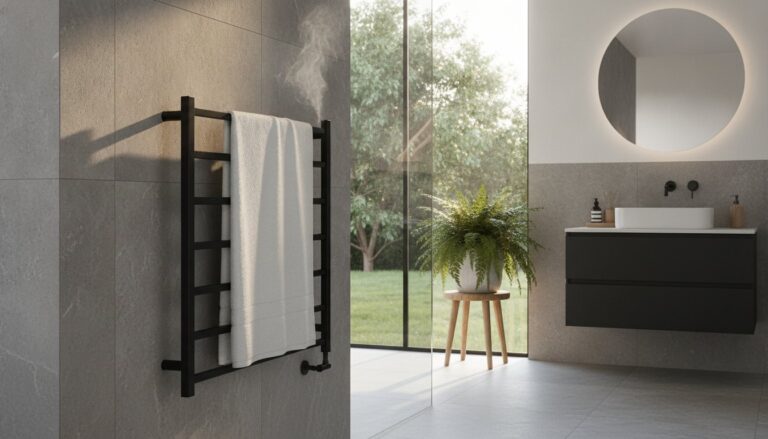
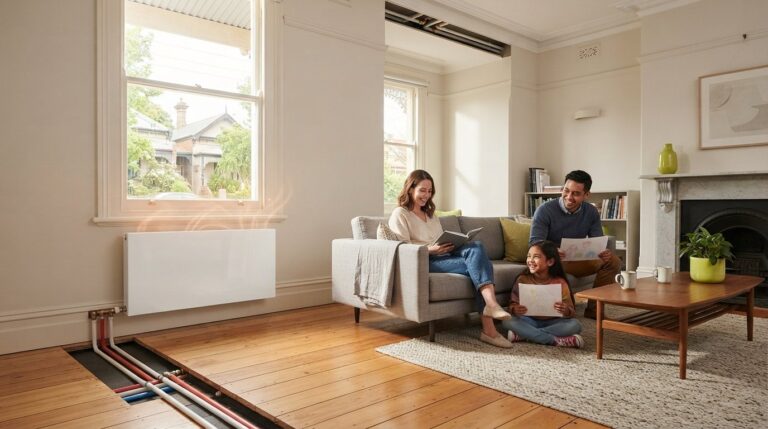
New builds offer the luxury of designing for low-temperature efficiency from the ground up. We specify larger diameter pipework to ensure optimal flow rates, which is critical for heat pump performance. Integrating underfloor heating is the gold standard here; the massive surface area of a concrete slab allows the heat pump to operate at its lowest, most efficient temperature setting. For a modern aesthetic, you can choose between designer vertical radiator panels or hidden trench heating that sits flush with your floorboards, providing a sleek look that doesn’t sacrifice that signature hydronic warmth.
Don’t leave your home comfort to chance. Request a professional site assessment from our Melbourne experts today.
The Verdict: Which System Is Right for Your Melbourne Home?
Deciding between a heatpump or gas boiler in 2026 depends on your property’s specific anatomy and your long-term energy goals. While gas was the Victorian standard for decades, the 1 January 2024 ban on gas connections for new residential builds has fundamentally shifted the market. For 90% of Melbourne homeowners planning a major renovation or system upgrade today, the air-to-water heat pump represents the most logical, future-proof investment. It aligns with the state’s move toward electrification and offers a path to zero-carbon heating when paired with renewable energy.
Choose a Gas Boiler if…
Specific structural constraints might make a high-efficiency condensing gas boiler the only practical choice. If you own a heritage-listed terrace in places like Carlton or Fitzroy where external space is non-existent, finding room for a heat pump’s outdoor fan unit is often impossible. Gas boilers remain effective for homes with poor thermal envelopes where high-temperature flow is required to combat significant heat loss through single-glazed windows. If your home’s electrical switchboard is at capacity and a required A$3,500 upgrade isn’t within your current budget, a premium gas boiler provides a reliable, compact solution.
Choose a Heat Pump if…
An electric heat pump is the superior choice for those looking to eliminate gas connection fees and leverage Melbourne’s high solar uptake. With a Coefficient of Performance (COP) often reaching 4.0, these systems turn 1kW of electricity into 4kW of heat. This efficiency, especially when powered by a 6.6kW solar array, can slash annual running costs by more than 60% compared to fossil fuel alternatives. It’s the ideal path for families who prioritize a dust-free, allergen-friendly environment and want to insulate themselves from the volatile gas prices expected as Victoria transitions toward a net-zero grid by 2045.
Before you finalize your choice between a heatpump or gas boiler, ensure your home meets these three critical criteria:
- Thermal Efficiency: Your roof insulation should be at least R4.0 to ensure the system doesn’t work harder than necessary.
- Solar Capacity: Evaluate if your roof space allows for solar PV to offset the electrical load of a heat pump.
- Emitter Compatibility: Confirm that your existing panel radiators are sized correctly for the lower flow temperatures used by modern heat pumps.
Melbourne Hydronic Heating helps you navigate this transition with expert engineering and local knowledge. We don’t just swap units; we design bespoke systems that guarantee silent, healthy, and luxurious warmth tailored to the Melbourne climate. Our team understands the nuances of local council requirements and the technical demands of European heating technology. Whether you’re retrofitting a mid-century classic or building a sustainable future, we provide the precision needed for a lifetime of comfort. Contact us today to arrange a comprehensive site audit for your home.
Future-Proof Your Home for a Comfortable Melbourne Winter
Deciding on a heatpump or gas boiler for 2026 involves more than just picking a heater; it’s about navigating Victoria’s evolving energy standards. With gas prices trending upward and new residential connections facing tighter restrictions, the shift toward electrification offers a clear path forward. Modern air-to-water heat pumps achieve 400% efficiency, delivering four units of heat for every unit of electricity consumed. While traditional gas systems still serve many existing properties, transitioning to a high-efficiency heat pump can save a typical Victorian household roughly A$800 per year in running costs.
Melbourne Hydronic Heating provides over 30 years of local installation expertise to guide your decision. As a family-owned business, we’re specialists in seamless gas-to-electric retrofits and sophisticated new builds that prioritize your family’s health. Our hydronic solutions offer a dust-free, silent warmth that eliminates the allergens often circulated by ducted systems. We’ll help you find a premium solution that balances upfront investment with decades of reliable performance.
Book a Professional Consultation for Your Melbourne Heating Upgrade
Let’s work together to ensure your home remains a warm, healthy sanctuary through every Melbourne winter.
Frequently Asked Questions
Is gas being banned for heating in Melbourne?
Yes, the Victorian Government banned gas connections for new homes requiring a planning permit starting January 1, 2024. While you can still use gas in existing homes, the 2023 Gas Substitution Roadmap outlines a clear path toward full electrification. Choosing between a heatpump or gas boiler now involves considering that gas prices in Victoria increased by 25% in 2023 alone.
Will a heat pump be loud enough to bother my neighbours in Bayside?
Modern hydronic heat pumps operate at noise levels between 45 and 55 decibels, which is quieter than a standard dishwasher. We install premium European units specifically designed for quiet operation in high-density areas like Bayside. Proper placement and anti-vibration mounts ensure your system stays well below the EPA Victoria noise limit of 5 decibels above background levels at night.
Can I use my existing radiators with a new electric heat pump?
You can use your existing radiators, but they must be sized correctly for the lower water temperatures a heat pump produces. Gas boilers typically run at 70 degrees Celsius, while heat pumps are most efficient at 45 to 55 degrees. We perform a detailed heat loss calculation for every room to see if your current panels provide enough surface area for a comfortable, dust-free environment.
How much more does a heat pump cost to install than a gas boiler in 2026?
A premium heat pump installation in 2026 typically costs between A$14,000 and A$19,000, while a high-efficiency gas boiler costs between A$6,000 and A$9,000. This initial A$8,000 price gap is often recovered within 6 to 8 years through lower energy bills and reduced maintenance. Deciding on a heatpump or gas boiler depends on whether you prioritise lower upfront costs or long-term energy independence.
Do heat pumps work effectively when it drops below zero in Melbourne?
Modern air-to-water heat pumps work effectively in temperatures as low as -20 degrees Celsius, which is far colder than Melbourne’s record low of -2.8 degrees. These systems use advanced defrost cycles to ensure they don’t lose efficiency during a frost. You’ll enjoy the same reliable, allergen-friendly warmth on a freezing July morning as you would with any traditional system.
Are there Victorian government rebates available for switching to a heat pump?
Yes, Victorian households can access significant incentives through the Solar Victoria program and the Victorian Energy Upgrades (VEU) scheme. As of 2024, eligible residents can receive a rebate of up to A$1,000 for replacing an inefficient gas heater with a heat pump. These programs are designed to lower the barrier for families moving toward a more sustainable, all-electric lifestyle.
What is the average lifespan of a modern hydronic heat pump vs a gas boiler?
A high-quality hydronic heat pump typically lasts between 15 and 20 years when serviced by a professional every two years. In contrast, a modern condensing gas boiler has an expected service life of 10 to 15 years. The electric system’s longevity makes it a more durable investment for homeowners looking for a permanent heating solution for the Melbourne winter.
Do I need to upgrade my home’s electrical switchboard for a heat pump?
Most Melbourne homes built more than 20 years ago require a switchboard upgrade to handle the 20 to 32 amp dedicated circuit a heat pump requires. This electrical work usually costs between A$800 and A$1,600 depending on the complexity of your existing wiring. We include a full electrical assessment in our quotes to ensure your home’s infrastructure is safe and ready for the upgrade.