

Gas Boiler vs. Heat Pump Running Costs in Melbourne: 2026 Comparison Guide
What if the system with the highest upfront price tag actually becomes your home’s most profitable asset by the end of the decade? With Victorian gas tariffs reaching 2.95 cents per megajoule in 2026, many families are questioning if their traditional heating is still sustainable. We understand the frustration of watching utility bills climb while trying to decipher complex new electrification mandates. Comparing gas boiler vs heat pump running costs melbourne isn’t just about the fuel anymore. It’s about future-proofing your comfort against a changing regulatory landscape and ensuring your home remains a sanctuary during those biting Victorian winters.
You deserve a clear, dollar-for-dollar breakdown that cuts through the noise of shifting energy prices. In this guide, we’ll reveal exactly how much you can save by switching to a high-efficiency heat pump or upgrading to a modern condensing gas boiler in today’s market. You’ll discover how to stack Victorian Energy Upgrades (VEU) and Solar Victoria rebates to slash initial costs by thousands. We’ll also examine how Melbourne’s unique climate impacts system efficiency, giving you the confidence to make a lasting investment in your family’s long-term wellbeing and financial security.
Key Takeaways
- Understand how Victoria’s 2027 gas hot water bans and rising tariffs are reshaping the financial landscape for home heating and future-proofing your property.
- Get a direct comparison of gas boiler vs heat pump running costs melbourne to see how modern efficiency standards can reduce your annual utility spend.
- Learn how to maximize your investment by stacking Solar Victoria and VEU rebates to significantly offset the initial cost of an electric transition.
- Discover the “Solar Soak” strategy that allows heat pump owners to leverage daytime energy production for significantly lower operational expenses.
- Explore why professional maintenance and power flushing are essential for protecting your system’s lifespan and maintaining peak thermal performance over 30 years.
The 2026 Energy Landscape: Why Melbourne is Moving Away from Gas
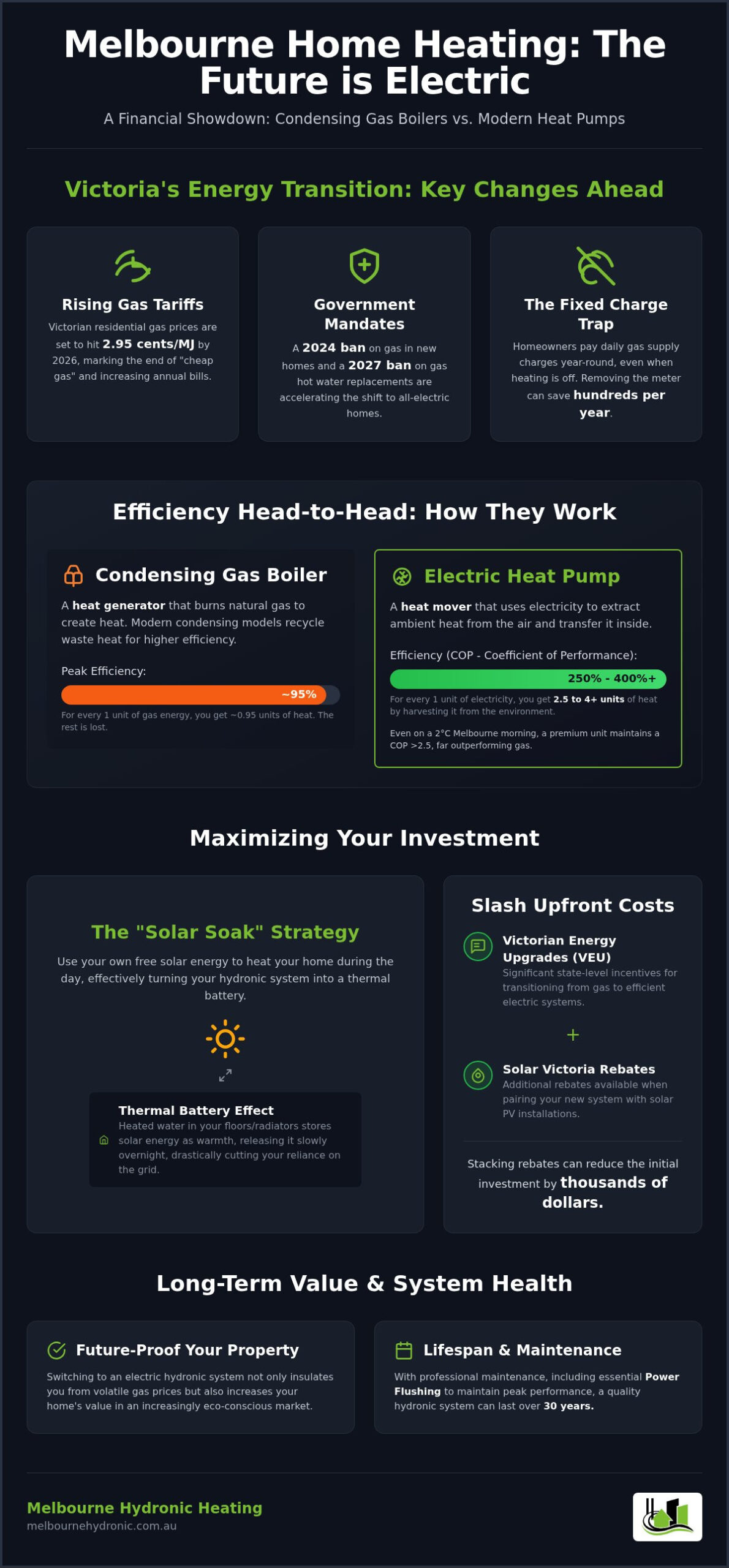
The 2024 ban on gas connections for new Victorian homes marked a permanent shift in how we think about home comfort. By 2026, this policy has evolved into a broader movement toward full electrification. For existing homeowners, the decision to stick with gas isn’t just about tradition anymore; it’s a financial calculation. As gas tariffs continue to climb, the gap in gas boiler vs heat pump running costs melbourne has widened significantly. Choosing between a high-efficiency condensing boiler replacement or a modern electric heat pump is now a strategic move to preserve property value. With the 2027 mandate approaching, which will ban gas hot water replacements in existing homes, many Geelong and Melbourne residents are choosing to future-proof their heating systems now. Hydronic heating remains the gold standard for comfort, offering silent, dust-free warmth that other systems cannot replicate.
Victorian Gas Price Hikes and Your Heating Bill
Residential gas prices in Melbourne have seen a steady upward trajectory. As of June 2026, the average usage rate has hit 2.95 cents per megajoule. This contributed to a 5.0% increase in the typical annual gas bill compared to 2025. The era of “cheap gas” in Victoria has officially ended. Many households are now caught in the “fixed charge trap,” where they pay daily supply charges even during the warmer months when heating is off. By removing the gas meter entirely and transitioning to a hydronic heat pump, homeowners can eliminate these standing charges, which often total hundreds of dollars per year. For those who aren’t ready to disconnect, upgrading to a premium condensing boiler can still offer significant efficiency gains over older, non-condensing units.
The Shift Toward All-Electric Melbourne Homes
The Victorian Energy Upgrades (VEU) program has become a cornerstone for families looking to exit the gas network. These incentives, combined with Federal Small-scale Technology Certificates, make the transition to electric hydronic systems more accessible than ever. Understanding How Heat Pumps Work is essential here; these systems move heat rather than creating it, allowing them to achieve efficiencies that gas boilers simply cannot match. When paired with solar PV, the financial argument becomes even stronger. You can effectively “soak” up excess solar generation during the day to heat your home’s thermal mass for free. A well-designed heat pump system essentially acts as a thermal battery, storing solar energy in your floors or radiator panels to keep the house warm long after the sun sets. This “Solar Bonus” effectively decouples your winter comfort from the rising prices of the energy market.
Efficiency Breakdown: How Boilers and Heat Pumps Actually Work
The core difference between these two technologies lies in their relationship with energy. A gas boiler is a “heat generator,” meaning it burns fuel to create thermal energy from scratch. In contrast, an electric heat pump is a “heat mover.” It uses a refrigeration cycle to extract ambient heat from the outside air and transfer it into your home’s hydronic reticulation system. When comparing gas boiler vs heat pump running costs melbourne, this distinction is vital. One system is limited by the energy contained within the fuel, while the other multiplies the energy it consumes by harvesting “free” heat from the environment.
What is COP and Why Does it Matter in Geelong and Melbourne?
The efficiency of a heat pump is measured by its Coefficient of Performance (COP). If a unit has a COP of 4.0, it produces 4kW of heat for every 1kW of electricity it consumes. While some skeptics worry about Melbourne’s frosty winter mornings, modern heat pumps are engineered for these conditions. Even on a 2-degree morning in Geelong, a premium heat pump can maintain a COP well above 2.5, making it significantly more efficient than any gas alternative. The humid, cool climate in Victoria actually provides plenty of latent heat for these systems to work with, provided the system is designed correctly for the local environment.
Condensing Gas Boilers: The Peak of Gas Technology
For homes staying on the gas network, condensing technology represents the pinnacle of efficiency. Unlike old cast iron boilers that vented hot exhaust gases straight up the flue, condensing units use a secondary heat exchanger to recycle that waste heat. This allows them to reach thermal efficiencies of 90% to 95%. However, physics dictates a hard limit here; a gas boiler can never exceed 100% efficiency because it cannot create more energy than the gas itself contains. While the Victorian Government hot water rebates primarily target domestic hot water, the shift toward higher efficiency standards is reflected across all hydronic boiler replacements in the state.
System design plays a massive role in these efficiency figures. Both technologies perform best when running at lower water temperatures. If your radiator panels are undersized, your boiler or heat pump has to work harder, which can quickly erode your expected savings. Achieving the perfect balance between comfort and economy requires a tailored approach. If you are unsure which technology fits your home’s existing pipework, our team can provide a professional system assessment to ensure your investment delivers the performance you expect for the next 30 years.
Comparing Running Costs: Gas Boiler vs. Heat Pump in Melbourne
Calculating the exact expenses for a typical 150sqm home requires looking at both raw energy prices and system behavior. For decades, Melbourne families relied on gas as the most affordable way to stay warm. However, the 2026 energy climate has flipped this script. When analyzing gas boiler vs heat pump running costs melbourne, we see that electricity is no longer just a lighting and appliance fuel; it is now a highly efficient heating medium. A well-designed electric system can save a homeowner over $2,500 per year compared to an aging gas setup, depending on usage patterns and home insulation levels. The regulated price for electricity in Victoria has actually decreased for the 2026-27 period, providing a welcome contrast to the rising cost of gas.
Scenario A: The Gas-Dependent Hydronic System
A home relying solely on gas for its radiator panels faces a two-pronged cost challenge. First, usage rates have climbed to 2.95 cents per megajoule. For a standard winter season, this contributes to an average annual gas bill of approximately $1,480. Second, the daily supply charge remains a constant burden. Even during a mild October, you’re paying for the privilege of being connected to the network. Maintaining a gas boiler also requires meticulous care. Annual servicing is essential to ensure the combustion process remains clean and the heat exchanger operates at peak efficiency. Neglecting this can lead to a 10% to 15% drop in performance, further inflating your monthly utility spend. While gas remains a powerful heating source, it lacks the flexibility to integrate with renewable energy sources.
Scenario B: The All-Electric Heat Pump Advantage
The financial profile of a heat pump is defined by its ability to leverage “Solar Soak” timing. By scheduling your system to run during peak solar production hours, you’re essentially heating your home for free. This strategy is most effective when paired with underfloor heating. The concrete slab serves as a thermal battery, storing heat generated during the day and radiating it slowly throughout the evening. This reduces the need to draw expensive peak-hour electricity from the grid. Even without solar, the recent 5% decrease in the Victorian Default Offer for electricity makes heat pumps more competitive than ever. When you divide your home into zones, heating only the spaces you currently occupy, the running costs of an electric system drop even further. This precision control ensures that every kilowatt spent translates directly into tangible comfort without wasting energy on unoccupied rooms.
Beyond the Bill: Maintenance, Lifespan, and ROI
When evaluating a heating investment, the sticker price is just the beginning. A premium condensing boiler usually provides 12 to 15 years of reliable service, whereas a high end heat pump can often exceed 15 years if maintained correctly. Our 30 years of local experience in Melbourne and Geelong shows that the longevity of either system depends heavily on the quality of the initial design. While a gas boiler requires biennial safety checks to meet Energy Safe Victoria standards, a heat pump focuses on refrigerant levels and coil cleanliness. Both systems are durable, but they require different care strategies to protect your long term comfort and financial return.
The Hidden Cost of Sludge and System Neglect
Efficiency isn’t just about the fuel source. Over time, black iron oxide, commonly known as magnetite, builds up in your pipework. This creates a thick sludge that forces your pump to work harder and creates cold spots in your radiator panels. This neglect can increase your bills by 15% and lead to premature component failure. Investing in a professional hydronic heating service in Melbourne, including a thorough power flush, restores the system to its original thermal performance. This is particularly critical for heat pumps, which operate at lower flow temperatures and require clear pathways to maintain their optimal efficiency.
Victorian Rebates and Financial Incentives
The Victorian government is aggressively supporting the transition away from gas. As of August 2026, homeowners can stack multiple incentives to reduce the upfront gap. This includes the VEU program, which can provide discounts up to $5,530 for those replacing ducted gas heating, alongside Federal Small-scale Technology Certificates (STCs). You should recognize that the Solar Victoria hot water rebate now has a lower household income cap of $150,000 per year, down from the previous $210,000. While a heat pump requires a larger initial outlay, these rebates combined with the significantly lower gas boiler vs heat pump running costs melbourne often lead to a full return on investment within five to seven years for high usage households.
System design is the final piece of the ROI puzzle. If your existing radiator panels are too small, a heat pump will have to run at higher, less efficient temperatures to keep you warm. We ensure your system is perfectly balanced for Melbourne’s specific climate challenges, whether you are sticking with gas or moving to electric. If you’re ready to see a detailed projection for your property, you can book a comprehensive technical consultation with our expert team today to ensure your investment stands the test of time.
Conclusion: Which System is Right for Your Melbourne Home?
Deciding between these two technologies requires balancing your immediate infrastructure with your long term financial goals. While the raw data on gas boiler vs heat pump running costs melbourne clearly favors electric systems for daily operation, the “best” choice isn’t always universal. A well designed system must account for your home’s thermal envelope and your existing energy capacity. As we’ve explored, the transition to all electric is accelerating across Victoria, but the high efficiency condensing gas boiler remains a vital tool for specific Melbourne households where a full transition isn’t yet feasible.
Best for Renovations: The Modern Gas Boiler
In many of Melbourne’s heritage suburbs, upgrading to a premium condensing boiler is often the most pragmatic path. If your home has limited electrical capacity or if a full switch requires expensive switchboard upgrades, a modern gas unit offers a massive leap in efficiency over older cast iron models. To maximize ROI in an older hydronic heating setup, we focus on precisely matching the boiler output to the specific heat load of your existing radiator panels. This prevents short cycling and ensures your system operates at its peak condensing potential even during the coldest July nights, keeping your usage as low as possible despite rising tariffs.
Best for the Future: Heat Pump Hydronic Heating
For new builds and comprehensive renovations, heat pump technology is the gold standard for 2026 and beyond. It offers the most robust protection against future gas tariff hikes and aligns perfectly with the upcoming 2027 Victorian regulatory shifts. Before making the switch, it’s wise to review your home’s insulation and glazing; a “tight” home allows a heat pump to run at its lowest, most efficient power levels. This synergy between building fabric and mechanical heating is what delivers those premium comfort levels and healthy living environments our clients expect.
Choosing the right partner is just as important as choosing the fuel source. To ensure your investment delivers on its promise, use this final checklist:
- Does the specialist have 30+ years of local Melbourne experience?
- Is the design tailored to your home’s specific heat loss calculations?
- Can they provide an unbiased comparison of both gas and electric options?
- Do they offer comprehensive maintenance and power flushing services?
The right expert doesn’t just install a unit; they design a comfort solution that enhances your lifestyle and property value for decades. If you’re ready to move beyond the confusion of electrification mandates, our team is here to help you navigate these choices with technical precision. Requesting a custom design and quote from Melbourne Hydronic Heating is the first step toward a warmer, more efficient, and future-proofed home.
Future-Proof Your Home Comfort Today
Choosing between these systems is a significant decision that impacts your family’s well-being and your property’s value for decades. You now have the data to navigate the gas boiler vs heat pump running costs melbourne landscape; from leveraging Solar Victoria rebates to understanding the “Solar Soak” advantage. Whether you opt for the immediate efficiency of a condensing boiler or the long-term savings of an electric heat pump, the secret to peak performance lies in a system designed specifically for your home’s unique thermal profile. Professional design ensures that your investment delivers the exact level of luxury you expect without wasting a single kilowatt of energy.
As a Victorian family-owned business with 30+ years of local expertise, we specialize in both gas and electric solutions. We don’t just install equipment; we engineer comfort that stands the test of time. Don’t let rising gas tariffs or complex regulations leave you in the cold. Take the next step toward a cleaner, more economical home and Request a Professional Hydronic Heating Consultation with our expert team. We look forward to helping you achieve the perfect balance of premium comfort and environmental responsibility in your Melbourne or Geelong home.
Frequently Asked Questions
Is a heat pump really cheaper than gas for heating in Melbourne?
Yes, a well-designed hydronic heat pump is now typically cheaper to run than a gas boiler in Victoria’s current energy climate. With the Victorian Default Offer for electricity decreasing by 5% in July 2026 and gas tariffs rising to 2.95 cents per megajoule, the gap in gas boiler vs heat pump running costs melbourne has widened. Homeowners can save over $2,500 annually by switching, especially when utilizing solar generation to offset daytime heating loads.
Can I use my existing radiators with a new electric heat pump?
Yes, you can often use existing radiator panels, but a technical assessment is required first. Traditional gas boilers operate at high water temperatures around 70 degrees, while heat pumps are most efficient at 45 to 55 degrees. If your current radiators are undersized for these lower temperatures, you may need to add more panels or upgrade to larger ones to maintain comfort levels without forcing the heat pump to work harder and lose efficiency.
How much does a heat pump’s efficiency drop during a Melbourne frost?
While efficiency does decrease as the mercury falls, modern heat pumps still outperform gas even during a Melbourne frost. On a 2-degree morning, a premium unit’s Coefficient of Performance (COP) might drop from 4.0 to approximately 2.5. This means it still produces 2.5kW of heat for every 1kW of electricity consumed. Since gas boilers can never exceed 100% efficiency, the heat pump remains the more economical choice even in peak winter.
Are there still government rebates for gas boilers in Victoria?
No, the Victorian government has phased out rebates for gas boilers as part of its electrification strategy. Instead, financial incentives like the Victorian Energy Upgrades (VEU) program and Solar Victoria rebates are strictly focused on electric alternatives. These schemes can provide discounts up to $5,530 for replacing old gas systems with heat pumps. Current policies aim to have all new residential buildings all-electric by January 2027, making gas investments less attractive.
Do I need to upgrade my electrical switchboard for a hydronic heat pump?
Most older Melbourne homes require at least a minor switchboard assessment or upgrade when installing a hydronic heat pump. These systems require a dedicated circuit and can draw significant current, especially during initial startup or in extreme cold. If your home still uses old ceramic fuses or has limited amperage available, a modern switchboard with safety switches is necessary. This ensures your new heating system operates safely and meets current Victorian electrical standards.
What is the average lifespan of a hydronic heat pump vs a gas boiler?
A premium hydronic heat pump typically lasts 15 to 20 years, while a modern condensing gas boiler has an expected lifespan of 12 to 15 years. Longevity depends heavily on regular maintenance and water quality within the system. Using power flushing to remove magnetite sludge is essential for both technologies. Because heat pumps have fewer combustion related components, they often face less internal wear than boilers, provided the refrigerant system is checked periodically.
Can a heat pump provide both hydronic heating and domestic hot water?
Yes, a single heat pump unit can manage both your home’s hydronic heating and your domestic hot water needs. This is achieved through a specialized tank or a “combi” system that prioritizes water for showers and taps before circulating heat to your radiator panels or underfloor pipes. Consolidating your energy needs into one electric system allows you to disconnect from the gas network entirely, eliminating daily supply charges and maximizing your solar investment.
Is hydronic heating more efficient than split system air conditioning?
Hydronic heating is more efficient at maintaining a consistent, healthy temperature through thermal mass, though split systems can heat a room faster. When calculating gas boiler vs heat pump running costs melbourne, hydronic systems excel because they don’t lose heat through ductwork or air exchange. They provide a radiant warmth that stays in the floor and walls, reducing the need for constant cycling. This makes them the superior choice for long term comfort.