Can You Add Cooling to a Hydronic System? A 2026 Melbourne Guide
Running chilled water through your existing wall radiators might seem like the easiest way to beat a Melbourne heatwave, but it’s actually the quickest way to end up with a damp, puddle-filled floor. While your pipes can technically carry cold water, standard radiators aren’t designed to handle the resulting condensation. However, by upgrading hydronic system to heat pump Melbourne homeowners can finally bridge the gap between winter comfort and summer relief without the mess.
We know you love the gentle, silent warmth of your hydronic heating, and it’s frustrating to switch to a noisy, bone-dry split system the moment December hits. You’ve invested in the healthiest way to heat your home, so it’s only natural to want that same premium, allergy-friendly experience when the temperature climbs. You don’t have to settle for dusty air and soaring energy bills any longer.
This 2026 guide explains how to transform your setup into a high-performance cooling system using modern heat pump technology and fan coils. We’ll explore how to leverage the latest Solar Victoria rebates and navigate upcoming gas replacement regulations to create a sustainable, year-round comfort solution that makes the most of your existing infrastructure.
Key Takeaways
- Understand why adding cooling requires a hardware shift from gas boilers to air-to-water electric heat pumps to achieve reverse-cycle functionality.
- Discover why standard radiator panels cannot be used for cooling and how fan coils provide a silent, condensation-free alternative.
- Learn how upgrading hydronic system to heat pump Melbourne helps you transition to an all-electric home while maintaining premium, allergy-friendly comfort.
- Explore the benefits of underfloor cooling for creating a natural, cave-like cool in your home without the dry air of traditional AC.
- Find out what a professional system audit involves and how it ensures your existing infrastructure can handle the demands of chilled water circulation.
Can You Add Cooling to Hydronic Heating? The Short Answer
Yes, you can certainly add cooling to your hydronic system, but it involves more than just a software update. While your existing pipework is a fantastic asset, a traditional gas boiler is a one-way street. It only knows how to create heat. To unlock cooling, you must replace that boiler with an air-to-water electric heat pump. This transition is why upgrading hydronic system to heat pump Melbourne is the most discussed home improvement for 2026. It allows you to move away from gas while gaining a silent, premium cooling solution.
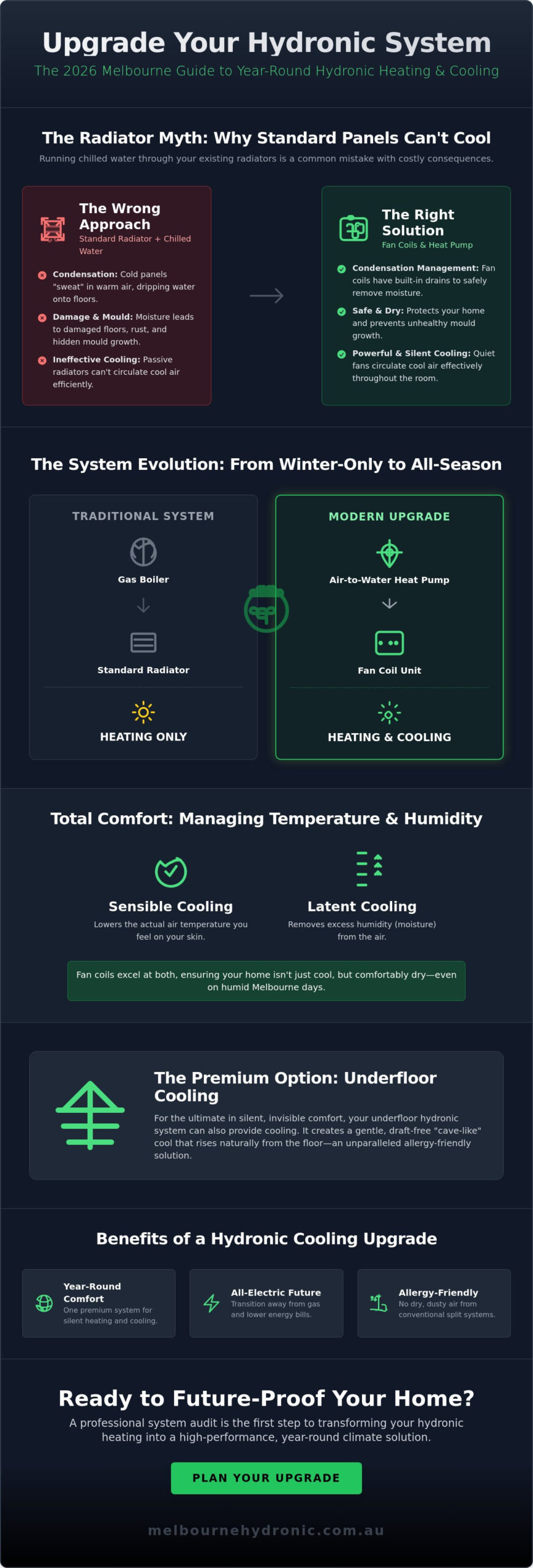
It’s vital to understand that your current radiator panels aren’t built for this job. Radiators are “passive” emitters. They’re perfect for warmth, but if you circulate chilled water through them, they’ll immediately begin to condense. Without a way to catch and drain that water, you’ll face moisture damage in your home. Instead, cooling requires “active” emitters such as fan coil units. These units look similar to modern radiators but include a small, quiet fan and a drainage tray to manage condensation safely and effectively. Retrofitting these into your home is highly effective for Melbourne families looking to exit gas connections this year.
Sensible vs. Latent Cooling: Why It Matters
When we talk about cooling in Victoria, we’re dealing with two distinct factors: sensible and latent heat. Sensible cooling is the actual reduction in air temperature that you feel on your skin. Latent cooling is the removal of humidity. A standard hydronic system provides excellent sensible cooling through Radiant heating and cooling surfaces, especially in underfloor setups. However, on those heavy, humid Melbourne afternoons, you need the latent cooling power of fan coils to strip moisture from the air. Without managing both, your home might feel cool but uncomfortably damp.
The Role of the Reverse-Cycle Heat Pump
The core of this transformation is the heat pump. A modern heat pump hydronic heating system operates on the same principle as your refrigerator. In summer, it reverses its cycle to extract heat from the water circulating in your pipes and rejects that heat into the outside air. This process is remarkably efficient. Instead of “creating” cold air, it’s simply moving heat energy out of your living space.
As Melbourne moves toward an all-electric future in 2026, switching to a heat pump isn’t just about comfort. It’s a strategic move to lower energy bills and comply with new environmental standards. By retrofitting your system now, you’re turning a winter-only luxury into a comprehensive, year-round climate control network that adds significant value to your property.
The Radiator Myth: Why Standard Panels Can’t Cool
A common misconception among homeowners is that a hydronic system is simply a network of pipes that can carry any temperature. While it’s true the pipes are versatile, the steel or cast iron radiator panels on your walls are strictly one-way thermal tools. Radiators are engineered to emit radiant heat, which naturally rises and migrates through a room. When upgrading hydronic system to heat pump Melbourne residents often hope to simply push chilled water through these same panels, but physics presents a major obstacle. Cold metal in a warm, humid room creates immediate condensation.
This “sweating” effect occurs because the panel temperature drops below the dew point of the surrounding air. Without a drainage system, this moisture has nowhere to go. It will drip onto your flooring, soak into carpets, and eventually lead to rust on the panels themselves. Modern Heat Pump Systems are incredibly efficient at reversing their cycle, but they require the right “active” emitters to deliver that cooling safely. Standard radiators simply lack the surface area and forced airflow needed to lower the temperature of a room effectively; they’ll likely leave you with a damp floor and a room that’s still uncomfortably warm.
The Problem with Condensation and Mould
The risks of using the wrong hardware go beyond simple puddles. When moisture builds up behind radiator panels or inside wall cavities, it creates a breeding ground for mould. This can lead to hidden structural damage and significant health risks for those with respiratory sensitivities. In a professional cooling retrofit, every component must be considered. This includes using specifically insulated reticulation pipework to prevent “sweating” inside your walls or ceiling. If you’re unsure about your current setup, it’s wise to consult with a local specialist to audit your existing infrastructure before making the switch.
The Solution: Transitioning to Fan Coil Units
To achieve high-quality cooling, the industry standard is to replace or supplement radiators with fan coil units. So, what are fan coils and how do they function? These units look similar to slimline radiators but contain a heat exchanger and a quiet, multi-speed fan. As chilled water flows through the coil, the fan draws warm room air over it, cooling and dehumidifying the space simultaneously.
Crucially, fan coils are built with integrated drip trays and dedicated drains to manage condensation. They provide the silent, allergen-friendly cooling you expect from a premium hydronic system while protecting your home’s integrity. When upgrading hydronic system to heat pump Melbourne households can enjoy the best of both worlds: radiant winter warmth and crisp, dry summer cooling without the noise or dust of traditional air conditioning.
Hardware Requirements for a Hydronic Cooling Retrofit
Turning a heating-only setup into a year-round climate solution requires a specific hardware ecosystem. The engine of this change is an air-to-water electric heat pump. Unlike a gas boiler, this unit is capable of reverse-cycle operation. When upgrading hydronic system to heat pump Melbourne homeowners need to ensure the selected unit is specifically rated for cooling. This machine extracts heat from your home’s water loop and releases it outside, leaving you with chilled water ready for circulation.
However, the delivery system is just as important as the heat source. A successful retrofit includes several critical components that work in harmony to keep your environment comfortable. These aren’t just optional extras; they’re essential for a system that’s both efficient and safe for your home’s structure. A proper installation includes:
- Insulated Pipework: All reticulation pipes must be wrapped in high-quality lagging to prevent “sweating” inside wall cavities or ceilings.
- Active Emitters: Fan coil units replace or supplement your radiator panels to manage the cooling load and provide dehumidification.
- Condensate Drainage: A dedicated network of drains must be installed to safely carry away the moisture removed from your indoor air during the cooling process.
- Intelligent Controls: Advanced thermostats with integrated humidity sensors are essential to monitor the dew point and prevent condensation before it starts.
Choosing the Right Fan Coil Units
Fan coils are the versatile heroes of a hydronic cooling upgrade. For most Melbourne retrofits, wall-mounted units are the most practical choice. They fit into existing rooms with minimal disruption and provide excellent airflow. If you’re planning a major renovation, concealed ceiling units offer an “invisible” luxury aesthetic, where only a sleek linear grille is visible. We can also upgrade existing trench heaters with small, whisper-quiet fans. These are particularly effective for large floor-to-ceiling glass areas where solar gain is a constant challenge during our intense summer afternoons.
Insulating Your Infrastructure
Your existing copper pipes were likely installed with only heating in mind. While they’re great at carrying hot water, they’ll attract condensation the moment chilled water passes through them. During a Melbourne site audit, we carefully assess your current pipework. We look for sections that require new, thicker lagging to handle the temperature differential safely. We also check your manifold setup. A cooling-ready manifold is designed to manage the specific flow requirements of chilled water, ensuring every room in your home stays crisp and dry without risking structural moisture damage or mould growth.
Hydronic Underfloor Cooling: Is It Right for Melbourne?
Imagine walking into a cool stone cellar or a deep cave on a 40-degree Melbourne afternoon. That’s the sensation of hydronic underfloor cooling. Instead of blowing cold air over you, the system works by circulating chilled water through the pipes embedded in your concrete slab. The slab becomes a giant heat sink, absorbing the radiant heat from your body and the room’s surfaces. When upgrading hydronic system to heat pump Melbourne homes with existing in-slab infrastructure are perfectly positioned to enjoy this natural, draught-free cooling method.
It’s vital to distinguish between the cooling types. Underfloor cooling is a “sensible-only” method. It effectively lowers the air temperature you feel, but it doesn’t remove moisture from the air. This makes it an ideal choice for Melbourne’s modern, high-thermal-mass homes with large north-facing windows. For a complete climate solution, many homeowners choose to combine underfloor cooling with a few strategically placed fan coils. This hybrid approach allows the floor to handle the heavy lifting of temperature reduction while the fan coils manage the humidity on those rare, muggy Victorian days.
Managing the Dew Point in Victoria
Melbourne’s weather is famous for its erratic shifts. A dry morning can quickly turn into a humid afternoon, and this fluctuation is why managing the dew point is critical. The dew point is the temperature at which air can no longer hold its water vapour, causing it to condense into liquid. If your floor temperature drops below this point, your tiles, stone, or polished concrete will begin to “sweat.” To prevent slippery surfaces, we install advanced smart controllers and dew-point sensors. These intelligent systems monitor indoor humidity in real-time and automatically adjust or shut off the water flow before condensation can form. Pairing this with ceiling fans is a professional secret; it improves air movement and makes the “cave-like” cool feel even more refreshing.
The Luxury of Silent Cooling
The standout feature of this technology is the total absence of noise. Traditional air conditioning relies on whirring fans and the constant clatter of expanding plastic vents. By repurposing your winter underfloor heating infrastructure for summer relief, you gain a system that operates in complete silence. This is the ultimate luxury for bedrooms and quiet zones where a peaceful environment is just as important as the temperature. You get to enjoy a consistently cool home without the dry eyes or dusty draughts associated with forced-air systems.
If you’re curious about whether your concrete slab is a candidate for this premium summer relief, contact our engineering team for a system audit.
Planning Your Upgrade with Melbourne Hydronic Heating
Successfully upgrading hydronic system to heat pump Melbourne requires a methodical approach that respects your home’s architecture while embracing future-proof technology. This isn’t a simple swap; it’s an engineering calibration. The process begins with a professional audit of your current infrastructure. We don’t just look at your boiler. We assess your pipework’s diameter, the insulation levels in your roof and walls, and your electrical switchboard’s capacity to handle a modern heat pump. This ensures that once the system is live, it operates at the peak efficiency you expect from a premium installation.
Selecting the right heat pump size is the next critical step. A unit that’s too small will struggle during a February heatwave, while an oversized unit will cycle on and off too frequently, wasting energy and shortening the system’s lifespan. We calculate your home’s specific heat load and cooling needs room by room. This data guides the strategic placement of fan coils. By identifying high-use living areas and bedrooms, we can ensure maximum comfort where it’s needed most while maintaining the silent operation that makes hydronic systems so desirable.
The long-term ROI of this transition is significant. As we navigate the 2026 Victorian Gas Substitution Roadmap, moving to an all-electric, dual-purpose comfort system protects your home from rising gas costs and future regulatory changes. You aren’t just buying a cooler; you’re investing in a sophisticated climate network that leverages your existing assets for year-round luxury.
Retrofitting vs. New Build Solutions
For Melbourne’s iconic period homes, we’ve developed techniques to integrate cooling with minimal disruption. We often use the existing floor or ceiling cavities to run the necessary drainage for fan coils, avoiding the need for major floorboard removal. In new architectural builds across Geelong and the Surf Coast, we can plan for “invisible” solutions from the ground up. This includes concealed ducting and high-performance heat pumps that integrate seamlessly with solar PV arrays to potentially bring your running costs down to near zero.
Maintenance and Longevity
A dual-purpose system works harder than a heating-only setup, making a regular hydronic heating service more important than ever. Chilled water systems require annual checks to ensure condensate drains are clear and heat pump filters are free of debris. We also monitor system pressure and the integrity of pipe lagging to prevent any moisture issues before they start. A well-maintained heat pump system is designed to provide reliable comfort for decades, provided it’s looked after by specialists who understand the local climate challenges.
Ready to transform your home’s comfort? Contact Melbourne Hydronic Heating for a professional cooling consultation and see how your existing system can be evolved for the future.
Future-Proof Your Home’s Comfort with Year-Round Hydronics
Transitioning your home to an all-electric future doesn’t mean sacrificing the premium comfort you’ve come to expect. By upgrading hydronic system to heat pump Melbourne families can finally enjoy a single, silent infrastructure that provides radiant warmth in July and crisp, allergen-free cooling in January. Whether you choose the natural, “cave-like” cool of a concrete slab or the active dehumidification of high-performance fan coils, the result is a healthier living environment that adds lasting value to your property.
At Melbourne Hydronic Heating, we bring over 30 years of specialist experience to every project across Melbourne and Geelong. As a family-owned and operated team, we’re experts in gas-to-electric upgrades and use a design-first methodology to ensure your system is as efficient as it is effective. Don’t let another sweltering summer catch you off guard with a noisy, dry air conditioner. Get a Professional Assessment for Your Hydronic Cooling Upgrade today and take the first step toward a more sustainable, comfortable home.
Frequently Asked Questions
Can I use my existing gas boiler for hydronic cooling?
No, you can’t use a gas boiler for cooling as it’s designed solely for combustion and heating. To achieve cooling, you must transition to an electric air-to-water heat pump. When upgrading hydronic system to heat pump Melbourne homeowners gain the ability to reverse the refrigeration cycle. This allows the system to chill water and circulate it through your home, a function that traditional gas boilers simply cannot perform.
Will hydronic cooling make my floors slippery or wet?
Not when the system is designed and installed correctly with modern safety features. We integrate dew-point sensors and smart controllers that monitor the humidity in your Melbourne home. These sensors automatically adjust the water temperature or shut off the flow before the surface temperature reaches the point where condensation forms. This ensures your polished concrete or tiled floors remain perfectly dry and safe throughout the summer.
How much quieter is hydronic cooling compared to a standard split system?
Hydronic cooling is remarkably quiet because it doesn’t rely on high-velocity fans or noisy indoor compressors. While a standard split system often creates a constant “whoosh” of air and mechanical hum, hydronic fan coils operate at a whisper-quiet level. In underfloor cooling setups, the process is completely silent. This makes it the ideal choice for bedrooms and quiet study areas where undisturbed peace is a priority.
Do I need to replace all my radiator panels to add cooling to my home?
You don’t necessarily need to replace every panel, but standard radiators cannot provide cooling. If you want a specific room cooled, that radiator must be replaced with a fan coil unit. Many homeowners choose a strategic approach, upgrading hydronic system to heat pump Melbourne while replacing radiators only in main living areas and bedrooms. This allows you to maintain traditional heating in some zones while enjoying chilled comfort in others.
Is hydronic cooling effective during a severe Melbourne heatwave?
It’s highly effective when the system is engineered for Victoria’s specific climate conditions. During a severe heatwave, fan coil units provide active dehumidification and sensible cooling to keep indoor temperatures stable. For homes with high thermal mass, underfloor cooling can maintain a consistent base temperature, preventing the house from “heat soaking” during consecutive days of 40-degree weather. It provides a more stable, natural cool than traditional air conditioning.
Can I run my upgraded hydronic cooling system off my solar panels?
Absolutely. Because a heat pump is a fully electric appliance, it’s the perfect partner for your rooftop solar PV system. By running your cooling during the day when your panels are producing peak power, you can significantly reduce or even eliminate your summer cooling costs. This synergy between electrification and renewable energy is a key reason why many Melbourne residents are moving away from gas-dependent systems.
Does hydronic cooling help reduce allergens, asthma, and dust?
Yes, hydronic cooling is one of the most allergy-friendly solutions available today. Unlike split systems or ducted refrigerated air that can circulate dust, pollen, and pet dander through turbulent air movement, hydronic systems are much gentler. Fan coils use low-velocity air, and underfloor cooling uses no fans at all. This lack of air disturbance creates a cleaner, more hygienic environment for families managing asthma or hay fever.
How long does it typically take to retrofit cooling to an existing system?
A typical retrofit usually takes between three to seven days to complete. A straightforward swap from a gas boiler to a heat pump is relatively quick, but installing new fan coils and the necessary condensate drainage lines requires more detailed work. During our initial site audit, we provide a clear timeline based on your home’s specific layout and whether we’re accessing wall cavities or underfloor spaces to integrate the new infrastructure.