Central Heating Installation in Melbourne: The 2026 Homeowner’s Guide
Could your current heating system be the hidden culprit behind your family’s seasonal allergies and those skyrocketing winter utility bills? If you’re considering a new central heating installation, you’re likely tired of the dry air and noisy vents that define Melbourne winters. Most local homeowners accept cold spots in the hallways of their Victorian-style homes as a fact of life, but you shouldn’t have to. You’ve likely felt the irritation of a gas-ducted system that circulates dust and allergens every time the fan kicks in, making it difficult to maintain a healthy indoor environment.
This 2026 guide reveals how a premium hydronic system transforms your living space into a silent, dust-free sanctuary. We’ll show you how to achieve consistent warmth while lowering long-term running costs, which is vital since heating accounts for approximately 40% of the average Victorian household’s energy usage according to state data. We’ll walk through the entire journey, from selecting European-engineered condensing boilers to the expert installation techniques that add significant market value to your Melbourne or Geelong property.
Key Takeaways
- Learn why Melbourne and Geelong homeowners are transitioning from traditional ducted gas to advanced, energy-efficient hydronic solutions for 2026.
- Compare the performance of high-efficiency gas boilers against modern electric heat pumps to find the ideal heat source for your home’s architecture.
- Discover the health benefits of silent, dust-free heating that eliminates allergens while providing superior thermal comfort in every room.
- Understand the critical phases of a professional central heating installation, including technical heat loss assessments and bespoke system engineering.
- Identify the long-term cost savings of premium hydronic systems within the evolving Victorian energy market and the value of hiring local specialist installers.
Understanding Central Heating Installation in Melbourne & Geelong
Melbourne winters are notoriously fickle, characterized by damp cold and sudden temperature drops that can make an uninsulated house feel like a refrigerator. For Victorian homeowners, understanding What is Central Heating? is the first step toward achieving year-round comfort. In the context of modern Australian architecture, central heating provides a unified solution to maintain a steady 20°C to 22°C throughout the entire floor plan. A professional central heating installation has evolved beyond the noisy, dry air of traditional 1990s ducted systems. In 2026, the focus has shifted toward thermal mass and radiant warmth. True comfort means eliminating cold zones in hallways or bathrooms, ensuring every square meter of your home remains habitable regardless of the frost outside.
Choosing the right system involves more than just picking a furnace. It’s about creating a silent, invisible infrastructure that supports your family’s health. Whether you’re retrofitting a heritage home in Geelong or planning a central heating installation for a new build in Melbourne’s inner suburbs, the goal is consistent thermal envelopes without the energy waste associated with older technologies.
The Evolution of Heating in Victoria
The Victorian Government’s Gas Substitution Roadmap, updated in late 2023, has fundamentally changed how we heat our homes. New residential builds are now predominantly all-electric, pushing the industry toward high-efficiency heat pumps and hydronic circuits. While forced-air systems move dust and allergens, radiant water-based heating mimics the sun’s natural warmth. This method uses water to transport heat through a network of pipes to stylish radiators or underfloor coils. It’s a cleaner approach that aligns with the 2030 net-zero targets while providing a more consistent heat profile than air-based alternatives.
Why Hydronic is the Gold Standard for 2026
Hydronic systems represent the pinnacle of home climate control for three specific reasons. First, health is paramount. The National Asthma Council’s Sensitive Choice program highlights radiant heat because it doesn’t circulate dust, pollen, or pet dander. This makes it a vital choice for the 1 in 9 Australians living with asthma. Second, the silence is transformative. There are no whistling vents or rattling fans, just a calm, quiet warmth. Finally, Melbourne real estate data shows that premium heating solutions are a high-yield investment. They typically increase property desirability in suburbs like Toorak or Geelong West, where buyers prioritize high energy ratings and luxury finishes.
How Hydronic Central Heating Systems Work: A Technical Overview
Hydronic heating operates on a sophisticated yet natural principle: the movement of thermal energy through water. Unlike forced-air systems that circulate dust and allergens, a professional central heating installation utilizes a sealed, closed-loop system. Water is heated at a central source and pumped through insulated pipes to heat emitters in each room. This method is 4 times more efficient at carrying heat than air, providing a consistent, silent warmth that doesn’t dry out your skin or respiratory system.
The Core Components of Your Installation
The heart of the system is the heat source. In Melbourne’s 2026 energy landscape, homeowners typically choose between high-efficiency condensing gas boilers or modern electric heat pumps. Selecting the right heat source is a critical step in any central heating installation, as it dictates your long-term running costs. While gas boilers remain a powerhouse for rapid heating, electric heat pumps are increasingly popular for those looking to leverage residential solar arrays. For a detailed breakdown of how these options compare, our hydronic heating system guide comparing Melbourne’s best solutions for 2026 covers the latest technologies side by side.
These units connect to the rest of the home via high-quality multi-layer pipes. These aren’t standard PVC; they’re oxygen-barrier pipes engineered to prevent corrosion and leaks over a 25-year lifespan. In larger, multi-story homes, we use manifolds to act as a traffic control system. These manifolds direct hot water to specific zones based on your thermostat settings, ensuring the master bedroom and the living area receive the exact amount of energy required.
Radiators vs. Underfloor Heating
The way you receive heat depends on your distribution choice. Radiator panels are the most common choice for Melbourne retrofits. They offer fast response times, often reaching peak temperature within 15 to 20 minutes. Modern European designs have moved away from the bulky units of the past, offering slimline profiles that complement contemporary interiors. For a broader perspective on how these compare to other technologies, the Homeowner’s Guide to Heating details the efficiency differences between various distribution methods.
Underfloor heating in Melbourne is the gold standard for new builds or slab-on-ground extensions. It turns your entire floor into a low-temperature radiator, providing “invisible luxury” that is particularly effective in bathrooms and large open-plan living areas. To manage these different distribution methods, smart thermostats allow you to set independent schedules for each room. This precision can reduce energy waste by 30% because you aren’t heating empty guest rooms or hallways. If you’re unsure which distribution method fits your specific layout, a specialist consultation can help map out the most efficient zones for your home.
Hydronic vs. Ducted Gas Heating: The Critical Comparison
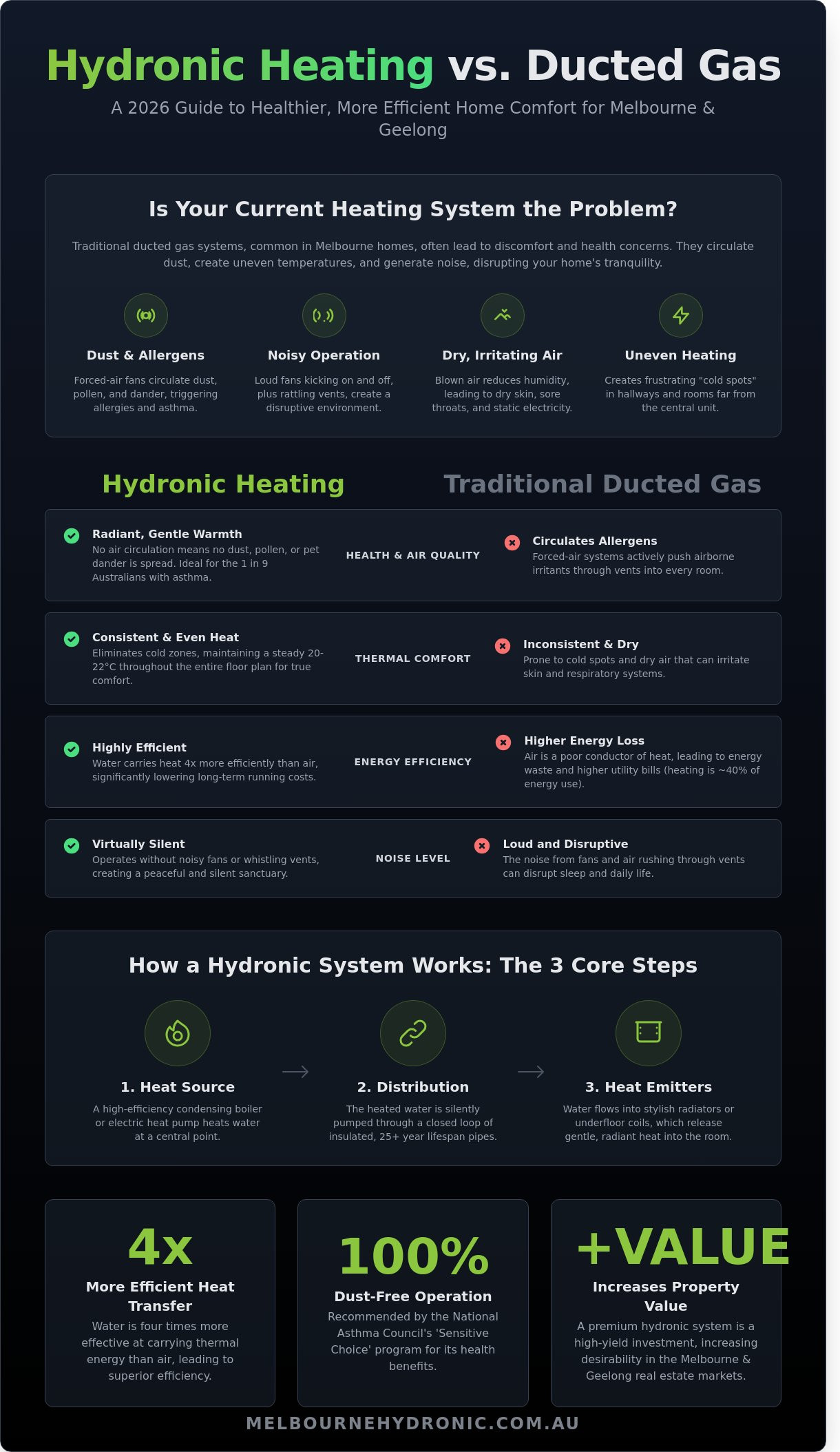
Choosing a central heating installation for your Melbourne home usually comes down to two distinct technologies: air-based ducted systems or water-based hydronic systems. While ducted gas heating was the Victorian standard for decades, the 2026 market shows a decisive shift toward hydronic solutions. This change is driven by a mix of legislative updates, rising gas prices, and a growing demand for healthier living environments.
Installation complexity varies significantly between the two. In new builds, both systems integrate seamlessly during the framing stage. However, retrofitting hydronic pipes into an existing double-brick or weatherboard home is often more surgical and less intrusive than installing bulky ductwork. Modern hydronic piping is flexible and can be threaded through wall cavities with minimal disruption to your home’s structural integrity.
Maintenance and longevity also separate these systems. Ducted units rely on high-speed fans and plastic components that typically require replacement every 10 to 12 years. Hydronic systems are engineered for the long term; a quality boiler or heat pump often serves a household for 25 to 30 years without major failure. When evaluating the Environmental Impact of Heating, the durability of your system is just as important as its daily energy consumption.
Health Benefits: The “Silent” Advantage
Ducted systems can be a nightmare for the 1 in 9 Australians living with asthma. These units act like industrial leaf blowers, circulating dust, pet dander, and pollen through every room. Hydronic heating is a “silent” alternative because it uses radiant heat. It warms objects and people directly rather than blowing air around. You’ll notice the absence of drafts and that “stuffy” feeling often associated with gas furnaces. This makes it the gold standard for allergy sufferers who need a sterile, dust-free atmosphere.
Efficiency and Environmental Impact
Victoria’s transition away from residential gas is now in full swing. Following the 2024 ban on gas connections for new homes, many homeowners are choosing electric heat pumps to power their hydronic systems. These units are up to 400% efficient, meaning they produce four units of heat for every unit of electricity consumed.
Strategic zoning is another major advantage for your central heating installation. Unlike many older ducted systems that heat the whole house or nothing at all, hydronic systems allow you to control individual radiators. You can keep the bedrooms at a crisp 18°C while the living area stays at a cozy 22°C. This level of precision significantly reduces your carbon footprint and lowers quarterly energy bills in the volatile 2026 energy market.
The Step-by-Step Central Heating Installation Process
A professional central heating installation is a precise engineering project that transforms your home’s environment. It isn’t a simple “plug and play” setup; it requires a methodical approach to ensure the system delivers silent, dust-free warmth while maintaining maximum energy efficiency. We follow a rigorous three-phase process to ensure your investment provides reliable comfort for the next 25 years.
Phase 1: Design and Engineering
Precision begins long before a single pipe is laid. We start with a comprehensive thermal assessment, calculating the specific “Heat Loss” for every room in your Melbourne home. This calculation considers ceiling heights, window orientations, and insulation R-values. Getting this right is vital; an undersized system will struggle during a 3°C July night, while an oversized boiler will short-cycle and waste energy. We draft a bespoke pipework layout designed to minimise structural impact on your home while ensuring the shortest possible travel distance for heated water.
Phase 2: Rough-In and Infrastructure
During the rough-in stage, our technicians integrate the system’s “veins” into the building’s structure. We install high-quality oxygen-barrier piping through floor joists or wall cavities, ensuring all connections are secure and leak-proof. We also set up the central manifold, which acts as the control hub for the entire system. For homeowners opting for hydronic floor heating, this phase includes the meticulous layout of PE-Xa pipes across the structural slab or within the screed before the final flooring is laid. We coordinate closely with other trades to ensure the installation timeline aligns perfectly with your renovation or new build schedule.
Phase 3: Fit-Off and Testing
The final phase involves the “Fit-Off,” where we mount your chosen radiator panels or towel rails with millimetre precision. Once the heat pump or gas boiler is connected, we fill the system with water treated with specialized corrosion inhibitors. We perform a “Power Flush” to remove any installation debris and then pressure test the entire circuit to 6 bar to ensure absolute integrity. Finally, we balance the system, adjusting the flow to every radiator so that each room reaches its target temperature simultaneously. We finish with a comprehensive homeowner handover, showing you how to master your thermostat for optimal comfort.
Ready to experience the healthiest, most efficient warmth available? Contact our Melbourne experts today to book your professional system design consultation.
Professional Central Heating Installation with Melbourne Hydronic
Choosing the right team for your central heating installation isn’t just about home comfort; it’s a critical decision for safety and long-term financial return. In Victoria, any gas-connected heating system requires a licensed Type A Gasfitter to ensure compliance with strict safety regulations. Melbourne Hydronic combines this technical certification with 30 years of specialized Victorian expertise. We focus on engineering silent, dust-free heating environments that prioritize your family’s respiratory health and overall well-being.
Our approach goes beyond simply placing radiators. We provide a comprehensive service that includes detailed heat-loss calculations for each room, ensuring your boiler isn’t oversized and wasting energy. Every installation concludes with a Certificate of Compliance, giving you the certainty that your system meets all current Australian standards and insurance requirements.
Why Local Expertise is Non-Negotiable
Victorian building codes and AS/NZS 5601.1 plumbing standards are unique, and navigating them requires a team that lives and works in the local landscape. Melbourne’s water quality, while generally high, contains specific mineral profiles in the Geelong and Surf Coast regions that can impact boiler heat exchangers if not treated correctly. We integrate high-quality magnetic filters and water conditioners to protect your system from day one.
Climate adaptability is another factor where local knowledge excels. Melbourne is famous for its “four seasons in one day” weather patterns. A system designed by locals accounts for these rapid 15-degree shifts. We use advanced weather compensation technology that allows your heating to respond to outdoor temperatures before your house even begins to cool down, maintaining a steady, comfortable 20°C regardless of the wind off Port Phillip Bay.
Maintaining Your Investment
A professionally installed hydronic system is a generational investment. While a standard ducted reverse-cycle unit often requires replacement after 10 to 12 years, a well-maintained hydronic system can easily last 25 years or more. To reach this lifespan, annual servicing is essential. Most premium European boiler manufacturers require documented annual maintenance to keep their 5-year or 10-year warranties valid.
One of the most effective ways we protect your system is through power flushing. Over time, the water inside your pipes can react with metal components to create iron oxide sludge, or “black magnetite.” This sludge settles in radiators and the boiler, reducing efficiency by up to 15% and causing pump failure. Our maintenance protocol includes:
- Testing system water PH levels to prevent internal corrosion.
- Cleaning magnetic filters to remove metallic debris.
- Checking gas pressure and combustion efficiency for the lowest possible running costs.
- Inspecting all radiator valves and thermostats for precise zone control.
By choosing Melbourne Hydronic for your central heating installation, you’re partnering with a team that provides end-to-end support, from the first pipe laid to the twenty-fifth year of operation.
Future-Proof Your Home Comfort with Melbourne’s Heating Experts
Choosing the right central heating installation is more than a technical decision; it’s an investment in your family’s health and long-term energy savings. While traditional ducted systems often circulate dust and allergens, hydronic solutions offer a silent, medical-grade warmth that preserves air quality. You’ve seen how 2026 efficiency standards make hydronic systems a smart move for Victorian property values. Our process ensures every radiator and floor coil meets rigorous Australian standards for performance and safety.
Melbourne Hydronic brings over 30 years of specialist experience to every project across Melbourne and Geelong. As a family-owned and operated Victorian business, we’re proud of our reputation as Licensed Type A Gasfitters who understand local climate demands. We design bespoke comfort systems tailored to your home’s unique layout, helping you reduce energy consumption by up to 35% compared to older, inefficient gas heaters. You’ll enjoy a dust-free, consistent heat that transforms your living environment.
Request a Professional Hydronic Heating Quote for Your Melbourne Home today and secure your installation date with our expert team. We’re ready to help you create the warm, healthy environment your family deserves.
Frequently Asked Questions
How much does a central heating installation cost in Melbourne?
A professional central heating installation in Melbourne typically costs between A$8,000 and A$22,000 depending on the system type and home size. Data from industry sources like Hipages indicates that while basic gas ducted systems start at the lower end, premium hydronic systems for a four bedroom home often exceed A$15,000. These figures cover expert labor and high quality components designed to withstand Victorian winters.
Can I install hydronic heating in an existing Melbourne home?
You can definitely install hydronic heating in an existing Melbourne home through a specialized process called retrofitting. Our technicians use narrow piping paths to install wall mounted radiators or floor coils without requiring major structural changes to your property. It’s a popular choice for period homes in suburbs like Carlton or Fitzroy where maintaining the original architectural integrity is a top priority.
Is hydronic central heating more efficient than ducted gas?
Hydronic systems are up to 35% more efficient than ducted gas because water is a much more effective heat conductor than air. Since the system doesn’t rely on fans, you won’t experience heat loss through leaky ductwork or the constant circulation of allergens and dust. This makes it a healthier, more cost effective solution for families who prioritize air quality and silent operation.
How long does the installation of a central heating system take?
A standard central heating installation usually takes between 3 and 7 business days to complete from start to finish. A simple unit replacement might only take 48 hours, but a full hydronic retrofit in a multi story residence requires more precise calibration and pipework. We provide a specific timeline after your initial site inspection to ensure your daily routine remains undisturbed.
Do I need to upgrade my electrical switchboard for a heat pump installation?
Most homeowners need to upgrade their electrical switchboard when transitioning to a high efficiency heat pump system. Modern heat pumps require a dedicated 20 to 40 amp circuit to operate safely and effectively. If your Melbourne home was built before 1990, there’s an 85% chance your current board lacks the capacity for these advanced electric heating technologies.
What is the best type of radiator for a modern Melbourne home?
Steel panel radiators are the gold standard for modern Melbourne homes due to their rapid response times and slim profiles. These units provide a perfect balance of radiant and convective heat, warming objects directly rather than just the air. They offer 100% silent operation and come in various designer finishes that fit seamlessly into contemporary Australian interior aesthetics.
Are there government rebates available for energy-efficient heating in Victoria?
Victorian homeowners can access significant rebates through the Victorian Energy Upgrades (VEU) program and Solar Victoria. Eligible households can receive up to A$1,000 toward energy efficient heat pumps or specific system upgrades. These incentives are part of the state government’s 2030 net zero targets, helping residents lower their carbon footprint while reducing annual energy bills.
How often should a hydronic central heating system be serviced?
You should have your hydronic system professionally serviced every 24 months to maintain peak performance and safety. Regular maintenance involves checking system pressure, testing corrosion inhibitor levels, and inspecting the boiler or heat pump components. This biennial schedule prevents sediment buildup and ensures your system reaches its expected 25 year lifespan without unexpected breakdowns.