Radiator Placement for Best Heat Distribution: A Melbourne Homeowner’s Guide
Placing your radiator on the warmest internal wall might seem logical, but it’s actually the fastest way to leave your Melbourne living room full of icy drafts. Most homeowners treat heating as a secondary thought to furniture layout, yet radiator placement for best heat distribution is a precise science that dictates whether you’ll be truly cozy or reaching for a second jumper. You’ve likely experienced those stubborn cold spots in large open-plan areas or noticed how dust accumulates behind units that weren’t installed with airflow in mind. It’s frustrating to pay for premium heating only to feel the chill of an inefficiently warmed room.
We believe your home should be a sanctuary of consistent, allergen-free warmth. This guide will help you master the physics of positioning to eliminate cold spots and maximize your energy efficiency, ensuring your system works with your home’s natural airflow rather than against it. We’ll explore how to align your installation with the updated AS/NZS 3500.4:2025 standards while taking advantage of current incentives like the $1,400 Solar Victoria rebate for high-efficiency heat pump systems. From avoiding common “heat traps” to creating a silent, dust-free environment, you’re about to learn how to transform your hydronic system into a sophisticated and cost-effective comfort solution.
Key Takeaways
- Understand how the 80/20 balance between convection and radiant heat creates a natural cycle of warmth that eliminates drafts and dust circulation.
- Learn why radiator placement for best heat distribution is no longer restricted to under-window areas in modern Melbourne homes with high-performance double glazing.
- Master room-specific positioning to avoid “cold corners” in large dining areas and prevent uncomfortable head-of-bed overheating in sleeping zones.
- Identify common layout errors like the “Sofa Trap” that can waste up to 30% of your radiator’s output by blocking critical airflow.
- Discover why professional BTU calculations are the foundation of a high-performance system, especially when integrating with modern electric heat pumps.
The Science of Comfort: How Radiator Placement Affects Your Melbourne Home
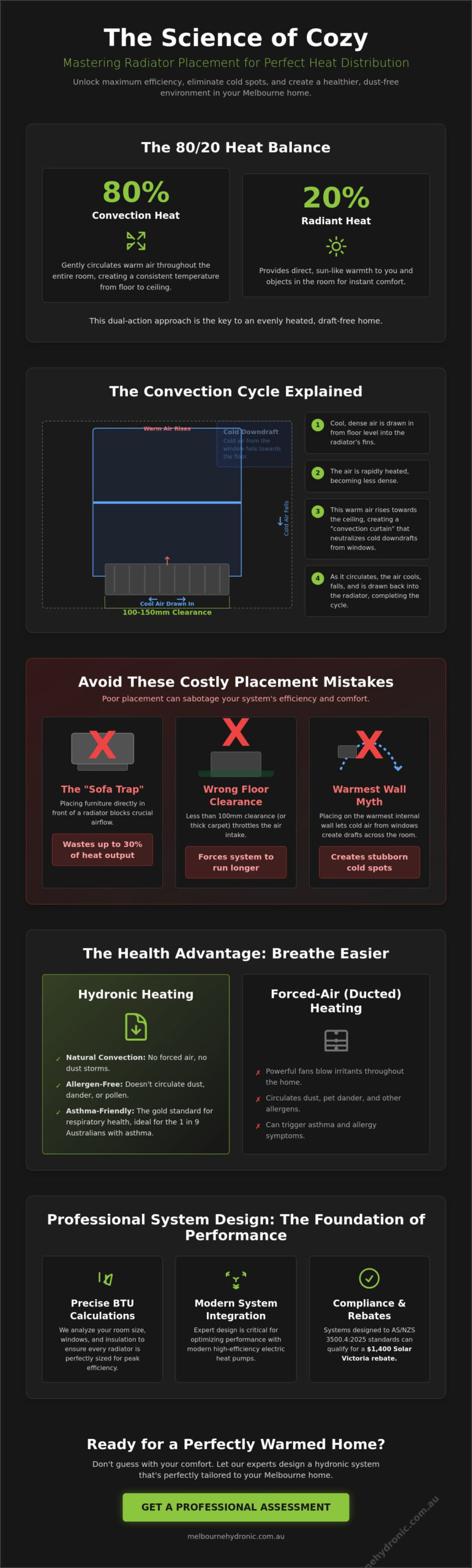
Hydronic radiators aren’t just static metal panels; they’re active heat exchangers that rely on a specific thermodynamic balance. To achieve the ideal indoor climate, these units utilize a ratio of 80% convection and 20% radiant heat. This dual-action approach is why radiator placement for best heat distribution is the most critical factor in your system’s design. The radiant component provides immediate, sun-like warmth to objects and people nearby, while the convection component handles the heavy lifting of warming the entire room’s air volume.
Understanding How Radiators Work involves mastering the “Convection Cycle.” As water from your high-efficiency heat pump or boiler flows through the panel, it warms the air trapped within the unit’s fins. This warm air becomes less dense and rises toward the ceiling, creating a vacuum that draws cooler air in from the floor level. In Melbourne’s damp winters, where outdoor humidity frequently exceeds 70%, this constant, gentle air movement is your primary defense against window condensation and the subsequent mold growth that plagues many local Victorian-era homes.
Thermodynamics of Hydronic Convection
The efficiency of the convection cycle depends entirely on unobstructed airflow. For the air intake to function at peak capacity, a radiator requires a minimum clearance of 100mm to 150mm from the floor. When you restrict this gap with thick carpeting or furniture, you throttle the air intake, forcing your system to run longer to reach the desired temperature. This placement strategy creates a “convection curtain” that intercepting falling cold air from windows, neutralizing drafts before they can settle at floor level. While the rising air circulates warmth, the 20% radiant heat ensures that the living zones of your room feel cozy the moment you step into them.
The Health Advantage: Dust-Free Distribution
One of the most significant benefits of hydronic systems is the absence of forced air. Traditional ducted heating relies on powerful fans that blow dust, pet dander, and allergens throughout your living spaces. By contrast, hydronic radiators move heat through natural buoyancy, which keeps the air still and prevents the circulation of irritants. This is particularly vital for the 1 in 9 Australians who suffer from asthma, as it eliminates the “dust-storm” effect common with central heating vents.
Strategically planning your radiator placement for best heat distribution also prevents “dead zones” where stagnant air can lead to moisture buildup. When heat is distributed evenly through calculated positioning, surfaces stay dry and the environment remains hostile to dust mites. Hydronic heating provides a stabilized, low-velocity thermal environment that serves as the gold standard for an asthma-friendly home.
Choosing Between Under-Window and Internal Wall Placement
Deciding where to mount your panels is a delicate balance between thermal physics and interior design. Traditionally, the industry standard was simple: place the unit under the window. However, as Melbourne’s residential architecture shifts toward high-performance standards, the rules for radiator placement for best heat distribution have become more flexible. Your choice doesn’t just affect your comfort; it directly impacts the return water temperature of your central hydronic heating system. When placement is optimized, your heat pump or boiler operates at peak efficiency, reducing wear and lowering monthly running costs.
Why Windows Are the Traditional Choice
In many of Melbourne’s heritage Victorian or Edwardian homes, single-pane glass acts as a significant thermal bridge. On a 5-degree winter night, air hits the cold glass, cools rapidly, and “slides” down to the floor in a process known as a cold downdraft. This creates a chilly layer of air at ankle height that makes even a warm room feel drafty. By placing a radiator directly under the window, you create a thermal barrier. The rising warm air from the convection cycle intercepts the falling cold air, neutralizing it before it can settle. This strategy also utilizes the “dead space” under window sills, keeping your primary walls clear for artwork or cabinetry.
The Rise of Internal Wall Mounting
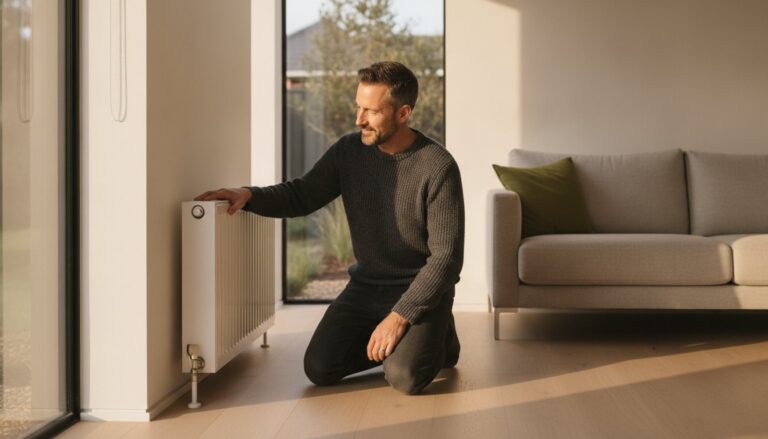
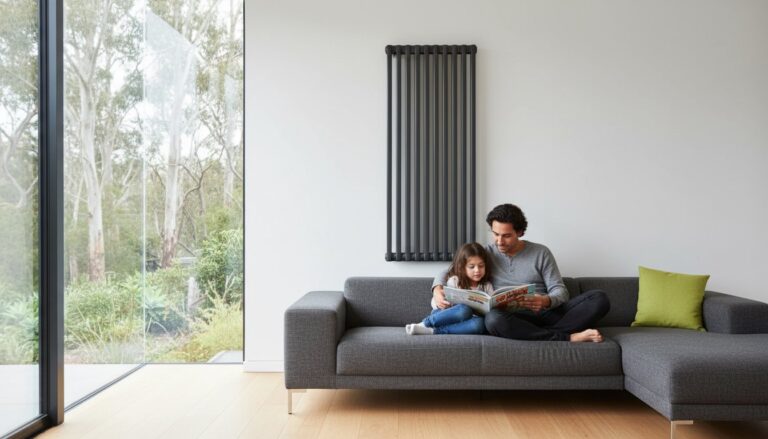
Modern builds in suburbs like Glen Iris or Northcote often feature high-quality double glazing and superior insulation levels that meet the latest energy standards. In these well-sealed environments, the cold downdraft effect is nearly non-existent. This allows for radiator placement for best heat distribution on internal walls, which can actually be more efficient. Mounting on an internal wall ensures that 100% of the radiant heat is directed into the room’s core rather than being partially absorbed or reflected by glass surfaces. We frequently specify vertical radiator panels for these modern layouts. They offer a sophisticated, architectural look while saving valuable horizontal wall real estate in compact townhouses.
Strategic internal placement allows the system to reach its set point faster, especially in rooms with high ceilings where heat layering can be an issue. If you’re planning a renovation, a professional system design assessment can determine whether your insulation levels support an internal wall configuration. This ensures your home remains a sanctuary of consistent, dust-free warmth regardless of the architectural style.
Room-by-Room Placement Strategies for Maximum Efficiency
Every room in a Melbourne home presents a unique thermal profile. Achieving the ideal radiator placement for best heat distribution requires more than just picking a free wall; it’s about understanding how air moves through specific architectural layouts. Whether you’re dealing with a sprawling open-plan extension or a narrow hallway, the goal is to create a seamless blanket of warmth. Proper positioning ensures that every square meter of your home remains comfortable, even when the outdoor temperature drops below 5 degrees in mid-July.
Large Open-Plan Living Areas
Living zones are the heart of the home, but their size often leads to “cold corners” if heating is centralized in one spot. We recommend using two or three smaller radiator panels rather than a single massive unit. This distributed approach ensures that heat reaches the “sitting zone” where your family gathers, even if your layout includes large bi-fold doors or expansive glass walls. Positioning units on opposite walls creates a balanced convection cycle, ensuring no one feels a chill while watching TV or dining. This method prevents the system from overworking to reach a single thermostat point, which can save significantly on annual energy bills.
Bedrooms and Quiet Zones
Sleep quality depends on precise temperature control. Placing a radiator directly opposite the foot of the bed is often the most effective strategy for even warmth. You should avoid placing units behind doors or under heavy floor-to-ceiling curtains, as these “heat traps” can stifle airflow and waste energy. By installing Thermostatic Radiator Valves (TRVs), you can maintain bedrooms at a crisp 18 degrees while keeping living areas at 21 degrees. This supports better sleep hygiene and aligns with health recommendations for restful environments while reducing unnecessary heat production in unoccupied rooms.
The Victorian Terrace Challenge
Melbourne’s iconic terrace houses present specific challenges like high 3.3-meter ceilings and long, narrow hallways. In these spaces, heat tends to rise and “pool” at the ceiling, leaving the floor level cold. We solve this by selecting taller vertical radiators or trench heating to push warmth into the room core. For drafty period-correct renovations, placing units near original hallway arches helps intercept moving air before it reaches the living zones. In bathrooms, hydronic towel rails serve a dual purpose; they provide essential room warmth while ensuring dry, allergen-free towels, contributing to a premium, spa-like experience every morning.
Avoiding Common Placement Mistakes That Waste Energy
Even the most advanced electric heat pump or high-efficiency boiler system can underperform if the final distribution point is compromised by poor furniture choices. Achieving the ideal radiator placement for best heat distribution isn’t just a task for the initial installation; it’s an ongoing consideration for how you live in and style your space. When a panel is obstructed, the delicate balance of convection and radiant heat is shattered, forcing your system to work harder and increasing your energy consumption by a measurable margin.
The “Sofa Trap” is perhaps the most frequent error we encounter in Melbourne homes. Placing a large, upholstered couch directly in front of a radiator might seem like a cozy idea, but it’s thermally disastrous. The furniture absorbs the 20% radiant heat directly into the fabric while simultaneously acting as a physical dam for the 80% convection flow. Research indicates that blocking a radiator this way can waste up to 30% of its total heat output. Your sofa becomes uncomfortably hot, but the air in the center of the room stays chilled, leading many homeowners to turn up the thermostat unnecessarily.
Another common mistake involves “hiding” radiators behind doors that stay open for most of the day. This creates a stagnant pocket of trapped air. The heat builds up in the small alcove behind the door, which can trick a nearby thermostat into thinking the entire room has reached its set point. This leaves the rest of the living area significantly cooler than the target temperature, often by as much as 4 or 5 degrees.
The Furniture Barrier
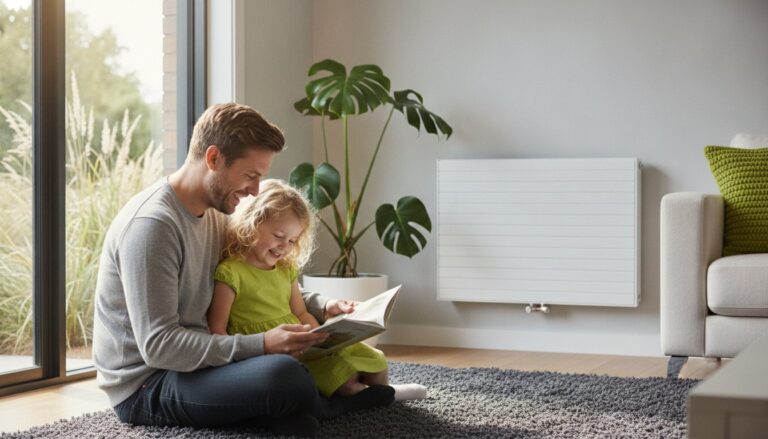
To maintain a healthy convection cycle, your radiators require breathing room. You should maintain a minimum clearance of 200mm between the front of the panel and any large furniture items like armchairs or sideboards. We often see decorative wooden radiator covers in period-style renovations. While these can match a traditional aesthetic, they frequently hinder efficiency by restricting both the air intake at the bottom and the warm air release at the top. If your room features fixed cabinetry or floor-to-ceiling bookshelves, it’s better to opt for vertical panels on a clear wall rather than trying to “build in” a standard horizontal unit.
Curtains and Heat Diversion
Full-length curtains provide excellent insulation against Melbourne’s winter drafts, but they become a liability when they hang over a radiator. When curtains cover the panel, they trap the rising warm air in the narrow gap between the fabric and the window glass, essentially heating the outdoors through thermal conduction. Heat loss through glass increases by roughly 25% when curtains are tucked behind or draped over a radiator. For the best results, use blinds or shutters that terminate above the radiator, or ensure the unit is positioned on an adjacent internal wall. If you suspect your current layout is costing you money, a professional system maintenance check can identify these thermal bottlenecks and help you reclaim that lost efficiency.
Professional System Design: Beyond DIY Placement
While understanding the physics of airflow helps you plan your room layout, achieving the absolute radiator placement for best heat distribution requires rigorous engineering. A panel positioned in the perfect spot will still fail to keep you warm if it’s undersized for the room’s thermal requirements. At Melbourne Hydronic Heating, we don’t rely on guesswork. We perform detailed BTU (British Thermal Unit) or kilowatt (kW) heat load calculations that account for your specific ceiling heights, the R-value of your wall insulation, and the total area of glass in each zone. We design every system to maintain a comfortable 21 degrees even during the most severe Melbourne frost, where outdoor temperatures often dip toward zero.
Once installed, verifying the system’s performance is the final step in a professional commission. We use high-resolution thermal imaging cameras during a hydronic heating service to visualize the heat distribution. This technology identifies any micro-drafts or “cold bridges” that aren’t visible to the naked eye. It allows us to fine-tune the balancing of the system, ensuring that water flows at the correct rate to every panel, whether it’s the first radiator in the circuit or the one at the furthest end of the house.
Heat Load Calculations and Sizing
A common DIY mistake is choosing a radiator based on the dimensions of the wall rather than the volume of the air. If a unit is too small, it will run constantly without ever reaching the desired temperature, leading to high energy bills and premature wear on your boiler or heat pump. Our design process considers the “worst-case” scenario for local winters. By calculating the specific energy loss through every surface, we ensure that the radiator placement for best heat distribution is matched with the exact power output needed to neutralize those losses efficiently. This precision prevents the “dead zones” and cold spots that often plague poorly planned installations.
Integrating with Modern Heat Sources
The transition toward electric heat pumps is a major trend in 2026, driven by the Victorian government’s electrification incentives. However, heat pumps operate most efficiently at lower flow temperatures, typically between 45 and 55 degrees Celsius, compared to the 75 degrees used by traditional gas boilers. This shift changes the placement rules. To deliver the same amount of warmth at a lower temperature, radiators often need a larger surface area. Professional design ensures these larger units are integrated seamlessly into your home’s aesthetic while maintaining the “always-on” gentle heating logic that makes hydronic systems so comfortable, silent, and allergen-friendly.
Transform Your Home Into a Sanctuary of Efficient Warmth
Mastering the physics of positioning ensures your hydronic system operates at peak performance. By understanding the 80/20 convection-radiant balance and avoiding common obstructions like the “Sofa Trap,” you can prevent energy waste of up to 30%. Whether you’re upgrading a classic Victorian terrace or designing a modern build compliant with 2026 standards, precise radiator placement for best heat distribution remains the critical link between technical efficiency and personal comfort. It’s about more than just heat; it’s about creating a silent, dust-free environment that supports your family’s respiratory health.
With 30 years of experience across Victoria, Melbourne Hydronic Heating specializes in designing allergy-friendly systems tailored to the local climate. We provide a full design and installation service that takes the guesswork out of thermal engineering and BTU calculations. Don’t leave your winter comfort to chance when a professional assessment can future-proof your home’s efficiency. Request a Professional Hydronic Design Consultation for Your Melbourne Home today. We look forward to helping you create a warm, healthy, and energy-efficient space you’ll love coming home to.
Frequently Asked Questions
Can I put a radiator behind a sofa if I leave a gap?
You can place a radiator behind a sofa, but you must maintain a minimum gap of 200mm to allow for adequate air circulation. Without this specific clearance, the furniture acts as a thermal dam, absorbing the radiant heat and blocking the convection cycle. This mistake can waste up to 30% of the unit’s heat output, leaving the rest of the room feeling chilled while the back of your sofa overheats.
Why are radiators usually placed under windows in Melbourne?
Radiators are traditionally placed under windows to neutralize cold downdrafts before they settle at floor level. In many Melbourne heritage homes, original single-pane glass creates a thermal bridge where air cools rapidly and “slides” down the wall. Positioning the unit here creates a warm air curtain that intercepts this chill, ensuring radiator placement for best heat distribution by balancing the room’s coldest point.
Should I place my radiator on an internal or external wall?
Internal walls are often the superior choice for modern Melbourne homes featuring high-performance double glazing and R-value insulation. While external wall placement was the standard for drafty period homes, mounting on an internal wall ensures that 100% of the radiant heat is directed into the living zone. This prevents thermal energy from being absorbed by the cooler external masonry or reflected back by glass surfaces.
Does radiator placement affect asthma and allergy sufferers?
Correct placement significantly benefits respiratory health by eliminating stagnant “dead zones” where moisture and mold thrive. Hydronic radiators move heat through natural buoyancy rather than forced fans, which prevents the circulation of dust and pet dander. Proper radiator placement for best heat distribution ensures a stabilized environment, making it a vital choice for the 1 in 9 Australians who suffer from asthma.
How much clearance does a radiator need from the floor?
Every hydronic panel requires a minimum clearance of 100mm to 150mm from the floor to function at peak efficiency. This gap is critical for the intake phase of the convection cycle, where cool air is drawn into the bottom of the unit to be warmed. If you restrict this space with thick carpeting or floor-level cabinetry, you throttle the air intake and force the system to run longer.
Can I move a radiator if it’s currently in a bad position?
You can relocate a radiator to a more efficient position, though it requires professional modification of the copper or PEX pipework. Relocating a unit that is currently trapped behind a door or blocked by fixed joinery can significantly improve your home’s thermal comfort. This investment often pays for itself through reduced energy consumption and the elimination of stubborn cold spots in your primary living areas.
Does the height of a radiator change its heat distribution?
The height of a unit changes the strength of the convection current, which is why vertical radiators are popular for Melbourne homes with 3-meter ceilings. Taller units create a more powerful upward flow of warm air, helping to circulate heat more effectively in rooms with large volumes. We often specify vertical panels for narrow hallways where horizontal wall space is limited but high-output heating is still required.
What happens if I place a radiator near a thermostat?
Placing a radiator too close to a thermostat creates a “false reading” that will cause your entire heating system to shut down prematurely. The sensor will detect the immediate heat from the nearby panel and assume the whole house is warm, even if other rooms are still freezing. We recommend maintaining a minimum distance of 1.5 to 2 meters between any heat source and your central control sensor.