Underfloor Heating vs Radiators for Old Melbourne Homes: 2026 Comparison Guide
What if your heritage home’s draughty reputation is actually a failure of outdated technology rather than a structural flaw? You likely cherish the ornate cornices and soaring ceilings of your Victorian terrace, yet you’re probably exhausted by A$450 monthly winter gas bills and the constant cycle of dust triggered by old ducted systems. It’s a frustrating trade-off, especially when you fear that modernising might damage those irreplaceable 19th-century floorboards or skirting boards. Deciding on underfloor heating vs radiators for old homes doesn’t have to mean compromising your property’s architectural soul or its structural integrity.
You deserve a living space that feels as warm as it looks, without the allergens or the mechanical noise. We’ll show you the most efficient, non-disruptive ways to integrate hydronic warmth into your heritage space while reducing your energy consumption by up to 35% through modern heat pump technology. This 2026 comparison guide explores how discreet panel designs and in-floor solutions can transform your living experience, providing a clear roadmap for a draught-free, cost-effective Melbourne winter.
Key Takeaways
- Understand why traditional Victorian and Edwardian high ceilings cause standard heating to fail and how radiant heat technology overcomes the “draughty house” challenge.
- Discover why hydronic radiators are the premier choice for occupied heritage homes, offering a “12-hour install” with minimal disruption to your floorboards or ornate skirting.
- Evaluate the “barefoot luxury” and space-saving benefits of underfloor heating, perfect for reclaiming wall space in compact Melbourne terrace houses and new extensions.
- Compare the 2026 energy efficiency and A$ running costs of underfloor heating vs radiators for old homes when integrated with modern, low-temperature electric heat pumps.
- Identify the ideal hydronic verdict for your specific renovation to ensure a silent, dust-free, and allergen-friendly environment that preserves your property’s architectural soul.
The Challenge of Heating Heritage Homes in Melbourne
Melbourne’s Victorian and Edwardian homes are architectural treasures, but they’re notoriously difficult to keep warm during a Victorian winter. Most of these properties suffer from poor insulation and significant air leakage through original sash windows and floor vents. Standard ducted systems often fail in these environments. They push hot air into a room, only for it to escape through gaps or sit uselessly near 3.5-metre ceilings. When considering underfloor heating vs radiators for old homes, you have to look at how heat actually moves. Convection heating relies on air circulation, which is inefficient in “draughty” houses. Radiant heat, however, warms objects and people directly, making it the superior choice for high-ceilinged period properties.
The local climate adds another layer of complexity. In coastal areas like the Mornington Peninsula, winter humidity levels frequently exceed 80%, leading to a “bone-chilling” dampness that penetrates old brickwork. Meanwhile, Greater Melbourne frosts can see overnight temperatures drop to 2°C. Hydronic systems provide a consistent, “soft” heat that doesn’t fluctuate. Because these systems don’t rely on fans, they don’t circulate dust or allergens. This makes hydronic heating the gold standard for the 1 in 9 Australians living with asthma, providing a sterile and healthy environment that split systems simply can’t match.
Preserving Architectural Integrity
Maintaining a heritage home in Bayside or Stonnington requires a delicate touch. Victorian-era Baltic Pine floorboards are particularly sensitive to moisture changes. Traditional forced-air heating can cause these boards to dry out rapidly, leading to significant shrinkage and unsightly gaps. Modern Underfloor heating technology or elegant designer radiators allow for a more controlled temperature gradient. This approach avoids the “dust-storm” effect common with old gas wall furnaces, which often blow decades of accumulated debris into your living space, compromising both your air quality and your antique furnishings.
The 2026 Electrification Shift
The landscape of home heating changed significantly following the Victorian Government’s 2023 Gas Substitution Roadmap. With the state moving away from residential gas connections, homeowners must now look toward sustainable alternatives. Transitioning to Electric Heat Pumps is the most effective way to future-proof a heritage property. These units are incredibly efficient, often delivering 4 units of heat for every 1 unit of electricity consumed. When weighing up underfloor heating vs radiators for old homes in 2026, the ability to pair your system with a high-efficiency heat pump is the most critical factor for long-term cost savings and environmental responsibility.
Hydronic Radiators: The Practical Choice for Retrofitting
Choosing between underfloor heating vs radiators for old homes often comes down to how much dust and disruption you’re willing to tolerate. For most occupied Melbourne residences, hydronic radiators represent the superior “12-hour install” solution. Unlike floor-based systems that require lifting original Baltic Pine floorboards or pouring new screed, we can often complete a full radiator retrofit in a single day. This speed doesn’t sacrifice performance. Modern hydronic heating panels are engineered for 2026 standards, requiring 20% less water volume than units manufactured just a decade ago. This reduction means your heat pump or boiler works less, lowering your quarterly energy bills significantly.
Large Victorian floorplans with four-meter ceilings present a unique heating challenge. Radiators excel here because they offer precise zoned control. You don’t need to waste energy heating a formal dining room or a guest wing that’s only used occasionally. By installing thermostatic valves on each unit, you can maintain a crisp 18°C in the bedrooms while keeping the family lounge at a cozy 22°C. This level of customization aligns with the Australian Government’s guide to heating and cooling, which emphasizes the importance of zoning for energy conservation in older, less insulated structures. It’s a localized approach to comfort that saves money without compromising on warmth.
Non-Invasive Installation Techniques
Melbourne’s traditional “stumps and joists” architecture is a hidden advantage for hydronic installers. We run high-quality oxygen-barrier piping through the crawl space beneath your home, popping up through the floor exactly where the radiator sits. This method completely bypasses the need to cut into delicate lath and plaster walls. When we encounter heavy cast iron units, we use specialized mounting systems to ensure the weight is distributed safely across the original timber studs. We also prioritize strategic placement, often installing panels under original sash windows. This creates a thermal “blanket” that intercepts cold air as it enters, stopping drafts before they can move through the room.
Style Guide for Period Homes
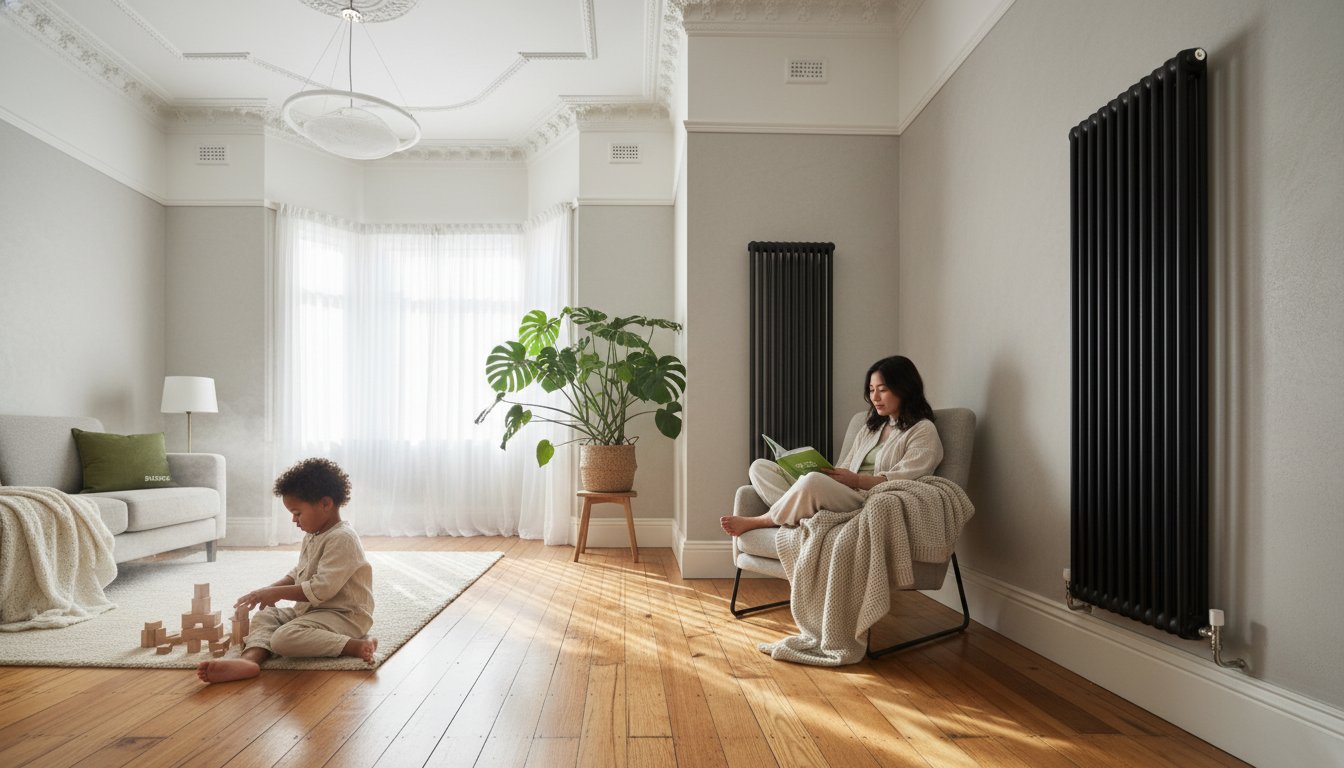
You don’t have to sacrifice your home’s historic aesthetic for modern warmth. Design versatility has peaked in 2026, ranging from ultra-slimline panels that disappear against neutral walls to ornate “schoolhouse” cast iron styles that look original to an 1890s build. We often match radiator finishes to existing Victorian skirting boards or Edwardian cornices to create a seamless look. For those renovating 1930s Art Deco gems in suburbs like Elwood or Ivanhoe, we offer curved and tubular designs that mirror the era’s geometric flair. If you’re unsure which style fits your hallway, our team can provide a customized heating consultation to help you select a finish that complements your home’s character.
Underfloor Heating in Old Homes: Luxury vs. Logistics
Deciding on underfloor heating vs radiators for old homes involves weighing the architectural charm of a Melbourne heritage property against modern comfort requirements. Hydronic underfloor heating provides a “warm feet, cool head” vertical temperature profile that radiators struggle to match. In a typical Victorian villa with 3.6-metre ceilings, heat from traditional sources rises quickly to the ceiling. Underfloor systems keep the warmth in the lower two metres of the room, where you actually live, creating a consistent environment without cold spots.
For residents in narrow terrace houses in suburbs like Fitzroy or Albert Park, the space-saving aspect is a primary driver. Removing radiators can reclaim up to 2 square metres of usable wall space per room, allowing for more flexible furniture layouts. Beyond aesthetics, the system turns your floor into a slow-release thermal battery. A comprehensive comparison of heating systems reveals that while the initial warm-up time is longer than radiators, the thermal mass of the floor maintains a stable temperature for hours after the boiler shuts down.
In-Screed vs. Dry Plate Systems
In-slab hydronic heating usually requires a 100mm concrete pour, which isn’t feasible for most retrofits unless you’re performing a structural rebuild. For Melbourne’s timber-floored cottages, dry plate systems are the standard. These involve fitting aluminium heat-spread plates and pipes between existing floor joists from the crawl space. If you’re working with an existing slab, low-profile overlay systems are a 2026 favorite, adding only 15mm to 20mm to the total floor height. This minimal increase often avoids the need to trim heritage doors or adjust skirting boards.
Compatibility with Heritage Floorboards
You can successfully install hydronic heating under original Baltic Pine or Jarrah boards, but it requires technical precision. Timber is sensitive to rapid moisture changes. We limit the water temperature in the pipes to roughly 45°C so the floor surface never exceeds 27°C. We always install dedicated floor sensors to monitor these thresholds. This prevents the 100-year-old wood from shrinking or warping. When comparing underfloor heating vs radiators for old homes, remember that professional sensor placement is what protects your heritage investment from “cupping” or structural gaps.

Energy Efficiency & Running Costs in 2026
Efficiency isn’t just a buzzword; it’s a financial necessity for Melbourne homeowners facing rising utility prices. When evaluating underfloor heating vs radiators for old homes, the choice depends heavily on your heat source. Underfloor systems are the natural partner for modern air-to-water heat pumps because they operate at low flow temperatures, usually between 35 and 45 degrees Celsius. While radiators can work with heat pumps, they often require larger surface areas or specialized “low-temp” designs to provide the same warmth at these lower temperatures.
- Heat Pump Synergy: Underfloor heating allows heat pumps to run at their peak Coefficient of Performance, maximizing every cent spent on electricity.
- The Power of Zoning: Modern hydronic systems allow you to isolate specific rooms. By not heating unused guest bedrooms or formal dining areas, you can reduce your annual energy consumption by up to 30%.
- Gas vs Electric: With Victorian gas prices climbing steadily, switching to an electric-driven hydronic system is the most future-proof investment for 2026.
Calculating the 2026 ROI
For a standard 3-bedroom home in Melbourne, the annual running cost for a traditional gas-fired radiator system averages A$1,450. In contrast, an electric heat pump system costs approximately A$880 per year. Heat pumps can deliver 3 to 4 units of heat for every 1 unit of electricity consumed. When you integrate a 6.6kW solar PV array, you can effectively offset the daytime running costs of your heat pump, bringing your net heating bill close to zero during the sunny intervals of a Melbourne winter.
Maintenance for Longevity
Old Melbourne homes often feature original iron pipework that’s susceptible to internal corrosion. This leads to the buildup of magnetite, a thick black sludge that restricts flow and damages your heat pump’s internal components. To prevent this, we perform a professional power flush during every retrofit to clear the lines. We also install high-performance magnetic filters to capture metallic debris before it reaches your boiler or pump. This simple addition can extend the lifespan of your system by 8 to 12 years, ensuring your home remains a dust-free, healthy environment for your family.
Ready to lower your bills? Request a customized efficiency audit for your Melbourne home today.
The Verdict: Which System Suits Your Melbourne Renovation?
Choosing between underfloor heating vs radiators for old homes boils down to your specific renovation goals and the existing structure of your property. If you’re looking for a “Quick Fix” that respects original Baltic Pine floorboards without lifting them, radiator panels are the gold standard. These systems provide rapid heat-up times, often reaching peak comfort levels within 20 minutes of activation. They’re ideal for the high ceilings of Victorian terraces, as they heat the air directly where you sit and sleep.
For those undertaking a major structural overhaul or adding a modern rear extension, underfloor hydronics offer “Barefoot Luxury.” This system radiates heat from the ground up, eliminating cold spots and providing a consistent temperature. In the 2026 Melbourne market, we’ve seen that homes with high-efficiency underfloor systems often command a 5 to 10 percent premium in resale value. It’s the ultimate choice for new concrete slabs in open-plan living areas.
A major renovation is also the perfect time to address other key areas of your heritage home. Integrating new heating often coincides with updating kitchens or creating custom storage solutions, and Melbourne-based specialists like Perfect FIT Interior can help design cabinetry that complements both modern extensions and the original character of the property.
Many homeowners find the best results through a hybrid approach. We often install underfloor heating in the new, sun-drenched extension while maintaining elegant radiator panels in the original heritage bedrooms. This strategy maximizes energy efficiency while preserving the architectural integrity of the older rooms. It also allows for zoned heating, so you don’t waste energy warming the guest room when it’s not in use.
Decision Matrix for Melbourne Homeowners
Your choice should align with the scale of your project. For minor updates, radiators offer a lower upfront A$ cost and can be installed with minimal disruption to your daily life. If you’re performing a major structural overhaul, the long-term energy savings and aesthetic benefits of underfloor heating outweigh the higher initial investment. Consider that a hydronic system is a 25-year investment in your home’s infrastructure.
- Minor Update: Choose Radiator Panels for speed, lower cost, and heritage aesthetics.
- Major Overhaul: Choose Underfloor Hydronics for invisible warmth and maximum energy efficiency.
- The Hybrid Play: Combine both to get the best of modern comfort and classic charm.
Why Local Expertise Matters
Melbourne Hydronic brings a 30-year history of working specifically with Victorian and Edwardian architecture. We understand the nuances of bluestone foundations and lath-and-plaster walls. Our “no-mess” guarantee ensures your heritage interiors remain protected during the installation process. Beyond just warmth, our systems provide a dust-free and allergen-friendly environment, reducing airborne particles by up to 80 percent compared to traditional ducted heating. Every home is unique, so a professional assessment is vital to ensure your system is sized correctly for Melbourne’s unpredictable winters. Book a consultation for your Melbourne heritage home today to start your journey toward a healthier, warmer home.
Future-Proof Your Heritage Home with 2026 Hydronic Standards
Choosing the right system for your renovation means balancing modern efficiency with Victorian or Edwardian architectural limits. Hydronic radiators offer a non-invasive retrofit that preserves your original floorboards, while underfloor systems provide unmatched luxury for new ground-floor extensions. By 2026, the shift toward low-emission heat pump technology makes both options significantly cheaper to run than traditional gas. Deciding between underfloor heating vs radiators for old homes doesn’t have to be a gamble for Melbourne homeowners.
You’re looking for a dust-free, allergen-friendly environment that protects your family’s health during those damp Melbourne winters. Our Victorian licensed plumbers bring 30+ years of experience to every heritage suburb, ensuring your installation meets the highest technical standards. We specialize in integrating high-efficiency heat pumps that can reduce seasonal energy bills by up to 60% compared to aging electric plug-in heaters. It’s time to stop shivering in your own hallway and start enjoying the silent, gentle warmth your home deserves.
Get a Tailored Hydronic Quote for Your Melbourne Heritage Home
Frequently Asked Questions
Is underfloor heating more expensive to run than radiators in Melbourne?
Underfloor heating typically costs 15% less to run than radiators when you pair it with a modern air-to-water heat pump. In Melbourne’s volatile climate, the lower operating temperature of 35 degrees Celsius makes underfloor systems highly efficient for consistent thermal comfort. While radiators provide faster heat, they often consume 10% to 20% more energy to reach the required 60 degree output in poorly insulated Victorian cottages.
Can I install hydronic radiators myself in a Victorian home?
You cannot legally install hydronic radiators yourself because the Victorian Building Authority mandates licensed practitioners for all hydronic plumbing work. Attempting a DIY install voids your home insurance and all manufacturer warranties. Professional installation ensures your system meets AS/NZS 3500 standards, which prevents leaks that could cause A$20,000 in structural damage to your heritage subfloor or foundations.
Will underfloor heating damage my original heritage floorboards?
Underfloor heating can cause original heritage floorboards to shrink or gap by 2mm to 4mm if the timber’s moisture content isn’t carefully stabilized. We recommend using specialized “dry” installation systems or ensuring timber is kiln-dried to 8% moisture before fitting. When comparing underfloor heating vs radiators for old homes, radiators are usually the safer choice for preserving sensitive 19th-century Baltic Pine or Jarrah boards.
How long does it take to install hydronic heating in an old house?
Installing a full hydronic system in a typical three-bedroom Melbourne house takes between 7 and 12 business days. Retrofitting radiators is usually 30% faster than underfloor heating because it doesn’t require lifting floorboards or pouring new concrete screed. A team of two expert technicians can typically install a standard 8-panel radiator system and a high-efficiency boiler within a single working week.
Do I need a new boiler if I switch from radiators to underfloor heating?
You don’t always need a new boiler, but you’ll definitely need a mixing valve to regulate water temperatures. Underfloor systems operate at 40 degrees Celsius, while older radiator boilers often pump out water at 75 degrees. If your current boiler is over 12 years old, upgrading to a condensing model can improve your system’s efficiency by 25% and ensure your new floor stays at a safe temperature.
What is the best heating for a house with high ceilings and draughts?
Hydronic radiators are the most effective solution for Melbourne homes with 3.3-meter ceilings and persistent draughts. They use natural convection to circulate warm air quickly, which counters the cold air entering through original sash windows. Unlike split systems that blow dust and allergens around, radiators provide a silent, still heat that keeps the living zone warm without wasting energy on high, empty ceiling voids.
Can I use a heat pump with my existing old radiator panels?
You can use a heat pump with existing radiators, but you must often upgrade your panel sizes by 50% to maintain warmth. Heat pumps operate at lower temperatures than gas boilers, usually around 45 to 55 degrees Celsius. Without larger surface areas to radiate heat, your old panels won’t provide enough energy to keep a draughty Victorian terrace comfortable during a 5-degree Melbourne night.
Is there a government rebate for switching to electric hydronic heating in Victoria?
Yes, the Victorian Energy Upgrades (VEU) program provides significant rebates for residents switching to electric hydronic heat pumps. As of 2024, eligible Melbourne homeowners can receive between A$1,200 and A$3,200 in incentives when replacing old gas heaters with high-efficiency electric systems. These rebates significantly lower the initial investment for families looking to create a healthier, dust-free home environment while reducing their carbon footprint.