

How to Get the Most Out of Your Hydronic System: The 2026 Efficiency Guide
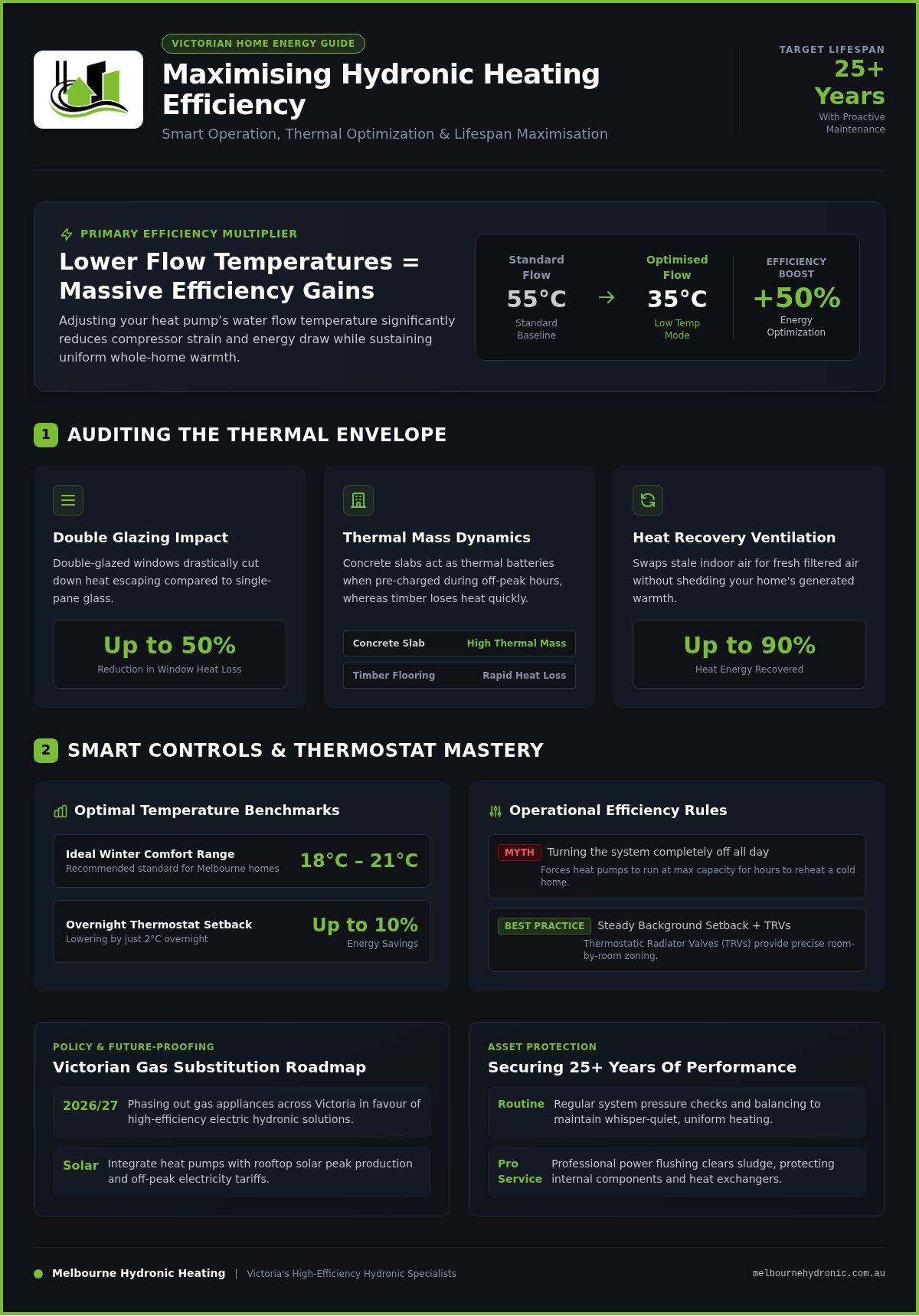
Did you know that lowering your heat pump’s flow temperature from 55°C to 35°C can boost its efficiency by up to 50%? Many Melbourne homeowners are sitting on a goldmine of potential savings without even realizing it. Learning how to get the most out of your hydronic system isn’t just about staying warm. It’s about adapting to Victoria’s rapidly changing energy landscape. With the 2027 gas appliance phase-out approaching, the way we heat our homes is shifting toward high-efficiency electric solutions that demand a smarter approach to operation.
We understand the frustration of opening a winter utility bill only to find it’s skyrocketed, or walking into a bedroom that feels five degrees colder than the lounge. You’ve invested in a premium heating solution, and it should deliver uniform, whisper-quiet comfort without the financial sting. This guide will show you how to master your thermostat settings, implement smart zoning, and schedule the vital maintenance needed to secure a 25 year system lifespan. We’ll explore everything from the latest Victorian rebates to the technical tweaks that turn a standard setup into a high-performance asset for your home.
Key Takeaways
- Identify and seal thermal envelope hotspots to ensure your heating energy stays inside your home rather than escaping through insulation gaps.
- Master the art of zoning and smart controls to maintain perfect, balanced temperatures in every room while reducing unnecessary energy consumption.
- Learn exactly how to get the most out of your hydronic system by adjusting flow temperatures to match Melbourne’s unique seasonal shifts.
- Protect your investment and ensure a 25 plus year lifespan with essential maintenance tips, including pressure checks and professional power flushing.
- Navigate the 2026 Victorian Gas Substitution Roadmap to future-proof your home with high-efficiency electric heat pump upgrades and available rebates.
Auditing Your Melbourne Home’s Thermal Envelope
Your home’s thermal envelope is the invisible barrier that keeps warmth in and cold out. Even the most advanced hydronic heating systems struggle if they’re fighting a leaky house. To understand how to get the most out of your hydronic system, you first have to stop thinking about the heater and start thinking about the room. In Melbourne, we see two distinct challenges. Victorian-era homes often lose heat through high ceilings and unsealed chimneys, while modern builds might suffer from poor insulation installs or gaps around window frames. Identifying these “hotspots” is the first step toward true efficiency.
Double glazing is a game changer for hydronic performance. It reduces heat loss through windows by up to 50% compared to single-pane glass. If you aren’t ready for a full window replacement, heavy floor-to-ceiling curtains with pelmets act as a secondary thermostat. They trap a layer of still air against the glass, preventing the “waterfall” of cold air that often rolls off windows during a Geelong winter. This simple physical barrier allows your radiators to work much less to maintain your desired temperature.
The Science of Thermal Mass in Victoria
Melbourne’s climate varies wildly, but thermal mass remains a constant ally. Homes built on concrete slabs have a high capacity to store heat. If you use underfloor heating, you can “charge” this slab during off-peak energy hours. The concrete acts like a giant battery, slowly releasing warmth throughout the day. This is far more efficient than trying to heat a timber-floored house from scratch every morning. Timber has low thermal mass and loses heat almost as fast as it gains it, requiring more frequent system cycles.
Draught Proofing for Hydronic Success
Air leaks are the silent enemy of low-temperature systems. A single gap under a door can be as detrimental as leaving a window slightly open. You can perform a simple DIY check by moving a lit candle around window and door seals on a windy day. If the flame flickers, you have a leak. Sealing these gaps allows your system to run at lower flow temperatures, which is essential for maximizing the efficiency of modern electric heat pumps. To maintain fresh air without sacrificing that warmth, consider Heat Recovery Ventilation (HRV). These systems swap stale indoor air for filtered outdoor air while recovering up to 90% of the heat, ensuring your home stays healthy and efficient.
Mastering Smart Controls and Zoning Strategies
Many homeowners believe that turning their system off entirely when they leave for work is the best way to save money. This is a myth. Reheating a cold house from scratch forces your boiler or heat pump to work at maximum capacity for hours, which is far less efficient than maintaining a steady background temperature. If you want to know how to get the most out of your hydronic system, the key is consistency. By using smart controls, you can keep the home at a low “setback” temperature during the day and ramp it up only when needed.
Zoning allows you to heat only the rooms you are using. You don’t need the guest bedroom at 21 degrees if no one is staying there. Using Thermostatic Radiator Valves (TRVs) gives you room-by-room precision, effectively turning each radiator into its own independent zone. This level of control is highlighted in Sustainability Victoria’s efficient home heating guide as a primary way to slash utility costs while improving comfort. By integrating these smart thermostats with Melbourne’s electricity price cycles, you can even schedule your heat pump to do the heavy lifting during off-peak windows or when your solar panels are producing the most power.
Optimising Your Thermostat Schedule
The ideal temperature range for a Melbourne winter is typically between 18°C and 21°C. It’s a small change, but dropping your thermostat by just 2 degrees overnight can reduce your energy consumption by up to 10%. With modern smart phone integration, you can monitor these settings remotely. If you’re heading home early from Geelong, you can trigger a “pre-heat” cycle from your phone. This ensures the house is perfectly warm the moment you walk through the door without wasting energy all afternoon.
Hydraulic Balancing: The Secret to Even Heat
Have you noticed that the radiator furthest from the boiler stays lukewarm while the one in the hallway is scorching? This is a sign that your system needs hydraulic balancing. Balancing ensures that the hot water is distributed evenly across all hydronic heating panels in the house. Without it, the pump works harder than necessary to reach the “cold” spots, wasting electricity and causing uneven comfort. You can check this yourself by feeling the temperature across different panels. If the heat is inconsistent, it’s a good idea to consult a local specialist to adjust the manifold flow rates and restore peak efficiency.
Optimising Performance by Heat Source: Heat Pumps vs. Boilers
Understanding your heat source is fundamental to learning how to get the most out of your hydronic system. In Victoria, the Coefficient of Performance (COP) is the critical metric for an electric heat pump. This ratio measures how many units of heat you get for every unit of electricity consumed. While a COP of 4.0 indicates 400% efficiency, this figure fluctuates based on the outside air temperature. According to the Your Home guide to heating and cooling, matching your heat source to your home’s specific thermal load is vital for long-term savings and equipment longevity.
If you’ve integrated solar panels, you can achieve nearly free heating by shifting your system’s heavy lifting to daylight hours. Even on overcast Melbourne days, modern inverter heat pumps can modulate their power draw to match your solar output, significantly reducing your reliance on the grid during expensive peak evening periods.
Heat Pump Efficiency in Cold Snaps
On frosty Geelong mornings, heat pumps often enter a “defrost cycle” to melt ice buildup on the outdoor unit. This is a normal part of operation, but frequent cycling can indicate that the system is undersized or struggling with low airflow. Conversely, “oversizing” a heat pump is a common mistake that leads to short-cycling, where the unit turns on and off too rapidly, which wears out the compressor and spikes energy use. To maintain peak performance, ensure your pump is paired with a low-temperature radiator heater design. These larger panels provide more surface area, allowing the system to keep you warm with water temperatures of just 45°C rather than the 75°C required by older technology.
Boiler Settings for Gas Users
If you’re currently using a gas boiler, efficiency hinges entirely on the “condensing” mode. To actually recover heat from exhaust gases, the return water temperature must stay below 54°C. Many systems are incorrectly set to a flow temperature of 75°C, which prevents the boiler from ever condensing. Lowering your flow temperature to 55°C or 60°C is the magic number for maximum recovery. If you hear your boiler firing up and shutting down every few minutes, it’s likely “cycling” too often. This usually means the system is producing more heat than your radiators can dissipate, which can often be solved by opening up your Thermostatic Radiator Valves or adjusting the pump speed.
Essential DIY and Professional Maintenance
Maintaining your system is just as vital as selecting the right hardware or setting the perfect temperature. If you want to know how to get the most out of your hydronic system, you have to look beyond the thermostat. A well-maintained circuit runs quieter, uses less energy, and can easily exceed a 25 year lifespan. Start with a monthly visual check of your radiator valves and boiler connections. Look for small damp patches or white mineral deposits, as these suggest a slow leak that could eventually drop your system pressure and cause a lockout.
Bleeding your radiators is another essential DIY task that improves heat distribution. When air gets trapped in a panel, it prevents hot water from filling the top section, forcing your pump to work harder for less warmth. The biggest threat to your efficiency, however, is something you can’t see: magnetite. This black iron oxide sludge builds up inside pipes and radiators over time. It creates a thick, insulating layer that prevents heat from reaching the surface of your panels. Scheduling an annual hydronic heating service in Melbourne ensures these issues are caught before they become expensive mid-winter repairs.
The Power of the Power Flush
If your radiators have cold spots at the bottom while the top is warm, you likely have a significant sludge problem. This is where power flushing becomes a critical intervention. Power flushing is a high-pressure chemical cleanse that removes iron oxide debris. By clearing these blockages, you can restore 15-25% of lost efficiency almost instantly. It’s a specialized process that cleanses the entire circuit, leaving the water clear and the heat transfer optimal across every room in your home.
Monitoring System Pressure
Your system needs a precise volume of water to function correctly. The “Goldilocks zone” for hydronic pressure is usually between 1.0 and 1.5 bar when the system is cold. If the needle on your boiler or heat pump gauge drops below 1.0 bar, you may need to top it up using the filling loop. However, a frequent drop in pressure isn’t normal. It often signals a micro-leak in the pipework or a failing charge in your expansion vessel. If you’re constantly topping up your water levels, it’s time to book a professional maintenance check to protect your pump from running dry and burning out.
Future-Proofing Your System with Melbourne Hydronic Heating
Future-proofing your home isn’t just about maintenance. It’s about intelligent integration. Modern hydronic setups can now link with home automation systems that use AI to predict weather patterns. If the forecast predicts a sudden cold snap in Geelong, your system can pre-warm the thermal mass of your home before the temperature drops. This proactive approach is the ultimate answer to how to get the most out of your hydronic system while keeping energy bills low. By shifting from reactive heating to predictive climate control, you ensure your environment remains stable regardless of the outdoor conditions.
Upgrading your system also adds significant value to your property. As energy standards evolve, homes with high-efficiency, low-carbon heating solutions are becoming increasingly desirable. A comprehensive efficiency audit can identify exactly where your current setup can be improved, whether through hardware upgrades or software calibration. This ensures your investment continues to pay dividends in both comfort and cost savings for decades to come.
Transitioning to All-Electric
Victoria’s Gas Substitution Roadmap has fundamentally changed the heating landscape. From 1 January 2027, building surveyors will be barred from issuing permits for new gas-connected homes. For existing homeowners, the mandate is equally clear. From 1 March 2027, broken gas hot water or heating units must be replaced with electric alternatives. Transitioning to an electric heat pump allows you to remove gas connection fees entirely. Many existing radiator panels can be repurposed for these systems, provided they are sized correctly for lower flow temperatures. In 2026, eligible households with a combined income under A$150,000 can still access Solar Victoria rebates of up to A$1,000 for heat pump upgrades. Beyond local incentives, homeowners can explore Planung, Installation und Finanzierung von Photovoltaik- und Energiesystemen to see how comprehensive energy solutions are structured in other advanced markets.
Retrofitting an older Victorian home requires more than technical knowledge. It requires local intuition. Our family-owned business has been operating since 1990, giving us 30 plus years of experience with Melbourne’s unique architectural challenges. We prioritize health-first heating, which is a vital choice for families dealing with asthma or allergies. Unlike split systems, hydronic heat doesn’t circulate dust, mites, or allergens. We provide custom design services that cater to the specific heat loss profile of your property, ensuring every room reaches its target temperature efficiently. Efficiency is a choice. We know Melbourne weather, and we know how to beat it. Book your 2026 efficiency audit with our specialist team today to secure your home’s comfort.
Securing Your Home’s Comfort for the Decade Ahead
Optimising your heating isn’t a one-time task; it’s an ongoing commitment to your home’s wellbeing. By mastering your thermal envelope and embracing smart zoning, you’ve already taken the biggest steps toward lowering your bills. Whether you’re fine-tuning a condensing gas boiler or transitioning to a high-efficiency electric heat pump, the goal remains the same: a healthy, whisper-quiet environment that respects both your budget and the planet.
Understanding how to get the most out of your hydronic system ensures your family enjoys a low-allergen space free from the dust and noise of traditional air conditioning. With the 2027 gas phase-out approaching, now is the perfect time to audit your setup and future-proof your investment. Professional maintenance, such as power flushing and pressure calibration, will keep your circuit running at peak performance for years to come.
With over 30 years of Victorian industry experience, our team specializes in everything from complex heritage retrofits to modern new-build hydronics. We’re here to help you navigate the latest technology and government rebates. Maximise your home’s comfort and efficiency, contact Melbourne Hydronic Heating today. Your home deserves the precision of professional engineering and the warmth of a local expert who understands the Melbourne climate.
Frequently Asked Questions
Is it cheaper to leave hydronic heating on all day?
It’s generally more efficient to maintain a steady background temperature than to heat a cold house from scratch. Spiking the temperature forces your boiler or heat pump to work at maximum capacity for hours. This uses more energy than keeping the system at a low setback level. By avoiding these heavy heating cycles, you’ll discover how to get the most out of your hydronic system while keeping your Melbourne utility bills predictable.
How often should I service my hydronic heating system in Melbourne?
You should book a professional service every 12 months, ideally before the first cold snap hits. Annual maintenance involves checking system pressure, testing the expansion vessel, and inspecting for leaks. In Melbourne and Geelong, regular servicing is the only way to ensure your system reaches its 25 plus year lifespan. It also keeps your warranty valid and prevents minor issues from turning into expensive mid-winter breakdowns.
Can I use my hydronic system for cooling in summer?
Standard hydronic radiators and underfloor systems are designed exclusively for heating. However, if your system includes fan coils, you can achieve cooling. Running cold water through standard radiators is dangerous as it causes condensation to form on the panels, which can damage your flooring and walls. If you’re interested in a dual-purpose setup, we can design a custom solution using modern electric heat pumps and specialized fan coil units.
Why are some of my radiators hot at the top but cold at the bottom?
This is a classic symptom of magnetite or “sludge” buildup. This heavy iron oxide debris settles at the bottom of your radiators, creating a thick insulating layer that prevents hot water from circulating. It significantly reduces the efficiency of your heating. To fix this, you’ll need a professional power flush. This high-pressure chemical cleanse removes the blockage and restores the full heat output of your radiator panels.
How much can I save by switching from a gas boiler to a heat pump?
Switching to an electric heat pump can reduce your heating energy consumption by up to 70% when paired with solar panels. Heat pumps are far more efficient than gas boilers because they move heat rather than creating it. With Victoria’s gas retail tariffs rising, moving to an all-electric setup is the best way to future-proof your home. Learning how to get the most out of your hydronic system via electrification is a smart long-term investment.
What is the ideal thermostat setting for a Melbourne winter?
We recommend setting your thermostat between 18°C and 21°C during the day. For every degree you push past 21°C, your energy consumption can increase by roughly 10%. At night, dropping the temperature by just two degrees can lead to significant savings without sacrificing comfort. Using smart thermostats with zoning allows you to maintain these precise levels in living areas while keeping unused bedrooms at a lower, more economical setting.
Is hydronic heating better for people with allergies?
Hydronic heating is widely considered the healthiest choice for asthma and allergy sufferers. Unlike split systems or ducted heating, hydronic systems use radiant heat rather than forced air. This means there are no fans blowing dust, pollen, or mites around your home. It creates a cleaner living environment with stable humidity levels, which helps prevent the dry eyes and respiratory irritation often caused by traditional air-based heating solutions.
What happens if I don’t power flush my system?
Ignoring the need for a power flush leads to a gradual decline in system health. Over time, sludge buildup increases the workload on your circulation pump, leading to premature component failure. You’ll notice your rooms take longer to warm up and your energy bills will climb as the system loses 15% to 25% of its efficiency. Eventually, the debris can cause your boiler or heat pump to lock out entirely during a freeze.