
Hydronic Heating for Polished Concrete Floors in Melbourne: The 2026 Guide
What if the most striking feature of your Melbourne home, that sleek, minimalist slab, was actually the key to slashing your winter energy bills? It’s a common dilemma for local homeowners. You love the industrial elegance of polished concrete, yet you dread the “ice-block” sensation underfoot during a long Victorian winter. You might worry about the slow response times of slab heating or feel confused about whether to stick with gas or transition to electric as regulations change. We understand that you want a home that feels as good as it looks without the stress of skyrocketing utility costs.
In this guide, you’ll discover how hydronic heating for polished concrete floors Melbourne is being redefined for 2026. With the Victorian Gas Substitution Roadmap setting a firm March 1, 2027 deadline for many gas replacements, there’s no better time to explore how modern electric heat pumps achieve 300% to 400% efficiency. We’ll show you how to transform your floor into a high-performing thermal mass that provides consistent, barefoot-friendly warmth. You’ll learn the practical differences between in-slab and in-screed systems, ensuring your investment delivers a premium lifestyle and a future-proofed home.
Key Takeaways
- Understand why high-density concrete acts as a natural thermal battery, storing and radiating consistent, silent warmth throughout your home.
- Discover why hydronic heating for polished concrete floors Melbourne is the most effective way to transform a cold slab into a premium, barefoot-friendly heat source.
- Evaluate the technical differences between in-slab and in-screed installations to determine the best fit for your new build or renovation.
- Learn how to future-proof your property by pairing underfloor pipes with high-efficiency electric heat pumps that align with new Victorian energy standards.
- Explore how smart zoning and manifolds give you precise control over individual room temperatures, ensuring you don’t waste energy on unused spaces.
Why Hydronic is the Gold Standard for Melbourne Polished Concrete
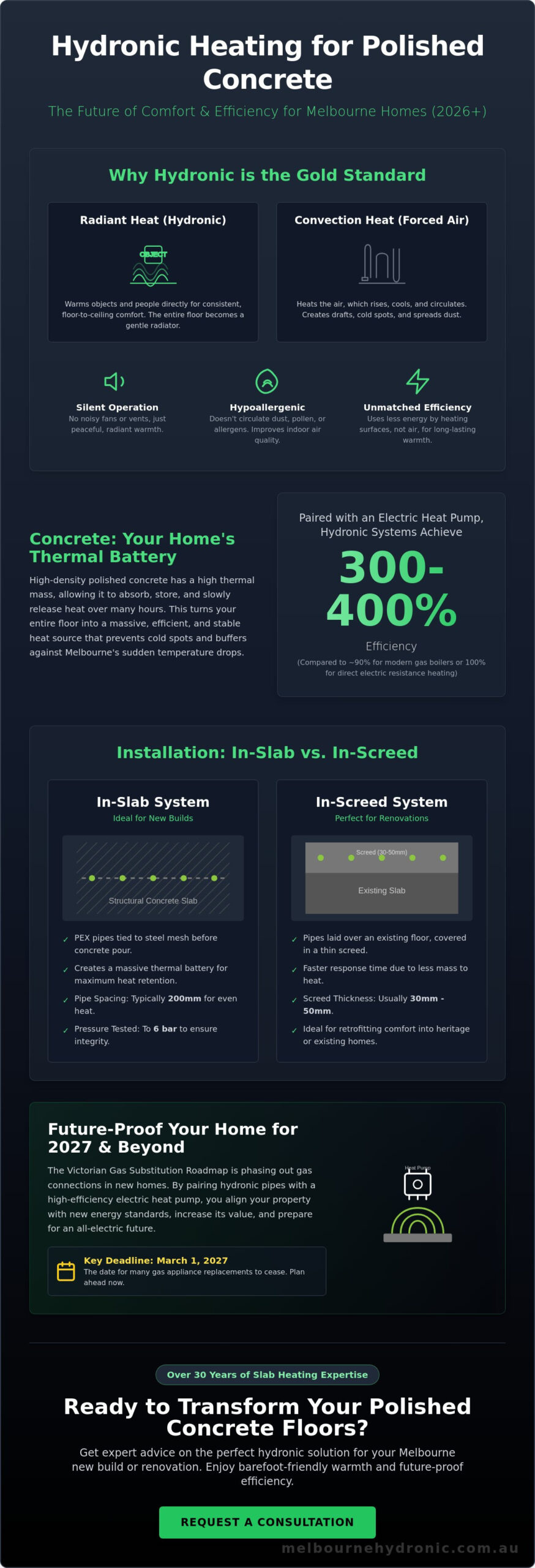
Melbourne weather is famous for its sudden shifts. One moment it’s sunny, the next a cold front sweeps in from the bay. This volatility makes hydronic heating for polished concrete floors Melbourne the premier choice for local homeowners who value both aesthetics and efficiency. At its core, this system uses a network of durable, water-filled PEX pipes embedded directly into the concrete slab. Instead of blowing hot air that quickly dissipates, it circulates warm water to turn your entire floor into a gentle, consistent radiator.
Concrete isn’t just a design choice; it’s a high-density thermal battery. This material possesses a high thermal mass, which means it can absorb, store, and slowly release heat over several hours. This is the fundamental principle behind Underfloor heating. Because the system is hidden beneath the surface, you enjoy the sleek, minimalist lines of your architecture without bulky wall units or floor grates cluttering your living space. It’s a premium lifestyle choice that prioritises comfort without compromising on design.
The Science of Radiant Heat in Concrete
Radiant heat works differently than convection. While split systems heat the air, which then rises to the ceiling and escapes, hydronic systems warm the objects and people in the room directly. This creates a much more uniform temperature profile from floor to ceiling. In Melbourne, we often experience 10-degree temperature drops within a single afternoon. The thermal mass of the concrete slab acts as a crucial buffer during these diurnal swings. It holds onto its warmth long after the heat pump or boiler has cycled off, preventing the uncomfortable “cold spots” that occur when traditional heaters stop running.
Hypoallergenic and Silent Operation
For many Melbourne families, health is just as important as warmth. Traditional ducted heating relies on moving air, which inevitably traps and redistributes dust, pollen, and pet dander throughout the house. Hydronic radiant heat serves as a dust-free alternative to traditional forced-air systems. There are no fans to whir and no vents to rattle in the middle of the night. It’s a completely silent solution that improves indoor air quality. This makes hydronic heating for polished concrete floors Melbourne a superior option for allergy sufferers and light sleepers who want a peaceful, healthy home environment. By removing the need for air movement, you ensure that your living space remains clean, calm, and perfectly tempered regardless of the conditions outside.
In-Slab vs. Screed: Which Installation Suits Your Melbourne Project?
Choosing the right installation method depends on whether you’re breaking ground on a new build or revitalising an existing Melbourne residence. For most homeowners, hydronic heating for polished concrete floors Melbourne involves one of two distinct approaches: in-slab or in-screed. Each path has specific structural requirements and performance characteristics that influence how your home feels and functions. While both deliver the signature “warm feet” experience, the technical execution varies significantly between a fresh construction site and a renovation.
In-Slab Hydronics for New Builds
The in-slab method is the most seamless way to integrate comfort into a modern home. We tie high-quality PEX pipes directly to the steel reinforcement mesh before the structural concrete is poured. This creates a massive thermal battery that holds heat for hours. Timing is everything here. The installation must occur after the mesh is laid but before the concrete trucks arrive. We typically set pipe centres at 200mm to ensure a perfectly even heat distribution across the entire surface. To guarantee long-term reliability, we pressure test every system to 6 bar. This ensures the integrity of the loops while the heavy concrete is being placed. It’s a robust, hidden solution that becomes a permanent part of your home’s structure.
Hydronic Retrofitting and Screed Beds
If you’re renovating a heritage home or updating an existing slab, a screed bed is often the solution. Instead of burying pipes deep in a structural pour, we lay them over the existing floor and cover them with a thinner layer of specialised concrete, usually between 30mm and 50mm thick. This “thin-bed” approach offers a significant advantage: faster response times. Because there’s less material to heat up, the floor reaches your desired temperature more quickly than a thick structural slab. However, you must account for the increase in floor height. This affects door clearances and transitions to other floor finishes. Proper planning with hydronic underfloor heating specialists ensures these architectural details are managed before the pour begins.
Regardless of the method, insulation is the silent hero of efficiency. Without a high-quality insulation barrier beneath the pipes, up to 20% of your heat can escape into the cold ground. This is a core recommendation in the Australian Government’s sustainable home heating guide. By reflecting heat upwards into the living space, you maximise every watt of energy used. This thermal barrier prevents the earth from acting as a “heat sink,” ensuring your hydronic heating for polished concrete floors Melbourne remains as cost-effective as possible during our long winters.
Maximising Efficiency: Pairing Concrete with Electric Heat Pumps
Victoria’s energy landscape is undergoing a permanent shift. With the Victorian Gas Substitution Roadmap setting a March 1, 2027 deadline for replacing end-of-life gas hot water systems in existing homes, electric heat pumps have become the primary choice for modern residences. When you choose hydronic heating for polished concrete floors Melbourne, moving away from gas boilers isn’t just about compliance; it’s about superior economics. Modern electric heat pumps offer a staggering Coefficient of Performance (COP), where 1kW of electricity can generate 3kW to 4kW of heat. This translates to 300% to 400% efficiency, a feat no gas boiler can match. By removing your gas connection, you also eliminate daily supply charges and future-proof your property against rising fossil fuel costs.
The real magic happens when you pair your system with solar PV. Your polished concrete floor acts as a massive thermal battery. By programming your system to run during the middle of the day, you soak up free solar energy and store it within the slab. A well-insulated slab can maintain a comfortable ambient temperature for up to 12 hours after the heat pump stops running. This strategic energy management allows you to heat your home using power generated on your own roof, significantly reducing reliance on the grid and lowering your carbon footprint.
How Electric Heat Pumps Work in Cold Climates
Modern air-to-water heat pumps are engineered to perform even during those biting 2-degree Melbourne mornings. The process involves extracting latent heat from the outside air and transferring it into the water circulating through your floor. It’s essential to select a unit specifically rated for Victorian winters to ensure consistent performance. For a deeper dive into the technology, our Heat Pump Hydronic Heating guide provides a detailed breakdown of the best models for local conditions. Choosing the right unit ensures your system stays efficient even when the frost settles on the grass.
Smart Energy Management and Solar Integration
Efficiency is as much about timing as it is about technology. By aligning your heating cycles with peak solar production, you maximise your return on investment. This approach is supported by the Australian Government guide to home heating, which highlights how thermal mass and efficient heat pumps work together to lower utility bills. Upgrading to this setup can reduce your heating-related energy costs by 60% to 70%. It makes hydronic heating for polished concrete floors Melbourne one of the smartest financial decisions you can make for your home’s long-term value. You aren’t just buying a heater; you’re investing in an integrated energy system.
Design and Control: Zoning Your Polished Concrete Floor
Precision is the hallmark of a well-engineered system. When we design hydronic heating for polished concrete floors Melbourne, we don’t just lay pipe and hope for the best. We implement sophisticated zoning strategies that divide your home into distinct thermal circuits. This means your sun-drenched living area can be managed independently from your upstairs bedrooms. The central hub for this coordination is the manifold. Acting as the distribution hub of the system, the manifold directs heated water exactly where it’s needed, ensuring you aren’t wasting energy on guest rooms or storage areas that don’t require constant warmth.
The ability to control these zones individually is what transforms a standard heater into a premium comfort system. By using multiple thermostats, you can tailor the climate of each room to its specific usage patterns. This granular control is essential for maintaining the energy efficiency we’ve discussed in previous sections. It prevents the system from overworking in areas that naturally retain heat, while keeping the south-facing parts of your home perfectly tempered. If you’re ready to see how a custom-zoned system could work in your floor plan, you can consult with our expert design team for a tailored layout.
Smart Control for Modern Lifestyles
Modern lifestyles demand flexibility. You shouldn’t have to wait hours for your home to feel comfortable after a long day at the office. With smart thermostat integration, you can manage your floor temperature via smartphone apps from anywhere. Many systems now offer geofencing capabilities. This allows your heating to activate automatically as you drive home from the CBD, ensuring your polished concrete is warm and welcoming the moment you step through the door. These systems integrate seamlessly with home automation platforms like Google Home or Apple HomeKit, providing a truly connected living experience.
Concrete Finishes and Thermal Conductivity
A common question we hear is whether the specific finish of the concrete affects its heating performance. Whether you choose a burnished, honed, or mechanically polished finish, the thermal conductivity remains largely the same. The aesthetic choice is yours. What truly matters is the structural integrity of the pour. We place a high priority on the strategic placement of expansion joints. These joints allow the concrete to expand and contract slightly as it heats and cools, preventing unsightly cracks and preserving the minimalist look you love. For a deeper look at how to prepare your site for this process, refer to our Underfloor Heating in Melbourne guide. Ensuring your hydronic heating for polished concrete floors Melbourne is installed with these technical details in mind is the only way to guarantee a lifetime of trouble-free operation.
The Melbourne Hydronic Advantage: 30 Years of Slab Expertise
Experience matters when you’re making a permanent change to your home’s foundation. We’ve been a family-owned and operated business in Melbourne since 1990. This heritage isn’t just a date; it’s a deep understanding of Victorian architectural styles and local climate challenges. We don’t just install pipes. We engineer hydronic heating for polished concrete floors Melbourne by calculating specific R-values and heat loss variables unique to our region. This technical precision ensures your system provides the premium lifestyle improvement you expect without unnecessary energy waste.
Choosing a local specialist means you have a partner for the life of your system. From the initial design phase to long-term maintenance, we provide a comprehensive service that keeps your home comfortable. Our local presence ensures faster access to genuine parts and specialised on-site support. We take pride in being more than just contractors; we’re consultants who help you navigate the transition to a modern, sustainable living environment.
Professional Design and Installation
Quality is found in the details you’ll never see once the concrete is polished. We use premium PEX-b piping equipped with oxygen barriers. This specific material choice is vital. It prevents oxygen from entering the water, which stops internal corrosion of your heat pump or boiler components. Our manifold setups are equally meticulous. We design them to be accessible and clearly labelled, making future adjustments simple and clean. With over three decades of experience, we guarantee the structural integrity of your slab. We understand the delicate balance between heating performance and concrete stability, ensuring your floor remains beautiful and crack-free for decades.
Ongoing Maintenance for Peak Performance
A high-performance system requires expert care to remain at peak efficiency. We provide comprehensive support that extends far beyond the initial installation. Annual servicing is essential to monitor pump health and maintain correct water chemistry. Over time, internal buildup can occur in any hydronic system, which may reduce efficiency and increase running costs. Our Hydronic Heating Service Melbourne guide explains how processes like power flushing keep your system operating at its original specifications. This proactive approach protects your investment and ensures your energy bills stay low.
Transforming your home with hydronic heating for polished concrete floors Melbourne is a significant investment in your long-term comfort and well-being. Our team is ready to help you engineer a solution perfectly suited to your floor plan and lifestyle. If you’re planning a new build or a major renovation, Request a Quote for Your Polished Concrete Project today and experience the difference that 30 years of local expertise makes to your home’s climate.
Future-Proof Your Home with Sustainable Comfort
Investing in hydronic heating for polished concrete floors Melbourne is about more than just staying warm. It’s a strategic decision to transform your home’s foundation into a high-efficiency thermal battery that works for you. By pairing the natural density of concrete with modern electric heat pumps, you align your property with the Victorian Government’s shift toward all-electric living. You gain a system that is silent, healthy, and perfectly zoned for your specific lifestyle needs.
We bring over 30 years of specialist Melbourne experience to every project. As experts in Victorian energy upgrades, we ensure your installation meets the highest standards of technical precision. We use only premium PEX-b piping, backed by 25-year warranties, to guarantee your comfort for decades to come. Our team is here to help you navigate the 2026 energy landscape with confidence and local expertise. You can trust that your environment is in the hands of professionals who understand the unique demands of the Victorian climate.
Get a custom quote for your Melbourne polished concrete project today and take the first step toward a barefoot-friendly home that defines modern luxury. We look forward to helping you create a space that feels as good as it looks.
Frequently Asked Questions
How long does it take for a polished concrete floor to heat up?
Polished concrete floors typically take 12 to 24 hours to reach a steady temperature when using a traditional in-slab system. If you have an in-screed installation, the response time is much faster, often reaching comfort levels within 2 to 4 hours. Because concrete acts as a thermal battery, it retains this heat for a long time. It’s best to keep the system running at a consistent low level during winter rather than turning it off completely.
Can hydronic heating cause polished concrete floors to crack?
No, hydronic heating doesn’t cause concrete to crack when installed with proper engineering and expansion joints. We design systems to ramp up temperatures slowly, which prevents thermal shock to the material. It’s crucial that the concrete is fully cured before the system is activated for the first time. Our 30 years of experience ensures that the structural integrity of your polished floor remains a top priority during the design and installation phase.
Is hydronic heating more expensive than ducted heating for concrete floors?
While the initial installation cost for hydronic heating for polished concrete floors Melbourne is higher than ducted systems, the long-term running costs are significantly lower. Hydronic systems are estimated to be up to 35% more cost-effective to operate than central ducted heating. You also avoid the heat loss associated with ceiling-mounted vents. Over time, the energy savings and increased property value often offset the higher upfront investment.
Can I install hydronic heating in an existing concrete floor?
You can install hydronic heating on an existing concrete floor by using a screed bed system. We lay the PEX pipes over your current slab and cover them with a new layer of specialised concrete, usually 30mm to 50mm thick. This is a popular choice for Melbourne renovations where homeowners want to upgrade their comfort. You must consider the slight increase in floor height, which may require adjusting door clearances and skirting boards.
What is the best heat source for hydronic underfloor heating in Melbourne?
Electric heat pumps are currently the superior heat source for Melbourne homes, especially with the Victorian Gas Substitution Roadmap in effect. They achieve 300% to 400% efficiency by extracting heat from the outside air. While high-efficiency gas boilers remain an option for some, heat pumps allow you to transition to an all-electric home. When paired with solar panels, they offer the lowest possible running costs for your underfloor system.
Does hydronic heating work under burnished or honed concrete?
Yes, hydronic heating works perfectly under both burnished and honed concrete finishes. The specific polishing technique doesn’t change the thermal conductivity of the slab. Whether you prefer a high-gloss mechanical polish or a more matte honed look, the radiant heat will transfer evenly through the material. The most important factor is the thickness of the concrete and the quality of the underslab insulation rather than the surface finish itself.
How much maintenance does a slab heating system require?
A slab heating system requires very little maintenance, but an annual professional service is highly recommended. We check the pump operation, test the water chemistry, and ensure the manifold valves are functioning correctly. Over time, we may suggest power flushing to remove any internal buildup and maintain peak efficiency. This simple preventative care ensures your hydronic heating for polished concrete floors Melbourne remains reliable and continues to lower your utility bills for decades.
Is there a Victorian government rebate for electric hydronic heat pumps?
Yes, there are financial incentives available for homeowners transitioning to efficient electric systems. In 2026, the Solar Homes Program offers rebates of up to $1,400 for eligible heat pumps. Additionally, the Victorian Energy Upgrades (VEU) program provides incentives for moving away from legacy gas systems. These rebates help lower the initial investment cost, making it easier to future-proof your Melbourne home with a high-efficiency hydronic solution.