
Hydronic Heating Zoning Options Melbourne: The 2026 Efficiency Guide
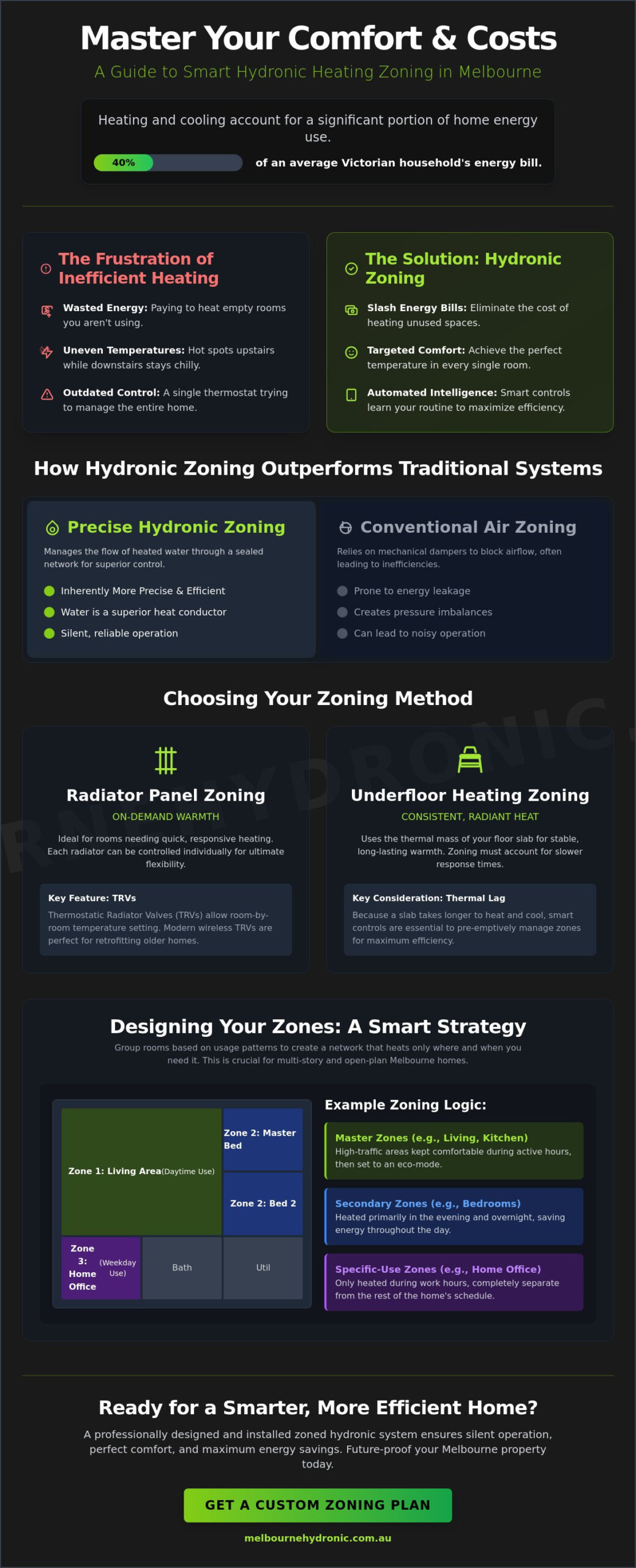
Heating and cooling account for approximately 40% of Victorian household energy bills, yet many families still waste money warming rooms they aren’t even using. If you’re looking for the best hydronic heating zoning options Melbourne has to offer in 2026, you’ve likely realized that a one size fits all approach to home comfort is a relic of the past.
It’s frustrating to deal with uneven temperatures in a drafty Victorian era home or a modern open plan space, especially when utility costs remain a constant concern. You deserve a system that’s as intelligent as the rest of your smart home, providing warmth only where and when you need it. Discover how to master your home’s comfort and slash energy bills with the latest hydronic zoning technology tailored for our unique local climate. This guide explores the most efficient ways to manage your radiator panels, underfloor systems, and heat pumps to ensure you achieve silent, automated comfort in every room.
Key Takeaways
- Eliminate the cost of heating empty rooms by dividing your home into independent thermal circuits designed for Melbourne’s unpredictable weather.
- Maximize efficiency by understanding how radiator and underfloor zoning handle thermal mass differently to provide consistent warmth.
- Automate your home’s comfort with app-based smart controls that learn your daily routines to minimize energy waste.
- Maintain perfect temperatures in large, open-plan spaces by applying a professional framework for grouping rooms into logical zones.
- Ensure a silent and reliable system by choosing the right hydronic heating zoning options Melbourne specialists recommend for professional installation and long-term maintenance.
Understanding Hydronic Heating Zoning Options in Melbourne
Hydronic zoning is the practice of dividing your home into independent thermal circuits, allowing for targeted heating where it matters most. Instead of a single thermostat struggling to balance the entire property, a zoned system treats each area as a unique environment. This is particularly vital in our city, where the “four seasons in one day” phenomenon can leave a north facing lounge room sweltering while a south facing bedroom remains chilly. By exploring the various hydronic heating zoning options Melbourne homeowners can transform a standard hydronic heating setup into a high performance network that responds to real time needs.
To understand the technical foundation of these systems, it helps to look at what hydronic heating is at its core: a method of using liquid to transfer heat. Zoning takes this principle and adds a layer of mechanical and digital intelligence. It works. This doesn’t just improve your comfort; it significantly extends the longevity of your boiler or heat pump by preventing unnecessary cycling. When your system only fires up to warm a specific area, it experiences less wear and tear compared to a system forced to heat an entire residence every time a single room feels a draft.
The Core Benefits of Multi-Zone Control
Multi zone control is a game changer for Melbourne’s iconic multi story Victorian homes. Heat naturally rises, often leaving upstairs bedrooms uncomfortably warm while ground floor living areas stay cold. Zoning allows you to isolate these levels. You can reduce energy waste by keeping the home office at a crisp 20 degrees during the day while the rest of the house remains in an energy saving eco mode. Modern systems integrated with electric heat pumps or gas boilers show much faster response times when they only need to satisfy a specific zone rather than the entire thermal mass of the building.
Zoning and the 2026 Melbourne Energy Landscape
As we move through 2026, the Victorian government’s push toward the Victorian Renewable Energy Target (VRET) makes efficiency a financial necessity. With heating and cooling accounting for roughly 40% of average Victorian household energy bills, zoning is the most effective way to mitigate rising costs. By selecting the right hydronic heating zoning options Melbourne residents can future proof their properties. A sophisticated control strategy isn’t just a luxury anymore; it’s a critical component of home value that signals to future buyers that the property is sustainable, modern, and cost effective to maintain.
Mechanical Zoning: Radiators vs. Underfloor Heating
When evaluating hydronic heating zoning options Melbourne homeowners must first distinguish between traditional air based zoning and modern water based systems. Standard split systems or ducted heaters rely on dampers to block air, which often leads to pressure imbalances and energy leakage. In contrast, hydronic zoning manages the flow of heated water through a closed loop. This method is inherently more precise. Water is a superior conductor of heat, which significantly contributes to the overall energy efficiency of hydronic heating systems compared to forced air alternatives.
The mechanical approach differs based on the emitters used. Radiators provide almost immediate convection heat, making them perfect for “on demand” zoning. Underfloor systems, however, rely on the thermal mass of a concrete slab. Because a slab takes longer to warm up and cool down, the zoning logic must account for this “thermal lag.” A professional installation also considers how to integrate specialized components like hydronic towel rails or trench heating into the broader network. Without careful hydraulic balancing, a multi zone system can suffer from uneven pressure, leading to noisy pipes or radiators that fail to reach their target temperature.
Zoning Options for Hydronic Radiator Panels
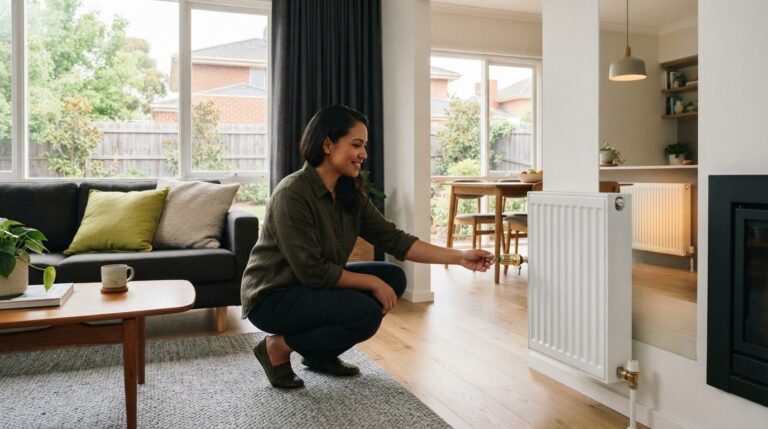
Thermostatic Radiator Valves (TRVs) are the primary tool for radiator zoning. These valves sit on each individual unit, allowing you to set a specific temperature for every room. For a 2026 upgrade, wireless TRV heads are an excellent choice for retrofitting older Melbourne homes without the need for complex rewiring. We often recommend creating “Master Zones” for high traffic living areas and “Secondary Zones” for bedrooms. This ensures the boiler doesn’t work harder than necessary to maintain comfort in areas used only at night.
Zoning for Hydronic Underfloor Heating
Zoning for underfloor heating happens at the manifold. This central hub uses small motors called actuators to open or close specific floor loops based on thermostat signals. In slab on ground builds, floor sensors are essential. They prevent the slab from overheating, which protects your floor finishes and improves efficiency. By using smart zoning schedules, you can “charge” the slab during off peak hours, allowing it to gently release heat throughout the day. A well balanced system starts with the right design; you might consider a professional consultation to map out your home’s unique requirements.
Smart Controls: The Brains Behind Your Zoning Strategy
Smart technology has revolutionized how we interact with our living spaces. Gone are the days of twisting a manual dial and waiting hours for a noticeable change. Today, the most advanced hydronic heating zoning options Melbourne homeowners choose are defined by their digital intelligence. These systems don’t just react; they anticipate. By using app-based management, you can monitor every room’s temperature from your smartphone. This ensures your home is perfectly pre-heated before you even step through the front door after a long day in the CBD.
Intelligence goes beyond simple scheduling. Modern smart thermostats utilize machine learning to understand your specific lifestyle patterns. They observe when the sun hits your living room windows or when the home office is most likely to be occupied. When choosing a heating system, integration is key. Many 2026 models feature geofencing. This automatically lowers zone temperatures as you leave a set radius around your property, ensuring you aren’t paying to heat an empty house. These systems now speak the same language as your other devices, integrating seamlessly with Apple Home or Google Home via the latest Matter and Thread protocols for a truly unified experience.
Thermostats and Actuators: The Hardware You Need
A zoned system relies on a partnership between the thermostat and the actuator. The thermostat acts as the sensor, while the actuator is the small motor that controls water flow. High-quality actuators are essential for a premium experience. They ensure silent operation, which is critical for comfort in bedrooms. If you’re planning a renovation, you have two main paths:
- Hard-wired controls: Best for new builds, offering the most stable connection.
- Battery-powered wireless options: Ideal for Melbourne renovations where running new cables through existing walls is difficult or expensive.
Zoning with Electric Heat Pumps
The shift toward electrification has made heat pump hydronic heating the gold standard for efficiency. Zoning plays a vital role here by preventing “short-cycling.” This happens when a compressor turns on and off too frequently, which wastes energy and shortens the unit’s lifespan. By grouping zones effectively, you ensure the heat pump runs for optimal durations. You can also maximize your solar investment. By zoning heat into a concrete slab during peak sun hours, you use your own generated power to “charge” your home’s thermal mass. This strategic use of hydronic heating zoning options Melbourne specialists provide is what separates a basic installation from a truly high-performance home.
Designing Your Zones: A Strategy for Melbourne Homes
Effective zone design is as much about architectural logic as it is about mechanical hardware. When you’re exploring hydronic heating zoning options Melbourne specialists offer, the goal is to map your heating to your lifestyle. A professional framework begins by identifying how your family moves through the home. We typically recommend a primary split between “Day Zones” and “Night Zones.” By grouping the kitchen, dining, and living areas into one thermal circuit, you can maintain a comfortable 21 degrees during the day while keeping bedrooms at a cooler, sleep friendly 18 degrees. This simple separation prevents your boiler or heat pump from wasting energy on empty rooms.
Vertical zoning is another critical consideration, particularly for homes with double height voids or open stairwells. Because heat naturally rises, a single thermostat on the ground floor often leads to sweltering upstairs bedrooms. We address this by creating independent circuits for different levels. In spaces with significant glass or high ceilings, integrating hydronic trench heating or fan coils into the zone map can help create a thermal curtain, preventing cold drafts from settling in the living areas. This strategic approach ensures that every square metre of your home remains functional and comfortable, regardless of the ceiling height.
Zone Mapping for Victorian Terrace Houses
Melbourne’s iconic terrace houses present a unique challenge. You often have high ceilinged heritage rooms at the front and a modern, glass heavy extension at the rear. These areas have vastly different insulation properties. Older brick walls lose heat quickly, while new extensions might gain significant solar heat during a sunny Melbourne afternoon. Independent zoning allows you to provide extra warmth to the uninsulated front of the house without overheating the thermally efficient rear. It’s the only way to achieve a consistent feel across such contrasting architectural styles.
Zoning for Modern Open-Plan Melbourne Builds
In modern builds, floor to ceiling glass is a standard feature. While beautiful, it makes temperature management complex. We use “buffer zones” in transitional spaces like hallways and laundries to prevent heat from escaping the main living areas. Before finalizing your layout, use this checklist to ensure your system is optimized:
- How does winter sun exposure affect the temperature of your living room?
- Which rooms are used strictly for work or sleep?
- Can the guest wing be completely isolated when not in use?
- Do you have double height voids that require vertical zoning?
- Is the manifold positioned to minimize the length of pipe runs?
Getting the design right during the planning phase saves thousands in running costs over the life of the system. If you’re ready to tailor a system to your floor plan, contact our team for a design consultation to explore the best hydronic heating zoning options Melbourne has for your specific home.
Professional Installation and Maintenance of Zoned Systems
Implementing a sophisticated network of thermal circuits requires more than basic plumbing knowledge. While the various hydronic heating zoning options Melbourne homeowners can access offer incredible flexibility, they also introduce technical complexity. A DIY approach or an inexperienced installer often results in hydraulic imbalances. This leads to frustrating issues like “water hammer” noise in pipes, or rooms that never quite reach the temperature set on the thermostat. Professional calibration ensures that water pressure remains consistent across the entire house, regardless of how many zones are active at once.
Troubleshooting these systems in 2026 often involves digital diagnostics. Common issues like stuck actuators or signal interference between wireless sensors can disrupt your comfort. At Melbourne Hydronic Heating, we design bespoke zoning solutions that account for the specific layout and thermal properties of your property. We ensure that every component, from the manifold to the individual radiator valve, is positioned for peak performance and easy access during future checkups.
The Role of the Hydronic Specialist
A true specialist looks at your home as a single, integrated machine. Engineering a balanced multi zone system involves calculating the peak load requirements for each possible combination of active zones. This is vital when choosing the best hydronic boiler in Melbourne or selecting a high efficiency heat pump. If the heat source is incorrectly sized for your zoning strategy, you risk inefficient operation and premature wear. The final commissioning stage is where we verify that every zone communicates correctly with the central unit, ensuring the system responds instantly to your commands.
Long-Term Maintenance of Zoned Hardware
To keep your system running at peak efficiency, regular attention is mandatory. In Victoria, it’s a legal requirement that a licensed gas fitter with specialized hydronic training handles boiler components and gas connections. During a standard hydronic heating service in Melbourne, we perform several critical tasks:
- Actuator Testing: We verify that the small motors on your manifold open and close fully without sticking.
- TRV Inspection: Each thermostatic radiator valve is checked to ensure the internal pin moves freely.
- Software Calibration: We ensure your smart thermostats are updated with the latest 2026 firmware for continued compatibility with your smart home ecosystem.
- System Hygiene: Because zoned systems use fine tuned valves, power flushing is essential to remove any sludge that could block these small ports.
By investing in professional installation and consistent care, you protect your investment and ensure your home remains a sanctuary of silent, automated comfort. If you’re ready to explore the hydronic heating zoning options Melbourne experts recommend for your specific floor plan, our team is here to provide the technical precision your home deserves.
Master Your Home Comfort for the Years Ahead
Choosing the right zoning strategy is the most effective way to align your home’s performance with the energy demands of 2026. By separating living and sleeping areas and integrating intelligent smart controls, you can finally eliminate the wasted energy of heating unoccupied rooms. This guide has shown that whether you’re retrofitting a heritage terrace or designing a modern open plan build, the diverse hydronic heating zoning options Melbourne families can access will deliver a healthier, more sustainable environment for your property.
At Melbourne Hydronic Heating, our family owned and operated team brings over 30 years of local experience to every project. We are specialists in high efficiency heat pump integration and bespoke system design, ensuring your home is as efficient as it is cozy. You deserve a system engineered for precision and silent, automated comfort. To start your journey toward a more efficient home, book a professional zoning consultation with Melbourne Hydronic Heating today. We look forward to helping you create a perfectly balanced living space that serves you for decades to come.
Frequently Asked Questions
Can I add zoning to an existing hydronic heating system in Melbourne?
Yes, you can certainly retrofit zoning into most established systems. For homes with radiator panels, the simplest method involves installing wireless thermostatic radiator valves (TRVs) which require no major pipework modifications. If you have underfloor heating, we can often add actuators to your existing manifold to create independent circuits. These upgrades allow you to modernize your home’s efficiency without a full system replacement.
Is it cheaper to leave hydronic heating on all day or use zones?
It’s much more cost-effective to use zones rather than leaving the system running at a constant temperature house-wide. While hydronic systems are efficient at maintaining heat, warming empty bedrooms or guest wings all day wastes significant energy. By using hydronic heating zoning options Melbourne families can reduce the thermal load on their boiler or heat pump, ensuring energy is only consumed where it’s actually needed.
How many zones should a standard three-bedroom Melbourne home have?
Most standard three-bedroom homes benefit from having three to four logical zones. A common configuration includes a “Day Zone” for the kitchen and living areas, a “Night Zone” for the bedrooms, and a separate zone for the bathrooms or home office. This allows you to follow your family’s daily rhythm, ensuring the living areas are warm for breakfast while the bedrooms stay cool until evening.
Will zoning my hydronic system really save me money on my gas or electric bill?
Yes, zoning is a proven way to lower your monthly utility expenses. By reducing the total volume of water your system needs to heat at any given time, you directly lower your gas or electricity consumption. Since heating accounts for a large portion of Victorian energy bills, this targeted approach is one of the smartest financial moves a homeowner can make in 2026.
What is the difference between a TRV and a wall-mounted thermostat zone?
A TRV is a valve located directly on a radiator that senses the local air temperature to control that specific unit. A wall-mounted thermostat is a more centralized control that manages an entire group of radiators or underfloor loops. While TRVs offer room-by-room precision, wall-mounted thermostats provide a convenient interface for managing larger areas and are often the primary “brain” for smart home integration.
Can I control my hydronic zones from my smartphone while I’m at work?
You can absolutely manage your heating remotely if you choose a smart-enabled control system. Most modern hydronic heating zoning options Melbourne residents install today feature Wi-Fi connectivity. This allows you to use a smartphone app to pre-heat your living room while you’re commuting home or to turn off the heating in a bedroom you forgot to click shut before leaving the house.
Do I need a separate pump for every zone in my house?
No, you generally don’t need a separate pump for every zone in a standard residential setup. Most systems utilize a single, high-efficiency variable speed pump combined with electronic zone valves or manifold actuators. These components work together to direct the flow of water exactly where it’s needed. Only very large or multi-story properties with complex hydraulic requirements might need secondary pumps to maintain balanced pressure.
What happens if one zone thermostat fails? Will the whole system stop working?
The rest of your system will continue to operate normally even if one thermostat fails. Because each zone is an independent circuit, a fault in one area won’t shut down the entire house. You’ll still have comfort in your other rooms while a specialist replaces the faulty component. This built-in redundancy is one of the many reasons why professional zoning is a reliable choice for long-term home comfort.