
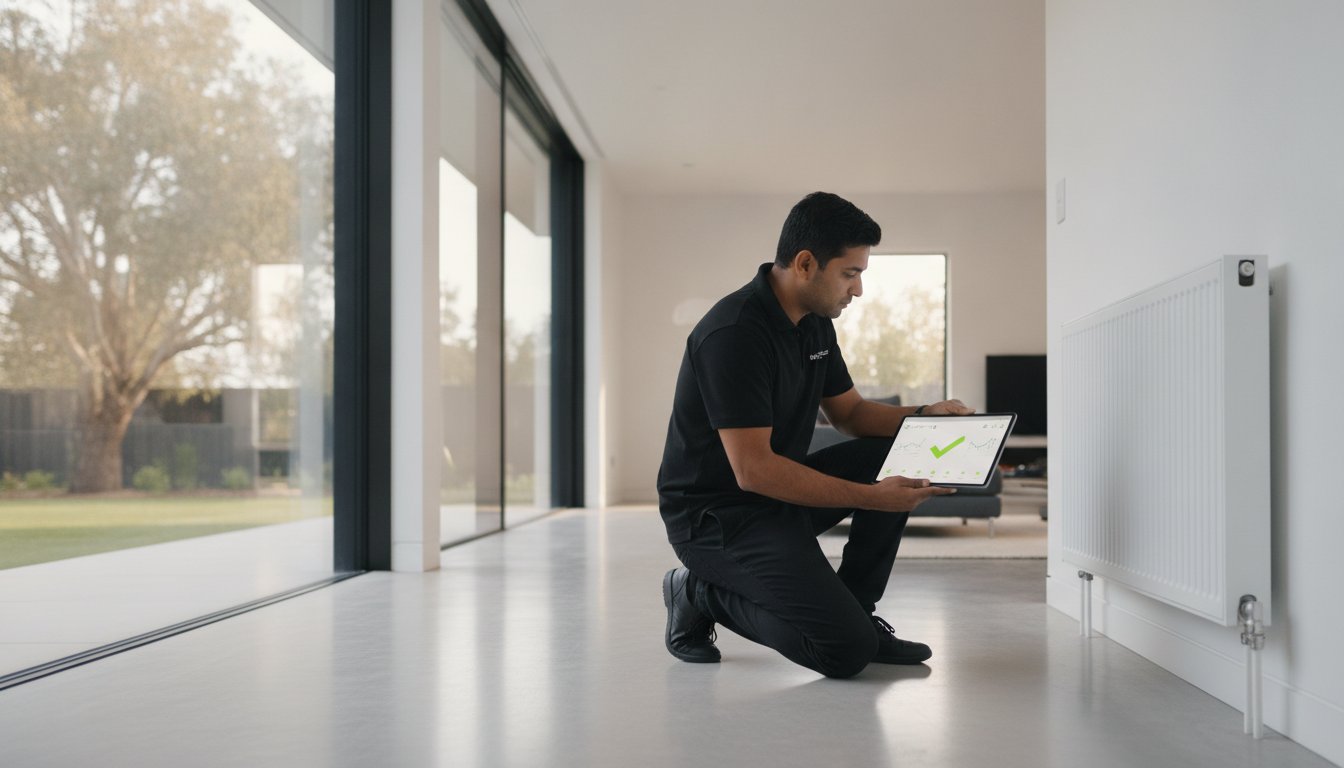
Hydronic Heating Commissioning: 2026 Melbourne Guide
Imagine spending thousands on a state-of-the-art heating system only to find yourself shivering in the study while the living room feels like a sauna. It’s a frustratingly common scenario for many Melbourne residents who assume that installation and operation are the same thing. In reality, the “fine-tuning” phase is where a collection of pipes and radiators transforms into a high-performance, health-focused comfort solution. Following a rigorous hydronic heating system commissioning checklist is the only way to bridge the gap between a basic setup and a truly premium experience.
We understand that you want more than just “working” heat; you want a silent, balanced system that doesn’t send your energy bills skyrocketing. With the 2026 introduction of the AS 5342 commissioning standards and the NCC’s 7-star efficiency requirements, precise calibration is no longer optional. This guide provides a comprehensive look at how we validate system health, from leak detection to smart control synchronization. You’ll learn exactly how to achieve even heat across every radiator panel and gain total confidence in your home’s long-term efficiency and comfort.
Key Takeaways
- Understand why formal commissioning is the essential final step to ensure your system meets its design efficiency and comfort targets.
- Follow our professional hydronic heating system commissioning checklist to verify system integrity through pressure testing and the removal of installation debris.
- Learn how hydraulic balancing ensures silent operation and perfectly even heat distribution across every radiator panel and floor circuit in your home.
- Discover how optimizing heat source controls, such as weather compensation, can significantly reduce energy consumption during Melbourne’s unpredictable winters.
- Ensure long-term reliability by securing a full commissioning report and a physical walk-through of your system’s isolation points and controls.
What is Hydronic System Commissioning and Why Does it Matter?
Commissioning is the bridge between a completed installation and a high-performance asset. It’s the formal process of testing, adjusting, and balancing every individual component to ensure they work as a single, cohesive unit. Think of it as the final tuning of a high-performance engine. Without a rigorous hydronic heating system commissioning checklist, your system is simply a collection of pipes and panels that may never reach its full potential. This phase confirms that the setup meets the original design intent, delivering the exact kilowatt output required for each specific room in your home.
Beyond performance, this step is a safety and administrative necessity. It’s the essential final stage before your manufacturer warranty period officially begins. Most premium European boiler and heat pump brands require a signed commissioning report to validate their guarantees. Skipping this process doesn’t just risk uneven heat; it can lead to “kettling” noises, air locks, and cold spots that undermine your investment from day one. By following a methodical approach, we ensure that Hydronic systems operate safely, reliably, and exactly as the engineers intended.
The Impact on Energy Efficiency and Longevity
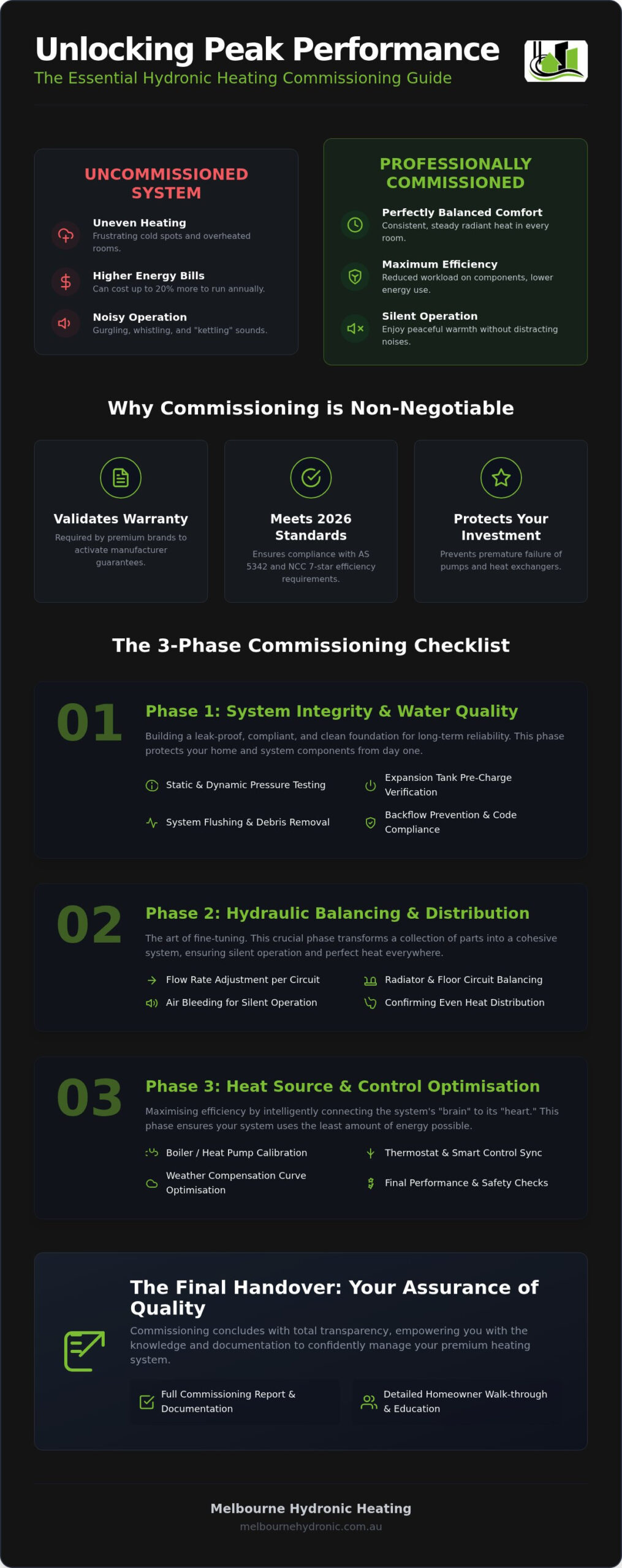
A correctly balanced system significantly reduces the workload on your electric heat pump or gas boiler. When the water flow is optimized, the heat source doesn’t have to work overtime to push warmth to the furthest radiator panels. This prevents premature component failure, particularly in circulating pumps and heat exchangers, which are often the most expensive parts to replace. Some industry professionals report that uncommissioned systems can cost up to 20% more to run annually due to short-cycling and inefficient heat transfer. By fine-tuning the system now, you’re protecting your long-term budget and the environment.
Health and Comfort Benefits
The primary reason Melbourne homeowners choose hydronic heating is the unparalleled comfort of radiant warmth. Commissioning ensures these benefits are fully realized by:
- Eliminating Temperature Swings: Unlike the “on-off” blasts of air from ducted systems, a commissioned hydronic circuit provides steady, consistent heat.
- Ensuring Silent Operation: We bleed air and balance pressures to remove the gurgling or whistling sounds that indicate a poorly tuned system.
- Maintaining Air Quality: By validating that the system operates via radiation rather than forced air, we guarantee the dust-free, allergy-friendly environment your family deserves.
Achieving this level of comfort requires more than just a quick check; it demands a deep understanding of Melbourne’s unique climate challenges and the technical specifications of modern hydronic hardware.
Phase 1 Checklist: System Integrity and Water Quality
Building commissioning serves as the essential quality assurance foundation for any premium HVAC installation. The first step on our hydronic heating system commissioning checklist focuses on the physical integrity of the circuit. We don’t just fill the pipes and hope for the best; we subject the entire network to rigorous static and dynamic pressure tests. This process ensures a 100% leak-free environment before a single drop of heated water circulates through your home, protecting your floors and ceilings from potential water damage.
Pressure Testing and Leak Detection
Victorian plumbing regulations require a specific “wet test” duration for residential installs. This typically involves maintaining the system under pressure for at least 30 minutes to detect even microscopic weeping at joints or fittings. During this phase, we also verify the pre-charge levels of the expansion tank against your home’s total water volume. If these aren’t matched perfectly, the fluctuating pressure during heating cycles will eventually stress the boiler or heat pump components. We also confirm that all backflow prevention valves meet current Victorian Building Authority codes, ensuring your household’s drinking water remains completely isolated from the heating fluid. Since May 1, 2026, we also ensure all new components meet the mandatory lead-free plumbing requirements.
Water Treatment and Power Flushing
It’s a common misconception that new systems are clean. In reality, new pipes often contain copper shavings, flux residue, or installation debris. Professional power flushing is critical even for brand-new installations. It clears these obstructions before they can clog delicate heat exchangers or pump impellers. Once the system is thoroughly flushed, we conduct pH testing on the fluid. Melbourne’s water supply has a specific mineral profile that can become corrosive if the pH level isn’t balanced. We apply high-grade corrosion inhibitors tailored to these local conditions and document the exact dosage for your records. This step is vital for the longevity of your radiator panels and prevents the internal “sludge” buildup that kills efficiency.
Finally, we verify the operation of automatic air vents and microbubble separators. Removing dissolved oxygen is the only way to prevent internal oxidation and eliminate those annoying gurgling sounds in the pipes. If you’re concerned about the health of an existing setup, a professional system service can often restore the silent, efficient operation you expect from premium hydronics.
Phase 2 Checklist: Hydraulic Balancing and Distribution
Once the system is sealed and clean, we move to the most critical stage for comfort: hydraulic balancing. This is where we ensure that the heated water doesn’t just take the path of least resistance. Without careful adjustment, radiators closest to the boiler or heat pump will “short-circuit” the system by stealing all the thermal energy, leaving distant rooms cold. A comprehensive hydronic heating system commissioning checklist must include a full sweep of the home to verify that every hydronic towel rail, trench heater, and radiator panel receives its engineered share of flow.
We perform Temperature Differential (Delta T) checks across the supply and return lines of every circuit. We look for a consistent drop in temperature as the water releases its heat into the room, which confirms the system is extracting energy efficiently. This verification ensures the pump isn’t overworking and that the heat source operates within its most efficient range. Professionals often refer to industry-standard Sample Hydronic System Commissioning Checklists to verify that each circuit performs according to its specific design parameters. Following a detailed hydronic heating system commissioning checklist ensures that every zone delivers the silent, even warmth you expect from a premium installation.
Radiator Panel Calibration
We start by adjusting the lockshield valves on each panel. This isn’t the same as the user-facing thermostat; it’s a permanent internal setting that throttles the flow to radiators near the heat source so that distant panels aren’t starved. We also check for trapped air pockets in the top of the panels. Even a small amount of air can block water flow entirely, creating cold spots and causing internal corrosion. Finally, we ensure that all thermostatic radiator valves (TRVs) are oriented correctly for maximum airflow. If a TRV is blocked by furniture or curtains, it’ll shut off the heat prematurely, leaving your room chilly despite the system running perfectly elsewhere.
Underfloor Heating Manifold Tuning
For homes featuring underfloor heating, the manifold serves as the central brain of distribution. We set the flow meters for each individual loop to the precise litres per minute (LPM) specified in the design. We then verify that each electronic actuator opens and closes correctly when triggered by its corresponding wall thermostat. For timber or tile finishes, we pay special attention to floor sensor calibration. These sensors are vital for protecting your premium floor finishes from overheating while maintaining that luxurious underfoot warmth that makes Melbourne winters far more bearable.
Phase 3 Checklist: Heat Source and Control Optimisation
The final technical stage of our hydronic heating system commissioning checklist moves from the pipes to the “brain” of the installation. Setting the “weather compensation” curve is a non-negotiable step for any modern Melbourne home. This feature uses an outdoor sensor to communicate with your heat source, automatically adjusting the water temperature based on the external climate. On a crisp 5°C morning in the Dandenongs, the system runs at a higher temperature; as the sun warms the house in the afternoon, the system dials back. This prevents energy waste and ensures your living spaces don’t overshoot their target temperature, keeping your home within the NCC 2026 annual energy use budget.
Electric Heat Pump vs. Gas Boiler Setup
Commissioning an electric heat pump hydronic heating system requires a different expertise than traditional gas boilers. Heat pumps are most efficient when they “sip” energy, operating with a coefficient of performance (COP) of 3.5 to 4.0. To achieve this, we optimize the flow temperature for your specific radiator or floor circuit requirements. If the flow is set too high, the heat pump works harder than necessary, slashing its efficiency. For gas systems, we focus on boiler modulation and gas pressure testing. This ensures the burner doesn’t “hunt” or short-cycle, which protects the heat exchanger and extends the unit’s lifespan. We also verify pump speed settings to match the hydraulic resistance of your home’s unique pipework layout.
Thermostat and Zoning Verification
Smart controls are only as good as their calibration. We test every WiFi-enabled hub and smart thermostat to ensure they’re communicating perfectly with the zone valves. This verification guarantees that when you call for heat in the master bedroom, you aren’t accidentally warming the guest wing. We also help you establish “setback” temperatures. By maintaining a floor of roughly 16°C overnight, the system doesn’t have to work twice as hard to recover in the morning. This strategy is essential for maximizing the benefits of your investment and ensuring the silent, seamless operation that defines a premium hydronic experience. For commercial clients who require this level of precision across all building systems, you can learn more about integrated security and communication solutions from Peninsula Smart Care.
If you’re planning an upgrade, make sure your provider includes a detailed heat pump performance validation as part of their standard commissioning process.
The Final Handover: Documentation and Homeowner Education
The technical work concludes with the finalization of your hydronic heating system commissioning checklist, but our job isn’t finished until you feel completely confident in your new system. This handover phase is where we transfer the “keys” of your home’s comfort to you. We provide a comprehensive commissioning report that details every flow rate, pressure test result, and control setting established during the process. In Victoria, we also issue a formal Compliance Certificate, which is a legal requirement for all regulated plumbing work. This documentation is vital for your records, as it validates your manufacturer warranty and proves that the installation meets all 2026 Australian standards.
We don’t just hand over a folder and leave. A physical walk-through of the system is a standard part of our premium service. We’ll show you the location of the main isolation valves, the expansion tank, and the filling loop. If an emergency ever arises, you’ll know exactly how to isolate the system safely. We also take the time to walk through your smart control interface, ensuring you know how to adjust schedules, set “vacation modes,” and monitor your energy usage via the mobile app.
Your Handover Folder Checklist
To ensure you have everything needed for the life of the system, we compile a dedicated handover folder. This package includes:
- As-Built Drawings: Detailed diagrams showing pipe runs and manifold locations, which are essential if you ever plan future renovations.
- Equipment Specifications: The specific brand and model details of your hydronic boiler or electric heat pump.
- Zone Schedule: A clear map of which thermostat controls which room, making it easy to manage your home’s micro-climates.
- Warranty Cards: All registration details for the panels, heat source, and pumps are organized and ready for your signature.
Next Steps for Long-Term Performance
Maintaining a high-performance system is simple once you know what to look for. We recommend checking the system pressure gauge once a month; it should typically sit between 1.0 and 1.5 bar when the system is cold. If you notice the pressure dropping frequently or hear gurgling noises in the radiator panels, it’s a sign that a small amount of air has entered the circuit. While modern systems are largely “set and forget,” an annual hydronic heating service is the best way to maintain peak efficiency. We suggest booking your first 12-month maintenance visit with Melbourne Hydronic Heating to check the water chemistry and clean the magnetic filters, ensuring your system remains silent and efficient for decades to come.
Securing Peak Performance for Your Melbourne Home
Professional commissioning is the vital final step that transforms a collection of high-end components into a seamless, high-performance heating solution. By following a rigorous hydronic heating system commissioning checklist, you ensure your home benefits from perfectly balanced radiators, silent operation, and the maximum possible energy efficiency. Whether you’ve installed a modern electric heat pump or a high-efficiency gas boiler, this precision tuning is what guarantees the longevity and reliability you expect from your investment.
Don’t leave your system’s performance to chance. With over 30 years of local Melbourne experience, our fully licensed and insured specialists are experts in both traditional and all-electric hydronic technologies. We understand the unique demands of the Victorian climate and the latest 2026 regulatory standards. Book a Professional Commissioning or Service with Melbourne Hydronic Heating today to ensure your system operates at its absolute peak. We’re here to help you enjoy the ultimate in silent, healthy, and sustainable warmth for many winters to come.
Frequently Asked Questions
How long does a professional hydronic commissioning take?
A standard residential commissioning usually takes between four and eight hours. The exact duration depends on the complexity of your home and the number of radiator panels or floor circuits involved. Larger multi-story properties in Melbourne often require a full day to ensure every lockshield valve is adjusted and every air pocket is removed. This methodical approach ensures the system is perfectly tuned before the first winter chill arrives.
Can I commission my own hydronic heating system?
It’s a legal requirement in Victoria that a licensed professional performs this work. You shouldn’t attempt to commission the system yourself because it involves complex hydraulic balancing and safety testing. DIY attempts often lead to noisy operation, high energy bills, and will void your manufacturer’s warranty. Trusting a specialist ensures your home stays safe and your investment remains protected under Australian standards.
What happens if a hydronic system is not balanced correctly?
Poor balancing leads to significant comfort and efficiency issues. You’ll likely notice that rooms closest to the heat source are uncomfortably warm, while distant bedrooms remain cold. The system may also produce annoying gurgling or whistling sounds. Using a professional hydronic heating system commissioning checklist prevents these “short-circuits” and ensures the pump doesn’t wear out prematurely by working against unnecessary hydraulic resistance.
Do I need to re-commission my system after a repair?
Any major intervention, such as a boiler replacement or adding a new radiator, requires a re-commissioning of that circuit. Even minor repairs can shift the hydraulic balance of the entire home. Re-checking the flow rates ensures the new components integrate seamlessly with the existing network. This maintains the silent, even heat distribution you expect while preventing any new air locks from forming after the system has been opened.
Why is my radiator hot at the bottom but cold at the top?
This symptom almost always indicates trapped air within the radiator panel. Since air is lighter than water, it gathers at the top and prevents the warm fluid from circulating through the entire surface area. While bleeding the radiator often solves the immediate problem, frequent air buildup suggests the initial hydronic heating system commissioning checklist was incomplete or that there’s a minor leak allowing oxygen into the sealed circuit.
What is a commissioning report and why do I need one for insurance?
A commissioning report is a formal document that validates your system’s performance and safety. It provides proof to insurance providers and manufacturers that the installation meets Victorian Building Authority standards. Without this report, you may struggle to process a warranty claim if a major component fails. It serves as a technical “birth certificate” for your heating system, documenting every pressure test and flow setting.
How often should a Melbourne hydronic system be re-checked?
We recommend a professional system check every 12 months to maintain peak performance. Melbourne’s varying water quality can lead to internal corrosion if inhibitor levels aren’t monitored. Regular annual maintenance, which costs approximately $220 + GST as of early 2026, ensures the magnetic filters are clean and the weather compensation settings are still optimized for the current climate. This proactive approach prevents small issues from becoming expensive repairs.
Does a heat pump system require different commissioning than a gas boiler?
Heat pumps operate on entirely different principles than gas boilers and require specialized tuning. They rely on much lower flow temperatures to achieve maximum efficiency and a high coefficient of performance. Commissioning a heat pump focuses heavily on flow rate optimization and anti-cycle timers to protect the compressor. In contrast, gas boiler commissioning prioritizes burner pressure and gas modulation to ensure safe and efficient combustion.