
How to Replace Your Gas Boiler with a Heat Pump in Melbourne: The 2026 Electrification Guide
By March 2027, the option to replace an old gas hot water system with like-for-like technology will officially end for Victorian homeowners. If you are planning to replace gas boiler with heat pump melbourne, you aren’t just following a government mandate; you are securing a more efficient, gas-free future for your home. It’s understandable to feel a bit overwhelmed by rising gas connection fees or technical questions surrounding radiator compatibility and noise levels.
You deserve a heating solution that is silent, allergy-friendly, and significantly cheaper to run without sacrificing that deep, hydronic warmth we all love during a Victorian winter. We’re here to show you that transitioning to a future-proof system is a precision engineering upgrade that enhances your lifestyle. This 2026 guide provides the complete roadmap for your transition. We will break down the latest rebate changes, explain how to stack incentives for up to $2,700 in savings, and show you how a professional heat load audit ensures your home stays perfectly cozy even on the coldest July mornings.
Key Takeaways
- Understand why rising gas tariffs and new Victorian regulations make 2026 the ideal time to transition your home to a sustainable electric system.
- Learn how a professional heat load audit helps you replace gas boiler with heat pump melbourne while ensuring your existing radiators are compatible with lower-temperature flow.
- Navigate the complex landscape of financial incentives to stack Solar Victoria rebates and VEU certificates for maximum upfront savings.
- Discover the essential technical steps for a successful installation, including electrical switchboard preparation and system power flushing for peak efficiency.
- See how a design-led, system-first approach ensures your new heat pump operates silently and provides premium, allergy-friendly comfort for decades.
The 2026 Shift: Why Melbourne Homeowners are Replacing Gas Boilers
Melbourne’s energy landscape is undergoing its most significant transformation in decades. As we move through 2026, the decision to replace gas boiler with heat pump melbourne has transitioned from an environmental choice to a practical necessity. At its core, this shift involves moving away from gas combustion toward air-to-water technology. Understanding how a heat pump works is simple: instead of burning fuel to create heat, it extracts thermal energy from the outdoor air and transfers it into your home’s water reticulation system. It’s a cleaner, more sophisticated way to maintain the premium comfort you expect.
For thirty years, we’ve seen how Melburnians value the deep, consistent warmth of hydronic systems. However, the fuel source that powers that warmth is changing. Electrification isn’t just about “going green”; it’s about staying ahead of a market that is rapidly moving away from gas. By making the switch now, you align your property with the Victorian Government’s 2026 electrification roadmap, ensuring your home remains modern, efficient, and highly tradable in a gas-free future.
Victoria’s Gas Phase-out and Energy Market Realities
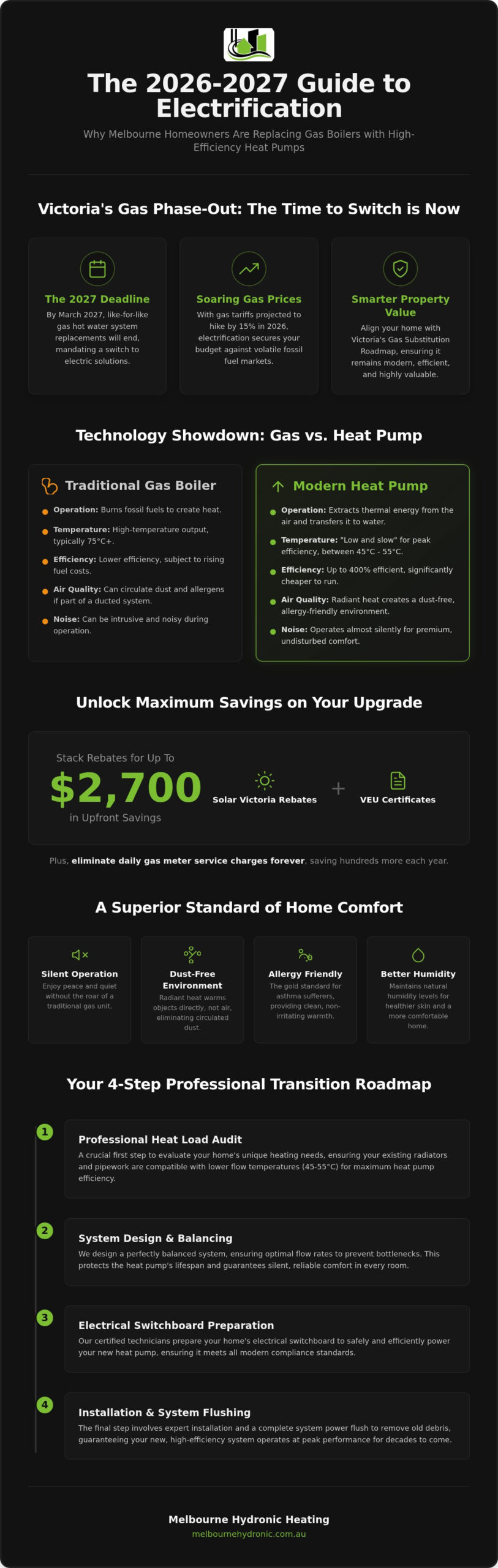
The financial landscape for gas in Victoria is becoming increasingly difficult to justify. With projected gas price hikes of 15% for 2026, families are looking for ways to decouple their household budgets from volatile fossil fuel markets. The Victorian Government’s Gas Substitution Roadmap has already set the stage by banning gas connections in new homes as of January 2024. For existing homeowners, the removal of gas connection fees and the upcoming March 2027 requirement to replace aging gas hot water systems with electric alternatives makes hydronic heating the most logical candidate for electrification. It’s the only system that offers the same high-density warmth without the mounting costs of gas infrastructure. When you choose to replace gas boiler with heat pump melbourne, you effectively eliminate the daily service charges associated with a gas meter, putting hundreds of dollars back into your pocket every year.
The Premium Comfort and Health Advantage
Beyond the budget, there is a profound health benefit to this transition. Traditional ducted heating systems circulate dust, allergens, and dry air, which can exacerbate respiratory issues. In contrast, heat pump hydronics use radiant heat. This method warms objects and people directly, creating a dust-free environment that is the gold standard for Melbourne’s asthma sufferers. Modern European-engineered heat pumps operate almost silently, removing the intrusive roar of old-fashioned gas units. By creating a closed-loop system, you’re not just heating a house; you’re investing in a well-being-focused lifestyle that aligns with a sustainable, eco-friendly future. The result is a home that feels more natural, maintains better humidity levels for your skin, and operates with the technical precision that modern engineering demands.
Heat Pump Compatibility: Evaluating Your Existing Hydronic System
When you decide to replace gas boiler with heat pump melbourne, the most critical technical consideration isn’t the unit itself, but how it interacts with your home’s existing infrastructure. Traditional gas boilers are high-temperature machines, designed to push water through your system at 75°C or higher. Modern heat pumps, however, are engineered for “low and slow” operation. They achieve their highest efficiency when the water flow temperature is kept between 45°C and 55°C. This “temperature gap” is the primary reason why a professional system evaluation is non-negotiable for a successful transition.
Infrastructure compatibility also extends to your pipework and pumps. Because heat pumps operate at lower temperatures, they often require a higher flow rate to deliver the same amount of thermal energy into your rooms. If your existing pipes are too narrow, it can create “bottlenecks” that force the heat pump to work harder, potentially shortening its lifespan. Ensuring your system is balanced and the flow rates are optimized is the only way to guarantee the silent, reliable comfort that hydronic heating is famous for.
Low-Temperature vs. High-Temperature Heat Pumps
Targeting a 45°C flow temperature is the “sweet spot” for maximizing efficiency and securing lower energy bills. However, for some older Melbourne properties, replacing every radiator to accommodate low temperatures isn’t practical. In these cases, high-temperature heat pumps are an excellent alternative. These specialized units can reach 70°C, acting as a more direct substitute for a gas boiler. While the hardware cost is typically higher, they allow you to keep your existing radiators. It’s a strategic trade-off between your initial investment and long-term operational savings.
Radiator Sizing and System Efficiency
Determining if your current hydronic heating panels are compatible requires calculating their surface area relative to the room’s heat loss. In many Melbourne homes, radiators were originally “oversized,” which is now a significant advantage. A larger panel can emit more heat even when the water inside is only 45°C. If your panels are too small, we often recommend upgrading a few key units to higher-output models rather than replacing the entire system. Conversely, underfloor systems are naturally “heat pump ready” because they are designed to run at low temperatures from the start.
Precision controls and modern zoning are the final pieces of the puzzle. Smart thermostats allow the heat pump to modulate its output based on the weather outside, ensuring you don’t waste energy when Melbourne’s climate shifts unexpectedly. To ensure your home is fully prepared for this upgrade, it’s wise to book a technical system audit before you replace gas boiler with heat pump melbourne, allowing us to identify any necessary optimizations for peak performance.
Financial Incentives and 2026 Rebates in Melbourne
Navigating the financial side of a home upgrade can feel daunting, but the 2026 incentive structure in Victoria is specifically designed to reward homeowners who lead the way in electrification. When you choose to replace gas boiler with heat pump melbourne, you aren’t just buying a new appliance; you’re entering a multi-layered system of state and federal support. By stacking various certificates and rebates, savvy homeowners can reduce the upfront cost of their new system by up to $2,700. This financial cushion makes the transition to a premium, gas-free lifestyle more accessible than ever before.
The key to maximizing these savings lies in understanding the interplay between different programs. We handle the technical precision of the installation, but we also ensure you don’t leave money on the table by missing out on eligible “stacked” incentives. These include Victorian Energy Upgrades (VEU), federal Small-scale Technology Certificates (STCs), and direct state rebates.
Maximising Victorian and Federal Incentives
The Solar Homes hot water rebate remains a cornerstone of the 2026 electrification strategy. As of July 1, 2026, the eligibility criteria have been refined to focus on middle-income households, with a combined annual income cap of $150,000. To qualify, your property must be valued at under $3 million and your existing gas system must be at least three years old. The standard rebate covers 50% of the purchase price up to $1,000, but this increases to $1,400 if you select a locally made heat pump system manufactured with at least 50% local parts.
- Solar Victoria Rebate: Up to $1,400 for eligible owner-occupiers.
- Federal STCs: An upfront discount applied at the point of sale based on the unit’s efficiency.
- VEU Certificates: Additional discounts provided through accredited providers for carbon reduction.
It’s vital that your installer manages the “deeming” process for these energy certificates. Professional handling ensures that all technical specifications meet the strict Victorian standards required for a successful claim.
Long-Term ROI: Gas vs. Electric Running Costs
While the initial discounts are impressive, the true value of the decision to replace gas boiler with heat pump melbourne is found in the long-term operational savings. With gas rates projected to rise by 15% this year, the efficiency of an electric heat pump becomes a powerful hedge against inflation. If you have solar panels, the “Solar Synergy” is even more significant. By timing your heat pump to run during peak daylight hours, you effectively heat your home using free, self-generated energy. On average, switching from gas to an efficient heat pump can save a Melbourne household approximately $400 per year on energy bills. For a typical four-bedroom Melbourne home, the transition to a heat pump coupled with existing solar PV typically achieves a full return on investment within five to seven years through cumulative energy savings and the elimination of gas daily supply charges.
The Installation Process: Transitioning Your Home Step-by-Step
Swapping an appliance is simple, but re-engineering a hydronic system requires technical mastery. When you replace gas boiler with heat pump melbourne, the journey begins with a professional heat load audit. We calculate the exact thermal requirements of every room, accounting for window sizes, insulation, and ceiling heights. This ensures your new heat pump is perfectly sized. We don’t rely on “guesstimate” rules of thumb that often lead to inefficient operation or insufficient warmth. A properly sized unit runs longer at lower speeds, which is the secret to the silent, consistent comfort that defines a premium home.
Beyond the unit itself, we prepare your home’s infrastructure for the electric future. This includes assessing your electrical switchboard. Since heat pumps are high-draw appliances, some older Melbourne homes require a circuit upgrade to handle the load safely. Simultaneously, we manage the decommissioning of your old gas boiler. This involves the safe removal and professional capping of gas lines, ensuring your transition to a gas-free home is permanent and secure.
Infrastructure Upgrades: Power Flushing and Pipework
A mandatory step in our process is power flushing. Many older Melbourne properties feature legacy iron-pipe systems that have accumulated “sludge” or magnetite over decades. If this debris remains, it can quickly clog the delicate, high-efficiency heat exchanger of your new electric unit. Our high-velocity cleanse removes these contaminants, protecting your investment. We also conduct rigorous pressure tests to identify micro-leaks. High-pressure electric systems can expose tiny weaknesses in old pipework that a standard gas boiler might have hidden, so we ensure the entire loop is sound before the final commissioning.
Timeline and Household Disruption
A typical installation takes between 2 and 4 days. We understand that losing your heating during a Melbourne winter is a concern, so we plan the transition to minimize downtime. The final stage is commissioning, where we fine-tune the weather compensation curve. This allows the system to automatically adjust its water temperature based on the outdoor climate, ensuring you never waste a kilowatt of energy. Before we leave, we’ll provide a comprehensive briefing on your new controls. We want you to feel completely confident in managing your home’s new, intelligent comfort system. To ensure your transition is handled with this level of technical precision, book a professional heat load audit with our specialist design team today.
Why Melbourne Hydronic Heating is Your Partner in Electrification
Transitioning away from gas is a significant technical milestone for any Victorian home. When you choose to replace gas boiler with heat pump melbourne, you aren’t just hiring a contractor; you’re partnering with specialists who have navigated the unique challenges of the local climate for over 30 years. As a family-owned business, we combine the stability of a local institution with the technical agility of a team that stays at the forefront of international heating technology. We understand that your home’s comfort is a long-term investment, which is why we approach every electrification project with the precision of a master designer.
Our “System-First” philosophy sets us apart from general providers who might simply swap one box for another. We analyze the entire ecosystem of your home, from the insulation in your ceiling to the specific output of your existing radiator panels. By optimizing the distribution network rather than just the heat source, we guarantee a system that operates silently and provides that signature hydronic warmth even on the frostiest winter mornings. This holistic approach ensures that your new electric system delivers the premium lifestyle benefits you expect from a high-end hydronic installation.
Custom System Design and Engineering
Every home has a unique thermal envelope that requires a tailored solution. Our engineers carefully match heat pump hydronic heating systems to your specific floorplan and current insulation levels. We exclusively use Tier-1 European components, ensuring that your system is built with parts designed for longevity and global performance standards. Local experience is the only way to accurately account for Melbourne’s rapid temperature fluctuations and high humidity when calculating room-by-room heat loss. This technical foresight prevents the common pitfall of under-sizing, which can lead to higher running costs and reduced comfort during extreme weather events.
Lifetime Support and Maintenance
Our commitment to your comfort doesn’t end when the final pipe is capped. We maintain dedicated local teams in both Geelong and Melbourne for rapid response and ongoing care. Our annual service programme is designed to keep your heat pump running at its theoretical maximum efficiency, protecting your return on investment for decades to come. We specialize in the complex task of integrating new electric technology with legacy radiator systems, troubleshooting technical challenges that general plumbers might overlook. You gain the peace of mind that comes with knowing a specialist is always just a phone call away. Ready to take the first step toward a gas-free home? Book your 2026 heat pump consultation with Melbourne Hydronic Heating today and ensure your transition is handled with the expertise your home deserves.
Future-Proof Your Home’s Comfort Today
Transitioning to a gas-free home is more than just a response to shifting regulations; it’s an investment in premium comfort and long-term financial stability. When you replace gas boiler with heat pump melbourne, you effectively eliminate volatile gas tariffs while creating a healthier, dust-free environment for your family. A successful upgrade relies on technical precision, from the initial heat load audit to the final commissioning of your weather-compensated controls.
With 30+ years of Victorian experience, we specialize in the engineering mastery required to optimize your existing radiators through professional power flushing and expert system design. As a Solar Victoria Authorised Retailer, we ensure you maximize every available incentive while delivering a system built for the unique demands of our local climate. It’s time to trade outdated combustion for silent, high-efficiency electric warmth. Request a Fixed-Price Heat Pump Transition Quote and let us help you build a future-proof home that stays perfectly cozy for decades to come.
Frequently Asked Questions
Will a heat pump be as warm as my old gas boiler?
Yes, a correctly sized heat pump provides the same deep, radiant warmth you expect from hydronic heating. While gas boilers provide short bursts of high-intensity heat, heat pumps use a “low and slow” approach. They maintain a steady water temperature that keeps your home’s thermal mass stable. This results in a more consistent indoor climate without the “cycling” or cold spots often felt with older gas systems.
How much does it cost to replace a gas boiler with a heat pump in Melbourne?
The total investment depends on your home’s size, the number of radiator panels, and necessary infrastructure work like power flushing or electrical upgrades. While we don’t provide fixed pricing without a technical audit, the upfront cost is significantly offset by available 2026 rebates. A professional heat load audit is the essential first step to determine the exact requirements for your property’s specific thermal envelope.
Can I use my existing radiator panels with a heat pump?
Most existing radiator panels are compatible with modern heat pumps. Because heat pumps operate most efficiently at lower flow temperatures, we evaluate your radiators to ensure they have enough surface area to heat your rooms effectively. In many Melbourne homes, radiators were originally oversized for gas, which makes them perfect for a heat pump transition. If a specific room requires more output, we simply upgrade that individual panel.
Are heat pumps noisy, and where should they be installed?
Modern European heat pumps are engineered for silent operation, often producing less noise than a standard dishwasher. We install the outdoor unit in a location with plenty of airflow, using anti-vibration mountings to ensure no sound transfers into your living spaces. Ideally, the unit is placed away from bedroom windows or quiet outdoor entertaining areas to maintain a peaceful environment for you and your neighbours.
Do I need to upgrade my electrical switchboard for a hydronic heat pump?
It’s possible, especially in older Melbourne homes with original electrical infrastructure. Because a heat pump is a high-draw appliance, it requires a dedicated circuit. During our initial system audit, we check your switchboard’s capacity to ensure it can safely handle the new load. If an upgrade is needed, it’s a straightforward process that ensures your entire home’s electrical system is modernised and safe for the electric future.
What government rebates are available for heat pump hydronics in Victoria for 2026?
Victorian homeowners can access significant incentives to replace gas boiler with heat pump melbourne. As of July 2026, the Solar Victoria rebate provides up to $1,000 for most systems, or $1,400 if you choose a locally made unit. By “stacking” these with federal Small-scale Technology Certificates (STCs) and Victorian Energy Upgrades (VEU) discounts, you can reduce the upfront cost of your new system by up to $2,700.
How long does the transition from gas to electric hydronics take?
A typical installation is completed within two to four days. This timeframe covers the decommissioning of your old gas boiler, a comprehensive power flush of your radiator circuit, and the commissioning of the new heat pump and smart controls. We plan the transition carefully to ensure your home’s downtime is kept to an absolute minimum, even during the peak of a Melbourne winter.
Is it worth switching to a heat pump if I don’t have solar panels?
Yes, a heat pump is still far more economical than gas due to its incredible efficiency. For every unit of electricity it uses, it can produce up to four units of heat. With projected gas price hikes of 15% in 2026 and rising daily connection fees, moving to electric heating lowers your bills regardless of solar. However, if you do add solar later, your heat pump will transform those panels into a free source of home heating.