

Future-Proofing Your Home Heating System: The 2026 Melbourne Guide
The gas heater in your hallway isn’t just getting older. As of March 1, 2027, it’s officially on the path to becoming a relic of the past due to Victoria’s mandatory phase-out of gas systems at their end-of-life. Future proofing your home heating system is no longer a luxury for the eco-conscious; it’s a financial and regulatory necessity for every Melbourne homeowner. With gas prices climbing and health concerns like asthma increasingly linked to ducted gas heating, the decisions you make in 2026 will determine your comfort and property value for the next two decades.
We understand that navigating the shift from gas to electric can feel like a daunting technical hurdle. This guide will show you exactly how to design a resilient, all-electric system that can reduce your heating costs by up to 70% while creating a cleaner, allergy-friendly environment. We’ll provide a clear roadmap for transitioning to high-efficiency electric heat pumps and hydronic solutions, ensuring you stack the right rebates to save over $2,000 on your upgrade before federal incentives decrease in 2027.
Key Takeaways
- Understand how Victoria’s 2027 gas regulations impact your property and why fuel versatility is the foundation of a resilient home.
- Learn why future proofing your home heating system involves transitioning to electric heat pumps to escape rising gas prices and ensure long-term compliance.
- Discover the “silent asset” of hydronic infrastructure, which allows you to upgrade your heat source without disturbing your home’s interior distribution.
- Identify actionable steps to improve your home’s thermal performance and create a healthier, dust-free environment for your family.
- Explore how a 20-year comfort plan integrates premium components like underfloor heating and radiator panels for maximum energy efficiency.
What Does Future-Proofing Your Home Heating Actually Mean?
Future proofing your home heating system is more than just a trend; it’s a strategic investment in your property’s core infrastructure. In the context of Melbourne’s climate, this means designing a Central heating system that remains efficient, compliant with Victoria’s evolving 2027 regulations, and cost-effective as energy markets fluctuate. It is the difference between a temporary fix and a permanent asset that adds tangible value to your home.
A truly future-ready strategy rests on three fundamental pillars. First, fuel versatility allows you to switch energy sources as prices change or regulations tighten. Second, energy efficiency ensures every watt of power translates into maximum warmth with minimal waste. Third, system longevity guarantees that your investment doesn’t end up in a landfill in a decade. Many homeowners adopt a “wait and see” approach, but delaying these decisions often leads to “panic buying” when an old gas boiler finally fails during a July cold snap. By then, government rebates may be lower, and emergency installation costs are always higher. Taking a proactive stance on future proofing your home heating system ensures you aren’t forced into an expensive, sub-optimal choice later.
The Resilience Factor: Why Longevity Matters
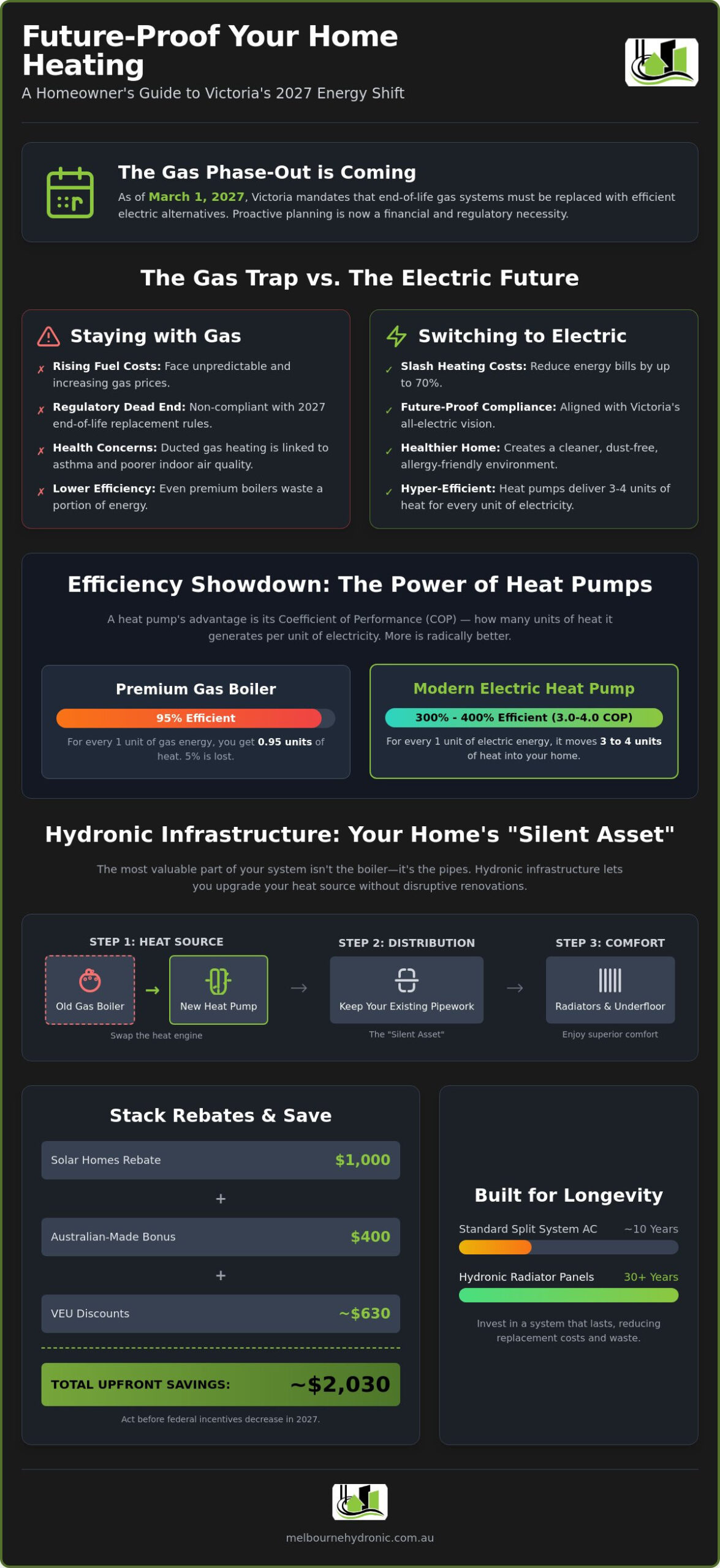
A standard split system air conditioner typically lasts about 10 years before the plastics degrade and the electronics fail. In contrast, high-quality hydronic radiator panels are engineered to last 30 years or more. While the initial setup requires more thought, the total cost of ownership over two decades is significantly lower because you aren’t replacing the entire system every few years. System resilience is the ability to swap heat sources without tearing out walls. This technical durability provides a sense of security, knowing your home’s comfort isn’t tied to the lifespan of a “disposable” appliance.
Adaptability to New Energy Sources
The most valuable part of your heating system isn’t the heater itself, but the pipework hidden beneath your floors or behind your plaster. A future-proofed home uses a “low-temperature” distribution network. This setup is essential for modern electric heat pumps, which operate most efficiently at lower water temperatures than traditional gas boilers. By installing these assets now, you create a hybrid-ready environment. Your home becomes a flexible platform that can adapt to whatever the Melbourne energy market looks like in 2035, protecting both your comfort and your long-term budget.
Navigating Victoria’s Energy Shift: From Gas to Electric
Victoria’s energy landscape is changing faster than many expected. By March 1, 2027, the Victorian Government’s Gas Substitution Roadmap mandates that existing homes must replace end-of-life gas hot water systems with efficient electric alternatives. For rental properties, the requirements are even broader, covering both hot water and space heating. Future proofing your home heating system isn’t just about environmental responsibility anymore. It’s a strategic move to avoid the “gas trap” where rising network charges and fuel costs make traditional heating an expensive luxury. Staying on the gas grid is becoming increasingly costly as the state pivots toward a cleaner, electric future.
Transitioning to an electric setup doesn’t mean you have to abandon the superior comfort of your current hydronic system. Modern electric heat pumps have emerged as the gold standard for Victorian homes in 2026. These units integrate with your existing pipework, allowing you to replace a gas boiler while keeping your high-quality radiator panels or underfloor coils. It’s a clean swap that preserves your interior aesthetics while drastically improving your home’s energy profile.
The Victorian Gas Substitution Roadmap Explained
The push toward electrification is backed by significant financial support for Melbourne and Geelong residents. Eligible households can currently access a Solar Homes rebate of up to $1,000 for high-efficiency heat pumps, which can increase to $1,400 for Australian-made units. When you stack these with Victorian Energy Upgrades (VEU) discounts, the total upfront savings can reach $2,030. Melbourne’s climate is perfectly suited for air-to-water heat pumps. These systems extract heat from the outside air even on cold mornings, providing a reliable and steady warmth that gas simply can’t match for efficiency.
Efficiency Metrics: COP and Your Energy Bill
The secret to a heat pump’s dominance lies in its Coefficient of Performance (COP). While a premium gas boiler might reach 95% efficiency, a modern heat pump operates at 300% to 400% efficiency. This means for every 1kW of electricity consumed, the system delivers up to 4kW of heat into your home. Switching from gas to an efficient electric system can save the average Melbourne household approximately $400 a year on energy bills. You can explore the specific technical requirements for these systems in our guide to heat pump hydronic heating. If you’re planning your next upgrade, our team can help you navigate these rebates to ensure your transition is as cost-effective as possible.
Why Hydronic Infrastructure is the Ultimate Future-Proof Asset
While the heat source acts as the “engine” of your home, the distribution system is the “chassis” that determines the quality of your comfort. Most Melbourne homes currently rely on forced-air ducted systems that push air through ceiling or floor vents. This method is inherently inefficient; air loses heat quickly and creates uneven temperature pockets throughout a room. Hydronic infrastructure uses water, which is a far superior thermal conductor. By circulating warm water through a closed-loop network, you create a silent, reliable asset that doesn’t just heat a space; it transforms the entire living environment.
The versatility of this infrastructure is a core component of future proofing your home heating system. A single pipe network can power high-performance hydronic heating panels in bedrooms, luxurious underfloor coils in the living area, and even heated towel rails in the bathroom. This multi-emitter approach ensures each space receives the specific type of warmth it needs. Modern panels have also evolved from bulky industrial units into sleek design features that complement contemporary Melbourne architecture, proving that technical efficiency doesn’t have to compromise style.
Health and Wellness: The Hidden Benefit
Standard ducted systems are often the primary culprits for poor indoor air quality. They act as a highway for dust, pet dander, and allergens, circulating them throughout the house every time the fan kicks in. For the millions of Australians living with asthma, this is a significant health concern. While upgrading your heating is a great step, maintaining a home free of other contaminants is equally vital; for those needing professional assistance with moisture-related issues, ABC Mould Cleaning Solutions offers specialized services to ensure your living spaces remain safe and breathable. Radiant heat from hydronic systems doesn’t rely on fans or air movement. These systems eliminate the “burn-off” smell of scorched dust and stop the constant movement of airborne particles, creating a sterile and healthy atmosphere. Radiant heat provides a more consistent thermal envelope, warming objects and people directly rather than just filling a room with “pockets” of hot air.
Zoning for Maximum Efficiency
A future-proofed home doesn’t waste energy heating empty rooms. Hydronic systems allow for precise control through smart thermostats and Thermostatic Radiator Valves (TRVs). These components let you set different temperatures for every room, ensuring the master suite is cozy while the guest wing remains at a lower, energy-saving setting. For those seeking the ultimate in whole-floor comfort, underfloor heating offers unparalleled zoning benefits by turning the entire floor into a slow-release thermal mass. This granular control is essential for managing energy bills as Victoria transitions toward an all-electric future.
5 Actionable Steps to Future-Proof Your Heating System Today
Moving from a high-emission home to a resilient, low-cost environment requires a methodical approach. Practical steps are the bridge between understanding the 2027 regulations and actually enjoying a comfortable, healthy home. Future proofing your home heating system is best achieved through a sequence of upgrades that prioritise the building envelope first and the mechanical hardware second. This ensures your new system isn’t oversized or working harder than it needs to.
- Step 1: Conduct a Thermal Audit. Before changing your heater, identify where your home loses energy. With 60% of Victorian homes currently under-insulated, a professional audit can pinpoint draughts and thermal bridges that undermine even the most efficient heat pump.
- Step 2: Upgrade to a High-Efficiency Heat Source. Whether you choose an electric heat pump or a high-efficiency boiler, selecting a unit with a high Coefficient of Performance (COP) is critical. For most Melbourne residents, the electric heat pump is the 2026 gold standard for long-term compliance.
- Step 3: Optimise Distribution. Ensure your radiator panels or underfloor coils are sized for low-temperature operation. This allows your heat source to run at its most efficient setting, extending the life of the equipment.
- Step 4: Implement Smart Controls. Use digital thermostats and zoning to eliminate heating in unoccupied rooms. This granular control can slash energy consumption by ensuring you only pay for the warmth you actually use.
- Step 5: Clear System Sludge. If you have an existing system, schedule a professional hydronic heating service. Removing internal debris is essential before installing a new heat pump to prevent damage and maintain flow efficiency.
The Importance of System Maintenance
Maintenance is often the most overlooked part of future proofing your home heating system. Over time, the water inside your pipes can react with metal components, creating a black sludge known as magnetite. This sludge settles in radiators and heat exchangers, forcing the system to use more energy to achieve the same temperature. Power flushing is a specialised cleaning process that acts as a reset button for your infrastructure. A Melbourne-based specialist can perform this service to ensure your pipework is pristine and ready for the technical demands of a modern electric heat pump. If you want to protect your investment, you can book a system health check with our expert team to identify potential efficiency gaps.
Insulation and the “Whole-Home” Approach
No heating system can perform its best in a “leaky” house. There is a powerful synergy between high-quality insulation and radiant heat. The Victorian Energy Upgrades (VEU) program now offers rebates covering 70-90% of ceiling insulation costs, making this the perfect time to seal your home’s thermal envelope. When combined with double glazing, your hydronic panels can maintain a steady, comfortable temperature with minimal energy input. This holistic approach allows your heat pump to run at lower, more efficient temperatures, significantly reducing your annual running costs while providing a whisper-quiet living environment.
Designing Your 20-Year Comfort Plan with Melbourne Hydronic
Building a home that stands the test of time requires a partner who understands the local landscape as well as the technical specifications of modern engineering. With over 30 years of experience designing bespoke systems for Melbourne and Geelong, we’ve seen energy trends come and go. Our focus has always remained on the long-term viability of your investment. Future proofing your home heating system isn’t a one-size-fits-all task; it’s a meticulous design process that balances your home’s unique architectural features with the latest in sustainable technology. We’re committed to creating environments that aren’t just warm, but are also healthy and prepared for the all-electric shift.
Our design philosophy goes beyond simply picking a heat pump or boiler. We consider your home’s specific orientation, the placement of windows, and the thermal properties of your building materials. A North-facing living room with expansive glass has vastly different thermal requirements than a shaded, South-facing study. By analyzing these variables, we ensure your hydronic system is perfectly calibrated to maintain a steady thermal envelope without overworking the equipment. This level of local expertise is vital for navigating the complex web of Victorian energy rebates and the 2027 gas phase-out regulations mentioned earlier in this guide. We help you secure the maximum incentives while building a system that remains compliant for decades.
Consultation to Commissioning: The Melbourne Hydronic Way
When you sit down for a professional design consultation, you aren’t just talking to a salesperson. You’re engaging with a consultant who understands the nuances of radiant heat. We walk through your property to identify the best solutions for each zone, whether that involves discreet hydronic trench heating for floor-to-ceiling windows or stylish hydronic towel rails that add a touch of luxury to your morning routine. As a family-owned business, we take a personal interest in the longevity of your system. Our commission process is thorough, ensuring every valve is balanced and every smart control is synced for peak performance. This hands-on approach provides the peace of mind that comes from knowing your comfort is backed by three decades of local trust.
Get Started on Your Future-Proof Journey
The transition to a cleaner, more efficient home starts with a single, well-informed decision. We invite you to explore our showcase of Melbourne installations to see how we’ve helped other homeowners successfully navigate the shift away from gas. Future proofing your home heating system today protects your family from rising energy costs and ensures your property remains a premium asset for the next generation. Don’t wait for your current system to fail during a Melbourne winter. Take the proactive step toward a healthier, more sustainable living environment. Book a consultation with Melbourne’s hydronic experts today.
Secure Your Comfort for the Decades Ahead
The transition toward an all-electric Victoria is no longer a distant possibility; it’s a current reality that requires thoughtful planning. By prioritizing high-efficiency electric heat pumps and robust hydronic infrastructure today, you protect your home from the volatility of gas prices and the constraints of upcoming 2027 regulations. You’ve seen that future proofing your home heating system is as much about the quality of your pipework as it is about the heat source itself. This strategic approach ensures a healthier, dust-free environment for your family while significantly reducing your long-term energy expenditure.
As a family-owned and operated business with over 30 years of local Melbourne experience, we specialize in designing systems that marry technical precision with everyday luxury. We’re specialists in high-efficiency electric heat pumps and can help you navigate the available rebates to maximize your investment. Don’t leave your winter comfort to chance. Request a Future-Proof Heating Quote for Your Melbourne Home and take the first step toward a cleaner, more resilient living space. We’re here to ensure your home remains a sanctuary of warmth for the next generation.
Frequently Asked Questions
Is gas heating being banned in Melbourne?
Gas isn’t banned for existing homes yet, but Victorian regulations are tightening significantly to encourage electrification. From March 1, 2027, all existing homes must replace end-of-life gas hot water systems with efficient electric alternatives like heat pumps. Rental providers face even broader requirements, including the replacement of gas space heaters, making gas a less viable and more expensive option for the future.
Can I use my existing hydronic radiators with an electric heat pump?
Yes, most existing hydronic radiator panels are compatible with modern air-to-water heat pumps. Because heat pumps operate most efficiently at lower water temperatures than traditional gas boilers, a specialist should assess your current radiator sizing. This technical check ensures your distribution network can provide sufficient warmth during a Melbourne winter without overworking your new, high-efficiency heat source.
How much can I save on energy bills by switching to electric hydronic heating?
Switching from gas to a high-efficiency electric heat pump can save the average Melbourne household approximately $400 annually on energy bills. These systems achieve 300% to 400% efficiency, which can reduce water heating costs by 60% to 70% compared to gas. This efficiency makes the transition a vital step in future proofing your home heating system against rising fossil fuel costs.
Are electric heat pumps noisy for neighbours in Melbourne suburbs?
Modern electric heat pumps are engineered for whisper-quiet operation and typically produce noise levels comparable to a standard split-system air conditioner. Most premium units operate at decibel levels similar to a quiet conversation or light rainfall. Professional placement by an experienced installer ensures your system remains unobtrusive for both your family and your neighbours while complying with local council noise regulations.
Does hydronic heating help with asthma and allergies?
Hydronic systems are an excellent choice for families managing asthma and allergies because they rely on radiant heat rather than fans. Unlike ducted systems, they don’t circulate dust, pet dander, or pollen throughout your living spaces. This creates a much cleaner indoor environment and eliminates the “dry air” sensation and burnt-dust smells often associated with traditional forced-air heating methods.
What is the lifespan of a modern electric hydronic heat pump?
A high-quality electric heat pump typically has an operational lifespan of 15 to 20 years when supported by regular professional maintenance. While the mechanical unit has a shorter life cycle than the hydronic radiator panels, which often last over 30 years, the system’s core infrastructure remains a permanent asset. Regular servicing prevents internal wear and ensures the system maintains its high efficiency.
How long does it take to retrofit a future-proof heating system?
A standard retrofit, such as swapping a gas boiler for an electric heat pump, usually takes between three and five business days to complete. If you’re installing a completely new network of radiator panels or underfloor coils, the process may extend to seven days. Our team follows a methodical installation plan to minimize disruption to your home while ensuring every component is perfectly calibrated.
Are there Victorian government rebates for switching from gas to electric heating?
Yes, Victorian households can currently stack multiple incentives to significantly reduce the upfront cost of future proofing your home heating system. Eligible residents can access a Solar Homes rebate of up to $1,000, which can reach $1,400 for Australian-made products. When combined with Victorian Energy Upgrades (VEU) discounts, total savings can reach $2,030 for households with an income under $210,000.