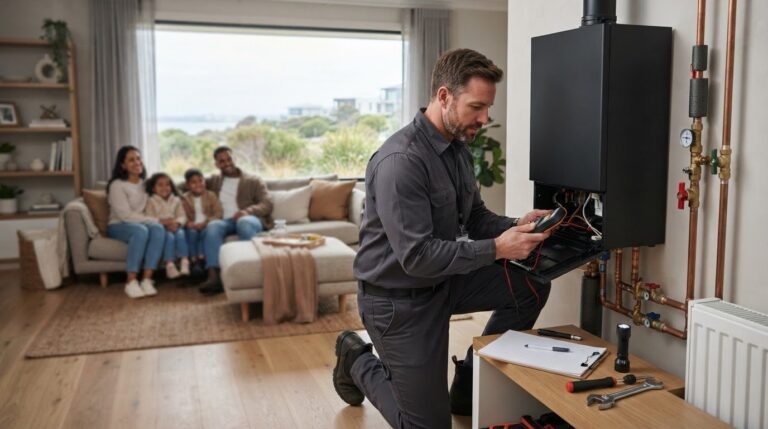
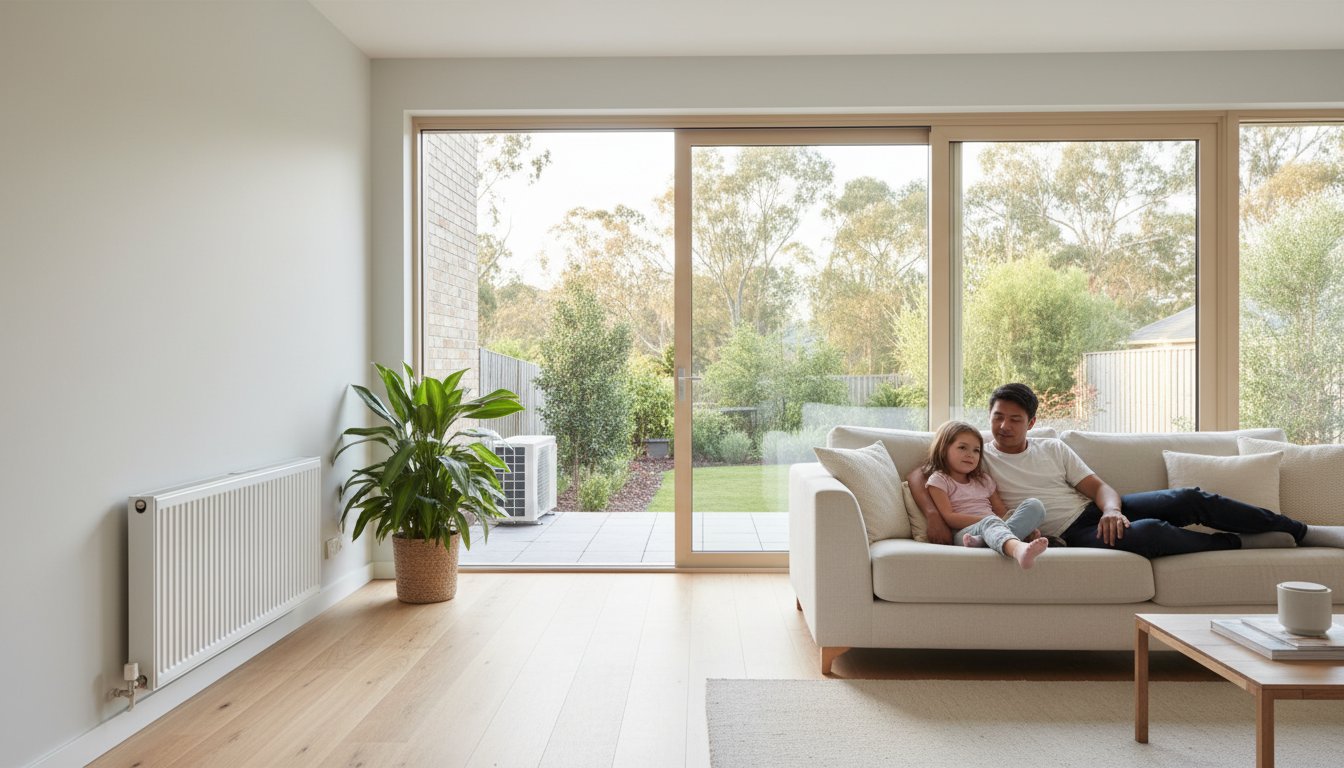
Melbourne Heat Pumps: The 2026 Guide to Hydronic Electrification
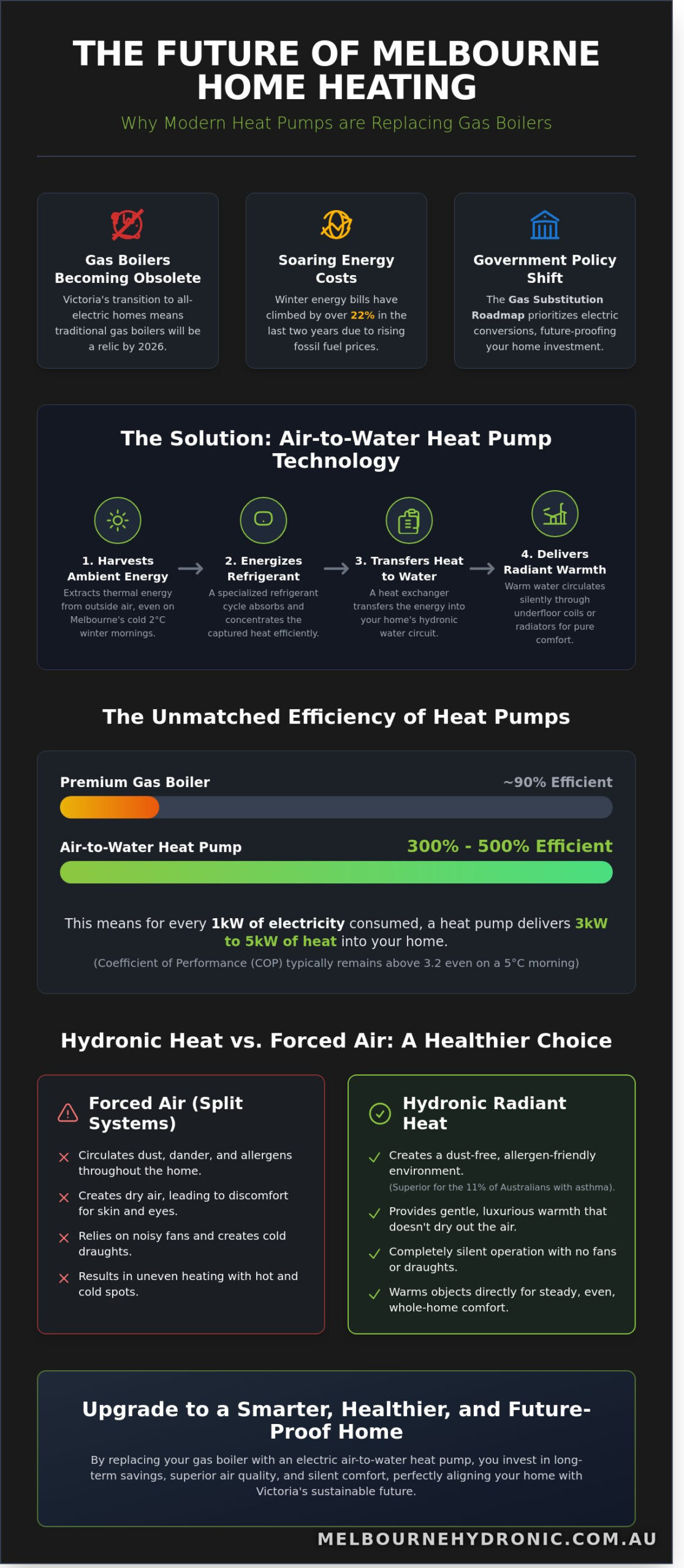
By 2026, the traditional gas boiler will be a relic of Victoria’s architectural history as the state’s transition to all-electric homes reaches a critical tipping point. You aren’t alone if you’ve watched your winter energy bills climb by more than 22% over the last two years. It’s a common frustration for Melbourne homeowners who love the premium, dust-free warmth of hydronic systems but feel trapped by the rising costs of fossil fuels. We believe you shouldn’t have to choose between a sustainable lifestyle and the silent, allergen-friendly comfort your family deserves.
This guide explores how modern melbourne heat pumps are revolutionizing home heating by replacing inefficient gas burners with advanced air-to-water technology. You will learn the vital differences between domestic hot water units and hydronic heating systems to avoid costly installation mistakes. We will also provide technical clarity on noise ratings and outdoor unit placement for the latest European-engineered models. By the end of this article, you’ll have a clear, expert-backed roadmap to future-proof your home with a system that delivers year-round efficiency and total peace of mind.
Key Takeaways
- Understand how air-to-water technology harvests ambient energy to provide consistent, high-efficiency warmth even during Melbourne’s coldest 2°C winter mornings.
- Discover why melbourne heat pumps are the essential upgrade for homeowners looking to navigate Victoria’s gas phase-out and rising energy tariffs.
- Learn how to seamlessly integrate modern electric heat pumps with existing hydronic heating panels to maintain a dust-free, allergen-friendly home environment.
- Gain expert insights into calculating the required kW capacity for your specific floor plan while identifying available Victoria rebates to maximize your investment.
- Realise the long-term value of professional hydraulic design and local Victorian expertise in ensuring a silent, sustainable, and premium heating solution.
What are Melbourne Heat Pumps for Hydronic Heating?
Melbourne heat pumps represent the next generation of home climate control, specifically designed to replace aging gas boilers with a sustainable, electric alternative. Unlike traditional combustion-based systems, an air-to-water heat pump extracts thermal energy from the outside air and transfers it into a closed-loop water circuit. Even when Melbourne temperatures dip to 2°C on a July morning, these units use a specialized refrigerant cycle to harvest ambient heat. This energy then circulates through underfloor coils or wall-mounted radiators, providing a silent, consistent warmth that gas simply cannot match.
It’s vital to distinguish between a “hot water heat pump” used for domestic taps and a dedicated “hydronic heat pump.” While both use similar physics, hydronic systems are engineered for high-duty cycles and the precise temperature modulation required for whole-home heating. The core system consists of an outdoor compressor unit, which captures ambient energy, and an indoor heat exchanger or “hydrobox” that transfers that heat into your home’s water pipes. This setup allows melbourne heat pumps to operate efficiently without the carbon footprint of methane gas.
The Science of Air-to-Water Energy Transfer
The efficiency of these systems is a significant leap forward for Victorian households. While a premium condensing gas boiler might reach 90% efficiency, air-to-water heat pumps operate at 300% to 500% efficiency. This means for every 1kW of electricity consumed, the system delivers 3kW to 5kW of heat to your living spaces. In the context of Melbourne winters, the Coefficient of Performance (COP) is the ratio of heat energy delivered to the home compared to the electrical energy consumed by the unit, typically remaining above 3.2 even during a 5°C morning.
- Refrigeration Cycle: The unit uses R32 or R290 refrigerant to absorb heat at low temperatures.
- Heat Exchange: A plate heat exchanger transfers this energy to the water circuit.
- Variable Speed: Inverter technology adjusts the compressor speed to match the exact heating load of the house.
Hydronic vs Split System Heat Pumps
Many homeowners confuse standard split systems with hydronic melbourne heat pumps. Split systems blow dry, recycled air, which often circulates dust, pet dander, and allergens throughout the room. Hydronic systems use radiant heat instead. This method warms objects and people directly through water-filled pipes, making it a superior choice for the 11% of Australians living with asthma. There are no cold draughts or noisy fans; there is only a steady, luxurious warmth that maintains a stable thermal mass within the building structure.
Choosing water-based distribution over air ducts offers a noticeable improvement in air quality. Because hydronic systems don’t rely on forced air, they don’t dry out your skin or eyes during long winter nights. The heat is distributed evenly through floor slabs or elegant European-style radiators, ensuring there are no hot or cold spots in the house. This creates a dust-free environment that is fundamentally healthier for families and allergy sufferers in our local climate.
Why Melbourne Homeowners are Switching to Electric Heat Pumps in 2026
Melbourne’s heating landscape has shifted permanently since the state’s gas connection ban for new homes took effect on January 1, 2024. By 2026, high-end residential projects in Bayside and the Mornington Peninsula have fully embraced all-electric designs to maintain property value and long-term comfort. The appeal of melbourne heat pumps lies in their ability to provide consistent, radiant warmth without the noise or air quality issues associated with legacy gas-ducted systems. This transition isn’t just a trend; it’s a calculated response to a changing energy market where gas has become a volatile, high-cost fuel source.
For many families, the move toward electrification is driven by health and luxury. Traditional gas heaters can dry out the air and circulate allergens throughout the home. In contrast, electric hydronic heating systems provide a “soft” heat that doesn’t move dust. This makes them the preferred choice for modern architectural builds where floor-to-ceiling glass and open-plan living require precise, silent climate control. As we move deeper into 2026, the presence of a gas meter is increasingly seen as a liability rather than an asset in the Melbourne real estate market.
Government Policy and the Gas-Free Future
The Victorian government’s commitment to a net-zero future is codified in the Gas Substitution Roadmap, which has made gas-to-electric conversions a priority for the state. Under the Victorian Energy Upgrades (VEU) program, homeowners can currently access rebates ranging from A$1,200 to A$3,500 when replacing inefficient gas boilers with high-efficiency heat pumps. These incentives have shortened the payback period for premium installations significantly. By 2026, the infrastructure for electric hydronic heating has become the gold standard, supported by a grid that’s rapidly transitioning to renewable energy sources.
Energy Efficiency and Cost Savings
The financial logic for switching is undeniable for a typical 4-bedroom Melbourne residence. While a gas boiler consumes fuel at a 1:1 ratio at best, modern electric heat pumps achieve a Coefficient of Performance (COP) of 4.0 or higher. This means they deliver four units of heat for every one unit of electricity consumed. When you factor in the 28% rise in gas tariffs recorded between 2023 and 2025, the savings become substantial.
- Solar Synergy: Homeowners with a 6.6kW or 10kW solar PV system can offset nearly 70% of their heating costs by running the heat pump during daylight hours to “charge” the thermal mass of their floors.
- ROI Timelines: Most households see their initial investment offset by energy savings within 6 to 8 years, depending on their solar capacity and usage patterns.
- Maintenance: Electric systems have fewer moving parts than gas combustion engines, leading to lower annual service costs and a longer operational lifespan of up to 20 years.
If you’re considering a transition to a more sustainable home, you can consult with our expert team to receive a detailed efficiency projection tailored to your specific suburb and floor plan.
Comparing Heat Pumps to Traditional Melbourne Heating Systems
Choosing between a gas boiler and a heat pump isn’t just about the initial price tag. It’s about future-proofing your home against rising gas tariffs and meeting Victoria’s 2030 emissions targets. While gas boilers have been the standard for decades, melbourne heat pumps now offer a coefficient of performance (COP) of up to 4.5. This means for every 1kW of electricity used, you get 4.5kW of heat. In contrast, even a high-efficiency condensing gas boiler peaks at around 0.95kW of heat per unit of energy.
If your home already features hydronic heating panels, you don’t necessarily need to rip them out. Modern air-to-water systems integrate seamlessly with existing radiator networks. For homeowners in Geelong and Cheltenham, where new residential gas connections were phased out in January 2024, heat pumps are the primary choice for premium comfort. These systems excel when paired with underfloor piping, as the concrete slab acts as a giant thermal battery, holding heat for up to 12 hours after the system cycles off.
The Gas Boiler Replacement Dilemma
Deciding whether to fix an 8-year-old boiler or switch to a heat pump often comes down to the “tipping point” of repair costs. If a heat exchanger replacement exceeds A$1,500, upgrading is usually the smarter financial move. Retrofitting a 1920s Melbourne cottage presents unique challenges, particularly regarding pipe sizing. We often recommend “High-Temperature” heat pumps for these projects. These units produce water at 70°C, ensuring your traditional steel radiators provide the same radiant warmth as they did with gas without requiring a total home renovation.
System Longevity and Maintenance Requirements
A well-engineered heat pump lasts between 15 and 20 years, outperforming the 10-12 year average of modern gas units. You’ll need an annual check-up to clean filters and check refrigerant levels, but you’ll avoid the carbon monoxide risks associated with gas combustion. For those interested in the specifics of professional cleaning, you can find detailed guides from European specialists at ecoolklima.hu. Quality matters here. Ensuring your hydronic heating installation is handled by certified specialists is the only way to guarantee these lifespan figures. Professional balancing prevents the compressor from short-cycling, which is the leading cause of premature equipment failure in melbourne heat pumps.
Planning Your Installation: Sizing, Location, and Victoria Rebates
Precision is the foundation of an efficient hydronic system. If your unit is undersized, it won’t keep you warm during a 3°C July morning in Victoria; if it’s oversized, it’ll cycle on and off too frequently, wasting energy and shortening the compressor’s lifespan. Our engineers calculate the specific heat load of your home by analyzing floor area, ceiling heights, and window glazing types. For most 150-square-meter melbourne heat pumps installations, an 11kW to 14kW capacity is the standard for maintaining a dust-free, consistent 21°C indoor environment.
Electrical infrastructure is a primary consideration for 2026 retrofits. While smaller 5kW to 9kW units often run on single-phase power, larger homes requiring high-capacity heating usually benefit from a 3-phase power connection. This allows the system to operate at peak performance without putting undue stress on your home’s switchboard. For homeowners considering the transition from gas to electric, understanding the electrical requirements is crucial, which is why we recommend reading our comprehensive guide on heat pump hydronic heating to clarify these technical considerations. We always audit your existing electrical capacity before the installation date to avoid any surprises during the commissioning phase.
Navigating Solar Victoria and VEU Rebates
The Victorian government continues to incentivize the transition away from gas. As of January 2026, the Solar Victoria rebate offers A$1,000 for eligible heat pump hot water and heating upgrades. Beyond this, the Victorian Energy Upgrades (VEU) program provides certificates that can reduce your total project cost by an additional A$2,500 to A$3,800 depending on the carbon offset of your specific model. To qualify, you must use a licensed installer and ensure your property value is under A$3 million. We handle the paperwork to ensure these savings are applied directly to your quote.
Site Requirements and Unit Placement
Placement is about more than just aesthetics. Outdoor units require a steady stream of ambient air to extract heat effectively. We recommend a minimum clearance of 300mm from any wall and at least 1,500mm of clear space in front of the fan. Noise is rarely an issue with modern inverter technology; high-end melbourne heat pumps now operate at roughly 48 to 52 decibels, which is quieter than a standard dishwasher. If you prefer to hide the unit, we use architectural slatted screens that provide 70% open airflow, ensuring the system remains hidden without sacrificing its energy-efficient performance.
Ready to upgrade to a healthier, more efficient home? Contact Melbourne Hydronic Heating for a detailed heat load calculation and rebate eligibility check.
The Melbourne Hydronic Advantage: Expert Design and Local Support
Selecting high-quality hardware is only half the battle when transitioning to melbourne heat pumps. For a system to deliver its full potential, including running costs that are often 30% to 50% lower than traditional gas equivalents, the hydraulic design must be exact. Melbourne Hydronic Heating brings over 30 years of local Victorian experience to every project. We don’t just swap units; we engineer comprehensive thermal solutions that account for the specific plumbing and structural nuances of Melbourne homes. Whether you’re installing underfloor coils in a new build or retrofitting radiator panels into a heritage terrace, our technical precision ensures your system operates at peak seasonal performance factors.
Our Design-First Approach
We begin every project with a rigorous heat loss calculation. This isn’t a “rule of thumb” estimate. We analyze your home’s insulation values, window glazing types, and orientation to determine the precise kilowatt output required for Melbourne’s damp winters. It’s vital to match the heat pump’s lower flow temperatures with the correct radiator surface area. If the panels are too small, the system won’t reach a comfortable 21°C on a frosty July morning. We solve this by using high-output European panels or fan coils that provide rapid response times. By integrating smart thermostats, we enable zone-based control, ensuring you only heat the rooms you’re actually using.
Local Support and Warranty
Choosing a family-owned business based in Cheltenham means you’re investing in a long-term relationship. We’ve spent three decades refining our craft across Greater Melbourne, and we understand that a heating system is a 20-year investment in your family’s health. Our installations prioritize a dust-free and allergen-friendly environment, which is a significant health upgrade over forced-air systems. Because we’re local, our maintenance and repair teams are never far away. We provide genuine peace of mind through local warranties and a deep understanding of Victorian building regulations. Request your personalized Melbourne heat pump quote today to start your journey toward a more efficient, fossil-fuel-free home.
Secure Your Home’s Comfort with Modern Hydronic Technology
Transitioning to an electric home isn’t just about meeting 2026 sustainability standards; it’s about investing in a healthier living environment for your family. By choosing melbourne heat pumps for your hydronic system, you eliminate the dust and allergens typically circulated by traditional ducted heating. These systems provide a silent, consistent warmth that maintains your home’s luxury feel while slashing energy consumption. You’ll benefit from superior European engineering specifically designed to handle the volatile shifts of Victorian winters. It’s a practical step toward a fossil-fuel-free future that doesn’t compromise on quality or performance.
We’ve spent over 30 years perfecting climate control for local residents across the city. As specialists in European hydronic technology, we ensure every installation meets rigorous technical standards for maximum efficiency. You can visit our local Cheltenham showroom to see the equipment in action and get tailored advice from our support team. Taking control of your home’s energy footprint has never been more straightforward or rewarding. Our team is here to guide you through every sizing and location requirement for your property.
Get a Professional Heat Pump Consultation for Your Melbourne Home
We’re ready to help you create the warm, healthy, and sustainable home you deserve.
Frequently Asked Questions
Are heat pumps effective during a cold Melbourne winter?
Yes, modern air-to-water heat pumps are highly effective in the local climate. They maintain a Coefficient of Performance (COP) above 3.0 even when July temperatures drop to 2°C, meaning they produce three units of heat for every unit of electricity. These systems operate reliably down to -15°C, ensuring your home stays at a comfortable 21°C through the coldest Victorian nights without the efficiency loss seen in older technology.
How much does it cost to install a hydronic heat pump in Melbourne?
A professional installation for melbourne heat pumps typically ranges from A$12,000 to A$22,000 for a standard residential property. This price includes the premium European outdoor unit, buffer tanks, and the technical integration into your plumbing system. While the initial investment is higher than a gas boiler, most homeowners see a 60% reduction in annual energy costs, leading to a full return on investment within 8 years.
Can I use a heat pump with my existing radiator panels?
You can use your existing radiator panels, but we must first calculate their heat output at lower flow temperatures. Traditional gas boilers run at 75°C, while heat pumps are most efficient at 55°C. In about 70% of retrofits, we either install high-temperature heat pumps or replace a few key panels with larger versions. This ensures you still enjoy the dust-free, allergen-friendly warmth that makes hydronic heating a healthy choice.
Do heat pumps make a lot of noise?
Modern heat pump units are remarkably quiet, generating noise levels between 45 and 55 decibels. This sound is comparable to a quiet conversation or a domestic refrigerator hum. We use vibration-dampening mounts and strategic placement to ensure the unit doesn’t disturb your peace or your neighbors. Once inside your home, the system is completely silent, preserving the tranquil environment that defines a luxury hydronic heating system.
What is the difference between a hot water heat pump and a hydronic heat pump?
Domestic hot water heat pumps only provide water for your showers and taps, while hydronic heat pumps are heavy-duty machines designed for whole-home climate control. A hydronic unit typically has a capacity of 12kW to 16kW, which is significantly higher than the 3kW or 5kW found in standard water heaters. It’s the engine that drives your radiator panels or underfloor coils, providing consistent and healthy warmth across every room.
How long does a heat pump installation take?
A standard installation usually takes between 2 and 4 business days. If we’re performing a straightforward boiler swap, our technicians can often complete the electrical and plumbing integration in 48 hours. For more complex projects involving new radiator panels or underfloor pipework, the process might take 5 to 7 days. We follow a methodical, engineering-led schedule to ensure your system is pressure-tested and commissioned for peak performance before we leave.
What rebates are available for heat pumps in Victoria in 2026?
Victorian homeowners can currently access Solar Victoria rebates of up to A$1,000 for eligible heat pump installations. You can also benefit from the Victorian Energy Upgrades (VEU) program, which provides certificates that often reduce project costs by an additional A$800 to A$1,400. These incentives support the state’s transition away from gas. Our team manages the paperwork for you, ensuring you claim the maximum financial support available for your electrification project.
Is 3-phase power required for a whole-home hydronic heat pump?
Most Melbourne homes under 250 square meters don’t require a 3-phase power upgrade. We can typically install a 14kW heat pump on a dedicated 32-amp single-phase circuit. However, for larger properties that need 16kW to 25kW of heating capacity, 3-phase power is necessary to handle the electrical load safely. We’ll check your switchboard during our initial site assessment to determine if your current infrastructure supports your heating goals.