Is Hydronic Heating Worth It in Melbourne? A 2026 Cost & Comfort Analysis
By March 1, 2027, the option to replace your end-of-life gas hot water system with another gas unit will officially vanish from the Victorian market. This looming regulatory shift makes the question of whether is hydronic heating worth it in Melbourne more urgent than ever for homeowners facing another winter of dry skin, noisy ducts, and fluctuating bills. You’ve likely felt the frustration of a ducted system that leaves your living room at 24 degrees while your bedroom stays at 16, all while aggravating your family’s allergies with circulating dust and allergens.
It’s natural to hesitate at the $15,000 starting price for a hydronic heat pump transition, but we’re here to help you determine if the premium comfort and health benefits truly outweigh those upfront costs for your specific property. You’ll discover how to navigate the 2026 energy landscape, including the $1,400 Australian-made heat pump bonuses and the 35% running cost savings compared to ducted systems. We’ll provide a clear look at how a system with a 4.0 coefficient of performance future-proofs your home’s value and provides a dust-free, silent warmth that forced-air systems simply can’t match.
Key Takeaways
- Understand why radiant heat provides a consistent, draft-free warmth that adapts perfectly to Melbourne’s unpredictable “four seasons in one day” weather.
- Learn why is hydronic heating worth it in Melbourne for asthma and allergy sufferers by eliminating the dust and pollen circulation common in traditional ducted systems.
- Compare the 25-year lifecycle of hydronic components against standard split systems to see how the long-term ROI outweighs the initial setup costs.
- Discover how to future-proof your property value by integrating electric heat pumps and underfloor systems that meet the latest Victorian energy regulations.
- Identify the best installation strategy for your home type, from invisible underfloor heating in new builds to elegant radiator panels for heritage renovations.
Defining ‘Worth’: Why Melbourne Homes are Switching to Hydronic
Melbourne’s weather is a local legend, often delivering four seasons before lunch. This volatility demands a heating system that doesn’t just react to temperature drops but maintains a stable, comfortable environment. When homeowners ask is hydronic heating worth it in Melbourne, they’re often looking for a solution to the “on-off” cycle of traditional heaters that leaves rooms feeling alternately stuffy and chilly. While a standard split system might last 10 to 12 years before requiring a full replacement, a well-maintained hydronic system is a 30-year investment. This longevity is particularly valuable in Melbourne’s iconic Victorian terrace houses and mid-century renovations, where the lack of sub-floor or ceiling space makes bulky ductwork an architectural impossibility.
The Science of Radiant Heat vs. Convection
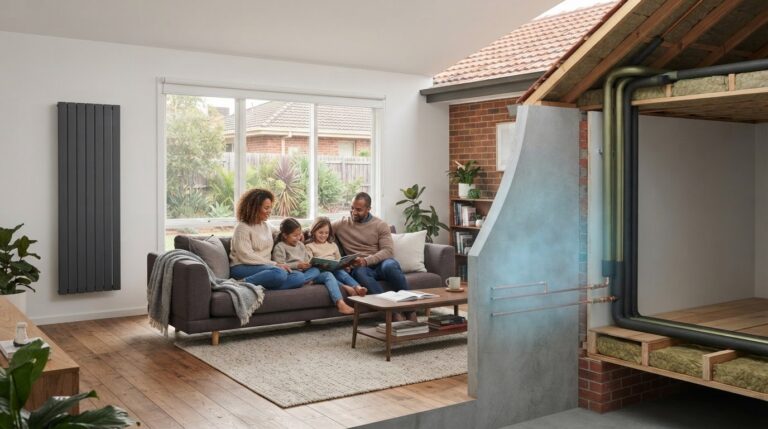
Traditional ducted systems rely on convection, which simply warms the air. This results in the “cold feet, hot head” syndrome as warm air rapidly rises to the ceiling, leaving the living zone uncomfortably cool. In contrast, hydronic systems use radiant heat to warm objects and people directly. To understand the physics behind this process, you can explore What is Hydronic Heating? which details how water serves as a superior medium for thermal energy transfer compared to air. By utilizing the thermal mass of your home, whether through concrete floor slabs or wall-mounted radiator panels, the system creates a consistent heat profile. You won’t experience the sudden drafts or dry air associated with forced-air units, which is a primary reason why is hydronic heating worth it in Melbourne for those prioritizing long-term lifestyle quality.
Comfort as a Metric of Home Value
True worth extends beyond monthly energy bills. In a city where property values are driven by premium finishes and sustainable technology, hydronic heating is a recognized hallmark of luxury. It operates in total silence, a feature that significantly improves sleep quality and the focus required for a modern home office. Renovators in suburbs like Northcote, Camberwell, or Hawthorn often choose this technology because it eliminates the need for intrusive, dust-collecting vents that mar beautiful floorboards or ornate ceilings.
- Silent Operation: There is no mechanical noise, fan forced air, or rattling ducts during the night.
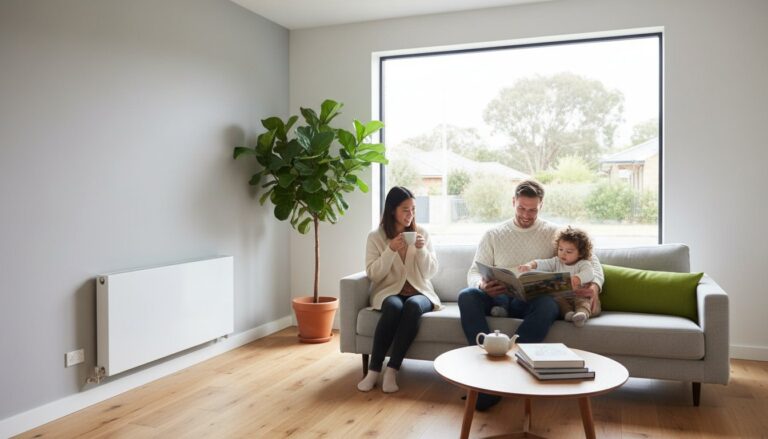
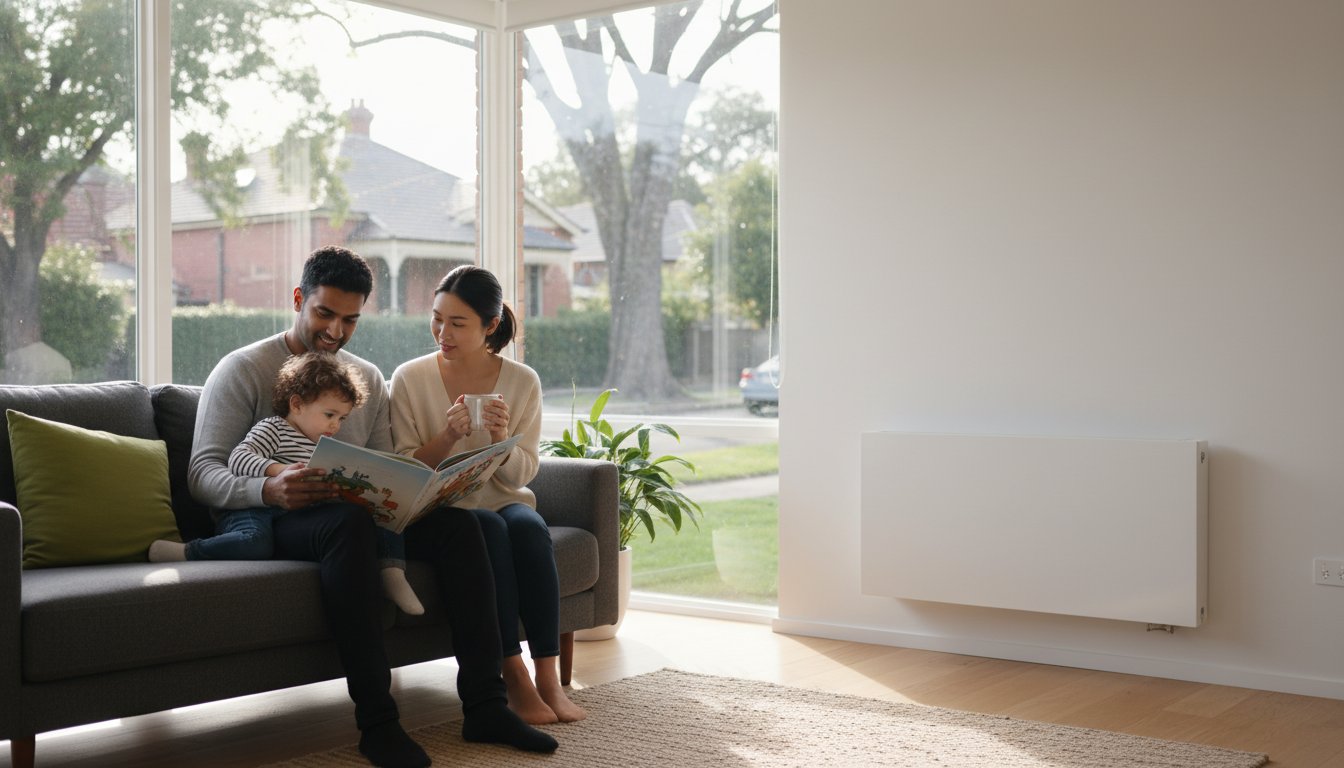
- Architectural Integrity: Slimline radiator panels or invisible underfloor coils preserve the original features of heritage homes.
- Property Appreciation: Melbourne real estate agents frequently highlight hydronic heating as a top-tier selling point that justifies a higher asking price.
The absence of forced air movement also means zero dust circulation. This makes it a cleaner, healthier choice for modern living, ensuring your home remains a sanctuary rather than a source of irritation.
The Health Argument: Is it Worth it for Asthma and Allergy Sufferers?
Hydronic heating stands as the gold standard for allergy-friendly living because it operates with zero air movement, unlike traditional forced-air systems. In a city frequently labeled the pollen capital of Australia, the question of is hydronic heating worth it in Melbourne becomes a matter of medical necessity for many families. During the peak grass pollen season, which typically peaks between October and December, ducted systems can act like delivery vents for outdoor allergens. They pull pollutants into your home and cycle them through every room. Families with young children or elderly residents often find that switching to a radiant system provides immediate relief from the constant sneezing and respiratory irritation that defines a Victorian winter.
Eliminating the ‘Dust Cycle’ in Victorian Homes
Traditional ducted heating systems are notorious for trapping skin cells, pet dander, and dust mites within their internal channels. Every time the fan kicks in, these microscopic irritants are redistributed throughout your living spaces. Radiant panels don’t require complex air filtration to stay clean because they don’t move air at all. They warm the room’s surfaces and occupants through electromagnetic waves, much like the sun’s warmth. Melbourne families who’ve made the switch often report a 40% reduction in night-time coughing and a noticeable decrease in asthma flare-ups. This isn’t just a comfort upgrade; it’s a fundamental change to the home’s internal ecosystem that eliminates the mechanical circulation of triggers.
Maintaining Natural Humidity Levels
The harsh, dry air produced by split systems and gas ducted heaters can be brutal on your health. It strips moisture from your sinus passages and skin, leading to the “winter itch” and cracked lips so common during Geelong and Melbourne winters. Hydronic heating preserves the natural humidity of your home. This moisture balance is also vital for your home’s infrastructure. Melbourne’s fluctuating humidity can cause expensive timber furniture and heritage floorboards to warp or crack when exposed to forced, dry air. Air quality metrics consistently show that radiant systems maintain a more stable environment, keeping the air fresh rather than “baked.”
Choosing a system that prioritizes your family’s respiratory health is a long-term investment in daily well-being. If you’re ready to breathe easier, exploring premium hydronic solutions tailored for local conditions is the first step toward a truly dust-free home. By removing the mechanical fan from the heating equation, you’re not just buying a heater; you’re creating a silent, allergen-friendly sanctuary that protects your family throughout the year.
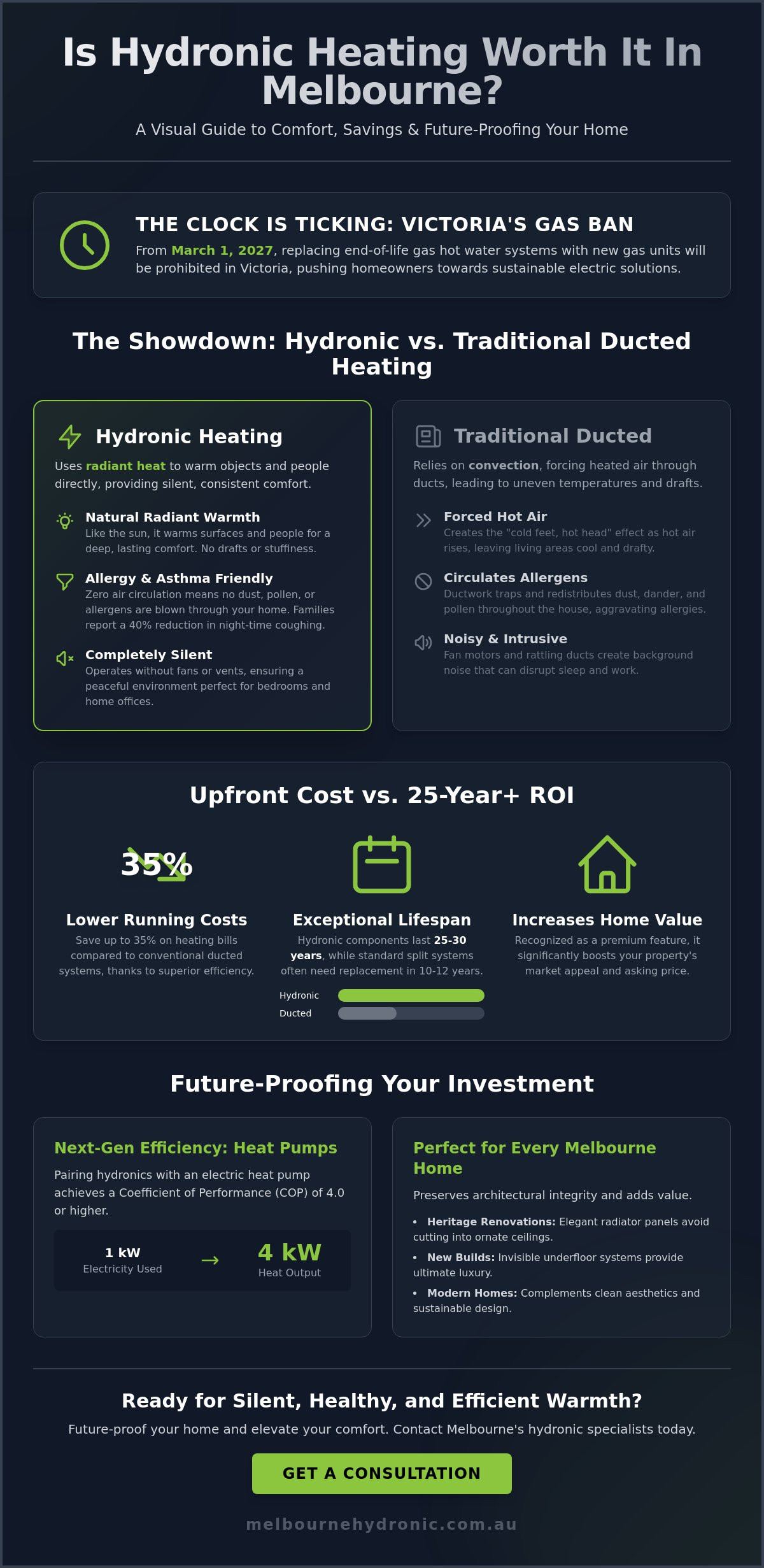
Crunching the Numbers: Upfront Costs vs. 25-Year ROI
Many homeowners focus solely on the initial invoice, but the true financial picture requires a longer lens. For a standard three-bedroom Melbourne home, retrofitting radiator panels costs between $1,300 and $1,600 per unit, including installation. If you’re outfitting eight rooms, the investment sits between $10,400 and $12,800 for the panels alone. When you ask is hydronic heating worth it in Melbourne, you’re really asking about the value of a system designed to last 25 to 30 years. Contrast this with standard split systems that typically require three full replacements over the same period. While the upfront cost is higher, you’re avoiding the “replacement cycle trap” that plagues cheaper alternatives.
To protect this investment, simple maintenance is key. Professional power flushing every few years removes internal sludge and keeps the system running at peak efficiency. This longevity translates directly into property value. In premium Melbourne suburbs like Toorak or Fitzroy, buyers view hydronic heating as a non-negotiable luxury asset. Real estate data consistently shows that homes with radiant heating attract higher bids because the heavy lifting of a future-proof installation is already done.
Running Costs: Gas vs. Electricity in 2026
The energy landscape in Victoria has shifted dramatically. With 2026 electricity prices projected between 32 and 35 cents per kilowatt-hour, efficiency is the only way to keep bills low. Modern air-to-water heat pumps operate with a coefficient of performance (COP) of 4.0. This means for every 1kW of power you pay for, you get 4kW of heat. Sustainability Victoria data indicates that a medium 160 square meter home costs roughly $1,657 annually to heat with gas hydronics, but switching to electric heat pumps can lower these costs by up to 35%. Implementing energy efficient heating strategies, such as smart zoning, can further halve your winter energy consumption.
The Hidden Costs of Cheap Alternatives
Cheap heating systems come with a “maintenance tax” that often goes ignored. Ducted systems require professional cleaning every two years to manage dust and allergen buildup, adding hundreds to your lifetime costs. Split systems also demand frequent servicing and filter changes to maintain their efficiency. Hydronic systems don’t have ducts to clean or filters to replace. You’re investing in a silent, sealed system that maintains its performance year after year. When you calculate the total cost of ownership over two decades, the initial “sticker shock” of hydronic heating dissolves into a smart, mathematical advantage for the savvy Melbourne homeowner.
Future-Proofing: The Shift to Electric Heat Pumps in Victoria
Victoria’s energy transition is no longer a distant goal; it’s a regulated reality. From January 1, 2027, all new Victorian homes must be all-electric, and by March 1, 2027, any end-of-life gas hot water system must be replaced with an electric alternative. This legislative push makes the decision of whether is hydronic heating worth it in Melbourne very clear for those looking to protect their home’s resale value. Electric heat pumps represent the peak of this transition, offering a way to heat your home without relying on fossil fuels. These systems also provide advanced zoning capabilities. You can deactivate heating in guest rooms or home offices when they aren’t in use, which significantly reduces unnecessary energy consumption compared to “whole-house” ducted systems.
Transitioning from Gas Boilers to Electric
A common concern for Melbourne homeowners is whether they can retrofit a heat pump to an existing radiator network. The answer is a resounding yes. While the starting price for replacing a gas boiler with a hydronic heat pump is approximately $15,000, the efficiency gains are substantial. On a typical 10°C Melbourne winter day, a high-quality heat pump maintains a Coefficient of Performance (COP) of 4.0. This means you receive four units of heat for every one unit of electricity purchased. To ease the transition, the Solar Victoria program offers rebates of up to $1,000. An additional bonus of up to $1,400 is available if you choose an eligible Australian-made system, making the switch to electric more accessible than ever before.
Maximising Solar Consumption
The true financial magic happens when you pair hydronic heating with rooftop solar. You can program your system to “pre-heat” your home during the day when solar production is at its peak. If you have underfloor hydronic pipes, your concrete floor slab acts as a massive thermal battery. It absorbs heat during the day and radiates it slowly throughout the evening. This strategy effectively bypasses the projected 2026 electricity costs of 32 to 35 cents per kilowatt-hour. By using your own generated power, you create a perfect hedge against energy market volatility while drastically reducing your carbon footprint. It transforms your home from an energy consumer into a self-sustaining sanctuary.
If you want to see how these incentives and technologies apply to your specific property, you can request a future-proofing consultation to plan your transition away from gas before the 2027 mandates take effect.
Verdict: Is it Worth it for Your Specific Melbourne Property?
The final decision on whether is hydronic heating worth it in Melbourne depends heavily on your property type and your long-term plans. If you’re building a new home in 2026, underfloor heating is practically a non-negotiable asset. With the cost per square meter for underfloor systems sitting between $45 and $65, it’s a cost-effective way to meet strict new energy efficiency ratings while providing invisible, luxurious warmth. For those planning to stay in their family home for 10 years or more, the investment pays for itself through health benefits and reduced energy bills. However, if you’re “flipping” a property in six months, the high upfront cost might not be fully recouped in such a short window, despite the added prestige.
For owners of heritage homes in suburbs like South Yarra or Williamstown, hydronic heating panels offer a way to modernize comfort without destroying period features. You don’t have to worry about dropped ceilings or ruined floorboards to accommodate bulky ducts. Before you sign a quote, ask yourself these five questions:
- Does anyone in my household suffer from asthma or hay fever?
- Am I planning to live in this property for at least 5 to 7 years?
- Is my home currently suffering from “cold spots” or uneven heating?
- Do I want to future-proof my home against the 2027 gas appliance phase-out?
- Is silence and air quality a priority for my home office or bedrooms?
Retrofitting vs. New Builds
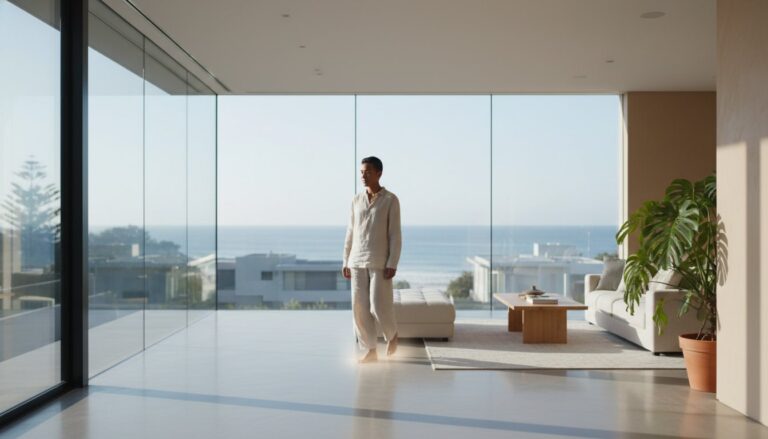
Installing hydronic pipes into a new concrete slab is the most seamless method, but retrofitting is where expert system design truly shines. If your renovation features floor-to-ceiling glass—a staple of modern Melbourne architecture—standard radiators might not fit. This is where hydronic trench heating becomes your secret weapon. These units are recessed into the floor along the glass line, creating a “curtain” of warm air that stops cold drafts before they enter the room. It’s a sophisticated solution that preserves your views while maintaining a perfect 21-degree environment indoors.
Choosing the Right Specialist
System design isn’t a “one size fits all” process. A specialist with 30 years of local experience understands that a weatherboard cottage in Footscray has vastly different thermal requirements than a brick veneer home in Doncaster. Custom heat-load calculations are essential to ensure you aren’t overpaying for a system that’s too large, or shivering with one that’s too small. To get a definitive answer for your unique space, book a consultation with Melbourne Hydronic Heating. We’ll provide a technical assessment of your home’s layout and insulation to determine exactly how is hydronic heating worth it in Melbourne for your specific lifestyle and budget.
Secure Your Home’s Comfort and Value
Deciding if is hydronic heating worth it in Melbourne depends on whether you view your home as a short-term shelter or a long-term sanctuary. With the Victorian Government’s March 1, 2027, deadline for electric hot water replacements approaching, now is the strategic time to transition. You’ll gain a system that eliminates the “dust cycle” of ducted heating while benefiting from a 30-year lifespan that far outlasts standard split systems. This isn’t just a luxury upgrade; it’s a calculated move to protect your property’s market value and your family’s respiratory health.
Our family-owned Victorian business brings over 30 years of experience to every installation across Melbourne and Geelong. We’re specialists in allergy-friendly radiant heat, ensuring your home remains a dust-free environment even during the peak of pollen season. Ready to see the numbers for your specific floor plan? Get a Custom Hydronic Heating Quote for Your Melbourne Home and discover how premium efficiency transforms your winter experience. Let’s build a warmer, healthier future for your home together.
Frequently Asked Questions
Is hydronic heating more expensive to run than gas ducted heating in Melbourne?
Hydronic heating is up to 35% more cost-effective to run than ducted gas systems when powered by a modern electric heat pump. Sustainability Victoria studies found that homeowners can save approximately 20% on annual bills by switching away from gas ducted units. While gas boilers cost roughly 3.52 cents per MJ, the high efficiency of heat pumps with a 4.0 COP makes electricity the smarter financial choice for 2026.
Can hydronic heating also provide cooling during Melbourne summers?
Yes, your hydronic system can provide cooling if you install fan coils instead of standard radiator panels. While traditional radiators only emit heat, fan coils use the same pipework to circulate chilled water from an electric heat pump. This allows you to maintain a perfect climate year-round without needing a separate split system. It’s a specialized setup that maximizes the utility of your hydronic infrastructure during Melbourne’s 40-degree summer days.
How long does it take for a hydronic system to pay for itself?
A hydronic system typically reaches its return on investment within 7 to 10 years. This calculation accounts for the 35% reduction in running costs and the avoidance of the “replacement cycle trap.” Since these systems last 25 years or more, you avoid replacing a standard split system three times over the same period. When you consider the question of is hydronic heating worth it in Melbourne, the long-term ROI is a primary factor.
What is the average cost of installing hydronic heating in a 4-bedroom Melbourne home?
For a standard 4-bedroom Melbourne home, installation costs generally range between $18,000 and $28,000 depending on the number of radiator panels and the choice of heat pump. Retrofitting radiators costs between $1,300 and $1,600 per unit. A typical 4-bedroom layout requires approximately 10 radiators and a high-capacity electric heat pump. Adding hot water integration for a stainless-steel tank usually adds another $4,000 to $5,000 to the total project cost.
Is it worth retrofitting hydronic heating into an existing house?
Retrofitting is highly worth it for existing homes because it provides a dust-free environment without the need for major structural changes. Unlike ducted systems that require large ceiling or sub-floor cavities, slimline radiator panels only require small pipes to be run through floors or walls. This makes it the ideal solution for heritage Victorian renovations where preserving original cornices and floorboards is a high priority for the homeowner and adds significant character value.
How often does a hydronic heating system need servicing in Melbourne?
We recommend a professional service once every 12 months to ensure your boiler or heat pump maintains its efficiency. Beyond annual check-ups, your system should undergo power flushing every 3 to 5 years to remove internal sludge and mineral buildup. This preventative maintenance protects your investment and ensures the system operates silently. Regular servicing is essential to keep your daily electricity consumption within the expected 20 to 30 kWh range during winter.
Does hydronic heating increase property value in Victoria?
Hydronic heating significantly increases property value in Victoria, often being highlighted as a premium feature in real estate listings for suburbs like Camberwell or Hawthorn. Buyers recognize it as a hallmark of luxury and health-conscious living. Because the system is built to last 30 years and aligns with the 2027 all-electric mandates, it future-proofs the home. Investors often see a higher resale price that easily justifies the initial installation cost.
Can I run my hydronic heating entirely on solar power?
You can run your system almost entirely on solar power by using your home as a thermal battery. By programming your electric heat pump to run during peak daylight hours, you can store heat in your concrete slab or radiator network. This allows you to bypass the 2026 electricity prices of 35 cents per kilowatt-hour. It is the most effective way to determine if is hydronic heating worth it in Melbourne for your specific monthly budget.