

Hydronic Heating System Noise Diagnosis: A Homeowner’s Guide to a Quiet Home
Imagine it’s 3 AM on a chilly Melbourne night. You’re jolted awake by a series of sharp, metallic bangs echoing through your hallway, leaving you wondering if your boiler is about to fail or if a pipe is about to burst. It’s an unsettling experience that turns your sanctuary into a source of anxiety. You chose hydronic heating for its reputation as the gold standard of silent, healthy comfort, so when the system starts “talking” back, it’s natural to feel concerned about your safety. A professional hydronic heating system noise diagnosis is the first step toward reclaiming the quiet, efficient home environment you deserve.
We know that a noisy system often signals more than just a nuisance; it can indicate inconsistent performance or trapped air that’s driving up your energy bills. This guide will help you decode those mysterious thumps, whistles, and gurgles. You’ll learn which sounds are simple DIY fixes and which ones require the technical precision of a specialist. By the end of this article, you’ll have the confidence to handle minor maintenance or know exactly when to call for professional servicing to ensure your system remains a reliable source of well-being for your family.
Key Takeaways
- Identify common noises like banging, whistling, or gurgling to determine if your system is suffering from trapped air or mechanical friction.
- Perform an accurate hydronic heating system noise diagnosis by matching specific sounds to their root causes, helping you decide between a DIY fix and professional help.
- Understand how gurgling sounds often signal air pockets that create cold spots and force your boiler or heat pump to work harder.
- Learn why ticking sounds are usually caused by thermal expansion and how specialist tools like thermal imaging can pinpoint hidden pipe knocks.
- Discover how professional solutions like power flushing remove internal sludge to restore the silent, energy-efficient performance of your heating system.
The Hydronic Sound Dictionary: Identifying Your System Noise
Homeowners choose hydronic heating because it’s the gold standard for silent, dust-free warmth. While traditional forced-air systems rattle and hum, a well-designed setup should be nearly imperceptible. To understand the basics of What is a hydronic system?, it’s essentially the use of water as a heat-transfer medium to create a consistent, healthy climate. When that silence is broken, it’s time for a hydronic heating system noise diagnosis. Identifying the specific “Big 4” sounds is the first step toward restoring your home’s peace:
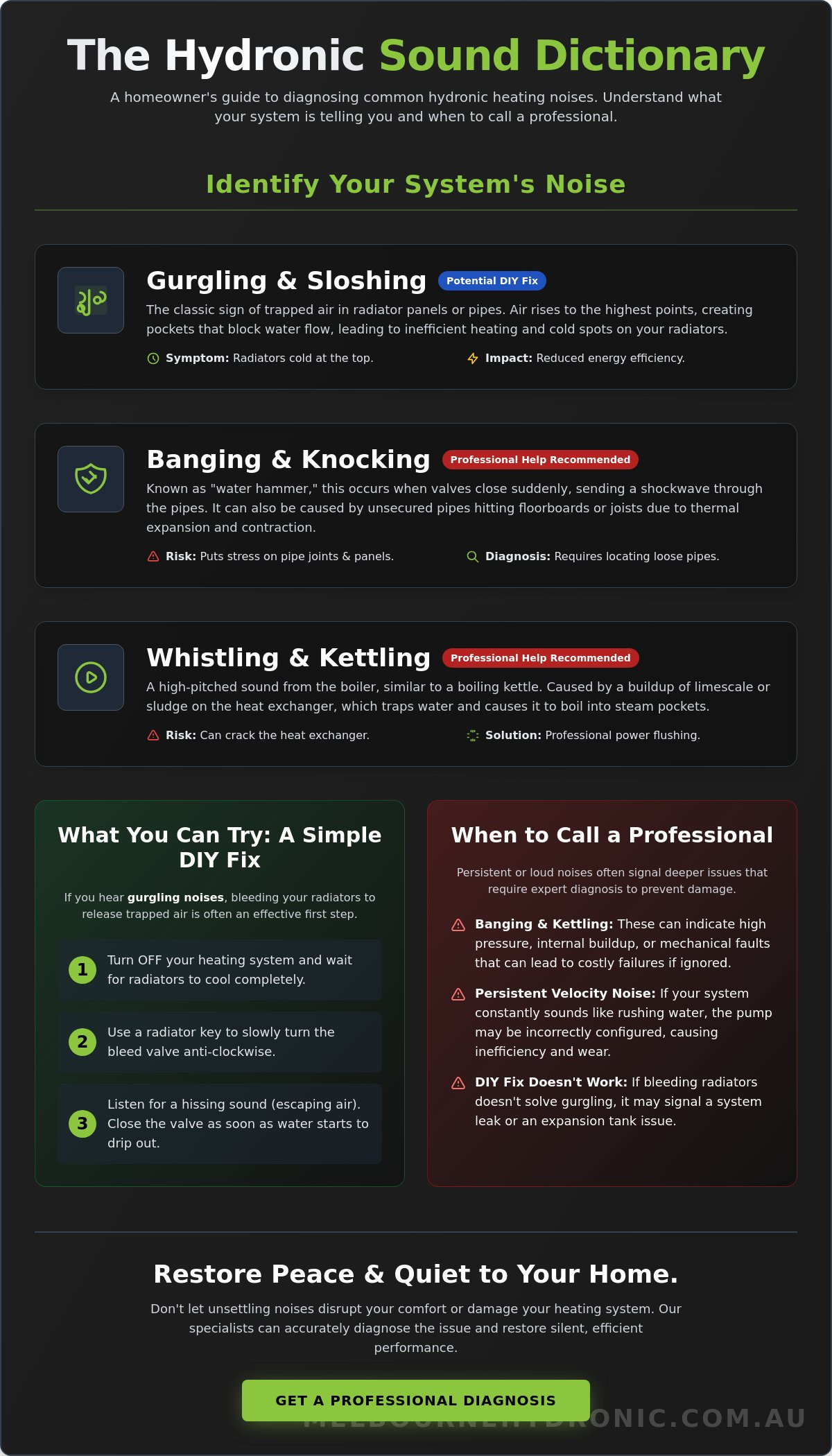
- Banging: Usually indicates mechanical shock or pipe movement.
- Whistling: Often points to flow restrictions or boiler issues.
- Gurgling: The classic sign of trapped air within the radiator panels.
- Humming: Typically related to the circulator pump or electrical vibrations.
Timing provides the most important clue for your diagnosis. Does the noise happen only at startup? This usually points to thermal expansion as the water heats up. If the sound persists throughout the heating cycle, you might be dealing with “Velocity Noise.” This occurs when water travels through the pipes too quickly, often because the pump speed is set too high for the system’s design. It sounds like a constant rushing of water that prevents the deep, restorative sleep hydronic heating is known for.
Banging and Knocking (Water Hammer)
Banging sounds often stem from “water hammer,” which happens when a valve closes suddenly and sends a shockwave through the water column. In many Melbourne timber-framed homes, this vibration causes pipes to strike against floorboards or wall joists. It’s different from the rhythmic “ticking” of pipe expansion. If your pipes aren’t secured with the correct clips, the natural movement of the metal will create a persistent knocking sound. This mechanical shock doesn’t just wake you up; it puts unnecessary stress on the joints and radiator panels.
Whistling and Kettling in the Boiler
If your boiler sounds like a tea kettle reaching a boil, you’re experiencing “kettling.” This high-pitched whistling happens when limescale or sludge builds up on the heat exchanger. These deposits trap water underneath them, causing it to boil locally and turn into steam bubbles. This isn’t just a noise issue; it’s a sign of internal overheating that reduces efficiency. Ignoring these signals during a hydronic heating system noise diagnosis can lead to a cracked heat exchanger. Professional power flushing is often the only way to remove this debris and protect your system’s longevity.
Air and Pressure: How to Fix Gurgling and Sloshing
Gurgling and sloshing sounds are often the first signs that your home’s sanctuary is being disrupted by trapped air. While a hydronic heating system noise diagnosis often starts at the heat source, the solution is frequently found within the radiator panels themselves. Air typically enters a sealed system through micro-leaks at valve joins or when fresh water is introduced during routine maintenance. Because air is lighter than water, it migrates to the highest points of the loop, creating pockets that block the flow of thermal energy. This results in radiators that feel warm at the bottom but remain cold at the top, significantly reducing your heating efficiency.
Your expansion tank plays a vital, silent role in preventing these disruptions. It acts as a mechanical cushion, absorbing the pressure changes that occur as water expands when heated. If this tank loses its internal air charge, the system pressure will fluctuate wildly. When the pressure drops too low, the circulator pump can suffer from cavitation. This creates a distinct grinding or rattling sound, almost like gravel moving through the pipes, as tiny air bubbles implode against the pump’s internal components. If you notice these symptoms, scheduling professional system servicing and maintenance is the best way to ensure your expansion tank is functioning correctly and your home remains quiet.
Step-by-Step: Bleeding Your Radiator Panels
To remove trapped air, you’ll need a standard radiator key, which is available at most Melbourne hardware stores. Ensure the heating is turned off and the panels are cool to the touch to avoid the risk of hot water spray. Insert the key into the bleed valve at the top of the radiator and turn it slowly counter-clockwise. You’ll hear a distinct hissing sound as the air escapes. Once a steady stream of water begins to emerge, close the valve firmly. Always keep a cloth handy to catch any drips and protect your flooring.
Checking Your System Pressure Gauge
After bleeding your radiators, it’s essential to check the pressure gauge located on the front of your gas boiler or heat pump. For most modern systems, the needle should sit within the “Green Zone,” which is typically between 1.0 and 1.5 bar. If the pressure has dropped below 1.0 bar, you may need to use the filling loop to top up the water level. Understanding how these components interact is key to a peaceful home. For broader insights into mechanical noises and system components, you can learn more about Parallel Plumbing and Heating, which illustrates how different boiler types and thermal expansion affect hydronic emitters.
Mechanical Expansion and Velocity: Why Pipes Rattle
Your pipes are constantly in motion. As water temperatures rise from 20 to 70 degrees Celsius, copper and PEX piping physically expand. This growth is inevitable, but it shouldn’t be loud. If you hear rhythmic “ticking” or “clicking” as the heat kicks in, you’re likely hearing pipes rubbing against timber floorboards or wall joists. A thorough hydronic heating system noise diagnosis often reveals that these sounds aren’t a sign of failure, but rather a result of restricted movement. When pipes are clamped too tightly or pass through holes without enough clearance, the friction of the expanding material creates that distinct tapping sound.
Modern installations prevent velocity noise using a Differential Pressure Bypass Valve. When thermostatic valves on your radiators close, this bypass valve ensures the water flow remains balanced, preventing a spike in pressure that causes whistling or “rushing” sounds. We also utilize variable speed pumps that automatically adjust their output based on demand. These smart pumps slow down when only a few rooms need heat, ensuring the system stays whisper-quiet while significantly reducing wear on the internal components. This balance of pressure and flow is what separates a professional installation from a noisy, inefficient one.
Expansion Noise vs. Mechanical Failure
It’s vital to distinguish between harmless settling and a genuine mechanical issue. Melbourne’s rapid temperature shifts, where a sunny afternoon quickly turns into a frosty evening, put extra stress on external pipework. If a radiator “clunks” every time it cools down, the mounting brackets might be missing their protective plastic inserts. These small components prevent metal-on-metal friction, ensuring the silent operation you expect from a premium system. If the noise is erratic or accompanied by a drop in heat, it may indicate a loose internal baffle rather than simple thermal expansion.
Pump Cavitation and Bearing Failure
A failing pump has a very specific signature; it sounds like someone dropped marbles into a blender. This isn’t just bad luck; it’s often the result of poor water quality. Over time, internal corrosion creates a black, metallic sludge known as magnetite. These tiny particles act like liquid sandpaper, grinding down high-precision pump impellers and damaging bearings. Keeping your water clean isn’t just about efficiency; it’s about protecting the mechanical heart of your home’s comfort. During a hydronic heating system noise diagnosis, we look for these signs of “sludge” to prevent a total pump seizure.
2026 Diagnosis: Noise in Heat Pumps vs. Gas Boilers
As Melbourne homes transition toward electrification in 2026, the sounds we associate with home comfort are changing. A hydronic heating system noise diagnosis now requires an understanding of two very different mechanical profiles. Traditional gas boilers rely on combustion, creating an audible “firing” sequence and a steady blue-flame hum. In contrast, modern electric heat pumps function like a high-efficiency refrigerator in reverse, using fans and compressors to move heat from the outside air into your home. While both systems are designed for premium comfort, the origin of any unexpected noise depends entirely on your specific heat source.
Technical precision is vital when installing these modern units. For example, heat pumps operate at lower water temperatures than gas boilers, which means they must move a larger volume of water to deliver the same amount of warmth. To keep this process silent, we use larger pipe diameters to maintain low water velocity. If a heat pump is retrofitted into a system with narrow pipes, you’ll likely hear a constant rushing sound as the water struggles to flow. We also prioritize anti-vibration mountings for external units. Without these specialized rubber pads, the compressor’s low-frequency hum can transmit through your home’s walls, turning a minor vibration into an annoying interior drone.
Common Gas Boiler Noises
Gas boilers typically exhibit noise issues as they age or if maintenance is neglected. You might hear a sudden “whoosh” during ignition, which often indicates a build-up of dust on the burner or a failing ignition lead. Fan bearing wear is another common culprit, producing a high-pitched squeal that grows louder as the system ramps up. In older Melbourne homes with cast iron heat exchangers, kettling remains a frequent complaint. This happens when internal mineral deposits cause localized boiling. If your boiler is showing these signs, it might be time to explore Choosing the best hydronic boiler in Melbourne to restore your home’s quiet efficiency.
Electric Heat Pump Noise Profiles
Modern heat pumps are incredibly quiet, but they have unique operational sounds. On frosty Melbourne winter mornings, you may hear your unit enter a “defrost cycle.” This can sound like a brief hiss or a change in fan speed as the system clears ice from its external coils. It’s a normal part of operation, but if you hear persistent clicking, it could indicate a cycling issue where the system is turning on and off too frequently. For more details on what to expect from these high-tech systems, consult our Heat Pump Hydronic Heating Guide. If your system’s noise profile has changed recently, we recommend a professional system assessment to ensure every component is functioning with engineering-grade precision.
Professional Solutions: When to Call Melbourne Hydronic Heating
While bleeding a radiator panel is a helpful first step for any homeowner, some noises require the technical precision of advanced diagnostic equipment. A comprehensive hydronic heating system noise diagnosis performed by a specialist often utilizes thermal imaging technology. This non-invasive tool allows us to see through your floorboards and walls to identify exactly where a pipe is rubbing against a joist or where a thermal bridge is causing a localized knock. Instead of guessing, we use visual data to pinpoint the source of your disruption, ensuring we only intervene where necessary to restore your home’s tranquility.
Professional servicing is more than just a quick fix; it’s a strategic investment in your system’s longevity and your family’s well-being. Over time, even the best-designed systems can fall victim to internal corrosion or pressure imbalances. By addressing these issues early, you prevent minor noises from escalating into costly mechanical failures. Our approach combines global quality standards with a deep understanding of Melbourne’s local climate challenges, ensuring your heating remains a silent partner in your home’s comfort throughout the coldest months.
The Power Flush: Restoring Silent Operation
If your hydronic heating system noise diagnosis points toward persistent kettling or grinding sounds, a power flush is often the most effective remedy. This process involves a high-velocity, low-pressure cleaning of your entire system to remove “magnetite,” a black metallic sludge that settles in radiators and heat exchangers. Beyond silencing your system, a power flush improves heat transfer efficiency and promotes a healthier indoor environment. A clean, sludge-free system operates more reliably, which is vital for the overall well-being of residents, particularly those sensitive to air quality. For a deeper look at professional maintenance, explore our guide to Hydronic Heating Service & Repair Melbourne.
System Balancing and Commissioning
Whistling sounds at the furthest radiator in your home often indicate that the system is “out of balance.” This happens when water takes the path of least resistance, starving distant radiators while over-pressurizing those closest to the boiler. Our technicians use lockshield valves to precisely calibrate the flow to every single emitter in your home. This process, known as commissioning, ensures that every room reaches its target temperature simultaneously and silently. Don’t let a noisy system disrupt your sleep or raise your energy bills. Book your hydronic noise diagnosis today and experience the premium comfort of a perfectly tuned home.
Restoring Your Home’s Silent Sanctuary
A quiet home isn’t just a luxury; it’s a sign that your heating system is operating with peak technical precision. You’ve learned how to identify the specific causes of gurgling, banging, and whistling, and when a simple radiator bleed can solve the problem. However, persistent noises often signal deeper issues like pump cavitation or internal sludge build-up that require specialist intervention. Choosing to act early protects your investment and ensures your home remains a sanctuary of healthy, dust-free warmth throughout the winter months.
If your DIY efforts haven’t restored the silence you expect, it’s time for a professional hydronic heating system noise diagnosis. Our family-owned and operated expert team brings over 30 years of local Melbourne experience to every service. We’re specialists in both high-efficiency gas boilers and modern electric heat pumps, using advanced tools like thermal imaging to find and fix even the most elusive pipe knocks. Don’t let a noisy system disrupt your well-being or compromise your comfort.
Request a Professional Noise Diagnosis from Melbourne Hydronic Heating today and enjoy the peace of mind that comes with a perfectly tuned, whisper-quiet system.
Frequently Asked Questions
Is a banging noise in my hydronic heating dangerous?
Banging noises are rarely an immediate safety threat, but they signal significant mechanical shock or poorly secured piping. This “water hammer” puts immense pressure on joints and seals, which can eventually lead to major leaks and water damage. While it’s an unsettling sound, it’s more of a call for maintenance than an emergency. A professional hydronic heating system noise diagnosis will identify if the issue is a failing valve or simply a loose pipe clip.
Why do my radiators make a clicking sound when the heating turns on?
Clicking or ticking sounds are almost always the result of thermal expansion as your system heats up. When hot water flows through copper or PEX pipes, the material physically expands and rubs against floorboards or timber joists. This is a common occurrence in Melbourne’s timber-framed homes. While it’s usually harmless, persistent clicking can be minimized by ensuring pipes have enough clearance or by installing plastic inserts on radiator mounting brackets to dampen the friction.
Can I fix a noisy hydronic pump myself?
Most pump-related noises require a specialist because they involve high-precision mechanical components and electrical wiring. If you hear grinding or vibrating, the pump’s internal bearings may have failed due to poor water quality. Attempting a DIY repair on a sealed circulator pump can lead to system leaks or electrical faults. It’s best to have a technician assess the pump’s health and determine if it needs a professional service or a complete replacement.
How often should I bleed my hydronic radiators to prevent noise?
You should generally bleed your radiator panels once a year, ideally at the start of the Melbourne winter season. If you hear gurgling or sloshing sounds before then, it’s a clear sign that air has entered the system and needs to be released. Regular bleeding prevents air pockets from causing cold spots and protects your pump from cavitation. If you find yourself bleeding the system every few weeks, you likely have a micro-leak that needs professional attention.
What causes a whistling sound in a hydronic boiler?
Whistling is typically caused by “kettling” within the heat exchanger or water moving too quickly through the system. Kettling occurs when sludge or limescale deposits trap water, causing it to boil and turn into steam. Alternatively, if the pump speed is set too high for your home’s requirements, the high-velocity water creates a whistling or rushing sound. A technician can balance the flow or perform a power flush to restore silent operation.
Will a power flush fix my noisy heating system?
A power flush is the most effective solution for noises caused by internal sludge and “magnetite” buildup. By circulating high-velocity water and specialized cleaning agents through your system, we remove the debris that causes kettling and pump grinding. This process doesn’t just stop the noise; it also restores heating efficiency and extends the life of your boiler or heat pump. It’s a vital maintenance step for any system that has become increasingly vocal over time.
Why is my new heat pump making more noise than my old boiler?
Heat pumps have a different acoustic profile than gas boilers, relying on fans and compressors rather than combustion. While they are incredibly efficient, you’ll hear the steady hum of the fan and the compressor’s low-frequency vibration. If the noise is intrusive, it may be due to poor anti-vibration mounting or the unit’s proximity to a bedroom window. Correct installation ensures these modern systems remain a quiet, premium addition to your home’s well-being and comfort.
Does low water pressure cause hydronic system noise?
Low water pressure is a leading cause of system noise because it allows air to enter the loop and causes pump cavitation. When the pressure drops below 1.0 bar, the pump struggles to move water, creating a distinctive rattling or grinding sound. This lack of pressure forces the system to work harder, leading to inconsistent heating performance and increased mechanical wear. Checking your pressure gauge and topping up the system via the filling loop is often the first step in restoring a quiet home.