
Hydronic Heating System Guide: Comparing Melbourne’s Best Solutions for 2026
What if the very system meant to warm your home was actually circulating allergens and driving your winter energy bills to record highs? Many Melburnians accept the dry air and cold spots of traditional ducted heating as an unavoidable part of Victorian winters. However, with gas prices in Victoria surging by up to 25% in 2023 according to the Essential Services Commission, switching to a high-efficiency hydronic heating system is no longer just a luxury; it’s a smart financial move for your household.
You don’t have to choose between comfort and your health. This guide shows you how to select the perfect solution for your Melbourne home, ensuring a silent, dust-free environment that benefits everyone, especially those sensitive to airborne particles. We’ll compare the latest 2026 heat pump technologies against high-efficiency condensing boilers and designer radiators to help you achieve maximum efficiency. You’ll learn how these premium upgrades not only lower your monthly bills but also add substantial value to your property through sustainable, European-inspired engineering that’s built to last.
Key Takeaways
- Understand why radiant warmth is the superior choice for Melbourne’s damp winters compared to traditional air-based heating systems.
- Compare high-efficiency gas boilers with modern air-to-water heat pumps to find the most cost-effective hydronic heating system for your home’s future.
- Evaluate the trade-offs between the rapid response of designer radiator panels and the invisible, steady comfort of underfloor slab heating.
- Discover how a dust-free heating solution can significantly improve indoor air quality and provide relief for Victorian families living with asthma or allergies.
- Learn why professional heat load calculations and tailored system designs are essential for meeting Melbourne’s unique building standards and ensuring maximum efficiency.
The Evolution of Hydronic Heating Systems in Melbourne for 2026
A hydronic heating system operates as a water-based thermal energy transfer network, circulating heated fluid through a closed loop to provide consistent warmth. Unlike traditional forced-air methods, this technology relies on the superior thermal mass of water to move heat from a central source to various emitters throughout the home. Melbourne’s winters are notoriously damp and biting, with overnight temperatures frequently dropping below 5°C. In these conditions, radiant heat is more effective than air-based systems because it prevents the “dry air” feeling and maintains a stable temperature without the constant cycling of a furnace.
Every modern system consists of three primary elements: the heat source, the distribution piping, and the emitters, which are usually radiators or floor coils. The landscape for home climate control in Victoria is changing rapidly. Following the state government’s Gas Substitution Roadmap, 2026 marks a significant milestone in the transition toward all-electric homes. This shift makes the hydronic heating system an ideal choice for new builds and major renovations, as these systems integrate perfectly with high-efficiency electric heat pumps rather than traditional gas boilers.
How Hydronic Systems Outperform Ducted Heating
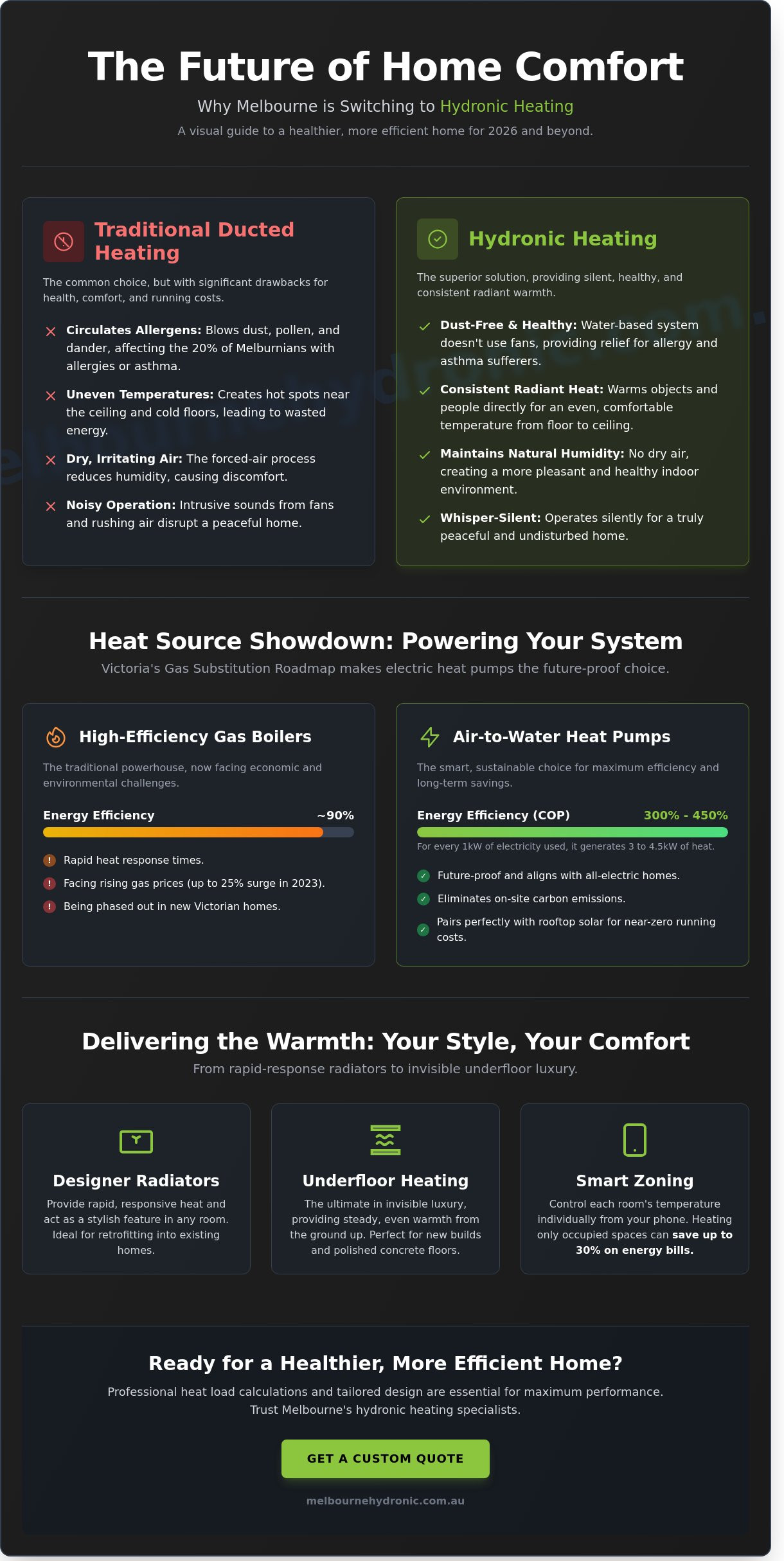
Ducted heating uses convection to warm a room by blowing heated air through vents. This process often creates hot spots near the ceiling while leaving the floor level uncomfortably cool. Hydronic systems use radiant heat, which warms objects and people directly, similar to the way the sun warms your skin on a winter day. This method creates an even temperature profile from floor to ceiling.
For the 20% of Melbourne residents who suffer from seasonal allergies or asthma, the “dust-free” advantage is a critical health benefit. Because hydronics don’t rely on fans, they don’t circulate dust, pollen, or pet dander through your living spaces. Additionally, the system is whisper-silent. You can say goodbye to the intrusive mechanical noise and rushing air sounds associated with split systems or gas ducted units, ensuring a peaceful home environment.
Modern System Components: From Boilers to Smart Controls
The technical backbone of a high-performance central heating installation has evolved significantly. Modern setups use sophisticated manifolds to distribute water through durable, oxygen-barrier PEX piping. This flexible piping is resistant to scale build-up and corrosion, ensuring the system remains efficient for decades.
Control technology has also seen a revolution. Modern smart thermostats allow homeowners to manage their comfort levels via smartphone apps with incredible precision. This allows for sophisticated room-by-room management. Zoning is the ability to heat only occupied spaces to save up to 30% on energy. By only activating the heat in the lounge or bedrooms when needed, you significantly reduce your environmental footprint and your quarterly utility bills.
Heat Source Showdown: Electric Heat Pumps vs. Gas Boilers
Choosing the right engine for your hydronic heating system depends on your home’s architecture and your long-term energy goals. In Melbourne’s temperate climate, modern air-to-water heat pumps typically achieve a Coefficient of Performance (COP) between 3.0 and 4.5. This means for every unit of electricity consumed, the system generates three to four times that amount in heat energy. While high-efficiency gas boilers remain a staple for their rapid response and 90 percent plus efficiency ratings, the shift toward electrification is accelerating. This transition is largely driven by rising gas tariffs and the Victorian government’s commitment to phase out gas connections in new builds.
Reliability remains a cornerstone of the Melbourne market. For decades, European gas boilers from brands like Baxi or Immergas have provided the backbone for local home heating. These units are celebrated for their engineering precision and ability to withstand the damp, chilly winters of the southern coast. However, as homeowners look to “future-proof” their properties, the environmental impact of gas is becoming a primary concern. Moving to an electric heat pump eliminates onsite carbon emissions and aligns with the broader push for sustainable, gas-free living.
Why Heat Pumps are Dominating the Melbourne Market
The surge in heat pump hydronic heating installations is closely tied to Melbourne’s high adoption rate of solar PV systems. By synchronizing the heating cycle with peak solar production hours, you can effectively heat your home using self-generated renewable energy, which slashes operational costs. The Victorian Energy Upgrades (VEU) program and various state incentives provide financial support to help families make this transition, often reducing the initial investment gap between gas and electric options.
Beyond standard heating, certain heat pump models offer the versatility of mild cooling when paired with fan coil units. This provides a quiet, dust-free alternative to traditional refrigerated air conditioning, making it an excellent choice for families managing asthma or allergies. It’s a sophisticated, all-in-one climate solution that maximizes the utility of your hydronic heating system infrastructure throughout the year.
When a High-Efficiency Gas Boiler Still Makes Sense
Despite the electric trend, a premium boiler replacement is often the most logical path for heritage renovations in suburbs like Carlton or Fitzroy. Older homes frequently feature smaller radiator panels designed for high-temperature water, usually around 60 to 75 degrees Celsius. Gas boilers reach these temperatures effortlessly, ensuring the home stays warm without needing to upsize every existing radiator.
Space is another critical factor. Modern wall-mounted boilers are incredibly compact, making them ideal for tight inner-city blocks where outdoor space for a large heat pump unit is non-existent. These systems provide a powerful, consistent warmth that has been trusted by Melburnians for generations. If you’re unsure which heat source fits your floor plan, our team can provide a professional assessment of your home’s heating needs to ensure you choose the most efficient path forward.
Radiator Panels vs. Underfloor Heating: Which Suits Your Melbourne Home?
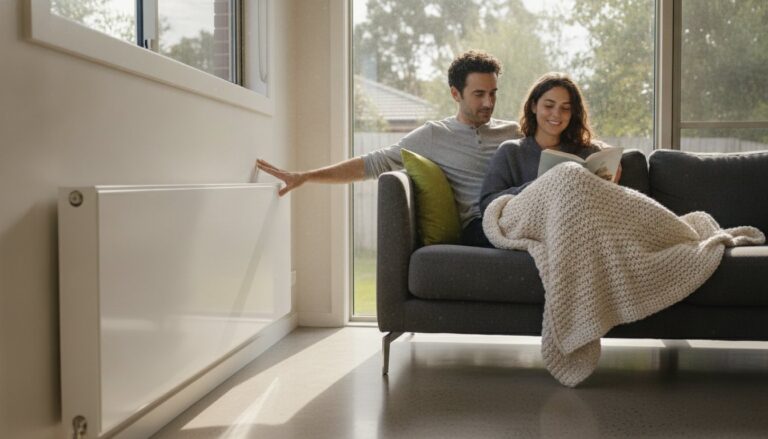
Choosing between these two delivery methods depends on your lifestyle and the architecture of your property. A hydronic heating system relies on water’s thermal mass, but how that heat enters your room changes the daily experience. Radiators provide quick, convection-based warmth, reaching peak output in roughly 10 to 30 minutes. In contrast, underfloor heating is a slow-release solution. It can take up to 24 hours to fully charge a concrete slab, making it a “set and forget” choice for the entire Melbourne winter season.
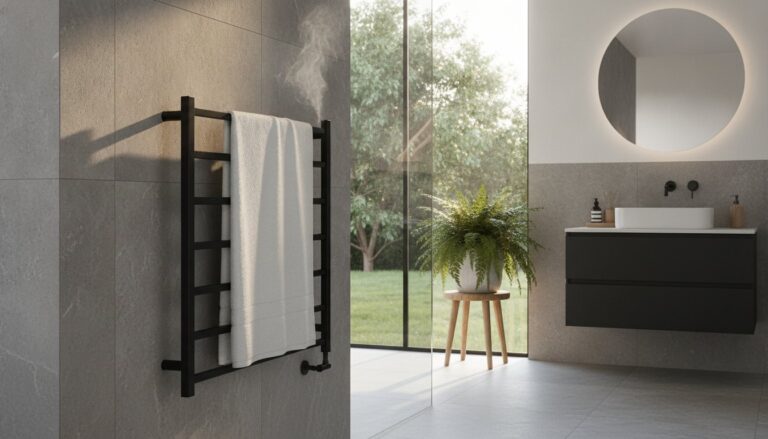
Visual impact is another major factor. Slab heating remains completely invisible, which suits minimalist aesthetics and open-plan living. However, modern hydronic heating panels have evolved into designer features. You’re no longer limited to bulky white boxes; you can opt for vertical units or slimline profiles that complement high-end interiors. For multi-storey homes, radiators often win on practicality. Since heat naturally rises, having individual control over upstairs bedroom panels prevents these spaces from becoming uncomfortably hot while you’re trying to warm the ground floor.
The Case for Hydronic Radiator Panels
Radiators are the gold standard for retrofitting Melbourne’s iconic Victorian and Edwardian timber-floor homes. Installing pipework through a subfloor crawl space is significantly less invasive than attempting to pour a new screed over existing boards. These systems offer localized control that slab heating can’t match. You can easily turn off the heat in a guest room or study when it’s not in use, which reduces energy waste. This flexibility is essential for families who want a hydronic heating system that adapts to their daily schedule rather than running at a constant temperature.
The Luxury of Hydronic Underfloor Heating
Nothing matches the “barefoot comfort” of hydronic floor heating melbourne during a frosty July morning. This method is exceptionally efficient because it uses lower water temperatures, typically between 35°C and 45°C, to heat a massive surface area. It’s the perfect match for modern extensions featuring polished concrete or tiled floors. Because there’s no air being forced through vents, the environment remains dust-free and allergy-friendly. It creates a silent, consistent warmth that radiates from the ground up, ensuring there are no cold spots in large, open-plan living zones.
Why Hydronic is the Healthiest Heating Choice for Victorian Families
Choosing a heating method for your Melbourne home involves more than just comparing running costs. It’s a decision that directly impacts the air your family breathes every day. Unlike traditional ducted or split systems that rely on blowing air, a hydronic heating system uses radiant heat to warm objects and people directly. This fundamental difference in physics creates a living environment that is significantly cleaner and more comfortable, especially during the long Victorian winters.
Asthma and Allergy-Friendly Heating
Melbourne is often cited as a challenging city for respiratory health, particularly during the spring and summer “thunderstorm asthma” events. However, indoor air quality in winter is just as critical. Conventional forced-air systems act as a delivery network for allergens. They stir up settled dust, pet dander, and pollen, circulating these particles through filters that rarely catch 100% of microscopic triggers. Because hydronic systems don’t use fans, the air remains still. This prevents the constant “dust cycle” common in modern homes. Many Australian health practitioners now recommend hydronic heating as the only suitable method for families managing severe asthma or chronic respiratory conditions. It’s a proactive way to reduce the allergen load in your bedrooms and living spaces.
Hydronic heat also preserves the natural moisture content of your indoor air. Split systems and gas ducted heaters often produce “parched” air that can drop relative humidity levels below the healthy 30% to 50% range. This dry air leads to itchy eyes, sore throats, and aggravated skin conditions like eczema. Radiant heat maintains a healthy humidity balance, ensuring your home feels cozy rather than dehydrated.
Operational Safety and Silent Comfort
Safety is a primary concern for households with young children, pets, or elderly residents. Traditional portable heaters or gas fireplaces often feature exposed flames or scorching metal surfaces. In contrast, modern hydronic radiators can be fitted with Low Surface Temperature (LST) covers. These ensure the unit remains safe to touch even when the system is running at full capacity. The reliability of a closed-loop system also means there are no carbon monoxide risks associated with indoor units, providing peace of mind for families.
- Silent Operation: Without the roar of fans or the clicking of expanding metal ducts, the system operates in near-total silence. This is essential for home offices and ensuring restful sleep in nurseries.
- Minimal Moving Parts: The simplicity of the system reduces the likelihood of mechanical failure, ensuring consistent warmth when the temperature drops toward zero.
- Zoned Control: You can maintain different temperatures in different rooms, preventing overheating and ensuring every family member is comfortable.
If you want to improve your home’s air quality and safety, contact our expert team to discuss a tailored solution for your property.
Designing and Maintaining Your System: The Melbourne Hydronic Approach
Choosing between radiators and underfloor heating is only the beginning. A truly efficient hydronic heating system requires meticulous engineering tailored to the specific thermal profile of your property. Melbourne Hydronic Heating brings a 30-year legacy to every project. Since 1994, our team has refined the art of silent, dust-free warmth, ensuring that every installation meets the rigorous demands of the Victorian climate. We don’t rely on guesswork. Our engineers perform precise heat load calculations based on current Melbourne building standards to ensure your system provides peak comfort without wasting energy.
A professional consultation is the foundation of your investment. We analyze the unique orientation of your home and the specific insulation levels of your walls and ceilings. This data-driven approach prevents the common mistake of installing undersized units that struggle in July or oversized systems that inflate your energy bills. By focusing on technical precision, we deliver a premium heating solution that enhances both your property value and your daily wellbeing.
The Installation Roadmap
Our installation process follows a methodical three-step strategy to guarantee long-term reliability. First, we conduct a comprehensive on-site assessment. We examine insulation R-values and window glazing types, as these factors dictate the total heat loss of each room. Second, our technicians design a custom pipework layout. We carefully plan manifold positioning to ensure balanced water pressure and consistent heat distribution throughout the house. Finally, we integrate the heat source, whether it’s a high-efficiency condensing boiler or a modern heat pump, and perform a rigorous pressure test to confirm the system’s integrity before it’s commissioned.
Ensuring Long-Term Performance with Power Flushing
To protect your home’s comfort, a regular hydronic heating service melbourne is essential. Over time, the internal components of any water-based system can develop “sludge.” This is actually a buildup of black iron oxide, or magnetite, which forms when air and water react with the metal inside your pipes and radiators. This debris settles in low-flow areas, creating cold spots and forcing your pump to work harder. If left untreated, sludge can reduce system efficiency by up to 15 percent and eventually cause expensive component failures.
We utilize a process called power flushing to restore your system to its original performance. This involves connecting a high-velocity, low-pressure pumping station to your heating circuit. We circulate specialized cleaning chemicals that break down deposits and flush them out of the system. This process clears internal debris and restores optimal flow to every radiator or floor coil. We recommend an annual service schedule to validate your manufacturer warranties and ensure your hydronic heating system operates at peak efficiency for decades to come.
Melbourne Hydronic Heating remains committed to providing local families with a healthier, allergen-friendly home environment. Our deep roots in the community and our focus on European-standard engineering make us the trusted choice for those who value quality and durability. Your home deserves a heating system that is as reliable as it is comfortable.
Future-Proof Your Melbourne Home with Sustainable Warmth
Investing in a hydronic heating system isn’t just about surviving the Victorian winter; it’s about choosing a lifestyle of silent, dust-free luxury. As we approach 2026, the shift toward high-efficiency electric heat pumps and premium condensing boilers reflects Melbourne’s commitment to sustainable living. You’re opting for a solution that eliminates cold spots and circulating allergens, which remains the healthiest choice for Victorian families. We’ve seen these systems transform home comfort levels across the state for decades.
At Melbourne Hydronic Heating, we bring over 30 years of local experience to every installation. We’re a family-owned and operated team serving Geelong and Greater Victoria, specializing in both cutting-edge heat pumps and traditional premium boilers. We understand the specific architectural needs of Melbourne homes. This ensures your system is designed for maximum thermal performance and long-term reliability. Don’t leave your comfort to chance when you can rely on proven local expertise.
Request a custom hydronic heating quote for your Melbourne home today
We look forward to helping you create a warmer, healthier environment for your family to enjoy for years to come.
Frequently Asked Questions
How much does a hydronic heating system cost to install in Melbourne?
According to Australian industry benchmarks, installing a hydronic heating system in a standard three-bedroom Melbourne home typically costs between A$10,000 and A$18,000. These figures fluctuate based on the number of radiator panels required and the complexity of the pipework. Larger installations or premium underfloor heating systems for new builds can exceed A$25,000 depending on the total floor area.
Is it possible to retrofit hydronic heating into an existing double-storey home?
You can successfully retrofit hydronic heating into most double-storey homes by using a combination of installation methods. Ground floors with crawl space access allow for easy under-floor pipe routing, while upper levels often utilize sleek wall-mounted radiators with pipes hidden inside wardrobes or behind decorative cornices. Our technicians use specialized tools to ensure the installation remains discrete and respects your home’s architectural integrity.
How long does it take for a hydronic radiator to warm up a room?
A hydronic radiator typically begins emitting noticeable warmth within 10 to 20 minutes of the system being activated. While they’re faster than underfloor slabs, which can take several hours to reach peak temperature, radiators provide a steady, radiant heat that doesn’t rely on blowing dry air. This makes them highly effective for Melbourne’s volatile weather where temperatures can drop 10 degrees in a single hour.
Which is cheaper to run in Melbourne: gas hydronics or an electric heat pump?
Modern electric heat pumps are currently more cost-effective to run than gas boilers, especially when paired with a residential solar array. Data from Victorian energy assessments shows that heat pumps operate at 300% to 500% efficiency, meaning they produce up to five units of heat for every unit of electricity consumed. This high efficiency helps protect Melbourne households against rising gas prices and reduces the home’s overall carbon footprint.
Does hydronic heating require a lot of maintenance?
Hydronic heating is a low-maintenance solution that generally only requires a professional service once every 12 months. This annual check ensures the boiler or heat pump operates at peak efficiency and the system pressure remains stable. Because the system is sealed and doesn’t use fans, it won’t circulate dust or allergens, making it a much cleaner and healthier option than traditional ducted heating.
Can I use my existing solar panels to power my hydronic heating?
You can use your existing solar panels to power a hydronic heating system if you choose an electric heat pump as your heat source. A standard 6.6kW solar system can significantly offset the electricity required to run the pump during daylight hours. This setup allows you to store energy in the form of warm water, effectively turning your home’s floors or radiators into a thermal battery.
Is hydronic heating safe to leave on overnight?
It’s completely safe to leave hydronic heating on overnight because the system doesn’t use exposed flames, glowing elements, or forced air. Most homeowners set their thermostat to a “setback” temperature of 16 or 17 degrees Celsius during the night to maintain a base level of warmth. This prevents the house from becoming too cold and ensures the system doesn’t have to work at maximum capacity the following morning.
What is the lifespan of a typical hydronic boiler versus a heat pump?
A high-quality European gas boiler typically has a lifespan of 15 to 25 years when serviced annually. In contrast, electric heat pumps generally last between 12 and 15 years, which is a similar lifespan to a high-end air conditioning unit. Both options provide a better long-term investment than cheap ducted systems, which often require major component replacements after just 8 to 10 years of use.