Hydronic Towel Rail Installation Melbourne: 2026 Cost & Style Guide
Is there anything more frustrating than stepping out of a shower into a freezing Melbourne morning, only to reach for a towel that’s still damp and smelling of mildew? You’ve likely tried the standard plug-in electric rails, only to find they barely warm the fabric while sending your power bills soaring. It’s a common struggle in our unique climate, where heritage homes often lack the ventilation needed to combat winter moisture and mould. Choosing a professional hydronic towel rail installation in Melbourne solves these issues by using radiant heat to dry your towels and warm the entire room simultaneously.
We understand that you want a bathroom that feels like a private spa, not a damp cellar. In this guide, we’ll show you how to integrate high-efficiency heating into your home while navigating Victoria’s 2026 energy regulations and the shift toward heat pump technology. You’ll discover the latest insights on unit costs and labour requirements, along with premium style options like brushed brass and matte black that won’t corrode in wet areas. We’ll preview the essential steps to achieve a healthier, more luxurious home environment that’s built to last for decades.
Key Takeaways
- Discover how radiant heat eliminates damp towel odours and mould growth while significantly reducing the high running costs associated with electric alternatives.
- Learn why a professional hydronic towel rail installation in Melbourne requires a dedicated manifold connection to your central boiler or electric heat pump.
- Identify the primary cost drivers for 2026, including the difference between premium hardware materials like brass and the specialist labour required for a leak-proof setup.
- Compare the logistics of retrofitting pipes into heritage walls versus modern installations to understand the impact on your bathroom’s tiling and layout.
- Protect your home’s value by understanding the Victorian Building Authority (VBA) requirements and why a Certificate of Compliance is essential for any hydronic work.
The Benefits of Hydronic Towel Rail Installation in Melbourne
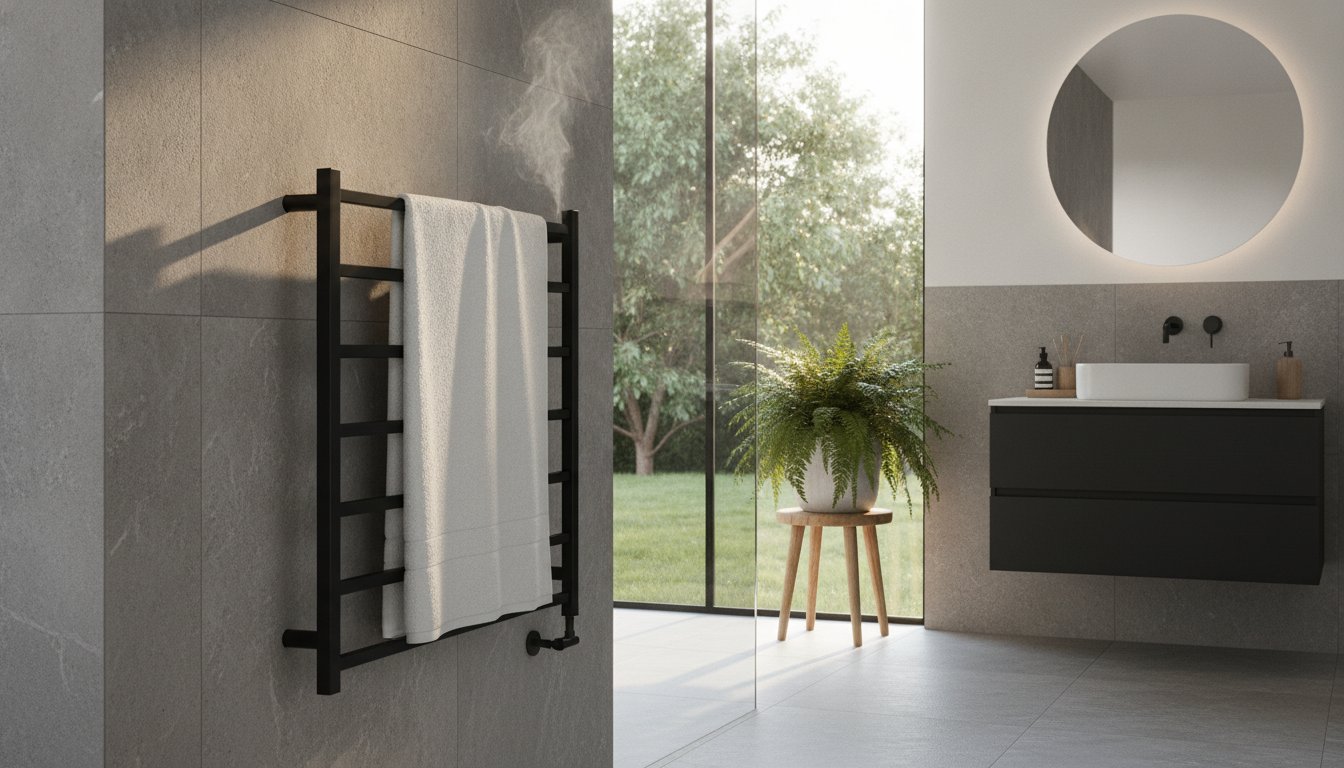
A hydronic towel rail is far more than a simple bathroom accessory. It’s a sophisticated radiator that integrates directly into your home’s central heating system. By circulating heated water through a series of rails, these units provide a constant source of radiant warmth. This technology doesn’t just dry your towels; it transforms the entire bathroom into a comfortable, heated zone. Understanding how hydronic heating works allows you to see why this method is superior to traditional forced-air or electric alternatives, especially in the fluctuating Melbourne climate.
Hydronic vs. Electric: Which is Right for You?
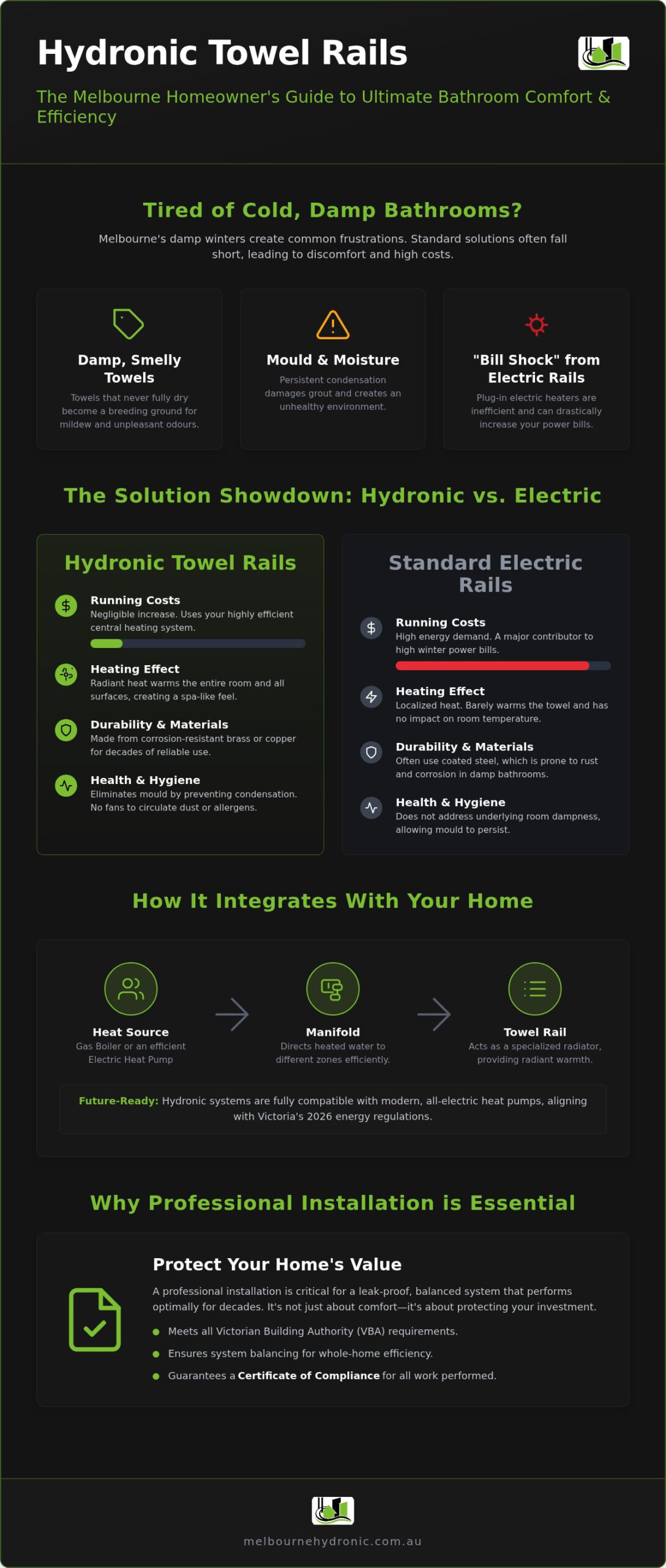
Many homeowners initially consider standard electric rails due to their low upfront cost. However, the long-term running expenses often lead to “bill shock” during the winter months. Electric rails function as standalone heaters with high energy demands. A professional hydronic towel rail installation in Melbourne connects your bathroom heating to your existing boiler or heat pump, which is significantly more efficient. Because the system uses the same energy source as the rest of your house, the incremental cost of heating your towels is negligible.
Durability is another area where hydronic systems excel. While cheaper electric models often use coated steel that can succumb to rust in a damp environment, high-quality hydronic rails are typically built from copper or brass. These materials offer superior thermal conductivity and are naturally resistant to the corrosive effects of bathroom moisture. You get a consistent, whole-room warmth that an electric bar simply cannot match.
Health and Hygiene in the Melbourne Bathroom
Melbourne’s winters are notoriously damp, which often leads to persistent condensation on bathroom surfaces. This moisture is the primary cause of mould and mildew growth, which can damage your grout and impact your family’s health. Radiant heat is the solution. Unlike ducted heating that blows air around, radiant heat warms the surfaces themselves. This keeps walls and mirrors above the dew point, preventing condensation from forming in the first place.
Hygiene is also improved through the rapid drying of fabrics. A towel that remains damp for hours becomes a breeding ground for bacteria and unpleasant odours. A hydronic rail ensures towels are bone-dry and fresh within minutes. For families, hydronic heating provides a cleaner way to live. There are no fans to stir up dust, pet dander, or allergens, making it the healthiest choice for anyone suffering from asthma or hay fever. It’s a silent, invisible comfort that prioritises your well-being.
How Hydronic Towel Rails Integrate with Your Heating System
A hydronic towel rail functions as a specialised radiator loop within your broader hydronic heating system. Unlike electric versions that operate in isolation, these units are physically plumbed into the network of pipes that carry hot water throughout your home. The heart of this distribution is the manifold. This component acts as a central hub, directing the flow of water to various bathroom zones and ensuring that each rail receives a consistent supply of thermal energy. During a professional hydronic towel rail installation in Melbourne, technicians must “balance” the entire system. This technical process involves adjusting the flow rates so that the towel rail reaches its optimal temperature without stealing heat from the larger radiators in your living areas.
Connecting to Boilers and Heat Pumps
Modern systems are highly versatile. They integrate seamlessly with traditional gas boilers or the increasingly popular heat pump hydronic heating solutions. It’s vital to note that heat pumps typically operate at lower flow temperatures than gas boilers. To compensate for this, our design team often recommends larger rail surfaces or high-efficiency models to ensure your towels are perfectly dry. This careful sizing ensures your bathroom remains a sanctuary of warmth, even as Melbourne moves toward more sustainable, all-electric heating. If you’re considering an upgrade, you can consult with our design experts to see how these units complement your existing hydronic heating panels.
Thermostatic Control and Zoning
Precision is key to comfort. By using thermostatic valves, you can control the bathroom temperature independently of your bedroom or lounge. One of the most significant advantages for 2026 is the implementation of “summer loops.” This configuration allows the system to circulate water through the towel rails even when the main heating panels are switched off for the season. It’s the perfect solution for drying towels after a rainy Melbourne afternoon without overheating the house. When integrated with smart home technology, you can schedule your bathroom to warm up thirty minutes before your alarm goes off, providing a premium lifestyle experience that is both automated and energy-efficient.
Hydronic Towel Rail Installation Costs in Melbourne (2026)
Investing in a hydronic towel rail is a decision that balances immediate lifestyle benefits with long term property value. Unlike simple electric alternatives, these systems require a dual focus on high quality hardware and technical expertise. When calculating the total investment for a hydronic towel rail installation in Melbourne, you must consider the hardware purchase and the specialist labour as two distinct components. In 2026, pricing reflects the high standard of Victorian plumbing regulations and the specialised insurance required for hydronic work. This is not a DIY task; it is a precision plumbing operation that ensures your system remains leak-proof and efficient for decades.
Hardware Pricing: From Standard to Designer
The material of the rail itself is the primary driver of the unit price. We always recommend rails constructed from copper or brass, as these materials offer superior heat transfer and natural resistance to corrosion in humid bathroom environments. While standard chrome remains a popular and cost-effective choice, designer finishes like matte black, brushed brass, or gunmetal grey carry a premium. These finishes require more complex manufacturing processes to ensure they don’t peel or fade under constant thermal cycling. When selecting your hardware, look for an industry-leading 10-year warranty. A long-term guarantee is a hallmark of Melbourne-made products designed specifically for our local water conditions and climate challenges.
Installation Labour and Site Complexities
The technical side of a hydronic towel rail installation in Melbourne involves more than just mounting a bracket. A licensed hydronic specialist must integrate the unit into your hot water loop, which requires specific knowledge of system pressure and flow dynamics. Several factors can influence the final labour cost, including:
- Wall Construction: Installing pipes behind existing tiled walls is more complex than working with a “rough-in” during a renovation.
- Access: Multi-storey homes or heritage buildings with restricted underfloor access may require additional time for pipe routing.
- System Integration: Extending the pipework from the nearest manifold or radiator point can vary in difficulty based on the bathroom’s location.
While some general plumbers might offer hourly rates, the complexity of hydronic balancing means that costs can quickly escalate if issues arise. Choosing a fixed-price quote from Melbourne Hydronic Heating provides peace of mind. A fixed quote ensures that all Victorian Building Authority (VBA) compliance requirements are met without the risk of hidden fees. This professional approach guarantees that your system is pressurised, tested, and certified correctly the first time.
Retrofitting vs. New Builds: What to Expect
The physical process of a hydronic towel rail installation in Melbourne varies significantly depending on your project’s lifecycle. In a new build, the installation is a streamlined part of the plumbing rough-in. In an existing bathroom, it’s a precision retrofit. One of the most common methods for retrofitting involves “chasing” pipes into the walls. This process requires cutting channels into the masonry or timber frame to house the hot water lines. While this is the best way to achieve a clean look in a finished room, it does require a professional site inspection. Our experts assess the wall’s load-bearing capacity and the current tiling to ensure that adding the rail won’t lead to structural issues or water leaks behind the scenes.
The Heritage Home Challenge
Melbourne’s iconic Victorian cottages and Edwardian homes offer a stunning backdrop but present specific technical challenges. Many of these properties use lath and plaster wall construction, which is far more brittle than modern plasterboard. Attempting to install heavy hardware without proper blocking can lead to significant wall damage. Additionally, these homes often have restricted sub-floor access. Our specialists are adept at navigating these tight spaces to route copper piping from the boiler to the bathroom. For these homes, floor-mounted hydronic rails are often the superior choice. They anchor into the floor joists, providing a sturdy, traditional look that matches heritage aesthetics while avoiding the complexities of mounting onto fragile older walls.
Planning for New Builds and Renovations
If you’re currently in the design phase of a renovation, you have the perfect opportunity to optimise your system. The “rough-in” stage is when we install the hidden infrastructure before the tilers arrive. At this point, we coordinate closely with your other trades to ensure the pipe outlets align perfectly with your chosen rail’s dimensions. This foresight prevents the unsightly “exposed pipe” look that can occur with poorly planned retrofits. We also consider the room’s thermal dynamics. Placing the rail on an external wall, for example, can help counteract cold drafts, making the radiant heat even more effective. If you’re ready to integrate luxury into your project, you can request a fixed-price installation quote from our experienced team today.
Why Choose Professional Installation for Your Melbourne Home?
A hydronic towel rail installation in Melbourne is a significant home improvement that requires far more than basic plumbing skills. In Victoria, all hydronic work must be performed by a licensed practitioner who can issue a Victorian Building Authority (VBA) Certificate of Compliance. This document is your legal guarantee that the installation meets strict Australian Standards and is covered by the necessary insurance. At Melbourne Hydronic Heating, we’ve spent over 30 years perfecting these systems across Victoria, ensuring that every connection is as durable as the heritage homes we often service. Choosing a professional ensures your system is safe, efficient, and adds genuine value to your property.
Precision matters when dealing with pressurized water systems. One of the most critical aspects of professional installation is material selection. Bathrooms are high-humidity environments where standard steel radiators often fail within a few years due to external rust and internal corrosion. We insist on using copper and brass components because they are impervious to the wet “splash zone” environment. Our expertise allows us to design a system that balances technical precision with the premium lifestyle you deserve, providing a heating solution that lasts for decades rather than just a few seasons.
Avoiding Common Installation Mistakes
Inexperienced installers often overlook the nuances of bathroom heating. A common error is placing standard steel radiators too close to showers or baths, leading to rapid degradation. Professional installers also focus on pipe insulation; without it, you lose a significant amount of heat before the water even reaches the bathroom. This inefficiency forces your heat pump or boiler to work harder, increasing your energy bills. Additionally, a specialist who understands Melbourne’s specific water pressure and quality can prevent common issues like noisy “water hammer” in the pipes or premature valve failure. We ensure your system is tuned to local conditions for silent, reliable operation.
Maintenance: Keeping Your Rails Warm
To maintain peak efficiency, a regular hydronic heating service is essential. Over time, air can become trapped in the rails, creating cold spots that prevent your towels from drying properly. Annual servicing includes “bleeding” the system and checking the chemical balance of the water to prevent internal rust. If your system has been neglected, power flushing is a highly effective way to remove internal sludge and debris that can block the narrow channels of a towel rail. This proactive care protects your investment and ensures your bathroom remains a warm, healthy sanctuary throughout the coldest Melbourne winters.
Ready to upgrade your home with energy-efficient luxury? Request a professional quote for your hydronic towel rail installation and experience the difference that 30 years of local expertise can make for your comfort.
Transform Your Bathroom into a Year-Round Sanctuary
Stepping into a warm, dry bathroom shouldn’t be a luxury reserved for five-star hotels. By integrating radiant heat into your home, you eliminate the persistent dampness and allergens that thrive during Melbourne’s cold winter months. The shift toward high-efficiency heat pumps and durable copper hardware ensures your heating system remains sustainable, rust-free, and cost-effective for decades. Selecting a professional hydronic towel rail installation melbourne is an investment in both your property’s long-term value and your family’s daily well-being.
Melbourne Hydronic Heating brings over 30 years of Victorian expertise to every project. As a family-owned and operated business, we specialise in creating asthma-friendly environments through technical precision and premium design. Whether you’re retrofitting a heritage cottage or planning a modern new build, our team ensures your system is balanced, compliant, and perfectly tailored to your lifestyle. We take pride in delivering comfort that’s as reliable as it is luxurious.
Ready to experience the comfort of a truly heated bathroom? Get a Specialist Quote for Hydronic Towel Rail Installation today. We’re here to help you navigate the 2026 energy transition with confidence and style.
Frequently Asked Questions
How much does it cost to install a hydronic towel rail in Melbourne?
The total investment for a hydronic towel rail installation in Melbourne depends on your choice of hardware and the complexity of the pipework. While designer finishes like matte black or brushed brass represent a higher initial cost, they offer superior durability in our local climate. Labour costs are influenced by whether we’re working with an existing system or roughing-in a new bathroom during a renovation.
Can I replace an electric towel rail with a hydronic one?
You can certainly replace an electric unit, but it involves transitioning from electrical wiring to hot water pipework. This requires a licensed specialist to run new lines from your central heating manifold to the bathroom. It’s a significant upgrade that moves your bathroom from an inefficient standalone heater to a fully integrated radiant warmth solution that’s cheaper to run long term.
Do hydronic towel rails heat the whole bathroom?
Yes, hydronic towel rails are designed to function as radiators that heat the entire room. Unlike electric rails that only have enough power to warm the fabric of a towel, these units circulate hot water through large surface areas. This provides consistent radiant heat that reduces bathroom condensation and prevents the growth of mould on your walls, ceiling, and grout lines.
What is the best material for a heated towel rail in a wet area?
Copper and brass are the gold standards for wet areas. These materials are naturally resistant to corrosion and offer excellent thermal conductivity for drying towels quickly. We advise against using standard steel radiators in splash zones, as they’re prone to rusting from the outside in. Investing in high quality materials ensures your rail remains a beautiful, functional feature for decades without leaking.
Are hydronic towel rails expensive to run compared to electric?
Hydronic rails are significantly cheaper to run than electric versions. Because they utilize the heat already being generated by your central boiler or heat pump, the incremental cost to your energy bill is minimal. Electric rails often draw high wattage for long periods to be effective, whereas hydronic systems leverage the superior efficiency of water based thermal transfer to keep your towels bone dry.
How long does a hydronic towel rail installation take?
A standard hydronic towel rail installation in Melbourne typically takes between four and eight hours to complete. This timeframe includes mounting the unit, connecting it to the pipework, and balancing the system to ensure it reaches the correct temperature. More complex retrofits in multi storey heritage homes may require additional time for pipe routing through restricted sub floor spaces or wall cavities.
Do I need a specific boiler to have a hydronic towel rail?
You don’t need a specific brand of boiler, as these rails are compatible with both modern gas boilers and electric heat pumps. However, the system must be sized correctly for your heat source. Heat pumps operate at lower temperatures than gas, so we might recommend a larger rail surface to ensure you get the same level of warmth and drying power for your family.
Is it possible to retrofit a hydronic rail into a tiled bathroom?
It is possible to retrofit a rail into a tiled bathroom, though it requires precision. We can often chase the pipes into the wall or use floor mounted designs to minimize disruption to your existing tiles. A professional site inspection is the best way to determine the most effective route for the pipework while protecting the structural integrity and aesthetic of your finished bathroom.