
How Long Does Hydronic Heating Take to Warm Up? A 2026 Melbourne Guide
Imagine waking up on a biting July morning in Melbourne, watching the frost settle on the window while you huddle under the covers, waiting for the house to become livable. It’s a frustrating reality when your heating schedule doesn’t align with your lifestyle, leading many homeowners to ask: how long does hydronic heating take to warm up? You deserve a home that’s ready when you are, without the stress of unpredictable temperatures or the sting of high energy bills from running a boiler round the clock unnecessarily.
We believe that true home comfort should be both precise and effortless. This 2026 guide provides the definitive breakdown of warm-up times for radiator panels versus underfloor systems, helping you master your home’s thermal performance. You’ll learn how to leverage smart technology and modern electric heat pumps to achieve predictable warmth and lower your running costs. We’ll also explore how to schedule your system to beat the Melbourne chill, ensuring your living space is inviting the moment you step through the door.
Key Takeaways
- Understand the fundamental difference between radiant heat and convection to better manage your home’s thermal comfort and air quality.
- Discover exactly how long does hydronic heating take to warm up by comparing the rapid response of radiator panels to the steady thermal mass of underfloor slabs.
- Learn how water temperature settings and pipe insulation impact the ramp-up speed of both high-efficiency gas boilers and modern electric heat pumps.
- Implement smart scheduling and “set and forget” strategies to maintain a predictable climate while significantly reducing your monthly energy bills.
- Determine which system design best aligns with your daily routine and Melbourne’s unique weather patterns through professional consultation.
Understanding Hydronic Heating Response Times in Melbourne
When we discuss how long does hydronic heating take to warm up, we’re defining the specific window of time between your thermostat’s call for heat and the moment your living space reaches its target temperature. In a city like Melbourne, where the temperature can drop ten degrees in a single hour, understanding this response time is essential for maintaining a stable, premium living environment. Unlike traditional air-based systems, hydronic heating doesn’t just warm the air; it warms the very fabric of your home.
Melbourne’s unique climate requires a proactive approach to heating. Our overnight temperature drops can be significant, and waiting until you feel cold to turn on the heater often leads to a long wait for comfort. The speed at which your home reaches its ideal climate depends on two primary factors: the thermal mass of your distribution points and the power of your heat source. Whether you’re using a high-efficiency gas boiler or a modern electric heat pump, the system must work in harmony with your home’s architecture to deliver the best results.
Why Hydronics Feels Different to Ducted Heating
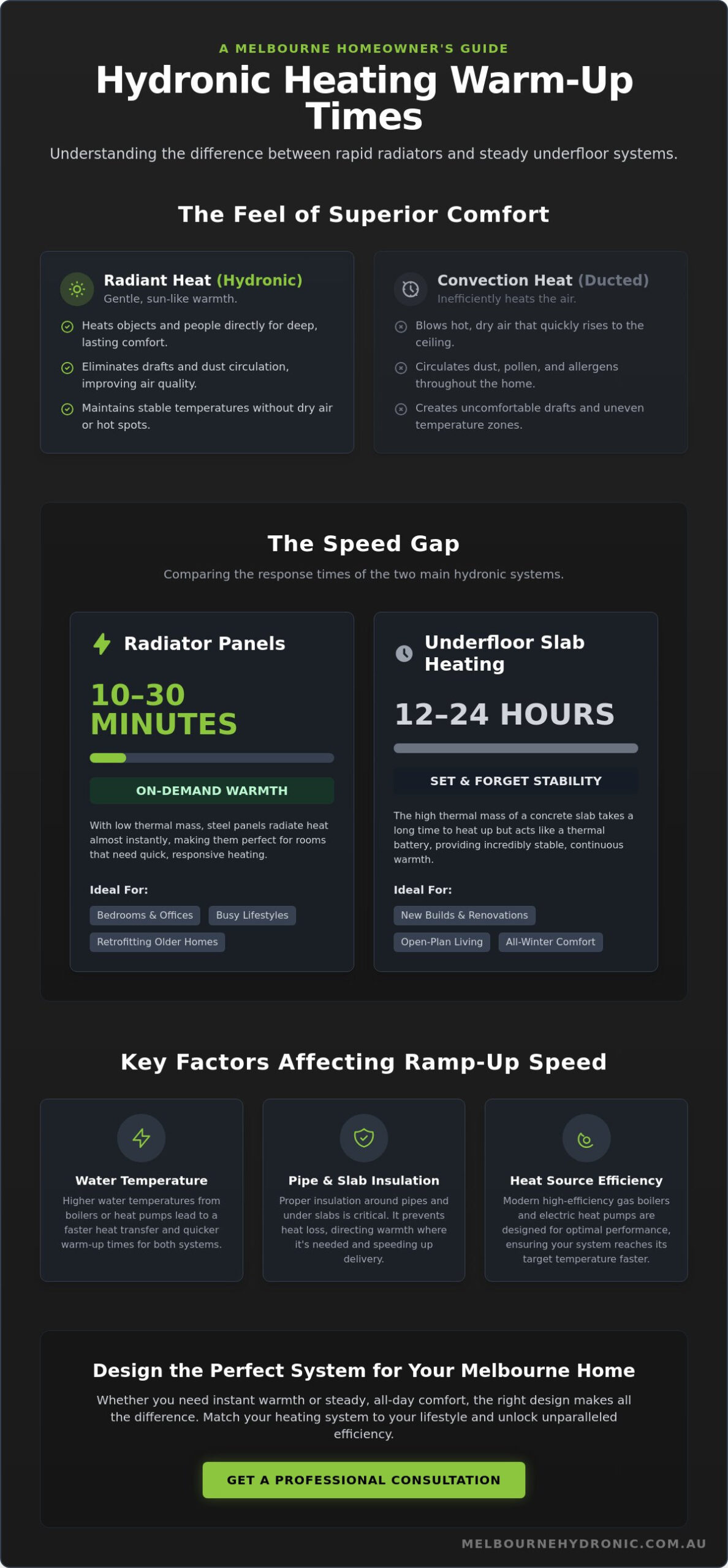
Most Melbourne residents are used to the ‘blast’ of a ducted system. These systems rely on convection, which means they move heated air around. While this feels warm almost instantly, it often creates hot spots and dry air. Hydronic systems operate differently by using radiant heat. This is a gentle, sun-like warmth that radiates from your radiators or floor, heating objects and people directly. Because radiant heat warms the surfaces around you, you’ll often feel perfectly comfortable even before the air temperature officially hits the thermostat target. This method is also far superior for health and hygiene. By eliminating fans, you stop the circulation of dust and allergens, providing a much cleaner environment for families with asthma.
The Role of Thermal Mass in Your Home
Thermal mass is a material’s ability to absorb, store, and slowly release heat. It acts as a thermal battery for your house. Underfloor heating systems installed within a concrete slab have high thermal mass. They take longer to reach temperature but provide incredible stability once they’re warm. In contrast, hydronic radiator panels are made of steel and have low thermal mass. They are designed for a much faster response, making them ideal for rooms you use less frequently. Your home’s construction style also influences how long does hydronic heating take to warm up. A classic Melbourne brick veneer home will retain heat differently than a lightweight weatherboard cottage, which is why a tailored design is crucial for every property.
Radiator Panels vs. Underfloor Heating: The Speed Gap
The choice between radiator panels and underfloor systems often comes down to your daily routine. When homeowners ask how long does hydronic heating take to warm up, they’re usually looking for a system that matches their specific lifestyle. In Melbourne, where we can experience a frosty morning followed by a sunny 20 degree afternoon, the speed of your heating system’s response is a critical factor in both comfort and energy efficiency. While both systems use heated water to provide superior radiant warmth, the way they distribute that heat creates a significant speed gap.
Hydronic Radiator Panels: 10 to 30 Minutes
Hydronic radiator panels are the premier “on-demand” solution for busy Melbourne households. These low-water-content steel panels are designed to heat up almost instantly. Because they have very little thermal mass themselves, they begin radiating heat into the room within minutes of the boiler or heat pump activating. This makes hydronic heating panels an exceptional choice for bedrooms and home offices where you might only need warmth for specific windows of time. If you’ve been out all day and return to a cold house, a panel system can transform the ambient temperature in roughly 10 to 30 minutes. Their versatility also makes them the gold standard for retrofitting into existing Victorian or Edwardian homes without disturbing the original flooring.
Underfloor Slab Heating: 12 to 24 Hours
At the other end of the spectrum is in-slab heating, which serves as a “set and forget” foundation for winter-long comfort. The physics here are entirely different. Instead of heating a steel panel, the system must warm up tonnes of concrete before the air temperature begins to move. Because of the slow thermal response time inherent in thick concrete slabs, it can take between 12 and 24 hours to reach your target temperature from a cold start. However, this creates a “flywheel effect.” Once the slab is warm, it stores an immense amount of energy and continues to radiate heat for hours after the heat source has turned off. This is ideal for homes with constant occupancy, though underfloor heating in Melbourne requires careful management during spring when outdoor temperatures fluctuate wildly.
For those seeking a middle ground, in-screed heating offers a faster alternative to traditional slab systems. By placing the pipes in a thinner layer of screed on top of the slab, the warm-up time is reduced to approximately 2 to 5 hours. Choosing the right system depends on whether you prefer the rapid response of panels or the steady, permanent warmth of a heated floor. If you aren’t sure which configuration fits your floor plan, a professional system assessment can help determine the most efficient path forward for your home.
Technical Factors Affecting Your System’s Ramp-Up Speed
While the choice between panels and slabs sets the baseline, the technical health of your system determines the actual daily performance. Many homeowners wonder how long does hydronic heating take to warm up only to realize their boiler isn’t operating at peak capacity. One of the most significant variables is the operating water temperature. Traditional gas boilers often circulate water at 70°C, providing a rapid thermal boost to radiator panels. In contrast, modern electric heat pumps typically operate at lower temperatures, often between 45°C and 55°C. This lower temperature is far more efficient for long-term running costs but requires the system to run for slightly longer periods to achieve the same ambient result.
Energy transport is the next piece of the puzzle. If your pipes run through a cold sub-floor without adequate insulation, you lose precious heat before it ever reaches your radiators. This thermal leakage forces the heat source to work harder and extends the wait time for comfort. Similarly, pump flow rates must be precisely calibrated. If the circulation pump is set too low, the heated water won’t reach the furthest rooms in your home quickly enough. This leads to uneven warmth and a sluggish response that can be frustrating on a cold Melbourne morning.
Gas Boilers vs. Electric Heat Pumps
The type of heat source you select plays a major role in how quickly you’ll feel the benefits. Choosing a hydronic boiler with high modulation is a smart move for those who value speed. These units ramp up their output for a fast start and then dial back to maintain temperature with precision. If you’re moving toward a greener future, heat pump hydronic heating is the gold standard for efficiency. While it might lack the instant punch of high-temperature gas, its ability to maintain a steady, low-cost climate is unmatched in the 2026 market. It’s a trade-off between immediate heat and sustainable, long-term comfort.
The Importance of System Maintenance
Maintenance is the silent factor in system speed. Air bubbles are a common culprit; they create cold spots in radiators that force the system to run longer to compensate. Over time, internal corrosion can create a black sludge known as magnetite. This debris settles in the bottom of radiators and heat exchangers, acting as an unintended insulator that slows down heat transfer significantly. Scheduling a regular hydronic heating service in Melbourne is the best way to prevent this. A professional technician can perform a power flush, removing these blockages and restoring the system’s ability to move heat rapidly through your home just like the day it was installed.
Strategies to Minimise Wait Times and Maximise Comfort
Achieving a perfectly tempered home doesn’t have to be a guessing game. While we’ve established the physical limits of different systems, your operational strategy determines exactly how long does hydronic heating take to warm up on a daily basis. For those with in-slab systems, the secret is the ‘Set and Forget’ method. Rather than turning the system off entirely when you leave for work, maintain a consistent base temperature. This prevents the concrete from losing its thermal energy; it ensures you never have to face a massive ramp-up time again during a cold snap.
If your home uses radiator panels, smart scheduling is your best tool for comfort. Because these units respond quickly, you don’t need to run them all day. Instead, use a timer to activate the system 20 to 30 minutes before you wake up or return from the office. This proactive approach ensures the radiant heat is already filling the room by the time you enter. To keep that warmth inside, ensure your home is well-insulated. Simple upgrades like secondary glazing on older Melbourne windows can significantly reduce heat loss, making the warm-up process even faster.
Thermostat Management for Melbourne Winters
The way you manage your thermostat directly impacts both your comfort and your energy bills. We recommend using a ‘setback’ temperature of roughly 16°C overnight rather than turning the boiler off completely. It’s much faster and more cost-effective to boost a room from 16°C to a comfort level of 20°C than it is to start from a freezing 10°C. Modern WiFi-enabled thermostats are a game-changer here. They allow you to monitor and adjust your home’s climate via smartphone, so you can trigger a heat boost while you’re still on the train home from the CBD.
Zoning Your Melbourne Home
Zoning is one of the most effective ways to reduce the ‘load’ on your boiler or heat pump. By using manifolds to create independent zones, you can prioritise heating the living areas during the day and bedrooms at night. This concentrated effort allows the system to reach your target temperature much faster in the rooms you’re actually using. This is particularly beneficial for large, double-storey homes in Geelong and the Melbourne suburbs. Instead of trying to warm a whole house at once, you can direct the energy where it’s needed most. If you want to optimise your current setup, you can book a system performance audit to see if zoning could improve your response times.
Designing Your Ideal Hydronic System with Melbourne Hydronic Heating
A premium heating system is more than just a collection of pipes and a boiler; it’s a carefully engineered solution tailored to your home’s specific architecture. At Melbourne Hydronic Heating, we’ve spent 30 years refining this process for local families. We know that a professional design consultation is the only way to truly guarantee performance. When homeowners enquire about how long does hydronic heating take to warm up, they’re often surprised to learn that speed is a variable we can control through smart hardware choices and meticulous layout planning.
We match your system to your daily routine. If your lifestyle involves being out of the house all day, we prioritise low-water-content systems that respond in minutes. For those who work from home, we focus on the steady, high-efficiency output of modern electric heat pumps. The ultimate solution often lies in a ‘hybrid’ approach. By installing hydronic underfloor heating in main living areas for constant thermal mass and radiator panels in bedrooms for on-demand warmth, you get the best of both worlds. This ensures your home is always at the perfect temperature, regardless of Melbourne’s unpredictable shifts.
Custom Design for Melbourne’s Unique Suburbs
Our expertise covers everything from modern new builds in Geelong to the grand Victorian-era homes of the inner suburbs. High ceilings and large windows in older properties present unique challenges for heat retention. We address these with high-output panels or discreet hydronic trench heating that creates a warm air curtain to block drafts. Understanding what is hydronic heating goes beyond the technical specs; it’s about choosing a lifestyle of health and comfort. With the mandatory adoption of the National Construction Code (NCC) 2025 as of May 1, 2026, we ensure every new installation meets the highest energy efficiency standards for the years ahead.
Next Steps for Your Home Comfort
Getting started is a straightforward, professional process. We begin with a comprehensive site inspection to evaluate your home’s layout, existing insulation levels, and window orientations. This data allows us to calculate the exact heat load required for each room, ensuring you never have to worry about how long does hydronic heating take to warm up once the system is live. From the initial blueprint to the final professional installation, our team manages every detail with technical precision. Request a professional hydronic heating consultation today to discover how we can transform your home into a sanctuary of efficient, predictable warmth.
Mastering Your Home’s Climate for a Melbourne Winter
Understanding how long does hydronic heating take to warm up is the first step toward a more comfortable and energy-efficient lifestyle. Whether you choose the rapid response of radiator panels for your bedrooms or the deep thermal stability of underfloor slab heating for your living areas, your comfort is a product of smart design. By using WiFi thermostats and maintaining a consistent setback temperature, you can ensure your home is always ready for the next Melbourne cool change without wasting energy.
As a family-owned and operated Victorian business with over 30 years of specialist experience, we understand the unique demands of our local climate. Our expertise spans the full spectrum of modern solutions, from high-output radiator panels to intricate underfloor installations, ensuring your system is perfectly matched to your home’s architecture. Don’t leave your winter comfort to chance. Book a Hydronic Heating Consultation for Your Melbourne Home today and experience the difference that professional, precision-engineered warmth can make to your daily quality of life.
Frequently Asked Questions
Can I turn my hydronic heating off at night to save money?
It’s more efficient to use a setback temperature rather than turning the system off completely. When you let the house temperature drop too low, the boiler has to run at maximum capacity for several hours to recover. Setting your thermostat to 16°C overnight keeps the thermal mass of the home stable, ensuring a faster and cheaper return to comfort in the morning.
Why is my hydronic radiator taking longer than usual to get hot?
A slow response time is often a sign of trapped air or internal sludge buildup. Air bubbles prevent hot water from filling the entire panel, while magnetite sludge acts as an insulator at the bottom of the unit. If you notice cold spots, bleeding the radiators or scheduling a professional power flush can restore the system’s original heating speed and efficiency.
Does the type of floor covering affect underfloor warm-up time?
Yes, floor coverings like tiles and polished concrete are excellent conductors that allow heat to pass through quickly. In contrast, thick carpets and certain timber overlays act as insulators. These materials increase the time it takes for radiant heat to reach the room, which is why we carefully calibrate the pipe spacing and water temperature based on your specific floor finishes.
How much faster is a gas boiler than a heat pump for hydronics?
Gas boilers are generally faster for an initial “boost” because they heat water to 70°C. Modern electric heat pumps are designed for steady operation at 45°C to 55°C. While gas provides a more rapid ramp-up, heat pumps are significantly more efficient at maintaining a constant temperature over long periods, which is why they’re becoming the standard for Melbourne homes in 2026.
What is the best temperature to set my hydronic thermostat in Melbourne?
We recommend a comfort setting between 18°C and 21°C for most Melbourne households. Because hydronic systems provide radiant heat that warms objects directly, you’ll often feel comfortable at a slightly lower air temperature than you would with a ducted system. Pushing the thermostat above 21°C usually increases energy consumption without a noticeable improvement in well-being.
Will bleeding my radiators make the house warm up faster?
Bleeding your radiators is one of the simplest ways to improve how long does hydronic heating take to warm up. By removing trapped air, you ensure that the entire surface area of the radiator panel is utilized for heat transfer. This allows the room to reach its target temperature much more quickly and reduces the strain on your circulation pump.
Should I leave my slab heating on during a warm Melbourne autumn day?
You should generally leave slab heating on during the autumn transition because of the system’s high thermal mass. Melbourne’s weather is notoriously unpredictable; a warm afternoon is often followed by a freezing night. If you turn the slab off, it won’t be able to react quickly enough when the temperature drops, leaving you with a cold house the following morning.
Can I add a smart thermostat to an old hydronic system to improve response?
Yes, most older gas boilers can be retrofitted with smart WiFi-enabled thermostats to give you better control over your climate. These devices allow you to manage exactly how long does hydronic heating take to warm up by triggering the system remotely via your smartphone. This ensures your home is perfectly warm the moment you arrive, without needing to run the heater all day.