Hydronic Heating vs Reverse Cycle Air Conditioning Cost: 2026 Melbourne Comparison
The cheapest heating system to install in your Melbourne home might actually be the most expensive one to live with. While initial quotes for a split system often look tempting, the long-term hydronic heating vs reverse cycle air conditioning cost tells a much more complex story. You’ve likely noticed how forced-air systems leave your skin feeling dry and your energy bills climbing every July. It’s a common frustration for local homeowners who want a warm house without the constant hum of fans or the circulation of dust and allergens.
We’ll help you look beyond the sticker price to discover the true total cost of ownership, energy efficiency, and life-changing comfort benefits of these two popular options. You’ll learn how a silent, radiant system can actually pay for itself through lower running costs and a significant boost to your property’s energy rating. From heat pump integration to the health benefits of dust-free warmth, here’s everything you need to know to make a smart investment for your home’s future in 2026.
Key Takeaways
- Understand why the lower entry price of split systems often leads to higher long-term expenses compared to the infrastructure investment of hydronic panels.
- Compare the 2026 hydronic heating vs reverse cycle air conditioning cost by looking at energy efficiency ratings and how Melbourne’s winter temperatures impact your monthly bills.
- Discover the significant health and lifestyle ROI of radiant heat, which eliminates the circulating dust, allergens, and fan noise common in forced-air systems.
- Evaluate the lifespan of your investment, contrasting the 25-plus year durability of hydronic systems against the more frequent replacement cycles of reverse cycle units.
- Learn how to choose the right system based on your property type, whether you’re upgrading a forever home or managing a budget-focused rental property.
Upfront Installation Costs: Hydronic vs Reverse Cycle
When you start comparing quotes, the difference in the hydronic heating vs reverse cycle air conditioning cost often comes down to the nature of the installation. A reverse cycle system is essentially an appliance you plug into your home. Hydronic heating, on the other hand, is a fundamental part of your property’s infrastructure. This distinction is the primary reason for the variation in upfront pricing. While one offers a quick solution for a single room, the other provides a comprehensive, whole-of-home comfort strategy that lasts for decades.
The complexity of your home’s layout also plays a major role. New builds offer a blank canvas where installing manifolds and pipework is a seamless part of the construction phase. Retrofitting an existing Melbourne home requires more careful planning. Accessing floor joists or wall cavities to run lines to each room adds to the labour time. However, this investment creates a permanent asset that doesn’t rely on bulky plastic ductwork or noisy indoor fans.
Reverse Cycle Split Systems: The Budget Entry
Split systems remain the most common entry point for many because they require minimal labour. A standard back-to-back installation involves mounting a head unit inside and a compressor outside. It’s fast and relatively simple. If you want a whole-of-home solution, you might look at ducted air conditioning. These systems require extensive ceiling space for insulated ducts. While they provide cooling, they often struggle with ‘zoning’ efficiency. You’ll often find yourself heating empty rooms just to keep the lounge room warm, which impacts your monthly budget long after the installation is complete. To understand how professional contractors optimize these types of air-based systems for better performance, you can learn more about GAP Mechanical.
Hydronic Heating: The Infrastructure Investment
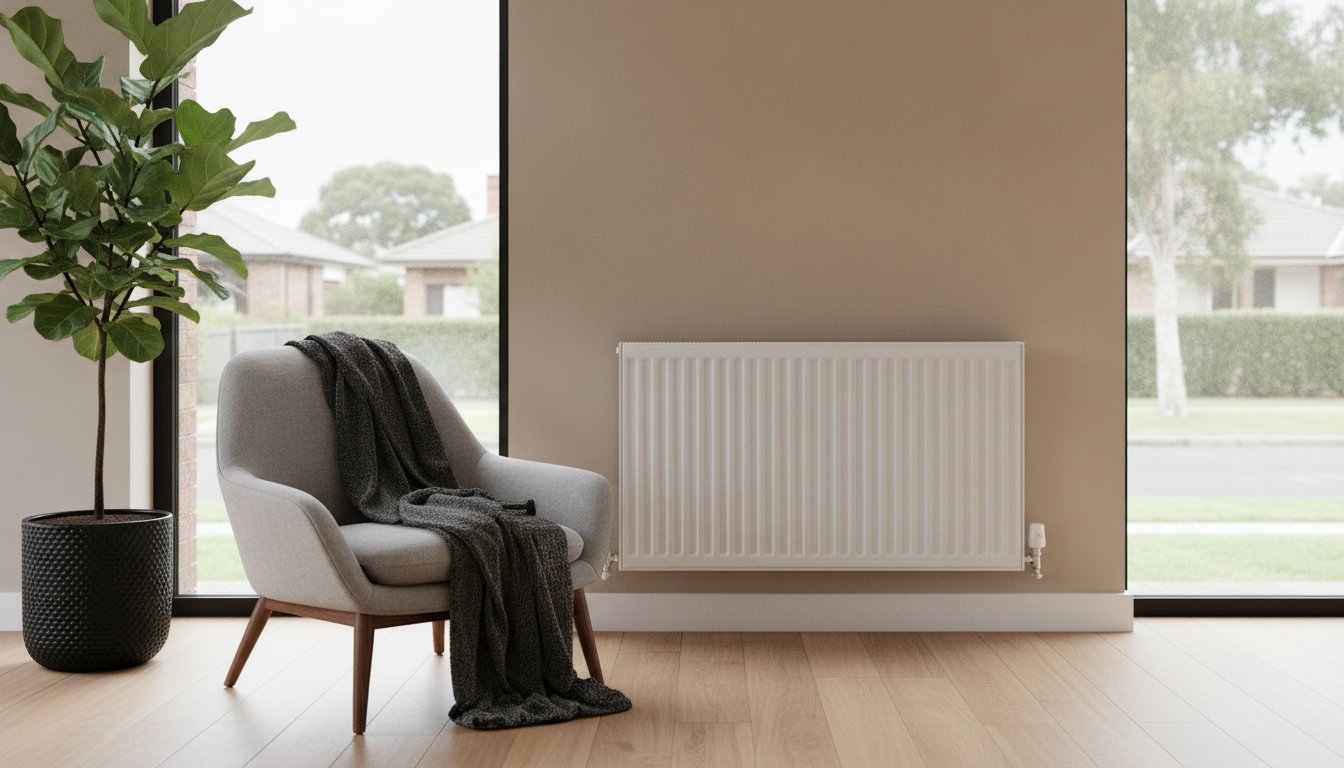
Investing in hydronic heating systems means you’re installing a network that will likely outlast your mortgage. The process involves laying specialized pipework and connecting high-efficiency hydronic heating panels throughout your living spaces. In Melbourne, where winter temperatures can be unforgiving, this radiant heat provides a level of comfort that air-based systems simply can’t match.
Whether you choose sleek radiator panels or invisible underfloor coils, the installation requires expert design to ensure even heat distribution. The quality of the manifold and the precision of the pipe layout determine your comfort for the next thirty years. This focus on durability is why the hydronic heating vs reverse cycle air conditioning cost can seem higher at the start. You’re paying for a system designed for longevity and health, rather than a disposable appliance that might need replacing in a decade.
Running Costs and Energy Efficiency in 2026
The monthly energy bill is where the hydronic heating vs reverse cycle air conditioning cost debate truly shifts in favour of radiant systems. In 2026, Victorian electricity prices and the state’s move away from gas connections have made efficiency the top priority for Melbourne homeowners. While a reverse cycle (RC) unit is efficient at moving air, it struggles to maintain temperature once the unit cycles off. Hydronic systems use water, which has a much higher thermal capacity than air, allowing it to hold and release heat steadily over a longer period.
Melbourne’s winter temperatures often hover between 5 and 12 degrees. Modern systems are designed to handle these dips, but the way they deliver that heat changes your daily experience. When you’re evaluating energy-efficient heating and cooling options, it’s vital to look at how much energy is lost through leaky ducts or poorly sealed windows. Hydronic systems operate in a sealed loop, ensuring that every bit of energy you pay for actually stays inside your living space.
Electric Heat Pumps: The Efficiency King
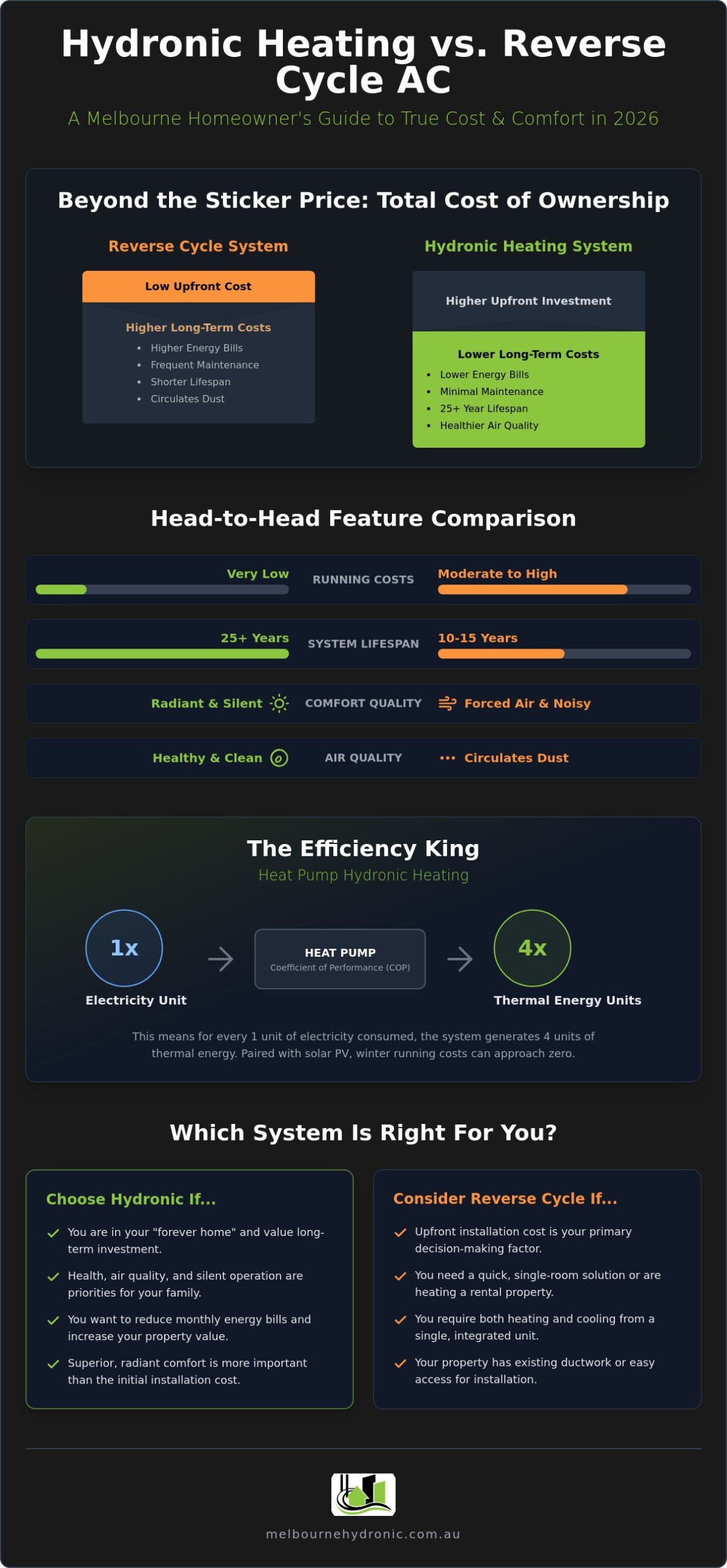
The gold standard for 2026 is undoubtedly heat pump hydronic heating. These systems utilize a Coefficient of Performance (COP) that can reach 4.0 or higher. This means that for every 1 unit of electricity consumed, the system generates 4 units of thermal energy. By comparison, even the most advanced air-to-air reverse cycle systems often see their efficiency drop during Melbourne’s frostiest mornings. Pairing an electric heat pump with a solar PV system allows you to pre-heat your home during daylight hours, effectively bringing your winter running costs close to zero.
Thermal Comfort vs. Air Displacement
There’s a noticeable ‘convection gap’ between these two technologies. A reverse cycle system heats the air, which naturally rises to the ceiling, leaving your feet cold and the room feeling ‘patchy.’ This is why 21 degrees on a split system often feels cooler than the same setting on a radiator. Radiant heat warms objects and people directly rather than just the air. This creates a consistent thermal mass within your furniture and walls, preventing the rapid heat loss associated with air-based systems. If you’re planning a long-term residence, you can request a tailored efficiency assessment to see how these physics-based advantages translate into actual savings for your specific floor plan.
Because hydronic systems don’t rely on blowing air, they don’t suffer from the 20% to 30% energy loss typical of ducted systems in poorly insulated roof spaces. You’re investing in a system that respects the laws of thermodynamics, ensuring your home stays warm long after the sun goes down without the constant cycling of a noisy compressor.
The Health and Lifestyle ROI: Beyond the Dollar
When you evaluate the hydronic heating vs reverse cycle air conditioning cost, the numbers on a quote only tell half the story. The true return on investment often appears in ways that don’t show up on a bank statement. For many Melbourne families, the choice between these systems is a decision about the air they breathe and the tranquility of their home. While a split system is a functional appliance, a radiant network is a lifestyle upgrade that transforms the internal environment of your property.
Melbourne’s premium housing market increasingly reflects this preference. Local real estate data from 2025 indicates that a quality hydronic installation can add between 3% and 5% to a home’s total resale value. Buyers in suburbs like Malvern, Camberwell, and Geelong view these systems as a sign of a well-built, high-performance home. They aren’t just buying a heater; they’re buying a superior way of living that prioritizes well-being over the lowest possible installation price.
Allergy and Asthma Benefits
Health is perhaps the most significant “hidden” saving. Reverse cycle air conditioning relies on fans to move warmed air throughout a room. This process inevitably disturbs settled dust, pet dander, and pollen. For the one in nine Australians living with asthma, this constant air turbulence can be a daily trigger. In contrast, hydronic heating operates through natural radiation and gentle convection.
Because there are no forced fans, the air remains still and the dust stays on the floor where it can be cleaned away. This technology also preserves natural humidity levels. You won’t have to deal with the dry eyes, scratchy throats, or parched skin that often accompany forced-air systems during a long Victorian winter. It’s why many local medical professionals recommend radiant heat as the gold standard for respiratory health.
Operational Silence and Peace
The psychological impact of a quiet home shouldn’t be underestimated. Standard reverse cycle units produce a constant background hum from the indoor fan and the outdoor compressor. Over time, this “white noise” can contribute to domestic fatigue. Radiant panels are completely silent. There are no rattling ducts, no whistling vents, and no sudden blasts of air.
This silence allows for better sleep and a more peaceful living environment. When you combine this with the ability to precisely zone your home, you gain total control. You can keep the bedrooms at a gentle 18 degrees while the living area stays at a cozy 21. By heating only the spaces you’re using, you further optimize the hydronic heating vs reverse cycle air conditioning cost without sacrificing an ounce of comfort. You’re investing in a home that feels as good as it looks.
Maintenance, Repairs, and Lifespan Comparison
Longevity is the silent factor that dramatically alters the hydronic heating vs reverse cycle air conditioning cost equation. Most Melbourne homeowners view heating as a long-term investment, but the hardware often tells a different story. A standard reverse cycle (RC) unit is built with a significant amount of plastic and complex electronics, typically reaching the end of its reliable life within 10 to 15 years. In contrast, a hydronic system is engineered for endurance. The core pipework and radiator panels often serve a home for 25 to 35 years or more, making them a permanent fixture rather than a temporary appliance.
This difference creates a “replace vs. repair” cycle that catches many off guard. When an RC compressor fails after a decade, the cost of the part and specialized labour often makes a full replacement the only logical choice. Hydronic systems are modular. If a boiler reaches its 20-year limit, you simply replace the heat source while the rest of the infrastructure remains intact. This ability to “reset the clock” on your system ensures your initial investment continues to provide value without requiring a total home overhaul every decade.
To see how a long-standing family business applies these principles of durability and maintenance, you can check out Around the Clock Heating and Air Conditioning.
Hydronic Longevity and Servicing
The durability of steel or cast iron radiator panels is leagues ahead of the lightweight materials used in air conditioning heads. To keep these systems at peak performance, a regular hydronic heating service is essential. This usually involves checking the system pressure, testing the water pH, and ensuring the heat pump or boiler is firing correctly. One of the smartest long-term moves is power flushing. This process removes the internal sludge or magnetite that can build up over years. It’s a simple maintenance step that protects your heat exchanger and ensures your running costs don’t creep up over time.
Reverse Cycle Maintenance Realities
Reverse cycle systems require more frequent hands-on attention to remain hygienic. Filters must be cleaned monthly to prevent dust buildup, and the outdoor condenser unit is constantly exposed to Melbourne’s salt air and debris. Over time, gas regassing and fan motor failures become common. These units often work harder to compensate for mechanical wear, which eventually leads to a terminal failure. The total cost of ownership over a 30-year period represents the complete sum of your initial purchase, installation fees, annual energy bills, routine maintenance, and the inevitable cost of replacing the entire unit twice.
If you’re tired of the disposable appliance cycle and want a system built for a lifetime, we can help you design a solution that lasts. You can book a professional system health check to evaluate your current setup or plan a high-durability upgrade that secures your home’s comfort for the next generation.
Making the Choice: Which System is Right for You?
Deciding on the right climate control strategy requires you to look past the immediate installation quote. The hydronic heating vs reverse cycle air conditioning cost debate is ultimately a question of how you intend to use your home. If you’re managing a short-term rental property or a budget-focused renovation where cooling is the primary concern, a reverse cycle split system offers an affordable entry point. It’s a functional, “plug-and-play” solution that meets basic needs. However, for those building or renovating a forever home, the calculation changes significantly.
Hydronic systems are for homeowners who prioritize health, silence, and long-term financial logic. While the initial outlay is higher, the system’s 25-year lifespan and lower running costs create a much more favourable total cost of ownership. You aren’t just buying a heater; you’re investing in a dust-free environment and a level of comfort that air-based systems simply can’t replicate. Many of our clients in Melbourne and Geelong now opt for a hybrid approach. This involves using a high-efficiency electric heat pump to power radiant panels for winter warmth, while integrating fan coils to provide refrigerated cooling through the same system during summer.
The Decision Framework
Before making a final choice, evaluate your property’s “fabric first” potential. A home with high-quality insulation and double glazing will maximize the benefits of radiant heat, allowing the system to run at lower, more efficient temperatures. If you’re at the start of a new build, underfloor heating is the ultimate choice for concrete slabs. It provides the most consistent thermal mass and frees up your wall space. For existing homes, radiator panels offer a more straightforward retrofit path that still delivers superior comfort compared to forced air. Think about your budget over the next 20 years, not just the next two months. Replacing a disposable air conditioner twice in the time one hydronic system lasts often negates any initial savings.
Customising Your Melbourne Solution
Every home in Victoria has unique thermal challenges, from the coastal winds of Geelong to the shaded valleys of the Dandenongs. This is why professional design is non-negotiable. A bespoke heat load assessment ensures your system isn’t over-engineered or underpowered, both of which lead to wasted energy. By combining the latest European technology with our 30 years of local experience, we can help you navigate the hydronic heating vs reverse cycle air conditioning cost comparison with total clarity. Whether you want the sleek look of designer panels or the hidden luxury of floor coils, your solution should be as unique as your floor plan.
Ready to move beyond standard air conditioning and experience the radiant difference? You can request a professional hydronic heating consultation today to discover how a custom-designed system can improve your home’s energy rating and your family’s well-being for decades to come.
Secure Your Home’s Comfort for the Next Generation
Choosing the right heating system is about more than just surviving the next winter. It’s an investment in your family’s health and your home’s long-term value. While the hydronic heating vs reverse cycle air conditioning cost may seem higher at the start, the dividends of silent, dust-free warmth and superior energy efficiency pay off for decades. You’re moving away from disposable appliances and toward a permanent infrastructure that respects both your comfort and your budget.
As a family-owned and operated business since 1990, we’ve spent over 30 years helping Melbourne and Geelong residents master their local climate. We specialize in high-efficiency electric heat pump integration, ensuring your home remains a sanctuary of well-being. Don’t settle for patchy, dry air when you can have the consistent, radiant luxury your property deserves. Our team is ready to design a bespoke solution that fits your floor plan and lifestyle perfectly.
Book a professional hydronic heating consultation with our Melbourne experts today and start planning your path to a more sustainable, comfortable future.
Frequently Asked Questions
Is hydronic heating more expensive to run than reverse cycle air conditioning?
Modern hydronic systems powered by electric heat pumps are often more cost-effective to run than standard reverse cycle units. While both use heat pump technology, hydronic systems benefit from the thermal mass of water, which retains heat much longer than air. This means your system doesn’t have to work as hard to maintain a consistent temperature, especially during Melbourne’s sustained cold snaps.
Can hydronic heating also provide cooling for my Melbourne home?
Standard radiator panels only provide heating, but you can achieve whole-of-home cooling by integrating fan coils into your system. These units use the same electric heat pump to circulate chilled water during the summer months. This hybrid approach gives you the best of both worlds: silent, radiant warmth in winter and high-performance refrigerated cooling when the Victorian summer hits its peak.
How long does it take to see a return on investment with hydronic heating?
While the upfront cost is higher, most homeowners see a financial return through energy savings and reduced maintenance within 8 to 12 years. However, the lifestyle ROI is immediate. When you factor in the 25-plus year lifespan and the 3% to 5% increase in property value seen in recent Melbourne real estate data, the long-term hydronic heating vs reverse cycle air conditioning cost becomes very attractive.
Do I need to upgrade my electrical switchboard for a hydronic heat pump?
Many older Melbourne homes require a switchboard upgrade to support the transition from gas to a high-efficiency electric heat pump. These systems require a dedicated circuit to ensure safe and stable operation. We assess your home’s electrical capacity during the design phase to ensure your infrastructure can handle the new load, providing a seamless transition to a more sustainable heating solution.
Is hydronic heating safer for children and pets than split systems?
Hydronic systems are the safest choice for families because they eliminate the risks associated with forced-air turbulence and hot surfaces. Radiant panels operate at lower surface temperatures than traditional heaters, and there are no exposed heating elements. Because the system doesn’t blow air, it also prevents the circulation of dust and allergens, creating a much healthier environment for children with asthma or allergies.
What is the average lifespan of a hydronic heating system compared to an air conditioner?
A quality hydronic system is built to last 25 to 35 years, which is more than double the typical 10 to 15-year lifespan of a reverse cycle split system. This longevity is a major factor in the total hydronic heating vs reverse cycle air conditioning cost. Choosing hydronic means you’re investing in permanent home infrastructure rather than a disposable appliance that will eventually require a full and costly replacement.
Does hydronic heating increase the resale value of a Melbourne property?
Hydronic heating is considered a premium feature in the Melbourne and Geelong property markets and significantly boosts resale appeal. Buyers increasingly prioritize energy efficiency and health-conscious home features. Having a professionally installed radiant system signals that the home is high-quality and well-maintained, often allowing sellers to command a higher price point in competitive inner-city and bayside suburbs.