Smallest Hydronic Boiler in Melbourne: Compact Heating Solutions for 2026
In the densifying suburbs of Melbourne, the old assumption that a heating system needs to be bulky to be effective is officially a thing of the past. You’ve likely felt the frustration of a massive, outdated unit hogging your laundry or kitchen cupboard, leaving you to wonder if a smaller model could truly handle a biting Victorian frost. It’s a common concern for many, especially as we adapt to the 2026 building standards that demand more intelligent use of both space and energy. You shouldn’t have to choose between a functional home layout and a warm living room.
This guide shows you how to reclaim your square footage while upgrading to a high efficiency hydronic boiler Melbourne homeowners can rely on for consistent, premium warmth. We’ll explore the latest European-style compact units that fit discretely into standard cabinetry and meet the newest Victorian gas regulations. You’ll discover how modern condensing technology can reduce your energy consumption by up to 28 percent, ensuring your home remains a sanctuary of health and comfort even as gas prices continue to rise. We will look at the most reliable small-scale solutions available today that guarantee your comfort for years to come.
Key Takeaways
- Learn how modern European engineering allows for ‘cupboard-fit’ boilers that provide full-home warmth without the bulky footprint of legacy systems.
- Discover how a high efficiency hydronic boiler melbourne families trust can slash energy consumption by 28% through advanced condensing technology.
- Understand the critical 2026 VBA clearance and ventilation requirements to ensure your compact installation remains safe and fully compliant.
- Compare the space-saving benefits of wall-mounted gas condensing units against the latest zero-emission electric boiler alternatives for tight spaces.
- Find out why professional heat-load calculations are the secret to finding a compact unit that fits your cupboard while meeting your home’s unique heating demands.
Why Compact Hydronic Boilers are the New Standard for Melbourne Homes
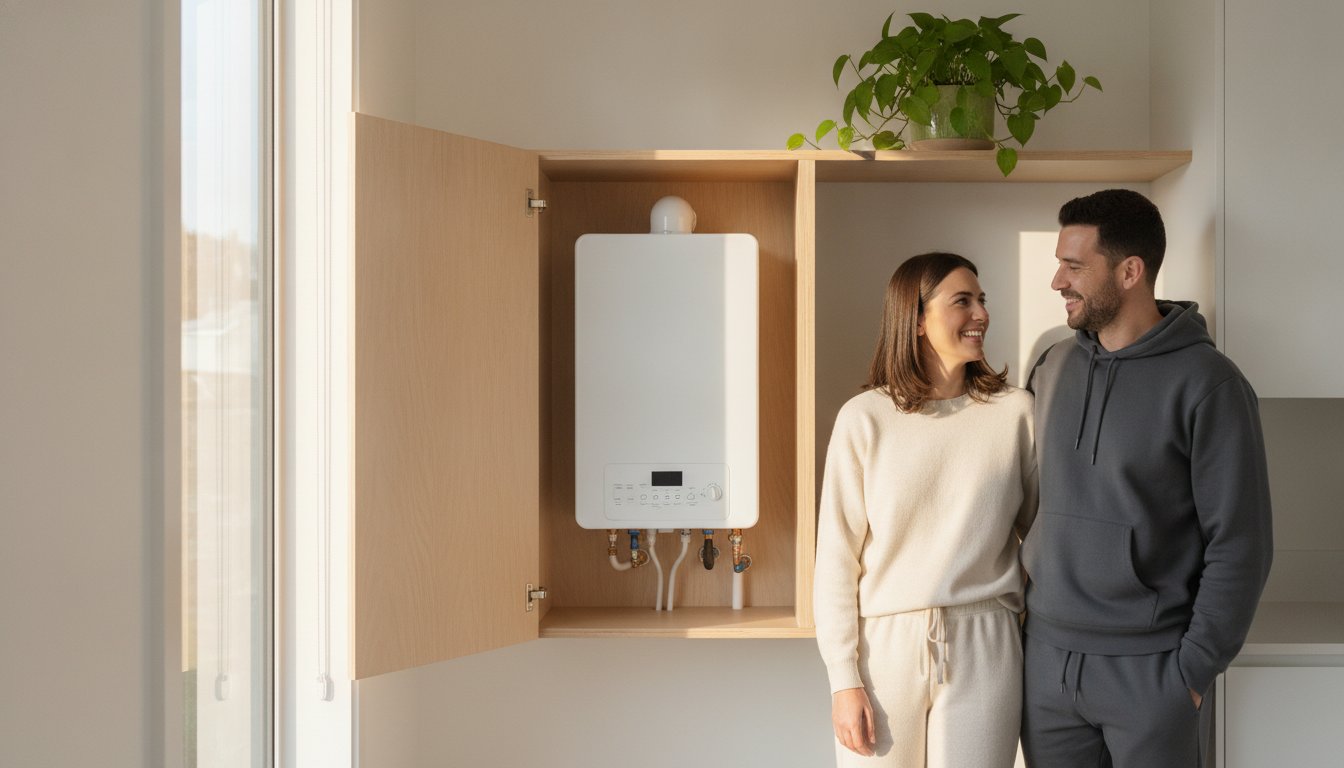
Melbourne’s architectural landscape is unique. From the narrow corridors of South Melbourne to the sprawling renovations in Prahran, every square inch of floor space is valuable. For decades, hydronic heating was synonymous with large, floor-standing units that dominated laundry rooms. This changed when European engineering reached our shores, introducing “cupboard-fit” technology. These units allow homeowners to hide their entire heating plant behind a standard kitchen or laundry cabinet door, maintaining a sleek, minimalist aesthetic without compromising on performance.
The 2024 Victorian gas ban on new connections has fundamentally changed how we approach replacements in 2026. While new developments are fully electric, many existing homes in suburbs like Carlton and Fitzroy still rely on established gas lines. Upgrading to a high efficiency hydronic boiler melbourne ensures you remain compliant with modern standards while significantly reducing your carbon footprint. These compact units are designed to integrate seamlessly into existing pipework, making them the preferred choice for discrete urban renovations where space is the primary constraint.
Defining the ‘Smallest’ Hydronic Boiler Category
We define a compact boiler as a unit under 700mm in height that delivers full residential heat load. Most high-performance models measure approximately 400mm in width and 300mm in depth. This footprint is ideal for wall-mounting, which is a major benefit in older Melbourne terraces. However, you must consider the structural integrity of internal walls. Older lath and plaster walls often need reinforcement to safely support the 35kg weight of a modern unit. Choosing a wall-mounted model frees up floor space for storage, which is a massive win in tight inner-city layouts.
The Efficiency Myth: Does Smaller Mean Less Powerful?
It’s a mistake to equate physical size with heating capacity. In the world of Hydronics, smaller often means smarter. Modern heat exchangers are crafted from high-grade stainless steel or aluminum, allowing for rapid heat transfer in a fraction of the space. A compact high efficiency hydronic boiler melbourne can easily generate 30kW of output, which is enough to power ten or more hydronic heating panels simultaneously.
Condensing technology is what makes this possible. By capturing and reusing latent heat from exhaust gases, these boilers achieve efficiency ratings above 90 percent. You get more heat for every megajoule of gas consumed. This technology can reduce energy consumption by up to 28 percent compared to older, non-condensing units. This relationship between size and output ensures that even if your boiler is tucked away in a tiny cavity, your home remains a sanctuary of warmth during the coldest July mornings.
Understanding Boiler Sizing: How Small Can You Actually Go?
Selecting a heating system isn’t just about finding the smallest box. It’s about matching the technical output to the thermal demands of your specific property. If you’re still exploring the basics of water-based comfort, it helps to understand What is Hydronic Heating? and how it uses reticulated water to distribute warmth. In Melbourne’s diverse climate, a heat load calculation is the only way to ensure you don’t undersize your system. A unit that’s too small will struggle to reach temperature on a three-degree morning, while one that’s too large will cycle on and off too frequently, wasting energy and wearing out components.
Most compact gas boilers can support between 8 and 12 radiator panels. This capacity is usually more than enough for a standard two-bedroom terrace or a large apartment. The goal is to find that ‘Goldilocks’ zone: a unit small enough to vanish into your cabinetry but powerful enough to keep every room at a steady 21 degrees. When we design these systems, we prioritize this balance to ensure your home remains a sanctuary of health and well-being without losing an inch of storage space.
kW Capacity vs. Physical Dimensions
It’s a common misconception that a higher kilowatt (kW) rating requires a larger physical unit. Modern engineering means a 24kW boiler often shares the exact same dimensions as an 18kW model. The difference lies in the internal heat exchanger’s ability to process energy. When selecting a high efficiency hydronic boiler melbourne, we look closely at the insulation levels of your home. A heritage Victorian home with high ceilings and no wall insulation will require a higher kW output than a modern, six-star energy-rated townhouse, even if the floorplans are identical. Matching the power to the environment is where technical precision meets home comfort.
Single Phase vs. Three Phase Electric Options
As we move toward 2026, many Melbourne apartment owners are looking at electric boiler replacements. These units are incredibly compact, often no larger than a small carry-on suitcase. However, the primary constraint isn’t the boiler’s size, but your electrical switchboard. A single-phase electric boiler is perfect for smaller footprints, but larger homes might require a three-phase upgrade to handle the increased load. This is why a professional assessment is vital. We help you navigate these technical requirements to ensure your switchboard doesn’t become the bottleneck in your comfort.
A high efficiency hydronic boiler melbourne should be a ‘set and forget’ solution. By getting the sizing right from the start, you ensure the longevity of the system and the lowest possible running costs for your household.
Comparing Compact Gas Boilers vs. Electric Heat Pumps for Small Spaces
Choosing between gas and electric systems often comes down to where you can afford to lose space. While physical dimensions are a priority, the fuel source dictates whether that footprint sits inside a kitchen cupboard or outside on a balcony. A high efficiency hydronic boiler melbourne remains the most compact internal solution. These wall-mounted units house the heat exchanger, pump, and expansion tank in one sleek chassis. If you are retrofitting a heritage home with no outdoor area, gas condensing technology is often the only viable path to premium comfort.
Electric boilers offer an even smaller internal profile, often resembling a large fuse box. They are zero-emission at the point of use and don’t require a flue, which simplifies installation in Melbourne apartments. However, they demand a high-amperage electrical supply. You must ensure your switchboard can handle the load, especially in older buildings where 30A or 40A circuits are the limit. When evaluating the total footprint, you must also account for the manifold and pump logic, which distribute water to your radiators.
The Physical Footprint Comparison
The trade-off between indoor and outdoor space is the deciding factor for most urban homeowners. While a gas boiler averages just 400mm in width, a heat pump unit typically requires a footprint of over 1m plus clearance zones. This makes heat pumps a challenge for narrow side-passages or small balconies. The following table outlines the typical space requirements for each system type in 2026:
| System Type | Indoor Space Needed | Outdoor Space Needed | Best For |
|---|---|---|---|
| Gas Condensing Boiler | Standard Cupboard | Minimal (Flue only) | Inner-city terraces |
| Electric Boiler | Small Wall Space | None | Modern Apartments |
| Hydronic Heat Pump | Small (Buffer Tank) | Large (Fan Unit) | Detached Homes |
Running Costs and Environmental Impact in Victoria
Environmental goals are driving many toward heat pump hydronic heating. In 2026, Victorian gas prices are projected to rise by 15 percent, making the long-term ROI of electric systems more attractive. Heat pumps are incredibly efficient, often delivering four units of heat for every unit of electricity consumed. If you have roof space for solar panels, you can offset these running costs entirely, essentially using your roof to save indoor space.
For those sticking with gas, a high efficiency hydronic boiler melbourne is still a responsible choice. Modern condensing units capture heat that older systems simply vented outside. While the initial installation of a heat pump is higher, combined rebates from Solar Victoria and federal STCs can provide total savings of up to $2,700. We help you weigh these financial incentives against your available square footage to find the most sustainable balance for your lifestyle.
Planning Your Installation: Cupboards, Cavities, and Clearances
Finding the perfect spot for your heating unit requires more than just a tape measure. In the tight confines of a Melbourne renovation, the technical installation of a high efficiency hydronic boiler melbourne must balance aesthetics with strict safety protocols. When you hide a boiler in a cupboard, you aren’t just managing space; you’re managing airflow and thermal safety. Precision is the difference between a system that lasts thirty years and one that fails due to heat stress.
The Victorian Building Authority (VBA) sets clear guidelines for gas appliances in confined spaces. These aren’t just suggestions; they’re legal requirements that ensure your home insurance remains valid. A high efficiency hydronic boiler melbourne generates significant internal heat. Without adequate ventilation, the electronics can degrade prematurely. Safety is non-negotiable. We often specify louvred cupboard doors or discrete ventilation grilles to allow cool air to circulate around the heat exchanger while keeping the unit out of sight.
Servicing is often the last thing on a homeowner’s mind during a renovation, but it should be the first for your installer. A compact boiler still needs accessible isolation valves and drainage points. By integrating a dedicated hydronic heating service melbourne plan into your design, you ensure the system remains as efficient as the day it was commissioned. Accessibility isn’t just about the boiler itself; it’s about the pumps and expansion tanks that keep the water flowing.
The Cupboard Installation Checklist
Creating a ‘cupboard-fit’ installation requires a methodical approach. You must consider:
- Combustible Clearances: Ensuring the boiler chassis is far enough from timber framing or joinery according to manufacturer specifications.
- Concentric Flueing: Using a ‘pipe-within-a-pipe’ system to bring in fresh air while exhausting gases through a single wall or roof penetration.
- Acoustic Dampening: Installing the unit on vibration-absorbing mounts to prevent low-frequency hums from traveling through your walls.
Retrofitting Small Boilers in Heritage Homes
Integrating modern tech into a 19th-century terrace requires a creative eye. We often hide the main pipe runs in the sub-floor cavity, connecting the boiler directly to underfloor heating manifolds or radiator circuits. This approach is particularly effective in suburbs like Prahran or Carlton, where chimney-breasts can be repurposed as vertical service ducts. By routing flues and pipes through old masonry, we maintain the architectural integrity of the home while providing a 21st-century heating solution.
If you are navigating a tricky renovation and need expert advice on placement, contact us for a technical site assessment to find the most discrete layout for your home.
Custom Space-Saving Hydronic Solutions with Melbourne Hydronic Heating
At Melbourne Hydronic Heating, we’ve spent 30 years mastering the nuances of Victorian architecture. From the heritage-listed terraces of South Melbourne to the modern, high-density developments in the CBD, we understand that every home requires a unique thermal strategy. Our legacy is built on solving “tricky” installations where space is the primary constraint. We don’t believe you should have to sacrifice your laundry storage or kitchen aesthetics to enjoy the premium, dust-free warmth of a high efficiency hydronic boiler melbourne homeowners have trusted for three decades.
Our selection process for compact units is rigorous. We source European-style compact boilers that are specifically engineered to handle Australian conditions. While many units look similar on paper, we prioritize models with robust internal components that can withstand the rigors of our local climate. Our end-to-end process begins with a detailed space-saving design, moves through a precise installation, and continues with long-term support. Whether you are looking for new boiler replacements or a completely new system layout, our goal is to provide a discrete heating solution that feels like a natural part of your home’s infrastructure.
Why Local Melbourne Expertise Matters
Local knowledge is critical when dealing with compact heat exchangers. These high-performance components have narrow waterways that are sensitive to mineral buildup. We understand Melbourne’s specific water quality and how it interacts with different metals within a high efficiency hydronic boiler melbourne system. To protect your investment, we incorporate power flushing into our installation and replacement services, clearing out sludge and debris that can cripple a small unit’s efficiency. As a family-owned specialist contractor, we take personal pride in ensuring every system we commission meets the highest Victorian safety and compliance standards.
Get Started on Your Compact Heating Project
Planning a renovation in a tight urban space doesn’t have to be overwhelming. When you book a consultation with our team, we’ll walk you through the most efficient ways to reclaim your square footage. To provide an accurate space-saving quote, it’s helpful if you can provide basic floor plans or photos of your current utility cupboard and any existing pipework. This allows us to visualize the clearances and ventilation requirements discussed earlier in this guide, ensuring a seamless fit from day one.
Don’t let a bulky, outdated system dictate how you use your home. You deserve a heating solution that is as modern and efficient as the rest of your life. Contact Melbourne Hydronic Heating for a custom quote today and discover how we can transform your home comfort with the world’s most compact hydronic technology.
Future-Proof Your Home with Compact Hydronic Comfort
Reclaiming your home’s square footage doesn’t mean compromising on the luxury of a warm, healthy environment. Modern European engineering has made the “cupboard-fit” installation a reality for even the most space-constrained inner-city terraces. By selecting a high efficiency hydronic boiler melbourne families can trust, you’re investing in a system that meets 2026 building standards while significantly lowering your long-term energy costs. From understanding heat loads to navigating complex ventilation requirements, the right technical approach ensures your heating plant remains a discrete, silent partner in your home’s comfort.
Professional design is the secret to a successful compact installation. Whether you’re navigating strict VBA regulations for a laundry cavity or retrofitting a heritage home in Prahran, expert guidance ensures your system remains safe and efficient for decades. With over 30 years of local experience, we specialize in these complex, space-saving layouts that require a specialist’s touch. Our VBA-compliant installations give you the peace of mind that your investment is protected and your home’s well-being is prioritized.
Ready to transform your living space? Request a Space-Saving Hydronic Heating Quote today to see how our inner-city specialists can design a custom solution tailored to your unique floorplan. Let’s build a warmer, more efficient future for your home together.
Frequently Asked Questions
What is the smallest hydronic boiler currently available in Melbourne?
The smallest high-performance units in the current market typically measure approximately 700mm in height, 400mm in width, and 300mm in depth. These European-engineered models are specifically designed to fit within a standard kitchen or laundry cupboard. Despite their small footprint, they deliver a full residential heat load, providing a discrete solution for modern urban living.
Can a compact hydronic boiler heat a two-story Melbourne home?
Physical size doesn’t dictate heating capacity, so a compact unit can easily heat a large two-story property. A 30kW compact high efficiency hydronic boiler melbourne can support up to 12 radiator panels across multiple levels. The key is ensuring the kW output is correctly matched to your home’s specific thermal demands through a professional heat load calculation.
Do I need special ventilation if I put my boiler in a kitchen cupboard?
Adequate ventilation is mandatory to prevent the internal electronics from overheating and to ensure safe operation. While modern room-sealed boilers use concentric flues for air intake, the cupboard itself often requires louvred doors or discrete grilles. This allows cool air to circulate around the chassis, which is a critical requirement for meeting Victorian safety standards.
Are electric hydronic boilers physically smaller than gas ones?
Electric boilers are generally smaller than gas models because they don’t require a gas burner, heat exchanger, or flue system. Some electric units are no larger than a small carry-on suitcase, making them ideal for Melbourne apartments. However, they do require a high-amperage electrical supply, which may necessitate a switchboard upgrade in older buildings.
Is it more expensive to install a boiler in a tight space in Melbourne?
Installation costs for restricted spaces can be higher due to the increased technical labor required for complex pipe routing and limited access. Retrofitting a high efficiency hydronic boiler melbourne into a heritage cavity or custom joinery requires specialized fittings and precision engineering. Most homeowners find this initial investment worthwhile to reclaim valuable square footage in their homes.
How much noise does a small high-efficiency hydronic boiler make?
Modern high-efficiency boilers are designed for quiet operation, typically producing between 35 and 45 decibels. This noise level is comparable to a quiet library or a modern refrigerator. When installed with proper acoustic dampening mounts, the unit is barely audible, even when it’s tucked behind a cupboard door in a main living area.
Can I replace my old bulky boiler with a compact unit without changing my radiators?
You can usually integrate a new compact boiler with your existing radiator panels and pipework. Our technicians perform a thorough power flush of the system to remove legacy sludge and debris before commissioning the new unit. This protects the sensitive internal components of your new boiler and ensures the entire system operates at peak efficiency.
What are the current VBA clearance requirements for small boiler installations?
The Victorian Building Authority requires specific minimum clearances from combustible materials to ensure fire safety. While these distances vary by manufacturer, most installations require at least 50mm of side clearance and 200mm of space above and below the unit. These gaps are also essential for providing “elbow room” for future maintenance and servicing.