
Superior Alternatives to Ducted Heating for Melbourne Homes in 2026
Did you know that the average Victorian household’s gas bill has surged by over 35% in just the last two years? It’s a frustrating reality for many families who are paying record prices for outdated systems that circulate allergens, trigger asthma, and leave uncomfortable cold spots throughout their living spaces. With the 2027 ban on new gas connections fast approaching, many are looking for smarter, healthier alternatives to ducted heating melbourne residents can rely on for the long term.
We understand that your home should be a sanctuary of comfort, not a source of rising bills and dusty air. At Melbourne Hydronic Heating, we’ve spent more than 30 years as local experts helping homeowners transition to premium, radiant warmth. This guide will show you how to swap noisy vents for the silent, dust-free heat of hydronic radiator panels and underfloor systems. You’ll learn how electric heat pump technology and current 2026 Victorian Energy Upgrades rebates make it easier than ever to achieve consistent warmth while significantly lowering your daily running costs and future-proofing your home.
Key Takeaways
- Learn why radiant heat provides a healthier, dust-free environment by eliminating the air circulation and allergen spread common in traditional ducted systems.
- Explore the most efficient alternatives to ducted heating melbourne has to offer, focusing on systems that provide consistent warmth without cold spots or noisy vents.
- Understand the functional differences between hydronic radiator panels and underfloor heating to determine which solution best fits your home’s layout and lifestyle.
- Discover how air-to-water electric heat pumps extract energy from the local environment to drastically reduce energy consumption and future-proof your home.
- Follow a professional roadmap for transitioning from gas-based forced air to a precision-engineered hydronic system, starting with a detailed heat load assessment.
Why Melbourne is Moving Away from Ducted Gas Heating
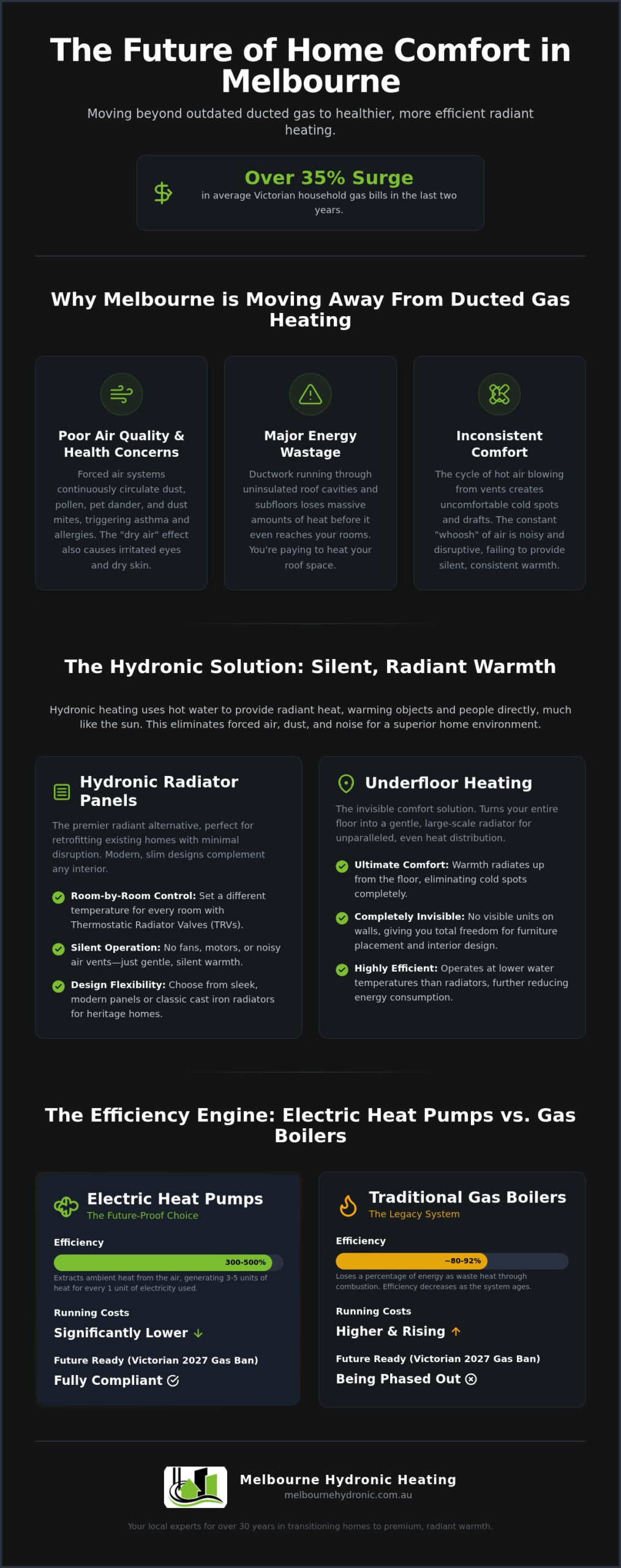
For decades, natural gas was the undisputed king of home heating in Victoria. It was fast, relatively cheap, and familiar. However, the economic and regulatory landscape has shifted dramatically. With average gas bills in Melbourne rising by over 35% in recent years, the “cheap” fuel of the past is now a significant financial burden. The Victorian Government’s Gas Substitution Roadmap has accelerated this trend, with a ban on new gas connections for new builds starting in 2027. This shift is driving a massive surge in interest regarding alternatives to ducted heating melbourne families can rely on for sustainable, long term comfort.
Beyond the cost, there’s a growing awareness of the physical discomfort caused by forced air systems. Ducted heating works by blowing hot air through vents, which often leads to “dry air” syndrome. This phenomenon strips moisture from your environment, frequently resulting in irritated eyes, dry skin, and itchy throats. Unlike Hydronics, which provides gentle radiant warmth, ducted systems create a cycle of hot and cold spots that never feels quite right. You are essentially living in a drafty environment even when the heater is running at full capacity.
The Health Impact of Forced Air Heating
If someone in your family suffers from asthma or hay fever, your heating system might be part of the problem. Standard residential ducted systems lack the medical grade filtration needed to capture microscopic triggers. Instead, these systems act like a closed loop for pollutants, continuously circulating dust, pollen, and pet dander from room to room. Forced air systems are notorious for creating pockets of warmth and moisture in dark ductwork, which directly facilitates rapid dust mite proliferation throughout the entire home. For many, switching to a ductless system isn’t just about warmth; it’s a vital health choice for clearer breathing and better sleep.
Efficiency Gaps in Aging Ducted Systems
Efficiency is another area where traditional systems fail. Most Melbourne homes have ductwork running through uninsulated roof cavities or subfloors. Even with modern insulation, the temperature difference between the hot air inside the duct and the freezing winter air outside leads to massive energy wastage. You’re effectively paying to heat your roof space before the air even reaches your living room. While many systems promise “zoning” to save money, these are often simple mechanical dampers that don’t actually reduce the energy consumption of the main unit. The constant, noisy “whoosh” of air you hear is a sign of turbulence and energy being lost to friction and poor design, rather than being converted into comfortable, silent warmth.
Hydronic Radiator Panels: The Premier Radiant Alternative
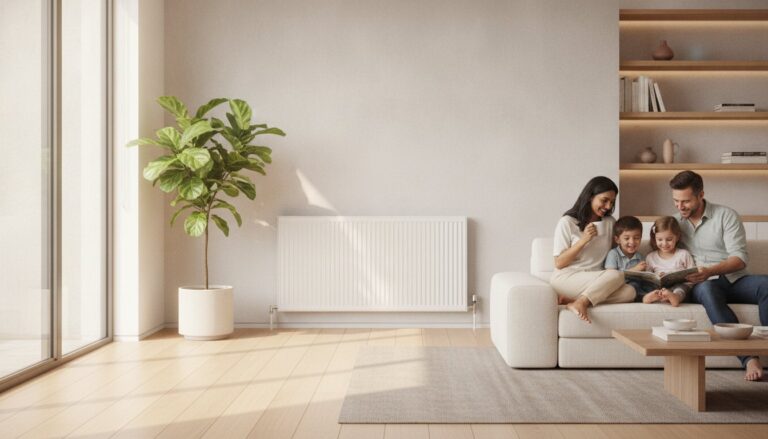
When exploring the best alternatives to ducted heating melbourne residents often land on hydronic radiator panels. This technology doesn’t rely on fans or noisy motors. Instead, it uses a central heat source to circulate hot water through a network of sealed pipes. These pipes lead to wall-mounted panels that emit radiant heat. It’s a fundamental shift in how we experience warmth. While forced air systems try to heat every cubic centimetre of air in a room, radiant heat warms the surfaces, objects, and people directly. It’s the same feeling as stepping into a patch of sunlight on a cold winter morning.
The aesthetic appeal of these systems has evolved significantly. Modern Hydronic heating panels are remarkably slim. They can blend into a minimalist interior or serve as a bold design statement. For those restoring heritage homes in suburbs like Camberwell or Williamstown, classic cast iron radiators provide an authentic period look while delivering 21st-century performance. Because these systems can be powered by electric heat pumps, they are considered one of the most energy-efficient methods for heating available to modern households.
Wall-Mounted Radiators for Retrofit Projects
One of the biggest misconceptions is that hydronic systems are only for new builds. In reality, radiator panels are perfect for retrofitting existing Melbourne homes with minimal structural impact. We can often run the small, flexible piping through subfloors or ceiling cavities with far less disruption than installing bulky ductwork. Each panel features a Thermostatic Radiator Valve (TRV). This allows you to set different temperatures for every room, giving you precision control that traditional “zoning” simply can’t match. We typically recommend placing radiators under windows to neutralise cold downdrafts, ensuring your living areas remain perfectly comfortable.
Hydronic Towel Rails and Trench Heating
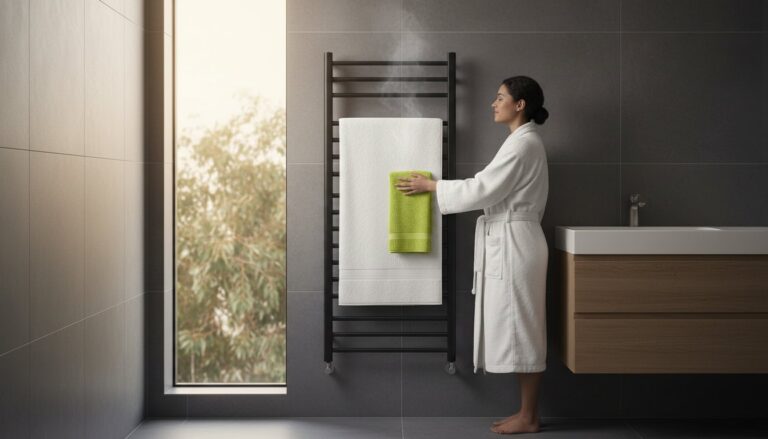
The versatility of hydronic technology extends beyond standard wall panels. Hydronic towel rails are a popular addition that brings a spa-like luxury to Melbourne bathrooms, keeping towels dry and the room warm simultaneously. For homes with large, floor-to-ceiling glass walls, trench heating offers a clever, invisible solution. These units are installed into the floor, creating a curtain of warm air that prevents condensation and heat loss through the glass. These premium additions don’t just improve your quality of life; they are highly sought-after features that can significantly increase property value. If you’re curious about how these components could work in your specific layout, speaking with a specialist can help clarify your options.
Hydronic Underfloor Heating: The Invisible Comfort Solution
Imagine walking barefoot across your living room on a July morning and feeling a gentle, consistent warmth beneath your feet. This is the hallmark of hydronic underfloor heating, often considered the ultimate luxury among alternatives to ducted heating melbourne homeowners choose. Unlike radiator panels that focus heat in specific areas, this system transforms your entire floor surface into a massive, low-temperature radiator. By circulating warm water through a network of cross-linked polyethylene (PEX) pipes, the system creates an even heat profile from the ground up. This eliminates the “cold feet, hot head” sensation common with forced-air vents.
One of the most significant technical benefits is the thermal mass advantage. In a typical Melbourne home with a concrete base, the slab acts as a thermal battery. It absorbs the heat from the water pipes and slowly releases it over several hours. This means even after the heat pump or boiler has cycled off, your home remains comfortably warm. It’s a highly efficient way to manage energy, especially when paired with off-peak electricity or solar power. Because the heat is radiant rather than convective, there are no drafts to disturb dust, making it a silent and healthy way to maintain your environment.
Best Flooring for Hydronic Systems
Choosing the right finish is vital for maximizing heat transfer. Polished concrete and ceramic tiles are the gold standard because they conduct heat brilliantly and retain it longer. However, you aren’t limited to hard surfaces. High-quality engineered timber and even specific carpets can be used, provided they meet certain thermal resistance ratings. We always emphasize the role of subfloor insulation. Without a proper thermal break, you risk losing a significant portion of your heat into the ground, which defeats the purpose of an efficient Underfloor heating in Melbourne system.
In-Slab vs. Ultra-Slim Retrofit Systems
For new builds, we typically install pipes directly into the structural slab before the concrete is poured. This is the most cost-effective time to integrate the system. If you’re renovating an existing Melbourne property, you don’t have to miss out. Ultra-slim retrofit systems allow us to lay pipes on top of the existing slab within a thin screed or specialized low-profile panels. While the upfront investment is higher than a standard split system, the long-term ROI is found in the reduced running costs and the unparalleled comfort that only radiant floor heating can provide. It’s an investment in the structural quality and future value of your property.
The Efficiency Engine: Electric Heat Pumps vs. Gas Boilers
Choosing the right heat source is the most critical decision for your home’s long term running costs. While the previous sections explored how heat is delivered, the “engine” in your plant room determines how much energy you consume to stay warm. In the context of 2026, air-to-water electric heat pumps have become the gold standard for alternatives to ducted heating melbourne. These units don’t create heat through combustion. Instead, they extract low-grade thermal energy from the outside air and upgrade it to a higher temperature to warm your home’s water circuit.
The financial logic of this transition is amplified when you consider Melbourne’s high adoption of rooftop solar. A typical 6.6kW solar system can generate enough power during winter daylight hours to run a heat pump, effectively allowing you to heat your slab or radiator panels for free. This synergy between renewable energy and Heat pump hydronic heating technology is why so many Victorian families are moving away from the volatility of the gas market, where prices have risen by over 35% in just two years.
The Shift to Electric Hydronics in Victoria
The technical secret behind the heat pump’s success is its Coefficient of Performance (COP). The COP represents the ratio of heat energy produced relative to the electricity consumed; specifically, while a high-efficiency gas heater might achieve 90% efficiency, a modern heat pump with a COP of 4.0 is 400% efficient because it “moves” heat rather than burning fuel to create it. This means for every 1kW of electricity you pay for, you receive 4kW of heat into your home. This level of efficiency is impossible for any gas-based system to match, providing a significant buffer against rising energy prices.
Hybrid Systems and Boiler Replacements
If your home already has an older hydronic system, you might be wondering if a full electric conversion is necessary. Boiler replacements are still a viable path for many, especially in homes with older radiator panels designed for high-temperature operation. Modern condensing gas boilers are far more efficient than the units installed twenty years ago, and they can often be swapped into existing systems with zero internal pipework changes. However, we’re seeing more clients choose hybrid setups or full heat pump retrofits to future-proof their properties before the 2027 gas connection regulations take full effect. Correct system sizing is vital here. We calculate the specific heat load of your Melbourne home to ensure your unit isn’t overworking on those frosty July mornings. If you’re ready to see which “engine” fits your home, you can request a professional system assessment from our team.
Transitioning from Ducted to Hydronic: A 2026 Roadmap
Moving from a forced-air system to a modern hydronic setup is a significant home improvement that requires a methodical, engineering-led approach. It’s the most robust of the alternatives to ducted heating melbourne residents can choose to future-proof their properties. This transition isn’t just a simple appliance swap; it’s a complete upgrade of your home’s thermal infrastructure. At Melbourne Hydronic Heating, we follow a precise four-phase roadmap to ensure your new system delivers the premium comfort you expect.
The process begins with a professional heat load assessment. We don’t rely on guesswork or “rule of thumb” estimates. Our specialists calculate the specific energy requirements of every room, accounting for window sizes, ceiling heights, and insulation levels. Once the design is finalised, you’ll choose your heat source, typically an electric heat pump or a high-efficiency boiler. The third phase involves the installation of the pipework, which can be elegantly integrated into subfloors, ceiling cavities, or behind walls. Finally, we perform commissioning and balancing. This critical step ensures that water flow is precisely tuned so every radiator or floor zone heats up at the same rate, providing that signature even warmth.
What Happens to Your Old Ducted System?
Many homeowners wonder what to do with their existing infrastructure once they switch. You have several options for decommissioning. While the main heating unit is removed, you can choose to leave the old ductwork in situ or have it professionally extracted. We strongly recommend sealing off all existing floor and ceiling vents. This is a vital step for home airtightness; leaving them open allows your expensive new heat to escape into the roof or subfloor. Don’t just leave old ductwork to rot, as it can become a haven for pests or collect moisture over time. Properly sealing your home ensures your new hydronic system doesn’t have to work harder than necessary.
Maintenance for Longevity
A well-engineered hydronic system is a long-term investment designed to last 25 years or more. To reach this lifespan, regular maintenance is essential. The most important service procedure is power flushing, which removes the internal “sludge” and corrosion that can build up in the pipes over time. We also recommend annual servicing for your heat pump or boiler to check seals, pump pressure, and electrical components. This proactive care keeps the system running at peak efficiency, ensuring your energy bills remain low and your home stays perfectly warm for decades to come.
Future-Proof Your Home Comfort for 2026 and Beyond
Transitioning from a dusty, inefficient gas system to hydronic heating is more than just a technical upgrade; it’s a commitment to your family’s health and long-term financial wellbeing. By choosing radiant warmth through radiator panels or underfloor systems, you eliminate the allergen-heavy drafts of forced air. When paired with modern electric heat pumps and solar power, these systems offer unparalleled efficiency that protects you from the rising costs of traditional gas. Selecting the right alternatives to ducted heating melbourne families can rely on means investing in a solution that provides silent, consistent comfort in every corner of your home.
As a family-owned local business with over 30 years of experience in Melbourne and Geelong, we specialize in high-performance electric heat pump integration. We’re here to help you navigate the 2026 energy landscape with expert advice and precision engineering. If you’re ready to experience the premium feel of radiant heat and lower your running costs, Request a Professional Hydronic Consultation for Your Melbourne Home today. We look forward to helping you create a cleaner, more efficient environment for your living space.
Frequently Asked Questions
Is hydronic heating more expensive to run than ducted gas in Melbourne?
No, modern electric heat pump hydronic systems are significantly cheaper to run than ducted gas. While gas prices in Victoria have risen by over 35% in recent years, electric heat pumps extract free energy from the air with incredible efficiency. When you pair this technology with solar panels, your daily running costs can drop to near zero, making them the most cost-effective alternatives to ducted heating melbourne households can install.
Can I install hydronic heating in a double-storey Melbourne home?
Yes, hydronic systems are highly adaptable for multi-storey properties. We can install radiator panels on both levels by running small, flexible pipes through wall cavities or floor joists with minimal disruption. For new double-storey builds, many homeowners choose hydronic underfloor heating for the ground floor slab and radiator panels for the upper bedrooms to ensure balanced, quiet warmth throughout the entire house.
How long does it take to install an alternative to ducted heating?
A standard retrofit installation typically takes between 3 to 7 days depending on the size of your home and the complexity of the pipework. While a basic ducted system swap might seem faster, the precision required for a hydronic setup ensures a much longer lifespan. Our team works methodically to minimize disruption, often completing the external heat pump or boiler installation while internal pipework is being finalized.
Does hydronic heating provide cooling for Melbourne summers?
Standard radiator and underfloor systems are designed exclusively for radiant heating. However, we can integrate fan coil units into your hydronic circuit to provide refrigerated cooling during Melbourne’s hot summer months. If you require a total climate solution, we can design a system that uses the same electric heat pump to deliver both radiant winter warmth and active summer cooling through a single plant room.
Is hydronic heating better for people with asthma and allergies?
Yes, hydronic heating is the gold standard for respiratory health because it provides radiant warmth without blowing air. Traditional ducted systems circulate dust, pollen, and pet dander through vents, which frequently triggers asthma and allergy symptoms. Because hydronic systems have no fans to disturb particles or ductwork to collect debris, they maintain a much cleaner and more hygienic indoor environment for your family.
Can I use my existing solar panels to power a hydronic heat pump?
Absolutely, and this is the most efficient way to manage your home’s energy. Modern air-to-water heat pumps integrate seamlessly with existing solar PV arrays. By running your heating during the day when your panels are producing peak energy, you can store that warmth in your concrete slab or radiator network. This allows you to keep your home comfortable throughout the night using the energy you generated for free.
What is the lifespan of a hydronic heating system compared to ducted?
A professionally installed hydronic system typically lasts 25 years or more, which is nearly double the lifespan of a standard ducted gas unit. While ducted heaters often require major repairs or replacement after 10 to 15 years, the high-quality components used in hydronic systems are built for long-term durability. Regular maintenance, such as power flushing, ensures the internal pipework remains clear and efficient for decades.
Are there Victorian government rebates for switching from gas to electric heating?
Yes, the Victorian Energy Upgrades (VEU) program provides significant financial incentives for homeowners transitioning from gas to efficient electric alternatives. These rebates are designed to reduce the upfront cost of decommissioning old gas heaters and installing modern heat pump technology. As of 2026, these incentives remain a key part of Victoria’s shift toward all-electric homes, helping to offset the initial investment in premium hydronic comfort.