Hydronic Heating for Period Homes Melbourne: The 2026 Heritage Guide
What if the very features that make your Victorian terrace or Edwardian villa so iconic are the same ones making it impossible to keep warm? You shouldn’t have to choose between preserving ornate cornices and escaping the bone-chilling drafts that haunt high-ceilinged rooms. Many homeowners worry that installing hydronic heating for period homes Melbourne will mean clashing modern appliances or damaging original floorboards, but the reality is quite the opposite. Hydronic systems are the only solution that truly respects the thermal physics of heritage architecture, providing a gentle, radiant warmth that protects your home’s structural integrity while eliminating rising damp.
We know you value the history of your property, and we’re here to help you bring it into the modern era with technical precision. You’ll discover how to achieve silent, consistent heat while reducing your heating-related energy costs by 60-70% using the latest electric heat pump technology. With the Victorian Government’s Gas Substitution Roadmap fast approaching its March 2027 deadline for gas appliance replacements, 2026 is the critical year to utilize rebates of up to $1,400 through the Solar Homes Program. This guide covers everything from period-style radiator panels to dust-free air quality, ensuring your home feels as luxurious as it looks.
Key Takeaways
- Identify why radiant heat is the only effective solution for the high ceilings and unique thermal challenges found in Melbourne’s Victorian and Edwardian architecture.
- Explore how to customize radiator materials and finishes so that hydronic heating for period homes Melbourne looks like a natural extension of your heritage aesthetic.
- Learn how to navigate the 2026 Victorian Gas Substitution Roadmap and secure up to $1,400 in rebates by transitioning to high-efficiency electric heat pumps.
- Discover the specialized installation methods used to protect original Baltic pine floorboards and delicate lath-and-plaster walls during a modern retrofit.
- Understand the health and lifestyle benefits of a silent, dust-free system that eliminates drafts and rising damp while increasing your property’s value.
The Unique Heating Challenges of Melbourne’s Period Architecture
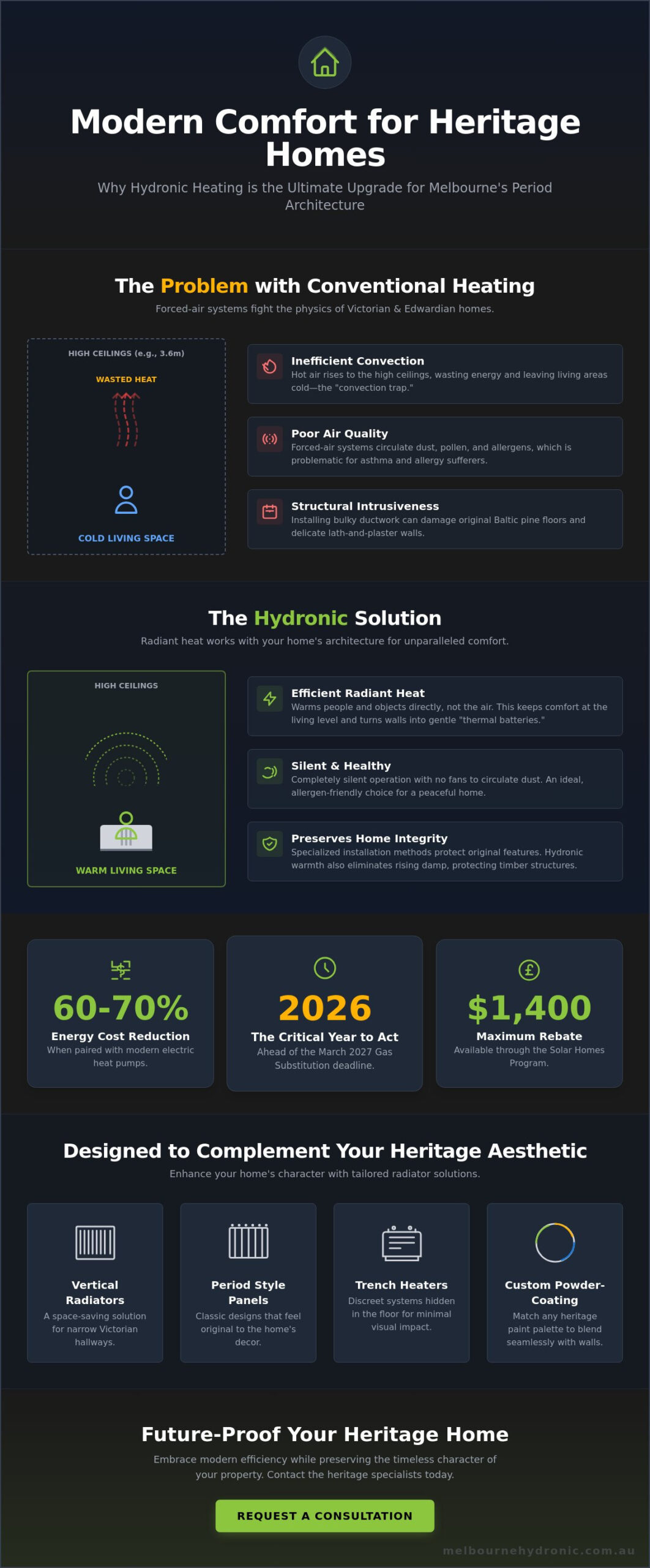
Melbourne’s heritage houses are architectural masterpieces, but they weren’t designed for 21st-century energy efficiency. If you live in a Victorian terrace or an Edwardian villa, you’ve likely experienced the “convection trap.” Standard ducted systems rely on blowing hot air into a room. In a space with 3.6-meter ceilings, that expensive warmth rises immediately to the rafters, leaving you with cold feet and high bills. Choosing hydronic heating for period homes Melbourne is about working with the building’s physics, not against it. Unlike air-based systems, hydronic panels emit radiant heat that warms objects and people directly, keeping the comfort exactly where you need it: at the living level.
The “leaky home” reality also plagues these older builds. Original Baltic pine or Jarrah floorboards often have gaps that allow sub-floor drafts to enter, while ornate open fireplaces act like chimneys, sucking warm air out of the room even when they aren’t lit. Furthermore, the double-brick construction common in Melbourne’s heritage suburbs presents a specific challenge. These thick walls have high thermal mass, meaning they stay cold for a long time. Air-based heating can’t penetrate this mass. Radiant heat, however, warms the bricks themselves, turning your walls into thermal batteries that radiate a steady, gentle warmth long after the system has cycled off.
As we move through 2026, energy standards in Victoria are shifting. Many old gas space heaters and wall furnaces are becoming obsolete due to their inefficiency and safety risks. Transitioning to a modern, water-based system ensures your home meets current standards while providing a level of comfort that forced-air systems simply can’t match.
Victorian vs. Edwardian: Different Eras, Same Cold Feet
Victorian terraces often feature narrow hallways and shared “party” walls, making it nearly impossible to install bulky modern ductwork without destroying original plasterwork. Edwardian homes, with their wider “bungalow” footprints and large timber-framed windows, face massive heat loss through glass. We strategically place radiator panels under these windows to create a “heat curtain” that neutralizes the cold before it reaches the rest of the room. This approach also helps manage the dampness often trapped in uninsulated sub-floors, protecting your home’s timber structure from rot and mould.
The Science of Radiant Heat in High-Ceiling Spaces
To understand why this technology is superior, it helps to look at what hydronic heating is and how it differs from convection. While forced air moves dust, pollen, and allergens around your home, hydronic heating is completely still and silent. It doesn’t rely on fans, which makes it an ideal, allergen-friendly choice for families with asthma. By using water to transport energy, we provide a consistent temperature that doesn’t fluctuate. It’s a premium, health-conscious solution that preserves the peaceful atmosphere of your heritage home while delivering the most efficient warmth available in 2026.
Choosing Radiators That Complement Your Heritage Aesthetic
One of the biggest concerns for owners of heritage properties is the visual impact of modern technology. You don’t want a sleek, white box clashing with your hand-carved architraves or floral wallpaper. The good news is that hydronic heating for period homes Melbourne offers a range of aesthetic choices that can either blend into the background or serve as a stunning focal point. From ornate cast iron to discreet trench systems, we ensure the hardware is as timeless as the architecture. We don’t just install a heating system; we enhance the character of your living space.
In narrow Victorian hallways where every centimeter counts, vertical radiators offer a space-saving solution without sacrificing heat output. For more traditional rooms, we also provide custom powder-coating services. This allows you to match your radiators to specific heritage paint palettes, making them virtually disappear against your walls. By selecting the right material and finish, you can ensure your new heating system feels like an original part of the home’s design rather than a 2026 afterthought.
The Revival of the Cast Iron Radiator
Cast iron radiators are the gold standard for Victorian and Federation homes. Their heavy, decorative scrolls match the intricate details of the era perfectly. Beyond their historical accuracy, these units provide exceptional heat retention. They utilize ‘thermal lag’, which is the physical delay in heat transfer as a dense material absorbs and then gradually releases energy. This is particularly beneficial in older rooms with thick walls, as the radiators continue to emit a gentle warmth long after the system has cycled off. It’s a premium choice that combines old-world charm with modern technical precision.
Trench Heating for Uninterrupted Heritage Views
For rooms featuring floor-to-ceiling bay windows or delicate leadlight glass, trench heating is the invisible hero of the modern retrofit. By installing the heating elements beneath the floorboards, we create a “curtain of warmth” that rises through a discreet floor grille. This prevents cold downdrafts from the glass without obstructing your views or requiring wall space. You might choose to install hydronic heating panels in the bedrooms for targeted comfort while keeping the formal dining room or grand parlor entirely clear of wall-mounted units. If you are unsure which style suits your property, our team can provide a personalized design consultation to find the perfect technical and aesthetic match.
Future-Proofing Heritage: Heat Pumps and the 2026 Gas Transition
The Victorian Government’s Gas Substitution Roadmap has set a firm deadline that every Melbourne homeowner needs to know. From March 1, 2027, any end-of-life gas hot water system in an existing home must be replaced with an electric alternative. This policy shift makes 2026 the most critical year for those planning a heating upgrade. Choosing heat pump hydronic heating allows you to stay ahead of these regulations while drastically improving your home’s efficiency. Modern electric heat pumps can achieve 300% to 400% efficiency. Compare that to the 95% efficiency of a premium gas boiler, and the choice becomes clear. By upgrading to a heat pump system, you can reduce your heating-related energy costs by 60-70%.
We understand that some residents in heritage-heavy suburbs like Carlton or Camberwell might feel hesitant about moving away from gas. For these specific cases, a hybrid boiler setup can serve as a bridge. However, with the Solar Homes Program offering rebates of up to $1,400 for eligible heat pumps in 2026, the financial incentive to go fully electric has never been stronger. Transitioning your hydronic heating for period homes Melbourne to an electric heat source is the single best way to future-proof your property value.
The Electric Revolution in Melbourne Suburbs
Modern heat pumps are engineered to perform exceptionally well in our local climate. They extract ambient heat from the cold Melbourne air and transfer it into your hydronic reticulation system with surgical precision. We prioritize the use of high-efficiency systems utilizing R290 refrigerant. This natural refrigerant has a very low Global Warming Potential (GWP), making it the gold standard for eco-conscious heritage retrofits. To maximize these gains, we implement sophisticated zoning strategies. This allows you to heat only the grand parlor or the master suite rather than the entire house, slashing your 2026 energy bills without sacrificing comfort.
Heritage Compliance and External Unit Aesthetics
Installing modern equipment on a protected property requires a nuanced touch. We work closely with Melbourne council guidelines and Heritage Victoria overlays to ensure external plant equipment doesn’t compromise your home’s street appeal. In the narrow side-alleys common to inner-city terraces, noise can be a concern for neighbors. We solve this by using premium sound-dampening enclosures and vibration-absorbing mounts. Our team also specializes in custom screening solutions. These allow for essential airflow while camouflaging the unit behind period-appropriate timber slats or greenery, ensuring your 2026 upgrade remains invisible to the casual observer.
Seamless Installation: Preserving Your Home’s Character
The greatest fear for many owners of heritage properties is the thought of a construction crew “ripping up” the house. We understand that your original Baltic pine or Jarrah floorboards are irreplaceable. Our installation process is built around a ‘No-Mess’ promise that treats your home like the museum-quality asset it is. When implementing hydronic heating for period homes Melbourne, we prioritize non-invasive techniques that keep the home’s structural soul intact. We don’t just install pipes; we navigate the unique architectural DNA of 19th and early 20th-century builds with surgical precision.
Most Melbourne heritage homes offer a hidden advantage: generous sub-floor crawl spaces. Our technicians utilize these voids to route the primary reticulation pipework, keeping the infrastructure entirely out of sight. In instances where we must interact with lath-and-plaster walls, we bring specialized expertise that general plumbers simply don’t possess. Lath-and-plaster is notoriously fragile and prone to cracking if handled incorrectly. We use precision cutting tools designed specifically for these layered surfaces to ensure your decorative finishes remain unblemished. Once the system is live, a regular hydronic heating service is essential to monitor system pressure and ensure the integrity of the network for decades to come.
The Pipework Path: Hiding the Infrastructure
In multi-storey Victorian terraces, hiding the pipework requires a tactical approach. We often use existing ceiling cavities or redundant chimney flues to move water between floors. This prevents us from having to disturb ornate plaster roses or hand-run decorative cornices. For vertical runs, we employ “pipe chasing,” which is the art of making modern copper lines disappear into the wall structure. By the time we’re finished, the only visible evidence of your 2026 upgrade will be the warmth in the air and the elegant radiators on the walls.
Protecting Heritage Finishes During Construction
Dust is the enemy of antique furnishings and delicate heritage paintwork. We implement rigorous dust mitigation strategies, including HEPA-filtered extraction and protective sheeting for every room we enter. Precision is especially critical when dealing with 19th-century brickwork. We use specialized diamond core drilling equipment that creates clean, vibration-free openings for pipe entry. This protects the soft, lime-based mortar common in older Melbourne masonry from crumbling. Our goal is to leave your home exactly as we found it, only significantly warmer and more comfortable.
Ready to upgrade your home without the stress of a messy renovation? Contact Melbourne Hydronic Heating today for an installation plan tailored to your property’s specific heritage requirements.
Why Melbourne Hydronic Heating is the Heritage Specialist
Choosing a partner to work on your Victorian or Edwardian treasure requires more than just technical skill; it demands a deep respect for Melbourne’s architectural history. With over 30 years of experience specifically within the city’s heritage suburbs, we’ve mastered the nuances of these unique buildings. We don’t just view a project as a series of pipes and boilers. Our design-first approach ensures that every installation of hydronic heating for period homes Melbourne actually enhances your property’s market value. We treat your home as a legacy, combining European technology with local, time-tested expertise.
Every property we service receives a customized 2026 energy roadmap. This plan isn’t a one-size-fits-all solution. Instead, it’s a strategic path that considers your home’s specific orientation, wall thickness, and existing infrastructure. We help you navigate the transition away from gas while ensuring your heating system remains a seamless, integrated part of your interior design. Our goal is to provide a premium heating solution that feels as though it was built into the home from the very beginning.
A Healthier Home for the Whole Family
Older Melbourne houses are prone to “winter damp,” which can lead to hidden mould growth behind heavy drapes or inside uninsulated cupboards. Because hydronic systems provide constant, radiant warmth, they help keep the building’s structure dry and healthy. This is an allergy-friendly choice that significantly reduces asthma triggers. Unlike ducted systems that blow dust and allergens around high-ceilinged rooms, hydronic heating is completely still. The experience of silent warmth in a high-ceilinged room is one of total stillness, where the temperature remains perfectly uniform from floor to cornice without the intrusive hum of a fan. It’s a luxury that improves your quality of life every single day.
Start Your Heritage Transformation Today
The journey toward a warmer, more efficient home begins with a professional consultation. We walk through your property to identify the most discreet pathways for infrastructure and the most effective placements for your chosen radiators. Our team provides detailed, transparent quotes that account for the complexities of heritage retrofits, so there are never any surprises mid-installation. We’re here to ensure your home remains a sanctuary of comfort for the next century. Book your period home heating consultation with our Melbourne experts.
Elevate Your Heritage Home’s Comfort for 2026
Your period home is more than just a building; it’s a piece of Melbourne’s history that deserves to be both preserved and enjoyed. By choosing hydronic heating for period homes Melbourne, you’re investing in a system that works with your home’s unique thermal mass while protecting its delicate architectural features. We’ve explored how modern heat pumps and radiant panels eliminate the “convection trap” of high ceilings, providing silent warmth without the dust and allergens associated with old ducted systems.
With the 2027 gas transition approaching, 2026 is the ideal time to future-proof your property. Our team brings over 30 years of local heritage experience to every project, specializing in non-invasive retrofitting that leaves your original Baltic pine floors and ornate cornices untouched. You don’t have to settle for a drafty house or clunky appliances that ruin your aesthetic. Our allergy-friendly, dust-free solutions ensure your living environment is as healthy as it is beautiful.
Take the first step toward a warmer, more efficient home today. Our experts are ready to design a customized heating roadmap that respects your home’s soul and your family’s comfort. Get a Specialist Quote for Your Melbourne Period Home and discover the difference that professional, heritage-focused engineering makes.
Frequently Asked Questions
Is hydronic heating too heavy for the floorboards in my Victorian home?
No, standard radiator panels are well within the load-bearing capacity of original timber floorboards. While cast iron units are heavier than steel alternatives, our technicians strategically distribute the weight across the joists to ensure structural integrity. It’s a common concern for homeowners, but modern engineering and careful placement mean your Baltic pine or Jarrah floors remain perfectly safe.
Can I install hydronic heating if my home has a heritage overlay?
You can definitely install hydronic heating for period homes Melbourne even with a strict heritage overlay. Most of the installation is internal and doesn’t require council approval as it doesn’t alter the building’s facade. We specialize in placing external heat pumps in discreet locations that comply with local guidelines, ensuring your home’s street appeal remains untouched.
How much does it cost to retrofit hydronic heating into an old Melbourne house?
Retrofit costs vary based on the number of rooms, the choice of radiators, and the complexity of your sub-floor access. Every period property has unique architectural challenges that influence the final price. We provide detailed, transparent quotes after a thorough on-site consultation to ensure the investment reflects your home’s specific requirements and your comfort goals.
Will I need to upgrade my electrical switchboard for a hydronic heat pump?
Many older Melbourne homes require a switchboard upgrade to accommodate the dedicated circuit and amperage needs of a modern electric heat pump. We assess your existing electrical capacity during our initial site visit. This ensures your new system operates safely and provides the 300% to 400% efficiency levels expected of 2026 technology.
How long does a typical installation take in a period property?
A standard installation usually takes between five to ten working days depending on the scale of the project. We work methodically to minimize disruption to your daily life. Our “No-Mess” promise means we protect your finishes and clean the workspace daily, ensuring your heritage home remains a sanctuary throughout the process.
Can I use my existing fireplaces alongside a new hydronic system?
You can keep your fireplaces for their aesthetic charm, but the consistent warmth of a hydronic system usually makes them redundant for heating. Radiant heat provides such a stable temperature that the drafts typically associated with open chimneys are neutralized. We can even install trench heating near your hearth to create a thermal barrier against cold air entering through the flue.
Is hydronic heating better for my antiques and original woodwork than ducted air?
Hydronic heating is the superior choice for preserving antiques and original woodwork because it doesn’t dry out the air or circulate abrasive dust. Forced-air systems can cause timber to shrink or crack due to rapid humidity fluctuations. The gentle, constant warmth of water-based heating protects your home’s sensitive heritage features and expensive furnishings.
What happens to the gas connection in my period home after 2026?
Your gas connection will remain active, but you’ll face increasing pressure to transition to electric appliances as part of Victoria’s Gas Substitution Roadmap. From March 1, 2027, the government mandates that end-of-life gas hot water systems in existing homes must be replaced with electric alternatives. Upgrading to an electric heat pump in 2026 allows you to future-proof your home before these regulations take full effect.