What is the Downside of Hydronic Heating? A Realistic 2026 Guide for Melbourne Homeowners
Choosing the most expensive heating option on the market only to wait hours for your living room to feel warm sounds like a poor investment, yet it’s a choice Melbourne’s most discerning homeowners make every day. If you’ve been comparing quotes, you’ve likely noticed that hydronic systems require a much larger upfront commitment than a standard split system. It’s natural to worry about the risk of water leaks inside your walls or feel overwhelmed by the technical differences between radiator panels and in-slab coils. You’re right to ask: what is the downside of hydronic heating before committing to such a significant home upgrade.
We believe in total transparency because a premium home deserves a system built on facts, not just marketing. This guide explores the genuine drawbacks of hydronic technology, from thermal lag to installation complexity. You’ll discover how professional design and modern heat pump technology can mitigate these challenges, ensuring your investment delivers unmatched air quality and efficiency. We’ll examine the long-term ROI in the context of Victoria’s 2027 gas transition, giving you the confidence to choose a system that truly serves your family’s health and comfort for decades to come.
Key Takeaways
- Understand why hydronic systems require a higher initial investment and how to navigate the installation complexities of retrofitting existing Melbourne homes.
- Learn how to manage thermal lag effectively so your living spaces remain consistently comfortable without the frustration of waiting for heat.
- Discover how proactive maintenance and power flushing address the common question of what is the downside of hydronic heating regarding long-term system health.
- Explore design strategies that integrate radiator panels and trench heating into modern interiors without compromising your furniture layout or aesthetic.
- See how transitioning to electric heat pumps future-proofs your home against 2027 gas regulations while delivering significantly lower seasonal running costs.
The Financial Reality: Upfront Costs and Installation Complexity
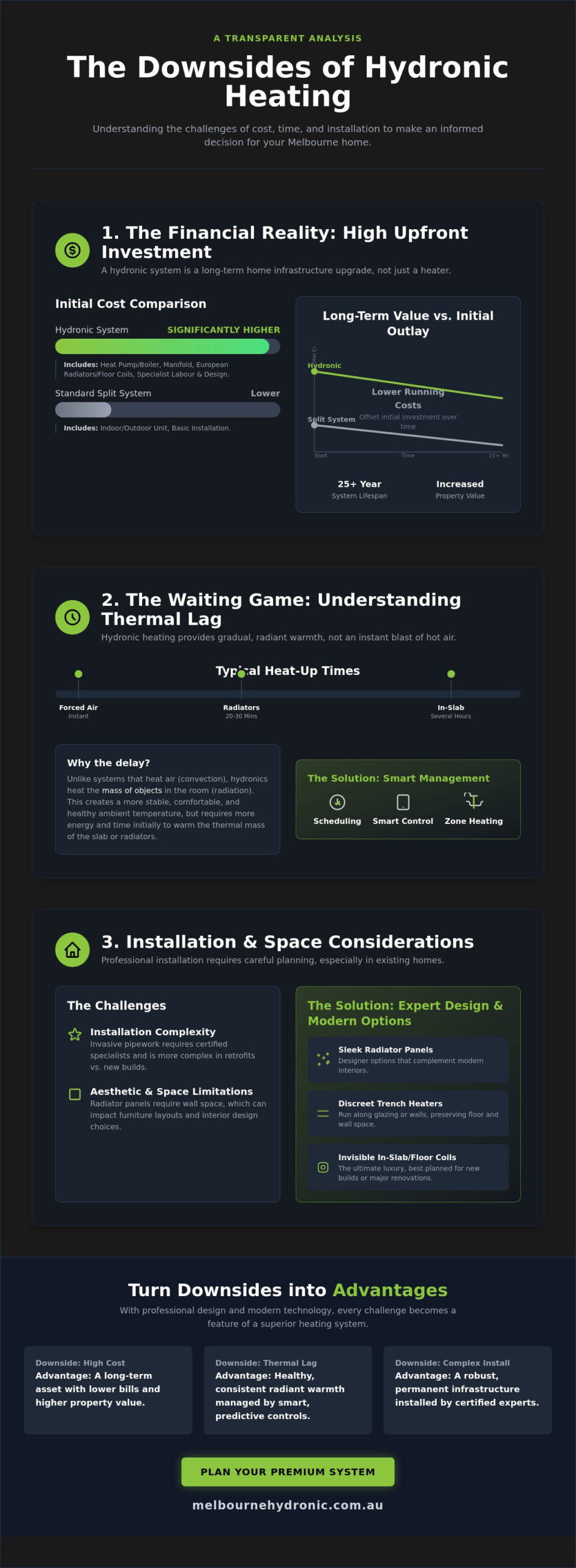
When homeowners first review a comprehensive quote for a premium heating system, the most common question we hear is: what is the downside of hydronic heating? The answer almost always starts with the initial financial commitment. Unlike a standard split system that can be installed in a few hours, a hydronic network is a sophisticated piece of home infrastructure. You aren’t just buying a heater; you’re investing in a central boiler or electric heat pump, a complex manifold system, and a series of precision-engineered radiator panels or floor coils. These components, often sourced from high-end European manufacturers, carry a price tag that reflects their 25-year-plus life expectancy. It’s a significant shift from the “disposable” nature of cheaper air-based units.
Installation complexity is another factor that sets these systems apart. A professional installation involves invasive pipework that must be integrated into the very fabric of your home. This is particularly challenging in multi-storey residences or high-end Melbourne renovations where structural integrity and aesthetics are paramount. Specialized trades are a necessity here. Standard residential plumbers often lack the specific hydronic certification required to calculate precise heat loss or manage complex system balancing. This expertise ensures your home remains a sanctuary of silent, dust-free warmth, but the requirement for skilled labor does influence the total project cost.
Why Installation Costs Vary Across Melbourne and Geelong
The architectural diversity of our region plays a major role in your final quote. Retrofitting a heritage Victorian-era home in inner Melbourne often requires careful navigation of tight sub-floor spaces or delicate wall cavities to hide pipework without damaging period features. In contrast, new builds in Geelong or the surf coast allow for in-slab integration. While slab heating is incredibly cost-effective when planned early, it requires coordination before the first bit of concrete is poured. Material choices also matter. While traditional copper piping is durable, many modern installations utilize multilayer pipework like PEX-AL-PEX. This material offers the flexibility needed for complex layouts while maintaining a high-pressure rating, helping to manage costs without sacrificing the system’s long-term reliability.
The Long-Term ROI vs. Initial Outlay
It’s vital to view the higher entry price through the lens of long-term value. While the upfront cost is higher, the efficiency of water-based heat transfer means your seasonal running costs are often much lower than those of traditional electric or ducted gas systems. This is especially true as Melbourne moves toward a gas-free future. Hydronic systems also act as a value-add for property resale, as buyers increasingly prioritize health-conscious, energy-efficient homes. Measured over a 15-year period, the ROI of a hydronic system is defined by its ability to offset high initial capital expenditure through drastically lower seasonal energy bills and a measurable increase in property valuation within the competitive Melbourne real estate market.
Managing Thermal Lag: Why Hydronic Heating is Not ‘Instant’
If you’re accustomed to the instant blast of a split system, the gradual warmth of water-based heating requires a mindset shift. One significant factor when evaluating what is the downside of hydronic heating is the concept of thermal lag. This refers to the time required for your heat source to warm the water, circulate it through the network, and allow that energy to radiate into your living spaces. It’s a physical process that prioritizes steady, healthy comfort over immediate gratification. Unlike air-based systems that simply heat the volume of a room, hydronic systems must warm the objects and surfaces within it.
The extent of this delay depends heavily on your chosen system. In-slab floor heating, while incredibly luxurious underfoot, has the highest thermal mass. It can take several hours to reach your desired temperature because the system must first heat the entire concrete foundation of your home. Hydronic radiator panels are significantly more responsive, usually offering noticeable warmth within 20 to 30 minutes, yet they still lack the “on-demand” speed of forced-air alternatives. For families with unpredictable schedules, this lack of immediacy can feel like a limitation if the system isn’t managed with the right technology.
The Challenge of Melbourne’s Fluctuating Weather
Melbourne’s climate is notoriously fickle. A sudden “cool change” in the late afternoon can catch a slow-reacting system off-guard, leaving your home chilly just as you return from work. Conversely, if your underfloor heating has been running all morning and the sun suddenly warms your windows, the retained heat in the slab can lead to temporary overheating. This is where professional expertise becomes vital. We often integrate outdoor weather sensors and predictive logic into our system maintenance and design plans. These sensors detect temperature drops before they affect your interior, allowing the boiler or heat pump to start working ahead of the curve.
Strategic Scheduling for Constant Comfort
Overcoming thermal lag is simply a matter of smart scheduling. Hydronic heating performs best when it’s allowed to maintain a consistent baseline temperature rather than being turned on and off like a light switch. We recommend a “night-setback” approach. Instead of shutting the system down completely, you drop the temperature by just two or three degrees overnight. This ensures the system only needs a small boost to have the home perfectly warm by 6:00 AM. Zoning also plays a crucial role. By heating bedrooms and living areas on separate schedules, you can manage the system’s thermal inertia while keeping energy consumption to an absolute minimum.
Maintenance Requirements and the Risk of System Degradation
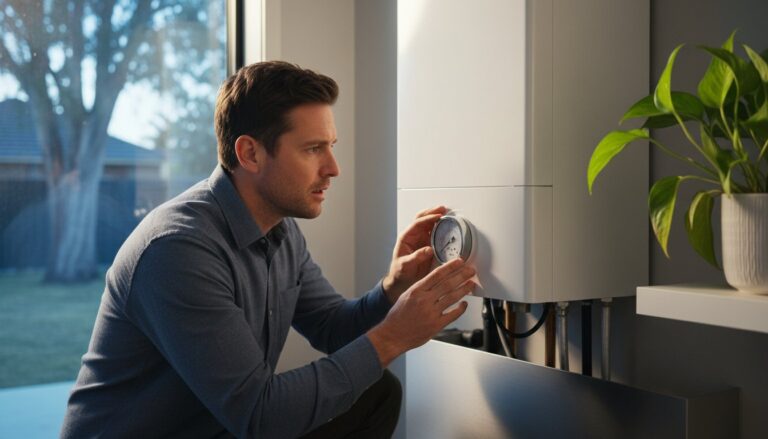
Every mechanical system requires attention to perform at its peak, and water-based heating is no exception. A frequent point of discussion regarding what is the downside of hydronic heating involves the ongoing maintenance needed to prevent internal degradation. Because these systems rely on a closed loop of circulating water, they are susceptible to internal corrosion if neglected. Over time, the interaction between water and metal components can create a black, iron-oxide sludge known as magnetite. If this buildup isn’t managed, it settles in the lowest points of your system, creating cold spots in radiators and forcing your pump to work much harder than intended.
To ensure your home remains a sanctuary of consistent warmth, annual servicing is a necessity. During a professional check-up, a specialist will verify the system pressure, inspect the pump operation, and ensure the boiler or heat pump is firing at maximum efficiency. You might also encounter air locks, which occur when small pockets of air become trapped in the pipework. While these are easily cleared through a process called “bleeding” the radiators, they can reduce heating performance if left unaddressed. While these tasks are simple for a professional, they do represent a commitment to upkeep that simpler, less efficient systems don’t require.
The Hidden Cost of Sludge and How to Prevent It
Magnetite is often called the “silent killer” of hydronic systems. Without proper filtration, this abrasive sludge can destroy a high-efficiency boiler heat exchanger in as little as five years. We prevent this by installing high-quality magnetic filters that catch metallic debris before it reaches sensitive components. Even with filters, a professional power flushing is a non-negotiable requirement every 5 to 10 years. This process uses specialized equipment to purge the entire network of contaminants, restoring the system to its original factory-clean state and protecting your long-term investment.
Myth-Busting: Are Water Leaks a Real Concern?
The fear of water leaking inside walls or under floorboards is a significant psychological barrier for many homeowners. However, modern engineering has largely eliminated this risk. We utilize advanced multilayer PEX-AL-PEX piping that is installed in continuous runs from the manifold to the radiator or floor coil. This means there are no joins hidden under your floors or behind your plasterwork where a leak could potentially start. Every system we install undergoes rigorous high-pressure testing before the walls are closed or the slab is poured. This ensures the entire network is hermetically sealed. On the rare occasion a minor drip occurs at a radiator valve, it is an external, visible issue that a specialist can rectify in minutes without any structural damage to your home.
Aesthetic and Space Limitations in Modern Interiors
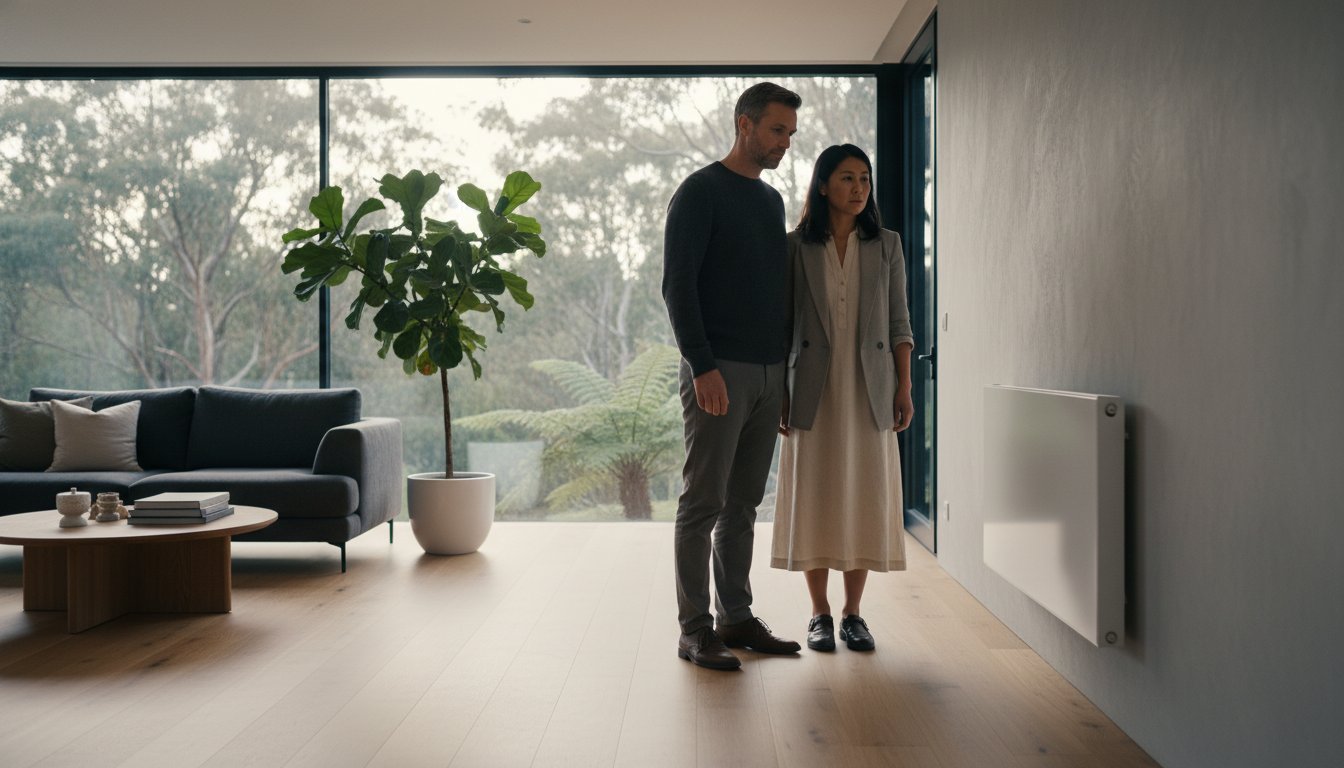
While the health benefits and silent operation of water-based systems are undisputed, another consideration when asking what is the downside of hydronic heating relates to the physical footprint. Unlike ducted systems that hide behind ceiling vents, hydronic systems often require visible components within your living space. Radiator panels require dedicated wall real estate, which can occasionally interfere with your ideal furniture layout or the placement of large artworks. In minimalist homes where “less is more,” the presence of a standard white radiator might feel at odds with an ultra-modern aesthetic if not planned correctly by an expert designer.
For those opting for underfloor solutions, the challenge shifts from wall space to floor height. In-slab heating adds a layer of complexity to new builds, as the structural slab must accommodate the heating coils and additional insulation. If you’re renovating an existing Melbourne home with restricted ceiling heights, adding a traditional screed-based system might not be feasible without creating awkward steps between rooms. Furthermore, for homes featuring stunning floor-to-ceiling glass walls, standard radiators are impossible to mount. In these cases, trench heating is the go-to solution, though it represents a more significant investment due to the specialized floor grilles and recessed casing required.
Working Around Radiator Panel Placement
Strategic placement is the key to turning a potential limitation into a design feature. We typically recommend installing hydronic heating panels directly under windows. This placement is functional rather than accidental; it creates a “heat curtain” that neutralizes the cold air falling off the glass, maximizing natural convection. In narrow Melbourne terrace homes where wall space is at a premium, vertical radiators offer a brilliant space-saving alternative. These sleek, tall units utilize height rather than width, allowing you to keep your favorite sofa exactly where you want it. Modern designer panels also come in a variety of finishes and colors, allowing them to blend seamlessly into your decor or act as a bold architectural statement.
Floor Height and Slab Considerations
Integrating hydronic coils into a structural slab requires meticulous early-stage planning with your architect and builder. The added thermal mass is fantastic for heat retention, but it does impact the structural requirements of the pour. For renovations where every millimeter counts, we often utilize ‘thin-bed’ or low-profile systems. These allow for hydronic comfort without significantly raising the floor level. It’s also important to consider your final floor finish. While polished concrete and tiles are the gold standard for heat transfer, high-quality engineered timbers and certain carpets can be used effectively, provided the system is calibrated to the correct operating temperature to protect the material.
If you’re ready to see how a bespoke design can overcome these space challenges, contact our Melbourne team today for a professional consultation tailored to your home’s unique layout.
Mitigating the Downsides: The Melbourne Hydronic Advantage
While we’ve explored what is the downside of hydronic heating in terms of upfront cost and thermal lag, these aren’t insurmountable flaws. Instead, they’re design parameters that a true specialist manages through precision engineering. A well-designed system doesn’t just heat a house; it enhances the entire living environment by providing silent, dust-free warmth. By choosing expert installation, you’re securing a system with a 25-year-plus lifespan. This far outlasts standard split systems, which often require total replacement after just a decade of hard work. Our local teams in Melbourne and Geelong provide the rapid support and specialized knowledge required to keep these high-performance systems running perfectly for generations.
The perceived drawbacks of hydronic technology often stem from poor design or outdated components. Professional design eliminates the common “downside” of poor system performance by ensuring every pump, pipe, and radiator is sized perfectly for your home’s unique requirements. We don’t just install hardware; we create a balanced thermal network. This level of technical precision ensures that heat is distributed evenly, eliminating the cold spots or noisy pipes often found in DIY or non-specialist installations. When a system is built to these standards, the high initial investment quickly transforms into a long-term asset that adds significant value to your property.
Future-Proofing Your Home with Electric Heat Pumps
Transitioning to heat pump hydronic heating is the most effective way to solve the gas-dependency issue that many Melbourne homeowners face. As Victoria moves toward all-electric new builds and stricter regulations in 2027, heat pumps have emerged as the superior choice for 2026. These units operate at lower temperatures but with much higher consistency, providing a gentle warmth that’s perfectly suited for our local climate. When you integrate a modern heat pump with a solar PV system, you can effectively eliminate your seasonal running costs. This turns a premium heating system into a carbon-neutral sanctuary that’s immune to fluctuating gas prices.
The Importance of 30 Years of Local Expertise
The difference between a frustrating system and a flawless one lies in the engineering. A generic plumber might be able to connect a pipe, but they often lack the specialized training to design a balanced hydronic manifold or calculate the specific heat loss of a heritage Victorian-era home. With over 30 years of local experience, we understand the specific thermal mass of Melbourne’s diverse housing stock. We don’t believe in one-size-fits-all solutions. Every home has its own thermal personality, and we tailor our systems to match. If you’re ready to invest in a lifetime of healthy, silent comfort, Book a consultation with our Melbourne specialists today and let us design a system that works for your family.
Investing in a Lifetime of Premium Comfort
Understanding what is the downside of hydronic heating is the first step toward making an informed decision for your family’s well-being. While the initial investment and slower heat-up times require a shift in perspective, the rewards are a home that feels naturally warm, operates silently, and promotes better respiratory health. By planning for these technical limitations during the design phase, you turn potential challenges into a high-performance asset that outlasts and outperforms standard alternatives.
As a family-owned and operated local business with over 30 years of Melbourne experience, we’re here to guide you through every technical detail. Whether you’re considering underfloor coils for a new build or designer radiator panels for a renovation, our specialists ensure your system is future-proofed for the 2027 gas transition. You don’t have to compromise on luxury to achieve world-class efficiency.
Ready to transform your living environment? Request a Professional Hydronic Heating Quote for Your Melbourne Home and discover why we’re the city’s trusted experts in premium climate control. We look forward to helping you create a sanctuary of warmth that lasts for generations.
Frequently Asked Questions
Is hydronic heating more expensive to run than ducted heating?
No, hydronic systems are typically more efficient than ducted heating because water is a far superior conductor of heat than air. You avoid the significant energy loss associated with leaky or poorly insulated ceiling ducts. While gas prices vary, modern hydronic heat pumps coupled with solar can reduce your seasonal running costs by up to 75% compared to traditional forced-air systems.
How long does it take for hydronic radiators to heat up a room?
Radiator panels usually begin radiating noticeable warmth within 20 to 30 minutes of the system firing up. This is faster than in-slab systems but slower than the instant blast of air-based heating. We recommend using smart thermostats to schedule the system to start shortly before you wake up, ensuring your home is perfectly comfortable the moment you step out of bed.
Can hydronic heating cause mould or dampness in Melbourne homes?
No, hydronic heating actually helps prevent mould by providing a consistent, radiant heat that warms the structural surfaces of your home. Unlike some gas space heaters that release moisture as a byproduct of combustion, hydronic systems are completely sealed. By keeping walls and floors warm, you eliminate the cold surfaces where condensation and dampness typically form during Melbourne’s humid winter months.
What happens if a hydronic pipe leaks under my floor?
Modern multilayer PEX-AL-PEX piping is installed in continuous runs without joins under the floor, making leaks extremely rare. If a leak did occur, you would notice a drop in the system’s pressure gauge on your boiler or heat pump. Because it’s a closed system, a specialist can use thermal imaging to locate the issue precisely, allowing for a targeted repair without disrupting your entire home.
Do I need to service my hydronic system every year?
Yes, annual servicing is essential to maintain peak efficiency and protect your long-term investment. A specialist check-up ensures the system pressure is correct, the pump is operating smoothly, and the corrosion inhibitor levels are sufficient to prevent magnetite buildup. Regular maintenance is the best way to address the question of what is the downside of hydronic heating by preventing minor technical issues from becoming expensive repairs.
Can I install hydronic heating in an existing double-storey home?
Yes, retrofitting a double-storey home is a common project that we manage through strategic radiator panel placement. We can often run pipework through floor joists, wardrobes, or internal cavities to reach the upper level with minimal disruption. While a full in-slab retrofit is rarely feasible for an existing second floor, radiator panels provide the same premium, silent warmth with a much simpler installation process.
Is hydronic heating better for people with asthma and allergies?
Hydronic heating is the gold standard for allergy sufferers because it relies on radiant heat rather than blowing air. Forced-air systems often circulate dust, pollen, and pet dander throughout your home, which can trigger respiratory issues. Because hydronic systems don’t use fans or ducts, the air remains still and clean, significantly improving the indoor air quality for anyone living with asthma or seasonal hay fever.
Will hydronic heating work with my existing solar panels?
Yes, your solar panels are a perfect partner for an electric hydronic heat pump. By using your self-generated electricity to power the heat pump during the day, you can store thermal energy in your floor slab or radiator network for the evening. This synergy effectively offsets the higher initial price, which is often cited when discussing what is the downside of hydronic heating, by drastically reducing your ongoing energy bills.