

Power Flush Hydronic System Cost Melbourne: 2026 Pricing & ROI Guide
What if that unsettling “kettling” sound from your boiler isn’t just a sign of age, but a warning that your heating system is essentially choking on its own internal rust? You’ve likely noticed your radiators aren’t as warm at the bottom as they used to be, or perhaps your winter utility bills have spiked despite no change in usage. It’s frustrating to pay more for less comfort, especially when researching the power flush hydronic system cost Melbourne residents face often feels like a gamble against a $10,000 replacement bill.
We understand that you want a home that stays warm without the stress of skyrocketing costs or sudden equipment failure. This guide breaks down the real factors influencing 2026 pricing and ROI, showing you how this precision maintenance service slashes energy bills and adds years to your boiler’s lifespan. We’ll explore the technical variables that dictate the investment, the immediate efficiency gains you’ll feel, and why a professional flush is the smartest insurance policy for your home’s long-term comfort and health.
Key Takeaways
- Learn how magnetite (black oxide) causes radiator cold spots and why removing this sludge is critical for preventing permanent boiler failure.
- Understand the difference between a basic flush and a professional high-velocity deep clean that uses pH-neutral agents to restore peak performance.
- Discover the key factors, including the number of heating circuits and radiator panels, that influence the power flush hydronic system cost Melbourne residents pay for long-term protection.
- Calculate your potential return on investment through improved system efficiency and reduced monthly utility bills after a successful power flush.
- Learn why specialised magnetic filters and local Melbourne expertise are required to safely clear contaminants without risking damage to your delicate heat pump or boiler.
The Science of Sludge: Why Your Hydronic System Efficiency is Dropping
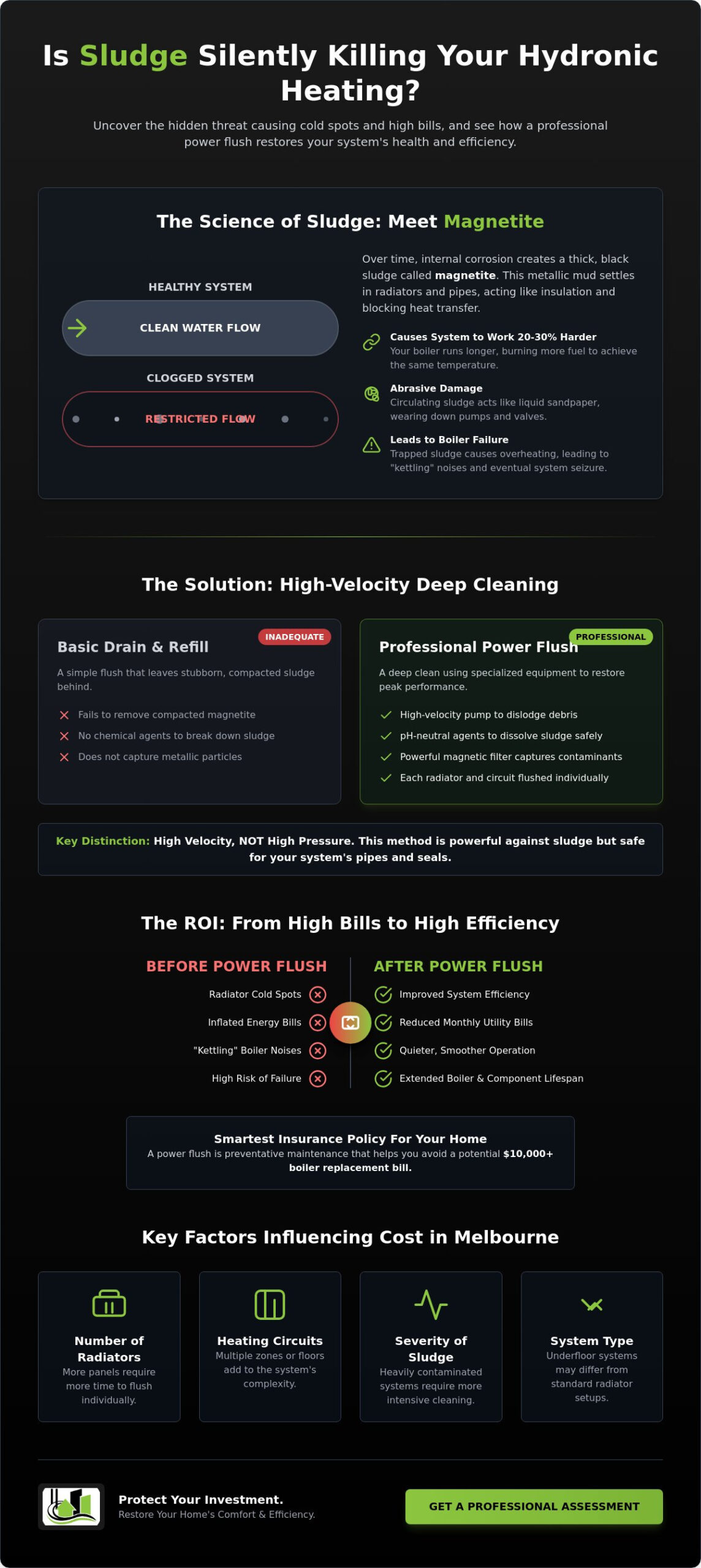
To understand why you might be researching the power flush hydronic system cost Melbourne, you first need to understand what’s happening inside your pipes. What is a hydronic system? At its core, it is a sealed loop of water designed to carry heat; however, over time, that water reacts with the internal metal surfaces. This chemical reaction creates “sludge,” technically known as magnetite. Magnetite is a black, viscous byproduct of internal oxidation that occurs when water meets iron-based components like steel radiators or cast iron heat exchangers.
Victorian homes in Melbourne are particularly susceptible to this issue. Many of our classic residences still rely on older steel radiator panels. While these panels provide a beautiful aesthetic and excellent radiant heat, they are prone to internal corrosion if the system water isn’t treated or refreshed. As this black oxide forms, it doesn’t stay in one place. It travels through the system and eventually settles in low-flow areas. You’ll often find it packed into the bottom of your radiators or caught in the narrow channels of your boiler’s heat exchanger. This buildup acts as a thick layer of insulation, forcing your system to work 20-30% harder just to push heat into your living spaces.
Magnetite: The Silent Killer of Melbourne Boilers
Think of magnetite as a metallic sludge that restricts thermal transfer and acts like liquid sandpaper. As these microscopic metal particles circulate, they cause abrasive wear on delicate components like pump seals and valves. When this debris becomes trapped in the heat exchanger, it creates localized overheating. This leads to the “kettling” sound many homeowners mistake for a ghost in the pipes; it’s actually the sound of water boiling unevenly against trapped sludge. Magnetite is a metallic sludge that restricts thermal transfer. Left unchecked, this “silent killer” eventually leads to a total system seizure.
How Corrosion Impacts Your Energy Bills
The relationship between restricted flow and your wallet is direct. When sludge blocks your pipes, your boiler has to run for much longer cycles to reach your desired thermostat setting. This increased burner cycle time translates directly to higher gas or electricity consumption. In Melbourne’s 2026 energy climate, where utility rates continue to fluctuate, paying for heat that never actually reaches your room is a luxury no one wants. Those “cold spots” at the bottom of your radiators are literal dead zones. You’re paying for energy that stays trapped in the mud rather than warming your home.
How a Professional Power Flush Works: High-Velocity Deep Cleaning
A standard flush is often little more than a gravity-fed drain and refill. While this might clear some loose debris, it’s ineffective against the stubborn, compacted magnetite discussed earlier. A professional power flush, however, uses a specialized high-velocity pump to circulate water at speeds significantly higher than your system’s normal operating flow. This force is necessary because The Impact of Sludge and Scale creates a bond with the internal pipework that simple water pressure cannot break. It’s a performance restoration that goes far beyond basic maintenance.
During the process, we introduce pH-neutral mobilising agents into the loop. These chemicals break down the sludge into a suspendable form without harming the system’s seals or internal components. As the water rushes through the pipes, a powerful magnetic filter is connected to the flushing machine. This filter captures the metallic debris in real-time, preventing it from simply settling elsewhere. When you consider the power flush hydronic system cost Melbourne homeowners invest, this level of technical thoroughness is what ensures a true return on that investment through restored efficiency.
The High-Velocity, Low-Pressure Advantage
Homeowners often worry that the “power” in power flushing might lead to leaks. It’s a common misconception. We use high velocity, not high pressure. This distinction is vital for the safety of your home. By moving a large volume of water quickly, we dislodge heavy magnetite without exceeding the safe operating pressure of your home’s plumbing. We isolate each radiator panel or underfloor circuit individually. This ensures the full cleaning force is directed exactly where it’s needed most. Whether your home uses traditional copper or modern PEX piping, the process is gentle on the structure while being aggressive on the contamination.
Chemical Treatment and System Balancing
The job isn’t finished just because the water runs clear. We must thoroughly flush out all chemical cleaners, as leaving them behind can eventually degrade pump seals. Once the system is pristine, we add a premium corrosion inhibitor. This chemical barrier coats the internal metal surfaces, significantly slowing the return of oxidation. The final stage involves re-balancing the entire system. We adjust the flow to every radiator to ensure heat is distributed evenly across your home. This meticulous approach is a hallmark of a high-quality hydronic heating service in Melbourne.
If you’ve noticed uneven heating or noisy pipes, it’s likely time to assess your system’s internal health before minor sludge buildup leads to a major repair.
Calculating the Cost of a Power Flush in Melbourne: Key Pricing Factors
Understanding the power flush hydronic system cost Melbourne homeowners encounter begins with recognizing that this isn’t a “one size fits all” service. Unlike a standard boiler service, which follows a relatively predictable checklist, a power flush is a project-based restoration. The complexity of your home’s layout and the current state of its internal hygiene dictate the total investment. We don’t charge a flat hourly rate because the goal is a results-driven outcome: a system that is clinically clean and fully balanced, regardless of how stubborn the magnetite buildup has become.
The primary driver of the cost is the sheer volume of the system. Each radiator panel or underfloor circuit must be isolated and flushed individually to ensure the high-velocity water reaches every corner. Naturally, a home with fifteen radiators requires significantly more labor and chemical volume than a small apartment with four panels. Accessibility also plays a major role. If your boiler is wall-mounted in a modern laundry, setup is quick. However, if our technicians need to navigate under-house crawl spaces in an older Victorian cottage to access pipework, the additional labor time will reflect in the final quote. Severe blockages may also require longer chemical “soak” times to fully mobilize the sludge before the flushing process can even begin.
Property Size and System Complexity
The difference between a three-bedroom unit and a multi-storey mansion in Toorak isn’t just the number of rooms; it’s the hydraulic complexity. Underfloor heating manifolds, for instance, often require more time than radiator panels because they involve multiple circuits that must be purged of air and debris with extreme precision. We also look for “dead legs” in older pipework. These are sections of pipe that no longer lead to a functioning radiator but still trap stagnant, sludge-heavy water. Clearing these manually is essential for a total system recovery and prevents old contaminants from re-entering your clean loop.
The “Heat Pump Ready” Requirement
If you’re planning to upgrade to heat pump hydronic heating, a professional power flush is no longer optional; it’s mandatory. Modern electric heat pumps are highly efficient but have very narrow tolerances in their heat exchangers. Installing a new $15,000 unit onto an old, sludge-filled pipe network is a recipe for disaster. Most manufacturers will void your warranty if they find magnetite damage in a new pump. In this context, the power flush hydronic system cost Melbourne residents pay is actually a vital insurance policy, protecting your significant investment in sustainable technology.
The ROI of Maintenance: How Power Flushing Saves You Money
While the initial power flush hydronic system cost Melbourne residents consider might seem like a significant maintenance expense, the return on investment often pays for itself within a few heating seasons. When your system is clogged with magnetite, it’s essentially fighting against a layer of internal mud. By removing this barrier, you can expect typical efficiency gains of 15% to 25%. This isn’t just a technical estimate; it’s a measurable reduction in the amount of energy required to keep your home at a comfortable temperature during a July cold snap. A clean system is a fast system, and speed equals savings.
The financial benefits extend far beyond your monthly utility bill. Standard boilers often fail prematurely because they are forced to run hotter and longer to overcome sludge blockages. A successful power flush can add up to 10 years to your boiler’s lifespan by protecting the heat exchanger and reducing the workload on the circulating pump. Replacing a pump is an annoying expense, but replacing a seized boiler is a major financial event. By keeping the water clean, you ensure that every component operates within its designed parameters. This precision significantly lowers the risk of emergency call-outs when the Melbourne weather is at its worst.
Reducing Your Carbon Footprint in 2026
For many Melbourne households, sustainability is now as important as savings. A clean system requires less fuel to achieve the same ambient temperature, directly lowering your home’s seasonal emissions. This is especially critical if you’re using modern condensing boilers or heat pumps. These systems rely on high-efficiency heat transfer to meet their environmental targets. If the pipes are dirty, the technology simply cannot perform as intended. Maintaining a clean hydronic loop is one of the most effective ways to ensure your home remains environmentally responsible while staying perfectly warm.
Preventing the $10,000 Emergency
It’s helpful to contrast the cost of preventative flushing with the reality of a total boiler replacement. When sludge accumulates in a heat exchanger, it creates hot spots where the metal expands and contracts unevenly. This eventually causes the heat exchanger to crack, which is the most expensive failure a system can suffer. In many cases, a cracked exchanger means the entire unit must be scrapped. Investing in maintenance now provides essential peace of mind during Melbourne’s peak winter months. You don’t want to discover a system failure on the coldest night of the year when a preventative flush could have avoided the crisis entirely.
Ready to restore your system’s performance and protect your investment? Book a professional system health check with our expert team today.
Protecting Your Melbourne Home with Professional Servicing
While many Melbourne homeowners take pride in maintaining their properties, a power flush is one task that cannot be accomplished with standard tools. DIY flushing is impossible without industrial-grade magnetic filters and high-velocity pumping stations designed specifically for hydronic loops. Without this specialized gear, you risk introducing airlocks or damaging delicate boiler seals. More importantly, a standard garden hose doesn’t have the velocity to lift heavy magnetite from the bottom of your radiator panels. It simply moves the sludge around, leading to more blockages later on. A professional service ensures the contaminants are actually removed from your home, not just redistributed.
Choosing a specialist with 30+ years of local Melbourne experience ensures that your system receives more than just a cleaning. We understand the specific water quality challenges and climate demands of Victorian homes. Our process often includes the recommendation of a permanent magnetic filter after the flush is complete. This device acts as a continuous safety net, capturing any new metallic particles before they can settle in your heat exchanger. When you weigh the power flush hydronic system cost Melbourne residents invest against the security of a long-term protection plan, the value of professional intervention becomes clear.
The Melbourne Hydronic Heating Difference
Our commitment to technical precision means we utilize professional-grade ADEY or Kamco equipment to achieve a clinically clean result. A critical part of our service is “system balancing.” After the flush, we don’t just turn the boiler back on; we meticulously adjust the flow to every radiator panel and floor circuit. This ensures that heat is distributed exactly where you need it, eliminating the cold zones that plague neglected systems. Beyond the mechanical benefits, a clean system supports the health-conscious lifestyle many of our clients value. Hydronic heating is inherently allergen-friendly because it doesn’t circulate dust like forced-air systems. Maintaining a clean internal loop ensures this premium level of hygiene remains a permanent feature of your home comfort.
Next Steps: Diagnostic and Quote
If you’re unsure whether your system requires a deep clean, you can perform a simple “Cold Spot Test” yourself. While your heating is running, carefully feel the surface of your radiator panels. If you notice any of the following, your system is likely struggling with sludge buildup:
- Radiators are hot at the top but cold or lukewarm at the bottom.
- The boiler makes “kettling” or unusual banging noises during startup.
- Some rooms take significantly longer to reach temperature than others.
- The water is cloudy or black when you bleed your radiators.
Taking a proactive approach to your home’s comfort is the best way to avoid the expensive replacement scenarios discussed earlier. We invite you to Book your Melbourne hydronic power flush consultation today to receive a professional diagnostic and a transparent, project-based quote tailored to your home’s specific needs. Protect your investment and restore the quiet, efficient warmth your family deserves.
Secure Your Home’s Warmth and Efficiency for the Years Ahead
Neglecting the internal health of your heating system doesn’t just lead to cold radiators; it risks the structural integrity of your boiler or heat pump. By addressing the build-up of magnetite now, you transform your system from a struggling, noisy unit into a silent and high-performing asset. While the power flush hydronic system cost Melbourne homeowners navigate depends on their specific property layout, the return on investment through lower energy bills and avoided emergency replacements is undeniable. It’s a choice that prioritizes both your financial well-being and the long-term comfort of your living environment.
With over 30 years of local Melbourne experience, we specialize in restoring both traditional gas boilers and modern electric heat pumps to their peak condition. Every service includes a comprehensive 2026 system health report, giving you total transparency into your home’s infrastructure. Don’t wait for a winter breakdown to take action. Restore your heating efficiency—Request a Power Flush quote today and enjoy the peace of mind that comes with a perfectly balanced, professionally maintained home. Your family deserves the quiet reliability of a system that works exactly as intended.
Frequently Asked Questions
How much does a power flush cost for a standard 3-bedroom home in Melbourne?
The total investment for a professional flush depends on the number of radiator panels and the system’s current condition. A standard 3-bedroom home typically features between 6 and 10 panels, which dictates the volume of cleaning agents and labor time required. We provide tailored quotes based on a project-specific assessment to ensure you only pay for the restoration your home actually needs.
How long does the power flushing process take?
A comprehensive power flush usually takes between 4 and 8 hours to complete. This timeframe allows our technicians to isolate and deep-clean each individual radiator or floor circuit. If your system has severe magnetite blockages, we might need additional time for chemical mobilization to ensure a thorough result. We always aim to complete the work in a single visit to minimize disruption to your daily routine.
Is a power flush messy or will it damage my carpets?
No, a professional power flush is a clean and contained process. We use specialized equipment with sealed connections to ensure all sludge and wastewater stay within the machine and your drainage system. Our technicians use protective floor coverings and boot covers to safeguard your home’s interior. You don’t need to worry about spills or damage to your carpets or furniture during the procedure.
Can I perform a hydronic power flush myself?
Performing a power flush yourself is not recommended because it requires industrial-grade high-velocity pumps and magnetic filtration units. Standard DIY methods, like using a garden hose, lack the velocity needed to dislodge compacted magnetite from radiator bottoms. Without professional equipment and pH-neutral chemicals, you risk pushing debris further into the boiler or causing internal leaks. This complex task is best left to specialists with the right tools.
Will a power flush fix my noisy boiler or “kettling” sounds?
Yes, a power flush is often the most effective solution for “kettling” sounds caused by debris trapped in the heat exchanger. These unsettling noises occur when water boils unevenly against layers of trapped sludge. By removing these contaminants, we restore smooth water flow and quiet operation. This maintenance step can prevent the localized overheating that eventually leads to expensive heat exchanger cracks.
How often should a hydronic system be power flushed?
Most experts recommend a power flush every 5 to 7 years to maintain peak efficiency. However, the ideal frequency depends on the age of your system and the specific water quality in your part of Melbourne. Regular annual servicing helps us monitor sludge levels over time. If we detect early signs of corrosion, we’ll recommend a flush to protect your boiler’s lifespan before major issues develop.
What happens if I ignore the signs of sludge buildup?
Ignoring sludge buildup leads to higher energy bills, frequent component failures, and eventual system seizure. As magnetite accumulates, it creates “cold spots” in radiators and forces your pump to work harder than necessary. This extra strain significantly shortens the life of your boiler. In the worst cases, neglected sludge causes the heat exchanger to fail, resulting in a replacement cost that far exceeds the power flush hydronic system cost Melbourne residents typically pay.
Do I need a power flush if I am upgrading to a heat pump?
Yes, a professional power flush is essential when transitioning to an electric heat pump. Modern heat pumps have very narrow internal channels that are easily blocked by old magnetite. To protect your new investment and ensure the manufacturer’s warranty remains valid, the existing pipework must be clinically clean. Factoring in the power flush hydronic system cost Melbourne homeowners face during an upgrade is a necessary step for long-term system health and efficiency.