

Silent Heating Solutions for Melbourne: A Buying Guide
Could the quietest heating choice depend less on a “silent” label and more on how heat reaches each room? For homeowners exploring silent heating solutions for Melbourne homes, that distinction matters: a system may reduce fan or airflow noise in living areas, but no mechanical heating system is completely silent.
If your current heater interrupts conversation, sleep or quiet time, you need more than a broad quiet-operation claim. The right choice depends on how heat is delivered, what generates it and how the system fits your home, not just a product description.
This guide compares hydronic radiators, underfloor heating and fan coils with other heating approaches. It explains where noise may come from and what to consider for an existing home, renovation or new build. You’ll also find practical comparison points and questions to take to a local specialist in Melbourne or Geelong.
Key Takeaways
- Quiet heating means reducing disruptive operating noise, not expecting a system to be completely silent.
- Hydronic panels, underfloor heating and fan coils deliver heat differently, which affects noise sources, visibility and room comfort.
- Compare noise sources, equipment locations, renovation requirements and service access when considering silent heating solutions for Melbourne homes.
- Record when and where noise occurs, then note whether it seems to come from equipment, airflow or pipework before seeking advice.
- Consider the heat source and room emitters together. Both influence how a hydronic system operates in your home.
What makes a heating solution quiet in a Melbourne home?
A heater that interrupts sleep, conversation or a quiet evening can make a comfortable room feel less restful. Choosing silent heating solutions for Melbourne homes starts with defining “quiet” in practical terms: comfortable warmth with minimal disruptive operating noise, rather than a promise of complete silence.
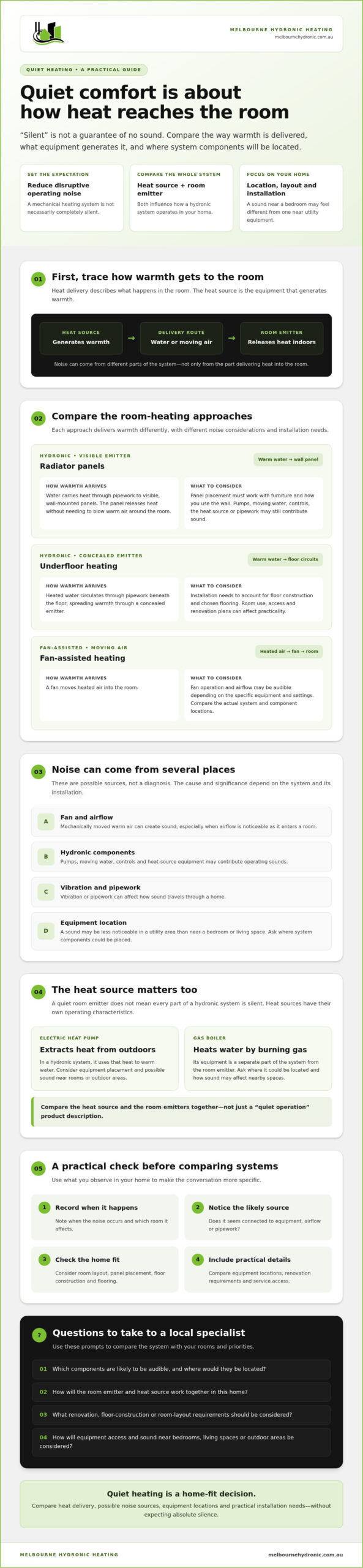
Quiet heating depends on how heat reaches a room and how the system operates there, not simply on the fuel or energy source. Heat delivery describes what happens in the room, such as warmth from a radiator panel or air moved by a fan. The heat source is the equipment that generates warmth, such as a gas boiler or electric heat pump. Both choices, along with system design and installation, can affect what you hear.
Which parts of a heating system can make noise?
Systems that move warm air mechanically can produce sound from fans and airflow, particularly if the air is noticeable as it enters a room. In hydronic heating, water carries heat through pipework to emitters such as radiator panels or underfloor circuits. For a basic technical overview of how hydronic heating systems transfer heat, see the hydronics reference.
Hydronic systems can still make sound. Pumps, moving water, controls and the heat-source equipment may all contribute. Vibration or pipework can also affect how noise travels through a home. These are possible sources, not a remote diagnosis: the cause and its significance depend on the system and installation.
Does “silent heating” mean a system makes no sound?
No. Operating sound varies with the equipment, its settings, component locations and installation. A sound that’s barely noticeable in a utility area may be more distracting near a bedroom or living space. Even a system designed to limit fan-driven airflow noise may have other audible components.
That distinction helps set realistic expectations. A low-noise system aims to keep everyday operation from disrupting comfort; it doesn’t guarantee absolute silence. Before choosing, ask which components are likely to be audible, where they’ll be located and how noise will be considered in your home. If you already have a noisy heater, note when the sound occurs and whether it seems linked to airflow, equipment or pipework. These observations can help a specialist assess the system at your Melbourne or Geelong property.
How hydronic and other heating systems deliver warmth quietly
Hydronic heating moves warmth around the home in water. A heat source warms the water, which circulates through pipework to room emitters such as radiator panels or underfloor circuits. The emitters release heat into the space without needing to blow warm air around it. This can reduce fan and airflow noise in the room, although pumps and heat-source equipment may still make operating sounds.
Hydronic panels warm a room from visible wall-mounted surfaces, while underfloor heating spreads warmth through pipework beneath the floor. Both use heated water, but they deliver warmth differently and have different practical requirements for installation.
Fan-assisted systems work differently: they use a fan to move heated air into a room. Depending on the equipment and settings, that airflow and fan operation may be audible. Noise varies between systems, so compare the specific equipment and where its components will sit rather than assuming every system in a category sounds the same. For broader, brand-neutral guidance on energy-efficient heating and cooling, ENERGY STAR’s guide also covers system selection and maintenance.
Hydronic radiator panels versus underfloor heating
Radiator panels are visible and mounted on walls, so their placement needs to work with furniture and room layout. Before settling on a location, consider whether the panel would conflict with how you use the wall or room. Underfloor pipework is concealed, keeping the emitter out of sight, but installation needs to account for floor construction and chosen flooring. Room use, access and whether the home is being renovated can all affect which option is practical. Neither is a universal fit. See this guide to hydronic radiator panels for more on the wall-mounted option.
Heat pumps, boilers and the sound they may introduce
The emitter and the heat source are separate choices. An electric heat pump extracts heat from the outdoor environment to warm water, while a gas boiler heats water by burning gas. The source equipment has its own operating characteristics, so quiet heat delivery in a room doesn’t mean every component in a hydronic system is silent. Ask where the equipment could be located and how its sound may affect nearby rooms or outdoor areas. This heat pump hydronic heating guide can help you understand that pairing.
Comparing silent heating solutions for Melbourne homes means looking at the complete arrangement: how heat is delivered in each room, what generates it, and where the operating equipment will be positioned. A home-specific assessment can help connect those decisions; explore hydronic heating options with Melbourne Hydronic Heating.
How to compare silent heating solutions for Melbourne homes
There isn’t one best choice for every property. Compare how each system heats the room, what might make sound, how it fits the building and how easily key components can be accessed for maintenance. Quiet operation matters, but so do room-by-room comfort, controls and the way you use each space. The Australian Government’s heating options guide is a useful starting point for understanding different system types.
| Option | Possible noise sources | Heat delivery and visibility | Renovation fit and maintenance |
|---|---|---|---|
| Hydronic radiator panels | Pump, heat source, water movement or vibration; noise depends on the system and setup. | Panels mounted on walls release heat into the room and remain visible. | Consider wall space and pipe routes. Allow for access to the panels and system components. |
| Hydronic underfloor heating | Pump, heat source or water movement; the floor emitter itself has no fan. | Pipework beneath the floor distributes heat out of sight. | Floor access and construction are key design considerations. Plan access to equipment and controls. |
| Fan coils | The fan and moving air may be audible; the heat source and installation can also contribute. | A fan coil transfers heat to room air and requires an accessible unit. | Check proposed unit locations, airflow direction and servicing access against the room layout. |
This is a comparison framework, not a noise ranking. Actual sound depends on the equipment, operating settings, location and installation. When comparing proposals, ask where pumps, heat sources or fan-coil units will be placed, how room controls will work and what access is needed for servicing. These details help you judge whether the design suits your home, not just whether an emitter is described as quiet.
Which heating option suits an existing home or renovation?
First establish whether the project is a retrofit, an extension or a new build. In an existing home, access to floors, walls and practical pipe routes can shape the design. An extension or new build may offer different opportunities to plan emitters and equipment locations. Underfloor heating needs particular consideration of floor construction and finish, while radiator panels require suitable wall locations. Explore the underfloor heating guide, then seek an assessment based on the property rather than choosing from the system name alone.
What trade-offs should homeowners compare?
Think about visible wall panels versus concealed floor pipework, room-by-room heating needs, your preferred comfort response and potential installation disruption. Include controls, equipment placement and servicing access in the conversation. For silent heating solutions for Melbourne homes, a home-specific design helps balance reduced disruptive noise with practical comfort. A specialist assessment can help you compare those factors; explore hydronic heating options.
Questions to ask before choosing a quiet heating system
A useful assessment starts with what you notice, then moves to what the system and home require. Identify the rooms where sound is most disruptive, define how you want each space to feel, compare suitable heating options, and discuss the design with a specialist. For silent heating solutions for Melbourne homes, clear observations help the installer assess your priorities without treating “quiet” as a one-size-fits-all promise.
What should you prepare for a heating consultation?
Bring a simple picture of how your household uses the home. Include its layout, the rooms you want heated, your existing system and any renovation plans. Note occupants’ schedules, preferred temperatures and sensitivity to operating noise. If you know the current heater’s make, model or service history, share those details. Don’t open equipment or inspect wiring, gas connections or pipework yourself.
Before the appointment, keep a short noise log. Record when the sound happens, which rooms are affected and whether it seems to come from a fan, airflow, equipment or pipework. Note whether it occurs at start-up, during operation or as the system shuts down. These are useful observations, not a diagnosis; a qualified professional can assess the source and recommend next steps.
Which questions help assess noise and suitability?
Ask the installer to explain the proposed system in terms of both comfort and sound. These questions can make the discussion more specific:
- Which components will operate inside the home, outside, or near bedrooms and living areas?
- Where will the heat source, pumps, pipework, controls and room emitters be positioned?
- What operating sounds should we expect, and how will the design manage sound in the rooms we use most?
- How will the system suit this property’s construction, room layout and renovation plans?
- How will room-by-room controls work, and what maintenance or service access should we plan for?
Quick checklist: Be ready to describe where and when noise occurs, which rooms need heating and what comfort matters to your household. A professional should assess the equipment, pipework, installation and proposed locations before advising on system suitability.
Clear answers should connect the proposed equipment and pipe routes to your home, rather than rely on a generic “silent” claim. To discuss a home-specific hydronic heating assessment in Melbourne or Geelong, talk with Melbourne Hydronic Heating.
Explore quiet hydronic heating solutions with a Melbourne specialist
Choosing a system for lower operating noise involves more than selecting an emitter or heat source. The property’s layout, existing heating, room priorities and project scope all affect how a design can balance warmth and quieter operation. Hydronic heating may be worth exploring if reducing fan-driven airflow noise is important, but the sound of the complete system still depends on its equipment, placement and installation.
How a specialist can match the system to your home
A home-specific design considers where heat is needed and how the building can accommodate pipework, emitters and mechanical equipment. Hydronic radiator panels and underfloor heating deliver warmth differently, while fan coils use a fan to move heat into a room. Electric heat pumps and boilers are possible heat sources. Assessing these elements together, including controls and equipment locations, helps shape recommendations around the property rather than a generic “quiet” claim.
Melbourne Hydronic Heating is a family-owned specialist contractor offering design, supply and installation across Melbourne and Geelong. Its options include hydronic radiator panels, hydronic underfloor heating, electric heat pumps, gas boilers and fan coils. The right combination depends on the home; no particular noise level or outcome should be assumed before the system and site have been assessed.
What to do next in Melbourne or Geelong
Before you get in touch, consider which rooms matter most, what you’re replacing or renovating, and what you want to understand about equipment location, controls and expected operating sounds. Sharing those priorities can make the discussion more specific. Melbourne Hydronic Heating brings over 30 years of industry experience to its work, useful context when exploring options, but not a guarantee of a particular result.
If you’re considering silent heating solutions for Melbourne homes, a conversation about your property can help clarify which hydronic options may be suitable and what needs closer assessment. You don’t need to settle on a system before asking questions. Discuss heating options for your home with the team.
Choose a quieter heating setup with confidence
Quiet comfort depends on the whole system, not a “silent” label. Consider how heat reaches each room, whether fans or other equipment could be audible, and how the heat source and system layout fit your home. Hydronic panels and underfloor heating offer different ways to distribute warmth, while your property’s construction and renovation plans help determine what may be suitable.
Comparing silent heating solutions for Melbourne homes is a practical first step. Note which rooms matter most, when existing heating noise occurs and what you expect from everyday comfort. Then discuss the options and likely equipment locations with a specialist. No system can be assumed completely silent without considering its design and installation.
Melbourne Hydronic Heating is a family-owned specialist contractor with over 30 years of industry experience, providing design, supply and installation services across Melbourne and Geelong. That experience offers useful context as you explore a system suited to your home, without assuming a particular outcome in advance.
Ready to discuss your priorities and possible options? Discuss quiet heating options for your home. A clear conversation is a practical next step towards a more comfortable living space.
Frequently Asked Questions
Is hydronic heating silent in a Melbourne home?
Hydronic heating can provide warmth with little disruptive noise in living areas, but it isn’t guaranteed to be completely silent. Heated water travels through pipework to panels or underfloor circuits, so there’s no fan moving warm air at the emitter. Pumps, water movement, controls or the boiler or heat pump can still make sound. For silent heating solutions for Melbourne homes, consider the whole system and its installation, not just the room emitter.
Which heating system is quietest for a Melbourne home?
There isn’t one quietest system for every Melbourne home, because equipment, settings, placement and installation affect what you hear. Hydronic heating is worth considering if reducing fan-driven airflow noise is a priority, while its heat source and pumps may still operate audibly. Compare how each option delivers warmth, where mechanical components will sit and which rooms need heating. Ask an installer to assess the specific home before choosing based on a “silent” claim.
Can hydronic heating work in an existing home?
Yes, hydronic heating can be considered for an existing home, but suitability depends on the property and project. The home’s layout, access to floors and walls, practical pipe routes and chosen emitters all inform the design. Radiator panels and underfloor heating have different installation requirements, so a retrofit may call for different decisions than a renovation or new build. A property-specific assessment can help clarify the options without assuming one system will suit every home.
Do hydronic radiator panels make noise?
Hydronic radiator panels don’t use a fan to blow warm air into the room, so they avoid fan noise at the panel itself. However, the heating system may still produce sound from a pump, water movement, controls or the boiler or heat pump. Vibration or pipework can also affect what occupants hear. If a panel or nearby pipework makes noticeable noise, record when it happens and ask a heating specialist to assess the system.
Are heat pumps noisy when used for hydronic heating?
Heat pumps can produce operating sound, particularly at the outdoor unit, so location matters even when they heat water for a hydronic system. The radiators or underfloor pipework deliver heat indoors, while the heat pump is a separate part of the system with its own sound profile. Ask the installer where the unit could be positioned, which rooms or outdoor areas may be affected, and what operating sounds to expect for the proposed equipment.
What should I ask an installer about heating noise?
Ask which components will operate inside and outside your home, where the heat source, pumps and pipework will be placed, and what sounds are normal during operation. Also ask how the design will suit your room layout, what controls are available and what maintenance access is needed. Share when and where existing noise occurs, including whether it seems linked to airflow, equipment or pipework. A specialist can assess the cause and discuss suitable options for your property.
Can underfloor heating reduce noise compared with fan-based heating?
Underfloor heating can reduce fan-driven airflow noise in the room because its emitter is pipework beneath the floor, not a fan blowing warm air. That doesn’t make the complete system silent: pumps and the boiler or heat pump may still produce sound. The floor construction, project scope and room requirements also affect suitability. Ask an installer to compare underfloor heating with fan-based options for your home and explain where system equipment would be located.