Commercial Hydronic Heating Solutions Melbourne: The 2026 Strategic Guide
Could your building’s current heating system be the single biggest threat to its market value by 2027? You’ve likely felt the pressure of rising Victorian gas prices and the constant cycle of tenant complaints about dry, dusty air. Finding the right commercial hydronic heating solutions Melbourne property owners can trust is no longer just about comfort; it’s a strategic move to protect your bottom line against upcoming regulatory shifts and soaring operational costs.
The second step involves designing pipework routes that work with your building’s existing skeleton. By using non-invasive techniques and identifying hidden voids, we can install new circuits without tearing down walls or forcing tenants to relocate. Finally, we focus on integration with your Building Management System (BMS). Modern hydronic controls allow for real-time monitoring and remote adjustments. If you’re interested in the precision components that power these industrial systems, you can learn more about Flow Meters and advanced control displays. This digital handshake ensures your heating works in perfect harmony with other building services, maximizing efficiency and reducing the workload on your facility management team.
We know the frustration of managing legacy HVAC systems that trigger endless maintenance calls and health concerns. This guide will show you how to transform your property into a high-efficiency, wellness-focused environment that pays for itself through energy savings. You’ll learn how to navigate the 2026 Victorian energy standards while delivering the silent, allergen-free warmth that premium tenants now expect.
We’ll explore the transition from traditional gas boilers to high-performance electric heat pumps and explain how the latest VEU incentives can reduce your capital expenditure. From underfloor systems to sleek radiator panels, you’ll see how modern hydronics can future-proof your commercial asset for the decade ahead.
Key Takeaways
- Understand why radiant heat is the superior choice for creating dust-free, allergen-friendly office spaces that prioritize tenant wellness.
- Identify the most efficient configuration for your floor plan, from rapid-response radiator panels to expansive underfloor systems for showrooms and lobbies.
- Navigate the shift toward electric heat pumps and learn how the latest commercial hydronic heating solutions Melbourne provide a clear path to 2027 regulatory compliance.
- Discover a strategic approach to retrofitting legacy buildings that minimizes tenant disruption while significantly boosting long-term asset value.
- Learn how professional system audits and preventative maintenance can lower your operational costs and extend the lifespan of your heating infrastructure.
The Rise of Commercial Hydronic Heating in Melbourne’s 2026 Market
Melbourne’s commercial property landscape is undergoing a fundamental shift. As we move through 2026, the push for building electrification and superior air quality has made commercial hydronic heating solutions Melbourne developers and asset managers choose the new gold standard for climate control. At its core, Hydronics involves the use of water as a heat-transfer medium, circulating it through a closed-loop system of pipes to radiator panels, underfloor coils, or trench heaters. Unlike traditional forced-air HVAC systems that struggle with heat loss and uneven distribution, these large-scale systems are specifically engineered for high-occupancy environments where consistency and reliability are non-negotiable.
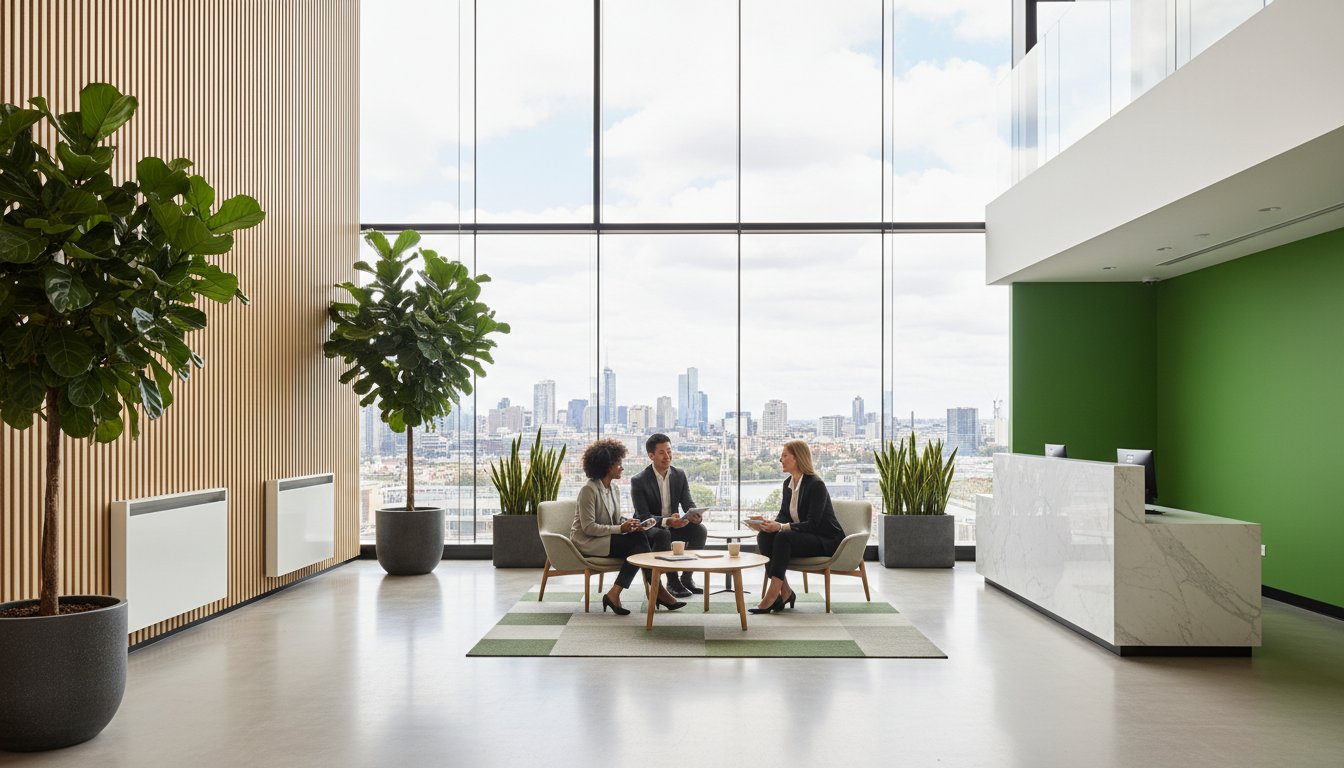
The “Silent Advantage” is perhaps the most immediate benefit for premium office spaces. Traditional air-based systems rely on powerful fans that create a constant background hum and move air at high velocities. This often leads to “hot and cold spots” that frustrate tenants. Hydronic systems are virtually silent. They provide radiant warmth that heats objects and people directly rather than just the air. This creates a calm, focused atmosphere that’s becoming a prerequisite for A-grade commercial listings in the CBD and surrounding business parks.
Energy Efficiency and the 2026 Victorian Context
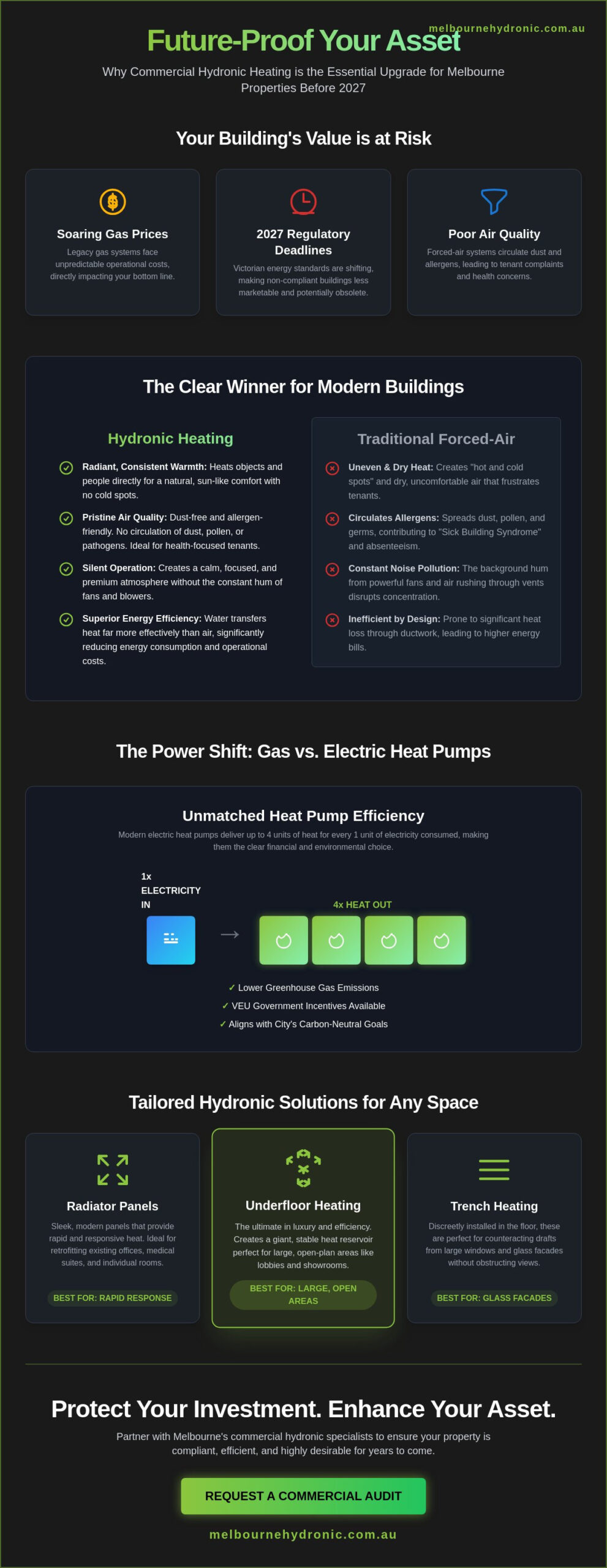
The Victorian government’s 2026 energy standards have placed immense pressure on building owners to move away from inefficient legacy systems. With the Department of Energy, Environment and Climate Action (DEECA) incentivizing the transition from gas to electric heat pumps, the financial argument for hydronics has never been stronger. These systems offer a remarkably high coefficient of performance, often delivering four units of heat for every unit of electricity consumed. By replacing outdated gas infrastructure with modern electric hydronic circuits, Melbourne commercial buildings drastically lower their greenhouse gas emissions and support the city’s transition to a carbon-neutral future. This shift doesn’t just lower operational costs; it protects the asset’s “green” rating and long-term marketability.
Health, Wellness, and Tenant Retention
Tenant wellness is no longer a luxury; it’s a commercial driver. Forced-air systems are notorious for circulating dust, pollen, and pathogens, which can contribute to “Sick Building Syndrome” and increased staff absenteeism. Because hydronic systems don’t rely on air movement, they provide a completely “dust-free” and allergen-friendly environment. This is a critical advantage for aged care facilities, medical suites, and high-end retail environments where air purity is paramount. The psychological benefits of radiant warmth shouldn’t be underestimated either. It mimics the natural comfort of the sun, creating a more inviting and productive workspace that helps landlords secure long-term, high-value leases. Choosing commercial hydronic heating solutions Melbourne experts provide ensures your building is positioned as a premium, health-conscious destination.
Comparing Commercial Solutions: Panels, Underfloor, and Trench Heating
Selecting the right configuration for your property depends on the architectural layout and the specific usage patterns of your tenants. A sprawling warehouse requires a completely different approach than a multi-story CBD office block. High-performance commercial hydronic heating solutions Melbourne businesses rely on provide the flexibility to mix and match these technologies within a single building. This ensures that every zone, from the drafty loading dock to the executive boardroom, receives consistent, cost-effective warmth. Modern systems also align with the federal government’s Trajectory for Low Energy Buildings, which emphasizes reducing peak demand and improving the thermal performance of the commercial sector.
For large open-plan areas like lobbies, showrooms, or medical waiting rooms, hydronic underfloor heating is often the superior choice. By embedding pipes within the concrete slab, the entire floor becomes a giant radiator. This creates a stable “heat reservoir” that isn’t affected by opening doors or high ceilings. In more versatile spaces, fan coils can be integrated into the same hydronic circuit. These units allow for rapid temperature adjustments and can even provide cooling when paired with a reversible electric heat pump, offering a year-round comfort solution without the need for separate, bulky HVAC units.
Radiator Panels for High-Density Office Spaces
Multi-room office environments benefit most from Hydronic Radiator Panels Melbourne property managers prefer for their rapid response times. Unlike underfloor systems that take time to warm up, radiator panels provide almost immediate heat. This is essential for zonal control; you can easily lower the temperature in empty meeting rooms while keeping occupied desks comfortable. Commercial-grade panels are built for durability, featuring robust finishes that withstand the daily wear and tear of a busy workplace. Maintenance is straightforward, typically requiring only an annual system check to ensure the water chemistry remains balanced and the valves are operating at peak efficiency.
Trench Heating: Perfect for Modern Melbourne Architecture
Melbourne’s love for floor-to-ceiling glass presents a unique heating challenge: the “cold downdraft.” Trench heating solves this by placing the heating elements in a recessed perimeter channel along the glass. This creates a thermal curtain that rises to block incoming cold air before it reaches the occupants. It’s an invisible solution that doesn’t compromise the clean lines of modern architecture. You can choose from a variety of custom grilles, including timber or brushed aluminum, to match your interior design. Beyond comfort, trench heaters are highly effective at preventing condensation on glass facades during Melbourne’s sharp temperature drops, protecting your window frames and improving visibility. If you’re planning a new build or a major renovation, speaking with a specialist early in the design phase can help you integrate these systems seamlessly into your floor plan.
The Energy Debate: Commercial Gas Boilers vs. Electric Heat Pumps
The choice between gas and electric has reached a critical junction for Melbourne property owners. For decades, gas boilers were the undisputed kings of high-output heating, especially in large-scale commercial footprints. They offer immediate, reliable heat that legacy systems were designed to handle. However, as we look toward the 2027 mandates requiring all-electric new builds and mandatory electric replacements for broken units, the strategic value of gas is shifting. Modern commercial hydronic heating solutions Melbourne now focus heavily on high-efficiency electric heat pumps as the primary sustainable alternative.
Electric heat pumps are incredibly efficient because they don’t create heat; they move it. By harvesting ambient energy from the outside air, these systems can reach efficiencies of 400%. When you pair this technology with a commercial rooftop solar array, your operating costs can drop to nearly zero during daylight hours. For buildings with massive peak loads, a hybrid system might be the best middle ground. This setup uses a heat pump for the steady baseload and keeps a high-efficiency gas boiler for those rare, freezing Melbourne mornings when the demand spikes beyond the heat pump’s capacity. Calculating the 10-year ROI involves weighing the higher upfront capital cost of heat pumps against the inevitable rise of gas tariffs and the benefit of lower maintenance cycles.
Is it Time to Replace Your Commercial Boiler?
If your building’s boiler is more than 15 years old, it’s likely operating at 60% to 70% efficiency. Modern condensing boilers can reach upwards of 95%, meaning you’re losing significant capital through the flue every winter. Common signs of fatigue include rising gas bills, frequent “lockouts,” and visible corrosion around the heat exchanger. Upgrading now, rather than waiting for a catastrophic failure in mid-winter, allows you to plan the transition without the pressure of an emergency. You can explore your options in our guide on Choosing the Best Hydronic Boiler to see which technology fits your current infrastructure.
Transitioning to Electric Hydronics
The shift to electric isn’t just a trend; it’s a regulatory reality. The Victorian government is currently streamlining this transition through the Victorian Energy Upgrades (VEU) program, offering significant financial incentives for businesses that replace aging gas-fired hydronic systems with high-efficiency electric heat pumps. As of March 31, 2026, the minimum co-payment for commercial heat pump activities increased to $10,000, which reflects a push toward higher quality, professional installations. Transitioning to an all-electric hydronic circuit doesn’t just lower your carbon footprint; it protects your asset from becoming a “stranded” gas-dependent property as the state moves toward its 2030 sustainability targets.
Retrofitting & Maintenance: Modernising Melbourne’s Commercial Assets
Modernising an existing property requires a surgical approach rather than a one-size-fits-all solution. For many building managers, the prospect of upgrading to commercial hydronic heating solutions Melbourne experts design can feel daunting due to the fear of tenant disruption. However, a strategic retrofit follows a methodical three-step process to ensure a seamless transition. It begins with a comprehensive system audit and thermal loss assessment. This allows us to identify where your building is leaking energy and ensures the new heat pump or boiler is sized with technical precision. We don’t just guess; we use data to guarantee performance.
The second step involves designing pipework routes that work with your building’s existing skeleton. By using non-invasive techniques and identifying hidden voids, we can install new circuits without tearing down walls or forcing tenants to relocate. Finally, we focus on integration with your Building Management System (BMS). Modern hydronic controls allow for real-time monitoring and remote adjustments. This digital handshake ensures your heating works in perfect harmony with other building services, maximizing efficiency and reducing the workload on your facility management team.
Maintaining these assets is just as critical as the installation itself. Power flushing is a vital part of this lifecycle. Over time, internal corrosion can create a “sludge” that restricts water flow and forces your pumps to work harder. A professional power flush cleanses the entire circuit, restoring thermal efficiency and protecting your investment from premature failure. It’s a proactive measure that keeps operational costs low and tenant satisfaction high.
Retrofitting Challenges in Melbourne Heritage Buildings
Melbourne’s CBD and inner suburbs are famous for their heritage architecture, but these buildings present unique structural constraints. When floor space is at a premium, we often recommend slimline radiator panels or recessed trench heating. These solutions provide the necessary warmth without compromising the historical aesthetic or reducing usable square footage. We recently helped transition a 1920s warehouse in North Melbourne into a modern office hub. By utilizing trench heating along the original steel-framed windows, we achieved 2026 comfort standards while preserving the building’s industrial character. This approach proves that commercial hydronic heating solutions Melbourne can be adapted to even the most challenging historical sites.
The ROI of Preventative Maintenance
The financial return on a well-maintained system is immediate. Annual servicing of commercial-grade pumps and manifolds prevents small leaks from becoming catastrophic floods. Beyond physical repairs, regular maintenance ensures the system remains balanced, so you aren’t over-heating certain zones while others stay cold. If your system hasn’t been checked in the last twelve months, you’re likely paying for hidden inefficiencies. You can find more details on our specialized care packages in our Hydronic Heating Service Melbourne guide. To protect your asset’s value and ensure peak performance, book a comprehensive system audit with our team today.
Partnering with Melbourne Hydronic Heating for Commercial Excellence
Choosing a partner for a large-scale mechanical project is a decision that impacts your asset for decades. At Melbourne Hydronic Heating, we bring over 30 years of specialized experience to the Melbourne and Geelong commercial sectors. We’ve seen technology evolve from basic gas boilers to the sophisticated electric heat pumps that now lead the market. Our team provides an end-to-end service that covers everything from initial thermal modeling and custom design to professional installation and ongoing system maintenance. This comprehensive approach is why we’re recognized for providing the most reliable commercial hydronic heating solutions Melbourne has to offer.
Our commitment to the 2026 Victorian energy standards isn’t just about ticking boxes; it’s about leading the industry toward a sustainable future. We understand the unique challenges of the local climate, from the sudden temperature drops in the CBD to the high-demand environments of regional Geelong. By focusing on technical precision and proactivity, we help building owners navigate the transition away from gas while enhancing the value of their property. We aren’t just contractors; we’re consultants who ensure your heating infrastructure is an asset rather than a liability.
The Melbourne Hydronic Design-First Approach
We don’t believe in generic, off-the-shelf configurations. Every commercial building has a unique thermal profile, occupancy schedule, and structural layout. Our design-first philosophy means we analyze your specific needs before a single pipe is laid. We source premium components from world-class European brands and adapt them for the specific challenges of the Victorian climate. This ensures your system doesn’t just work; it excels under the pressure of a Melbourne winter. Beyond the initial setup, we provide rapid-response local support. This ensures your facility remains comfortable, silent, and allergen-free year-round, backed by a team that knows your system inside and out.
Ready to Upgrade Your Commercial Heating?
The transition to modern commercial hydronic heating solutions Melbourne property managers are now adopting is a strategic investment in your property’s future. By upgrading now, you’re securing lower operational costs, superior tenant comfort, and full compliance with the 2026 Victorian energy standards. You’re also removing the headache of legacy HVAC maintenance and the risks associated with aging gas infrastructure. If you’re ready to see how a custom-engineered system can transform your building’s performance, it’s time to speak with a specialist. We can provide a detailed, tailored quote that reflects the specific requirements of your facility. Book a Commercial Consultation with our Melbourne Experts to start your building’s transition today.
Future-Proof Your Asset with Strategic Hydronic Solutions
Investing in modern heating isn’t just about the current winter; it’s about staying ahead of the 2027 mandates. We’ve explored how transitioning to electric heat pumps and optimizing your distribution through radiator panels or trench heating can slash operational costs while boosting tenant satisfaction. By choosing commercial hydronic heating solutions Melbourne property owners can rely on, you’re ensuring your asset remains compliant, healthy, and high-performing for years to come.
As a family-owned and operated Victorian business with over 30 years of local experience, we understand the specific demands of our city’s commercial sector. We specialize in 2026-compliant electric heat pump systems that offer a clear path away from rising gas tariffs. Whether you’re planning a heritage retrofit or a new development, our expert team is here to guide you through every design and installation phase. Request a Commercial Hydronic Heating Consultation for Your Melbourne Project today. Let’s build a warmer, more sustainable Melbourne together.
Frequently Asked Questions
Is hydronic heating suitable for large multi-storey commercial buildings in Melbourne?
Hydronic systems are exceptionally suitable for large multi-storey commercial buildings because water is a much more efficient heat carrier than air. This allows for precise temperature management across different floors without the significant energy loss associated with long duct runs. It’s an ideal choice for high-occupancy environments where consistent, silent warmth is required across diverse zones.
How much does a commercial hydronic heating system cost to install in 2026?
Installation costs vary significantly based on the building’s floor area, the choice between radiator panels or underfloor systems, and the selected heat source. While the upfront capital for commercial hydronic heating solutions Melbourne developers choose is often higher than traditional HVAC, the long-term operational savings and lower maintenance requirements typically provide a superior return on investment over the system’s life.
Can we switch from a gas boiler to an electric heat pump in our existing office?
You can definitely switch from a gas boiler to an electric heat pump in an existing office. This transition is a key strategy for meeting the 2027 Victorian electrification standards and reducing carbon footprints. Most existing hydronic pipework is compatible with modern heat pumps, although a professional system audit is necessary to ensure flow rates are optimized for electric technology.
What is the expected lifespan of a commercial hydronic heating system?
A well-maintained commercial system typically lasts between 20 and 30 years. While the heat source, such as a boiler or heat pump, might need replacement after 15 years, the high-quality pipework and radiator panels are designed for decades of service. Regular servicing and water chemistry checks are the best ways to protect this long-term investment.
How long does a commercial hydronic retrofit take and will it disrupt tenants?
The duration of a retrofit depends on the building size, but we focus on minimizing disruption by using existing service voids and scheduling work in stages. Many Melbourne businesses continue to operate normally during the installation process. Our team designs pipework routes that avoid major structural changes, ensuring a faster turnaround than traditional ducted system replacements.
Are there government rebates for commercial hydronic heating in Victoria for 2026?
Yes, several incentives are available in 2026, including the Victorian Energy Upgrades (VEU) program which offers rebates for replacing gas systems with electric heat pumps. Solar Victoria also provides rebates of up to $1,400 for eligible Australian-made heat pump products. These programs are specifically designed to lower the transition costs for Victorian businesses moving toward electrification.
How does hydronic heating improve NABERS or Green Star ratings for a building?
Hydronic heating significantly boosts NABERS and Green Star ratings by drastically reducing a building’s energy consumption and peak demand. Because these systems are more efficient than forced-air alternatives, they help properties achieve higher energy performance scores. This improvement in efficiency directly translates to higher asset value and a more attractive profile for premium tenants.
What maintenance is required for a commercial-scale hydronic system?
Commercial systems require an annual professional service to check pump operation, valve settings, and water chemistry. We also recommend periodic power flushing to remove any internal sludge that could hinder thermal efficiency. Staying on top of these minor checks prevents costly downtime and ensures your commercial hydronic heating solutions Melbourne continue to operate at peak performance.