
Hydronic Heating Installation Cost for 4 Bedroom House: 2026 Melbourne Guide
By March 1, 2027, Victoria’s mandatory transition away from residential gas will fundamentally change how we heat our homes. If you’re planning a build or renovation, you need to know the hydronic heating installation cost for 4 bedroom house projects to ensure your investment is future-proof. You likely want a silent, allergen-friendly solution that replaces the noisy fans and circulating dust of traditional heating with consistent, medical-grade warmth. We understand that choosing the right system is about more than just numbers; it’s about securing a comfortable, healthy environment for your family.
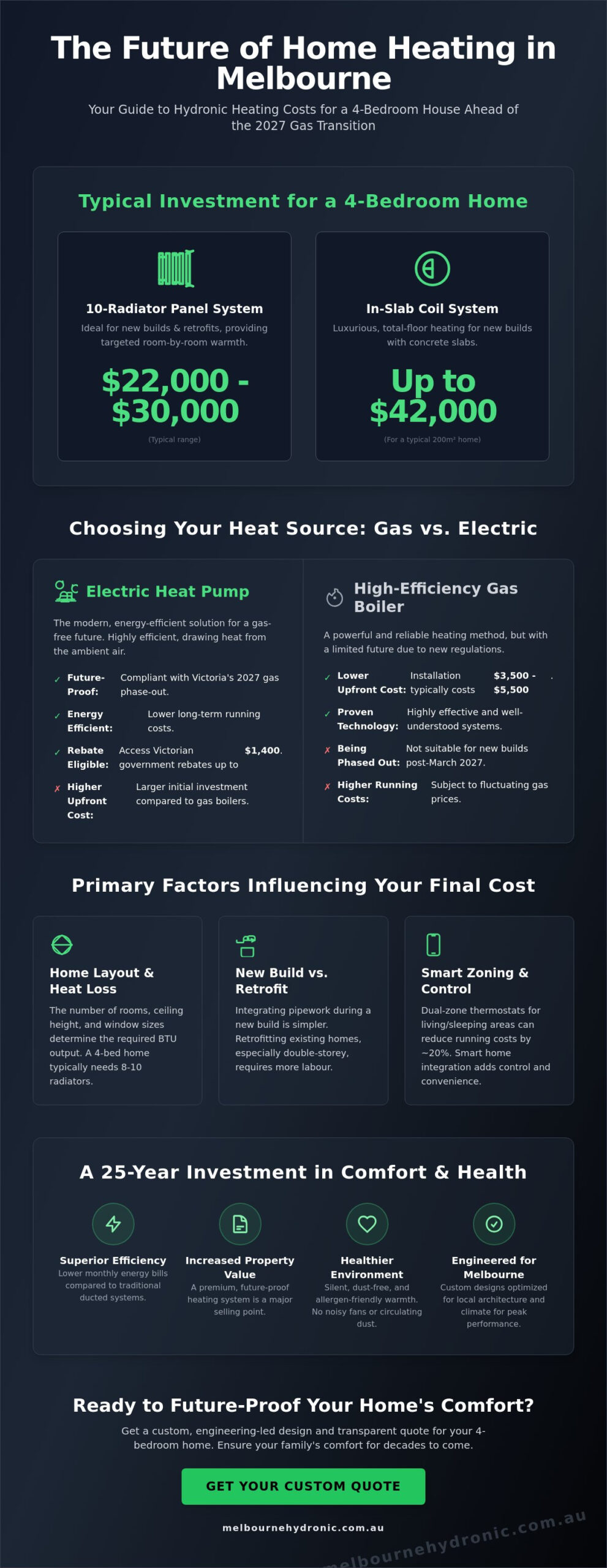
For a typical 10-radiator system in a new build, costs generally range between $22,000 and $30,000, while in-slab systems for a 200m² home can reach up to $42,000. This guide provides a transparent breakdown of every component, from high-efficiency heat pumps to premium radiator panels and towel rails. You’ll learn how to leverage Victorian government rebates of up to $1,400 to offset your initial costs. We’ll show you how this 25-year investment pays for itself through superior energy efficiency and increased property value, ensuring your Melbourne home remains a sanctuary for decades to come.
Key Takeaways
- Understand how your home’s layout dictates the number of radiator panels and why including “wet area” solutions like hydronic towel rails is essential for a complete 4-bedroom system.
- Compare the initial investment and long-term running costs of high-efficiency gas boilers versus modern electric heat pumps to future-proof your home before the 2027 gas transition.
- Identify the critical installation differences between integrating in-slab coils during a new build and retrofitting radiator panels into existing Melbourne architectural styles.
- Evaluate the total hydronic heating installation cost for 4 bedroom house projects by factoring in system components, expert labor rates, and available Victorian energy rebates.
- Learn why custom engineering-led designs provide a higher return on investment than generic quotes by optimizing thermal performance and reducing monthly energy bills.
Factors Defining the Installation Cost for a 4-Bedroom Home
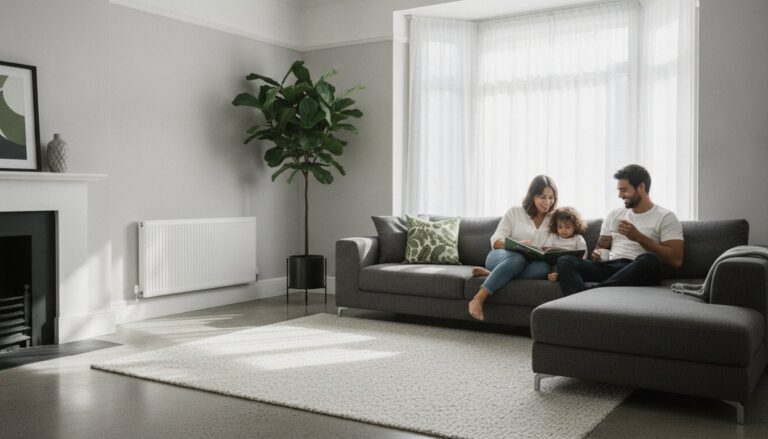
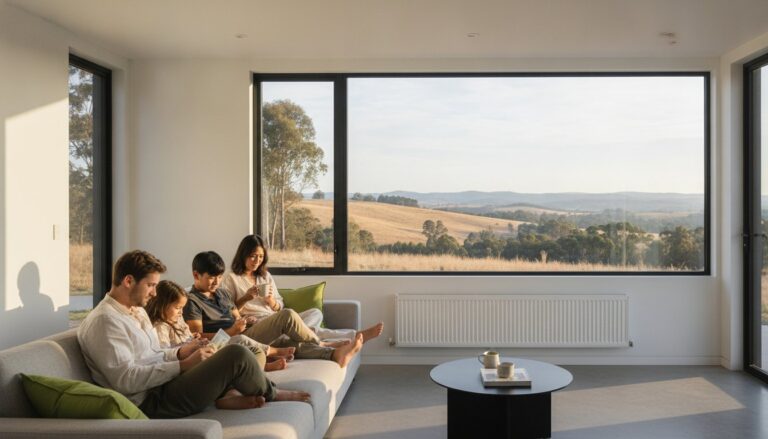
Calculating the hydronic heating installation cost for 4 bedroom house projects requires looking beyond the number of sleeping quarters. In a typical Melbourne family home, a 4-bedroom layout usually necessitates between 8 and 10 radiator panels to ensure every corner remains comfortable. This includes the primary bedrooms, the open-plan living and dining area, and often a hallway or study. If your home features high ceilings or large floor-to-ceiling windows, the British Thermal Unit (BTU) requirements increase, as these architectural elements lead to higher heat loss. To accurately price a system, we evaluate your home’s insulation levels and window orientations to determine the exact thermal load required.
The “Wet Area” factor is another significant cost driver. Most modern 4-bedroom homes include at least two bathrooms and an ensuite. Integrating hydronic towel rails into these spaces doesn’t just add a touch of luxury; it provides a functional heat source that keeps bathrooms dry and mold-free. To understand the technical foundation of these choices, it’s helpful to review what hydronic heating is and how it uses water as a superior medium for heat transfer compared to air. This engineering-led approach ensures that your investment provides a dust-free, allergen-friendly environment for your family.
The Impact of Home Layout on Pipework Complexity
Whether your home is a sprawling single-storey residence in Berwick or a compact double-storey build in Richmond affects the installation complexity. Double-storey 4-bedroom homes often require more intensive labor to route pipework between floors, especially in retrofit scenarios. The distance from the primary heat source, such as a high-efficiency gas boiler or an electric heat pump, to the furthest bedroom also influences the pump capacity needed. Strategically locating the manifold centrally within a 4-bedroom floor plan reduces the total length of PEX pipe required, which significantly lowers labor hours during the rough-in stage.
Zoning for Comfort and Savings
Large family homes rarely need full heating in every room simultaneously. By 2026 energy standards, smart zoning has become a baseline requirement for cost-efficient living. We recommend dual-zone thermostats that allow you to separate the sleeping wing from the active living areas. Implementing this level of control can reduce your monthly running costs by approximately 20% by avoiding the heating of unoccupied rooms. These systems integrate seamlessly with modern smart home hubs, allowing you to pre-warm your home via your smartphone before you arrive, ensuring you never sacrifice comfort for efficiency.
Breaking Down the Components: Radiators, Pipework, and Heat Sources
Every component of a hydronic system contributes to its performance and the total hydronic heating installation cost for 4 bedroom house layouts. While the heat source is the most visible element, the invisible network of pipework and circulation hardware ensures the system operates silently and efficiently. In 2026, many Melbourne homeowners are moving away from traditional copper pipework in favor of multi-layer composite pipe (MLCP). MLCP combines the benefits of metal and plastic, providing a corrosion-resistant barrier that maintains water quality and prevents the internal scaling that often leads to system inefficiency.
A high-performing system also relies on a robust expansion tank and premium circulation pumps. These components manage the pressure changes as water heats and cools, protecting your investment from internal stress. When evaluating the energy efficiency of different heating systems, it becomes clear that the synergy between these parts is what allows hydronic systems to deliver consistent warmth without the energy spikes seen in ducted alternatives.
Electric Heat Pumps vs. Gas Boilers in 2026
The choice between a gas boiler and an electric heat pump is the most significant factor in your upfront capital cost. A high-efficiency condensing gas boiler typically costs between $3,500 and $5,500 to install, whereas a modern heat pump hydronic heating system ranges from $9,500 to $15,500. With the Victorian government’s mandatory transition away from residential gas starting March 1, 2027, many families are opting for electric heat pumps. These units offer a coefficient of performance (COP) between 3.5 and 4.0, meaning they deliver up to four times the heating energy for every kilowatt of electricity used. This efficiency often results in annual running costs as low as $260 to $420, compared to $680 for gas systems.
Choosing the Right Radiator Panels
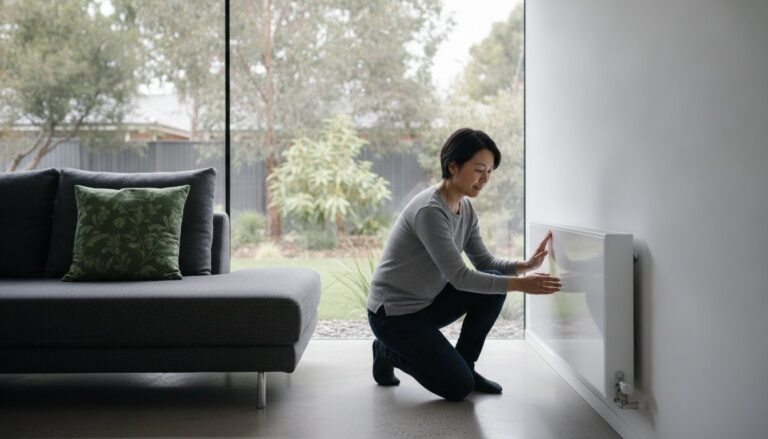
Your selection of hydronic heating panels Melbourne involves balancing aesthetics with thermal output. Standard steel panels are highly effective for guest bedrooms, but designer panels are frequently chosen for high-traffic living areas where they serve as a statement piece. Proper sizing is critical; a master suite requires a larger panel to maintain a steady temperature compared to a smaller 10m² guest room. Investing in quality European panels reduces the likelihood of sludge buildup, which protects the system’s longevity and maintains peak performance. If you’re ready to explore a tailored solution, our team can help you design a future-proof system that fits your home’s unique footprint.
Retrofitting vs. New Builds: Navigating Melbourne’s Architectural Challenges
The architectural diversity of Melbourne means that the hydronic heating installation cost for 4 bedroom house projects is rarely a one-size-fits-all figure. For those building a new home in developing suburbs or embarking on a knockdown-rebuild, the process is streamlined by integrating systems during the early construction phases. Conversely, retrofitting a system into a classic Victorian or Edwardian residence in suburbs like Camberwell or Brighton requires a more nuanced, engineering-led approach. While a new build allows for seamless integration into the slab, a retrofit often involves navigating sub-floor spaces and working around established floorboards or heritage lath-and-plaster walls.
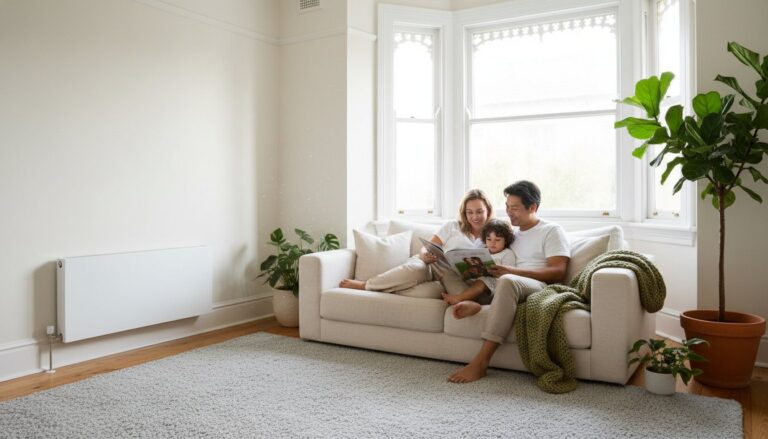
In a recent renovation of a 4-bedroom period home in Brighton, the installation included a mix of elegant radiator panels and trench heating to accommodate a modern glass extension. These projects often incur “invisible” costs, such as minor plaster repairs or the lifting and relaying of floorboards to accommodate pipework. However, the result is a home that maintains its character while benefiting from the silent, dust-free warmth that characterizes these systems. According to the Australian Government’s guide to heating, choosing a system that avoids air movement is a primary way to improve indoor air quality and reduce the distribution of allergens throughout your living spaces.
Underfloor Heating in Modern 4-Bedroom Designs
For new constructions, underfloor heating remains the gold standard for luxury and efficiency. By embedding cross-linked polyethylene (PEX) coils directly into the concrete slab during the pour, the entire floor becomes a giant thermal mass that radiates heat evenly. This method is particularly effective for open-plan 4-bedroom floorplans where wall space might be limited by large windows or bespoke cabinetry. Typically, the installation of pipework for a 200m² home is completed in 2 to 3 days, fitting perfectly within the building schedule before the concrete is poured.
Retrofitting Challenges in Period Homes
Retrofitting requires a specialized skill set to minimize disruption to your home life. In established Melbourne residences, we often utilize sub-floor access to route pipework discreetly to radiator panels in each of the four bedrooms. If your home features a large floor-to-ceiling glass extension, we frequently recommend hydronic trench heating. This involves installing heating units into a floor recess, creating a “curtain” of warm air that prevents cold downdrafts from the glass. A comprehensive retrofit for a 4-bedroom home generally takes between 10 and 14 days, ensuring every room is converted into a cozy, allergen-friendly sanctuary without compromising structural integrity.
Long-Term ROI: Energy Efficiency, Health Benefits, and Rebates
When assessing the hydronic heating installation cost for 4 bedroom house layouts, savvy homeowners look beyond the initial invoice. They view this as a strategic 25-year investment in their family’s health and the property’s resale value. In the competitive Melbourne real estate market, a premium hydronic system is often categorized alongside high-end kitchen renovations as a luxury feature that attracts quality buyers. Beyond the financial appreciation, the immediate return is felt in the drastic reduction of monthly energy bills, especially when pairing the system with modern electrification technology.
The 2026 Solar Victoria rebates provide a significant financial bridge for families making the switch. Eligible households can receive a rebate of up to $1,000 for high-efficiency heat pumps, which can increase to $1,400 for specific Australian-made products. To qualify, your combined taxable income must be less than $210,000 per year, and the property value must be under $3 million. These incentives, combined with the Victorian Energy Upgrades (VEU) program, drastically shorten the payback period for your new system.
Health and Wellness: A Dust-Free Environment
For many Melbourne families, the most valuable return on investment isn’t found on a spreadsheet; it’s found in the improved air quality of their homes. Traditional ducted heating systems are notorious for circulating dust, pollen, and mites, which can trigger asthma and hay fever. Because radiant heat warms objects and people directly without blowing air, it creates a clinically cleaner environment. This is why many parents of young children prioritize learning what is hydronic heating before finalizing their renovation plans. The silent operation also provides a psychological benefit, removing the disruptive “on-off” noise associated with standard HVAC units.
Calculating Your Monthly Savings
The efficiency of a hydronic heat pump system is unmatched in large 4-bedroom homes. While a gas-based system might cost roughly $480 to $680 per winter to run, a heat pump system often operates between $260 and $420. This is achieved through a coefficient of performance (COP) of 3.5 to 4.0, delivering four times the heat for every kilowatt of electricity consumed. To maintain these savings over the system’s 25-year lifespan, consistency is key. Scheduling an annual hydronic heating service ensures that your circulation pumps and panels operate at peak efficiency, preventing the minor issues that can lead to increased energy consumption. If you want to ensure your system continues to deliver maximum ROI, we recommend booking a professional maintenance check to verify your system’s performance before the winter peak.
Choosing Your System: Custom Design with Melbourne Hydronic Heating
Generic “per-room” estimates often overlook the technical reality of larger homes. For a 4-bedroom residence, the hydronic heating installation cost for 4 bedroom house projects depends on hydraulic balancing that a simple online calculator can’t capture. We bring a 30-year legacy of engineering-led design to every project, ensuring that the water pressure remains consistent whether it’s heating the master suite or the furthest guest bedroom. Our team doesn’t just sell components; we design systems that work in harmony with your home’s specific architectural footprint.
During a professional on-site consultation, we look at more than just wall space. We examine floor structures, ceiling heights, and current insulation levels to determine the exact thermal load. This allows us to create a bespoke solution that might combine elegant radiator panels in the bedrooms with sleek trench heating in open-plan living areas. Adding plumbed-in heated towel rails to your ensuites completes the luxury experience. These rails typically cost between $650 and $1,200 per unit according to industry data, and they provide a functional, dry heat that protects your bathrooms from dampness.
The Design-Supply-Install Advantage
Choosing a partner who manages the entire lifecycle of your project provides single-point accountability for your home’s infrastructure. We don’t just supply parts; we map out custom pipework to ensure your system operates at peak efficiency from day one. This process includes choosing the best hydronic boiler or heat pump for your specific household needs. By managing the installation ourselves, we guarantee that the system’s engineering matches the high-quality European components we provide, preventing the performance gaps that occur when multiple contractors are involved.
Requesting Your 4-Bedroom Quote
To provide an accurate estimate for the hydronic heating installation cost for 4 bedroom house layouts, we require detailed information about your property. Providing floorplans, window glazing specifications, and insulation ratings allows us to calculate the exact BTU requirements for every room. As local Melbourne and Geelong specialists, we understand the specific challenges of our southern winters and the upcoming 2027 gas transition. We invite you to book a consultation with the experts at Melbourne Hydronic Heating to secure a future-proof, dust-free heating solution that enhances your family’s quality of life for decades.
Secure Your Home’s Comfort for the Next 25 Years
Investing in a modern heating system is about more than just surviving the Melbourne winter; it’s about future-proofing your property before the March 2027 gas transition. While the hydronic heating installation cost for 4 bedroom house projects reflects a premium commitment, the returns are measured in decades of silent, dust-free warmth. You’re choosing a system that prioritizes your family’s respiratory health and significantly reduces energy consumption when paired with a high-efficiency heat pump and smart zoning technology.
As a Victorian family-owned and operated business with over 30 years of local experience, we specialize in creating asthma-friendly environments through engineering-led design. We understand that every 4-bedroom layout in Melbourne is unique, requiring a bespoke approach to achieve perfect thermal balance. Don’t settle for a generic estimate when you can have a system tailored to your home’s specific needs. Get a custom hydronic heating quote for your 4-bedroom home today and take the first step toward a healthier, more efficient lifestyle. We look forward to helping you transform your home into a sanctuary of premium comfort.
Frequently Asked Questions
Is hydronic heating more expensive than ducted heating for a 4-bedroom house?
Yes, the initial investment for hydronic systems is generally higher than traditional ducted gas heating. While a ducted system might have a lower entry price, the hydronic heating installation cost for 4 bedroom house projects reflects a superior 25-year lifespan and significantly lower running costs. A heat pump system costs between $260 and $420 per winter to operate, whereas ducted gas systems often exceed $680 for the same period. You’re paying for a silent, dust-free environment that adds permanent value to your home.
How long does it take to install hydronic heating in an existing 4-bedroom home?
A standard retrofit for a 4-bedroom Melbourne home typically takes between 10 and 14 days to complete. This timeframe allows our team to discreetly route pipework through sub-floor spaces and mount radiator panels in every room. For new builds, the process is split into two stages: a 2-3 day rough-in before the slab is poured or walls are plastered, followed by a final fit-off once the home is nearing completion.
Can I use a heat pump for a large 4-bedroom hydronic system in Melbourne?
Modern air-to-water heat pumps are specifically engineered to handle the thermal load of large 4-bedroom residences. These units are highly efficient in Melbourne’s climate, operating with a coefficient of performance (COP) between 3.5 and 4.0. This means for every 1kW of electricity used, the system delivers up to 4kW of heating energy. It’s a future-proof choice that aligns with the Victorian government’s 2027 residential gas transition.
What is the most cost-effective way to zone a 4-bedroom hydronic system?
The most efficient method is installing a dual-zone thermostat system that separates the active living areas from the sleeping quarters. By only heating the bedrooms during the evening and the living areas during the day, you can reduce your annual energy consumption by approximately 20%. This smart room management ensures you don’t waste energy heating unoccupied spaces while maintaining consistent comfort where it’s needed most.
Are there government rebates available for hydronic heating in Victoria in 2026?
Eligible Melbourne households can access rebates of up to $1,400 for high-efficiency heat pump systems through the Solar Homes Program. To qualify in 2026, your combined annual household income must be below $210,000 and your property value must be under $3 million. Additional point-of-sale discounts are also available through the Victorian Energy Upgrades (VEU) program, which generates certificates based on the energy saved by your new system.
Does hydronic heating require a lot of maintenance in larger homes?
Hydronic systems are remarkably low-maintenance, requiring only one professional service per year to ensure peak performance. During this annual check, a technician verifies the system pressure, inspects the circulation pumps, and tests the water quality to prevent internal corrosion. This simple preventative measure protects the hydronic heating installation cost for 4 bedroom house investments by ensuring the hardware reaches its full 25-year life expectancy.
Can I install hydronic heating myself to save on costs?
No, hydronic heating must be installed by licensed plumbing and electrical professionals to comply with Victorian building regulations. Attempting a DIY installation voids the manufacturer’s warranty on premium boilers and heat pumps; it also poses significant risks of water damage from incorrect pipework joining. Professional installation ensures the system is hydraulically balanced so that the radiator furthest from the heat source performs as well as the closest one.
Will hydronic heating increase the resale value of my Melbourne property?
Hydronic heating is widely recognized as a premium luxury feature in the Melbourne real estate market. Potential buyers often prioritize homes with radiant heating because of the associated health benefits, such as being asthma and allergen-friendly. As the city moves away from residential gas, having a high-efficiency electric heat pump system installed makes your 4-bedroom property more attractive and future-proof for energy-conscious buyers.