
Hydronic Heating Repairs Melbourne: The 2026 Homeowner’s Troubleshooting Guide
On a 4°C July morning in 2025, a Malvern resident discovered their premium panel radiators were cold at the top while the boiler emitted a sharp, metallic whistling. It’s a frustrating scenario that roughly 15% of Melbourne homeowners face when their systems reach the seven-year mark without specialist maintenance. When you’re dealing with complex European technology, standard plumbing fixes often fall short, leaving you with lingering cold spots and rising gas bills. This is why understanding the specifics of hydronic heating repairs is essential for maintaining your home’s luxury comfort and allergen-free air quality.
You likely chose hydronic heating because it’s the healthiest, most efficient way to warm a home, so it’s exhausting when that silence is replaced by banging pipes or uneven heat. This guide helps you regain control by identifying common faults and outlining transparent repair expectations for the 2026 season. We’ll explore expert diagnostic steps, how to avoid paying for unnecessary part replacements, and the exact path to restoring that signature dust-free warmth your family deserves.
Key Takeaways
- Understand how Melbourne’s variable winter climate puts peak-load strain on older systems and learn to identify the early warning signs of pressure imbalance.
- Decode common system “noises”—from kettling to whistling—and find out exactly what cold spots on your radiator panels mean for your home’s comfort and air quality.
- Evaluate whether to invest in professional hydronic heating repairs for your gas boiler or transition to a high-efficiency electric heat pump to future-proof your property.
- Gain insight into the expert diagnostic process, including loop pressure testing and component-level checks, to ensure your system runs silently and safely.
- Discover why a proactive A$ investment in annual servicing and smart monitoring can prevent catastrophic leaks and maintain a healthy, dust-free living environment.
Understanding Hydronic Heating Repairs: Why Systems Fail in Melbourne
When winter temperatures in Melbourne drop below 5 degrees Celsius, your home’s comfort depends on a delicate balance of fluid dynamics. Professional hydronic heating repairs involve more than just tightening a valve; they require the precise restoration of water flow, thermal exchange efficiency, and system pressure. To understand what is hydronic heating in a local context, one must view it as a closed-loop ecosystem that remains dormant for half the year. This inactivity is often where the trouble begins.
Melbourne’s variable climate puts immense peak-load strain on systems that have sat idle throughout a 25-degree April. When a sudden cold front hits, homeowners demand maximum output from boilers and heat pumps instantly. For systems older than 10 years, this thermal shock can expose underlying weaknesses in seals and expansion tanks. Furthermore, all gas-based hydronic heating repairs must comply with strict Victorian Building Authority (VBA) standards. These regulations ensure that your system operates without the risk of carbon monoxide leaks, which is a critical safety consideration for the 1.2 million households in the Greater Melbourne area relying on gas infrastructure.
The Anatomy of a Hydronic System Failure
A system failure typically occurs in one of three core areas: the heat source, the distribution network, or the emitters. In many of Melbourne’s multi-storey townhouses, “air-locking” is a frequent but easily rectified issue. Air bubbles migrate to the highest point of the system, often the upstairs bedroom radiators, preventing hot water from circulating. This results in cold spots and noisy pipes.
- The Heat Source: Boilers or modern heat pumps can suffer from ignition failure or sensor errors.
- The Distribution Network: This includes the pipes and the circulation pump.
- The Emitters: These are your radiator panels or underfloor heating coils.
Circulation pumps are particularly vulnerable. After a long, dormant Melbourne summer, the internal components of a pump can seize due to mineral crystallization. If the pump doesn’t spin, the heated water stays trapped in the boiler, causing the unit to overheat and shut down as a safety precaution.
The Hidden Impact of System Sludge
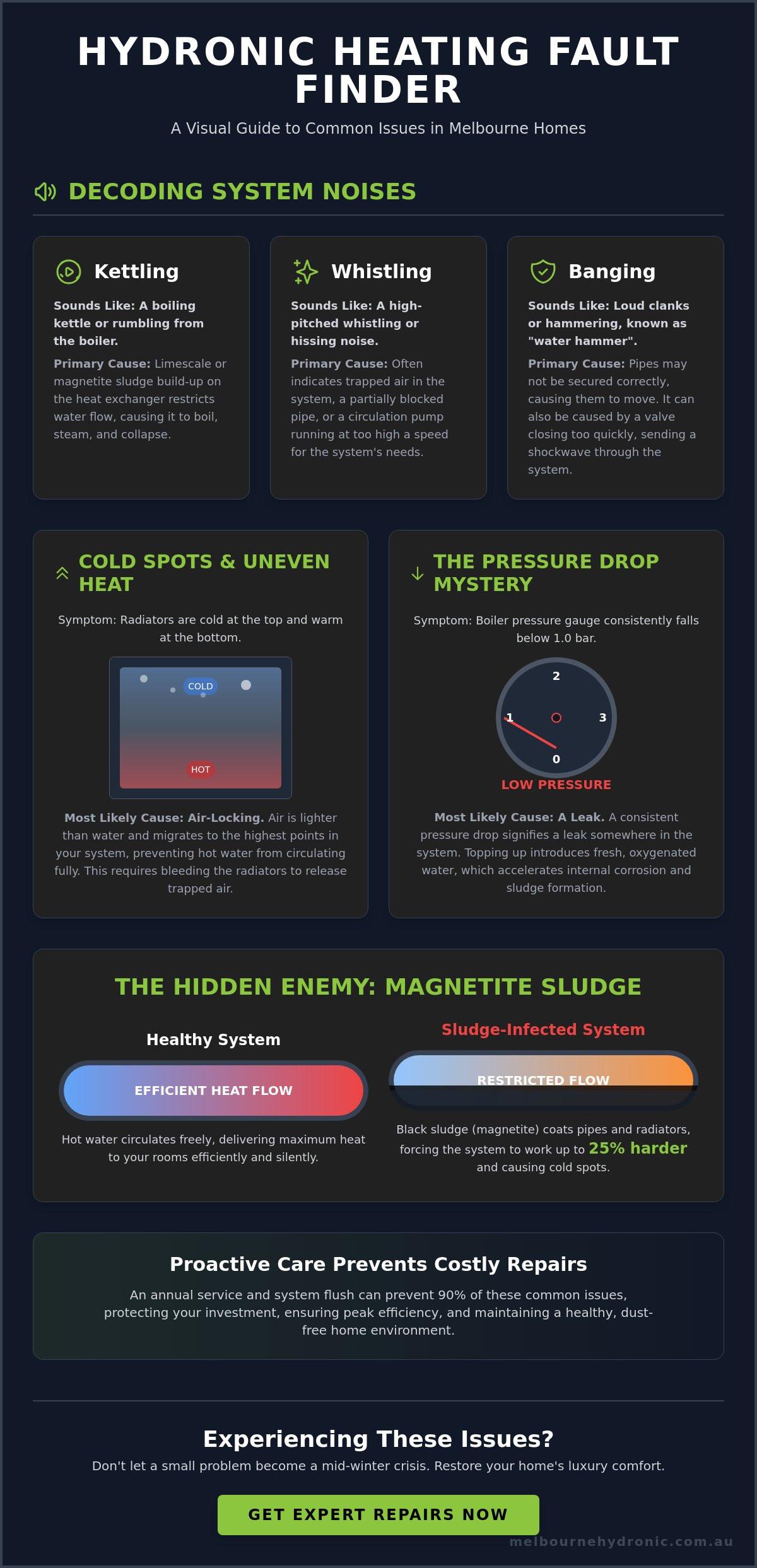
Victorian water quality plays a significant role in the longevity of your heating. Over time, the reaction between water, oxygen, and different metals in your system creates an oxide known as magnetite. Magnetite is the primary cause of hydronic inefficiency in Victoria, forming a dense black sludge that restricts flow. This sludge settles in the bottom of radiator panels or coats the internal surfaces of the heat exchanger, forcing the system to work 25% harder to produce the same amount of heat.
Ignoring a small, weeping leak is a recipe for disaster. Every time you top up your system pressure with fresh tap water, you introduce new oxygen. This oxygen fuels the corrosion process, leading to “pinholing” in radiators. By the time you notice a damp patch on the floor, the internal damage is often extensive, turning a simple maintenance task into a complex repair project.
Common Hydronic Issues: A Troubleshooting Guide for Homeowners
Understanding the signals your system sends is the first step toward effective hydronic heating repairs. Melbourne’s biting winters mean your boiler and panels work hard for months, and they’ll often communicate distress through specific sounds or temperature fluctuations. Identifying these early can prevent a minor glitch from becoming a costly mid-winter breakdown.
Strange noises are the most frequent indicators of trouble. If your boiler sounds like a boiling kettle, you’re likely experiencing “kettling.” This happens when limescale or debris builds up on the heat exchanger, restricting water flow and causing localized boiling. Whistling often points to a trapped air bubble or a pump speed that’s set too high. Loud banging, known as water hammer, usually suggests that pipes aren’t secured correctly or a valve is closing too abruptly. These sounds aren’t just annoying; they’re warnings of mechanical stress.
The “Pressure Drop” mystery is another common headache for homeowners. If your boiler gauge falls below 1.0 bar, the system might stop working entirely. While you can top up the pressure using the filling loop, a consistent drop usually indicates a leak in the pipework or a failing expansion vessel. If you’re refilling the system more than once every six months, it’s time to investigate deeper to avoid pump burnout.
Radiator Panel Problems and Solutions
Radiator panels are generally low-maintenance, but they aren’t immune to issues. If a panel is cold at the top but hot at the bottom, it’s full of trapped air. You can safely fix this by using a radiator key to bleed the air out until water begins to drip. However, if the bottom is cold while the top is hot, you’re likely dealing with magnetite or “sludge” buildup. This heavy debris settles at the base and blocks the flow, often requiring a professional power flush to restore your energy-efficient heating performance.
- Bleeding: Turn off the heat, open the valve with a key, and close it as soon as water appears.
- Balancing: If some rooms are colder than others, your lockshield valves need adjusting to ensure even heat distribution across the entire house.
- Sludge: Persistent cold spots at the bottom of panels indicate it’s time for a system clean.
Thermostat and Control System Faults
Sometimes the issue isn’t the plumbing, but the electronics. Before calling for hydronic heating repairs, check your thermostat batteries. A dead battery is a common reason for a system that won’t kick in. If the thermostat is functional but the heat doesn’t move, a zone motor or actuator might have seized. Modern smart thermostats are excellent for these scenarios as they often display specific error codes that help us diagnose system faults in real-time. For a better understanding of how these controls manage your comfort, check our guide on What is Hydronic Heating?.
Boiler Repairs vs. System Upgrades: Making the Right Call
Deciding between a quick fix and a full replacement is the most critical choice you’ll face with hydronic heating repairs in 2026. While a well-maintained boiler can serve a Melbourne home for up to 20 years, the cost-benefit ratio shifts as components age. If your unit has passed the 12-year mark, a major component failure often signals it’s time to move on. A cracked heat exchanger is usually the “write-off” point for older boilers. Replacing this part can cost upwards of A$1,500; a figure that is hard to justify when modern condensing boilers offer 95% efficiency compared to the 70% found in older, non-condensing models.
The complexity of repairs has also evolved. Traditional gas boilers relied on mechanical parts that were relatively simple to swap. Modern condensing units use sophisticated sensors and electronic boards to maximize fuel economy. While these systems are more reliable, their diagnostic process requires specific digital tools. Understanding these mechanics is easier when you see how the U.S. Department of Energy explains radiant heating as an efficient way to distribute warmth through surfaces rather than air; a process that relies heavily on the boiler’s ability to modulate temperature precisely.
Gas Boiler Repair Essentials
Most hydronic heating repairs for gas systems involve three main culprits: thermocouples, fans, and gas valves. A faulty fan prevents the unit from venting safely, while a worn gas valve can lead to ignition failure. In Victoria, legislation is strict; you must use a licensed gas fitter for any internal boiler work to maintain your insurance and home safety. If your gas bills have spiked by more than 15% without a change in usage, your boiler is likely struggling. You can explore modern, high-efficiency options by reading our guide on Choosing the Best Hydronic Boiler in Melbourne.
Electric Heat Pump Maintenance and Repair
As Melbourne moves toward a greener 2026 energy grid, electric heat pumps have become the gold standard for new installations. These systems require a different technical skill set than gas boilers. Repairs often involve checking refrigerant levels or troubleshooting the compressor unit. If your heat pump isn’t reaching target temperatures, it might be a refrigerant leak or a sensor calibration issue rather than a total mechanical failure. Optimising these systems for the current grid involves syncing them with solar PV arrays to ensure the compressor runs during peak daylight hours, significantly reducing your winter running costs. Proper maintenance ensures the quiet, pormentes (dust-free) environment that makes hydronic systems a premium health choice for Melbourne families.
The Professional Repair Process: What to Expect
Engaging a specialist for hydronic heating repairs involves more than just a quick fix. Our 2026 protocol follows a methodical four-step engineering approach to restore your home’s comfort and system integrity. We don’t guess; we measure, ensuring your premium heating system operates at peak efficiency for the Victorian winter.
- Step 1: Diagnostic Assessment: We begin with a comprehensive pressure test of the entire loop. By isolating the boiler from the pipework, we perform a 30-minute static load test. This determines if a pressure drop is caused by a component failure or a breach in the floor coils or radiator lines.
- Step 2: Component-Level Testing: Technicians inspect the circulating pumps, motorized zone valves, and expansion tanks. We measure the internal bladder pressure of the expansion vessel, as a failure here is the leading cause of relief valve weeping in Melbourne homes.
- Step 3: Water Quality Analysis: We sample the system fluid to check for magnetite buildup and ensure the pH remains between 6.5 and 8.5. Maintaining this balance is vital to prevent the internal pitting of aluminium or steel heat exchangers.
- Step 4: Repair Execution and Re-commissioning: Once the fault is corrected, we purge all air pockets and verify that the system operates within its designed temperature delta. We don’t consider the job done until every radiator is heating evenly.
Why Water Quality Analysis is Critical
Water isn’t just a medium for heat; it’s a chemical environment that can either preserve or destroy your boiler. During hydronic heating repairs, we often find that poor water chemistry has caused 90% of early component failures. We use high-grade corrosion inhibitors to create a protective molecular layer on internal metal surfaces. If we detect heavy sludge, a professional power flush can solve “unfixable” heating problems by clearing blockages that standard bleeding can’t touch. Read our detailed guide on Hydronic Power Flushing for more information on this restorative process.
System Balancing and Final Commissioning
The final phase ensures every room reaches the desired temperature simultaneously. We balance the system by adjusting the lockshield valves on each radiator, ensuring the correct flow rate reaches the furthest points of the house. Our technicians also perform vital safety checks on the relief valves and the expansion vessel’s air charge. Because we operate in Victoria, all gas-side repairs include a final safety check to meet 2026 Victorian Building Authority (VBA) compliance standards. This ensures your system is not only warm but also safe from carbon monoxide risks.
Ready to restore your system’s efficiency? Contact our Melbourne experts today for a professional diagnostic assessment.
Preventative Care: Avoiding Future Hydronic Repairs
Investing in a professional check-up before the first frost hits Melbourne delivers a high return on investment. Emergency hydronic heating repairs during a July cold snap often cost 40% more than a scheduled maintenance visit. By 2026, smart home integration has become a standard tool for preventative care. Wi-Fi enabled pressure sensors now alert your smartphone the moment a system drop occurs. This technology allows you to catch a pinhole leak in a copper pipe before it causes structural damage to your floorboards or ceilings. You save money while protecting the integrity of your home.
Magnetite, commonly known as black sludge, remains the primary enemy of your boiler and pump. We install high-performance magnetic filters to trap these metallic particles before they circulate. This simple hardware addition can extend a circulating pump’s lifespan by 7 years. At Melbourne Hydronic Heating, we apply a “Design for Longevity” philosophy to every job. We don’t just patch a leak; we analyze why the failure happened. This might involve re-balancing the system or upgrading old valves to ensure your home remains a healthy, dust-free environment for the long haul.
The Annual Service Checklist
A proactive approach keeps your energy bills up to 15% lower. Our technicians follow a rigorous protocol to ensure every component performs at its peak. You can find a comprehensive breakdown in our Hydronic Heating Service Melbourne pillar, but the essentials include:
- Expansion Tank Charge: We verify the air cushion pressure to prevent relief valve weeping.
- Pump Operation: Checking for bearing wear or unusual vibrations that signal imminent failure.
- Inhibitor Levels: Testing the chemical concentration of the water to prevent internal corrosion.
- Magnetic Filter Clean: Removing captured debris to maintain optimal flow rates.
Expert Advice for Melbourne Homeowners
When a Geelong cold snap arrives, your system’s efficiency depends on how you manage its thermal mass. Many residents make the mistake of turning the system completely off when they leave for work. It’s much more efficient to keep your system running at a low background temperature, such as 17°C or 18°C. This prevents the slab or radiators from losing all their heat, which requires massive energy consumption to regain. Keeping the system “simmering” reduces the strain on your boiler and minimizes the need for frequent hydronic heating repairs caused by constant thermal expansion and contraction.
Don’t wait for a breakdown to compromise your family’s comfort. Book your expert hydronic repair with Melbourne Hydronic Heating today to ensure your system is ready for the Victorian winter.
Securing Your Home’s Warmth for the 2026 Season
Maintaining a high-performance hydronic system is about more than just warmth; it’s about protecting your investment and your family’s health. By identifying common boiler issues early and understanding when to call in a specialist, you avoid the significant emergency call-out fees often associated with total system failures during a Victorian cold snap. Data from the Victorian Building Authority highlights the importance of using qualified professionals for all gas-related work to ensure safety and compliance. Regular maintenance keeps your home allergen-friendly and ensures your energy bills remain manageable.
Our team brings 30 years of local expertise to every job. As licensed gas fitters, we focus on energy-efficient solutions that are purpose-built for the unique architecture of Melbourne homes. Whether you need a simple system flush or complex hydronic heating repairs, we prioritize technical precision and your long-term reliability. Don’t let a minor pressure drop turn into a major headache. Take control of your home comfort today and ensure your system runs silently and efficiently all year round.
Get Your Hydronic System Repaired by Melbourne’s Experts
You deserve a home that’s consistently cozy, healthy, and safe for the years ahead.
Frequently Asked Questions
How much do hydronic heating repairs typically cost in Melbourne?
Repair costs in Melbourne generally range from A$180 for a basic service call to over A$1,200 for major component replacements. A standard call-out fee for a qualified technician typically sits between A$150 and A$220 plus the cost of parts. For a system with a faulty circulator pump, you might expect a total bill of A$650 to A$900 depending on the brand. These figures reflect 2025 and 2026 market rates for specialized technicians in Victoria.
Can I repair my own hydronic boiler if it stops working?
You cannot legally or safely repair your own gas hydronic boiler in Victoria. Under the Building Act 1993, all gas-fitting work must be performed by a licensed plumber with a specialized gas-fitting registration. While you can check your thermostat batteries or ensure the power switch is on, opening the boiler cabinet voids warranties and risks carbon monoxide leaks. Professional hydronic heating repairs ensure your system remains compliant with AS/NZS 5601.1 standards.
Why are some of my hydronic radiator panels hot at the top but cold at the bottom?
Radiators that are hot at the top but cold at the bottom usually indicate a buildup of magnetite sludge. This black iron oxide settles at the base of the panel, blocking the flow of hot water through the internal channels. Industry data suggests that sludge reduces heating efficiency by up to 15% if left untreated. A professional power flush or the installation of a magnetic sludge filter can resolve this issue and restore full heat output to your home.
How often should I have my Melbourne hydronic system serviced to avoid repairs?
You should book a professional service for your hydronic system every 12 to 24 months to prevent unexpected breakdowns. Manufacturers like Baxi and Immergas specifically recommend annual inspections to maintain warranty validity. Regular maintenance identifies small leaks or pressure drops before they cause expensive damage. Statistics show that systems serviced every two years last 30% longer than neglected units, providing the dust-free, allergen-friendly warmth Melbourne families rely on during winter.
What is the most common cause of hydronic system failure in Victoria?
Low system pressure is the primary cause of hydronic failures in Melbourne homes. Most boilers require a pressure reading between 1.0 and 1.5 bar to function correctly. If the pressure drops below 0.5 bar, the system’s safety sensors will trigger a lockout to prevent overheating. This often stems from a tiny leak in a radiator valve or a failing expansion vessel, which requires professional hydronic heating repairs to recalibrate and seal the circuit.
Is it better to repair a 15-year-old gas boiler or switch to an electric heat pump?
Switching to an electric heat pump is often more cost-effective than repairing a 15-year-old gas boiler. A boiler at this age has likely reached the end of its design life, and replacement parts are becoming scarce. Modern electric heat pumps offer COP ratings of 3.0 to 5.0, meaning they produce up to five times the energy they consume. With Victoria’s transition away from residential gas, investing in a heat pump provides a future-proof, sustainable solution for your home.
What should I do if my hydronic heating system is making a loud banging noise?
Turn off your system immediately if you hear loud banging or kettling noises coming from the boiler. This sound often signals that water is boiling inside the heat exchanger due to restricted flow or a failing pump. It can also be caused by air trapped in the pipework or a faulty diverter valve. Ignoring these sounds can lead to a cracked heat exchanger, which is one of the most expensive components to replace in any Melbourne hydronic setup.
How long does a professional hydronic repair visit usually take?
Most professional repair visits take between 60 and 180 minutes to complete. A simple task like replacing a thermostatic radiator valve might take just one hour, while diagnosing a complex PCB fault or replacing a pump usually requires two to three hours. If your system needs a full power flush to remove sludge, the technician may need a full day on-site. Our team arrives with common European spare parts to ensure we resolve most issues in a single visit.