

Hydronic Heating: A Guide to Eczema-Friendly Comfort
Imagine waking up on a crisp Melbourne morning and feeling only the gentle warmth of your home, rather than the tight, itchy sensation of dehydrated skin. For many families dealing with eczema, the arrival of winter usually means a constant battle against the dryness caused by traditional ducted systems. These heaters often strip the air of its natural moisture and circulate dust throughout every room, triggering flare-ups just when you want to feel most comfortable. Choosing hydronic heating for sensitive skin isn’t just about temperature control; it’s a deliberate choice to protect your family’s health and well-being.
We understand that managing skin conditions requires a holistic approach to your environment. You shouldn’t have to choose between a warm house and a comfortable complexion. In this guide, you’ll learn how radiant heat preserves the air’s humidity and eliminates the turbulent airflows that spread allergens. We’ll explore the technical reasons why radiator panels and underfloor systems are the gold standard for dermatological comfort. We will also look at how modern heat pumps and high-efficiency boilers can transform your living space into a dust-free sanctuary that supports your skin’s natural barrier all year round.
Key Takeaways
- Learn how forced-air heating strips moisture from the epidermis and why this process is a primary trigger for winter eczema flare-ups.
- Discover the science behind hydronic heating for sensitive skin and how radiant heat warms objects directly without circulating irritating dust.
- Compare the unique health benefits of hydronic radiator panels and underfloor systems to determine which solution best suits your family’s comfort requirements.
- Identify the critical role that stable relative humidity plays in preserving your skin’s natural barrier during Melbourne’s dry winter months.
- Understand how a professional system design can eliminate cold spots and air turbulence to create a truly hypoallergenic living environment.
Why Traditional Heating Aggravates Sensitive Skin and Eczema
Melbourne winters demand effective indoor heating, but the method you choose can either soothe or sabotage your skin’s health. Most Victorian homes rely on forced-air ducted systems. While these provide quick warmth, they often create a harsh environment for anyone prone to dermatitis or eczema. The fundamental problem lies in how these systems move air. By forcing heated air through vents, they create a convection cycle that actively pulls moisture from your surroundings and your body.
The Dehydration Effect of Ducted Systems
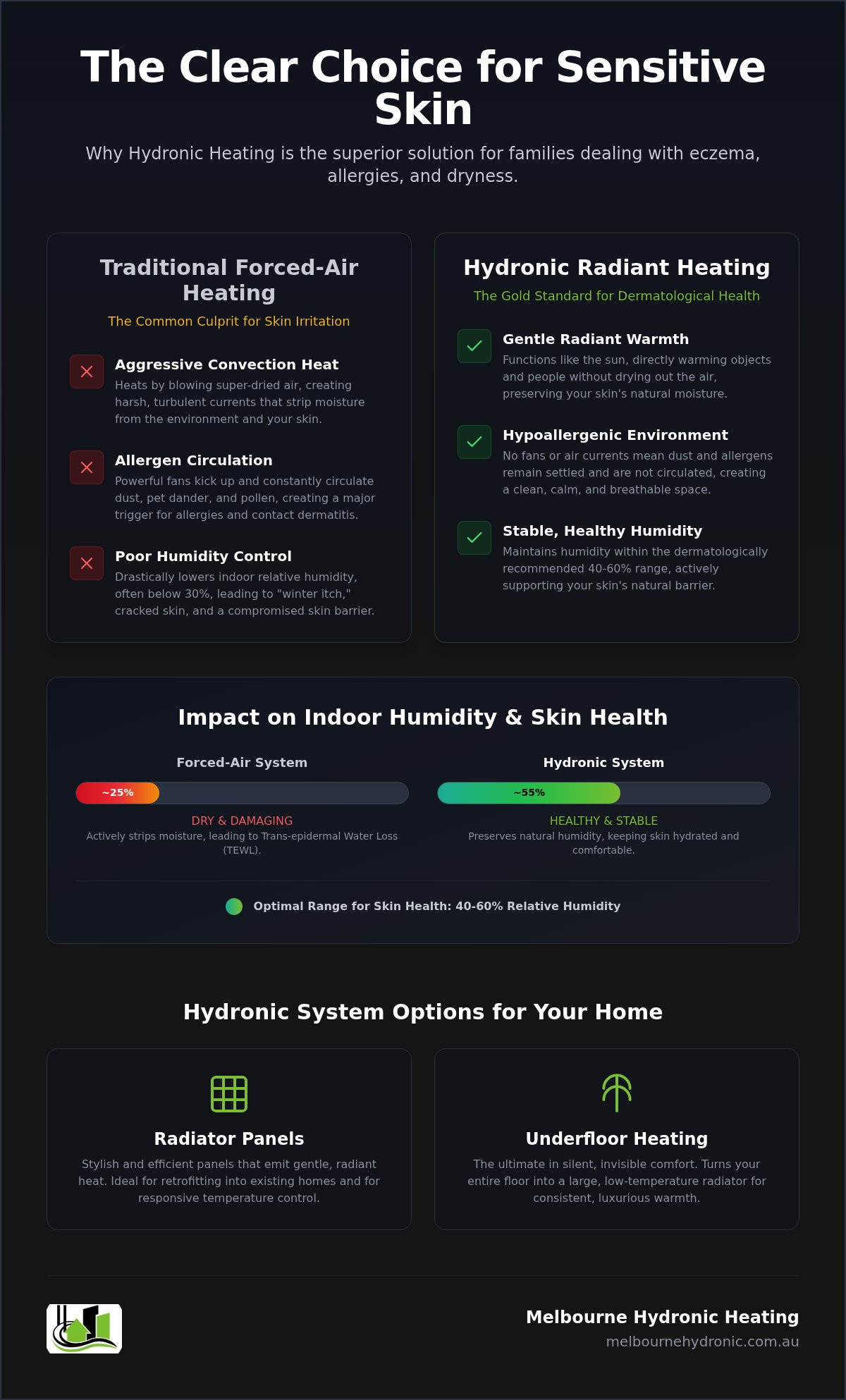
When warm air blows across your skin, it accelerates a process known as trans-epidermal water loss (TEWL). This isn’t just a minor inconvenience; it’s a direct assault on your skin’s natural barrier. Ducted systems typically drop indoor relative humidity levels significantly below the 40 to 60 percent range recommended for dermatological health. As the air becomes parched, it begins to “wick” moisture directly out of your epidermis. This rapid dehydration leads to the characteristic “winter itch” that leaves skin feeling tight, cracked, and prone to inflammation. Unlike these aggressive systems, hydronic heating for sensitive skin works by warming the room’s surfaces, which keeps the air’s moisture content stable and your skin barrier intact.
Allergen Circulation and Skin Irritation
Beyond simple dryness, traditional heating acts as a delivery system for irritants. Forced-air units rely on powerful fans to circulate warmth, which simultaneously keeps dust mites, pet dander, and pollen airborne. For a person with eczema, these particles are more than just allergens; they are physical triggers for contact dermatitis. Understanding The Science of Radiant Heat reveals why this doesn’t happen with hydronic systems. Radiant panels don’t use fans, so they don’t create the turbulent air currents that keep microscopic irritants in your breathing zone and on your skin. Stagnant dust trapped within ductwork often becomes a concentrated health hazard that is blasted into your living areas every time the thermostat clicks on.
The constant “on-off” cycling of ducted heaters also creates rapid temperature fluctuations. These spikes stress the skin’s ability to regulate its own temperature, often leading to sudden flare-ups. This physical discomfort frequently spills over into the night, resulting in poor sleep quality. When your environment is too dry, your body can’t settle into the deep, restorative sleep necessary for skin repair. Transitioning to hydronic heating for sensitive skin provides a steady, silent warmth that supports both your physical comfort and your long-term well-being.
The Science of Radiant Heat: How Hydronic Systems Preserve Skin Moisture
Radiant heat operates on the principle of thermal radiation, much like the way the sun warms the earth on a clear day. Instead of trying to heat every cubic meter of air in a room, hydronic systems transfer energy directly to the objects and people within the space. This fundamental difference in physics is why hydronic heating for sensitive skin is widely considered the gold standard for dermatological health. By focusing on objects rather than air, the system avoids the parched, “baked” atmosphere that characterizes traditional convection heaters.
Hydronic systems use water to carry heat through pipes to radiator panels or floor coils. These surfaces then emit a gentle warmth that doesn’t rely on high-velocity fans. This “silent heat” doesn’t just reduce ambient noise; it prevents the constant movement of microscopic particles that can abrade sensitive skin. When your heating system works with physics rather than against it, your home becomes a sanctuary for your skin’s natural repair processes. When researching hydronic heating for sensitive skin, many families find that the lack of air movement is the most immediate relief they experience.
Radiant vs. Convective Heat Transfer
Convective systems work by cycling air through a heat exchanger, often raising the temperature of that air to extreme levels before blowing it back into the room. This process strips the air of its natural moisture and compromises the skin’s lipid barrier. Radiant heat, however, feels like standing in a patch of winter sunlight. It provides deep, penetrating warmth without disturbing the delicate balance of oils on your skin’s surface. You can learn more about how infrared solutions utilize these principles to create a moisture-stable environment that supports dermatological health. This gentle approach preserves the moisture within your epidermis, which is your body’s first line of defense against environmental triggers.
Dermatologists often refer to a “Goldilocks zone” for indoor humidity, typically between 30% and 50% relative humidity. Staying within this range is vital for managing chronic skin conditions like eczema. Modern hydronic heating systems excel here because they don’t involve the combustion of indoor air or high-speed circulation that causes humidity levels to plummet. Maintaining a consistent relative humidity ensures the skin’s protective barrier remains hydrated, effectively preventing the microscopic cracks that allow irritants to trigger an eczema flare-up.
Thermal mass also plays a significant role in comfort. Systems like hydronic underfloor heating use the floor itself to store and release heat slowly and steadily. This prevents the rapid temperature spikes and dips that can shock sensitive nerve endings and cause itchy reactions. If you’re looking for a solution that prioritizes your family’s health, you might want to speak with a specialist about a custom system design for your home.
Comparing Hydronic Radiators vs. Underfloor Heating for Skin Health
Choosing between radiator panels and underfloor systems depends on your home’s layout and your family’s specific health requirements. Both configurations provide the core benefits of hydronic heating for sensitive skin, but they deliver warmth in distinct ways that impact how you manage eczema daily. While radiator panels offer localized, rapid response warmth, underfloor systems provide a consistent thermal foundation that is virtually impossible for allergens to penetrate.
Hydronic Radiator Panels for Targeted Comfort
Installing hydronic heating panels gives you precise control over the microclimate of individual rooms. This is a significant advantage for overnight skin relief in bedrooms. You can set a lower, skin-friendly temperature for sleeping while maintaining higher warmth in living areas. Modern radiator designs have evolved significantly; they now feature smooth, flat exterior surfaces specifically designed to prevent dust accumulation. Unlike old-fashioned finned heaters that act as dust traps, these panels can be wiped clean in seconds with a damp cloth. This simplicity ensures that your heating system never becomes a reservoir for the mites or dander that trigger dermatitis flare-ups.
Underfloor Heating: The Ultimate Hypoallergenic Choice
If your priority is creating the cleanest possible indoor environment, underfloor heating is the premier choice. Because the entire system is embedded beneath your floor’s surface, there are no exposed units to collect dust or allergens. This makes it a truly hypoallergenic solution for families with severe sensitivities. For toddlers who spend their time playing on the floor, the gentle “feet-up” warmth is revolutionary. It eliminates the cold drafts and “dead spots” common in Melbourne’s older homes. This “slab heating” also helps maintain a dry floor surface, which inhibits the growth of mold and mildew in carpet fibers or tile grout, further protecting sensitive respiratory and skin systems.
When deciding between the two, consider your lifestyle and cleaning habits. Underfloor systems are essentially “set and forget” from a hygiene perspective. Radiator panels, however, allow for faster temperature adjustments during Melbourne’s erratic weather shifts. If you’re retrofitting an existing home, panels are often the most practical way to introduce hydronic heating for sensitive skin without major floor renovations. Both systems avoid the turbulent air movement of ducted units, ensuring your home remains a calm, moisture-rich sanctuary that supports your skin’s natural healing processes throughout the winter months.
Creating a Skin-Friendly Home Environment in Melbourne’s Climate
Melbourne’s winter weather presents a unique challenge for those managing dermatitis. From the coastal winds of Geelong to the frosty mornings in the Dandenongs, Victorian winters are characterized by low outdoor humidity. When you bring that cold, dry air inside and heat it with a traditional ducted system, the relative humidity can plummet to levels that trigger immediate skin distress. Using hydronic heating for sensitive skin provides a foundation of stable warmth, but achieving a truly hypoallergenic home requires a holistic approach to your indoor environment. To complement your air quality efforts, you can explore Residential Water Filtration System Sales and Installation to ensure your bathing water is free from skin-irritating chemicals.
Managing Melbourne’s Winter Humidity
Local weather patterns often see humidity levels fluctuate wildly, yet indoor environments remain consistently parched when gas ducted heating is active. These systems are particularly harsh because they rely on rapid combustion and high-velocity air movement, which effectively “cooks” the moisture out of your living spaces. To protect your skin, we recommend using a simple digital hygrometer to monitor your home’s air quality. Aim to keep your indoor humidity between 30% and 50%. Because hydronic heating for sensitive skin doesn’t involve forced air, it’s much easier to maintain this “Goldilocks zone” without the need for heavy-duty humidifiers that can sometimes introduce mold risks if not cleaned perfectly.
The Importance of System Hygiene
A heating system is only as healthy as its maintenance record. To ensure your home remains a sanctuary, an annual hydronic heating service in Melbourne is essential. This check-up confirms that your boiler or heat pump is operating at the correct temperature, preventing the system from overworking and creating “hot spots” that can irritate sensitive nerves. If your system is older, power flushing may be necessary to remove internal sludge and mineral deposits. This process restores the quiet, efficient flow of water, ensuring that every radiator panel provides the gentle, even warmth your skin requires. For daily hygiene, a quick wipe of your radiator panels with a damp microfiber cloth is all it takes to keep your home virtually dust-free.
Ventilation also plays a critical role. While it’s tempting to seal your home tight against the Melbourne chill, stagnant air can lead to a buildup of indoor pollutants. Hydronic systems allow you to crack a window for fresh air without losing that deep, radiant warmth that has soaked into your furniture and walls. This synergy between fresh air and radiant heat creates a vibrant, healthy atmosphere that supports your skin’s natural barrier. If you’re ready to upgrade your home’s health profile, contact our expert team to design a system tailored to your family’s needs.
Choosing Your Health-First Hydronic System with Melbourne Hydronic Heating
Choosing the right hydronic heating for sensitive skin involves more than just selecting hardware; it requires a deep understanding of how thermal dynamics affect human biology. Melbourne Hydronic Heating has spent over 30 years refining the art of healthy home climate control. Since 1990, we’ve operated as a family-owned business, giving us a personal stake in the well-being of the Victorian families we serve. We don’t just install heaters. We engineer environments that prioritize air purity and skin hydration, ensuring your home remains a sanctuary during the coldest months.
Custom Design for Sensitive Skin
A professional installation goes beyond simply placing panels. We conduct a thorough analysis of your home’s layout to ensure that your system delivers warmth exactly where it’s needed without creating discomfort. For example, we carefully tailor radiator placement in bedrooms to avoid direct “hot spots” near beds, which can trigger nocturnal itching or flare-ups. By integrating a high-efficiency boiler, we provide you with the ability to manage temperatures with degree-perfect precision. This level of control ensures your skin barrier isn’t stressed by the sudden temperature spikes common in lower-quality systems. Our family-owned approach means we take the time to understand your specific health needs before a single pipe is laid.
Next Steps for a Healthier Home
If you’re ready to transition away from the dry, dusty air of ducted heating, the first step is a health-focused heating audit. During this consultation, we assess your current infrastructure and discuss your family’s health priorities. Many homeowners are now choosing to future-proof their properties with heat pump hydronic heating, which offers an energy-efficient way to maintain a hypoallergenic environment. Whether you’re looking for a new installation or a system upgrade, we guide you through every technical detail to ensure the best outcome for your skin health.
During the installation process, our team works with a level of precision that reflects our three decades of local experience. we ensure that every component is optimized for allergen reduction and silent operation. This meticulous approach gives you the peace of mind that your home will remain a safe, comfortable sanctuary regardless of how harsh the Melbourne winter becomes. It’s time to stop compromising on your physical comfort and start investing in a system that supports your well-being. Contact Melbourne Hydronic Heating today for a skin-friendly heating consultation and discover the difference that professional, radiant warmth can make for your family.
Transform Your Home into a Sanctuary for Healthy Skin
Transforming your living space into a haven of health and comfort is a significant step toward managing chronic skin conditions. By choosing hydronic heating for sensitive skin, you’re opting for a system that works in harmony with your body’s natural barrier rather than against it. We’ve explored how radiant heat preserves essential moisture and why eliminating fan-driven dust is vital for preventing dermatitis flare-ups. This technical shift from convection to radiation doesn’t just improve air quality; it fundamentally changes how your home feels.
As a family-owned and operated business since 1990, Melbourne Hydronic Heating understands the unique challenges of local Victorian winters. With over 30 years of experience, we’re specialist installers of hypoallergenic heating solutions that prioritize your family’s well-being and long-term health. You don’t have to endure another winter of dry, itchy skin or poor sleep caused by parched indoor air. Take the first step toward a more comfortable, moisture-rich home today by speaking with our expert team about a custom design. Your skin deserves a warm, hydrated environment where it can truly rest and repair.
Book a Health-First Hydronic Consultation with Melbourne’s Experts
Frequently Asked Questions
Is hydronic heating really better for eczema than ducted heating?
Hydronic systems are significantly better for managing eczema because they eliminate the forced-air convection used by ducted units. Ducted heating relies on fans that actively strip moisture from the air and circulate microscopic irritants. In contrast, hydronic heating for sensitive skin provides a gentle, radiant warmth that keeps indoor humidity stable. This process preserves the skin’s natural lipid barrier, which is essential for preventing the inflammation and itching associated with winter eczema flare-ups.
Does hydronic heating dry out the air as much as gas heaters?
Standard gas ducted heaters often cause indoor relative humidity to drop below healthy levels, leading to parched air that irritates the epidermis. Hydronic systems use water circulating through sealed pipes to warm surfaces directly. Since there is no high-temperature combustion of indoor air or high-velocity fans, the natural moisture in your home remains intact. This stable environment is much kinder to your respiratory system and skin, preventing the “baked air” feeling common in Melbourne homes.
Can hydronic heating help with asthma as well as sensitive skin?
The same lack of air movement that benefits skin health also makes hydronic heating an ideal choice for asthma sufferers. Traditional heaters blow dust, pollen, and pet dander through every room. Because hydronic systems don’t have fans or filters that trap and release allergens, the air remains still and clean. This reduction in airborne particles helps minimize the triggers that lead to respiratory distress, creating a safer living space for your whole family in Geelong or Melbourne.
Which is better for allergies: hydronic radiators or underfloor heating?
Both systems are excellent for allergy management, but underfloor heating is often considered the ultimate choice for a hypoallergenic home. Since the heating coils are buried beneath the floor, there are no exposed surfaces to collect dust. However, hydronic radiator panels are also highly effective because their flat, smooth surfaces are easy to wipe clean. Unlike ducted vents that hide years of debris, both hydronic options ensure that no allergens are being actively circulated through your breathing zone.
How much does it cost to install hydronic heating for a health-focused home?
The cost of a health-focused installation depends on several factors, including the size of your home and whether you choose radiator panels or underfloor coils. Every project we design in Victoria is unique, tailored to the specific architectural requirements and health priorities of the family. We recommend a professional consultation to assess your property’s layout. This allows our team to provide an accurate quote for a system that delivers long-term comfort and dermatological benefits without compromise.
Does hydronic heating require a lot of cleaning to stay hypoallergenic?
No, hydronic systems are remarkably low-maintenance from a hygiene perspective. Unlike ducted systems that require professional duct cleaning to remove accumulated dust and mold, hydronic radiator panels only need an occasional wipe with a damp cloth. Because there are no fans to draw in hair or dander, the system doesn’t create the hidden reservoirs of allergens found in traditional heaters. This simplicity makes it much easier to maintain a sterile, skin-friendly environment for your family year-round.
Can I install hydronic heating in an existing Melbourne home?
We frequently retrofit hydronic systems into existing Melbourne homes. While underfloor heating is easiest to install during a new build, hydronic radiator panels are a versatile solution for established properties. Our team specializes in discreetly running pipework under floorboards or through ceiling cavities to connect panels in every room. This allows you to upgrade to hydronic heating for sensitive skin without needing to reconstruct your entire house, providing an immediate and lasting improvement in your indoor air quality.
How do I maintain my hydronic system to ensure it stays dust-free?
Maintaining system hygiene is straightforward. We recommend an annual service to ensure your boiler or heat pump is operating at peak efficiency. For the distribution points, simply keeping the exterior of your radiator panels free of surface dust is sufficient. If you notice uneven heating, a professional power flush can remove internal debris, ensuring the system provides the consistent, gentle warmth required for skin health. Regular maintenance by our specialist team ensures your system remains a reliable, hypoallergenic heat source.