Best Hydronic Panel Radiators in Melbourne: The 2026 Buyer’s Guide
Could the secret to a healthier, more stylish home be hidden in your heating system? For many Melbourne homeowners, the familiar rattle of ducted vents and the dry, dusty air they circulate have become an accepted part of winter. However, as the state moves toward the 2027 residential gas transition, the way we heat our living spaces is fundamentally changing. Finding the best hydronic panel radiators Melbourne has to offer isn’t just about staying warm. It’s about choosing a system that respects your home’s architecture and your family’s respiratory health.
We understand that you want a heating solution that doesn’t ruin the aesthetic of a period home or send your energy bills soaring. This guide promises to help you navigate the shift toward high-efficiency solutions, showing you how to balance silent performance with modern design. We will explore durable European options like DeLonghi Radel panels with their 30-year warranties, explain how to maximize Victorian energy rebates, and show you how to achieve a premium, allergy-friendly heat that adds genuine value to your property.
Key Takeaways
- Understand the fundamental difference between radiant warmth and forced-air systems to eliminate dust, noise, and cold spots in your home.
- Discover how to identify the best hydronic panel radiators Melbourne properties require by matching specific materials like cast iron or sleek steel to your home’s architectural era.
- Learn why “oversizing” your radiator panels is a critical step for ensuring maximum efficiency when transitioning to modern electric heat pump technology.
- Get expert insights on balancing functional heating with interior design, from standard high-output steel workhorses to luxury architectural centerpieces.
- Explore how professional installation and 30 years of local design experience ensure your heating system adds long-term value and aesthetic appeal to your property.
What Defines the ‘Best’ Hydronic Panel Radiators for Melbourne Homes?
Defining the best hydronic panel radiators Melbourne residents should consider begins with understanding how heat interacts with your specific living space. At its core, Hydronic heating technology uses water as a medium to transfer thermal energy, which is significantly more effective than moving air. For a home in Melbourne’s variable climate, where a sunny afternoon can quickly turn into a freezing evening, the “best” radiator must excel in three areas: thermal response, material longevity, and architectural compatibility. It’s not just about a product. It’s about a system that works in harmony with your lifestyle.
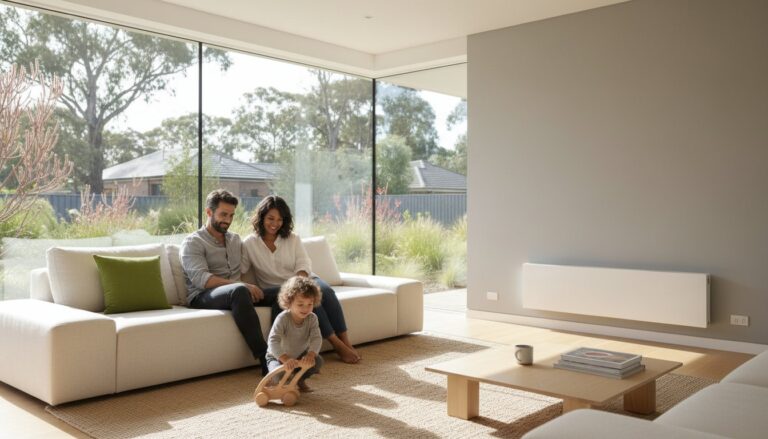
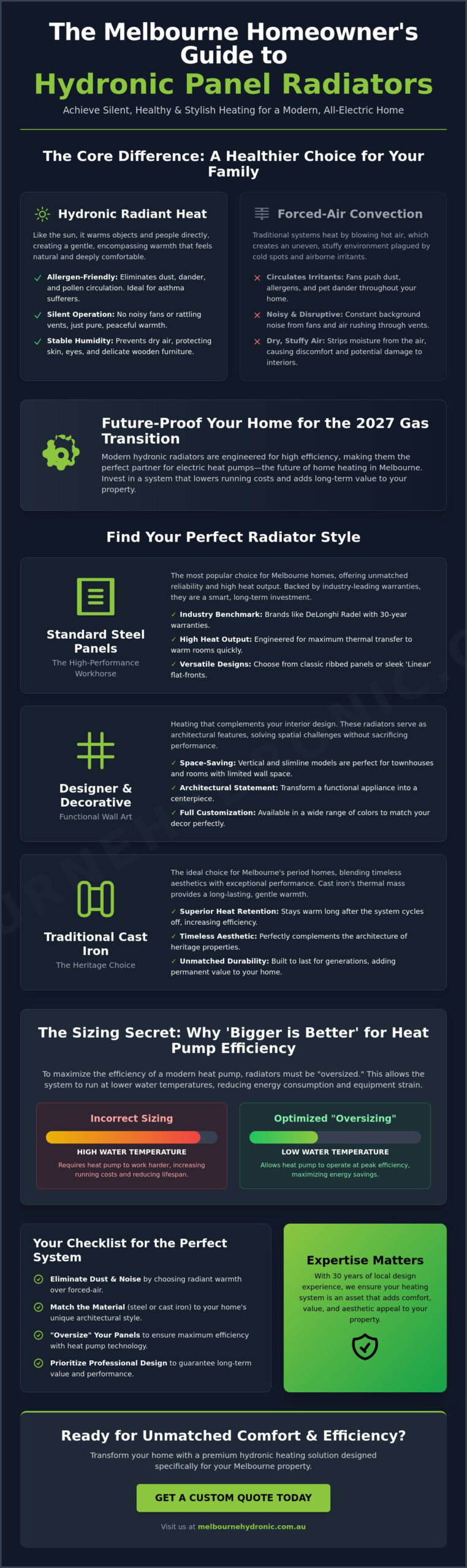
Many families suffer through winter with forced-air systems that circulate dust, pet dander, and allergens. Radiant panels eliminate this problem entirely. They don’t rely on noisy fans, meaning they operate in total silence while maintaining a consistent humidity level. This makes them the gold standard for health-conscious households, especially those managing asthma or seasonal allergies. When you choose high-quality panels, you’re investing in a cleaner, more stable indoor environment that protects your family’s wellbeing while providing a premium sense of comfort.
Radiant vs. Convective Heat
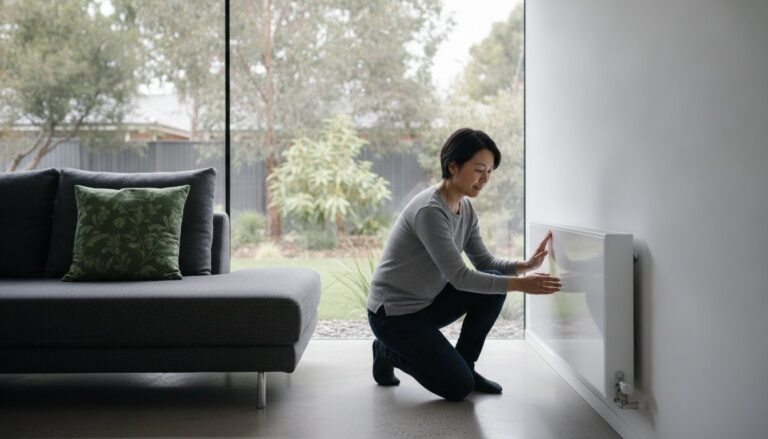
Radiant heat works like the sun. It warms objects and people directly rather than just the air between them. Convective systems, such as split systems, often lead to “dry eye” syndrome and a stuffy atmosphere because they strip moisture from the room. In Melbourne’s historic suburbs, from Carlton to Camberwell, this gentle radiant warmth is also essential for preserving the integrity of antique furniture and delicate lath-and-plaster walls. These features can often crack under the stress of the rapid temperature swings caused by traditional ducted heating.
Energy Efficiency in the 2026 Landscape
As we move toward the 2027 gas transition, energy efficiency is a top priority for every homeowner. Modern radiators are designed to operate effectively at lower water temperatures, which is a critical requirement for 2026. This is why 2026 is the year of the heat pump hydronic heating system. High-quality steel panels and cast iron units offer superior heat retention. This means your home stays warm long after the heat source has cycled off. By choosing panels with high thermal mass, you reduce the strain on your heat pump, leading to lower running costs and a much longer equipment lifespan.
Top Hydronic Radiator Categories: From Standard Steel to Designer Luxury
Melbourne’s diverse housing stock, ranging from heritage terraces in Fitzroy to sleek townhouses in Richmond, requires a versatile approach to heating. Selecting the best hydronic panel radiators Melbourne has available means matching the material and form factor to your room’s specific thermal demands. While every home is unique, most installations fall into three primary categories: standard steel, designer solutions, and traditional cast iron. Each serves a different purpose, whether you’re looking for a discreet workhorse or a bold architectural statement.
Standard Steel Panels (The DeLonghi Standard)
Standard steel radiators remain the most popular choice for Melbourne renovations due to their incredible reliability and high heat output. Brands like DeLonghi Radel are the industry benchmark, often coming with a 30-year warranty that provides long-term peace of mind. You can opt for the classic ribbed design, which is engineered to maximize surface area for heat transfer. If you prefer a more discreet look, “Linear” flat-front panels provide a smooth, modern finish that blends naturally into contemporary interiors. These panels are specifically treated for high corrosion resistance, ensuring they handle the local water conditions without issue for decades.
Designer and Decorative Solutions
Modern heating doesn’t have to be hidden away. Designer radiators are increasingly used as architectural features or even functional wall art. For homeowners with limited wall space, vertical and slimline options utilize the height of a room to deliver powerful warmth without cluttering the floor plan. This is a game-changer for narrow townhouses or open-plan kitchens where every centimeter of horizontal space counts. Many of these units offer full color customization, allowing you to match the radiator to your specific interior palette. In wet areas, stylish hydronic towel rails provide the perfect blend of bathroom luxury and practical moisture control.
Traditional Cast Iron
Ensuring you choose the right category is essential for the overall energy efficiency of heating and cooling in your home. If you’re unsure which style best fits your floor plan, it’s a good idea to speak with a local design expert who can calculate the precise heat requirements for each room and ensure your system is perfectly balanced.
Choosing the Right Radiator for Your Melbourne Architectural Style
Melbourne is a city defined by its architectural heritage and its bold future. From the ornate details of a Malvern Victorian to the brutalist lines of a Collingwood warehouse conversion, the best hydronic panel radiators Melbourne homeowners choose must respect the building’s soul. A radiator that looks perfect in a minimalist apartment might feel out of place in a Federation home, and more importantly, it might not perform as required. Selecting the right unit involves understanding the thermal physics of your specific floor plan and ceiling height.
Heating Period Homes Effectively
Older homes present unique thermal challenges that modern split systems simply can’t handle. High ceilings often lead to “heat stratification,” a process where warm air pools at the ceiling while your feet stay cold. Radiant panels solve this by warming the room’s occupants and surfaces directly. To combat the drafts common in heritage timber-frame windows, we recommend positioning panels directly beneath the glass. This creates a thermal curtain that neutralizes cold downdrafts before they reach the center of the room. When sizing these units, we account for the lower insulation values of original brickwork, ensuring the output is sufficient for the most bitter Melbourne nights.
Modern Minimalism and Hidden Heating
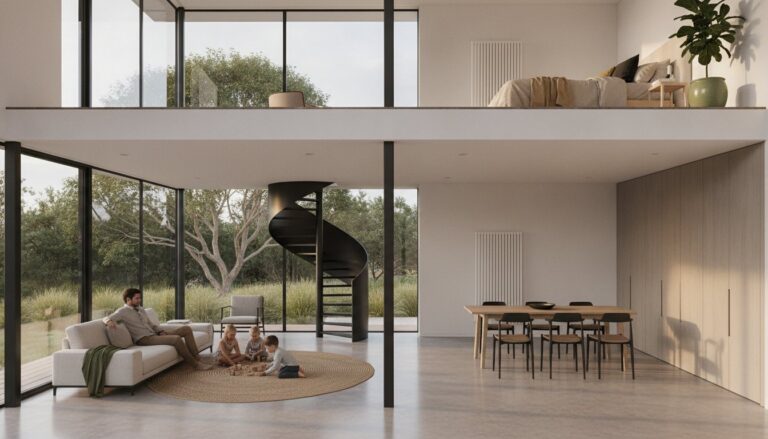
Contemporary design often prioritizes clean lines and unobstructed views. If you have floor-to-ceiling glass, standard wall-mounted panels might not be an option. Vertical radiators can be tucked into narrow wall sections between windows, providing high output without blocking the light. For a truly seamless look, trench heating can be installed into the floor along the perimeter of the room. This provides a discreet barrier against the cold while keeping the walls completely clear. For the ultimate in invisible comfort, many owners of new builds prefer underfloor heating in Melbourne, which eliminates the need for any visible units while providing the same healthy, radiant warmth.
Industrial warehouse conversions require a different strategy altogether. These spaces often feature raw concrete and exposed brick, which act as huge heat sinks. These environments require high thermal output due to their sheer volume and lack of traditional insulation. Raw metal finishes on steel panels or oversized cast iron units complement the industrial aesthetic while providing the intense warmth needed to make these cavernous spaces feel like a home. By matching the radiator’s material and size to the specific architectural era, you ensure that your heating system is an asset to your home’s design rather than a compromise.
Technical Performance: Sizing and Heat Pump Compatibility
While the visual appeal of your heating system is vital, its technical performance determines your comfort during a biting Melbourne winter. As we move through 2026, the criteria for the best hydronic panel radiators Melbourne residents choose have shifted significantly. With the Victorian government’s 2027 mandatory transition away from residential gas fast approaching, your choice of radiator must be compatible with future-proof technology. This means looking beyond the aesthetic and focusing on the thermal physics of low-temperature heating.
The most significant shift in the industry is why 2026 is the year of the heat pump hydronic heating system. Unlike traditional gas boilers that circulate water at 70°C or higher, modern electric heat pumps are most efficient when operating at lower temperatures, typically between 45°C and 55°C. To achieve the same level of warmth in your living room, the radiators must have a larger surface area to emit enough heat at these lower temperatures. This process, known as “oversizing,” is a non-negotiable step for anyone looking to future-proof their home against rising energy costs.
The Gas to Electric Transition
Selecting panels with increased surface area doesn’t mean your home has to be cluttered with massive units. High-efficiency double or triple convector panels provide the necessary output while maintaining a relatively slim profile. By installing these panels now, even if you are currently using a gas boiler, you ensure that your home is ready for a seamless transition to a heat pump later. This foresight prevents the need for a costly radiator replacement when you eventually make the switch to an all-electric system. A professional heat-loss calculation, measuring the exact Watts or BTUs required for every individual room, is the only way to guarantee your system remains efficient and comfortable.
Smart Controls and Zonation
Efficiency isn’t just about the radiator itself; it’s about how you control it. Thermostatic Radiator Valves (TRVs) allow for precise room-by-room temperature management. You can keep your bedrooms at a cool, healthy 18°C for sleeping while maintaining a cozy 21°C in the lounge. This zonation prevents energy waste in unoccupied spaces and significantly reduces running costs. To keep these sophisticated controls functioning perfectly, regular system servicing is essential to ensure valves never seize and the water chemistry remains balanced. If you’re ready to design a system that meets the 2026 standards, contact our expert team today for a technical consultation.
Expert Installation: Why Design Matters as Much as the Product
Selecting the best hydronic panel radiators Melbourne has to offer is only the first step toward a comfortable home. Even the highest-quality European panels will underperform if the system behind them isn’t engineered correctly. At Melbourne Hydronic Heating, we bring over 30 years of local design experience to every project. We understand that a truly premium heating solution is a marriage of superior components and precise hydraulic design. It’s the difference between a system that simply works and one that provides silent, perfectly balanced warmth for decades.
Aesthetics are a major consideration when installing exposed radiator panels. Professional pipework should be discreet, straight, and integrated into your home’s architecture with minimal disruption. Whether we are working on a new build or a complex retrofit in a heritage terrace, our installers prioritize neatness. Beyond the look, the technical “balancing” of the system is what ensures every radiator in your house heats up simultaneously. Without professional balancing, you may find that the panels closest to the heat source are scorching while those at the end of the line remain lukewarm.
Protecting your investment requires more than just a great initial setup. Over time, internal corrosion and sludge can build up within any hydronic system, reducing efficiency and potentially damaging your heat pump or boiler. We recommend periodic power flushing to clear these contaminants. This specialized cleaning process restores the system to its original efficiency, ensuring your panels continue to deliver maximum thermal output while keeping your running costs as low as possible.
The Design and Consultation Process
Our process begins with a detailed assessment of your home’s unique thermal envelope. We don’t just count rooms; we analyze your insulation levels, the type of glazing you have, and the orientation of each living space toward the sun. This data allows us to create custom pipework solutions that solve the challenges of retrofitting into existing Melbourne homes. A well-designed system is also a quiet one. By calculating the correct flow rates and allowing for thermal expansion, we eliminate the “ticking” or “banging” noises often associated with poorly installed hydronic systems.
Long-Term Reliability and Support
We are proud to provide dedicated local support across both Melbourne and Geelong. Our commitment to quality means we only supply and install panels with industry-leading warranties, such as the 30-year guarantee offered on our steel radiator range. You aren’t just buying a product; you’re gaining a long-term partner in your home’s comfort. If you want to ensure your heating system is future-proof and perfectly tailored to your lifestyle, request a professional design consultation for your hydronic system today.
Future-Proof Your Home’s Comfort Today
Selecting the best hydronic panel radiators Melbourne has to offer is about much more than just picking a product from a catalog. It involves understanding the synergy between your home’s unique architecture and the upcoming 2027 transition to all-electric heating. Whether you’re restoring a heritage Victorian or designing a minimalist contemporary space, the right radiator choice ensures a healthier, silent living environment that adds tangible property value. By focusing on heat pump compatibility and precise technical sizing now, you protect your home from rising energy costs while enjoying a premium level of warmth that forced-air systems simply cannot match.
As a family-owned and operated local business with over 30 years of Melbourne-based experience, we take pride in our role as your comfort consultants. We are specialists in both traditional gas boiler replacements and modern heat pump systems, ensuring your installation is engineered for peak efficiency. Our team is dedicated to providing the technical precision and aesthetic care your home deserves. Ready to transform your living environment with a system designed for the future? Book a Design Consultation with Melbourne’s Hydronic Experts and discover the difference that professional local knowledge makes to your home’s wellbeing.
Frequently Asked Questions
Are hydronic radiator panels more efficient than ducted heating?
Yes, hydronic panels are significantly more efficient because they eliminate the energy losses commonly found in uninsulated or leaky ductwork. While ducted systems heat air that quickly rises to the ceiling, radiant panels warm objects and people directly. This creates a more consistent temperature at a lower energy cost, as the system doesn’t need to work as hard to maintain your desired comfort level.
Can I mix different styles of radiators in the same house?
You can absolutely mix different radiator styles to suit the specific architectural needs of each room. Many of our clients choose ornate cast iron units for their heritage living areas while opting for sleek, horizontal steel panels in modern extensions. As long as the system is professionally balanced during installation, mixing styles will not have any negative impact on your heating performance.
Do hydronic radiators get too hot to touch for children or pets?
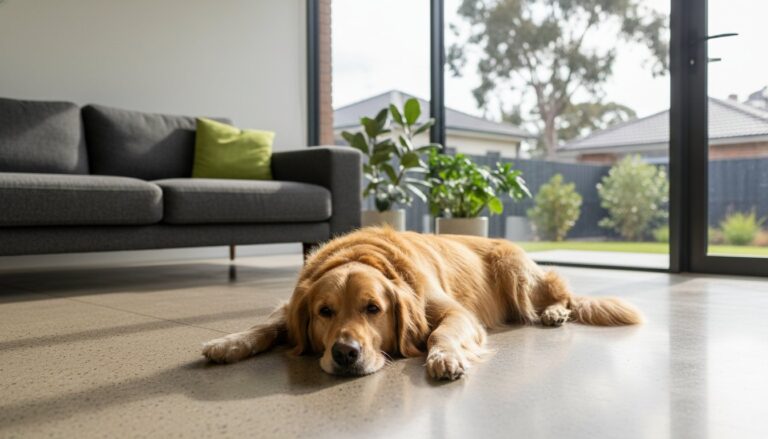
Hydronic radiators become warm to the touch, but they are far safer than the intense, exposed heat of wood stoves or electric bar heaters. The surface temperature is strictly controlled by the water temperature within the system. For households with young children, you can use Thermostatic Radiator Valves (TRVs) to precisely limit the temperature of panels in nurseries or playrooms for added peace of mind.
How much wall space do I need for a standard panel radiator?
The required wall space depends on the thermal needs of your room, but a typical horizontal panel usually ranges between 600mm and 1200mm in length. If your floor plan is tight, vertical radiators are a brilliant alternative that utilize the height of the room instead of its width. This flexibility is essential when sourcing the best hydronic panel radiators Melbourne townhouses need to maintain open, airy living spaces.
Can I use hydronic radiators with an electric heat pump instead of a gas boiler?
Yes, modern hydronic radiators are perfectly compatible with electric heat pumps, which is a major trend in 2026. Because heat pumps operate at lower water temperatures, we simply “oversize” the panels to ensure they have enough surface area to heat the room effectively. This transition is a smart way to future-proof your home ahead of the mandatory 2027 residential gas transition in Victoria.
How often do hydronic radiator panels need to be serviced?
We recommend a professional service once every twelve months, ideally before the first cold snap of winter. Regular maintenance includes checking the system pressure, testing the water chemistry to prevent internal corrosion, and ensuring that all valves move freely. This annual check-up protects your investment and ensures the system operates at peak efficiency when you need it most.
What is the lifespan of a high-quality steel or cast iron radiator?
High-quality steel radiators, such as DeLonghi Radel panels, often come with 30-year warranties and can last even longer with proper water treatment. Cast iron radiators are even more durable, frequently lasting 50 years or more. Because these units have no moving parts, they are incredibly reliable and rarely need replacement if the system’s water quality is maintained.
Is it possible to retrofit hydronic panels into an older Melbourne home?
Retrofitting is a specialty of ours, and it is entirely possible to install a full system into an existing period home. We can run the necessary pipework through floor joists, ceiling cavities, or behind decorative bulkheads to ensure minimal disruption to your heritage features. It is often the most effective way to eliminate drafts and cold spots in Melbourne’s beautiful but traditionally chilly older houses.