
Hydronic Floor Heating in Melbourne: The 2026 Homeowner’s Guide to Comfort and Efficiency
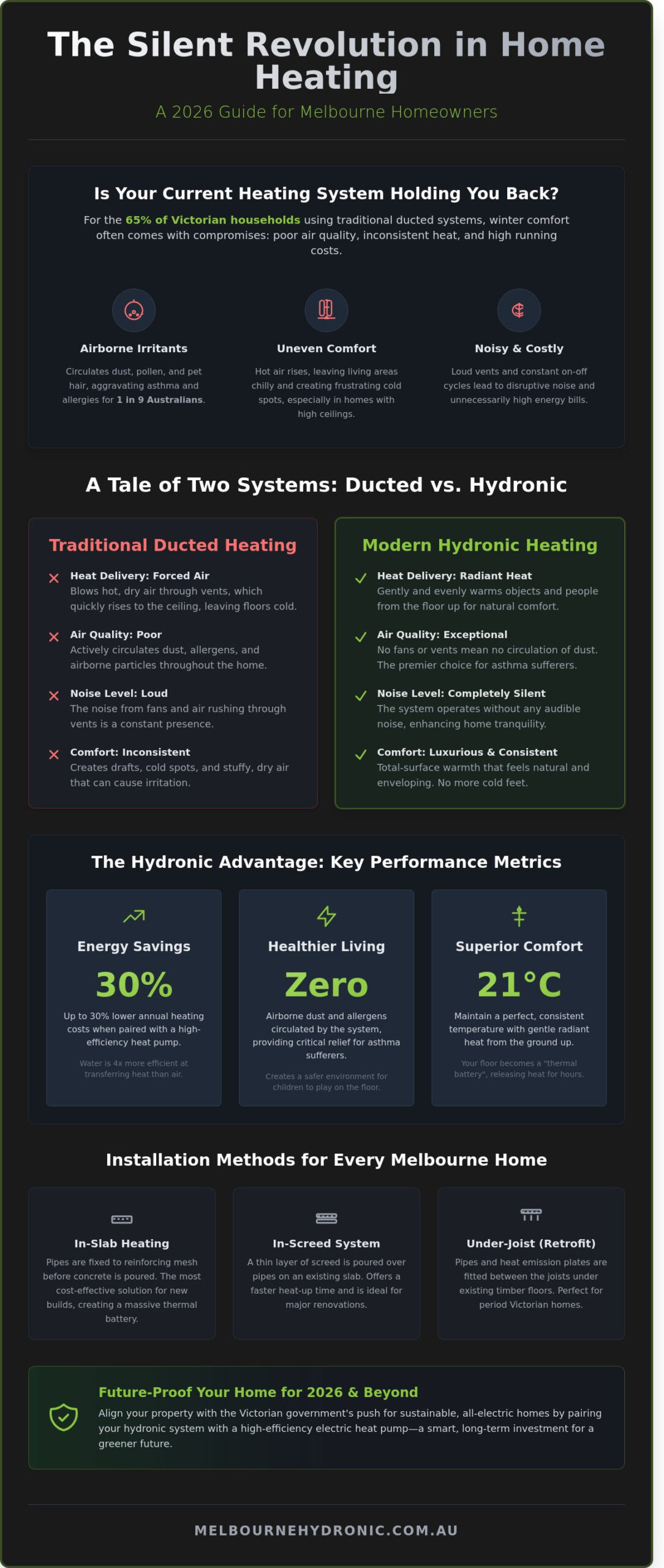
What if the system you rely on for warmth is actually circulating dust and allergens throughout your living room every 15 minutes? Most Melbourne homeowners accept that winter means dry eyes, noisy vents, and skyrocketing gas bills as a necessary trade-off for comfort. You’ve likely noticed how traditional ducted systems struggle to heat high-ceiling Victorian terraces, making hydronic floor heating melbourne a vital upgrade for those seeking consistent, radiant warmth. It’s a frustrating reality for the 65% of Victorian households still relying on aging gas infrastructure that fails to reach every corner of the home.
We believe your home should be a sanctuary, not a source of respiratory irritation. By switching to a water-based system, you can eliminate the airborne particles that aggravate asthma while reducing your annual heating costs by up to 30% through high-efficiency heat pump integration. You’ll finally enjoy a silent, dust-free environment with consistent warmth that radiates from the ground up, providing that luxurious barefoot comfort even on the frostiest July mornings.
This 2026 guide explains how to transition your home to this healthy, energy-efficient solution. We will cover the latest European technology, installation costs in the current A$ market, and the step-by-step process of retrofitting Victorian properties for a sustainable future.
Key Takeaways
- Experience the health benefits of a dust-free, silent heating system that utilizes thermal mass to maintain consistent luxury throughout Melbourne’s fluctuating winter days.
- Identify the ideal installation technique—In-Slab, In-Screed, or Under-Joist—tailored specifically to the structural requirements of both period Victorian and contemporary homes.
- Future-proof your property by exploring high-efficiency electric heat pumps, aligning your home with the 2026 Victorian government push toward sustainable, all-electric residential developments.
- Master the logistics of hydronic floor heating melbourne projects, including professional heat load calculations and essential maintenance like power flushing to protect your 25-year investment.
Why Hydronic Floor Heating is Melbourne’s Gold Standard for Comfort
Melbourne winters are notoriously unpredictable. Temperatures often swing from a mild 15 degrees to a biting 3 degrees in a single afternoon. To combat this, hydronic floor heating melbourne residents rely on utilizes a closed-loop system of pipes buried beneath the floor surface. Unlike traditional heaters that warm the air, this system uses heated water to turn your entire floor into a radiant heat source. It creates a consistent envelope of warmth that starts from the ground up, ensuring your feet stay warm while the rest of the room remains perfectly tempered.
The secret to its success in the Victorian climate lies in thermal mass. Your floor slab effectively becomes a thermal battery. It absorbs heat from the water-filled pipes and releases it slowly over several hours. This prevents the “on-off” cycling common with split systems, which often leads to cold spots and high energy bills. In older Melbourne suburbs where drafty heritage homes are common, this steady radiation is the only way to achieve true thermal comfort without constant heat loss.
Contrast this with the ducted heating systems found in many 1970s and 80s builds. Those systems rely on scorched air that rises immediately to the ceiling, leaving your living zone chilly. Hydronic systems provide a silent, invisible luxury that integrates seamlessly into the architecture of a modern home.
The Health Connection: Asthma and Allergy Relief
Melbourne is often cited as a challenging environment for respiratory health due to high seasonal pollen counts. Traditional forced-air systems are the primary culprits for circulating dust, pet hair, and allergens throughout a home. Because hydronic systems don’t use fans or vents, they completely eliminate the “dust cycle.” There’s no air movement to stir up irritants, making it the premier choice for the 1 in 9 Australians living with asthma. For families in suburbs like Malvern or Northcote with young children, a dust-free floor provides a safe, hygienic environment for kids to play and crawl without exposure to concentrated allergens.
Energy Efficiency in the Victorian Climate
Water is a superior medium for heat transfer, carrying energy four times more efficiently than air. This physical advantage translates to lower running costs for your household. You can achieve a comfortable 21-degree internal temperature using significantly less energy than a gas-ducted alternative. Modern systems allow for sophisticated zoning, which is essential for the large, open-plan extensions popular in Bayside and Cheltenham. Instead of heating the entire house, you can direct warmth only to the rooms you’re using. This targeted approach can reduce energy consumption by 25% to 30%. As we move into 2026, these efficiency gains aren’t just about comfort; they’re a critical factor in maintaining the premium market value of your property.
Installation Methods for Every Melbourne Home Type
Selecting the right installation method is the most critical decision in your heating journey. Melbourne’s housing stock varies from 19th-century Victorian terraces in Fitzroy to ultra-modern concrete builds in the Mornington Peninsula. Each architectural style requires a specific technical approach to ensure the system delivers that signature dust-free, silent warmth. The manifold acts as the “brain” of your hydronic floor heating melbourne system, sitting in a central cupboard or cavity. It precisely regulates the flow of warm water to different zones, allowing you to keep bedrooms cooler while maintaining a toasty 22°C in the main living areas.
Performance depends heavily on what happens before the pipes are laid. We prioritise high-performance insulation to prevent heat from escaping into the ground. Using 20mm edge insulation and reflective foil backing is standard practice in 2026. Without these barriers, you can lose up to 15% of your thermal energy to the external environment. Proper insulation ensures the energy moves upward, turning your floor into a high-efficiency radiator.
In-Slab Heating for New Builds
This method involves tying heavy-duty PEX piping directly to the steel reinforcing mesh before the concrete pour. It’s the most cost-effective solution for new architectural builds. The concrete slab acts as a massive thermal battery, absorbing heat and releasing it slowly over 8 to 12 hours. This extreme heat retention is perfect for Melbourne’s coastal suburbs, where overnight temperatures often plummet. Because the thermal mass is so large, the system provides a consistent base temperature that remains stable even if a door is briefly left open.
In-Screed and Retrofit Solutions
For renovations in established suburbs like Camberwell or Brighton, “thin-bed” screed systems are the preferred choice. Instead of a thick structural slab, we lay pipes over the existing floor and cover them with a 30mm to 50mm sand and cement screed. These systems offer a 40% faster response time than traditional in-slab setups. You’ll feel the floor warming up in approximately 45 to 60 minutes, which is ideal for Melbourne’s volatile “four seasons in one day” weather patterns. If you’re currently planning a kitchen or bathroom upgrade, you can consult with our technicians to determine if your existing floor levels can accommodate a screed retrofit.
For homes with heritage timber floors, we utilise under-joist installations. This method uses aluminium heat transfer plates fitted between the floor joists. It allows homeowners to enjoy the luxury of hydronic floor heating melbourne without removing original floorboards. This approach is particularly effective in drafty period homes where traditional forced-air heating often fails to provide a healthy, allergen-friendly environment. For a comprehensive overview of all installation options available to Melbourne homeowners, our guide to underfloor heating in Melbourne covers every method in detail to help you make the right choice for your property.
- In-Slab: Best for new builds; maximum heat retention; 8-12 hour thermal lag.
- In-Screed: Perfect for renovations; faster 45-minute response time; adds minimal floor height.
- Under-Joist: Ideal for heritage homes with timber floors; no need to lift existing floorboards.
The Shift to Electric: Heat Pumps vs. Gas Boilers in 2026
The Victorian Government’s Gas Substitution Roadmap has fundamentally changed how we heat our homes. Since the 2024 ban on new gas connections for residential developments, the transition toward all-electric living has reached a tipping point. By 2026, homeowners investing in hydronic floor heating melbourne are increasingly looking at heat pumps as their primary energy source. This shift isn’t just about government compliance; it’s about future-proofing your property investment against rising gas tariffs and taking full advantage of Victoria’s greening electricity grid. To understand how different hydronic heating system options compare across heat pumps, condensing boilers, and designer radiators, our 2026 solutions guide breaks down the key differences for Melbourne homeowners.
Electric Heat Pumps: The Future of Victorian Heating
Air-to-water heat pumps represent the gold standard for efficiency in 2026. These systems function like a refrigerator in reverse, pulling ambient heat from the outside air to warm the water circulating under your floors. The technical advantage lies in the Coefficient of Performance (COP). While a standard electric plug-in heater has a COP of 1.0, a premium heat pump delivers a COP of 4.5 under typical Melbourne conditions. This means for every 1kW of electricity used, you get 4.5kW of heat energy back into your home.
When you integrate this technology with a 6.6kW solar PV system, you’re essentially heating your slab for free during daylight hours. We’ve documented local households that reduced their annual energy bills by over A$1,350 after switching from old gas units to solar-boosted heat pumps. Modern external fan units are engineered for silence, operating at levels as low as 45 dB(A). This ensures your home remains a peaceful, dust-free sanctuary without any intrusive mechanical noise.
High-Efficiency Gas Boilers
Despite the electric push, high-efficiency gas boilers remain a powerhouse for specific Melbourne contexts. In established suburbs like Prahran or Fitzroy, where heritage overlays often prevent solar installations, a condensing gas boiler is the most viable path to premium comfort. These modern units utilize secondary heat exchangers to reclaim energy that older systems simply vented out the flue. They achieve thermal efficiency ratings of over 92%, making them far superior to the cast-iron boilers installed in the early 2000s.
- Compact Design: Modern boilers are roughly the size of a kitchen cupboard, perfect for narrow terrace houses.
- Retrofit Ready: If your current hydronic floor heating melbourne system is over 15 years old, a simple boiler replacement can cut your gas consumption by 25% immediately.
- High Demand: Gas provides rapid recovery times for large, multi-story homes with high peak heating requirements.
We focus on these sensitive retrofits to ensure your existing pipework continues to deliver the allergen-friendly warmth your family relies on. Whether you choose the sustainability of a heat pump or the proven reliability of a condensing boiler, the goal remains a silent, healthy, and perfectly tempered home.
Planning Your Project: Costs, Timelines, and Expectations
Successfully installing hydronic floor heating melbourne homes require requires more than just laying pipes in a slab. It demands a methodical approach that aligns with 2026 building standards and local Victorian climate data. A well-planned project ensures your system operates at peak efficiency from the first frost in May through the end of a chilly October.
- Step 1: Professional heat load calculation. We don’t guess the size of your boiler or heat pump. Our team performs a room-by-room analysis based on your specific Melbourne floor plan, accounting for window orientations and insulation R-values to prevent a 15% energy loss caused by over-engineered systems.
- Step 2: Selecting floor finishes. You need to decide on your final surfaces early. Whether you choose polished concrete or engineered oak, the choice dictates the spacing of the PEX piping and the required flow temperatures.
- Step 3: Site coordination. The “rough-in” stage is a 48-hour window that occurs after the steel reinforcement is laid but before the concrete pour. We work directly with your builder and plumber to ensure every manifold is positioned for maximum hydraulic balance.
- Step 4: Pressure testing and commissioning. Before any concrete is poured, we pressurize the system to 600 kPa (6 bar). This exceeds standard operating pressures to guarantee a leak-free lifespan for the next 50 years.
Floor Finishes and Thermal Conductivity
Tiles and natural stone remain the “kings” of hydronic heating because they possess high thermal conductivity and excellent thermal mass. These materials absorb heat quickly and radiate it long after the system cycles off. If you prefer engineered timber, ensure the product is rated for a surface temperature of 27°C; suppliers like Greenhill Timbers can advise on suitable options. You’ll also need specialized low-tog underlays to prevent the floor from trapping heat. Avoid thick, heavy carpets with a thermal resistance (R-value) higher than 1.5. These act as an unwanted insulator, forcing your hydronic floor heating melbourne system to work 20% harder to reach your desired room temperature.
What to Look for in a Melbourne Installer
Melbourne’s unique weather patterns require an installer who understands local conditions. Look for a team with 30+ years of local Victorian experience and a valid Victorian Building Authority (VBA) license. Ask for specific hydronic design qualifications rather than a general plumbing background. For homes with existing upper levels where slab heating isn’t an option, ask about hybrid systems. You can learn more about combining floor coils with radiators in our Hydronic Heating Panels Melbourne guide to achieve total home comfort.
Ready to start your journey toward a healthier, warmer home? You can request a detailed quote and heat load assessment from our expert design team today.
Maintenance and Longevity: Protecting Your Investment
Investing in hydronic floor heating melbourne homeowners often find, is a decision that pays dividends for decades. These systems are famous for lasting 25 to 30 years. This longevity stems from the lack of moving parts within the floor itself. While a standard reverse-cycle air conditioner might struggle after 12 years, your floor coils remain encased in slab or screed, protected from environmental wear and tear. This durability makes it one of the most stable assets you can add to a Victorian property.
Annual servicing is the heartbeat of a reliable system. Whether you use a high-efficiency condensing gas boiler or a modern electric heat pump, a yearly check-up ensures peak performance. Our technicians inspect pressure levels, test water pH, and verify that all mechanical seals are intact. Melbourne Hydronic Heating acts as your long-term service partner, providing the local expertise needed to navigate the specific water conditions and climate demands of the region. Regular maintenance doesn’t just prevent breakdowns; it keeps your manufacturer warranties valid and your energy consumption low.
The Importance of Power Flushing
Even the best systems face the “Hidden Cost of Sludge.” Over a decade, microscopic metallic debris known as magnetite can accumulate in your floor coils. This sludge restricts water flow and forces your boiler to work 15% harder to achieve the same temperature. A professional power flush uses high-velocity water and specialized cleaning agents to purge these deposits. We recommend this deep clean every 8 to 10 years to restore your system to its original factory efficiency and prevent cold spots from developing in your living areas.
Smart Controls and Thermostats
By 2026, the technology managing your home’s warmth has evolved significantly. Modern smart thermostats now offer sophisticated room-by-room zoning. This allows you to heat the nursery to 21 degrees while keeping the guest room at a cost-saving 16 degrees. These units utilize “Adaptive Learning” to study your home’s thermal mass. They calculate exactly when to start the heating cycle so your floors are perfectly warm the moment you wake up.
This precision can reduce monthly energy bills by as much as 22% compared to old-fashioned manual dials. You gain total control via your smartphone, ensuring you never waste energy heating an empty house. It’s the ultimate marriage of technical precision and lifestyle convenience. Book a consultation with our Melbourne experts today to secure your home’s comfort and ensure your hydronic floor heating melbourne system is optimized for the years ahead.
Secure Your Home’s Comfort for the Next Decade
Investing in your home’s climate isn’t just about surviving the next Victorian winter; it’s about future-proofing your lifestyle. By 2026, the transition to high-efficiency electric heat pumps has become the definitive choice for sustainable living. You’re choosing a system that eliminates cold spots and provides a silent, dust-free environment, which is vital for the 2.7 million Australians living with asthma. Whether you’re retrofitting a period cottage or planning a modern new build, hydronic floor heating melbourne offers a level of silent luxury that traditional forced-air systems can’t match.
Melbourne Hydronic Heating brings over 30 years of local experience to every project. As a family-owned and operated Victorian business, we specialize in energy-efficient heat pump integration to ensure your running costs stay low while your comfort remains high. You don’t have to navigate the technical shift to electric heating alone. Our team provides the precise engineering needed to protect your investment for its 25 year expected lifespan.
Ready to transform your living space into a healthy, warm sanctuary? Request a Custom Hydronic Floor Heating Quote today and see why we’re the city’s gold standard. We look forward to bringing that premium warmth to your home.
Frequently Asked Questions
How much does hydronic floor heating cost to install in Melbourne?
Installation costs for hydronic floor heating typically range from A$100 to A$150 per square metre for new builds. For a standard 200-square-metre Melbourne home, you can expect an investment between A$20,000 and A$30,000. This price includes the energy source, manifold, and high-quality pipework. Costs vary based on whether you choose a high-efficiency electric heat pump or a traditional condensing gas boiler.
Can I install hydronic floor heating under timber floors?
You can definitely install hydronic heating under timber floors using specialized “dry” installation methods or thin-profile screeds. It’s essential to use engineered timber or specific hardwoods with a moisture content between 7% and 11% to ensure stability. We use aluminum heat-diffuser plates to spread the warmth evenly. This prevents hot spots and protects your floor’s integrity while providing luxurious, silent comfort.
Is electric or gas hydronic heating better for a Melbourne home?
Electric heat pumps are now the superior choice for Melbourne homeowners because they offer 300% to 400% efficiency compared to gas. With the Victorian government’s focus on electrification, moving away from gas reduces your home’s carbon footprint by up to 60%. If you have a solar array, you can run your system for nearly zero cost during daylight hours. This makes electric systems a future-proof investment.
How long does it take for hydronic floor heating to warm up?
An in-slab system usually takes 12 to 24 hours to reach the target temperature, whereas modern in-screed systems warm up in just 2 to 4 hours. Because hydronic floor heating melbourne relies on thermal mass, it’s designed to stay on throughout the colder months. You don’t turn it on and off like a split system. Instead, your smart thermostat maintains a consistent, gentle base temperature all winter long.
Does hydronic floor heating require a lot of maintenance?
Hydronic systems are incredibly reliable and only require a professional service every 12 to 24 months. During this check, a technician ensures the water pH levels are balanced and the system pressure is optimal. Most high-quality European components we install have a lifespan of 25 years or more. It’s a “set and forget” solution that offers much greater longevity than standard ducted heating units.
Can I retrofit hydronic floor heating into an existing Melbourne house?
You can retrofit hydronic systems using low-profile panels that add as little as 15mm to your existing floor height. This is a popular choice for Melbourne renovations where digging up a concrete slab isn’t possible. If floor heights are a major constraint, we often install elegant wall-mounted radiators. These connect to the same energy-efficient boiler and provide the same dust-free, radiant warmth throughout your home. For comprehensive heating solutions that include both floor and wall options, consider exploring central heating installation in Melbourne to achieve whole-home comfort.
Is hydronic floor heating safe for children and pets?
Hydronic floor heating is the safest heating method available because it eliminates hot surfaces, exposed flames, and sharp metal corners. The floor surface stays at a comfortable 25 to 28 degrees Celsius, which is perfect for toddlers crawling or pets napping. There’s no risk of burns or fire hazards. It provides a consistent heat that makes your home’s floor the most comfortable place to play during a cold July morning.
How does hydronic floor heating help with asthma and allergies?
Hydronic heating improves indoor air quality by eliminating the fans and vents that circulate dust, pollen, and pet dander. By choosing hydronic floor heating melbourne, you reduce airborne allergens in your home by up to 80%. This creates a completely “pormentes” (dust-free) environment. It’s the gold standard for the 1 in 9 Australians living with asthma who need a clean, stable, and non-drying heat source. For a deeper dive into how underfloor heating in Melbourne can transform your home’s air quality and comfort, our complete 2026 homeowner’s guide walks you through every consideration.