Hydronic Heating for Wine Cellars: 2026 Melbourne Guide
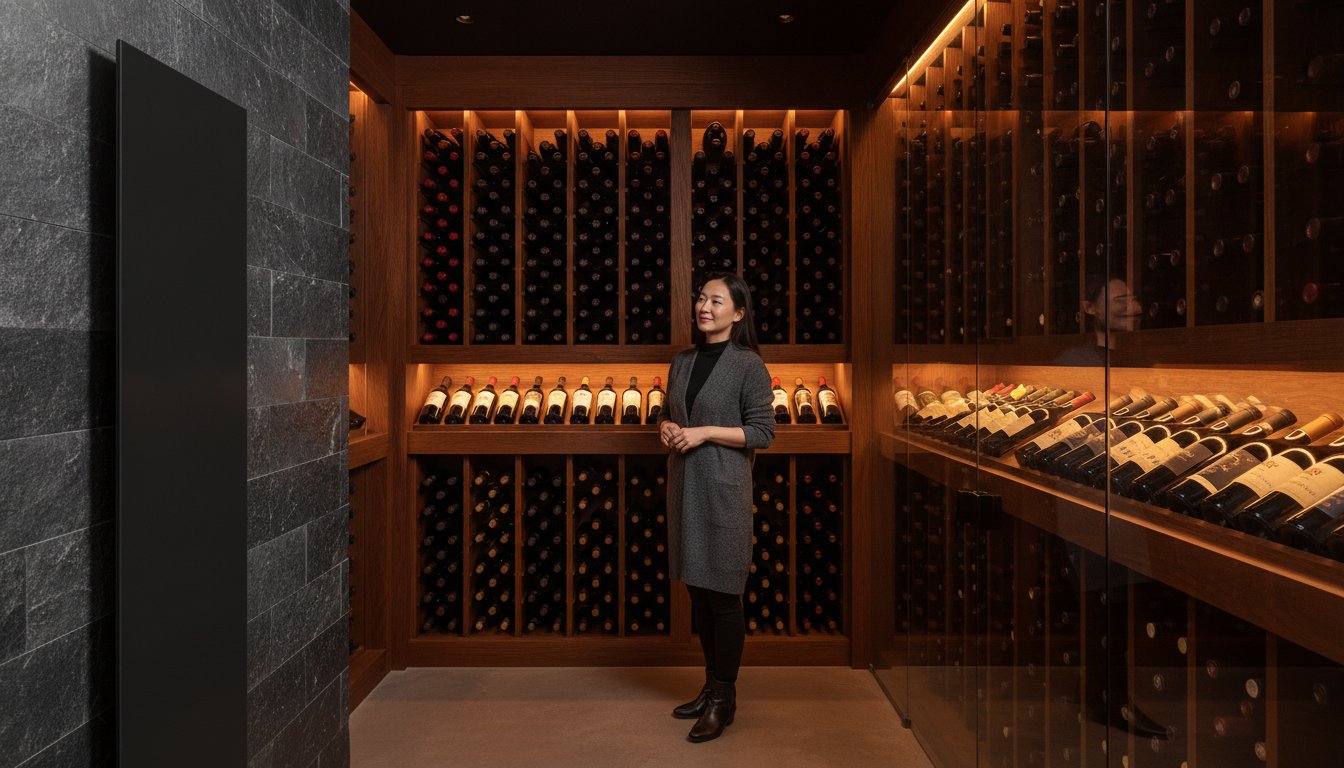
Imagine the frustration of finally uncorking a rare Victorian vintage, only to discover the wine has aged prematurely due to the subtle, constant vibrations of a standard cooling unit. For serious collectors in Melbourne, the fear of temperature fluctuations and dry air damaging expensive corks is a constant concern. You want a sanctuary for your bottles that mimics the steady, silent conditions of a traditional limestone cave.
Implementing hydronic heating for wine cellars provides the precise, vibration-free temperature stability essential for protecting your premium wine investment. By using liquid to transfer thermal energy, these systems eliminate the harsh air movement and mechanical hum that can disturb delicate sediment. In this 2026 guide, we’ll explain how you can achieve a stable 12-14°C environment year-round while benefiting from the energy efficiency of modern electric heat pumps. You’ll learn why this silent, “set and forget” luxury upgrade is the gold standard for local connoisseurs who refuse to compromise on professional climate management.
Key Takeaways
- Master the science of humidity management and learn how to prevent the damaging liquid expansion that occurs when cellar temperatures fluctuate outside the ideal 60-70% range.
- Understand how hydronic heating for wine cellars eliminates the “silent killer” of vibration, ensuring your wine’s sediment remains undisturbed during the aging process.
- Compare the aesthetic and performance benefits of underfloor systems, radiator panels, and fan coils to find the best thermal emitter for your specific bottle count.
- Discover the essential 5-step planning process for integrating hydronic climate control within the unique temperature and humidity challenges of the Melbourne and Geelong climate.
- See how 30 years of local technical expertise in Victoria translates into bespoke, energy-efficient systems that protect your wine investment with minimal maintenance.
The Science of Wine Preservation: Why Temperature Stability is Non-Negotiable
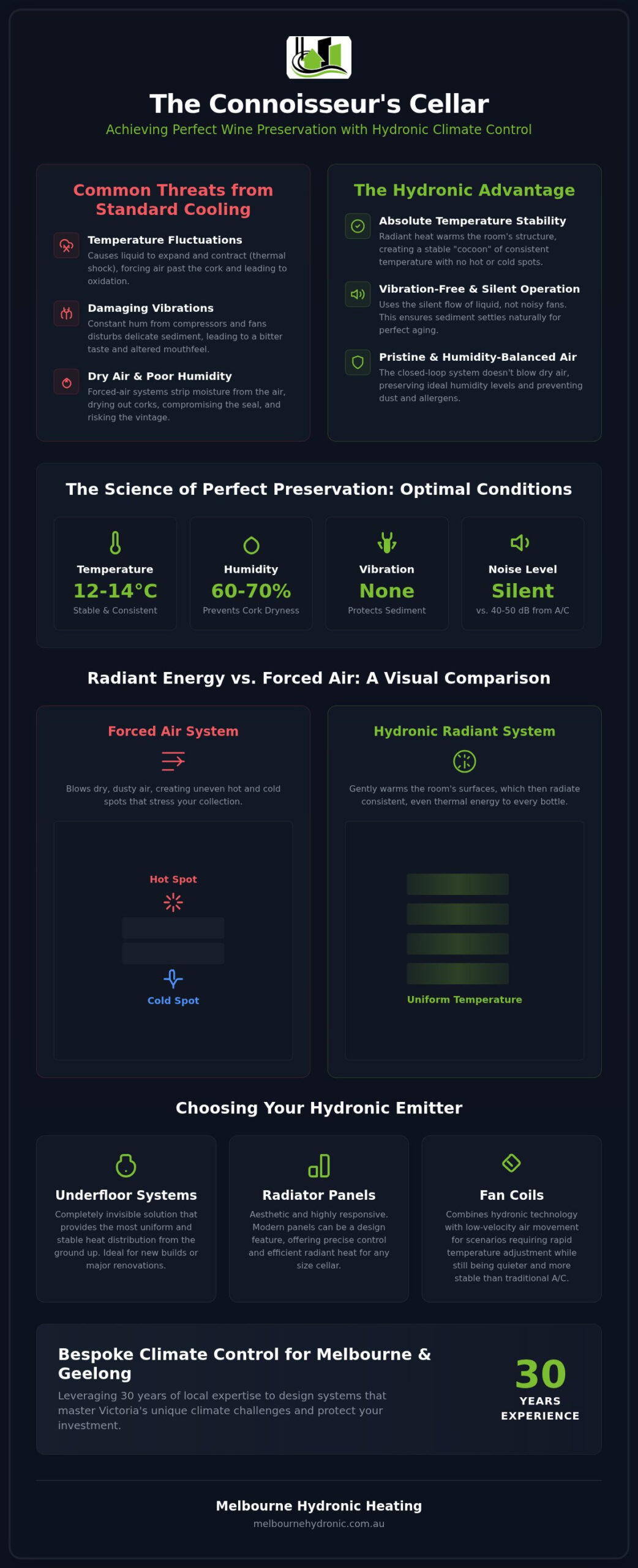
Protecting a premium vintage requires more than just a locked door; it demands a sophisticated understanding of The Science of Wine Preservation. For a cellar to function as an active aging environment, it must maintain a consistent baseline of 12-14°C with a relative humidity between 60% and 70%. Achieving this balance in Melbourne’s volatile climate is a technical challenge. While many focus on the average temperature, the true goal is absolute stability. Even minor deviations can trigger chemical changes that alter the wine’s intended trajectory.
When temperatures fluctuate rapidly, the liquid inside the bottle expands and contracts. This physical movement, often called thermal shock, acts like a slow-motion pump. It forces air past the cork, leading to oxidation and the eventual ruin of the wine’s complex structure. Traditional air conditioning systems often struggle in these specialized spaces. They rely on high-velocity fans that create “hot spots” near the ceiling and “cold spots” near the floor. This uneven distribution makes it impossible to achieve a true thermal baseline across your entire collection, leaving some bottles at risk while others remain stable.
The Danger of Fluctuations for Premium Vintages
Heat is the primary catalyst for unwanted chemical reactions. Small, frequent swings accelerate the aging process, stripping away the delicate floral or fruit notes of a fine Pinot Noir before they can fully develop. High heat also compromises cork integrity. When a cork dries out or loses its seal due to constant expansion, oxygen ingress becomes inevitable. Thermal lag is the specific duration required for the internal temperature of the wine to reach equilibrium with the surrounding ambient air.
Radiant Heat vs. Forced Air
Unlike split systems that blow dry, dusty air, hydronic heating operates on the principle of radiant energy. It warms the structural elements of the room, such as the floor or walls, which then emit a gentle, steady warmth. This method creates a “cocoon” of stability. Because there is no forced air movement, the humidity remains intact, preventing the dry air issues common with standard HVAC units. Using hydronic heating for wine cellars ensures that the thermal mass of the room itself helps regulate the climate, providing a level of precision that mechanical fans simply cannot match.
Hydronic Technology: The Secret to Vibration-Free Cellar Climate Control
Vibration is the silent killer of a sophisticated wine collection. While temperature is the headline concern, the mechanical movement caused by standard cooling units often goes ignored until the damage is done. Traditional split systems rely on high-velocity fans and powerful compressors that transmit micro-vibrations through the walls and shelving. These constant tremors prevent the delicate chemical reactions necessary for graceful aging. Hydronic heating for wine cellars solves this by using the silent flow of water rather than the turbulent movement of air. Because water is a far more efficient conductor of thermal energy than air, it can maintain a precise temperature baseline with significantly less mechanical effort.
A major advantage of this technology is its closed-loop design. Unlike ducted systems that constantly cycle air, dust, and allergens into the room, a hydronic system operates within a sealed pipe network. This creates a pristine, dust-free environment where bottle labels remain clean and corks are protected from airborne contaminants. It’s a cleaner, more stable way to manage a climate that requires 24/7 precision. If you are planning a renovation, consulting with a hydronic specialist ensures your cellar infrastructure supports these long-term preservation goals.
Protecting the Sediment: The Silent Advantage
Fine wines require absolute stillness to allow sediment to settle naturally. If a bottle is subjected to the hum of a standard air conditioner, the sediment remains in suspension, which can lead to a bitter taste and an altered mouthfeel upon pouring. Hydronic radiator panels or underfloor pipes operate in near-total silence. While a typical split system might produce 40 to 50 decibels of noise, a well-designed hydronic system is virtually imperceptible to the human ear. This silence doesn’t just benefit the wine; it enhances the luxury of the tasting experience, allowing you to enjoy your cellar without the background drone of industrial machinery. For those hosting high-end tastings or corporate events in such a space, NextGen AV provides the premium audio-visual solutions necessary to maintain a professional and immersive environment.
Electric Heat Pumps: The Modern Powerhouse
The transition toward sustainable, all-electric homes in Victoria has made electric heat pumps the preferred choice for cellar climate management. These units are incredibly efficient, often achieving a Coefficient of Performance (COP) of 3.0 or higher. This means they generate three units of thermal energy for every one unit of electricity consumed. When paired with a rooftop solar PV installation, your wine cellar can run on self-generated power, effectively creating a zero-carbon storage solution. This level of efficiency is vital for a system that must operate every hour of the year to protect your investment. Using hydronic heating for wine cellars powered by a heat pump provides the ultimate “set and forget” luxury for the modern Melbourne collector.
Comparing Hydronic Solutions: Underfloor, Radiators, or Fan Coils?
Selecting the right thermal emitter is a critical step in designing a functional cellar. While the heat source provides the energy, the delivery method determines how effectively that energy interacts with your collection. The choice often comes down to a balance between aesthetic preferences and the specific bottle count of the room. In Melbourne’s diverse residential architecture, from historic Toorak mansions to modern bayside homes, the physical footprint of the climate system must never compromise the storage capacity of the wine racking.
When implementing hydronic heating for wine cellars, you must consider whether the system needs to provide heating only or a dual-purpose climate control. While traditional radiators are excellent for maintaining warmth in colder months, premium cellars often require fan coils to manage cooling during Victoria’s heatwaves. Each solution offers distinct advantages depending on whether you are retrofitting an existing basement or starting a new build from scratch. Choosing the wrong emitter can lead to uneven thermal zones, which is why a bespoke design is non-negotiable for high-value investments.
Hydronic Underfloor Heating for Maximum Space
For collectors who want to maximize every square centimetre of wall space for custom racking, underfloor heating is the ultimate “invisible” solution. By embedding the pipework within the floor slab or screed, the entire floor surface becomes a low-temperature radiant emitter. This setup ensures a perfectly consistent floor-to-ceiling temperature gradient, eliminating the risk of stratification where heat pools at the top of the room. In 2026, updated building codes in Victoria emphasize thermal efficiency, so professional slab insulation is mandatory to prevent energy loss into the ground. This ensures your cellar remains a stable thermal sanctuary regardless of external conditions.
Fan Coils and Radiator Panels for Active Control
If your cellar requires rapid response times or dual heating and cooling capabilities, fan coils are the most versatile option. Unlike standard split systems, hydronic fan coils use chilled or heated water to temper the air, maintaining the high humidity levels that protect corks from drying out. For smaller, dedicated storage rooms, hydronic radiator panels offer a slimline alternative. These panels can be discreetly integrated behind custom joinery or placed in corners where they won’t interfere with bottle access. This design flexibility allows for hydronic heating for wine cellars to be tailored to any layout, providing targeted stabilization without the bulk of traditional HVAC hardware.
Planning Your Cellar Installation in Melbourne and Geelong
Planning a premium cellar in Victoria requires a localized approach. Melbourne’s biting winter chills and Geelong’s coastal humidity levels create unique atmospheric pressures on a storage space. Unlike general residential rooms, a wine cellar operates as a high-performance thermal envelope. Integrating hydronic heating for wine cellars during the design phase allows you to account for these environmental variables before they become a risk to your collection. If the structural planning isn’t precise, even the most advanced hardware will struggle to maintain the required stability.
A professional installation follows a methodical five-step process to ensure long-term success:
- Environmental Load Assessment: Calculating the specific cooling and heating requirements based on bottle count, room volume, and glass exposure.
- Structural Envelope Design: Coordinating with architects to specify high-performance insulation that meets 2026 Victorian energy standards.
- System Specification: Selecting the appropriate electric heat pump and silent thermal emitters for the layout.
- Zoning Integration: Establishing independent control circuits that isolate the cellar from the rest of the home’s climate.
- Precision Commissioning: Calibrating sensors and flow rates to ensure the 12-14°C baseline is met with zero fluctuation.
If you are ready to begin your project, contact our specialist team for a technical consultation to ensure your cellar meets the highest Victorian engineering standards.
Insulation and Vapor Barriers
Cellars in Melbourne require a significantly higher R-value than standard living areas to maintain thermal inertia. Without proper insulation, your heat pump will work harder, increasing energy costs and mechanical wear. Vapor barriers are equally critical in Victoria’s damp climate; they prevent moisture from migrating through walls and causing mold or label damage. The dew point is the specific temperature at which the air can no longer hold its water vapor, causing it to condense into liquid droplets on your cellar walls or bottles.
Zoning and Smart Controls
Precision management relies on dedicated zoning. Your wine cellar shouldn’t be an extension of your living room’s heating loop. By using independent thermostats and dedicated manifold circuits, you can maintain a constant 14°C in the cellar while the rest of the house fluctuates for occupant comfort. Modern smart controls allow for remote monitoring via smartphone, providing real-time alerts if the temperature drifts. This integration ensures your whole-home hydronic system remains efficient while your investment stays perfectly protected 24/7.
Custom Hydronic Solutions for Premium Wine Storage
High-value wine collections represent a significant financial and emotional investment. Protecting these assets requires a tailored approach that standard climate control simply cannot provide. Investing in hydronic heating for wine cellars is a decision that pays dividends in bottle longevity and absolute peace of mind. The Melbourne Hydronic Heating approach is built on 30 years of technical precision within Victoria. We ensure that every system we design meets the exact thermal requirements of your specific cellar layout while maintaining the silent, vibration-free environment your vintages deserve.
A bespoke design isn’t just about aesthetics; it’s about engineering a system that respects the delicate chemical balance of aging wine. Our family-owned and operated team understands the specific climate challenges in Melbourne and Geelong. We provide a level of local accountability and technical expertise that national providers often lack. We focus on creating a seamless integration that feels like a natural part of your home’s luxury infrastructure, allowing you to focus on enjoying your collection rather than worrying about its storage conditions.
Expert Design and Supply
Custom pipework layouts are essential to avoid “hot spots” near wine racks. These can occur if emitters aren’t positioned with mathematical accuracy relative to the bottle density. Whether your project requires a high-efficiency electric heat pump for 24/7 cooling or a compact boiler for targeted warmth, we select components based on your cellar’s total volume and insulation levels. This attention to detail is what makes hydronic heating for wine cellars the gold standard. It ensures the thermal mass of the room remains consistent, preventing the expansion and contraction cycles that threaten cork integrity and wine structure.
Maintenance for Preservation
A 24/7 climate management system requires regular attention to perform at its peak. Scheduling a professional hydronic heating service is vital to ensure your cellar environment never drifts from its ideal baseline. Over time, air bubbles or debris can enter the system, potentially leading to subtle noises or reduced efficiency. We recommend regular power flushing to keep the water loops clean and the operation completely silent. This proactive maintenance schedule protects your wine investment from mechanical failure and keeps the system running with the same precision it had on day one.
Book a consultation with Melbourne’s cellar heating experts today to start designing a climate-controlled sanctuary for your premium wine collection.
Secure the Future of Your Collection
Protecting a premium wine investment in Victoria’s unpredictable climate requires more than just a cooling unit; it demands a system built on technical precision and silent operation. You’ve learned how hydronic heating for wine cellars eliminates the micro-vibrations that spoil aging vintages while providing the absolute temperature stability essential for long-term preservation. From invisible underfloor solutions to highly responsive fan coils, the right technology ensures your cellar remains a stable thermal sanctuary year-round.
With 30+ years of experience in Melbourne and Geelong, our family-owned team specializes in bespoke designs for connoisseur-grade collections. We combine energy-efficient heat pump technology with localized expertise to create high-performance environments that meet the latest 2026 building standards. Don’t leave your rare vintages to chance with standard air conditioning systems that can’t handle the nuances of fine wine. It’s time to elevate your home’s infrastructure with a solution that values stillness and precision as much as you do.
Ready to design a world-class storage space? Request a Professional Hydronic Cellar Consultation today and ensure your collection reaches its full potential.
Frequently Asked Questions
What is the best temperature for a wine cellar in Melbourne?
The ideal temperature for a wine cellar in Melbourne is between 12°C and 14°C. This specific range provides the thermal stability required to slow chemical reactions without stopping them entirely. Maintaining this baseline consistently is more important than the exact number; fluctuations are what cause cork expansion and oxidation. A stable environment ensures your vintages age according to the winemaker’s original intent.
Can hydronic heating also cool my wine cellar?
Yes, hydronic systems can cool your cellar when paired with an electric heat pump and fan coils. While traditional radiators only provide heat, modern reverse-cycle heat pumps circulate chilled water to manage temperatures during Victorian summer heatwaves. This dual-purpose capability makes hydronic heating for wine cellars a versatile year-round climate solution that replaces the need for separate cooling units.
Does hydronic heating affect the humidity levels in the cellar?
Hydronic technology helps maintain ideal humidity levels because it doesn’t rely on the aggressive dehumidification common with standard air conditioning. Because the system uses radiant energy or low-velocity fan coils, it doesn’t strip moisture from the air. This protects your corks from drying out and shrinking, ensuring a tight seal that prevents oxygen from entering the bottle and spoiling the wine.
Is hydronic heating more energy-efficient than a standard split system for wine storage?
Modern hydronic systems are significantly more energy-efficient than split systems, particularly when using air-to-water heat pumps. These units can achieve a Coefficient of Performance (COP) of 3.0 or higher, meaning they produce 3kW of thermal energy for every 1kW of electricity consumed. Pairing this with a solar PV installation can reduce your annual running costs by about half compared to traditional gas or electric cooling.
How much space does a hydronic cellar system take up?
A hydronic system is highly space-efficient, especially if you choose underfloor heating, which takes up zero wall space. If your layout requires radiator panels, slimline designs can be integrated discreetly behind or beside custom racking. This flexibility allows Melbourne collectors to maximize their bottle storage capacity without being limited by bulky mechanical hardware or the large ductwork required for forced-air systems.
Can I retrofit hydronic heating into an existing basement wine cellar?
You can certainly retrofit hydronic technology into an existing basement. While installing underfloor pipes in an existing slab is complex, wall-mounted radiator panels or thin-profile screed systems are excellent alternatives for Victorian renovations. These solutions allow you to upgrade your climate control with minimal structural changes, making it possible to transform a standard basement into a professional-grade wine sanctuary.
Is there any noise associated with hydronic cellar climate control?
Hydronic climate control is virtually silent, providing a much quieter environment than traditional forced-air units. Because the system moves water through pipes rather than blowing air through large vents, there is no mechanical hum or vibration. This stillness is better for your wine’s delicate sediment and creates a more luxurious, museum-like atmosphere for you to enjoy your collection in peace.
How often does a cellar hydronic system need servicing?
We recommend a professional system service once every twelve months to ensure peak performance. Regular maintenance involves checking water pressure, testing the heat pump efficiency, and occasionally performing a power flush to remove any internal debris. Consistent servicing ensures your 24/7 climate management system remains reliable for decades, providing the constant protection your premium wine investment requires.