
Hydronic Heating Efficiency Tips: The 2026 Melbourne Homeowner’s Guide
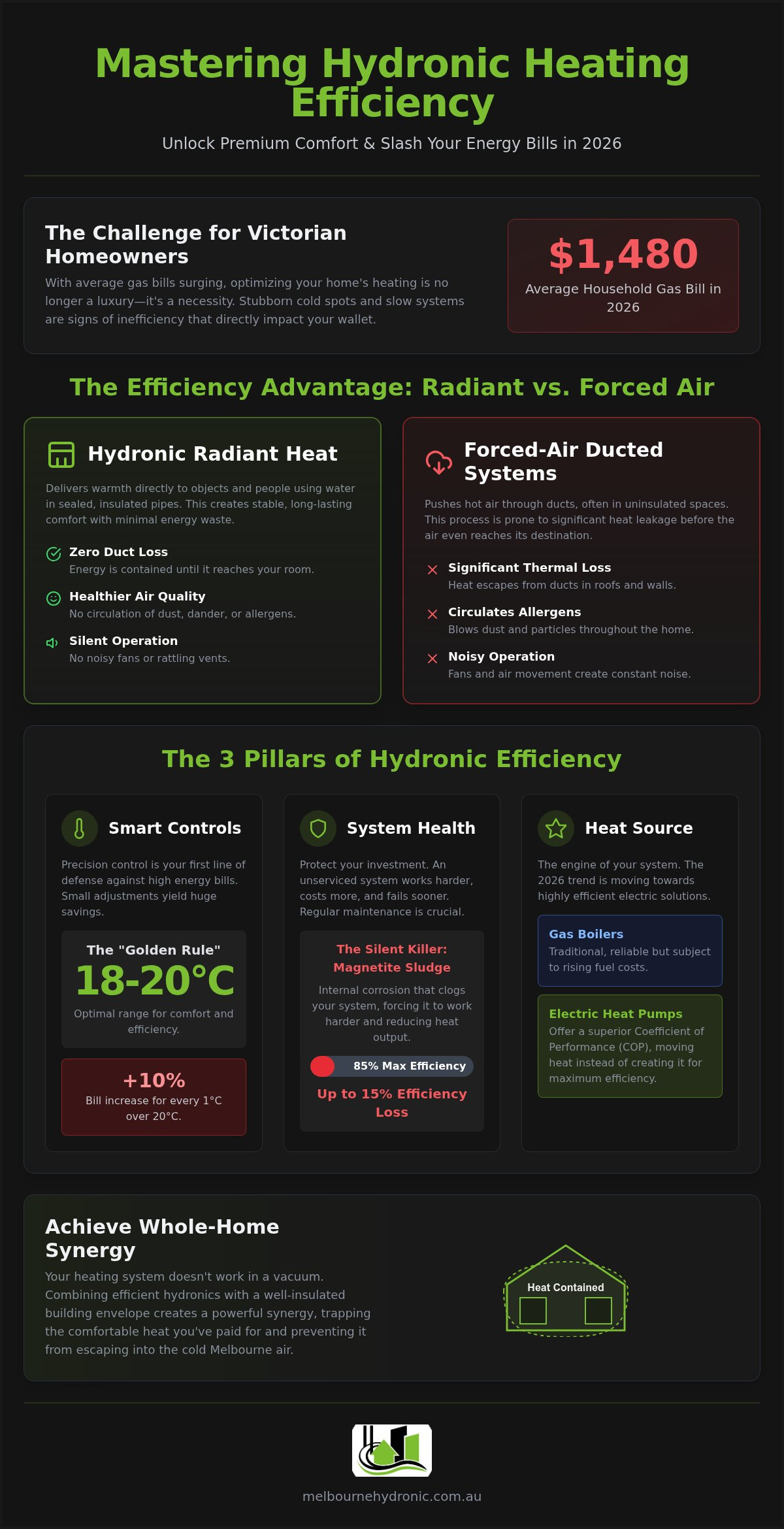
Did you know that the average Victorian household gas bill has surged to $1,480 in 2026, even as electricity prices under the Victorian Default Offer have begun to soften? It’s a frustrating reality for many Melbourne homeowners who find themselves dealing with stubborn cold spots or slow system response times despite paying more for energy every month. If you’re looking to regain control over your home’s climate and your wallet, implementing the right hydronic heating efficiency tips is the most effective way to bridge the gap between premium comfort and rising utility costs.
We believe your home should be a sanctuary of health and warmth, operating with the technical precision you expect from a premium system. This guide will show you how to slash your energy bills and maximize your family’s well-being by revealing expert strategies tailored for Victoria’s unique climate and the latest 2026 regulations. We’ll explore the “Triple-A” approach to efficiency, covering everything from smart thermostat features and the restorative power of system maintenance to navigating the transition toward high-efficiency electric heat pumps.
Key Takeaways
- Understand why radiant heat is fundamentally more efficient than forced-air systems by delivering warmth directly to objects and people.
- Master the 18-20°C “Golden Rule” for thermostat settings to avoid the 10% bill increase associated with every degree over the limit.
- Discover essential hydronic heating efficiency tips, including how transitioning to electric heat pumps can provide a superior Coefficient of Performance in 2026.
- Protect your investment by identifying the “silent killer” of efficiency—magnetite sludge—which can cause unserviced systems to lose 15% of their effectiveness.
- Learn how to create whole-home synergy by combining advanced heating controls with proper building insulation to prevent heat from escaping.
Understanding the Fundamentals of Hydronic Heating Efficiency
To truly grasp how to save on your energy bills, we first need to look at the hydronic heating fundamentals. At its core, hydronic efficiency is the ratio of energy input to the actual heat delivered to your living space. Unlike air, water is a superior thermal conductor. It holds heat for much longer periods and moves it more effectively. This physical property allows your system to transport warmth throughout your home with far less energy expenditure than traditional methods. Applying these hydronic heating efficiency tips begins with understanding how heat moves through your home.
Radiant vs. Forced Air: The Efficiency Gap
Ducted systems often struggle with significant thermal loss. When hot air travels through ducts located in uninsulated roof spaces, a substantial portion of that heat leaks out before it ever reaches your rooms. Hydronic systems avoid this entirely by using sealed, insulated pipes. Consider these advantages:
- Zero Duct Loss: Energy stays within the pipes until it reaches the radiator or floor coil.
- Healthier Air: No forced air means no dust, pet dander, or allergen circulation.
- Silent Operation: No rattling vents or noisy fans disrupting your peace.
This makes it a healthier, asthma-friendly choice for Melbourne families seeking a cleaner living environment. Simply put, hydronic efficiency is the ability to maintain consistent comfort with minimal thermal loss. Melbourne’s unique climate is notorious for its sudden temperature drops and biting winds. Hydronic systems excel here because they provide a steady, “thermal mass” style of heating. Radiant heat warms the objects and people in a room rather than just the air. This means the warmth doesn’t vanish the moment the system cycles off, providing a stable environment even during a cold Victorian snap.
The Impact of Water Temperature on Performance
The temperature of the water circulating through your pipes dictates your monthly costs. Modern hydronic heating panels are engineered with high surface areas to facilitate rapid heat exchange even at lower temperatures. By running your system at a “low-temperature” setting, you significantly reduce the workload on your heat pump or boiler. This approach is particularly effective in 2026 as we move toward more sustainable, electric energy sources.
Efficiency also depends on the relationship between water flow rates and energy consumption. High flow rates aren’t always better; in fact, a carefully balanced system with optimized flow ensures that every joule of energy is transferred to your living space. When your system is tuned correctly, it operates quietly and responds precisely to your needs without wasting fuel or electricity. Investing time in understanding these mechanics is the first step toward a more cost-effective home.
Smart Controls and Thermostat Optimization Strategies
Controlling your home environment with precision is the cornerstone of sustainable comfort. One of the most impactful hydronic heating efficiency tips involves adhering to the “Golden Rule” of temperature settings: 18-20°C. While it might be tempting to aim for a tropical indoor climate during a Melbourne winter, the financial cost is steep. Every degree you set your thermostat above 20°C can increase your energy consumption by approximately 10%. By keeping your living areas within this optimal range, you strike the perfect balance between thermal comfort and fiscal responsibility.
Placement is just as critical as the setting itself. A thermostat mounted in direct sunlight or near a draughty hallway will provide false readings, causing your system to cycle unnecessarily. In a city where we famously experience four seasons in one day, your controls need to be shielded from external interference to accurately monitor the internal “envelope” of your home. Modern systems now utilize weather-compensated logic. This technology communicates with outdoor sensors to adjust the water temperature in your pipes before the house even begins to cool down, preventing the system from working harder than necessary.
In 2026, smart thermostats have evolved into sophisticated energy management tools. Features like geofencing allow your heating to lower automatically when the last person leaves the house and ramp back up as you enter your neighborhood. This ensures you never pay to heat an empty building while still returning to a warm sanctuary. These intelligent systems learn your habits, aligning your heating schedule with Melbourne’s fluctuating daily temperatures to ensure peak performance without manual intervention.
Avoiding the “Blast” Method
Many homeowners mistakenly believe that cranking the dial to 30°C will warm the house faster. It won’t. The water in your system travels at a set speed and carries a specific amount of energy; a higher thermostat setting simply ensures the heat stays on much longer than needed, overshooting your comfort zone and wasting expensive energy. It’s helpful to remember that hydronic systems are marathons, not sprints. They operate most efficiently when allowed to maintain a steady, lower temperature through “set and forget” logic rather than being forced through aggressive on-off cycles.
Zoning for Targeted Efficiency
Zoning is a game-changer for larger Victorian homes. By using Thermostatic Radiator Valves (TRVs), you can dial down the heat in guest rooms or storage areas while keeping living spaces cozy. Heating an unused room is the primary cause of efficiency loss in many households. Zoning allows for different comfort levels, such as keeping bedrooms slightly cooler for better sleep hygiene while maintaining a premium warmth in the lounge. If you’re unsure if your current setup is optimized for these modern controls, our team can provide expert system servicing and maintenance to ensure your sensors and valves are perfectly calibrated.
System Health: How Maintenance Protects Your ROI
Maintaining a hydronic system is often viewed as a chore, but it’s actually a high-yield investment in your home’s comfort and longevity. One of the most overlooked hydronic heating efficiency tips involves addressing the internal hygiene of your pipes and radiators. Over time, a black, metallic substance known as magnetite sludge develops within the system. This “silent killer” of efficiency creates a thick layer of internal insulation where you don’t want it, forcing your heat source to work much harder to achieve the same results. Statistics show that an unserviced system can lose up to 15% of its efficiency in just a few years, leading to higher monthly bills and premature component failure.
Internal corrosion doesn’t just block heat; it also damages expensive hardware. When debris circulates through the system, it can lead to boiler short-cycling, where the unit turns on and off rapidly because it can’t move heat away fast enough. Securing a professional hydronic heating service Melbourne homeowners trust is the only way to ensure these technical issues are caught before they become expensive repairs. Regular servicing keeps the pump operating smoothly and ensures that air, which creates frustrating cold spots and noise, is properly purged from the lines.
The Power of a Professional Power Flush
If you’ve noticed that your radiator panels are cold at the bottom but warm at the top, or if your pump has started making a grinding noise, it’s likely time for a power flush. This process involves connecting a specialized machine to your system to circulate high-velocity water and cleaning chemicals, stripping away years of built-up magnetite and debris. It’s a transformative procedure for older systems. A professional power flush can restore system efficiency to “as-new” levels, dramatically reducing the energy required to keep your Melbourne home warm during a cold snap.
Annual Checklists for Melbourne Homeowners
While deep cleaning requires a specialist, there are several tasks you can perform to keep things running efficiently between professional visits. Consistency is the key to protecting your system’s health. We recommend an annual routine that includes:
- Monitoring System Pressure: Check the gauge on your boiler or heat pump; if the pressure is too low, the system won’t circulate water effectively.
- Bleeding Radiators: Safely release trapped air to eliminate cold spots and reduce the load on your circulation pump.
- Inspecting for Leaks: Look for any signs of moisture around valves or joints, as even a small leak can lead to significant pressure loss.
- Inhibitor Levels: Ensure your system has the correct concentration of chemical inhibitors to prevent future corrosion and sludge formation.
By staying proactive, you ensure your heating system remains a reliable source of well-being rather than a source of stress. With over 30 years of experience in the local industry, we’ve seen how proper care extends a system’s lifespan by decades, ensuring you get the full value out of your initial investment.
Heat Source Efficiency: Heat Pumps vs. Gas Boilers
Choosing the right heat source is the single most important decision for your long-term energy budget. Traditional gas boilers in Victoria typically operate at approximately 90% efficiency. In contrast, modern air-to-water heat pumps have completely redefined the market by achieving a Coefficient of Performance (COP) of up to 4.5. This means for every 1kW of electricity consumed, they produce 4.5kW of heat. The numbers don’t lie. When you compare these figures, it’s clear why heat pump hydronic heating is the gold standard for 2026. Transitioning to this technology allows you to leverage the 5% average decrease in Victorian electricity prices while avoiding the rising costs of natural gas.
The Shift to All-Electric Heating
The Victorian Government’s Gas Substitution Roadmap has fundamentally changed how we think about home comfort. Since January 2025, customers are required to pay the full upfront cost for new gas connections, signaling a clear policy shift toward electrification. Electric heat pumps are engineered to extract ambient heat from the air even during a freezing Melbourne winter night. By disconnecting from the gas grid, you eliminate daily supply charges and protect your household from the volatility of fossil fuel pricing. This move represents a long-term financial strategy that prioritizes both sustainability and a premium living experience. Many families find that the peace of mind coming from a “gas-free” home is just as valuable as the lower utility bills.
Optimising Your Existing Boiler
If you aren’t ready to switch to electric just yet, you can still maximize the performance of your current gas setup. Modern condensing technology allows boilers to recycle waste heat that would otherwise escape through the flue, significantly boosting the energy output. However, many systems are held back by “short-cycling,” where the boiler turns on and off too frequently. This usually happens when a unit is oversized for the property or the water flow is restricted by debris. Ensuring your system is correctly balanced and upgrading to a right-sized, high-efficiency model can dramatically lower your gas consumption. We often recommend a comprehensive hydronic heating service Melbourne homeowners can rely on to identify these hidden efficiency drains before they impact your winter comfort.
Whole-Home Synergy: Insulation and Building Envelope
A world-class heating system is only half of the efficiency equation. If your home’s building envelope is compromised, your heat pump or boiler will constantly struggle to replace warmth that has escaped through gaps and poorly insulated surfaces. True home comfort relies on whole-home synergy. By securing your home’s “skin,” you allow your hydronic system to reach its target temperature faster and stay there with minimal energy input. These hydronic heating efficiency tips are most effective when your house acts as a sealed thermal vessel, holding onto the radiant energy you’ve paid to generate.
The relationship between your heating source and your home’s structure is a partnership. While we’ve discussed the technical precision of boilers and heat pumps, the physical environment they operate in dictates the final ROI. Simple habits, such as closing heavy, floor-to-ceiling curtains at dusk, can significantly reduce heat loss through glass. These window coverings act as a thermal barrier, retaining the radiant heat that has built up in your furniture and floors throughout the day. When you combine high-performance hardware with a smart building strategy, you create a premium living environment that remains stable even during the most volatile Melbourne weather.
Insulating for Underfloor Efficiency
When installing underfloor heating, the insulation beneath the heat source is non-negotiable. For concrete slabs, “edge loss” is a significant concern. This is where heat migrates horizontally through the slab and escapes into the external ground rather than rising into your room. Installing perimeter insulation prevents this energy drain. If you have a suspended timber floor, sub-floor insulation is critical to ensure the heat moves upward into your living space rather than downward into the crawl space. Your choice of flooring also plays a role. Tiles and stone offer excellent thermal conductivity, while thick carpets can act as an unwanted insulator, slowing down the heat transfer and reducing overall system response times.
Melbourne-Specific Draught Proofing
Melbourne is famous for its beautiful Victorian and Edwardian architecture, but these older homes were rarely built with modern airtightness in mind. Small gaps around sash windows, original floorboards, and unused fireplaces are major leak points. Radiant heat is unique because it warms objects, but cold draughts will still strip that warmth away from your skin. Simple DIY fixes like weather-stripping doors can make a massive difference. A well-sealed home is a direct path to lower bills. It allows your system to operate at lower water temperatures, which is exactly where modern heat pumps find their peak efficiency. If you want to ensure your setup is performing at its absolute best, it’s time to Request a professional efficiency audit for your Melbourne home and take the final step toward a truly high-performance living environment.
Securing Your Home’s Future Comfort
Achieving a truly efficient home in 2026 requires a synergy between modern technology and consistent care. We’ve explored how transitioning to electric heat pumps and mastering smart zoning can significantly reduce your environmental footprint while keeping your family healthy. By implementing these hydronic heating efficiency tips, you aren’t just saving money on bills; you’re investing in a premium lifestyle where comfort is guaranteed regardless of Melbourne’s unpredictable weather.
Our family-owned and operated team brings 30+ years of local expertise directly to your doorstep. We specialize in using advanced power flushing equipment to eliminate efficiency-killing sludge and restoring systems to their peak potential. Don’t let another cold snap drive up your energy costs. Book your 2026 Hydronic Efficiency Service with Melbourne Hydronic Heating today and enjoy the peace of mind that comes with expert care. You deserve a home that remains a sanctuary of warmth and well-being for decades to come.
Frequently Asked Questions
Is it cheaper to leave hydronic heating on all day?
Leaving the system on at a consistent, lower temperature is typically more cost-effective than frequent “cold starts.” Because hydronic systems rely on thermal mass, they take longer to reach temperature but retain heat excellently. Constant cycling forces the boiler or heat pump to work at maximum capacity, which consumes more energy than maintaining a steady 18-19°C baseline throughout the day.
How much can I save by switching from gas to a hydronic heat pump?
Switching to an electric heat pump can significantly reduce running costs, particularly as Victorian gas prices rose by 5% in 2026 while electricity prices decreased. With a Coefficient of Performance (COP) of up to 4.5, a heat pump delivers more than four times the heat for every kilowatt of energy used compared to a traditional gas boiler. This transition is a powerful way to hedge against rising fossil fuel costs.
Why are some of my hydronic radiators colder than others?
Colder radiators are often a sign of trapped air or internal sludge buildup preventing hot water from circulating properly. If the top of the panel is cold, it usually requires bleeding. However, if the bottom remains cold while the top is warm, it indicates a collection of magnetite sludge that requires professional attention to restore flow and ensure the system operates at peak performance.
What is the most efficient temperature setting for a hydronic boiler?
The most efficient room temperature setting is between 18°C and 20°C. For the system itself, modern condensing boilers operate most effectively when the return water temperature is kept low, allowing the unit to stay in “condensing mode” and recycle waste heat. This is one of the most practical hydronic heating efficiency tips for gas-reliant households looking to minimize waste.
How often should I service my hydronic heating system for maximum efficiency?
You should schedule a professional service once every twelve months, ideally before the winter season begins. Regular maintenance ensures that your inhibitor levels are correct and your components are clean. This proactive approach prevents the 15% efficiency loss often seen in neglected systems and helps identify minor leaks before they cause significant pressure drops or hardware damage.
Does power flushing really improve energy efficiency?
Power flushing is highly effective because it removes the metallic debris and sludge that act as internal insulation. By stripping away these blockages, your system can circulate water with less resistance and transfer heat through radiator panels more rapidly. This process can restore a system to “as-new” performance levels and noticeably lower your energy consumption during the colder months.
Can I use solar panels to run my hydronic heating system?
Yes, solar PV is an ideal partner for electric heat pump systems. By utilizing smart timers, you can schedule your heating to run during peak solar generation hours, essentially using free energy from your roof to pre-warm your home. This strategy is a cornerstone of modern hydronic heating efficiency tips for Melbourne’s sustainable, all-electric homes.
How do I know if my hydronic heating system is losing efficiency?
Efficiency loss is usually signaled by rising utility bills, cold spots on radiators, or the system taking significantly longer to warm your rooms. If you hear banging or gurgling noises, or if your boiler is short-cycling, these are clear indicators that the system is struggling. Monitoring these signs helps you maintain a premium, healthy home environment while keeping your operational costs as low as possible.