Central Heating Installation Cost Melbourne: 2026 Pricing Guide
What if the “cheapest” heating quote you receive today ends up being the most expensive mistake for your home over the next decade? With Victoria’s transition toward all-electric new builds by 2027 and changing rebates for heat pumps, calculating the central heating installation cost melbourne homeowners face in 2026 requires looking beyond the initial invoice. You’re likely feeling the weight of these shifting regulations while trying to balance upfront expenses against the rising costs of traditional gas. It’s a lot to manage, especially when you just want a warm house that doesn’t aggravate your family’s allergies or asthma.
We’ve spent over 30 years helping local families find the perfect balance between technical precision and home comfort. This guide promises a comprehensive breakdown of what you’ll actually pay for hydronic radiator panels, underfloor systems, and high-efficiency heat pumps this year. We’ll explore clear price-per-room estimates and the long-term ROI of modern electric systems. You’ll also discover how the right choice can transform your indoor air quality, providing a silent, health-conscious environment that delivers premium comfort for 25 years or more.
Key Takeaways
- Learn how to accurately estimate the central heating installation cost melbourne homeowners should budget for in 2026, comparing traditional gas boilers with modern electric heat pumps.
- Understand the specific price variables between installing hydronic radiator panels and premium in-slab or in-screed underfloor heating systems.
- Discover the long-term financial ROI of switching to high-efficiency electric systems and how to navigate Victoria’s upcoming 2027 gas regulations.
- Identify the complexities of retrofitting existing homes, including the importance of power flushing to protect your investment when upgrading components.
- Explore the health benefits of radiant heat, specifically how hydronic systems provide an asthma-friendly environment compared to standard forced-air solutions.
Factors Influencing Central Heating Installation Costs in Melbourne
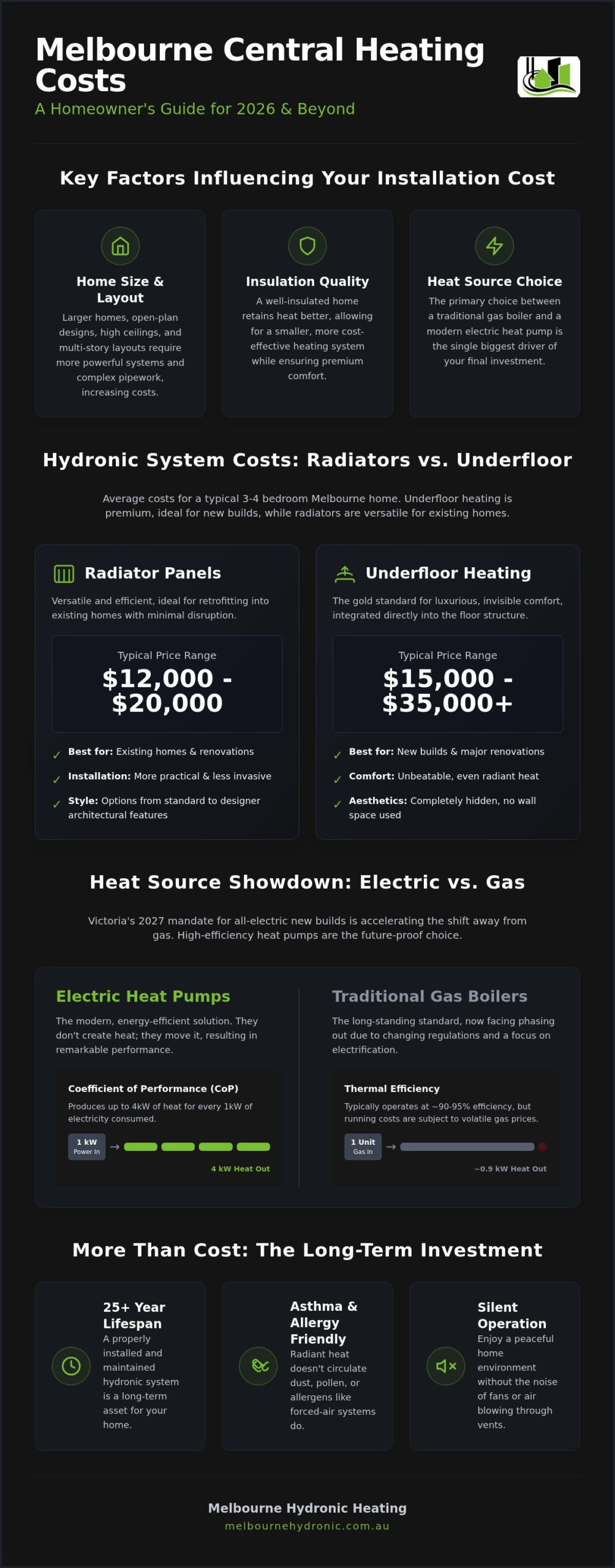
Calculating the central heating installation cost melbourne families face isn’t a simple one-size-fits-all equation. It’s a sophisticated balance of technology, property architecture, and the evolving Victorian regulatory landscape. In 2026, the primary driver of your investment is the choice between traditional gas boilers and high-efficiency Electric Heat Pumps. While gas has been the local standard for decades, Central heating technology has shifted toward electrification. Modern heat pumps offer a high coefficient of performance, often producing up to 4kW of heat for every 1kW of power consumed. This efficiency helps offset the higher initial equipment costs compared to gas units.
Victorian standards are tightening as we approach the 2027 mandate for all-electric new builds. Homeowners are now prioritizing future-proof systems to avoid the complications of upcoming gas replacement regulations. Beyond the heat source, the complexity of your system, such as smart thermostat integrations and multi-zone configurations, will influence the final quote. These features allow you to heat only the rooms you’re using, significantly reducing long-term running costs.
Home Size and Layout Considerations
A standard 3-bedroom Melbourne weatherboard requires a vastly different approach than a modern, open-plan renovation. High ceilings and large glass expanses increase the required kW output, which directly impacts the size and cost of the boiler or heat pump. Multi-story installations introduce additional labor variables, as vertical pipework routing through wall cavities or floor joists requires more time and technical precision. Insulation levels also play a critical role; a well-insulated home can often utilize a smaller, more cost-effective system while maintaining the same premium comfort levels.
The Role of Local Labor and Expertise
You aren’t just paying for hardware; you’re investing in technical precision. Specialized hydronic plumbers command a premium over general residential plumbers because they understand the nuances of Victorian safety certifications and the specific challenges of Melbourne’s varied housing stock. Choosing a family-owned team with 30 years of local experience ensures your system is balanced correctly from day one. This expertise is vital for ensuring the longevity of your system, which can last 25 years or more. Professional installation also guarantees that the system remains asthma and allergy friendly by maintaining a sealed, dust-free radiant heat environment, providing a level of wellness that standard forced-air systems can’t match.
Hydronic Heating Cost Breakdown: Radiators vs. Underfloor
Choosing between radiator panels and underfloor heating is the most significant decision impacting your central heating installation cost melbourne. While both systems rely on the same energy-efficient water circulation technology, their installation methods and material requirements differ greatly. For a standard three to four bedroom Melbourne home, a radiator panel system typically averages between $12,000 and $20,000. In contrast, premium underfloor systems generally range from $15,000 to $35,000 depending on the floor area and the specific installation method chosen.
The choice often comes down to the architectural stage of your home. Underfloor heating is the gold standard for Melbourne new builds because the pipework can be integrated directly into the concrete slab. For existing homes, radiator panels are often more practical as they avoid the need for major structural floor modifications. When planning your budget, it’s vital to consider sustainable heating and cooling systems that provide long-term value through energy efficiency rather than just focusing on the lowest entry price.
Radiator Panel Pricing Factors
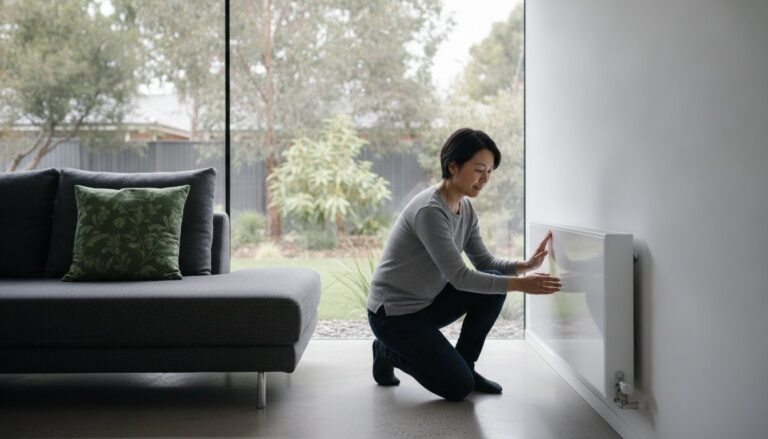
The total cost of a radiator system is largely driven by the number of units and the style of the panels. Standard functional steel panels are cost-effective, but many homeowners now opt for premium Hydronic Radiator Panels that serve as architectural features. Adding Hydronic Towel Rails to bathrooms also adds to the investment, though they provide the luxury of warm towels and a dry, mold-free environment. To maximize efficiency, we recommend thermostatic valve upgrades. These allow you to control the temperature of individual rooms, ensuring you don’t waste energy heating unoccupied spaces.
Underfloor Heating Investment Layers
If you’re building from the ground up, in-slab hydronic heating is highly efficient, with industry estimates ranging from $70 to $115 per square meter. For those renovating an existing Melbourne property, in-screed systems are the alternative. These are installed on top of the existing slab and covered with a thin layer of specialized screed. While in-screed systems cost more per square meter, typically $110 to $160, they offer faster response times. Beyond the pipes themselves, “hidden” costs include high-quality manifolds and circulating pumps that act as the heart of the system. These components ensure even heat distribution and are essential for the 25-year longevity we expect from professional installations. If you’re unsure which configuration suits your floor plan, you can consult with our specialist team to explore the best fit for your property.
The Shift to Electric: Heat Pumps vs. Gas Boilers in 2026
The transition from gas to electricity is the defining trend of 2026 for Melbourne homeowners. While the initial central heating installation cost melbourne residents see for heat pumps is often higher than traditional boilers, the operating ROI tells a different story. Industry data indicates that a typical home can save approximately $950 annually by making the switch to electric options. For hydronic systems, a high-efficiency heat pump for a 200-square-meter home costs between $1,200 and $1,800 to run per year; natural gas boilers average around $2,200 for the same period. Most air source heat pumps now operate with a coefficient of performance (COP) between 3.5 and 4.0, meaning they generate four times the energy they consume.
The Victorian government’s roadmap is accelerating. By January 1, 2027, all new residential building permits will exclude gas connections. Existing homes face similar shifts; starting March 1, 2027, if a gas hot water system breaks and cannot be repaired, it must be replaced with an electric alternative. If you already have solar PV panels, the financial benefits are even more pronounced. You can achieve a “zero-cost” running state by using your solar gain to power the heat pump during the day, storing that thermal energy in your floor or radiators for the evening. Some owners even opt for hybrid systems, using a gas boiler for peak winter loads while the heat pump handles the bulk of the season’s requirements.
Gas Boiler Replacement Costs
Sometimes a full system overhaul isn’t required. A Boiler Replacement is a viable path if your existing radiator panels and pipework are in good condition. Modern condensing boilers are significantly more efficient than older units, but they do require specific flue modifications and drainage for condensate. We perform rigorous safety checks during these installations to ensure your home’s infrastructure is ready for the upgrade. Replacing a standard unit typically costs between $1,990 and $4,000, providing a reliable bridge for those not yet ready for full electrification.
Heat Pump Installation Specifics
Installing Electric Heat Pumps involves unique technical variables. These units require strategic outdoor placement to ensure optimal airflow and noise mitigation. You may also need an electrical switchboard upgrade to accommodate the system’s power draw. To offset the central heating installation cost melbourne families encounter, several incentives are available. The Victorian Energy Upgrades (VEU) program provides point-of-sale discounts, and eligible households with an income under $150,000 can access Solar Victoria rebates of up to $1,000. A straightforward boiler-to-heat-pump swap, retaining existing radiators, generally starts at around $15,000.
Retrofitting Central Heating: Complexity and Added Costs
Retrofitting central heating into an established Melbourne home is a craft that requires more than just technical knowledge; it demands respect for the building’s history. Unlike new builds where pipes are laid before the slab is poured, retrofitting often involves lifting floorboards or navigating tight wall cavities. These labor-intensive variables are a significant factor in the central heating installation cost melbourne homeowners should budget for. While a new build installation is straightforward, an existing property requires a bespoke design to minimize disruption to your daily life.
In many of Melbourne’s iconic period homes, we prioritize protecting heritage features like original cornices and intricate skirting boards. This often means choosing more complex routing paths for pipework to avoid visible disruption. However, older properties can also hide budget surprises such as asbestos or structural decay in sub-floor areas. A professional site assessment is the only way to identify these risks early. By planning the layout meticulously, we can often reduce the installation time and avoid the need for extensive plaster repairs after the job is finished.
The Importance of a System Power Flush
If you’re connecting a modern, high-efficiency boiler to an existing pipe network, skipping a Power Flushing service is a gamble you shouldn’t take. Over time, sludge and magnetite build up inside old radiators and pipes. This debris can circulate into your new unit, potentially destroying a $4,000 boiler in a matter of months. By performing a comprehensive flush, you don’t just protect your investment; you can also improve the system’s overall efficiency by up to 15%. This level of technical care is a hallmark of experienced trade professionals, such as the generational experts at Garrett’s Plumbing, who understand how proactive maintenance preserves home infrastructure. It’s a proactive step that ensures your new heat source operates at its peak performance from day one.
Working with Existing Infrastructure
We often evaluate whether your existing radiator panels are compatible with modern electric heat pumps. While older panels can sometimes be reused, they may need to be resized to provide the same warmth at the lower water temperatures heat pumps typically use. We also focus on upgrading pipework insulation in sub-floor areas. Without proper lagging, you’re essentially heating the earth under your house rather than your living room. Strategic manifold placement is another way we help manage costs, as it minimizes the amount of expensive copper piping required for the project. If you’re planning a major renovation, speak with our expert team to see how we can integrate a modern system with minimal structural impact.
Why Melbourne Hydronic Heating is the Smart Long-Term Investment
When evaluating the central heating installation cost melbourne families often focus solely on the initial quote. However, a premium hydronic system is better viewed as a 25-year investment in your property’s infrastructure and your family’s well-being. Unlike standard air-based systems that may require replacement every decade, our systems are designed for longevity. As a family-owned specialist with 30 years of local experience, we understand that the cheapest installation often becomes the most expensive over time due to inefficient design or frequent repairs. We tailor every system specifically for the unique coastal humidity of Geelong and the biting winter winds of Melbourne.
The “invisible” value of hydronic heating lies in its silent operation and superior thermal comfort. There are no noisy fans or drafts; just consistent, gentle warmth that permeates every corner of the room. This premium experience is supported by our commitment to comprehensive care. We guide you from the initial design phase through to Annual Servicing, ensuring your system remains as efficient on year twenty as it was on day one.
Health Benefits and ROI
For many Melbourne families, hydronic heating is a medical investment as much as a financial one. Standard ducted heating systems are notorious for circulating dust, pet dander, and allergens throughout the home. Radiant heat eliminates this air movement entirely, making it the gold standard for residents living with asthma or severe allergies. This lack of air turbulence also benefits elderly residents who are more sensitive to drafts and inconsistent temperatures. While the entry price is higher than a split system, the ROI is measured in improved health outcomes and a significantly higher property resale value. Health-conscious homeowners prioritize this technology because it provides a clean, hygienic environment that forced-air alternatives simply cannot match.
Next Steps for Your Melbourne Home
Moving from a “rough estimate” to a functional heating plan requires professional insight. A simple online calculator can’t account for your home’s specific orientation, insulation levels, or existing pipework condition. We recommend preparing for an on-site consultation by identifying your primary “cold zones” and checking your electrical switchboard’s capacity if you’re considering a heat pump. Our team provides a fixed design quote rather than a vague range, giving you total transparency on your central heating installation cost melbourne. Contact Melbourne Hydronic Heating today to begin designing a customized, energy-efficient plan that will protect your home’s comfort for decades to come.
Future-Proof Your Home’s Comfort and Health
Deciding on a new system in 2026 means looking far beyond the initial central heating installation cost melbourne to find lasting efficiency. You’ve seen how the shift toward electric heat pumps and the precision of hydronic radiators can redefine your home’s environment. These systems aren’t just about warmth; they’re about creating a silent, asthma-friendly sanctuary that protects your family’s well-being for 25 years or more. By prioritizing high-efficiency technology and professional maintenance like power flushing, you’ll ensure your investment delivers premium performance through every Victorian winter.
We’re a family-owned and operated team with over 30 years of industry experience, and we’re dedicated to helping you navigate the evolving local regulations. As specialists in asthma-friendly heating, we take pride in designing systems that combine technical excellence with genuine care for your indoor air quality. Don’t leave your comfort to chance when you can rely on local expertise that understands Melbourne’s unique climate challenges. It’s time to elevate your living standards with a system that’s as reliable as it is healthy.
Get a Professional Central Heating Installation Quote for Your Melbourne Home and start your journey toward a warmer, healthier future today.
Frequently Asked Questions
Is hydronic heating more expensive to install than ducted gas heating in Melbourne?
Yes, the upfront investment for hydronic technology is higher than traditional ducted gas systems. While a gas ducted installation might range from $2,500 to over $5,500, a standard three-bedroom hydronic system typically starts around $12,000. This higher entry cost reflects the premium materials and specialized labor required for pipework. Over time, the 25-year lifespan and superior comfort of radiant heat often provide better long-term value than air-based alternatives.
How much does it cost to replace an old hydronic boiler in 2026?
A standard boiler replacement typically costs between $1,990 and $4,000 depending on the unit’s capacity and the complexity of the required flue modifications. This path is ideal when your existing radiator panels and pipework remain in good condition. We focus on installing high-efficiency condensing models that significantly lower your gas consumption. It’s a reliable solution for homeowners who need a modern upgrade without committing to a full system overhaul or electrification.
Are there government rebates for installing electric hydronic heat pumps in Victoria?
Yes, several financial incentives are available to help manage the central heating installation cost melbourne residents face for electric upgrades. The Victorian Energy Upgrades (VEU) program provides point-of-sale discounts on approved heat pump technology. Additionally, households with a combined taxable income under $150,000 can access a Solar Victoria rebate of up to $1,000. These programs are designed to accelerate the state’s transition toward efficient, all-electric residential heating solutions.
Can I install hydronic heating in a double-story Melbourne home?
Hydronic systems are perfectly suited for multi-story properties. Installation involves routing specialized pipework through wall cavities, floor joists, or dedicated service ducts to reach the upper floor. While this adds some complexity to the design phase, it ensures every room receives consistent, radiant warmth without the noise of fans. We often recommend a zoned approach for double-story homes, allowing you to manage sleeping and living areas independently to maximize energy efficiency.
How much extra does it cost to add hydronic towel rails to a system?
Adding hydronic towel rails is a popular luxury upgrade that integrates directly with your main heating circuit. While the specific price depends on the designer style and size you choose, they represent a modest addition to the overall project budget. These rails provide the dual benefit of warming your towels and dehumidifying the bathroom environment. It’s a functional choice that enhances the premium feel and hygienic standards of your home’s wet areas.
Does hydronic heating add significant value to a Melbourne property?
Real estate experts consistently report that hydronic heating is a highly desirable feature for premium Melbourne homes. Because it is a permanent, long-lasting infrastructure upgrade, it often increases a property’s resale value beyond the initial central heating installation cost melbourne. Potential buyers prioritize these systems for their silent operation, asthma-friendly air quality, and superior comfort. It positions your home as a high-quality residence in a competitive local market.
How long does a typical central heating installation take in an existing home?
A typical installation in an established property takes between three and seven working days to complete. The duration depends on the number of radiator panels required and the ease of access to sub-floor or roof spaces. We prioritize minimizing disruption to your daily routine during this period. Our team uses specialized equipment to ensure the process is clean, protecting your home’s heritage features while upgrading your environment to modern comfort standards.
What is the average running cost of a hydronic system in a 4-bedroom Melbourne house?
Running costs vary based on your heat source and home insulation. A 200-square-meter home using a high-efficiency electric heat pump can expect annual costs between $1,200 and $1,800. If you’re using a natural gas boiler, these costs typically rise to around $2,200 per year. By integrating your system with solar PV panels, you can significantly reduce these figures. Some homeowners even reach a near-zero running state during the milder months of the year.