
Hydronic Radiator Installation in Melbourne: The 2026 Homeowner’s Guide
Why are thousands of Melbourne families choosing to abandon their gas heaters in 2026, even before the mandatory electric replacement laws take full effect? It’s no secret that our city’s erratic “four seasons in one day” weather makes reliable heating a necessity. Yet, most traditional forced-air systems leave us with dry air, circulating allergens, and energy bills that spiked by 22% over the last year. You deserve a home that feels like a sanctuary, not a dusty wind tunnel. A professional hydronic radiator installation melbourne provides exactly that by delivering silent, radiant warmth without the drafts or the noise.
We understand that choosing a heating system is a significant investment in your family’s long-term well-being. This guide will show you how to transform your living space into a haven of healthy and energy-efficient comfort that stands the test of time. You’ll discover the latest 2026 technology, including high-efficiency heat pumps and Victorian Energy Upgrade rebates that can reduce your upgrade costs by up to $4,500. We’ll walk you through the transition from outdated gas boilers to modern, sustainable systems that protect both your health and your budget.
Key Takeaways
- Discover why radiant warmth is the most effective solution for Melbourne’s unique architectural challenges and “four seasons in one day” climate.
- Navigate the transition from gas boilers to high-efficiency electric heat pumps and find out how current Victorian rebates can support your upgrade.
- Learn why a professional hydronic radiator installation melbourne is essential for achieving a perfectly balanced, silent system that reduces long-term running costs.
- Explore the aesthetic and functional benefits of modern steel radiator panels for both heritage retrofits and new residential designs.
- Understand the step-by-step installation process, from custom design to the “Rough-In” phase, to ensure a seamless transition to premium home comfort.
What is Hydronic Radiator Installation and Why Does Melbourne Need It?
Hydronic heating isn’t just a luxury; it’s a precision-engineered method of temperature control that has become the standard for premium Melbourne homes. At its core, the system relies on a central heat source to warm water, which is then circulated through a sealed network of pipes to wall-mounted panels. To understand the technical foundations of what hydronic heating is, we look at the principle of thermal radiation. Unlike air-based systems that push heat out of a vent, hydronic systems use reticulated hot water to turn each radiator into a gentle source of warmth. This process provides a consistent temperature that doesn’t fluctuate every time a fan cycles on or off.
Melbourne’s architectural heritage, from Victorian-era terraces in Carlton to Edwardian villas in Malvern, presents unique heating challenges. High ceilings and large windows are beautiful, but they’re notorious for losing heat through convection. A professional hydronic radiator installation melbourne addresses these issues by placing heat sources exactly where they’re needed, often under windows to offset cold glass surfaces. Radiator panels are particularly effective in these older homes because they don’t require the massive ceiling or floor cavities needed for bulky ductwork. They integrate seamlessly into the aesthetic of a period home while providing performance that meets 2026 energy standards.
The Health Benefits of Dust-Free Heating
Traditional forced-air systems are often the hidden culprits behind indoor air quality issues. They work by blowing air through ducts, which inevitably collect dust, pet dander, and pollen over time. For the one in nine Australians living with asthma, this constant circulation of allergens can make Melbourne’s hay fever season unbearable even indoors. Radiant heat from radiators keeps the air still and clean. There are no fans to stir up particles, making it the gold standard for families prioritizing respiratory health and hygiene. In a city where indoor air quality is increasingly linked to long-term well-being, choosing a non-convective system is a vital lifestyle choice.
Radiant vs. Convection: The Comfort Difference
Most people are used to convection heating, which only warms the air. Because hot air rises, it often ends up trapped at the ceiling while your feet stay cold, especially in homes with 3-metre ceilings. Radiators work differently. They emit radiant energy that travels through the space to heat objects and people directly. It’s the same feeling as standing in a patch of sunlight on a winter morning. This method eliminates the cold spots common in large Melbourne rooms and operates in total silence. You won’t hear the rattling of ducts or the roar of a fan, just a steady, pervasive warmth that makes your home feel like a true sanctuary.
Choosing the Right Radiator Panels for Your Home
Selecting the right hardware is where technical precision meets interior design. A professional hydronic radiator installation melbourne ensures that your choice of hydronic heating panels complements your home’s character while maximizing thermal output. Modern panels aren’t the bulky, unsightly units of the past. They’re streamlined, high-performance components available in a variety of finishes and profiles. Whether you’re retrofitting a mid-century classic or designing a contemporary masterpiece, the right panel choice is vital for both aesthetics and comfort.
Standard steel panels remain the reliable workhorse for most Melbourne households. They offer a neutral aesthetic and rapid response times, making them ideal for active family homes. If you want an architectural statement, designer radiators can transform a functional heating element into a piece of wall art. Conversely, for heritage restorations in suburbs like Carlton or Fitzroy, cast iron radiators provide the thermal mass and period-accurate look that modern alternatives can’t replicate. These heavy-duty units hold heat much longer, providing a consistent temperature profile that suits older, draughtier buildings.
Specialised Solutions: Towel Rails and Trench Heating
Luxury and functionality go hand in hand with specialized hydronic components. Hydronic towel rails are a game-changer for Melbourne’s frosty winters, keeping your bathroom dry and your towels toasted. For modern homes featuring expansive floor-to-ceiling glass, trench heating offers an invisible solution. These units are recessed into the floor, creating a curtain of warm air that prevents condensation and heat loss without obstructing your view. You can easily mix and match these different radiator styles within a single system to suit the specific needs of each room.
Sizing Your Radiators for Maximum Efficiency
Precision sizing is the secret to a high-performance system. Bigger isn’t always better. An oversized panel can lead to uneven heating and reduced efficiency, while an undersized one will struggle on the coldest July nights. We perform detailed heat loss calculations for every room, accounting for window dimensions, insulation levels, and ceiling heights. This technical approach ensures you enjoy lower running costs by only consuming the energy you actually need. Ideally, we place panels under windows to intercept cold air as it enters, creating a natural cycle that distributes warmth evenly. If you’re unsure which combination suits your floor plan, our expert design consultants can provide a tailored recommendation for your specific property.
Boilers vs. Heat Pumps: Powering Your Melbourne System in 2026
The heart of your heating system isn’t just the panels on the wall; it’s the heat source and the distribution manifold that manages them. During a professional hydronic radiator installation melbourne, the manifold acts as the central brain, ensuring that hot water is distributed evenly and precisely to every room. In 2026, the choice between a gas boiler and an electric heat pump has become more than just a matter of preference. It’s now a strategic decision influenced by rising energy costs and significant shifts in Victorian building regulations.
While gas boilers have been the traditional choice for decades, we’re seeing a massive transition toward heat pump hydronic heating across the state. This shift is driven by both environmental goals and the practical reality of gas prices, which saw a 22% spike in the 12 months leading up to April 2026. For homeowners with existing rooftop solar, heat pumps offer a way to turn self-generated electricity into highly efficient warmth, creating a solar-ready system that virtually eliminates winter energy bill shocks.
Electric Heat Pumps: The Future of Victorian Heating
Modern air-to-water heat pumps are engineering marvels. They extract ambient thermal energy from the Melbourne air and upgrade it to heat your home. These systems can achieve a Coefficient of Performance (COP) of 5.0 or higher, meaning they produce 5 kWh of heat for every 1 kWh of electricity consumed. This makes them roughly 300% to 400% efficient. With Victorian government policy now banning new gas connections and the Victorian Energy Upgrades (VEU) program offering rebates between $3,000 and $4,500 for efficient upgrades, the financial case for heat pumps is stronger than ever. Additionally, eligible households can access the Solar Homes Program for a further rebate of up to $1,400 when installing a heat pump system.
Boiler Replacements and Upgrades
Despite the move toward electrification, gas boilers still play a vital role in specific Melbourne contexts. If you live in a heritage-listed property with existing gas lines and limited space for external heat pump units, a high-efficiency condensing gas boiler remains a high-performance solution. These modern units are significantly more efficient than the older cast iron boilers found in many older Melbourne homes. However, it’s vital to plan ahead. From March 1, 2027, Victorian regulations will require that any gas heater that breaks and cannot be repaired must be replaced with an electric alternative. If your current boiler is nearing the end of its life in 2026, now is the time to consult with us about a seamless transition to a heat pump or a final high-efficiency boiler replacement while the option remains available.
The Step-by-Step Professional Installation Process
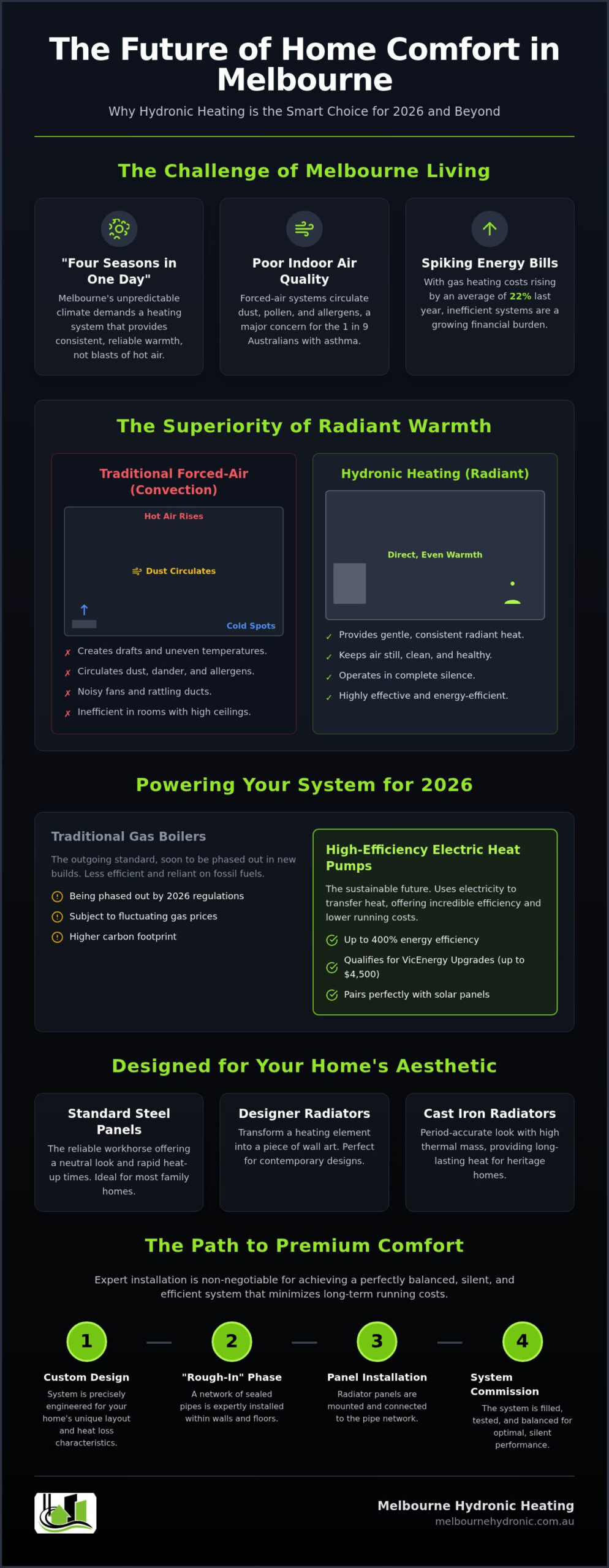
A successful hydronic radiator installation melbourne begins with an engineering-first mindset. It’s not about simply hanging panels; it’s about designing a closed-loop system that matches your home’s unique thermal profile. Our process starts with a comprehensive consultation where we review your floor plans to perform precise heat loss calculations. This ensures that every radiator is sized correctly to maintain a steady temperature without wasting energy. We act as consultants during this phase, helping you choose the best locations for maximum comfort and aesthetic appeal.
Once the design is finalized, we move into the “Rough-In” phase. This is the most technical part of the journey, involving the installation of a high-quality, insulated pipework network. Depending on your home’s construction, we run these pipes through subfloor spaces or ceiling cavities. We use premium materials to ensure oxygen-tight seals and long-term durability. This stage sets the foundation for a silent, leak-free system that operates under pressure for decades.
After the pipework is secured, we mount your chosen radiator panels and connect the central heat source, whether it’s a high-efficiency gas boiler or a modern electric heat pump. The final and most vital step is system commissioning. This involves pressure testing the entire network to ensure integrity and “balancing” the system. Balancing is a critical process where we adjust the flow rate of each radiator so they all heat up at the same speed, preventing cold spots or noisy pipes. We then walk you through the system operation, ensuring you’re comfortable with your new controls.
Retrofitting Radiators in Existing Melbourne Homes
Retrofitting radiators into an existing home requires a delicate touch and local expertise. We specialize in navigating the tight subfloors of classic Melbourne weatherboard and brick veneer houses, ensuring that your original floorboards and heritage plasterwork remain undisturbed. Most standard 3-bedroom home installations are completed within 3 to 5 days. We treat your property with the respect it deserves, leaving your sanctuary as clean as we found it, only much warmer. If you want to see how this fits your specific property, you can book a professional consultation with our design team today.
New Build Integration
For those building from scratch, early-stage planning with your architect and builder is the key to a seamless result. We coordinate with other trades during the framing stage to integrate pipework into the structure, allowing for “invisible” installations where pipes are hidden within walls. By planning now, you can future-proof your new build for future solar PV integration or heat pump upgrades. This ensures your property meets the 2026 energy efficiency standards and maintains its value for years to come.
Why Expert Installation is the Key to Long-Term Performance
The longevity of your heating system depends on more than just the quality of the panels you choose. While a professional hydronic radiator installation melbourne provides the foundation for home comfort, the precision of the initial balancing and the consistency of subsequent care determine how efficiently that system runs a decade from now. Balancing is the technical process of calibrating water pressure so that a radiator in a distant upstairs bedroom receives the same thermal energy as the one closest to the heat source. Without this expert touch, your system will work harder than necessary, leading to increased wear on your pump and higher energy consumption.
We treat every home as a unique thermal environment. A system that isn’t professionally commissioned often suffers from “short-cycling,” where the boiler or heat pump turns on and off too frequently. This doesn’t just waste energy; it significantly shortens the lifespan of your most expensive components. By choosing a specialist with over 30 years of local industry experience, you ensure that your system is optimized for Melbourne’s specific climate conditions from day one. We don’t believe in “one size fits all” solutions; we believe in engineering that lasts.
System Maintenance and Power Flushing
Hydronic systems are sealed, but they aren’t immune to the internal chemistry of water and metal. Over time, a black, muddy substance known as magnetite or “sludge” can build up within the pipes and radiator panels. This sludge restricts flow and acts as an insulator, preventing the metal from radiating heat effectively. If left unaddressed, it can eventually cause a total boiler or heat pump failure. This is why a comprehensive hydronic heating service in Melbourne is vital for protecting your investment.
We recommend an annual check-up to maintain peak performance. For gas boilers, this involves checking gas pressures and heat exchangers. For heat pumps, we focus on refrigerant levels and external airflow. Every few years, your system may require power flushing. This process uses high-velocity water and specialized cleaning agents to purge the entire network of debris, restoring it to its original efficiency. You should watch for these common signs that your installation needs a professional check-up:
- Cold spots at the bottom of radiator panels.
- Noisy pipes or “kettling” sounds coming from the boiler.
- Individual rooms taking significantly longer to warm up than others.
- A noticeable increase in running costs without a change in your heating habits.
The Melbourne Hydronic Heating Difference
Our family-owned approach to customer service across Melbourne and Geelong is built on trust and technical excellence. We don’t just act as installers; we act as consultants who understand the emotional and financial value of a comfortable home. We customize every design to the specific thermal needs of your property, ensuring you get the most out of the latest 2026 technology and available government rebates. Our 30-plus years of history mean we’ve seen every type of Melbourne home, and we know exactly how to make yours feel like a sanctuary. Ready to transform your home? Request a custom hydronic quote today and experience the difference that local expertise makes.
Invest in a Lifetime of Premium Home Comfort
Choosing the right heating is about more than just surviving the winter; it’s about investing in a lifestyle of silent, healthy warmth. By embracing modern electric heat pumps and precision-engineered radiator panels, you’re securing a system that meets Victoria’s 2026 energy standards while protecting your home from rising gas costs. Whether you’re retrofitting a heritage cottage or designing a sustainable new build, the transition to radiant heat offers a level of comfort that forced-air systems simply can’t match.
A high-performance system requires a specialist touch to ensure long-term reliability. Our family-owned business brings over 30 years of local experience to every project, ensuring your hydronic radiator installation melbourne is designed for maximum efficiency. We combine heritage expertise with cutting-edge heat pump technology to create a sanctuary of warmth tailored specifically to your property’s thermal needs.
Get a Professional Hydronic Installation Quote for Your Melbourne Home
Your journey to a cleaner, quieter, and more efficient home starts with a simple conversation. We look forward to helping you transform your living space into a haven of well-being that your family will enjoy for decades to come.
Frequently Asked Questions
How long does it take to install a hydronic radiator system in a typical Melbourne home?
A standard 3-bedroom home typically takes between 3 and 5 days to complete. The exact timeline depends on whether it’s a new build or a retrofit in an older Melbourne property. Retrofits often take slightly longer as we carefully navigate subfloors or ceiling cavities to minimize disruption to your original floorboards and heritage plasterwork.
Can hydronic radiators be installed in a double-storey house?
Yes, hydronic radiators are perfectly suited for multi-level homes. We utilize internal wall cavities, wardrobes, or specialized floor voids to run the insulated pipework between levels. Our design team ensures that the pump and manifold are correctly sized to maintain consistent water pressure and heat distribution to both the ground floor and the upper levels.
Is hydronic heating more expensive to install than ducted reverse cycle systems?
While a professional hydronic radiator installation melbourne has a higher upfront cost than a standard ducted system, it offers superior long-term value. Hydronic systems have a significantly longer lifespan, often lasting 25 years or more, and provide much lower running costs. You also save on health-related maintenance since there’s no air circulation or allergen buildup in ducts.
Will I need to move out of my house during a retrofit installation?
You don’t need to move out during a retrofit installation. Our team works methodically room-by-room to ensure your home remains habitable and tidy throughout the process. Because there’s no major ductwork to install, the disruption is minimal compared to other heating upgrades. We treat your sanctuary with respect and leave the site clean at the end of every day.
How do I choose between a gas boiler and an electric heat pump for my radiators?
The choice depends on your property’s specific infrastructure and your sustainability goals. In 2026, many Melbourne homeowners are choosing electric heat pumps to take advantage of Victorian government rebates and bypass rising gas prices. However, high-efficiency gas boilers remain an excellent option for heritage homes where external space for a heat pump unit might be limited.
Are hydronic radiators safe for homes with young children or pets?
Hydronic radiators are incredibly safe for families with young children and pets. The surface temperature of the panels is controlled and won’t cause burns on contact, unlike traditional wood heaters or electric bar heaters. Modern panels also feature rounded edges and no exposed flames or moving parts, providing a secure and child-friendly environment for your little ones.
Do hydronic radiators require a lot of maintenance after installation?
Maintenance is minimal but essential for keeping your system at peak efficiency. We recommend an annual professional service to check water pressures and the health of your heat source. Every few years, a power flush may be necessary to remove any internal sediment. This simple routine protects your investment and ensures your radiators continue to heat your home evenly.
Can I add more radiators to my system later if I extend my home?
You can certainly add more radiators later, provided your central boiler or heat pump has the capacity to handle the extra load. During the initial design phase, we often recommend sizing your heat source and manifold with future extensions in mind. This foresight allows you to expand your system seamlessly if you decide to add a new room down the track.