
Electric Heat Pump Hydronic System Running Costs: 2026 Melbourne Guide
If electricity in Melbourne costs roughly 26.8 cents per kilowatt-hour while gas remains cheaper per unit, why are so many Victorian homeowners rushing to disconnect their gas meters? You’ve likely felt the sting of rising gas tariffs lately, and with electricity bills jumping another 7.5% in 2026, it’s natural to feel uncertain about the best way to heat your home. It’s frustrating to face a cold Melbourne winter without a clear picture of what your monthly utility spend will actually look like once you make the switch.
We’re here to provide that clarity by diving deep into electric heat pump hydronic system running costs and how they stack up against traditional boilers. You’ll discover how a Coefficient of Performance (COP) of 4 or higher allows these systems to generate four units of heat for every one unit of power consumed, making them a premium, future-proof investment for your home’s comfort and well-being.
This guide breaks down the latest 2026 Citipower rates, explains how to stack VEU and Solar Victoria rebates to save up to $2,000 on installation, and provides actionable tips on zoning to keep your annual energy bills as low as possible.
Key Takeaways
- Understand why a Coefficient of Performance (COP) of 4.0 is the secret to cutting energy consumption by transforming 1kW of power into 4kW of premium warmth.
- Compare 2026 Melbourne energy tariffs to see how electric heat pump hydronic system running costs outperform traditional gas boilers despite rising electricity prices.
- Discover how integrating solar PV and smart zoning can turn your roof into a free fuel source while ensuring you only heat the rooms you’re actually using.
- Evaluate the long-term return on investment and why a custom-engineered system is essential for maximizing efficiency in Victoria’s unique climate.
Understanding Electric Heat Pump Hydronic System Running Costs
Running costs are the ongoing expenses you pay to keep your home at a stable, comfortable temperature. Unlike the initial investment, these costs are recurring and influenced by fluctuating energy markets. In Melbourne, the 2026 energy landscape has reached a turning point. With average electricity rates sitting around 26.8 c/kWh, many residents are scrutinizing their utility bills more closely than ever. Understanding electric heat pump hydronic system running costs requires looking at three core pillars: the efficiency of the unit, the price of the energy source, and the specific thermal demand of your property.
The shift from traditional gas boilers to electric heat pumps is accelerating across Victoria. This transition is driven by a desire for greater energy independence and the superior efficiency of modern technology. By moving heat rather than creating it through combustion, these systems redefine how we think about home comfort. Learning how heat pumps work reveals why they are the most logical choice for a future-proof home. They leverage the refrigeration cycle to extract ambient warmth from the outside air, even during a brisk Melbourne morning. It’s a sophisticated process that turns a small amount of electricity into a significant amount of heat.
Why Melbourne Homeowners are Switching to Electric Hydronics
The Victorian Government’s phase-out of residential gas connections has fundamentally changed the long-term cost equation for local families. Beyond policy, the health benefits are a major draw. Hydronic systems don’t rely on fans to circulate air, which means they don’t stir up dust or allergens. This makes them the gold standard for asthma and allergy sufferers. Additionally, an electric system provides a clear path to a 100% renewable-powered home. When paired with solar panels, your heating becomes nearly self-sustaining, shielding you from future energy price hikes.
The Key Components that Influence Your Energy Bill
Several technical factors determine your final bill. The size of the heat pump unit must be precisely matched to your home’s volume. An undersized unit will work too hard, while an oversized one will cycle on and off too frequently. Your choice of distribution also matters. Hydronic underfloor heating typically operates at lower water temperatures than hydronic radiator panels, which can lead to higher efficiency. Finally, your home’s thermal insulation plays a massive role. A well-insulated 6-star rated house can cost as little as 30% to heat compared to a drafty 2-star property. Reducing the total system runtime through better glazing and insulation is the most effective way to lower your electric heat pump hydronic system running costs.
The Science of Savings: COP and Energy Efficiency
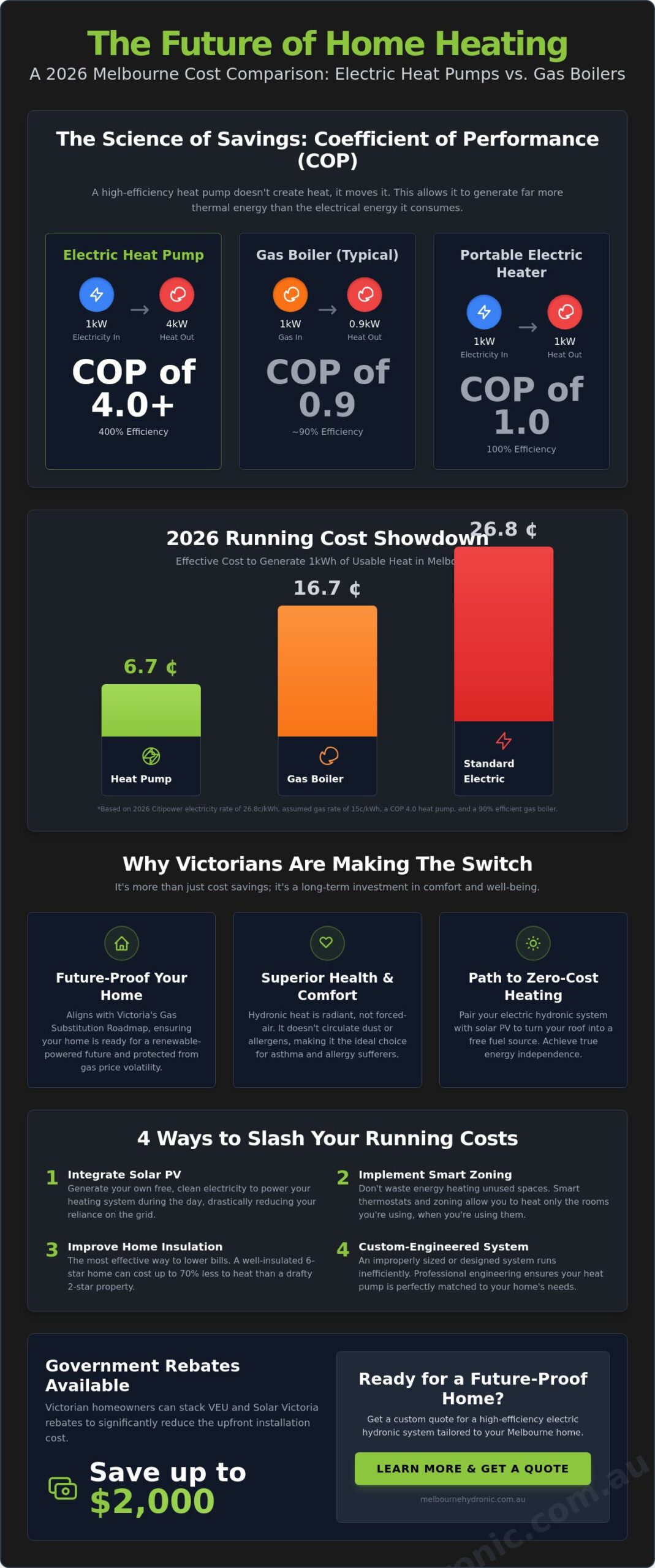
Efficiency is the engine room of your home’s financial performance. To understand electric heat pump hydronic system running costs, you must first understand the Coefficient of Performance, or COP. While a standard electric portable heater has a COP of 1.0; meaning it turns one kilowatt of electricity into exactly one kilowatt of heat; a high-end heat pump operates at a COP of 4.0 or higher. This means you receive four kilowatts of premium warmth for every single kilowatt of power you purchase. It is a mathematical advantage that traditional gas boilers simply cannot match.
The secret lies in the inverse refrigeration cycle. Instead of burning a fuel source to create heat from scratch, a heat pump acts as a transporter. It extracts existing thermal energy from the outdoor air and moves it into your home’s water circuit. Even when the air feels cold to us, it contains massive amounts of harvestable energy. This shift from “creation” to “transportation” is why the old belief that electric heating is expensive no longer holds true for modern hydronic systems. This technological leap is a central pillar of Victoria’s Gas Substitution Roadmap, which encourages the move toward highly efficient electric alternatives.
How Melbourne Temperatures Affect Heat Pump Efficiency
Melbourne’s brisk 2 to 5 degree winter mornings are often cited as a concern for heat pump performance. However, modern air-to-water heat pumps are engineered specifically for these conditions. Unlike standard air conditioners that may struggle as temperatures drop, dedicated hydronic heat pumps use advanced compressors to maintain a high COP even in single-digit weather. Melbourne’s temperate climate is actually an ideal environment for this technology. We rarely experience the sustained sub-zero temperatures that would significantly hinder the system’s ability to extract heat efficiently.
Low-Temperature vs High-Temperature Systems
The temperature of the water in your pipes directly impacts your monthly bill. Hydronic underfloor heating is the most efficient partner for a heat pump because it only requires water temperatures between 35 and 45 degrees Celsius. This lower “lift” allows the heat pump to operate at its peak COP. If you prefer hydronic radiator panels, we can still achieve excellent results by slightly increasing the panel size. This allows them to heat the room effectively while using cooler water. Implementing weather compensation technology further refines this by automatically adjusting the system’s output based on the outdoor temperature. If you are considering a transition, you can explore our range of electric heat pumps to see which configuration best suits your floor plan.
Running Costs Comparison: Heat Pumps vs. Gas Boilers in 2026
Comparing gas and electricity requires looking past the simple cost per unit. Natural gas has a high energy density, but even the most advanced condensing boilers only achieve around 90 to 95% efficiency. In contrast, an electric heat pump leverages the environment to reach efficiencies of 400% or more. This massive gap in performance is why electric heat pump hydronic system running costs often remain lower than gas, despite electricity costing more per kilowatt-hour. When you burn gas, you lose energy through the flue; when you use a heat pump, you gain energy from the ambient air.
Melbourne residents must also consider the daily supply charge. As of May 2026, the average daily electricity supply charge sits around $1.02. If you maintain a gas connection solely for heating or cooking, you pay a second daily supply charge for the gas network. This “double standing charge” can add over $370 to your annual utility spend before you even turn a heater on. By transitioning to a fully electric home, you eliminate one of these fixed costs entirely. Detailed data from the Australian Government on the energy efficiency of heat pumps confirms that moving away from combustion-based systems is the most effective way to lower long-term household overheads.
For a typical 3-bedroom Melbourne home of approximately 160 square metres, annual gas hydronic costs were estimated at $1,657 back in 2023. With the 7.5% increase in energy bills seen in 2026, those relying on gas are facing significantly higher numbers. A well-designed electric heat pump system can reduce this annual spend by 30 to 60%, especially when the home is well-insulated and the system is programmed to run during off-peak windows.
The Financial Impact of Victoria’s Gas Phase-Out
Removing your gas connection does more than just lower your monthly bills. It protects your property’s value as the state moves toward a renewable future. Victorian Energy Upgrades (VEU) rebates currently offer upfront discounts ranging from $500 to $1,200 for heat pump transitions. These incentives, combined with the Solar Victoria rebate of up to $1,000, make the financial case for switching incredibly strong. You aren’t just buying a heater; you’re investing in a modern infrastructure that avoids the volatile price spikes of fossil fuels.
Annual Consumption Breakdown for Melbourne Homes
While gas is measured in Megajoules (MJ) and electricity in Kilowatt-hours (kWh), the real metric is the total cost of ownership. Gas boilers require regular combustion checks and component replacements due to high-heat stress. Heat pumps, while sophisticated, operate at much lower temperatures and generally have a longer service life with fewer mechanical failures. Over a 15-year period, the combined savings from lower usage rates, eliminated supply charges, and reduced maintenance make the electric heat pump the most economical choice for the modern Melbourne home.
4 Ways to Slash Your Hydronic Running Costs
Optimising your electric heat pump hydronic system running costs isn’t just about the hardware you install. It’s about how you manage the energy flow within your home. While the technology is inherently efficient, proactive management can bridge the gap between a good energy bill and a great one. By aligning your heating schedule with Melbourne’s specific energy patterns, you can reclaim control over your monthly utility spend.
One of the most effective strategies involves leveraging smart thermostats and zoning. Traditional gas central heating often operates on an “all or nothing” basis, heating every corner of the house regardless of occupancy. Modern hydronic systems allow you to divide your home into distinct zones. You can keep the bedrooms cool during the day while maintaining a perfect 21 degrees in the home office. This precision ensures you don’t waste power heating empty spaces, which is a simple way to protect your budget.
Off-peak charging is another powerful tool. Many Melbourne electricity tariffs offer significantly lower rates during overnight or midday windows. You can program your heat pump to “buffer” heat into your underfloor thermal mass or a large water storage tank during these cheaper periods. The system then releases this stored warmth throughout the day. It’s a method that effectively turns your home into a thermal battery, reducing the need to draw expensive power during the evening peak.
Maximising Solar PV for Hydronic Heating
If you have solar panels, your roof is essentially a free fuel source. The goal is to time your heat pump’s “boost” cycle to coincide with peak solar production, typically between 10 am and 2 pm. Even on a cloudy Melbourne winter day, a solar array can often provide enough power to run the compressor of a high-efficiency heat pump. This synergy between battery storage and hydronic thermal mass allows you to minimize your reliance on the grid. It’s a sustainable loop that keeps your home cozy without the premium price tag of imported energy.
The Importance of System Health
System efficiency can degrade over time if internal hygiene is ignored. Sludge and magnetite buildup in your radiators or underfloor coils create an insulating layer that prevents heat transfer. This forces your heat pump to run longer and consume more electricity to reach your desired temperature. Implementing power flushing removes these contaminants and restores the system to its original factory performance. A clean system maintains a higher COP, ensuring your electric heat pump hydronic system running costs stay as low as possible. We recommend booking a professional hydronic heating service Melbourne once every two years to verify your system is operating at peak technical precision. If you haven’t had your system checked recently, you can schedule a maintenance assessment to ensure you aren’t overpaying for your comfort.
Is an Electric Heat Pump Right for Your Melbourne Home?
Deciding on a heating system is a long-term commitment to your family’s comfort and your property’s value. While the initial capital might be higher than a standard boiler replacement, the cumulative electric heat pump hydronic system running costs over the next decade tell a different story. As Victoria moves away from gas infrastructure, an electric system offers a stable, efficient, and healthy alternative that aligns with the future of energy in Melbourne. It’s a premium choice that rewards you with lower bills and a smaller carbon footprint every year you live in your home.
Success isn’t found in a box. An “off-the-shelf” heat pump that hasn’t been sized for your specific floor plan will often lead to disappointing performance and inflated energy bills. Professional design is the only way to ensure your system operates at its peak technical potential. With over 30 years of local experience, Melbourne Hydronic Heating has seen how Melbourne’s unique architectural styles, from Victorian terraces to modern open-plan builds, require a tailored approach to thermal management. We don’t just sell components; we engineer solutions that provide a lifetime of quiet, reliable warmth.
Custom Design for Melbourne and Geelong Climates
A “one size fits all” approach is the fastest way to increase your monthly overheads. If a unit is too small, it will run constantly without ever reaching the set point. If it’s too large, it will cycle on and off, wearing out the compressor prematurely. Our team performs detailed heat loss calculations for every room. This precision sizing ensures your heat pump is perfectly matched to your home’s volume and insulation levels. Our local specialists understand the specific challenges of the Victorian climate, allowing us to design systems that maintain a high COP even on the coldest July mornings.
Your Next Steps to Energy Independence
Transitioning to a heat pump hydronic heating system is a straightforward process when guided by experts. During a professional design consultation, we’ll assess your existing infrastructure, analyze your solar capacity, and provide a site-specific estimate of your expected electric heat pump hydronic system running costs. We’ll walk you through the zoning options and radiator placements that best suit your lifestyle. This ensures you have a clear roadmap to energy independence before any work begins. If you’re ready to secure your home’s comfort for the next generation, Contact Melbourne Hydronic Heating today for a comprehensive heating design that prioritizes your well-being and your budget.
Secure Your Home’s Thermal Future
Transitioning to electric hydronics significantly reduces household overheads through environmental warmth and smart energy management. By eliminating redundant gas supply charges and integrating solar PV, you create a self-sustaining ecosystem that prioritizes both your health and your budget. Understanding the nuances of electric heat pump hydronic system running costs is the first step toward a more sustainable and cost-effective Melbourne lifestyle. You’ve seen how modern technology outpaces traditional combustion, providing a cleaner path to home comfort.
At Melbourne Hydronic Heating, we bring over 30 years of local expertise to every project. As a family-owned Victorian business, we specialize in high-efficiency heat pump designs that are specifically engineered for our unique climate. We don’t believe in generic, off-the-shelf solutions. We believe in technical precision that delivers genuine, long-term value for our clients.
Request a custom running cost analysis for your Melbourne home to discover how a precision-engineered system can transform your living environment. Investing in modern hydronic technology is more than a technical upgrade; it’s a commitment to a cleaner, more comfortable way of life for your family.
Frequently Asked Questions
How much does it cost to run a hydronic heat pump per year in Melbourne?
Annual costs vary based on your home’s insulation and size, but a high-efficiency system typically costs significantly less than traditional electric storage. For context, while a small heat pump hot water system might cost $150 to $300 annually, a full home heating system scales with your floor plan. The electric heat pump hydronic system running costs stay low because the unit extracts ambient heat rather than creating it, making it roughly three times more efficient than a standard electric heater.
Is it cheaper to run hydronic heating on gas or electricity?
Modern heat pumps are now the most cost-effective choice for Melbourne homes in 2026. While gas unit prices were historically lower, the 400% efficiency of a heat pump far outpaces the 90% efficiency of a gas boiler. When you factor in the 7.5% increase in Victorian electricity bills and the rising costs of gas, the ability to “multiply” energy through a heat pump provides a clear financial advantage over combustion-based systems.
Do heat pumps work effectively in Melbourne’s coldest winter nights?
Yes, modern air-to-water heat pumps are specifically engineered to maintain performance during single-digit mornings. These systems use advanced compressors that can extract warmth from the air even when temperatures hover between 2 and 5 degrees. Unlike standard split systems that might struggle, a dedicated hydronic heat pump is designed for sustained operation in the Victorian winter, ensuring your home stays perfectly comfortable regardless of the outdoor frost.
Can I use my existing radiators with a new electric heat pump?
You can often retain your existing radiator panels, though a technical assessment is required. Heat pumps operate most efficiently at lower water temperatures, so we check if your current radiators have enough surface area to heat the room effectively under these conditions. In some cases, we might suggest upgrading specific panels or adding fan coils to ensure the system maintains a high Coefficient of Performance (COP) while keeping you warm.
How much can I save by pairing my hydronic system with solar panels?
Solar integration can reduce your grid reliance for heating by 40% to 70% during the winter months. By programming your system to run its primary heating cycle during peak solar production windows, you’re essentially using free energy from your roof. This synergy turns your home’s thermal mass into a battery, storing warmth during the day so the system doesn’t need to draw expensive power from the grid during the evening peak.
What is the average lifespan of an electric hydronic heat pump?
A well-maintained heat pump typically lasts between 15 and 20 years. Because these units don’t use combustion, they aren’t subjected to the extreme heat stress that eventually degrades gas boilers. The steady, low-temperature operation preserves the internal components. Choosing a professional installation ensures the unit isn’t “short-cycling,” which is the most common cause of premature wear in poorly designed systems.
Are there Victorian government rebates for heat pump hydronic systems?
Victorian homeowners can access several incentives, including the Solar Victoria Hot Water Rebate of up to $1,000 for eligible owner-occupiers. Additionally, the Victorian Energy Upgrades (VEU) program provides upfront discounts that generally range from $500 to $1,200. By stacking these with federal Small-scale Technology Certificates (STCs), you can often achieve total installation savings of over $2,000, significantly lowering the barrier to entry for a 100% electric home.
How often does a heat pump hydronic system need servicing to stay efficient?
We recommend a professional service every two years to ensure your electric heat pump hydronic system running costs remain at their absolute minimum. Regular maintenance involves checking the refrigerant charge, cleaning the outdoor evaporator coils, and ensuring the water circuit is free of debris. This proactive care prevents the system from working harder than necessary, protecting your COP and extending the life of your investment.