
Hydronic Heating for Allergy Sufferers in Melbourne & Geelong: The 2026 Health Guide
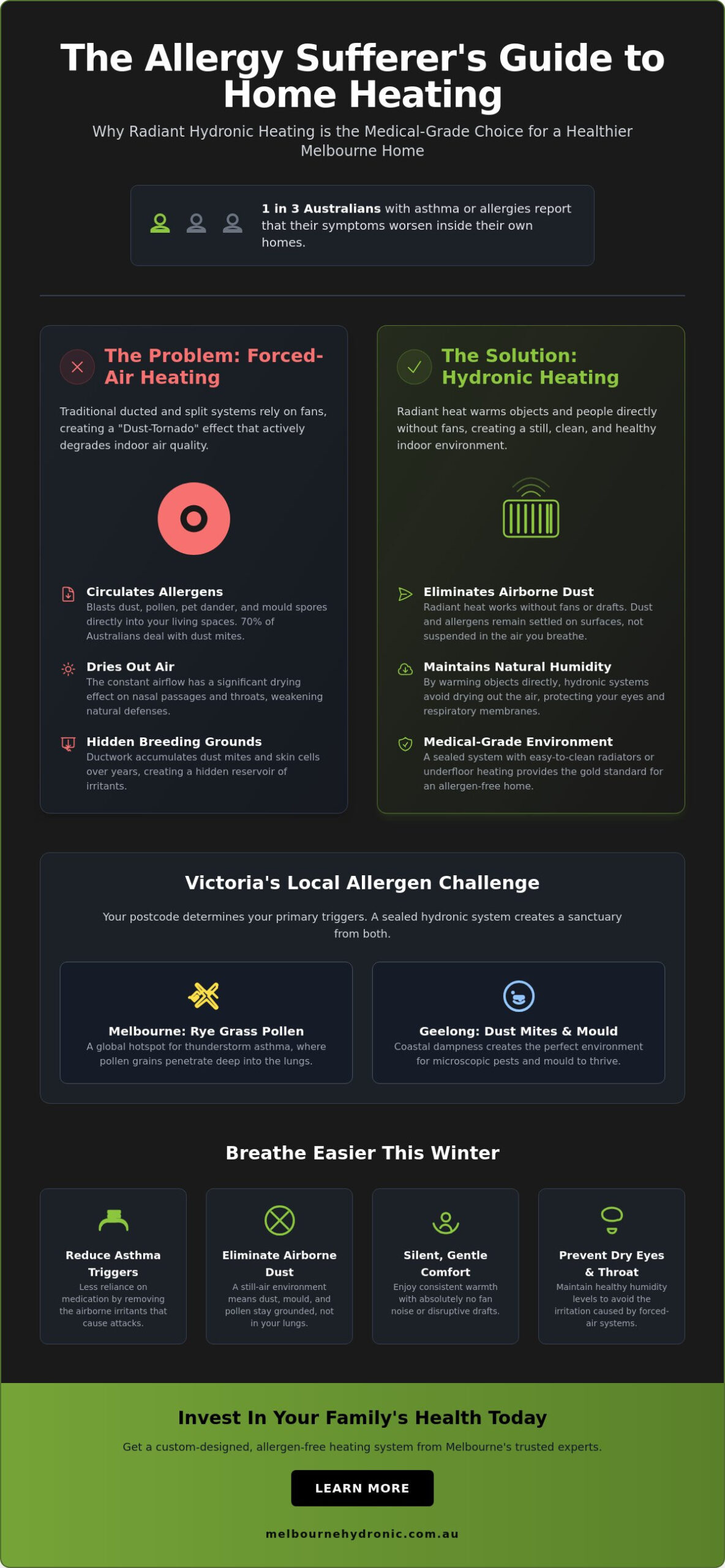
Approximately one in three Australians with asthma or allergies report that their symptoms actually worsen inside their own homes. If you find yourself reaching for antihistamines or waking up with a sore throat the moment your heater kicks in, you aren’t alone. Research shows that 70% of Australians have dealt with dust mites in the last 12 months, and traditional fan-forced systems often act as a delivery service for these microscopic triggers. This is why hydronic heating for allergy sufferers Australia has become the medical-grade choice for families across Melbourne and Geelong who are tired of the winter sniffles.
You deserve a home environment that supports your health rather than compromising it. With the mandatory adoption of the 2025 Plumbing Code of Australia on 1 May 2026, there is a clear shift toward systems that prioritize indoor air quality and efficiency. This guide explains how switching to radiant heat eliminates airborne dust and dry eyes, helping you reduce your reliance on asthma medication during the colder months. We will explore the latest heat pump technology, explain how to access Victorian Energy Upgrades (VEU) rebates, and show you how to enjoy a silent, draft-free winter without the constant sneezing.
Key Takeaways
- Understand why radiant heat technology eliminates the circulation of dust, pollen, and mould spores by removing the need for fans and vents.
- Discover why hydronic heating for allergy sufferers Australia is considered the gold standard for creating a medical-grade, allergen-free indoor environment.
- Compare the benefits of easy-to-sanitize radiator panels and underfloor heating to find the most effective solution for your family’s respiratory health.
- Learn how professional servicing and maintenance ensure your system continues to provide clean, gentle warmth without drying out your eyes or throat.
- Find out how a custom-designed system can help reduce your household’s reliance on asthma medications during the damp Melbourne winter.
The Health Crisis: Why Melbourne Winters Trigger Allergies
Melbourne and Geelong residents face a unique respiratory challenge every winter. While one in nine Australians lives with asthma, the damp Victorian climate often pushes local symptoms to a breaking point. When the temperature drops, we naturally seal our homes to keep the cold out. Unfortunately, this also traps allergens inside. Traditional forced-air systems, such as ducted gas or split systems, create what we call a “Dust-Tornado” effect. These units rely on powerful fans to push air through your home, which doesn’t just distribute heat; it recirculates dust, pet dander, and mould spores. For families searching for hydronic heating for allergy sufferers Australia, the priority is breaking this cycle of airborne irritation.
Our region is also susceptible to severe environmental health events. Victoria is a global hotspot for thunderstorm asthma, where rye grass pollen grains burst in the damp air and become small enough to penetrate deep into the lungs. During these periods, your home must serve as a sanctuary. However, if your heating system is constantly stirring up settled particles or pulling in external triggers, your indoor air quality remains compromised. Research indicates that cooking with gas and using unflued gas heating is responsible for up to 12% of the childhood asthma burden in Australia, making the move toward cleaner, radiant solutions a matter of family health.
The Hidden Dangers of Ducted Heating
Ductwork is often a case of “out of sight, out of mind,” but these hidden channels are prime breeding grounds for allergens. Over years of operation, dust mites and skin cells accumulate in the dark, warm crevices of uncleaned vents. When the fan engages, these microscopic triggers are blasted directly into your bedrooms and living spaces. Beyond the particles themselves, forced air has a significant drying effect on your nasal passages and throat membranes. This dehydration weakens your body’s natural barriers against respiratory illness. Even systems equipped with HEPA filters often struggle because they only treat the air passing through the unit, leaving the dust on your floors and furniture to be disturbed by the constant airflow.
Local Allergen Profile: Melbourne vs. Geelong
The specific triggers you face often depend on your postcode. In Melbourne, the rye grass pollen season is a primary contributor to winter and spring respiratory distress, especially in the leafy eastern suburbs. In contrast, Geelong’s coastal dampness creates a perfect environment for dust mites and mould to thrive. These pests require moisture to survive, and traditional heating methods often fail to regulate humidity levels effectively. The Science of Underfloor Heating and radiator panels demonstrates that by warming objects directly through radiation, we can maintain a stable, comfortable temperature without the airborne chaos of traditional vents. A sealed hydronic system ensures that the air you breathe remains still, clean, and free from the irritants that dominate the Victorian landscape.
Radiant vs. Forced-Air: The Science of Dust-Free Heating
To understand why radiant heat is superior for respiratory health, we must look at how energy moves through a room. Most Melbourne homes rely on forced-air systems that use powerful fans to distribute warmth. This process, known as forced convection, creates a constant cycle of air movement. In contrast, radiant heat works like the sun. It emits energy that warms surfaces and objects directly, such as your floors, furniture, and even your body, without needing to blow air around. Because the heat is transferred through electromagnetic waves rather than moving air currents, the environment remains remarkably still.
This stillness is the secret to a healthier home. According to the EPA Guide to Indoor Air Quality, central heating systems can be significant sources of indoor pollution if they aren’t managed correctly. While ducted systems struggle with particulate distribution, hydronic systems use natural convection. This is a gentle, passive process where warm air rises slowly from a radiator or floor and cools as it nears the ceiling. There are no aggressive fans to kick up settled allergens, making hydronic heating for allergy sufferers Australia the most stable climate solution available for sensitive households.
Eliminating the “Dust-Tornado”
When a fan-forced heater turns on, it creates a localized high-pressure zone that disturbs particulates as small as 0.3 microns. These tiny triggers, including dust mite droppings and pet dander, stay suspended in the breathing zone for hours. Hydronic systems eliminate this “Dust-Tornado” entirely. By using water to carry heat through sealed pipes to radiator panels or floor coils, the system provides “sun-like” warming of surfaces. You’ll notice that dust stays on the floor where it can be easily vacuumed, rather than floating in the air you breathe. If you’re tired of seeing dust motes dancing in the light every time the heater starts, exploring modern hydronic solutions is the first step toward a healthier home.
Maintaining Healthy Humidity
Standard heaters often strip moisture from the air, pushing indoor humidity levels below the healthy 30% threshold. This bone-dry air irritates the mucous membranes in your nose and throat, making you more susceptible to allergens. Hydronic systems are “wet” systems that don’t combustion-dry the air, helping to preserve the natural dew point of your rooms. This consistency is vital for lung health and also prevents the cold spots where condensation and mould typically form. By maintaining a steady, gentle temperature across all surfaces, you create an environment where mould spores find it much harder to colonize, further protecting your family’s airway health.
Radiators vs. Underfloor: Which is Better for Sensitive Airways?
While both radiator panels and underfloor systems provide the air stillness required for hydronic heating for allergy sufferers Australia, they achieve this goal through different delivery methods. Choosing between them often depends on your home’s construction and your specific health triggers. Both systems eliminate the need for the vents and ducts that 48% of Australian households rely on, which often harbor pollutants. By focusing on radiant heat, you shift from a system that moves air to one that moves energy, providing a foundational step in Controlling Indoor Allergens effectively.
The “Warm Feet, Cool Head” philosophy is central to both options. Unlike split systems that blast hot air toward the ceiling, hydronic systems keep the warmth where you live. This vertical temperature gradient is particularly beneficial for sleep quality. When your head remains in a slightly cooler zone while your body stays warm, your respiratory system doesn’t have to work as hard to process dry, overheated air. This reduces the likelihood of waking up with the “winter throat” or dry eyes common in Melbourne’s colder months.
Hydronic Radiator Panels: The Allergy Warrior
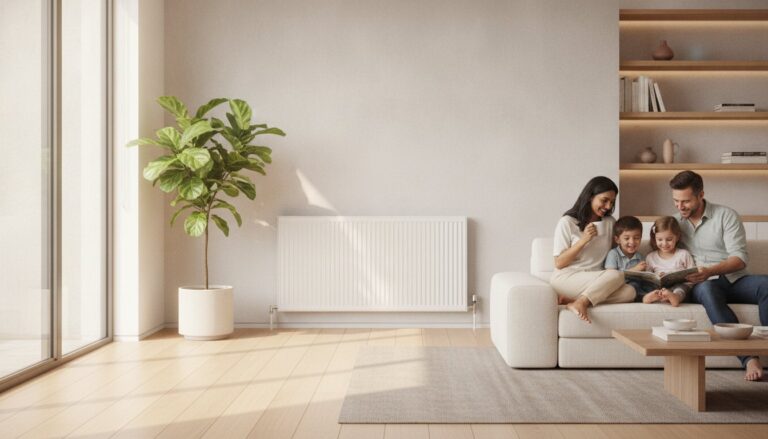
Modern Hydronic Radiator Panels are designed with hygiene as a priority. Older style radiators often had complex fins that acted as dust traps, but 2026 designs feature smooth, powder-coated surfaces that you can wipe clean in seconds. Because these panels don’t use fans, they don’t create the static electricity that attracts dust to walls and furniture. They are also the ideal choice for retrofitting older homes in Melbourne’s inner suburbs, where installing underfloor coils isn’t feasible. The ability to “zone” your heating means you can keep bedrooms at a slightly lower, allergen-safe temperature while maintaining luxury warmth in living areas.
Underfloor Heating: A Slab-Down Solution
For those building new homes or undergoing major renovations, underfloor heating in Melbourne offers a powerful defense against dust mites. Research shows that 70% of Australians have dealt with pests like dust mites in the last 12 months. These microscopic triggers thrive in the damp, cool fibers of carpets and floor coverings. By warming the slab directly, you eliminate the cold damp spots where mites proliferate. This “slab-down” approach is particularly effective in Geelong and coastal areas where higher humidity levels can lead to mould growth in floor-level corners. When paired with hard-surface flooring like tile or polished concrete, underfloor heating creates an environment that is practically impossible for allergens to colonize.
Beyond the Install: Maintaining a Medical-Grade Environment
While the lack of fans makes hydronic heating for allergy sufferers Australia the superior choice, the system’s internal health is what guarantees long-term air quality. A neglected system can develop internal corrosion, often called “sludge,” which prevents radiator panels from heating evenly. When certain areas of a panel remain cold, it creates temperature imbalances in a room that can lead to localized condensation. As we established earlier, dampness is the primary fuel for mould growth in Melbourne homes. Ensuring your system is professionally maintained is the only way to prevent these microscopic triggers from returning.
A regular hydronic heating service in Melbourne involves more than just a mechanical check. It’s a health audit for your home’s climate. Our technicians look for early signs of bacterial growth in the water and check that the system’s pressure is optimal. This precision prevents the “dry air” effect caused by overheating, which we know irritates sensitive respiratory tracts. By keeping the water chemistry balanced, we ensure the radiant heat remains gentle and consistent across every square inch of your home.
The Power of Power Flushing
Power flushing is a specialized cleaning process that removes years of rust, magnetite, and debris from your pipes and radiators. For an allergy-prone household, this is critical. Internal blockages force the system to work harder, often leading to fluctuating temperatures that disturb the “physics of stillness” we strive for. A flushed system runs quieter and cleaner, ensuring that every room reaches the exact temperature required to keep dust mites at bay. This process also extends the life of your heat exchanger, maintaining the medical-grade standards your family relies on.
Annual Health Check for Your System
Precision is the enemy of allergens. During an annual check, we calibrate your thermostats to ensure they aren’t overcompensating and drying out the air. We also inspect every panel and joint for micro-leaks. Even a tiny, unnoticed leak under a floorboard or behind a radiator can create a damp patch where mould spores thrive. Finally, we verify that your boiler or heat pump is operating at peak emission standards. This is especially important following the 1 May 2026 adoption of the new Plumbing Code of Australia, which emphasizes efficiency and safety. If you haven’t had your system inspected recently, you can book a comprehensive health check to ensure your home remains a sanctuary.
Investing in Your Family’s Health with Melbourne Hydronic Heating
Choosing a heating system is a significant decision for any homeowner, but when family health is the priority, it’s an investment that pays dividends every single winter. Melbourne Hydronic Heating brings over 30 years of local experience to every project, ensuring that your installation is perfectly suited to the unique Victorian climate. We don’t just install hardware; we engineer environments. For families seeking hydronic heating for allergy sufferers Australia, our local heritage means we understand the specific moisture levels and pollen counts that define our region. We know exactly how a damp Geelong morning or a high-pollen Melbourne afternoon affects your indoor air quality.
The long-term return on investment extends far beyond your monthly energy bills. When you consider the reduced reliance on asthma medications, fewer missed school or work days, and the sheer luxury of waking up without a congested chest, the value becomes clear. Modern technology makes this transition even more accessible and sustainable. By moving toward heat pump hydronic heating, you’re choosing a future-proof, all-electric system that aligns with Victoria’s electrification goals. These systems provide the most efficient radiant warmth available while significantly lowering your home’s carbon footprint.
Professional Design and Installation
Off-the-shelf heating solutions often fail because they don’t account for the “cold spots” where mould spores love to colonize. Our design process involves meticulous heat load calculations for every room in your house. We analyze your home’s orientation, insulation levels, and window placement to ensure the radiant heat is perfectly balanced. This precision prevents the sudden temperature fluctuations that can trigger respiratory sensitivities. Every component Melbourne Hydronic Heating uses is selected for its durability and performance, backed by our quality guarantee and dedicated local support.
Take the First Step to a Sneeze-Free Winter
Preparing your home for a healthier winter starts with a specialized consultation at your property. During our health-focused assessment, we don’t just look at boilers and pipes; we look at how your family uses each living space. We’ll identify the best locations for radiator panels or discuss the feasibility of underfloor coils to ensure maximum allergen control. You’ll receive a clear, technical breakdown of how a bespoke system will eliminate dust circulation and dry air in your home. It’s time to stop managing symptoms and start addressing the environmental cause. Get your custom hydronic heating quote today and ensure your family breathes easier this winter.
Secure a Healthier Home for the 2026 Winter
The choice to upgrade your heating is a choice to prioritize your family’s long-term respiratory health. By eliminating the forced-air currents that circulate dust and pet dander, you create a stable, medical-grade environment where allergies no longer dictate your comfort. Hydronic heating for allergy sufferers Australia offers a permanent solution to the dry eyes and sore throats that often accompany a Melbourne winter. You can finally enjoy even, gentle warmth without the constant worry of airborne triggers.
As a family-owned business with over 30 years of local experience, we specialize in designing allergy-friendly radiant systems tailored to the unique climate of Melbourne and Geelong. We understand that a truly healthy home requires technical precision and high-quality components that prevent cold spots and mould growth. Don’t let another winter pass with compromised air quality or reliance on fans that stir up settled particulates. Our expert team ensures every installation meets the highest standards for indoor air quality and comfort.
Breathe easier this winter; get a professional hydronic heating consultation in Melbourne today.
Our team is ready to help you transition to a cleaner, quieter, and more comfortable way of living. Your home should be your sanctuary, and we’re here to ensure it stays that way for years to come.
Frequently Asked Questions
Is hydronic heating really better for asthma than ducted gas heating?
Yes, hydronic systems are significantly better for asthma management because they eliminate the forced-air fans that characterize ducted gas heating. Ducted systems often recirculate dust and allergens through uncleaned vents, which triggers respiratory distress in approximately 11% of Australians living with asthma. Hydronic systems use radiant heat to warm objects directly, ensuring the air remains still and free from airborne particulates.
Can hydronic heating help with dust mite allergies in Melbourne homes?
Absolutely, especially when using underfloor heating which maintains a warm, dry environment at floor level. Dust mites require moisture to survive, and by warming the slab or floor directly, you eliminate the damp spots where 70% of household pests thrive. This is a critical factor for hydronic heating for allergy sufferers Australia, as it targets the source of triggers rather than just filtering the air.
Does hydronic heating dry out the air like split systems do?
No, hydronic heating does not dry out the air or irritate nasal passages like standard split systems or gas heaters. Because it relies on water circulating through sealed pipes, it doesn’t combustion-dry the indoor environment. This helps maintain a healthy humidity level above the 30% threshold, preventing the sore throats and dry eyes that many Melbourne residents experience during the winter months.
What is the best type of hydronic radiator for allergy sufferers?
Modern panel radiators with smooth, powder-coated surfaces are the best choice for those with sensitivities. Unlike older designs with intricate fins that act as dust traps, these panels are easy to wipe clean with a damp cloth. This design ensures that no allergens can accumulate behind or inside the unit, maintaining a medical-grade climate throughout your home.
How often should a hydronic system be serviced to maintain air quality?
You should have your system professionally serviced once every 12 months to ensure peak performance and air quality. During an annual service, technicians check for micro-leaks and balance the water chemistry to prevent bacterial growth. Regular maintenance ensures the system operates at the high efficiency standards required by the 2025 Plumbing Code of Australia, preventing any dampness that could lead to mould.
Is underfloor heating safe for children with severe allergies?
Yes, underfloor heating is widely considered the safest and most effective option for children with severe allergies. It provides a consistent, gentle warmth that doesn’t disturb settled dust on the floor where children often play. There are no exposed hot surfaces or sharp corners, and the lack of air movement significantly reduces the inhalation of microscopic triggers in nurseries and playrooms.
Can I retrofit hydronic heating into my existing Melbourne home to help with allergies?
Yes, retrofitting radiator panels is a straightforward process for most existing Melbourne homes. While underfloor heating is often best for new builds, wall-mounted radiators can be installed with minimal disruption to your flooring or structure. This allows families in older suburbs to replace inefficient, dusty heaters with a modern, allergen-friendly system that provides immediate relief for respiratory sensitivities.
Does hydronic heating produce any smells or fumes?
No, a correctly installed hydronic system produces zero smells, fumes, or combustion by-products inside your living areas. The heat source, such as a high-efficiency boiler or electric heat pump, is located outside or in a dedicated utility space. Because the system is completely sealed, there is no risk of gas leaks or the “burnt dust” smell common with traditional electric or gas heaters.