Upgrading from Gas Ducted to Hydronic Heating in Melbourne: The 2026 Guide
Why are Melbourne homeowners still paying a premium to blow dust and allergens around their living rooms while gas prices continue to climb? You’ve likely noticed your bills creeping up as Victoria moves away from fossil fuels, making the idea of upgrading from gas ducted to hydronic Melbourne homes a top priority for savvy renovators. It’s frustrating to spend thousands on a system that leaves your feet cold and your ears ringing from noisy fan operation. We believe your home should be a sanctuary of health and comfort, not a source of financial or respiratory stress.
This guide will show you how to swap inefficient, dusty ducts for a premium, silent system that uses water to radiate gentle, even warmth. We’ll explore the path to complete electrification, the health benefits of an allergen-friendly environment, and why 2026 is the pivotal year to future-proof your property. Discover how to transition to a cleaner, more sustainable way of living while enjoying the luxurious comfort that only hydronic systems can provide.
Key Takeaways
- Understand how the 2026 Victorian Gas Substitution Roadmap impacts your home and why transitioning to hydronic heating is the most future-proof solution for Melbourne’s climate.
- Learn the professional process of upgrading from gas ducted to hydronic Melbourne homes, replacing dusty, allergen-heavy air with silent, radiant warmth.
- Compare the lifetime performance and COP ratings of modern electric heat pumps versus high-efficiency gas boilers to find the most cost-effective energy source for your property.
- Discover our “No-Mess” retrofit methodology designed to protect your existing floorboards and walls while seamlessly integrating premium European engineering.
- Review current market investment ranges in A$ for various home sizes and calculate your long-term ROI through significantly reduced energy consumption.
Why Melbourne Homeowners are Phasing Out Gas Ducted Heating in 2026
Melbourne’s heating landscape has reached a definitive turning point. The Victorian Gas Substitution Roadmap, which saw significant updates in late 2023, has effectively signaled the end of the gas era for residential properties. By 2026, the shift away from fossil fuels isn’t just an environmental trend; it’s a structural change in how our city functions. Many residents now realize that upgrading from gas ducted to hydronic Melbourne systems is the most logical step to future-proof their homes. Gas ducted units often struggle with Melbourne’s unique climate, where high humidity and biting cold require a more consistent thermal mass than simple forced air can provide. These old systems are becoming increasingly expensive to maintain as gas tariffs rise and spare parts for aging units become scarce.
The Move Toward an All-Electric Melbourne
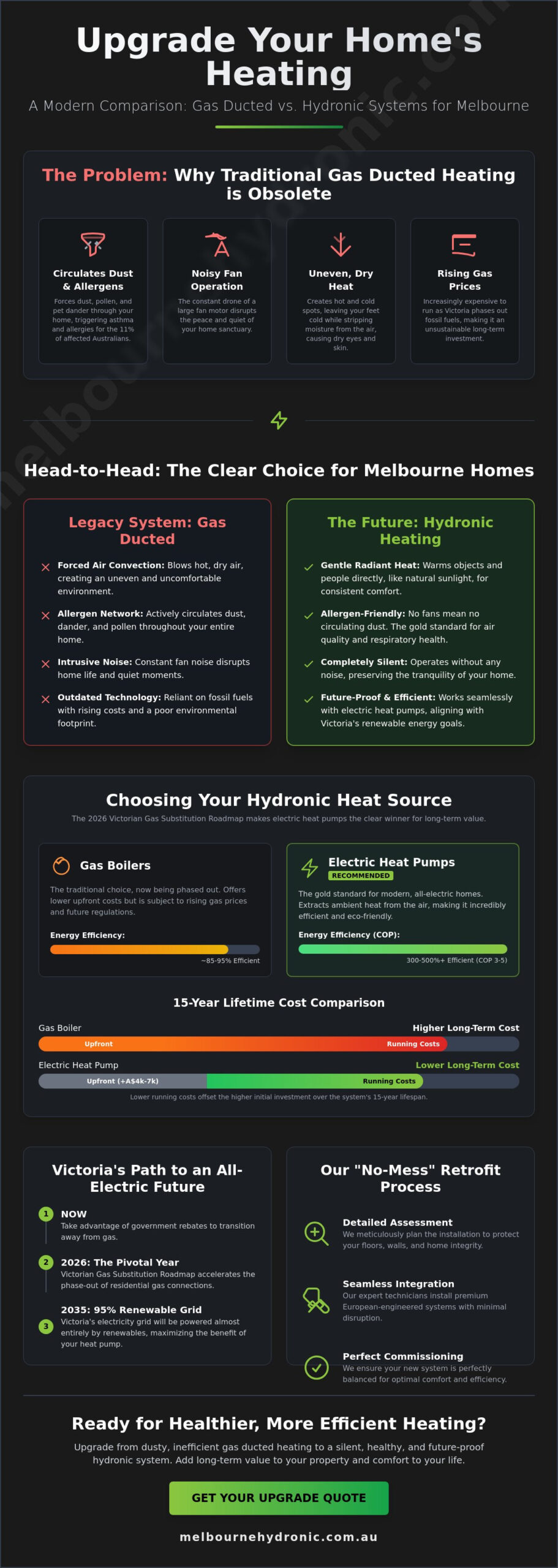
The transition focuses heavily on moving from traditional gas boilers to high-efficiency electric heat pumps. These systems leverage the evolving Victorian electricity grid, which is on a legislated path to reach 95% renewable generation by 2035. Homeowners are currently taking advantage of Victorian government incentives and rebates to offset the costs of decommissioning gas appliances. Real estate trends in 2025 indicate that “all-electric” homes in suburbs like Brighton and Camberwell are attracting higher auction bids. Buyers recognize that a home without a gas connection is protected against future regulatory restrictions and volatile fossil fuel prices. Understanding how hydronic heating works through closed-loop water circulation is essential for those looking to maintain premium comfort without the carbon footprint.
Health Benefits: A Dust-Free Home for Families
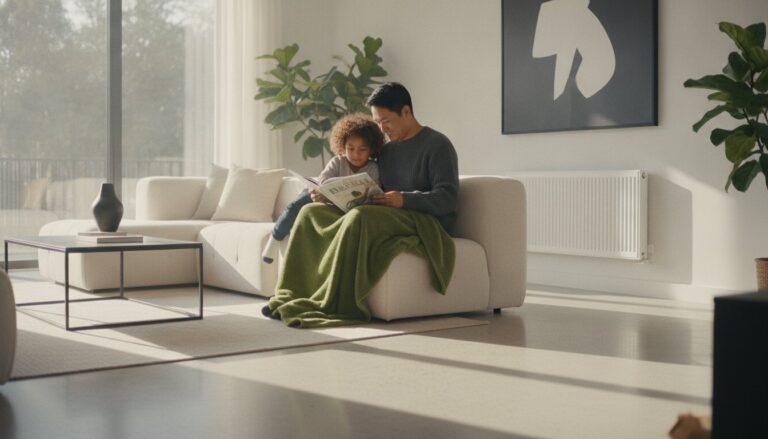
Traditional ducted systems often carry a hidden “health tax” that many families overlook. These systems act as a circulatory network for dust mites, pollen, and pet dander, trapping particles in the ductwork only to blast them back into living spaces. For the 11% of Australians living with asthma, these systems can be a constant respiratory trigger. Hydronic heating offers the “gold standard” alternative because it relies on radiant heat rather than forced air convection. It eliminates the dry, itchy eyes and the “burning dust” smell that often permeates Melbourne homes when the heater is first switched on in May.
- Radiant Heat: This warms objects and people directly, creating a stable, sun-like warmth.
- No Air Movement: Zero fans mean no draughts and no circulating allergens.
- Silent Operation: Hydronic systems operate without the constant drone of a large ducted motor.
- Humidity Control: Hydronic heat doesn’t strip the moisture from the air, preserving your home’s indoor air quality.
By 2026, the decision to move away from gas is as much about family wellness as it is about energy efficiency. When upgrading from gas ducted to hydronic Melbourne families are choosing a system that prioritizes their health while adding significant long-term value to their property.
Hydronic Heat Sources: Gas Boilers vs. Electric Heat Pumps
When upgrading from gas ducted to hydronic Melbourne homeowners face a critical choice between traditional gas boilers and modern air-to-water heat pumps. While gas was the standard for decades, the 2026 landscape heavily favors electrification. Modern heat pumps operate with incredible efficiency even when Melbourne mornings dip to 2°C. These systems extract ambient heat from the external air to warm your home, providing a dust-free and allergen-friendly environment that gas ducted systems simply can’t match.
Deciding on the right heat source is the most impactful step when upgrading from gas ducted to hydronic Melbourne residents can take to lower their carbon footprint and long-term energy bills. While the upfront cost for a heat pump is often A$4,000 to A$7,000 higher than a gas boiler, the lifetime savings are substantial. A heat pump’s operational life typically spans 15 years, and during that time, the lower running costs usually offset the initial investment.
The Case for Electric Heat Pumps
Electric heat pumps are the gold standard for energy-efficient heating systems. They allow you to maximize solar PV self-consumption by running the unit during peak daylight hours to “charge” your home’s thermal mass. Beyond heating your rooms, these versatile units also provide domestic hot water, which simplifies your home infrastructure. In the context of Victorian winters, COP (Coefficient of Performance) is the ratio of heat energy output to the electrical energy input required to run the system. A high-quality heat pump maintains a COP of 3.0 to 4.5, meaning it’s 300% to 450% efficient compared to the 90% efficiency of a premium gas boiler.
When a Gas Boiler Still Makes Sense
Gas boilers remain relevant for specific Melbourne properties. If you live in a compact terrace house in Fitzroy or South Melbourne, you might lack the 1.5-meter clearance required for a heat pump’s outdoor unit. Gas boilers are much smaller and often fit inside a kitchen cupboard or a laundry nook. They’re also ideal if your electrical switchboard lacks the 20 to 32-amp capacity required for a heat pump and you aren’t ready for a costly electrical upgrade. Older homes with specific cast iron radiators often require high-temperature water reaching 75°C, which gas boilers deliver more consistently than many standard heat pumps.
In suburban blocks across Geelong and Melbourne, unit placement is a vital consideration. Heat pumps produce a consistent hum, typically between 45 and 55 decibels. We don’t recommend placing them directly under bedroom windows or right on a boundary where noise might bother neighbors. If you’re unsure which system fits your property, you can consult with our expert team for a detailed site assessment.
The Retrofit Reality: How We Install Hydronics in Existing Homes
Melbourne’s architectural landscape is incredibly diverse. Our team approaches every project by first assessing the specific structural integrity of your home. Whether you live in a classic 1920s weatherboard in Northcote, a sturdy brick veneer in Glen Waverley, or a solid brick heritage residence in South Yarra, the installation process is tailored to fit the skeleton of the building. We’ve refined our methods to ensure that upgrading from gas ducted to hydronic Melbourne systems is a clean, surgical process rather than a messy renovation.
Our “No-Mess” promise is a core part of our service. We understand that your home is a sanctuary. We use heavy-duty floor protection and dust-extraction tools to ensure your original Baltic pine floorboards or modern carpets remain pristine. We strategically place radiator panels under windows to create a natural convection current, which effectively blocks cold downdrafts and distributes heat evenly across the room. For multi-storey homes, we often utilize internal wardrobes or existing cavities to run pipework between floors, maintaining the aesthetic integrity of your living spaces.
Radiator Panels vs. Underfloor Retrofits
For most Melbourne retrofits, hydronic radiator panels are the most efficient and cost-effective choice. They offer rapid response times and can be installed with minimal disruption to your daily life. While installing underfloor coils into an existing concrete slab is technically possible through floor-topping systems, it often requires significant changes to door heights and skirting boards.
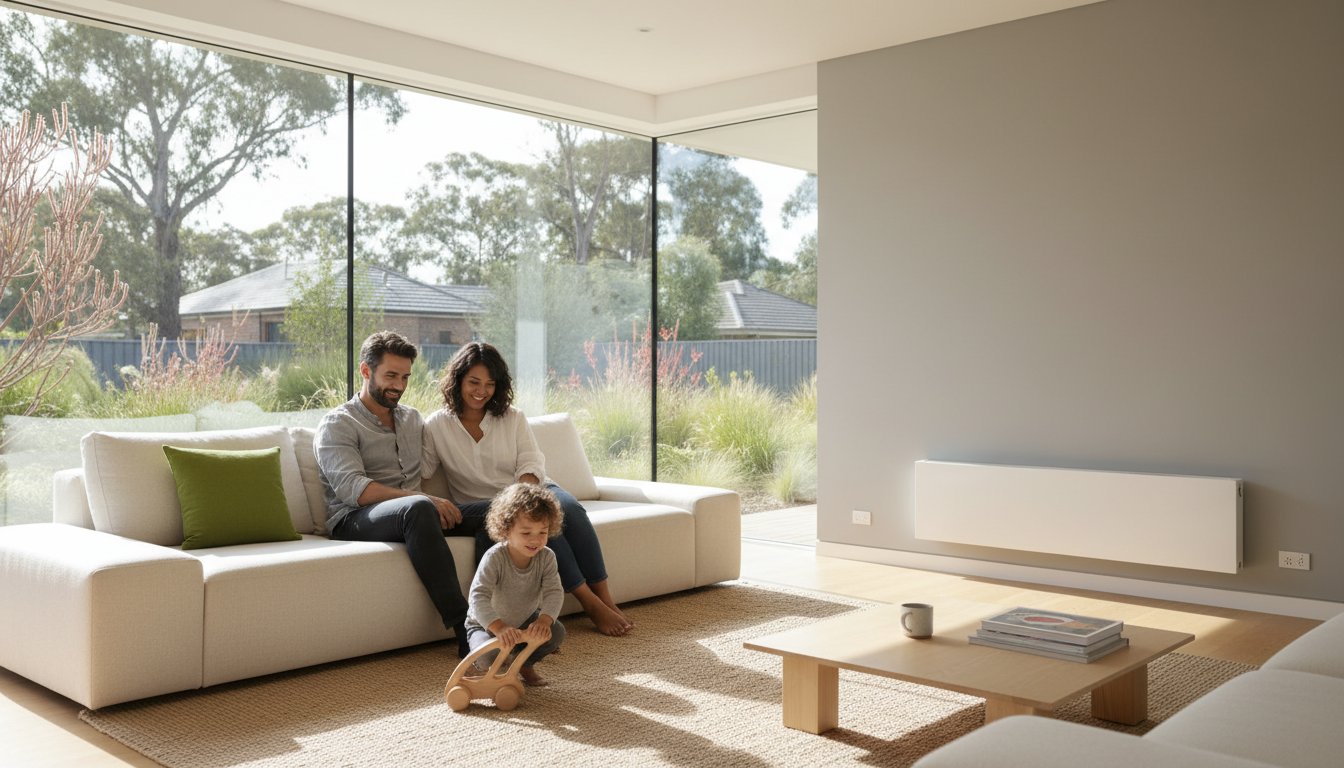
If your home features modern floor-to-ceiling glass extensions, we recommend trench heating. These units sit flush with the floor, providing a powerful heat curtain that prevents condensation on the glass without obstructing your garden views. It’s a premium solution that solves the “cold glass” problem common in contemporary Melbourne designs.
Running the Pipework: Underfloor and In-Wall Solutions
The secret to a seamless installation lies in how we route the reticulation pipes. Most traditional Melbourne cottages sit on stumps, providing us with generous sub-floor access. This allows our technicians to run insulated copper or multi-layer pipes out of sight, connecting each radiator back to the central boiler or heat pump. In homes built on a concrete slab, we look for creative routing options through the ceiling space or discreetly behind joinery.
Efficiency is key to our workflow. You can typically expect a full installation to take between 3 to 5 business days. We follow a strict timeline:
- Day 1: Site preparation, floor protection, and marking out radiator positions.
- Day 2-3: Pipework installation and mounting of radiator panels.
- Day 4: Boiler or heat pump installation and connection to the gas or electrical supply.
- Day 5: System flushing, pressure testing, and owner handover.
By the time we leave, your home will be transformed into a dust-free, allergy-friendly environment, providing a level of comfort that old gas ducted systems simply cannot match.
Investment and ROI: The Cost of Upgrading in Melbourne
Transitioning to a premium heating solution requires an initial capital outlay, yet the financial trajectory for Melbourne homeowners is increasingly positive. For a standard 3-bedroom home, upgrading from gas ducted to hydronic Melbourne typically ranges between A$12,000 and A$18,000. Larger 4-bedroom properties often see costs from A$18,000 to A$25,000, while expansive 5-bedroom residences may exceed A$30,000 depending on the choice between wall-mounted radiators or underfloor coils.
The payback period has shortened significantly as of 2026. While gas prices continue to fluctuate, high-efficiency electric heat pumps coupled with hydronic systems offer operational savings of up to 30% compared to aging ducted units. You’ll also save on long-term upkeep. Unlike ducted systems that require frequent, costly duct cleaning to manage dust and allergens, professional hydronic servicing focuses on water quality and system pressure, ensuring the hardware lasts 25 years or more.
Rebates and Financial Incentives
The Victorian Government continues to support the electrification of homes through the Victorian Energy Upgrades (VEU) scheme. In 2026, homeowners can access substantial rebates when replacing old gas heaters with high-efficiency heat pump hydronic boilers. Additionally, Small-scale Technology Certificates (STCs) can reduce the upfront cost by several thousand dollars. Local councils in Melbourne and Geelong often provide additional green grants or access to low-interest green loans, allowing you to spread the investment over 5 to 10 years at rates lower than standard personal finance.
Long-Term Operational Savings
A 10-year cost projection for a standard family home shows that while gas ducted systems are cheaper to install, their lifecycle cost is higher due to rising gas tariffs and lower thermal efficiency. Hydronic systems are superior because water based systems retain thermal energy far longer than air based systems, which lose heat almost immediately once the fan stops. By utilizing smart thermostats and multi-zone configurations, you can heat specific rooms only when needed. This precision eliminates the waste associated with heating empty corridors or unused spare rooms.
Ready to see how much you could save on your energy bills? Request a detailed quote from our Melbourne experts today.
Why Choose Melbourne Hydronic Heating for Your Upgrade?
Selecting the right partner for upgrading from gas ducted to hydronic Melbourne homes is a decision that impacts your family’s comfort and health for decades. Melbourne Hydronic Heating brings over 30 years of specialized experience to every project. We’ve spent three decades navigating the unique plumbing challenges of Victorian architecture, from heritage bluestone terraces to sprawling modern builds in the outer suburbs. Our local teams in Melbourne and Geelong possess deep knowledge of Victorian Building Authority (VBA) regulations, ensuring every installation is safe, compliant, and built to last.
We don’t simply swap out units. We take an engineering-led approach to home climate. Our technicians understand that a hydronic system is a precision instrument. Because of this, we provide comprehensive post-installation support. We’re committed to ensuring your new system runs at peak efficiency, offering guidance on seasonal adjustments and maintenance that keeps your energy bills low and your home environment allergen-free.
The Design-First Methodology
A successful transition starts with data, not guesswork. Our design process begins with rigorous heat load calculations. We measure every room’s volume, window orientation, and insulation levels before we even generate a quote. This precision prevents the common industry mistake of installing oversized boilers that waste energy or undersized radiators that leave rooms chilly.
- Custom Manifold Setups: We install advanced manifolds that allow for precise temperature control across different zones of your home.
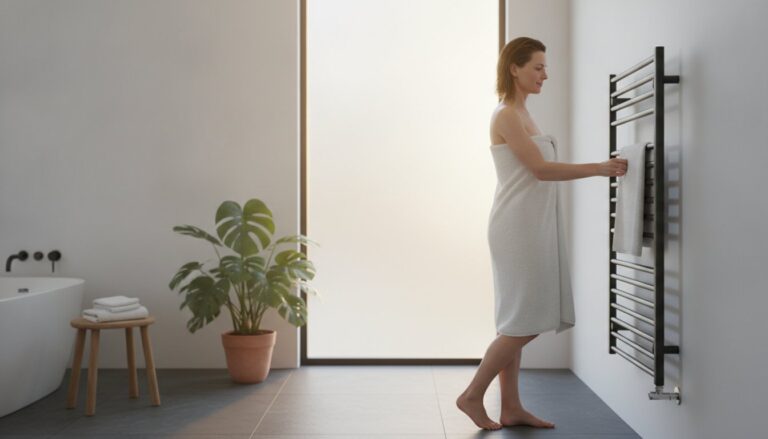
- Aesthetic Integration: We source premium European panels and designer radiators that complement Melbourne’s diverse interior styles while providing silent, dust-free radiant heat.
- Technical Accuracy: Every pipe run and radiator placement is calculated to maximize the physics of natural convection.
Start Your Transition Today
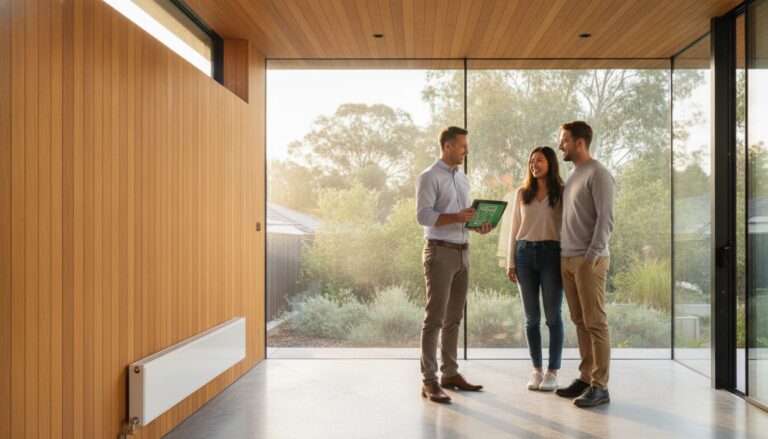
Moving away from forced-air heating is a significant step toward a more sustainable and comfortable lifestyle. When you’re ready to begin upgrading from gas ducted to hydronic Melbourne specialists from our team will conduct a thorough site inspection to evaluate your existing infrastructure. This site visit allows us to identify the most efficient paths for piping and the ideal location for your high-efficiency boiler or heat pump.
To make your initial heating assessment as productive as possible, please have a few items ready. A copy of your home’s floor plans and your most recent winter energy bills help us tailor a solution that maximizes your return on investment. Our consultants will walk you through the timeline, from the removal of old ductwork to the final commissioning of your silent, radiant system.
Take the first step toward a healthier, more efficient home today. Request a comprehensive hydronic upgrade quote for your Melbourne home and experience the difference that 30 years of local expertise makes.
Secure Your Home’s Comfort for the Decade Ahead
The shift toward healthier, more efficient homes in Victoria is accelerating rapidly. By 2026, the transition away from noisy, dust-circulating vents will be the standard for homeowners seeking premium comfort. You aren’t just changing a heater; you’re investing in a silent, allergen-friendly environment that adds tangible value to your property. The process of upgrading from gas ducted to hydronic Melbourne families choose ensures consistent, radiant warmth without the dry air or allergens associated with traditional forced-air systems.
Melbourne Hydronic Heating has been a staple in the local community since 1990. With over 30 years of specialist experience across Victoria, we understand the unique architectural challenges of retrofitting existing residences. Our expert installers specialize in both high-efficiency European gas boilers and the latest electric heat pump technology. As a family-owned business, we take pride in delivering engineering precision and localized service to every suburb in Melbourne and Geelong. It’s time to experience the luxury of radiant heat that’s as good for your health as it is for your energy bills.
Get a Custom Hydronic Upgrade Quote for Your Melbourne Home
Frequently Asked Questions
Can I use my existing ductwork for a hydronic system?
No, you can’t reuse your existing ductwork because hydronic systems circulate heated water through sealed pipes rather than blowing air through vents. When upgrading from gas ducted to hydronic Melbourne homeowners typically leave the old ducts in place or have them professionally removed. Hydronic heating relies on specialized copper or multilayer pipes that are only 16mm to 20mm in diameter, which we install discreetly under floorboards or through wall cavities.
How long does it take to replace a gas ducted system with hydronics?
A standard installation in a three-bedroom Melbourne home typically takes between 3 and 5 business days to complete. This timeline includes the decommissioning of your old gas unit and the precise mounting of premium European panel radiators in each room. Larger projects or complex double-storey retrofits might require up to 7 days of on-site work. Our team coordinates every stage to ensure your home remains functional and tidy throughout the entire transition.
Will I need to upgrade my electrical switchboard for a hydronic heat pump?
You’ll likely need a switchboard assessment if you’re switching to an electric heat pump from a gas-fired system. Modern air-to-water heat pumps often require a dedicated 20-amp or 32-amp circuit to handle the peak electrical load during winter. According to Energy Safe Victoria standards, older homes with original ceramic fuses must upgrade to modern circuit breakers and RCDs. This ensures your new system operates safely without overloading your existing domestic power supply.
Is hydronic heating really better for asthma than ducted heating?
Hydronic heating is significantly better for respiratory health because it uses radiant heat instead of forced air. Gas ducted systems can circulate up to 150 grams of dust, pet dander, and allergens throughout a home every season. Because hydronic panels don’t use fans, they create a still-air environment that prevents the spread of pollen and dust mites. This makes it the preferred choice for the 1 in 9 Australians currently living with asthma.
What happens to my old gas ducted unit after the upgrade?
We decommission your old gas furnace and can arrange for its removal from your ceiling space or external mounting point. Most components of an old gas heater, including the metal heat exchanger and motor, are 90% recyclable at local Melbourne scrap metal facilities. We ensure the gas line is safely capped by a licensed plumber according to AS/NZS 5601.1 standards. This process eliminates the risk of future gas leaks or safety hazards in your home.
Can I install hydronic heating in a double-storey Melbourne home?
Yes, we frequently perform retrofits in double-storey Melbourne residences by utilizing internal wardrobes and floor cavities for pipe routing. When upgrading from gas ducted to hydronic Melbourne teams can often access the ground floor through the subfloor and the upper floor via the roof space. If your home is built on a concrete slab, we use specialized wall-chasing techniques or decorative pipe covers to maintain a seamless, high-end aesthetic across both levels.
How much can I expect to save on my winter energy bills?
Homeowners often see a reduction of up to 35% in their seasonal heating costs when switching from an aging gas ducted system to a high-efficiency hydronic heat pump. Modern condensing boilers also offer efficiency ratings of over 90%, compared to the 50% or 60% efficiency seen in older gas furnaces. These savings are particularly noticeable in Melbourne’s climate. Consistent, low-intensity radiant heat prevents the costly energy spikes caused by the frequent on-off cycling of ducted units.
Is a hydronic system noisy compared to ducted heating?
Hydronic systems are virtually silent, operating at noise levels below 25 decibels inside the living areas. You won’t hear the rushing air, rattling vents, or mechanical clatter associated with traditional ducted systems. The only sound you might notice is a faint hum from the external heat pump or boiler, which we install away from bedroom windows. This creates a peaceful home environment that’s perfect for light sleepers and quiet evenings in the lounge.