
How to Improve Hydronic System Efficiency: The 2026 Melbourne Guide
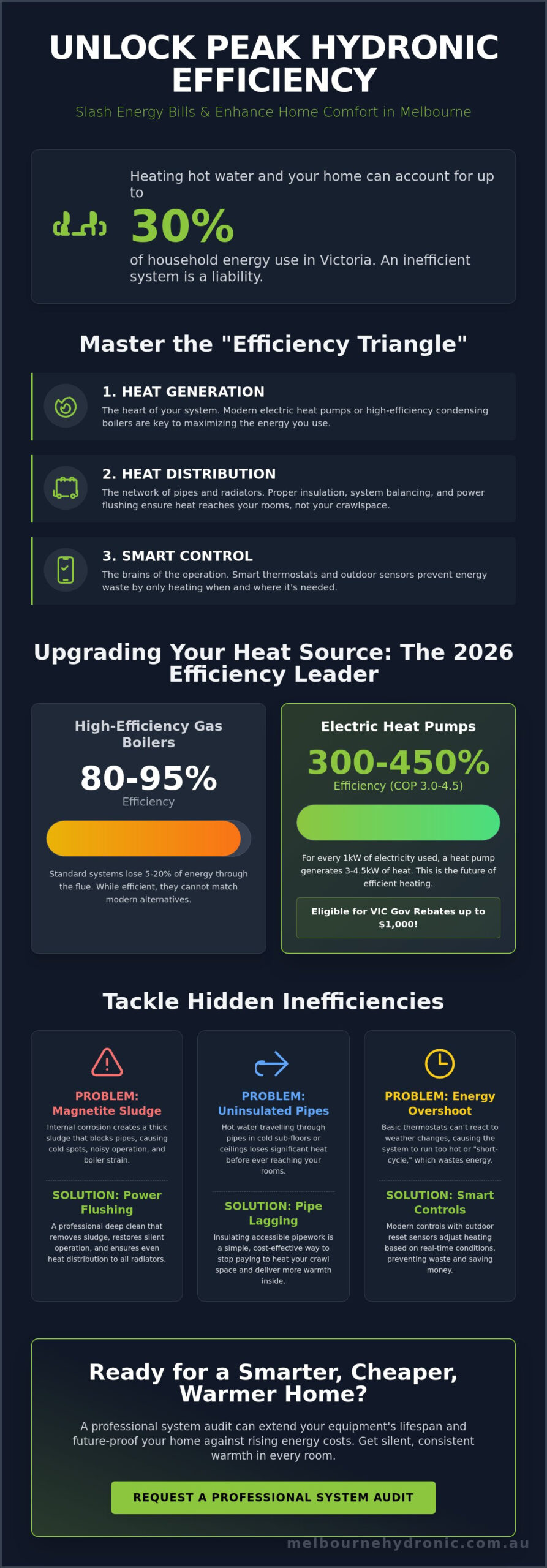
Heating hot water and warming your home accounts for up to 30% of household energy use in Victoria, yet many Melbourne systems are essentially working against themselves. If you’re noticing cold spots in the bedroom or wincing at your latest utility bill, your setup is likely underperforming. Learning how to improve hydronic system efficiency isn’t just a technical chore; it’s the most effective way to reclaim your home’s comfort and your financial peace of mind.
We understand that dealing with noisy radiators or confusing thermostat settings is the last thing you want after a long day. You deserve a system that provides consistent, silent warmth without the premium running costs. This guide shares professional strategies to slash your energy bills and enhance your lifestyle by optimising every component of your Melbourne hydronic heating system.
We will walk you through the concept of “System Harmony,” covering everything from the 10-year rule for boiler replacements to the latest 2026 Victorian heat pump rebates. You’ll discover how simple maintenance like power flushing and smart distribution can extend your equipment’s lifespan and future-proof your home against rising energy costs.
Key Takeaways
- Master the “Efficiency Triangle” by aligning heat generation, distribution, and control to ensure every room in your home reaches its ideal temperature.
- Discover how to improve hydronic system efficiency by upgrading to modern electric heat pumps or high-efficiency condensing boilers that reclaim waste heat.
- Learn how smart thermostats and outdoor reset sensors prevent energy overshoot by adjusting your heating based on Melbourne’s unpredictable weather patterns.
- Understand the importance of professional power flushing to remove magnetite sludge, which restores silent operation and eliminates stubborn cold spots.
- Evaluate the long-term financial benefits of a professional system audit to extend the lifespan of your equipment and reduce monthly running costs.
Understanding the Factors That Impact Hydronic Efficiency
True efficiency in a hydronic system is measured by the ratio of energy consumed to the usable heat delivered into your living spaces. In Melbourne, where winter mornings can drop to near-zero within hours, a system that wastes energy through heat loss is a liability. Understanding how to improve hydronic system efficiency starts with looking at the “Efficiency Triangle”: the generation of heat, the distribution through your home, and the control mechanisms that manage it all.
Melbourne homes, particularly our beautiful heritage villas and Victorian terraces, often face unique thermal challenges. Poor original insulation means your system has to work harder to maintain a steady temperature. Unlike forced-air systems that blow dry, dusty air which cools almost instantly, hydronic systems use the superior thermal mass of water to provide consistent warmth. When these three elements of the triangle aren’t calibrated, you lose the very benefits that make radiant heating a premium choice.
- Generation: This is your heat source, whether it’s a modern electric heat pump or a high-efficiency gas boiler.
- Distribution: The network of pipes, hydronic radiator panels, or underfloor coils that move heat where it’s needed.
- Control: The thermostats and smart sensors that dictate when and how the system operates.
The Hidden Enemies of Your Heating Bills
Uninsulated pipes are a primary culprit for energy waste. If your hot water travels through unlagged copper pipes in a cold sub-floor or ceiling cavity, you’re essentially paying to heat the crawl space instead of your lounge room. Another common issue is inaccurate thermostat placement. If a sensor sits in a drafty hallway or near a window in direct sunlight, it sends false data to the boiler. This leads to “short-cycling,” where the unit turns on and off rapidly. This doesn’t just waste energy; it places unnecessary stress on the pump and burner, shortening the lifespan of your equipment.
Why Hydronic Heating is Inherently Efficient
Water is an incredible conductor of energy. It carries roughly four times the heat of air by volume, meaning your system can move more warmth using much less power. For those just starting their journey, our What is Hydronic Heating guide provides the foundational context for how these systems function in a local climate. Beyond the physics of thermal mass, there’s a significant wellness benefit. Radiant heat doesn’t rely on fans, which means no circulating allergens or dust. Achieving peak performance often requires Hydronic balancing, a professional process that ensures each radiator receives exactly the right amount of hot water for its size and location, preventing some rooms from being too hot while others stay chilled.
Upgrading Your Heat Source: Heat Pumps vs. High-Efficiency Boilers
The heart of your system determines the ceiling of your energy savings. When homeowners ask how to improve hydronic system efficiency, the conversation usually starts with the heat source. In 2026, Melbourne residents face a pivotal choice between the established reliability of gas and the high-performance future of electrification. The decision isn’t just about the fuel type; it’s about the Coefficient of Performance (COP), which measures how much heat you get for every unit of energy you pay for.
A standard gas boiler typically operates at around 80% to 95% efficiency, meaning some energy is always lost through the flue. In contrast, modern electric heat pumps often achieve a COP of 3.0 to 4.5. This means for every 1kW of electricity consumed, they deliver 3kW to 4.5kW of heat into your home. This massive leap in the efficiency of radiant heating is why the Victorian Government is heavily incentivising the switch. With Solar Homes Program rebates of up to $1,000 and additional VEU discounts available, the financial barrier to upgrading has never been lower.
Electric Heat Pumps: The 2026 Efficiency Leader
Modern heat pumps are engineered to thrive in Melbourne’s unique climate. They extract ambient thermal energy from the outside air even when the temperature drops toward zero. When paired with a solar PV system, these units can operate at near-zero running costs during daylight hours, storing warmth in your floor or radiators for the evening. If you’re planning an all-electric transition, our Heat Pump Hydronic Heating guide explores how these systems integrate with your existing architecture.
Modern Condensing Boilers: When Gas Still Makes Sense
While the trend is shifting toward electric, high-efficiency condensing gas boilers remain a powerhouse for older Melbourne homes with high-temperature hydronic radiator panels. These units reclaim “waste” heat from the exhaust gases that traditional boilers simply vent outside. Modulating burners allow the unit to “throttle down” its output to match the actual heat demand of the house, preventing the energy-wasting cycles of older “on-off” models. You can find more details on selecting these units in our guide to Choosing the Best Hydronic Boiler.
Efficiency also relies on “right-sizing.” An oversized boiler or heat pump will cycle too frequently, while an undersized unit will run constantly without ever reaching the set point. Both scenarios lead to high bills and premature wear. A professional system assessment ensures your heat source is perfectly matched to your home’s specific thermal load, providing the silent, consistent warmth you expect from a premium installation.
Optimising Controls and Distribution for Maximum Savings
Selecting a high-performance heat source is a vital first step, but the true secret of how to improve hydronic system efficiency lies in the precision of your controls. Without a smart management strategy, your system might continue pumping high-temperature water long after your living room has reached its ideal state. This leads to energy overshoot, where rooms become uncomfortably warm and fuel is wasted. Modern distribution technology ensures that heat is delivered only where and when it is actually needed.
One of the most effective ways to refine this process is through Thermostatic Radiator Valves (TRVs) installed on individual hydronic radiator panels. These valves allow you to set different temperatures for every room in the house. You can keep your home office at a crisp 21 degrees while maintaining a cooler 18 degrees in the bedrooms. By localising heat demand, you prevent the boiler or heat pump from working to warm unoccupied spaces, which directly translates to lower monthly running costs.
Smart Thermostats and Zoning Strategies
Zoning is the practice of dividing your home into separate heating circuits managed by a central manifold. In a multi-zone setup, your hydronic underfloor heating can operate independently from your upstairs radiators. Wi-Fi enabled smart thermostats take this a step further by allowing you to manage your energy use from your phone. You can delay the heating if you’re stuck at work or adjust schedules based on real-time usage patterns. We find that a “set and forget” approach, where the system maintains a steady background temperature, is often more efficient than turning the system completely off and on. This prevents the “cold start” surge that consumes significant energy as the system struggles to reheat the entire thermal mass of the home.
Outdoor Reset: Anticipating Melbourne’s Weather
Melbourne is famous for its “four seasons in one day” weather, and your heating system needs to be just as adaptable. Outdoor reset sensors are small devices installed on the exterior of your home that communicate directly with your boiler or heat pump. When the sensor detects a mild spring morning, it tells the system to lower the water flow temperature. There is no need for 70-degree water in your radiators when it is 15 degrees outside.
By automatically adjusting the flow temperature based on external conditions, the system avoids the aggressive cycling that wastes fuel. This is particularly crucial for condensing boilers. They operate at their peak efficiency when return water temperatures remain low, allowing the unit to stay in “condensing mode” longer. This proactive adjustment ensures your home stays perfectly comfortable without the system ever working harder than the local weather requires.
The Role of Maintenance: Power Flushing and System Balancing
While upgrading your heat source and refining your controls provides a strong foundation, the internal health of your system dictates its daily performance. Many Melbourne homeowners overlook the fact that the water circulating through their pipes can become a significant obstacle to warmth. Over time, a substance known as “Magnetite” or black sludge builds up within the network. This byproduct of internal corrosion is a fine, metallic debris that settles at the bottom of your hydronic radiator panels. It creates a thick thermal barrier, forcing your system to work harder to push heat through a layer of mud. Understanding how to improve hydronic system efficiency means looking beyond the hardware and addressing the water quality itself.
When magnetite accumulates, it doesn’t just block heat; it places immense strain on your circulating pump. A pump struggling against sludge consumes more electricity and is prone to premature failure. Regular maintenance ensures the water remains clear and the flow remains unobstructed, protecting your investment and keeping your running costs at their lowest possible point.
Restoring Performance with Power Flushing
If you’ve noticed that your radiators are hot at the top but remain stubbornly cold at the bottom, your system is likely choked with sludge. Power flushing is a specialised cleaning process that uses high-velocity, low-pressure water to scour the internals of your pipes and panels. Unlike a simple drain and refill, this method dislodges the heavy magnetite deposits that a standard flush leaves behind. By restoring the system to its original, clean state, you ensure that every watt of energy produced by your boiler or heat pump is actually reaching your living space. For a detailed breakdown of the process, see our Hydronic Heating Service Melbourne guide.
Balancing Your Radiators for Even Warmth
Hydronic balancing is the art of ensuring that water is distributed evenly throughout the entire home. Water naturally takes the path of least resistance, which often means the radiators closest to the boiler get too much heat, while the unit in the furthest bedroom stays lukewarm. Professionals use the “Lockshield” valve, usually found under a plastic cap on the radiator, to restrict flow to the “hungry” panels. This forces the hot water to reach the furthest points of the system. A balanced system operates with much higher circulating efficiency, as the pump doesn’t have to run at maximum speed just to reach a single cold room.
Maintaining the correct chemical balance is just as vital as physical cleaning. We recommend a regular check of your system’s inhibitor levels. These chemicals coat the internal metal surfaces, preventing the chemical reaction that creates magnetite in the first place. If your system hasn’t been inspected in the last two years, it’s time to book a professional system maintenance audit to protect your home’s comfort and your energy budget.
Professional System Audits and Long-Term Efficiency Planning
Achieving peak performance is rarely about a single component. It’s about how the entire network functions as a unified organism within your home’s unique footprint. While the previous sections detailed individual upgrades, a professional audit provides the data needed to make informed, long-term decisions. At Melbourne Hydronic Heating, our 30-year approach to system design is built on the belief that a well-maintained system should be a silent, invisible partner in your home’s comfort. If your energy bills remain high despite basic adjustments, it’s time to investigate how to improve hydronic system efficiency through a comprehensive technical assessment.
The return on investment for professional maintenance is clear when compared to the cost of neglect. A system that runs at just 70% efficiency doesn’t just cost more every month; it wears out its most expensive components, like the heat pump compressor or boiler heat exchanger, years ahead of schedule. By identifying small calibration issues early, you avoid the “emergency call-out” scenarios that often occur on the coldest nights of a Melbourne July. To see how these maintenance standards are applied to ensure system longevity, you can explore Residential HVAC Inspection as an example of a comprehensive technical evaluation.
What a Professional Efficiency Audit Includes
A specialist audit goes far beyond a visual check. We use thermal imaging cameras to see exactly where heat might be escaping through uninsulated pipe runs or poorly sealed manifold cabinets. For those still using gas, we perform a detailed combustion analysis and gas pressure testing to ensure your boiler isn’t wasting fuel through incomplete burning. We also look at pump speed optimisation. Many installers leave pumps on the highest setting by default, which consumes unnecessary electricity and causes “velocity noise” in the pipes. Adjusting the pump to the minimum speed required for your home’s flow rate can significantly reduce your electrical footprint.
Future-Proofing Your Melbourne Home
Efficiency doesn’t exist in a vacuum. To get the most out of your hydronic system, consider how it interacts with other home upgrades. Upgrading to double glazing or improving ceiling insulation reduces the “heat load” of your rooms. This allows your hydronic system to run at lower, more efficient temperatures while still keeping you warm. If you’re planning a transition away from gas, we can help you create a staged roadmap. This might involve installing oversized Hydronic Radiator Panels now so that they are ready to operate at the lower flow temperatures required by a heat pump in the future.
A modern, efficient home is a valuable asset that provides health, comfort, and sustainability for decades. Whether you are looking to refine an existing setup or planning a complete boiler replacement, the right expertise makes all the difference. To secure your home’s winter comfort and start saving on your energy bills, contact Melbourne Hydronic Heating for a professional system audit today.
Future-Proof Your Melbourne Home’s Comfort
Optimising your heating isn’t just about reducing bills; it’s about creating a sanctuary of silent, healthy warmth. By selecting high-efficiency heat pumps or condensing boilers, refining your zoning with smart controls, and investing in essential maintenance like power flushing, you ensure your system operates at its absolute peak. Understanding how to improve hydronic system efficiency is a powerful way to enhance your quality of life while protecting your long-term investment.
As a family-owned and operated business with over 30 years of Melbourne experience, we specialise in the technical precision required for both modern heat pump transitions and traditional boiler efficiency. You don’t have to navigate these technical choices alone. Our experts are here to provide the local knowledge and engineering expertise your home deserves. We take pride in ensuring every radiator and floor coil delivers the premium life-quality you expect from a world-class system.
Take the next step toward total home comfort and lower running costs. Book Your 2026 Hydronic Efficiency Audit with Melbourne’s Experts today. Let’s work together to ensure your system provides the reliable warmth your family relies on for many winters to come.
Frequently Asked Questions
How can I make my hydronic heating more efficient without replacing the boiler?
You can achieve significant gains by insulating exposed pipes in sub-floors and installing Thermostatic Radiator Valves (TRVs) on individual panels. These upgrades show you how to improve hydronic system efficiency by preventing heat loss in transit and ensuring you only heat the rooms you’re actively using. A professional system balance and a chemical inhibitor top-up also help maintain clear, efficient water flow without a full equipment overhaul.
Is it cheaper to leave hydronic heating on all day or turn it off?
Maintaining a steady background temperature is generally more cost-effective than turning the system off completely. Hydronic heating relies on thermal mass, meaning it takes more energy to heat a stone-cold house than to maintain a consistent 18 degrees. We recommend using a smart thermostat to lower the temperature when you’re out and boosting it slightly when you return to avoid high-energy “cold starts.”
How often should I have my hydronic system serviced in Melbourne?
We recommend a professional service every 12 months, ideally during autumn before the winter chill sets in. Annual maintenance ensures that your gas boiler or heat pump is operating at its design specifications and that your system pressure is correct. Regular checks also prevent the buildup of magnetite sludge, which can quietly erode your efficiency and lead to expensive component failures over time.
What is the most efficient temperature to set my hydronic boiler to?
For modern condensing gas boilers, setting the flow temperature between 50 and 55 degrees Celsius allows the unit to stay in its most efficient “condensing mode.” If you use an electric heat pump, the flow temperature is typically lower, often between 35 and 45 degrees. Lowering the flow temperature as much as possible while still maintaining comfort is a proven way to reduce your monthly energy consumption.
Does power flushing really improve heating efficiency?
Yes, power flushing is a highly effective way to restore a system that has become sluggish or noisy. By removing the black magnetite sludge that settles in radiators, you eliminate a thick thermal barrier that blocks heat transfer. This process allows your rooms to warm up faster and reduces the workload on your circulating pump, leading to lower electricity bills and a longer equipment lifespan.
Can I add smart thermostats to an old hydronic system?
Most existing hydronic systems can be retrofitted with smart thermostats to provide better energy management. These devices allow you to control your heating via a smartphone and use geofencing to turn the heat down when you leave the house. Upgrading your controls is a simple way to modernise an older system and prevent the energy waste associated with manual adjustments or rigid mechanical timers.
Why are some of my radiators hotter than others?
Uneven heat is usually caused by an unbalanced system where hot water takes the path of least resistance. Radiators closest to the heat source often steal most of the flow, leaving the furthest rooms feeling chilled. A technician can fix this by adjusting the lockshield valves on each radiator to ensure the water is distributed evenly throughout the entire home, regardless of the distance from the boiler.
How much can I save by switching from a gas boiler to a heat pump?
Data from 2026 indicates that a typical 3-bedroom Melbourne home can reduce winter running costs from a range of $480–$680 with gas down to $260–$420 with a heat pump. These savings are even more pronounced if you have a solar PV system, as you can run the heat pump during the day for nearly zero cost. The transition also makes you eligible for various Victorian government rebates to offset the initial investment.