Smallest Hydronic Boiler in Melbourne: Compact Heating Solutions & Replacement Costs for 2026
Can a heating unit the size of a small suitcase really keep a three-story Richmond terrace warm while meeting the strict Victorian energy standards of 2026? You shouldn’t have to sacrifice floor space or compromise your interior design just to enjoy the silent, allergen-free luxury of radiant heat. We know that navigating the hydronic boiler replacement cost melbourne market can feel daunting, especially with the new Building and Plumbing Commission requirements and shifting gas regulations. You deserve a solution that fits your home perfectly without sacrificing the power needed for Melbourne’s coldest mornings.
This guide will show you how to maximise your home’s comfort using the most space-efficient technology available today. We provide a detailed look at the latest compact units and the installation costs homeowners face in 2026, ensuring you can plan your upgrade with confidence. You will discover how to hide your heating system within existing cabinetry while remaining fully compliant with upcoming electrification mandates. We will preview the latest high-efficiency models and explain how to navigate the 2026 rebate landscape to secure a premium, future-proof heating solution for your home.
Key Takeaways
- Learn how the “300mm depth rule” allows modern boilers to fit seamlessly into standard kitchen cabinetry without disrupting your home’s floor plan.
- Understand the current hydronic boiler replacement cost melbourne and how the 2026 Victorian gas regulations impact your choice between high-efficiency gas and electric heat pumps.
- Discover how compact units maintain enough power to heat multi-story heritage terraces while operating silently and keeping your indoor air allergen-free.
- Identify the best hidden installation spots, from under-stair voids to bathroom cupboards, to maximise every square centimetre of your inner-city property.
- Get expert insights on navigating the 2026 Solar Victoria rebates to offset the cost of transitioning to a smaller, more energy-efficient heating system.
The Space Challenge: Why Compact Hydronic Boilers are Trending in Melbourne
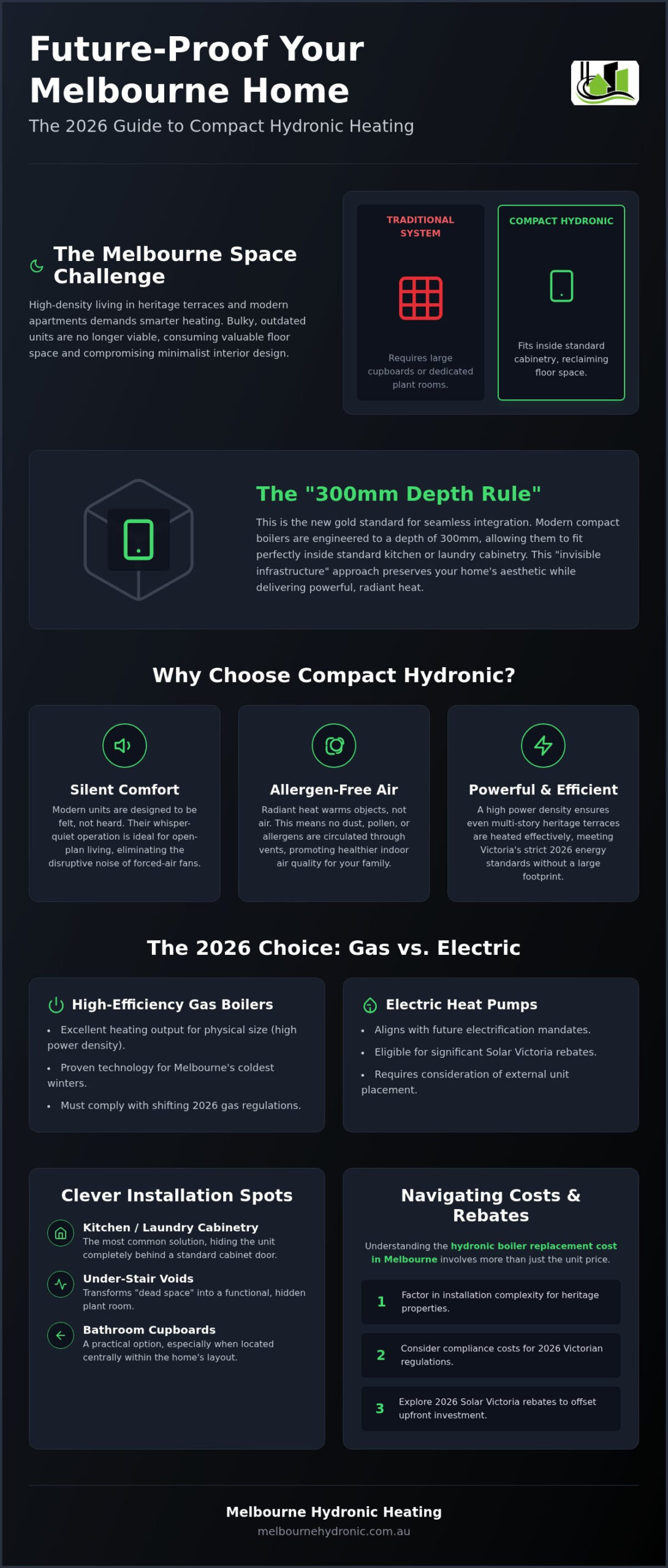
The shift toward high-density living in suburbs like South Yarra and Collingwood has fundamentally changed Melbourne’s home renovation landscape. As we move into 2026, homeowners are increasingly reclaiming their floor space by moving away from bulky, outdated heating units. Traditional ducted systems often prove physically impossible for terrace retrofits because they require extensive ceiling voids or floor cavities that heritage structures simply lack. This architectural reality has made compact units a necessity rather than a luxury for the modern urban dweller.
Today’s Victorian interior design prioritises “invisible” infrastructure. You want a home that feels warm and inviting without a massive appliance dominating your laundry or kitchen. Evaluating the hydronic boiler replacement cost melbourne requires looking beyond the initial price to see how a smaller footprint adds long-term value to your property. A compact hydronic heating system allows you to maintain the aesthetic integrity of your home while providing superior, radiant warmth that doesn’t rely on intrusive ductwork.
Melbourne’s Architectural Constraints: From Terraces to Tiny Homes
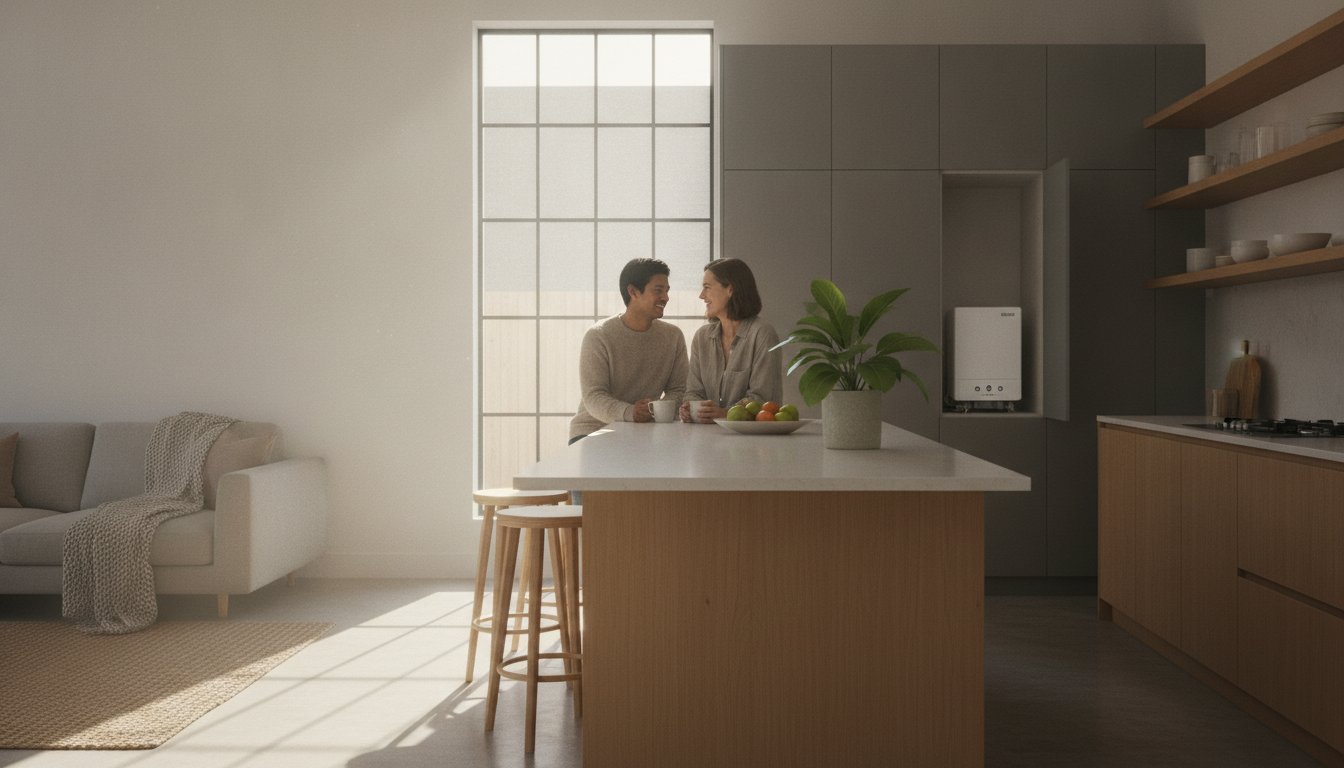
Heritage-listed properties often present unique challenges, such as limited external wall space and narrow floor plans that restrict where equipment can be placed. We’ve seen the “Laundry-Cupboard” plant room concept become the standard for successful inner-city renovations. By integrating a high-efficiency boiler into a standard 600mm wide cupboard, you maximise every square centimetre of your living area. These custom solutions ensure that even the smallest tiny home or a narrow Carlton terrace can benefit from professional heating without the need for major structural compromises.
Silent Comfort: The Psychological Benefit of Small-Scale Hydronics
A significant advantage of modern small-scale boilers is their near-silent operation. In open-plan living environments, the roar of a forced-air fan can be incredibly disruptive during a quiet evening. Compact hydronic units operate with a whisper; they’re designed to be felt, not heard. Beyond noise reduction, the health benefits are a major driver for Melbourne families. Unlike forced-air systems that circulate dust and allergens through vents, radiant heat provides a clean, still warmth. This is vital in confined apartments where air quality can quickly degrade. Choosing a smaller, more refined unit ensures your heating remains a hidden, healthy part of your daily life.
Sizing Up: Understanding Dimensions and Power Output for Small Homes
In the 2026 Melbourne market, the term “compact” has been redefined by engineering breakthroughs that pack higher performance into smaller chassis. For most inner-city homeowners, the 300mm depth rule has become the gold standard for seamless integration. This specific dimension allows a boiler to sit flush within standard kitchen or laundry cabinetry, leaving ample room for necessary pipework and ventilation. Specific Power Density is defined as the ratio of heating output to physical unit volume. Achieving a high density is critical because it ensures your unit provides enough Kilowatts (kW) to combat a damp Geelong winter without requiring a dedicated plant room. Adhering to the Australian standards for water heater energy consumption ensures your compact unit meets the necessary efficiency benchmarks required for modern Victorian homes.
Wall-Mounted vs. Floor-Standing Footprints
Wall-mounted units are almost always the superior choice for small laundry retrofits or apartment installations. By elevating the heat source, you preserve valuable floor space for appliances or storage. However, weight is a vital consideration in modern apartment builds where internal partition walls may require additional reinforcement to support a 40kg unit. Safety also dictates specific clearance requirements; even the most compact boilers need “breathing room” for airflow and technician access. If you’re unsure which unit fits your specific layout, our team at Melbourne Hydronic Heating can provide a tailored assessment of your structural needs.
Calculating Heat Load for Compact Properties
One of the most frequent mistakes in small-space design is “over-sizing” the boiler. While it might seem safer to buy a more powerful unit, an oversized boiler will short-cycle, leading to increased wear and tear and higher running costs. When calculating the hydronic boiler replacement cost melbourne, we must factor in the thermal efficiency of your home. Modern high-performance glazing significantly reduces the minimum boiler size required to maintain comfort. Furthermore, Melbourne’s “four seasons in one day” weather patterns demand a boiler with a high modulation ratio. This technology allows the unit to turn its power down during mild spring mornings while still having the capacity to ramp up when a polar blast hits the bay. Precise sizing ensures your system operates at peak efficiency, providing the gentle, consistent warmth that defines the hydronic experience.
Compact Gas Boilers vs. Small-Scale Electric Heat Pumps: The 2026 Choice
Choosing between gas and electric in 2026 involves balancing physical space with long-term regulatory compliance. High-efficiency condensing gas boilers remain the champions of internal space-saving, often fitting inside a standard kitchen cupboard. Conversely, heat pump hydronic heating offers an all-electric future but requires a different approach to spatial planning. Understanding the hydronic boiler replacement cost melbourne requires looking at both the hardware and the shifting Victorian energy landscape. While gas units are smaller, heat pumps offer a superior Coefficient of Performance (COP), often delivering three to four units of heat for every unit of electricity consumed. This efficiency makes electric options increasingly attractive as Melbourne moves away from fossil fuels.
Condensing Gas Boilers: The Smallest Physical Footprint
Condensing gas boilers currently hold the title for the most compact internal heating solution. These units are often no larger than a wall-mounted kitchen cabinet, making them the primary choice for heritage retrofits in high-density zones like Fitzroy or South Melbourne. Flueing logistics are the main hurdle in these tight spaces. You can choose between vertical flues that exit through the roof or horizontal flues that vent through an external wall. While these units are space-efficient, you must consider their 10-year viability. The Victorian Gas Substitution Roadmap is accelerating; from January 1, 2027, new connections will be restricted, and from March 1, 2027, end-of-life gas hot water systems must be replaced with electric alternatives. Investing in gas in 2026 is a choice for immediate convenience over long-term electrification trends.
Compact Monobloc Heat Pumps: The Space-Saving Electric Alternative
The Monobloc heat pump is the go-to solution for homeowners wanting to go all-electric without losing internal cupboard space. The Monobloc advantage lies in its design; all major components are housed in the outdoor unit. This moves the “size” of your heating system to the balcony or courtyard, leaving only a small control interface inside. Noise regulation compliance is a vital factor here. Victorian standards require specific decibel levels at property boundaries, so unit placement is a technical puzzle we solve during the design phase. These outdoor units integrate seamlessly with existing hydronic heating panels, allowing for a straightforward transition from gas to electric. By choosing a Monobloc system, you future-proof your home against upcoming gas mandates while reclaiming every square centimetre of your interior living space.
Installation Secrets for Tight Melbourne Spaces & Cost Factors
Selecting the right location for a compact boiler requires a space-puzzle solver mindset. In high-density Melbourne suburbs, we often look beyond the obvious. Under-stair voids or bathroom cupboards can serve as excellent plant rooms, provided they meet strict ventilation standards. Manifold management is a crucial factor in narrow terrace hallways. If you don’t plan the pipework distribution correctly, you’ll lose valuable wall space to bulky covers. Integrating these systems into tight spots is a primary driver of the hydronic boiler replacement cost melbourne, as the complexity of the pipework directly impacts the labour hours required.
Accessibility is not just a safety requirement; it’s a practical necessity for future hydronic heating service in Melbourne. If a technician cannot reach the isolation valves or the internal components without dismantling your joinery, your long-term maintenance costs will skyrocket. The Building and Plumbing Commission (BPC), which replaced the VBA in July 2026, mandates specific clearances for a reason. Ensuring your installation is compliant from day one protects your investment and your home’s safety.
The Cupboard Install: A Step-by-Step Approach
Installing a boiler within a cupboard involves more than just measuring the box. You must account for isolation valves, the expansion vessel, and the intricate web of pipework. For boilers sharing a wall with a bedroom, we recommend specific soundproofing membranes to dampen operational vibrations. Managing condensate drains in internal apartment locations is another technical hurdle. These drains must be plumbed into the domestic waste system correctly to prevent moisture build-up in confined spaces. This precision ensures your system remains a silent, invisible part of your home’s infrastructure.
Navigating Heritage Overlays and Strata Approvals
Melbourne’s heritage zones, such as Carlton and Fitzroy, impose strict constraints on external flueing. You cannot simply punch a hole through a protected facade. We often design vertical flues that exit through existing chimney stacks to maintain the home’s historic character. For those in modern apartments, gaining Body Corporate approval for balcony-mounted heat pump units is essential. These units must meet strict noise and aesthetic guidelines to avoid strata disputes. Obtaining a BPC Compliance Certificate is mandatory for any work over A$750, providing the legal proof your insurer requires. If you are planning a complex retrofit, you can book a site assessment with our specialist team to ensure your project meets all 2026 regulatory standards.
Custom Solutions: Designing Your Small-Space Hydronic System
Generic heating kits often fail in Melbourne’s unique suburbs because they don’t account for the specific thermal challenges of heritage brickwork or the tight clearance requirements of modern apartment balconies. A custom-designed system is the only way to ensure your hydronic boiler replacement cost melbourne results in a high-performing asset rather than a spatial compromise. We focus on integrating the smallest possible boilers with high-efficiency components to create a system that fits your specific floor plan. By tailoring the design to your home’s unique heat load, we ensure the system adds significant value to your property while providing the silent, radiant comfort that defines premium Victorian living.
Efficiency in a small system isn’t just about the boiler; it’s about how you control the warmth. Smart thermostats play a vital role in managing energy consumption, allowing you to heat only the rooms you’re using. This is particularly effective in Melbourne, where the “four seasons in one day” weather means you might only need a gentle background warmth in the morning and a full boost by evening. These intelligent controls ensure your compact system operates at peak performance, reducing wear on the boiler and keeping your running costs low.
The Radiator Panel Advantage for Small Rooms
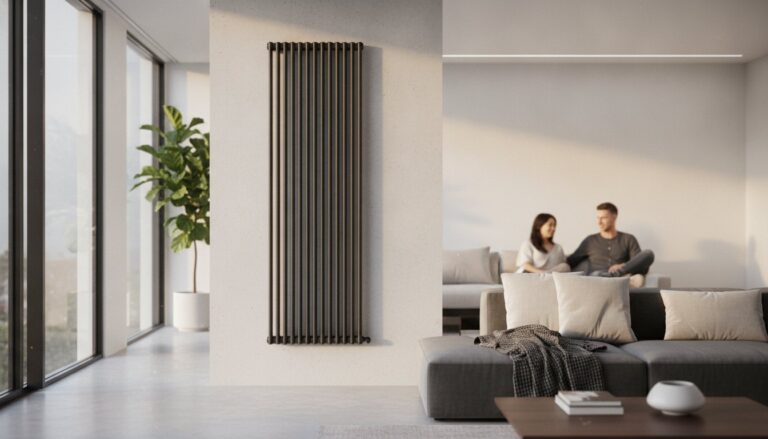
When floor space is at a premium, Hydronic Radiator Panels offer a versatile solution. Slimline and vertical panel options allow us to utilise narrow wall sections that would otherwise go to waste, keeping your main living areas clear for furniture and art. In micro-bathrooms or ensuites, Hydronic Towel Rails serve as excellent secondary heat sources; they provide the luxury of warm towels while contributing enough radiant heat to keep the space dry and comfortable. For multi-story terrace homes, we implement zoning strategies that allow you to manage temperatures independently on each level, ensuring you don’t waste energy heating an empty upstairs bedroom during the day.
Consulting with a Melbourne Specialist
Preparing for a successful installation starts with a detailed site visit. We recommend having your room dimensions and current insulation details ready, as these factors dictate the minimum boiler output required. With over 30 years of local industry experience, our team specialises in solving the space puzzles that stop other installers. We understand the nuances of Victorian building codes and the latest 2026 energy standards, ensuring your system is both compliant and future-proof. If you’re ready to reclaim your floor space without losing an ounce of comfort, Request a custom compact hydronic quote today and let us design a system that perfectly fits your home.
Future-Proof Your Home with Melbourne’s Most Compact Heating Solutions
Navigating the hydronic boiler replacement cost melbourne landscape in 2026 means balancing immediate comfort with long-term regulatory compliance. Modern compact boilers and monobloc heat pumps now allow you to reclaim your floor space without sacrificing the silent, radiant warmth that makes a Victorian winter bearable. By choosing a system designed for the “300mm depth rule,” you can hide your heating infrastructure within standard cabinetry, preserving the minimalist aesthetic of your heritage terrace or modern apartment while meeting new energy standards.
Our team brings 30+ years of local Melbourne expertise to every project, acting as dedicated space-puzzle solvers for the most challenging inner-city floor plans. We are BPC-licensed and insured specialists who understand the intricate requirements of heritage retrofits and the latest Victorian electrification mandates. Whether you’re transitioning to an all-electric heat pump or upgrading to a high-efficiency gas unit, we ensure your installation is safe, compliant, and perfectly sized for your specific heat load. Don’t let limited square footage dictate your home’s comfort levels. Book a Compact System Consultation with Melbourne’s Experts today and discover how a custom-designed hydronic system can transform your living environment.
Frequently Asked Questions
What is the smallest physical size for a hydronic boiler in Melbourne?
The smallest high-efficiency gas boilers in the 2026 Melbourne market typically measure approximately 700mm in height, 400mm in width, and 300mm in depth. These dimensions are specifically engineered to fit within a standard Australian kitchen or laundry cupboard. While sizes vary between manufacturers, the depth is the most critical factor for a flush finish. This compact footprint allows for discreet installation in narrow inner-city terraces without requiring any structural modifications to your existing cabinetry.
Can I install a hydronic boiler inside a standard kitchen cupboard?
Yes, you can install a compact boiler inside a standard kitchen cupboard, provided the installation meets the Building and Plumbing Commission (BPC) safety standards. These regulations require specific “breathing room” for airflow and technician access. We often use custom-designed cabinetry or ventilated door panels to ensure the unit operates safely while remaining completely hidden. This approach is ideal for high-density living where every square centimetre of floor space is vital for daily functionality and comfort.
Are smaller boilers less efficient than larger units for Melbourne homes?
Smaller boilers are not inherently less efficient than larger units; modern compact models often feature superior modulation technology. Efficiency is determined by the unit’s ability to adjust its power output to match the home’s actual heat load. A correctly sized small boiler will often operate more efficiently than an oversized unit that short-cycles. This precision helps manage the overall hydronic boiler replacement cost melbourne by reducing long-term energy consumption and preventing unnecessary wear on internal components.
How much clearance does a compact boiler need for ventilation?
Most compact boilers require a minimum clearance of 50mm to 100mm on the sides and bottom, with roughly 200mm to 300mm at the top for flueing and pipework. These specific service zones are mandatory under Victorian plumbing regulations to allow for safe maintenance and adequate heat dissipation. During a site visit, we calculate these clearances precisely to ensure your cupboard installation remains compliant with the latest 2026 safety standards and all relevant manufacturer warranties.
Do I need a different boiler for underfloor heating vs. radiator panels in a small home?
A single compact boiler can typically serve both underfloor heating and radiator panels, though the system design must account for different operating temperatures. Radiators generally require higher water temperatures than underfloor coils. In smaller Melbourne homes, we often recommend a high-modulation boiler that can efficiently handle these varying demands. This versatility ensures you enjoy consistent radiant comfort across different zones without needing multiple bulky units in your limited utility space, keeping your home warm and clutter-free.
Can a compact heat pump be installed on an apartment balcony?
Compact monobloc heat pumps are specifically designed for installation on apartment balconies or in small courtyards. These units move the bulk of the heating system outdoors, leaving only a small control interface inside your home. When planning a balcony install, we focus on meeting Victorian noise regulation standards and ensuring the unit is placed to avoid vibration transfer. This is a popular choice for 2026 renovations looking to meet upcoming electrification mandates while preserving internal storage.
What is the average hydronic boiler replacement cost in Melbourne for 2026?
Factors influencing the hydronic boiler replacement cost melbourne include the choice between gas and electric heat pumps, the complexity of the flueing, and any necessary pipework upgrades. While gas units often have a lower upfront price, transitioning to a heat pump may qualify for Solar Victoria rebates and Victorian Energy Upgrades discounts. Every installation is unique; we focus on providing a tailored quote that reflects your home’s specific architectural constraints and your long-term energy efficiency goals.
Is a small boiler powerful enough for a two-story Carlton terrace?
A compact boiler is absolutely powerful enough for a two-story Carlton terrace, provided the Kilowatt (kW) output is matched to the home’s specific heat load. Modern engineering allows small units to produce up to 30kW or more, which is ample for most multi-story heritage homes. The key is professional system design; we calculate the thermal loss of each room to ensure the boiler provides enough pressure to circulate warm water to the highest radiators consistently.