Cost of Hydronic Heating in Melbourne: The 2026 Price Guide
What if the true cost of your home heating isn’t the upfront price tag, but the hidden toll of skyrocketing gas bills and circulating allergens on your family’s wellbeing? If you’ve spent another Melbourne winter shivering near a noisy vent while watching your utility costs climb, you aren’t alone. Most homeowners we speak with are tired of the dust and dry air that comes with traditional ducted systems. When investigating the cost of hydronic heating melbourne residents often find themselves at a crossroads between sticking with aging technology or investing in a silent, allergy-friendly comfort that adds genuine value to their property.
It’s a significant decision, and you deserve clarity before committing to a system that will last for the next thirty years. We understand that the shift toward electrification and heat pump technology can feel complex. That’s why we’ve created this 2026 price guide to give you a transparent breakdown of what to expect. You’ll learn about the differences in installation for radiator panels and underfloor systems, discover how electric heat pumps compare to gas boilers in 2026, and see how current Victorian rebates can lower your initial investment. We’re here to help you build a future-proofed home that stays warm, healthy, and cost-effective for decades to come.
Key Takeaways
- Understand why the initial cost of hydronic heating melbourne typically ranges from $12,000 to $25,000 and how this investment translates into thirty years of silent, dust-free comfort.
- Compare the installation advantages of radiator panels versus underfloor heating to find the most cost-effective solution for your home’s specific layout and construction.
- Learn how modern electric heat pumps achieve superior efficiency with a COP of 3.0 to 4.0, drastically lowering annual running costs compared to traditional gas boilers.
- Identify the property factors, such as insulation quality and building materials, that can reduce the size and price of the system you actually need.
- Explore how to leverage 2026 Victorian government rebates to offset your transition to a future-proofed, electric-ready heating system that adds significant property value.
How Much Does Hydronic Heating Cost in Melbourne? (2026 Overview)
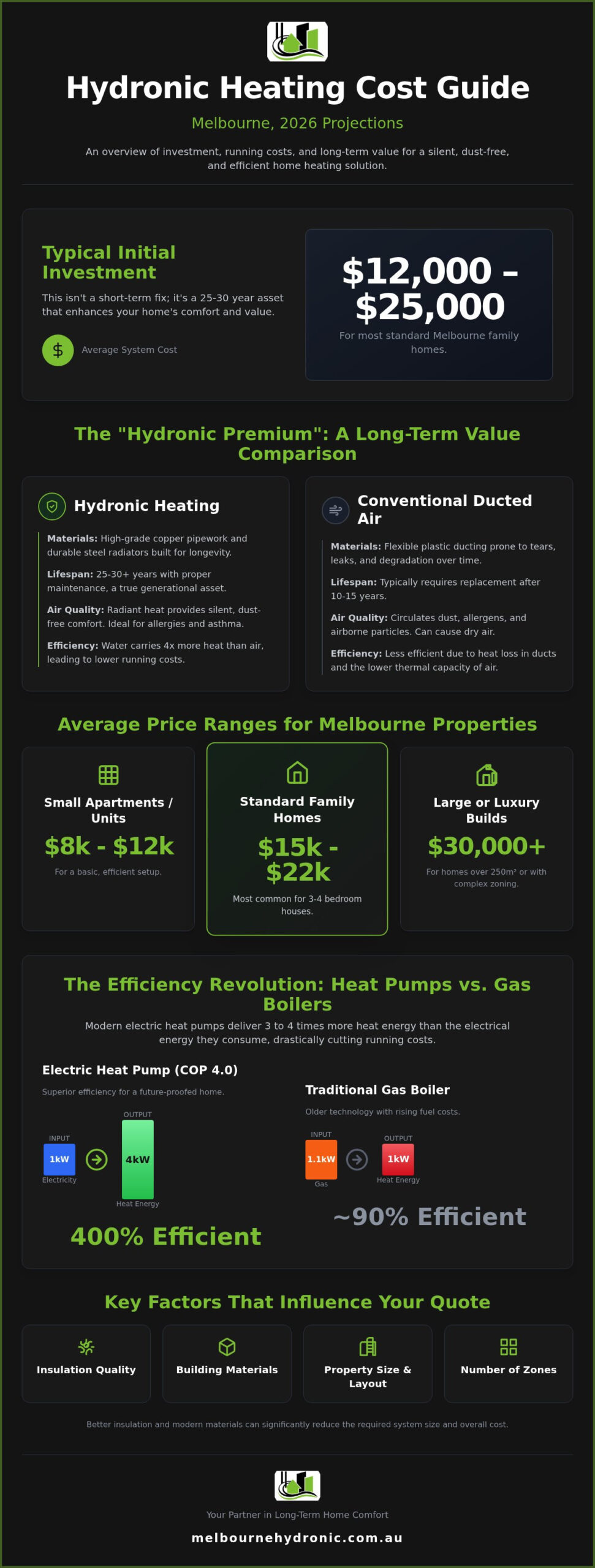
For most Melbourne families, the initial investment for a hydronic system in 2026 typically falls between $12,000 and $25,000. While this is higher than a standard split system or gas ducted unit, it represents a fundamental shift in how we heat our homes. These 2026 prices reflect a market that has moved toward premium, high-efficiency electric heat pumps. When you look at the cost of hydronic heating melbourne, it’s vital to view it as a 25-year asset rather than a short-term fix. Unlike air-based systems that often require replacement after a decade, a well-maintained hydronic system is built to last for generations.
The “Hydronic Premium”: Why it costs more than ducted air
The price difference boils down to engineering and materials. Ducted air relies on plastic flexible piping that can tear or leak over time. In contrast, hydronic systems use high-grade copper pipework and durable steel radiator panels. These materials are built to survive for decades without losing efficiency. The installation also demands a higher level of expertise. You aren’t just hiring an HVAC installer; you’re engaging licensed plumbers and specialized hydronic technicians who understand fluid dynamics and thermal mass. Whether you’re installing radiator panels or Underfloor heating systems, the precision required is significantly higher. A professionally installed hydronic system generally offers a full return on investment through reduced energy consumption and increased property resale value within ten years.
Average Price Ranges for Melbourne Properties
Property size and complexity are the primary drivers of any quote. In 2026, we see the following market averages across Victoria:
- Small apartments or units: Expect a range between $8,000 and $12,000 for a basic setup.
- Standard family homes: Three to four-bedroom homes usually see figures between $15,000 and $22,000.
- Large multi-story or luxury builds: Systems for homes over 250 square meters often start at $30,000 and scale upward based on the number of zones.
These figures include the specialized labor and premium components necessary to ensure the system operates silently and efficiently. In Melbourne’s volatile climate, where temperatures can drop ten degrees in an hour, the ability of water to carry four times more heat than air makes this investment a strategic choice for long-term comfort and health.
Installation Costs: Radiator Panels vs. Underfloor Heating
Choosing the right delivery method for your home is a balance of architectural constraints and your family’s lifestyle preferences. In Melbourne and Geelong, the two primary options, radiator panels and underfloor systems, offer distinct advantages. When you evaluate the cost of hydronic heating melbourne, it’s essential to understand the “scale effect.” While a larger home naturally requires a larger total investment, the cost per square metre often decreases as the property size increases. This happens because the primary infrastructure, such as the electric heat pump or gas boiler, represents a significant fixed cost that is spread more efficiently across a larger floor plan.
Retrofitting is another area where the choice of delivery method impacts your budget. For existing homes, especially those classic Melbourne weatherboards with sub-floor access, radiator panels are almost always the more cost-effective choice. Installing panels involves running copper pipework beneath the floor and mounting units on the walls, which is far less invasive than lifting existing floor coverings to install heating coils. Beyond their utility, modern radiator panels now serve as functional art. You can select designer finishes and sleek profiles that complement your interior design, turning a heating element into a premium feature of the room.
Hydronic Radiator Panel Costs
Radiator panels remain the most popular choice for Melbourne renovations due to their versatility and rapid response times. The investment for each panel typically covers the high-grade steel unit, specialized valves, and the expert labor required for a precise installation. For homeowners in older suburbs, hydronic heating panels provide a reliable way to introduce modern comfort without compromising the home’s structural integrity. These systems allow for excellent zoning, meaning you don’t have to waste energy heating guest rooms or storage areas when they aren’t in use. If you’re looking for a system that can be installed quickly with minimal disruption, discussing a panel layout with a specialist is the best place to start.
Hydronic Underfloor Heating Costs
Underfloor heating is widely considered the gold standard for new builds and major structural renovations. For new constructions, the most efficient method is slab heating, where the pipework is integrated directly into the concrete foundation. This creates a massive thermal bank that releases heat slowly and evenly. If you’re renovating an existing space, in-screed systems are used instead. This involves laying the heating coils on top of the existing slab and covering them with a thin layer of specialized concrete before the final floor finish is applied. While the installation for underfloor heating is more labor-intensive than panels, the result is an invisible heating system that provides unparalleled comfort underfoot, particularly in homes with tiled or polished concrete floors.
Running Costs in 2026: Heat Pumps vs. Gas Boilers
Victoria’s energy transition has fundamentally changed the financial math for local homeowners. As we move through 2026, the conversation around the cost of hydronic heating melbourne has shifted from “gas or electric” to “how fast can we electrify?” The Victorian Government’s Gas Substitution Roadmap has made gas connections in new builds a thing of the past, while rising tariffs are making existing gas systems more expensive to operate every year.
The efficiency of your system is the biggest driver of long-term savings. Modern electric heat pumps are engineered to move heat rather than create it, allowing them to achieve a Coefficient of Performance (COP) of 3.0 to 4.0. This means for every unit of electricity the system uses, it delivers three to four times that amount in thermal energy. When calculating the total cost of hydronic heating melbourne residents should prioritize these COP values, as a higher efficiency rating directly translates to lower monthly winter bills.
The Rise of Electric Heat Pumps
Pairing a heat pump hydronic heating system with a solar PV array is the most effective way to future-proof your home. By using your own generated electricity to run the pump during the day, you can reduce your winter heating bills by up to 50% compared to gas. For a typical 200sqm Melbourne home, annual running costs with a heat pump now range between $900 and $1,300. The upfront cost for the unit alone sits between $8,000 and $12,000, but the available Victorian Energy Upgrades (VEU) rebates and Solar Homes Program incentives significantly soften this initial investment.
The Future of Gas Boilers in Melbourne
High-efficiency condensing boilers still serve a purpose, especially in complex heritage retrofits where outdoor space for a heat pump is unavailable. In these scenarios, boiler replacements offer a lower entry price, typically ranging from $4,000 to $7,000 for the unit. However, the operational reality is changing. A 200sqm home using a gas boiler can expect annual running costs between $1,400 and $1,800 in 2026. If you choose gas today, it’s wise to ensure your pipework and radiators are “heat pump ready” for an eventual transition. This strategy allows you to maintain comfort now while protecting your property value as Victoria continues its move away from fossil fuels.
Key Factors That Influence Your Melbourne Hydronic Quote
Every home in Victoria has a unique thermal profile. This is why a generic estimate rarely matches a final on-site quote. When assessing the cost of hydronic heating melbourne, we look far beyond the square footage of your floor plan. The construction material of your walls, the quality of your window glazing, and even the direction your living room faces all dictate the required kilowatt capacity of your heat pump or boiler. A home built with high-performance insulation and double glazing effectively traps heat. This allows us to specify a smaller, more affordable unit that won’t have to work as hard to maintain your desired temperature.
Zoning is another critical variable. While adding individual thermostats to different rooms increases the initial installation price, it’s a strategic move for long-term savings. By creating distinct zones, you can keep bedrooms cool during the day while only heating the active living areas. This precision prevents energy waste and ensures your system operates at peak efficiency. Physical access also plays a role. If our technicians can easily access a sub-floor crawl space to lay pipework, the labor hours decrease. Conversely, tight attic installations or multi-story homes requiring external pipe stacks involve more complex engineering and time.
New Build vs. Retrofit Economics
The timing of your installation significantly impacts your budget. New builds are typically 20% to 30% cheaper to equip because we have open access to the slab or wall frames before the plaster and flooring go down. The “Melbourne Retrofit” presents a different challenge. In heritage homes across suburbs like Carlton or Geelong, we prioritize protecting original timber floors and ornate ceilings. This requires surgical precision and specialized tools. To keep these complex systems running at their peak, a regular hydronic heating service melbourne is essential to prevent component wear and ensure the system doesn’t degrade over its thirty-year lifespan.
System Maintenance and Long-Term Protection
Ongoing maintenance is a small but necessary part of the total cost of ownership. You should budget for an annual professional service, which typically costs between $250 and $450. This check ensures your water pressure is correct and your heat pump or boiler is firing efficiently. Every five to seven years, we recommend a power flush. This process removes the “sludge” or magnetite that naturally builds up inside steel radiators. While Melbourne’s water is relatively soft, mineral deposits can still affect heat transfer over time. If you’re ready for a precise assessment of your home’s unique requirements, request a tailored quote from our specialist team today.
Maximizing ROI: Why Melbourne Hydronic is the Best Choice
Selecting a heating system is a significant financial commitment, but the partner you choose for the installation determines the true cost of hydronic heating melbourne over the next three decades. A poorly designed system often leads to “short-cycling” or inefficient energy use, which quietly drains your bank account through higher utility bills. Our team brings over 30 years of industry experience in Victoria to every project. This local history means we don’t just guess at your requirements; we understand exactly how a 10-degree morning temperature drop in Geelong or a damp winter afternoon in Melbourne affects your home’s thermal performance.
Our goal is to ensure you get the installation right the first time. By leveraging our deep technical knowledge, we prevent the common industry mistake of specifying oversized units. An oversized heat pump or boiler isn’t just more expensive to buy; it’s less efficient to run because it constantly starts and stops. We focus on precision engineering to match the system capacity to your home’s actual heat loss, protecting your investment from day one. With comprehensive warranties and a dedicated local support team, you gain the peace of mind that comes from knowing your comfort is backed by Victorian experts.
Custom Design for Victorian Homes
Every project begins with a tailored heat load calculation that respects the specific floor plan and architectural integrity of your property. We don’t believe in one-size-fits-all solutions. Whether you’re investigating hydronic heating for a heritage Victorian terrace or a contemporary new build, we analyze your utility setup to recommend the ideal heat source. We help you navigate the choice between high-efficiency gas boilers and modern electric heat pumps, ensuring your system is future-proofed against changing energy regulations while maximizing your daily comfort.
The “Health ROI”: Beyond the Dollar Sign
While the financial numbers are important, the return on investment for a hydronic system includes significant lifestyle and health benefits. Unlike ducted systems that circulate dust, pet dander, and allergens, hydronic heat is radiant and completely still. This makes it the gold standard for families managing asthma or hay fever. There’s also the luxury of silence; without the constant roar of fans, your home remains a peaceful sanctuary for sleep and remote work. Finally, consider the impact on your property’s equity. Real estate data for 2026 indicates that Melbourne homes equipped with premium hydronic systems can command a price premium of $25,000 to $55,000. It’s an investment that pays dividends in health today and resale value tomorrow.
Secure Your Home’s Comfort for the Next Generation
Investing in your home’s infrastructure is about more than just the numbers on a balance sheet. It’s about the silence of a cold winter morning and the long-term health of your family. While the cost of hydronic heating melbourne residents navigate in 2026 reflects a premium for high-efficiency technology, the rewards in energy savings and increased property value are undeniable. By choosing to transition toward electric heat pump technology today, you’re securing a future-proofed system that aligns perfectly with Victoria’s evolving energy landscape.
As a local family-owned business with over 30 years of experience, we specialize in helping Victorian homeowners manage these complex transitions with technical precision. Whether you’re planning a heritage retrofit or a modern new build, our expertise ensures your system is designed for maximum efficiency from day one. Don’t let another winter pass in an inefficient, dusty environment. Get a Tailored Hydronic Heating Quote for Your Melbourne Home and experience the difference that expert design and local care can make. We’re ready to help you create the warm, healthy sanctuary your family deserves.
Frequently Asked Questions
Is hydronic heating more expensive to run than ducted heating?
Hydronic systems are significantly more cost-effective, often reducing running costs by 20% to 35% compared to traditional gas ducted heating. This efficiency comes from water’s superior ability to carry heat. When you factor in the cost of hydronic heating melbourne households face, electric heat pumps provide the best long-term value. With a Coefficient of Performance between 3.0 and 4.0, these systems turn one unit of electricity into four units of radiant heat.
How much does it cost to replace a hydronic boiler in Melbourne?
Replacing a hydronic boiler involves several variables, including the unit’s kilowatt capacity and whether you’re sticking with gas or transitioning to an electric heat pump. High-efficiency condensing boilers are the standard for 2026 gas replacements. However, many Melbourne residents now opt for heat pump transitions to future-proof their homes. The total investment depends on your existing pipework’s compatibility and the complexity of the flue or outdoor unit placement.
Are there Victorian government rebates for electric hydronic heat pumps in 2026?
Yes, the Victorian Government continues to support the transition toward sustainable energy through the Victorian Energy Upgrades (VEU) program and the Solar Homes Program. In 2026, eligible homeowners can access rebates when switching from inefficient gas appliances to high-efficiency electric heat pumps. These incentives are designed to lower the initial cost of hydronic heating melbourne families encounter, making the shift to a cleaner, emission-free home more accessible for local residents.
What is the average installation time for a hydronic system?
A typical installation for a standard family home usually takes between five and ten working days. Radiator panel systems are generally faster to install, especially in existing homes with sub-floor access. Underfloor heating requires more coordination, particularly in new builds where we work alongside your concreters or flooring specialists. We prioritize a clean, methodical process to minimize disruption, ensuring your home remains a liveable environment throughout the technical installation phase.
Can I install hydronic heating in a two-story Melbourne home?
Absolutely, hydronic systems are ideal for multi-story residences. We often recommend a hybrid approach, using underfloor heating for the ground-floor slab and elegant radiator panels or trench heating for the upper levels. This configuration allows for precise zoning across different floors. Our design team ensures that the pump capacity and pipework layout are engineered to handle the vertical lift required for consistent warmth in every room of your Melbourne home.
Is it cheaper to leave hydronic heating on all day?
It’s often more efficient to keep your hydronic system running at a consistent, lower temperature rather than turning it off completely. Hydronic heating relies on thermal mass, meaning it takes more energy to heat a cold house from scratch than to maintain a steady ambient warmth. By using smart thermostats and effective zoning, you can lower the temperature slightly when you’re away while keeping the core of the home comfortably warm.
What is the cost difference between panel radiators and underfloor heating?
Underfloor heating generally requires a higher initial investment due to the intensive labor involved in laying coils within a concrete slab or screed. It’s the premium choice for new builds where invisible heating is preferred. Radiator panels are typically more budget-friendly for retrofits because they don’t require structural floor changes. Both systems offer the same high-quality radiant heat, so the choice often depends on your property’s architectural constraints and your aesthetic preferences.
Does hydronic heating add value to my Melbourne property?
High-quality hydronic heating is a major selling point in the Victorian real estate market. Recent 2026 data indicates that homes with these systems can command a significant price premium, often exceeding the initial installation cost. Buyers increasingly prioritize energy efficiency, silent operation, and health benefits like dust-free air. Beyond the immediate comfort, installing a hydronic system is a strategic investment that fundamentally enhances the long-term equity and desirability of your Melbourne property.