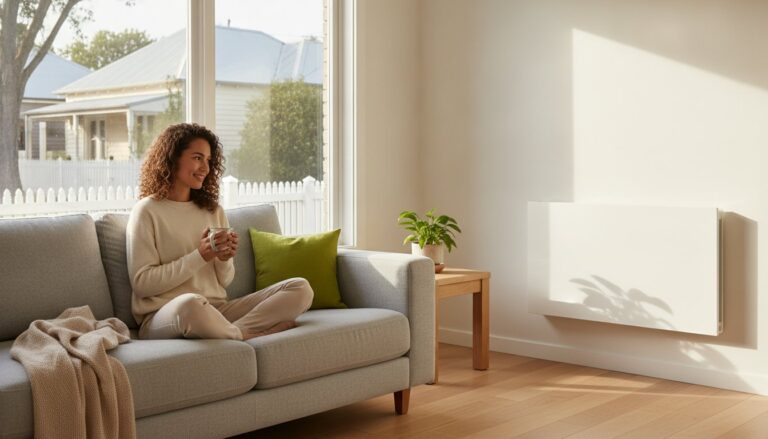

Radiator Heater Guide for Melbourne Homes: Hydronic vs. Electric in 2026
What if the very system keeping you warm this Melbourne winter is the primary cause of your morning cough and those A$500 monthly energy spikes? Many Victorians accept dry air and rattling fans as a necessary trade-off for surviving a 5°C July night. You’ve likely experienced the frustration of a modern open-plan living area that feels drafty or a Victorian terrace with stubborn cold spots that never seem to vanish. It’s a pressing issue, especially since the Australian Energy Regulator reported that Victorian residential electricity prices jumped by roughly 25% in the 2023-24 period.
In this guide, you’ll discover why a hydronic radiator heater system remains the gold standard for premium home comfort in 2026. These systems offer a silent, dust-free alternative that can reduce energy consumption by up to 35% when integrated with high-efficiency heat pumps. We’ll compare hydronic and electric options to show you how to achieve consistent warmth while creating a healthier, asthma-friendly environment for your family. By the end, you’ll understand how modern European technology meets local Melbourne expertise to transform your home’s air quality and efficiency.
Key Takeaways
- Understand the critical distinction between permanent hydronic panels and portable units to select the most efficient radiator heater for your home’s long-term comfort and value.
- Discover the science of radiant energy, which provides a silent, “Sun-like” warmth that is dust-free and ideal for Melbourne families prioritising health and allergy-friendly living.
- Compare the initial installation investment against long-term running costs in A$, including a breakdown of high-efficiency air-to-water heat pumps versus traditional gas boilers.
- Learn how to accurately assess room dimensions and insulation levels to choose between space-saving vertical panels or traditional horizontal radiator designs for your property.
- Gain expert insights into navigating Victoria’s gas-to-electric transition with future-proof, premium hydronic solutions tailored for the Greater Melbourne and Geelong regions.
What is a Radiator Heater? Understanding the Hydronic Difference
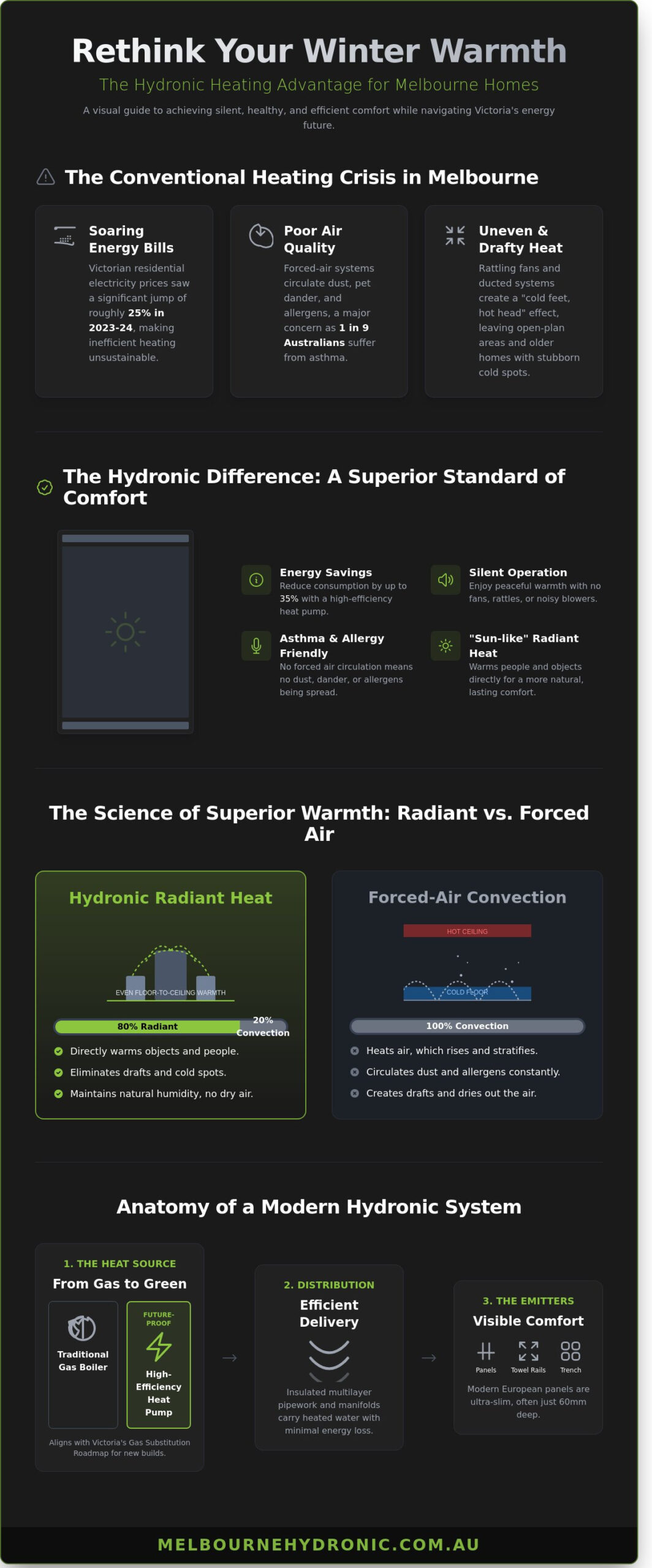
To truly understand What is a Radiator Heater?, we must look beyond the simple metal box on the wall. At its core, a radiator heater is a sophisticated heat exchanger. It works by circulating a heated medium, typically water, to transfer thermal energy into a room through two primary methods: 80 percent radiant heat and 20 percent natural convection. This dual approach ensures that surfaces and people are warmed directly, rather than just heating the air volume.
Melbourne’s winters are notoriously damp, with average humidity levels often exceeding 75 percent in June and July. Forced air systems often struggle in this climate, as they move dry, dusty air that can aggravate respiratory issues. Radiant heat is different. It provides a “sun-like” warmth that doesn’t dry out your sinuses or circulate allergens. The technology has evolved significantly since the bulky cast iron units of the early 1900s. Modern European panels are now slim, often measuring as little as 60mm in depth, and are designed for high-efficiency heat output in contemporary Australian homes.
Portable vs. Permanent Solutions
Many Victorians confuse a permanent radiator heater system with the portable electric column heaters found in retail stores. While a $60 plug-in unit might provide temporary relief in a small study, it’s an inefficient whole-home solution. These portable units rely on high-wattage electric elements that can spike Victorian energy bills by 30 percent or more during peak winter months. In contrast, a permanent hydronic system is a fixed, value-adding asset. It provides silent, consistent warmth across every room and is often a key selling point in the Melbourne real estate market.
The Core Components of a Hydronic System
A professional hydronic installation is a closed-loop system consisting of three critical parts:
- The Heat Source: In 2026, we’ve seen a massive shift from traditional gas boilers to high-efficiency electric heat pumps. This transition aligns with Victoria’s Gas Substitution Roadmap, which began impacting new builds in January 2024.
- The Distribution: A network of insulated multilayer pipework and manifolds carries heated water from the source to the panels with minimal energy loss.
- The Emitters: These are the visible components, including standard steel panels, elegant towel rails for bathrooms, or discreet trench heating installed into floor voids.
By choosing a permanent hydronic system, you’re investing in a dust-free and allergen-friendly environment. It’s a choice that prioritizes health and long-term energy efficiency over the quick fix of a portable heater.
How Radiant Heat Works: The Science of Silent, Healthy Warmth
Imagine the sensation of standing in a patch of sunlight on a crisp Melbourne morning. That feeling is the core of radiant heat. Unlike traditional ducted systems that rely on blowing scorched air, a radiator heater warms your home by emitting infrared energy. This energy travels through the air until it hits a solid object, such as a sofa, a wall, or a person. This process, often referred to as The Science of Silent, Healthy Warmth, ensures that your living space absorbs heat directly rather than just heating the oxygen around you.
This “Sun-like” warmth feels more natural because it mimics the way humans have stayed warm for millennia. In a typical Melbourne winter, ducted systems often create a “cold feet, hot head” effect. This happens because hot air rises rapidly, leaving the floor level chilly while the ceiling stays warm. Radiant systems eliminate this stratification. By warming the objects in the lower half of the room, the temperature remains consistent from floor to ceiling. You’ll notice a distinct lack of drafts, as there are no high-velocity fans pushing air around your living zones.
Health is a primary driver for the shift toward hydronic solutions in Victoria. Data from the National Asthma Council Australia indicates that 1 in 9 Australians suffer from asthma. Standard forced-air systems act as a delivery mechanism for dust, pet dander, and microscopic allergens. Because a hydronic radiator heater has no moving parts or fans, it keeps these irritants settled on the floor where they can be easily cleaned. It’s a passive, healthy way to maintain a 21-degree sanctuary without compromising your respiratory health.
Convection vs. Radiation
Forced-air systems circulate the entire volume of air in a room several times per hour, which keeps dust particles permanently airborne. The physics of a hydronic radiator are different. While it provides some natural convection, about 60 to 80 percent of its output is pure radiation. This means the heat stays in the room much longer after the system turns off. While air loses heat quickly when a door opens, the energy stored in your furniture and walls remains, providing a stable thermal environment. If you want to see how this fits your home, you can explore our range of premium panels to find the right match.
The Silent Heating Advantage
Peace of mind starts with a quiet environment. Many Melbourne homeowners find the mechanical clunking and rushing air of ducted systems disruptive, especially in bedrooms. Radiant systems are completely silent; there are no fans to whir or vents to rattle. This silence has significant psychological benefits, reducing ambient stress and improving sleep quality during the long winter months. Thermal mass is the capacity of a material to absorb and store heat energy, providing a buffer against temperature fluctuations. By leveraging the thermal mass of your home’s structure, radiant heat creates a steady, unwavering warmth that feels like a natural part of the building itself.
Comparing Radiator Heater Costs: Investment vs. Running Expenses
Choosing the right radiator heater system involves balancing the upfront capital with the monthly utility bill. For a standard three-bedroom home in Melbourne, a professional hydronic central heating installation typically ranges from A$10,000 to A$18,000 depending on the number of panels and the heat source. While this is a higher initial investment than purchasing portable electric units, the financial benefits accumulate quickly through lower operational costs and increased property value.
Energy distribution plays a massive role in your quarterly expenses. Research into Comparing Radiator Heater Costs shows that water-based systems are far more efficient at moving heat than air-based alternatives. In Victoria, electricity prices often fluctuate between 25 and 35 cents per kilowatt-hour. A standard 2400W portable electric heater can cost roughly A$0.75 per hour to run. If you run four of these to heat a family home, you’re looking at A$3.00 per hour. A modern hydronic system powered by a high-efficiency boiler or heat pump can slash these costs by 40% to 70%.
Zoning is the secret to preventing energy waste. By using Thermostatic Radiator Valves (TRVs) on every radiator heater, you can set the lounge to 21°C while keeping guest bedrooms at 16°C. This granular control ensures you aren’t paying to heat empty space. Beyond the bills, these systems offer a 25-year lifespan, significantly outperforming the 10-year cycle of most split systems. Real estate data in Melbourne’s inner suburbs suggests that premium hydronic heating can add significant appeal to a home’s valuation, often recouping the initial cost during a sale.
Operational Efficiency in Victoria
Melbourne’s electricity prices make high-wattage electric plug-ins a luxury most households can’t afford long-term. While an electric radiator is 100% efficient, air-to-water heat pumps achieve 300% to 400% efficiency. This means for every 1kW of power consumed, the system delivers 4kW of heat to your home. This technology is the gold standard for 2026, providing a sustainable way to keep your home warm without the “bill shock” associated with traditional resistance heating.
Maintenance and Lifespan
Hydronic systems are built for longevity. Unlike split systems that rely on fans and complex refrigerants, a radiator network is a sealed, quiet system. To maintain this 25-year lifespan, a hydronic heating service in Melbourne is recommended every 12 months. This annual check prevents the buildup of magnetite sludge, a common byproduct that can reduce system efficiency by 15% if ignored. Regular flushing and inhibitor top-ups keep the water clear and the heat transfer optimal.
Choosing the Right Radiator Heater for Your Melbourne Property
Selecting a radiator heater requires a balance of technical precision and aesthetic vision. You must first determine the heat load of each room by measuring its volume and assessing insulation quality. For a typical Melbourne home with 2.7-metre ceilings, a general rule is to provide 60 to 100 Watts of heat per square metre. Properties in coastal areas like the Mornington Peninsula often require the higher end of this scale to combat sea breezes and higher thermal loss. Modern homeowners in Bayside are increasingly treating these units as design statements rather than hidden utilities. Vertical radiators offer a sleek solution for narrow kitchens or entryways where wall space is a premium. Conversely, every Melbourne bathroom benefits from a hydronic towel rail, which provides a constant, gentle heat that eliminates dampness and prevents mould growth during our humid winter months.
- Room Volume: Larger rooms with high ceilings require higher BTU (British Thermal Units) or wattage to maintain comfort.
- Insulation: Homes with double glazing and R-rated wall insulation can often drop their required heater size by 15%.
- Wall Space: Vertical panels are ideal for saving space, while horizontal panels fit perfectly in the dead space beneath windows.
Panel Selection and Placement
Efficiency dictates that you place your radiator heater under a window. This position creates a convection curtain, warming the cold air as it enters the room and preventing floor-level drafts. While standard ribbed steel panels offer the highest surface area for heat exchange, many 2026 renovations favour flat-plate designer radiators for their minimalist appearance. For more detailed advice on matching styles to your architecture, see our guide on choosing the best heating radiator for your home.
Zoning and Control
Melbourne’s weather is famous for its unpredictability, often swinging ten degrees in a single afternoon. Smart thermostats allow you to zone your home, heating only the rooms you’re using. This ‘set and forget’ approach ensures your living room is a steady 21 degrees while bedrooms remain cooler for better sleep. Integrating these controls with hydronic towel rails for Melbourne bathrooms ensures your towels are dry without running the entire house system. This level of control can reduce energy consumption by up to 20% compared to non-zoned systems.
The Melbourne Hydronic Approach: Local Expertise in 2026
For over 30 years, our team has delivered silent, healthy warmth to homes across Greater Melbourne, Geelong, and the Mornington Peninsula. We’ve seen the city’s architecture evolve from drafty heritage cottages to airtight modern builds. We’ve adapted our engineering right alongside these changes. As Victoria moves rapidly toward an all-electric future, we’re leading the local transition by pairing premium electric heat pumps with the classic radiator heater systems Melburnians trust. We don’t just install pipes; we design thermal solutions that respect the unique bones of Victorian properties.
Our “Project-based” design process is what sets us apart. We know that a one-size-fits-all approach fails in the face of Melbourne’s four-seasons-in-one-day climate. A weatherboard home in Geelong requires a vastly different hydraulic calculation than a double-brick residence in Toorak. We analyze every room’s heat loss, window orientation, and insulation levels before a single component is ordered. This bespoke methodology ensures your system isn’t just powerful enough for July, but efficient enough to keep running costs low year-round.
We’ve committed ourselves to European quality standards, but we’ve adapted them for Australian coastal conditions. While European systems are designed for constant snow, our systems are built to handle the high humidity and salt air of Port Phillip Bay. By using corrosion-resistant materials and specialized fittings, we ensure your investment lasts for decades, not just a few seasons. It’s about providing that signature “soft” heat while maintaining the highest levels of air quality and energy performance.
Victorian Energy Standards and Rebates
The 2026 building codes require new homes to meet strict 7-star energy rating requirements. Our hydronic systems are engineered to help you exceed these benchmarks by utilizing low-temperature heat pump technology. You can currently navigate various Victorian government incentives for energy-efficient upgrades, which help reduce the upfront cost of transitioning from gas to electric. Choosing a Cheltenham-based specialist means you get local support from experts who understand exactly how these rebates apply to your specific postcode.
Ready to Upgrade Your Home Comfort?
Your journey to a warmer home begins with a professional consultation. We walk through your property to identify the ideal placement for every radiator heater, ensuring maximum convection without disrupting your interior design. For those undergoing renovations, we offer a “No-Mess” installation promise. We’ve perfected the art of retrofitting systems into existing Melbourne homes with minimal disruption to your daily life or floorboards. Our technicians treat your home with the same respect they’d show their own, leaving nothing behind but a superior heating system.
Don’t settle for dry, dusty air this winter. Request a tailored hydronic heating quote and discover why Melbourne families have trusted our expertise for three decades.
Invest in a Healthier, More Efficient Melbourne Winter
Choosing the right radiator heater for your Melbourne property in 2026 is a decision that balances immediate comfort with long-term sustainability. Hydronic systems stand out as the premier choice because they provide silent, dust-free warmth. This makes them essential for families seeking asthma-friendly heating solutions that don’t circulate allergens or dry out the air. With over 30 years of local Melbourne experience, we’ve seen how integrating expert heat pump technology can transform Victorian homes into energy-efficient sanctuaries. You’ll benefit from a system that’s designed for our specific climate while significantly lowering your monthly running costs compared to traditional electric options. It’s time to move away from inefficient, noisy fans and embrace a tailored approach that prioritizes your health and your home’s value. Our specialists are ready to help you navigate the transition to a modern, integrated hydronic system that lasts for decades. Your journey to a cozy, premium home environment starts with a professional assessment of your unique space.
Book a Melbourne Home Consultation for Your Radiator System
We look forward to helping you create the perfect climate for your home.
Frequently Asked Questions
Is a hydronic radiator heater cheaper to run than a split system?
Hydronic systems often cost 20% to 30% less to run for whole-home heating compared to split systems. While split systems are efficient for single rooms, a central hydronic system maintains a steady temperature without the constant cycling of fans. This makes it a more cost-effective solution for Melbourne’s sustained winter cold, especially when paired with a high-efficiency condensing boiler.
Can I replace my old gas ducted heating with radiator panels?
Yes, you can retro-fit radiator panels into homes that currently use gas ducted heating. This transition eliminates the 15% to 20% energy loss typically found in leaky ceiling ducts. It also significantly improves air quality for the 2.7 million Australians living with asthma, as radiators don’t circulate dust, allergens, or pathogens throughout your living spaces.
How long does it take to install a full radiator system in a Melbourne home?
A full installation in a standard three-bedroom Melbourne home typically takes 3 to 5 business days. Our expert technicians handle everything from sub-floor pipework to panel mounting during this period. We ensure the process is tidy and structured, so your daily routine faces minimal disruption while we upgrade your home’s comfort and energy efficiency.
Do hydronic radiators get hot enough to burn children or pets?
No, hydronic radiators are designed to be safe to touch even when operating at full capacity. They typically maintain a surface temperature between 45°C and 60°C, which provides deep radiant warmth without the risk of skin burns. This makes them a much safer choice for families compared to portable electric bar heaters or wood-burning stoves.
Can I use an electric heat pump to power my existing radiator heaters?
Yes, modern air-to-water heat pumps can integrate with your existing radiator heater setup to provide a fossil-fuel-free solution. Transitioning to a heat pump can reduce your heating-related carbon emissions by up to 60%. We may recommend upsizing specific panels to ensure they provide enough warmth, as heat pumps operate at lower water temperatures than traditional gas boilers.
What is the best type of radiator for a heritage Victorian-style home?
Cast iron radiators are the premium choice for Victorian homes built between 1850 and 1900. These units act as a beautiful design feature while providing incredible heat retention properties. They stay warm long after the system turns off, which is perfect for the high ceilings and solid masonry found in Melbourne’s historic inner-suburban residences.
How often should I bleed my hydronic radiator heaters?
You should bleed your radiators once a year, preferably in April or May before the peak winter chill arrives. This simple maintenance task removes trapped air pockets that prevent the radiator heater from warming up fully. Regular bleeding ensures your system operates at 100% efficiency and prevents cold spots from developing in your primary living areas.
Are radiator heaters effective in large, open-plan living areas?
Radiators are exceptionally effective in large spaces because they heat objects and people directly through radiation. Unlike forced air systems, the warmth doesn’t just rise to the ceiling or blow away when a door opens. By placing panels strategically under windows, we create a thermal curtain that stops cold drafts and maintains a consistent 21°C throughout the room.