Radiator Valve Replacement Cost: 2026 Melbourne Pricing & Guide
That tiny puddle forming beneath your radiator isn’t just a nuisance; it’s a silent drain on your home’s comfort and your bank account. While many Melbourne homeowners view a dripping valve as a minor repair to be deferred, the reality is that ignoring it often leads to warped floorboards and skyrocketing energy bills. Understanding the radiator valve replacement cost in 2026 is the first step toward reclaiming a precise, efficient climate in your home. You’ve likely felt the frustration of a room that’s either too hot or too cold, or perhaps you’re confused about whether a manual or thermostatic upgrade is worth the investment.
We agree that your hydronic heating should be a source of seamless well-being, not a cause for technical stress. This guide provides a clear, expert breakdown of what you can expect to pay for professional valve replacement in the current Melbourne market. You’ll discover the price differences between standard and high-efficiency thermostatic valves, the value of fixed-rate specialist maintenance, and how the right hardware protects your entire system for years to come. By the end of this article, you’ll have the confidence to choose the best upgrade for your lifestyle and your budget.
Key Takeaways
- Learn to identify the “Big Three” warning signs-including persistent leaks and cold radiator spots-that signal your valves require urgent professional attention.
- Understand the functional differences between manual valves and Thermostatic Radiator Valves (TRVs) to maximize your home’s energy efficiency and comfort.
- Get a transparent look at the radiator valve replacement cost in 2026, covering everything from professional-grade parts to the labour involved in system draining.
- Discover how specific variables, such as pipework material and the location of your trench heating or wall panels, can influence your final service quote.
- See why choosing a dedicated hydronic specialist over a general plumber is essential for maintaining system pressure and preventing costly water damage.
Identifying the Need: When to Replace Hydronic Radiator Valves
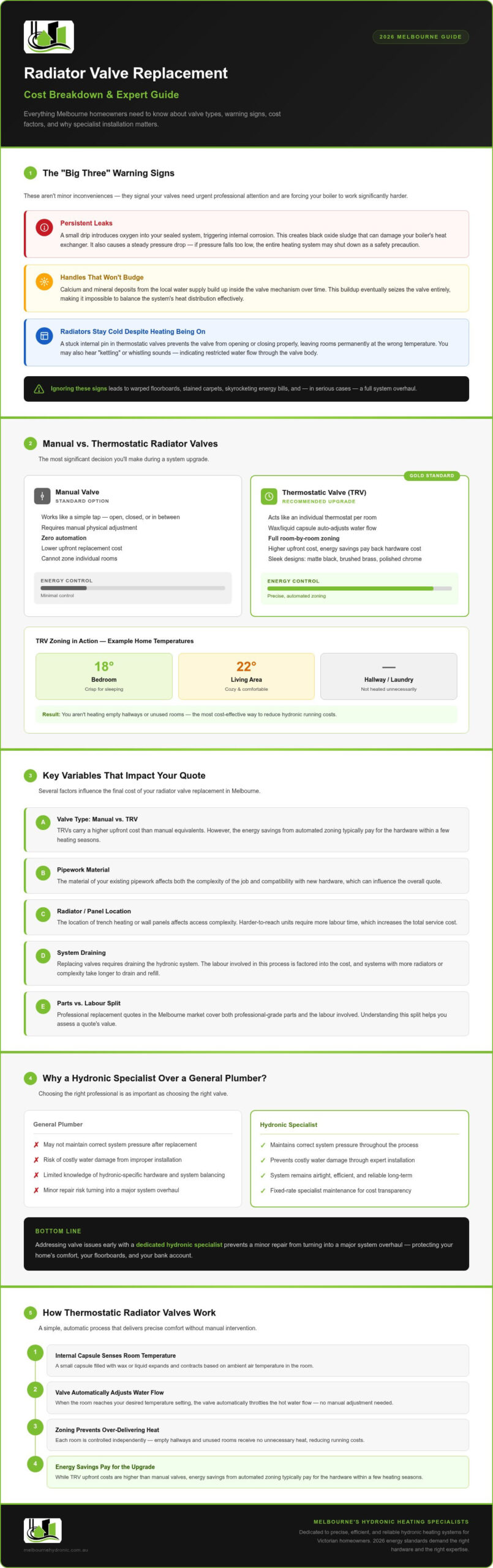
Maintaining a hydronic system requires more than just an annual boiler check. Radiator valve replacement is a fundamental maintenance task that ensures your home stays warm without wasting energy. If you’re currently weighing up the potential radiator valve replacement cost, you’re likely dealing with one of the “Big Three” issues: persistent leaks, handles that won’t budge, or radiators that stay cold despite the heating being on. These aren’t just minor inconveniences. They force your gas boiler or electric heat pump to work significantly harder, leading to premature wear and higher utility bills. With 2026 energy standards now focusing heavily on household efficiency, moving away from outdated manual valves is a priority for Victorian homeowners looking to future-proof their comfort.
Signs of Internal Valve Failure
Sometimes the problem isn’t visible on the outside. In many thermostatic radiator valves, a small internal component called a pin can become stuck. This prevents the valve from opening or closing properly, leaving your room permanently stuck at the wrong temperature. You might also hear “kettling” or a distinct whistling sound coming from the unit. This usually indicates restricted water flow through the valve body. Over time, calcium and mineral deposits from the local water supply build up inside the mechanism. This buildup eventually seizes the valve entirely, making it impossible to balance the system’s heat distribution effectively.
The Risk of Ignoring Leaky Valves
A small drip might seem manageable with a towel, but the long-term consequences are severe. Beyond the obvious risk of warped floorboards or stained carpets in your Melbourne home, a leak is an entry point for oxygen. Once oxygen enters your sealed hydronic system, it triggers internal corrosion. This process creates a black oxide sludge that can eventually damage your boiler’s heat exchanger. Constant leaks also lead to a steady drop in system pressure. If the pressure falls too low, your entire heating system may shut down as a safety precaution, often during the coldest part of the night. Addressing these issues early prevents a minor repair from turning into a major system overhaul. Investing in a professional replacement ensures your system remains airtight, efficient, and reliable for the long haul.
Manual vs. Thermostatic: Choosing the Right Valve for Your Home
Choosing between manual and thermostatic valves is the most significant decision you’ll make during a system upgrade. A manual valve works like a simple tap; it’s either open, closed, or somewhere in between, requiring you to physically turn it to adjust the heat. While these are often the cheapest option when looking at the initial radiator valve replacement cost, they offer zero automation. In contrast, Thermostatic Radiator Valves (TRVs) act like individual thermostats for every room. They are now considered the gold standard for modern hydronic heating panels because they provide the precision climate control today’s homeowners expect.
The comfort benefits of TRVs are immediate. You can keep your bedroom at a crisp 18 degrees for sleeping while ensuring the living area remains a cozy 22 degrees. Beyond performance, modern valves have evolved aesthetically. You no longer have to settle for bulky plastic knobs. Today’s market offers sleek designer options in matte black, brushed brass, or polished chrome, allowing your heating hardware to complement your interior design rather than detract from it. It’s a simple way to elevate the premium feel of your home while improving functionality.
How TRVs Save Money in Melbourne
TRVs contain a small internal capsule filled with wax or liquid that expands and contracts based on the ambient air temperature. When the room reaches your desired setting, the valve automatically throttles the hot water flow without you lifting a finger. This creates “zoning” throughout your home, ensuring you aren’t heating empty hallways or unused laundry rooms. TRVs are the most cost-effective way to reduce hydronic running costs because they prevent your system from over-delivering heat. While the upfront radiator valve replacement cost for a TRV is higher than a manual equivalent, the energy savings typically pay for the hardware within a few heating seasons.
When to Stick with Manual Valves
There are specific scenarios where a manual valve is actually the better choice. Every hydronic system needs at least one “bypass” radiator, usually located in the same room as the main wall thermostat. This radiator stays permanently open to ensure water can always circulate, protecting the pump from damage. Manual valves are also standard for hydronic towel rails, where the goal is constant drying rather than room temperature regulation. If you have a guest wing that stays closed for months at a time, manual valves might be a sensible way to keep your project budget in check. They are also highly compatible with older gas boilers that may not have the sophisticated modulation of modern heat pumps. If you’re unsure which combination fits your floor plan, our team can help you design a balanced system that prioritizes both comfort and efficiency.
Cost Breakdown: Understanding Labour and Parts in Melbourne
Calculating the radiator valve replacement cost involves more than just looking at the price tag on a brass fitting. In the 2026 Melbourne market, homeowners must weigh the difference between budget off-the-shelf parts and professional-grade components. While a hardware store valve might save a few dollars initially, these generic parts often lack the robust internal seals found in specialist-grade hardware. A professional replacement doesn’t just swap a part; it restores the integrity of a pressurized system. Choosing a specialist ensures that every component, from the valve body to the smallest olive, is designed to withstand the specific demands of Victorian hydronic systems. You’ll also find that grouping your replacements is much more economical. The initial setup and system preparation represent a significant portion of the quote, so replacing five valves in a single visit is far cheaper per unit than five separate service calls.
Labour Components of Valve Replacement
The labour involved in valve replacement is more technical than standard residential plumbing. A specialist technician must decide between a full system drain-down or using advanced pipe-freezing kits. Draining is thorough but time-consuming, while freezing allows for a surgical replacement without emptying the entire system. Beyond the physical swap, professional balancing is the “invisible” part of the service. This involves adjusting the flow across every radiator to ensure heat is distributed evenly throughout your home. In Melbourne and Geelong, you’ll typically encounter a call-out fee and a minimum booking time, which reflects the technician’s expertise and the specialized equipment they bring to your doorstep.
Materials and Consumables
The hardware you choose has a direct impact on both your immediate comfort and your long-term energy bills. High-quality TRV heads offer superior temperature sensing compared to budget alternatives, which can be prone to “hunting” for the right temperature. You must also factor in the cost of professional-grade consumables. Every time a system is opened, fresh corrosion inhibitor must be added to the water. This chemical treatment is essential for protecting your radiator panels and boiler from internal rust. Small parts like tailpieces and olives are also replaced as a standard precaution. These minor items are critical for preventing the slow, weeping leaks that can cause thousands of dollars in damage to your carpets and skirting boards over time.
Key Variables: What Impacts Your Replacement Quote?
Every home in Melbourne has a unique architectural footprint, and these physical details directly influence your final radiator valve replacement cost. While a standard wall-mounted panel is often the baseline for a quote, the complexity of your specific installation can shift the time and materials required. For example, the material of your existing pipework is a major factor. While traditional copper is common, many modern Victorian homes use multilayer pipework. This requires specialized crimping tools and specific adapters that aren’t found in a standard plumbing kit. If your system is over 20 years old, a technician may also find that the surrounding pipework has become brittle, requiring careful reinforcement to ensure the new valve sits securely without causing future stress fractures.
Accessibility and System Complexity
The physical location of your heating units dictates the pace of the job. Working with hydronic trench heating typically takes longer than servicing standard wall panels because the valves are recessed within floor troughs, often requiring the removal of decorative grilles and careful navigation of floor finishes. Accessibility is also a concern for radiators tucked into tight corners or behind custom cabinetry where rear access is restricted. In multi-storey Melbourne residences, the labour time naturally increases. Draining a system across multiple levels requires a methodical approach to manage head pressure, and the subsequent bleeding process to remove air pockets is more intensive than in a single-story cottage.
System Condition and Secondary Services
A professional technician views a valve replacement as an opportunity to assess the health of your entire system. If they discover thick, black magnetite sludge while removing an old valve, they might recommend a power flush. While this adds to the immediate service cost, it prevents the new valves from seizing up within months. You might also consider bundling your valve upgrade with a smart thermostat installation. Modernizing your control interface while the system is already drained is the most efficient way to manage your project budget. If you’re ready to improve your home’s climate control, you can request a detailed quote from our specialist team to get a precise breakdown for your specific layout.
Professional Replacement: Why Specialist Installation Matters
Attempting a DIY fix to lower your radiator valve replacement cost often results in far more expensive repairs. Hydronic systems operate under significant pressure; a minor error during installation can lead to hundreds of litres of water flooding your living space. This chemically treated water can cause catastrophic damage to floorboards, carpets, and structural timber in a matter of minutes. A hydronic specialist brings a level of technical precision that a general residential plumber is rarely trained for. We focus exclusively on these complex systems, ensuring every seal is airtight and every component is perfectly compatible with your specific boiler or heat pump. At Melbourne Hydronic Heating, we bring over 30 years of Victorian industry experience to every job, providing the peace of mind that comes with expert-led maintenance.
The Value of System Balancing
System balancing is the science of ensuring heat is distributed evenly throughout your entire home. It isn’t just about swapping the hardware; it’s about calibrating the water flow so every room reaches its target temperature simultaneously. Our technicians meticulously adjust the lockshield valves on the opposite side of the radiator to prevent “short-circuiting,” where the water takes the path of least resistance and leaves distant rooms cold. This precise calibration is vital for the longevity and efficiency of modern electric heat pumps. When a system is balanced, the heat pump operates within its optimal range, reducing unnecessary cycling and lowering your monthly energy bills.
Booking Your Service in Melbourne
Booking a professional service is the most reliable way to protect your home’s comfort. Before our technician arrives, we recommend clearing a one-metre workspace around each radiator being serviced and moving any delicate furniture or rugs. This preparation allows for a faster, cleaner installation and helps keep the project on schedule. Most residential valve upgrades are completed within a single morning or afternoon, depending on the number of units and whether the system requires a full drain-down. Investing in professional installation means you receive a comprehensive warranty and the confidence that your heating will perform flawlessly through the harshest Melbourne winter. Don’t leave your home’s climate to chance. You can request a professional quote for your radiator valve replacement today to ensure your system is handled by local experts who understand Victorian conditions.
Secure Your Home’s Efficiency and Comfort
Upgrading your heating system is about more than just stopping a leak. By choosing modern thermostatic valves, you gain precise control over every room while protecting your home from the risks of high-pressure water damage. We’ve explored how the radiator valve replacement cost is an investment in your property’s long-term health and energy efficiency. Whether you’re modernizing a heritage cottage or optimizing a contemporary build, the right hardware ensures your system operates at its peak performance throughout the Victorian winter.
With over 30 years of Melbourne heating expertise, our team of licensed Victorian plumbers and hydronic specialists is here to help. Every repair we perform includes a comprehensive system health check to ensure your entire installation is running safely and efficiently. Don’t wait for a minor drip to become a major floorboard repair. Get a Fixed-Price Quote for Radiator Valve Replacement today. Let’s work together to create a warm, reliable, and perfectly balanced environment for your family.
Frequently Asked Questions
How much does it cost to replace a single radiator valve in Melbourne?
Pricing for a single valve replacement typically reflects the specialist’s call-out fee and the cost of professional-grade parts. It’s often more economical to bundle multiple replacements together because the initial system preparation takes the same amount of time regardless of how many valves are swapped. For a precise radiator valve replacement cost, we recommend requesting a tailored quote that accounts for your specific system type and pipework configuration in Melbourne.
Do I need to drain my entire hydronic system to change one valve?
Not always. While a full drain-down is a thorough way to ensure a clean installation, specialists often use advanced pipe-freezing kits for single valve replacements. This technology creates a temporary ice plug in the pipework, allowing the technician to swap the valve without emptying hundreds of litres of water. However, if your system contains significant sludge or requires fresh inhibitor, a full drain and refill might be the more responsible choice.
Is it worth upgrading to Thermostatic Radiator Valves (TRVs)?
Upgrading to TRVs is one of the most effective ways to improve home comfort and reduce energy waste. Unlike manual valves, TRVs automatically adjust the heat output of each radiator based on the room’s air temperature. This allows you to zone your home, heating only the spaces you’re using. While the initial radiator valve replacement cost is higher for thermostatic models, the long-term savings on your energy bills usually justify the investment.
Can I replace a radiator valve myself if I have basic plumbing tools?
We strongly advise against DIY valve replacement on hydronic systems. These are pressurized, closed-loop systems that require technical knowledge to balance and refill correctly. A simple mistake can lead to massive water damage or airlocks that stop your heating from working entirely. Using a licensed specialist ensures that the installation is leak-free and that your system’s corrosion protection is professionally restored with the correct chemical inhibitors during the process.
How long does it typically take to replace valves on five radiators?
A typical residential project involving five radiators usually takes between three and five hours to complete. This timeline includes draining the system, removing the old hardware, fitting the new valves, and performing a full system refill. The process also involves “bleeding” the radiators to remove air pockets and balancing the flow to ensure even heat distribution. If your home has multiple storeys, the process may take slightly longer.
Will new valves help if some of my radiators are cold at the bottom?
Radiators that are cold at the bottom usually indicate a buildup of magnetite sludge rather than a valve failure. While replacing the valves can improve flow control, this specific symptom often requires a professional power flush to clear internal blockages. However, if the radiator is cold because the valve has seized shut, a replacement will restore the heat. Our technicians perform a comprehensive system health check during every repair to identify the root cause.
What is the difference between a manual valve and a lockshield valve?
Every radiator panel typically has two valves. The manual or thermostatic valve is the one you interact with to adjust the temperature. The lockshield valve is located on the opposite side and is used by the technician to “balance” the system. It controls the maximum amount of water that can flow through that specific radiator. Once set by a professional, the lockshield valve is rarely touched by the homeowner to ensure the system remains efficient.
Do you offer fixed-rate pricing for valve replacements in Geelong?
Yes, Melbourne Hydronic Heating provides fixed-rate maintenance and repair fees for clients in both Melbourne and Geelong. This approach offers predictable budgeting for homeowners, ensuring there are no hidden surprises when the job is finished. Our service includes the technical labour for troubleshooting and the replacement of components using professional-grade hardware. We cover the wider Victoria region with over 30 years of specialized industry experience in hydronic systems.