
Electric Hydronic Heating Running Costs Melbourne: 2026 Homeowner’s Guide
What if the most comfortable way to warm your home was also the most financially savvy move you could make this decade? As Victorian gas tariffs continue their steep climb, many families are looking closely at electric hydronic heating running costs to see if the old way of heating still makes sense. You’ve likely noticed that traditional gas ducted systems often leave you with cold spots, dusty air, and a sense of dread when the quarterly bill arrives. It’s a common frustration in our local climate, but it’s no longer an inevitable part of homeownership.
We’re here to show you that a warm, healthy home doesn’t have to come with a premium price tag. You’ll discover how modern electric heat pumps and smart system design can reduce your Melbourne heating bills by up to 35% compared to traditional gas and ducted systems. This guide provides a clear look at the technical efficiencies of water-based heating, the impact of professional design, and how to future-proof your property for a cleaner, dust-free lifestyle.
Key Takeaways
- Understand why the shift toward all-electric homes in Victoria makes gas a financial liability for Melbourne households in 2026.
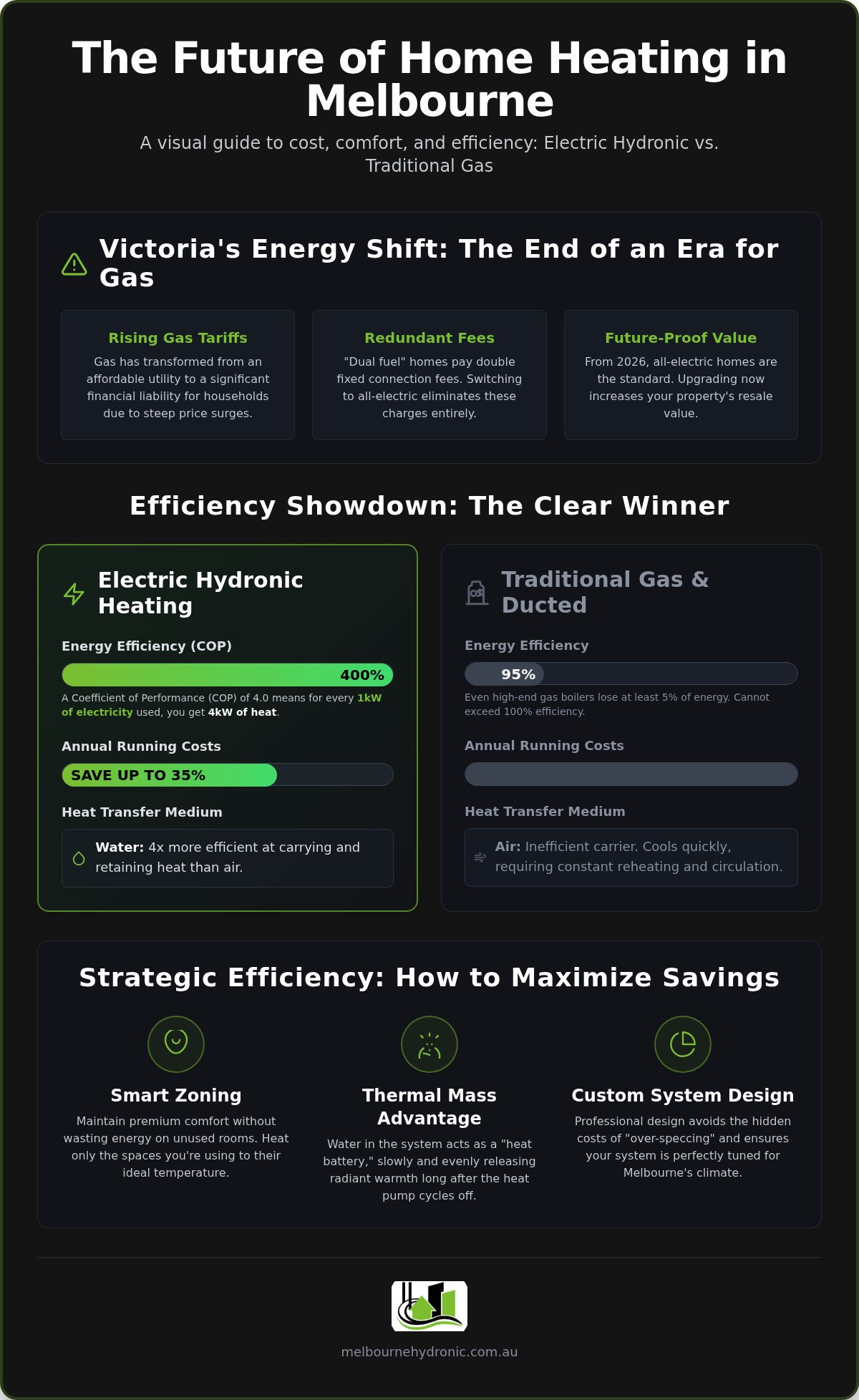
- Learn how electric heat pumps leverage the superior thermal mass of water to transfer heat four times more efficiently than air-based systems.
- Compare real-world electric hydronic heating running costs against outdated gas ducted systems to see how you can save up to 35% on annual bills.
- Discover how smart zoning and thermal mass optimisation allow you to maintain premium comfort without wasting energy on unused rooms.
- See why custom system design is essential to avoid the hidden costs of over-speccing and to ensure your installation is perfectly tuned for the local climate.
The 2026 Victorian Energy Landscape: Why Electric Hydronics Win
Victoria’s energy transition isn’t just a policy goal; it’s a daily reality for Melbourne homeowners. With the state government’s clear mandate for all-electric residential developments, the era of relying on fossil fuels to keep our living rooms warm is ending. This shift has fundamentally changed how we evaluate electric hydronic heating running costs. While gas was once the standard, it has quickly become an expensive legacy system that many are eager to leave behind.
The Death of the Gas Tariff in Melbourne
Choosing to stick with gas in 2026 often feels like fighting an uphill battle against your bank balance. Recent surges in Victorian gas prices have transformed a once-affordable utility into a significant household liability. If you’re running a “dual fuel” home, you’re likely paying double the fixed connection fees just for the privilege of having a gas line. By disconnecting gas entirely and switching to high-efficiency electric heat pumps, you eliminate these redundant daily charges. It’s a clean break that simplifies your bills and protects your budget from the volatile price hikes seen across the state over the last few years.
Melbourne’s unique climate, characterised by biting cold nights followed by surprisingly mild afternoons, is perfectly suited for modern electric hydronic systems. Traditional gas boilers often operate with an “all or nothing” approach, but electric heat pumps use advanced modulation. They adjust their output to match the outdoor temperature, providing just enough heat to maintain comfort without over-consuming energy during those sunny Melbourne winter days.
Regulatory Shifts and Future-Proofing
New building standards in Victoria now heavily favour electric-only infrastructure, making gas-connected properties feel increasingly dated. This regulatory environment means that installing an electric hydronic system does more than just lower your monthly expenses; it actively increases your property’s resale value. Buyers in 2026 are looking for homes that are already prepared for a gas-free future. Sustainable, all-electric properties are no longer a niche preference. They are the gold standard for the modern Melbourne real estate market.
When planning these transitions, it is often helpful to look at how experts handle the underlying infrastructure; you can read more about the role of comprehensive rewiring in modernizing residential electrical systems.
At Melbourne Hydronic Heating, we’ve spent over 30 years helping locals navigate these changes. We specialise in transitioning homes from outdated gas boilers to high-efficiency electric heat pumps. By choosing a system designed for the specific thermal challenges of the Victorian climate, you’re not just buying a heater. You’re making a long-term investment in a healthy, sustainable, and economically sound home environment. Preparing your home for a gas-free future today ensures you won’t be left behind by the regulations of tomorrow.
Why Electric Heat Pumps are the Efficiency Gold Standard
Unlike traditional heaters that burn fuel to create warmth, an electric heat pump works like a refrigerator in reverse. It extracts ambient thermal energy from the outside air and transfers it into water. This process is fundamentally more efficient because it moves existing energy rather than generating it from scratch. When you combine this technology with the physics of water, the results are impressive. Water is roughly four times more efficient at carrying heat than air, meaning it retains warmth longer and requires less energy to circulate throughout your home.
This thermal mass advantage is why electric hydronic heating running costs remain so competitive. Once the water in your pipes or radiator panels reaches the desired temperature, it acts as a battery, slowly releasing heat into your living spaces. This is a far more stable and economical method than constantly blowing hot air that quickly cools down the moment the fan stops spinning.
The COP Advantage: Getting 4kW for the Price of 1kW
The efficiency of these systems is measured by the Coefficient of Performance (COP). In simple terms, COP is the ratio of heat energy produced compared to the electrical energy consumed, directly determining how much you pay for every degree of warmth. While a high-end gas boiler might reach 95% efficiency, a modern heat pump often achieves a COP of 4.0. This means for every 1kW of electricity you pay for, the system delivers 4kW of heat into your home.
This 400% efficiency represents a massive leap forward for Victorian households. Even during Melbourne’s frostiest mornings, premium heat pumps are designed to maintain high performance. They don’t struggle in the cold; they are engineered to modulate their output, ensuring your comfort doesn’t dip when the temperature does. If you’re looking to upgrade, our team can help you specialise your system design to capture these specific efficiency gains.
Radiant Heat vs. Forced Air
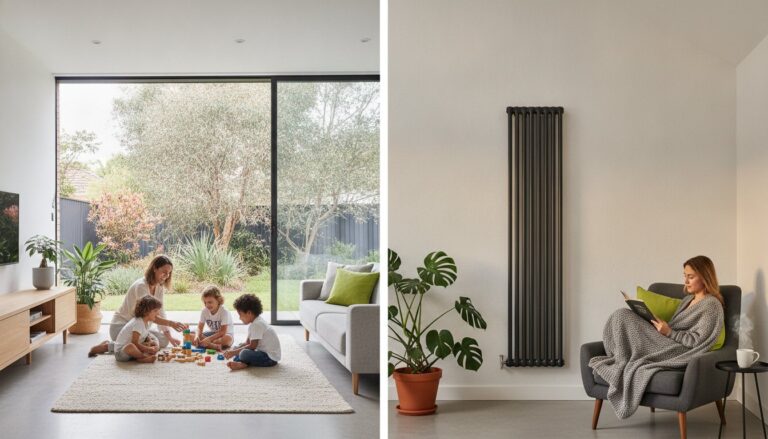
Forced air systems, like ducted heating, often lose up to 30% of their energy before the air even reaches your rooms. This heat escapes through leaky ducts or is absorbed by the cold ceiling cavity. Hydronic systems avoid this “tax” by delivering radiant heat directly through panels or underfloor pipes. Radiant heat warms objects and people rather than just the air, creating a much more consistent environment.
Because radiant surfaces remain warm, you’ll often feel perfectly comfortable with the thermostat set two degrees lower than you would with a ducted system. This “Radiant Effect” significantly reduces energy demand and prevents the rapid heat loss typically seen through windows and ceilings. By maintaining lower air temperatures while keeping the room’s occupants warm, you can achieve long-term energy savings that simply aren’t possible with traditional forced air methods.
Comparing the Numbers: Hydronic vs. Ducted & Gas
When evaluating electric hydronic heating running costs, it’s essential to look beyond the initial price tag. Traditional gas ducted systems are often cheaper to install, but they carry a hidden “Ceiling Cavity Tax.” This refers to the significant thermal leakage that occurs when warm air travels through uninsulated ducts in your roof. In many Melbourne homes, up to 30% of the heat you pay for never actually reaches your living space. By contrast, a heat pump hydronic heating system delivers warmth directly where it’s needed, ensuring every dollar spent translates into actual comfort.
The investment in a modern electric system typically pays for itself within 7 to 10 years. This ROI is driven by the combination of superior heat pump efficiency and the elimination of gas connection fees. While gas prices continue to fluctuate, electricity provides a more stable path forward, especially for households that can pair their heating with solar power.
Estimated Seasonal Costs by House Size
The financial benefits of electric hydronics become clearer when we look at different property types. For a 100m² unit, switching from gas ducted to electric hydronic panels can drastically reduce fixed daily connection fees. In a standard 160m² home, the tipping point for ROI usually occurs within the first few years as the efficiency of the heat pump offsets rising gas tariffs. For large 220m² family homes, the efficiency gap widens even further. Hydronics are often the only viable choice for these larger spaces because they maintain consistent temperatures without the massive energy spikes required to move high volumes of air through a ducted network.
The Hidden ROI: Health and Maintenance
Financial returns aren’t just found in your utility bills. There’s a significant, albeit less visible, ROI in creating a dust-free, healthy home environment. Traditional forced-air systems circulate allergens and dust, which can lead to higher medical costs for families managing asthma or allergies. Hydronic systems provide silent, radiant warmth that doesn’t disturb the air, making your home a sanctuary for respiratory health.
System longevity is another critical factor in the value equation. While a ducted unit might require a full replacement after just a decade of heavy use, high-quality radiator panels are built to last 25 years or more. This durability means you won’t be facing another major capital expense in ten years’ time. To protect this investment and keep your electric hydronic heating running costs as low as possible, regular professional hydronic heating service melbourne is vital. A well-maintained system operates at peak efficiency, ensuring your transition to an all-electric home remains a smart financial decision for decades to come.
Strategic Efficiency: How to Slash Your Monthly Bills
Even the most advanced technology requires a smart operational strategy to reach its full potential. While the inherent efficiency of water helps keep electric hydronic heating running costs low, your daily habits and your home’s envelope play a critical role in the final tally. In Melbourne, where solar uptake is high, the synergy between rooftop panels and an electric heat pump is a game-changer. By timing your system to run during peak solar production hours, you’re essentially heating your home using the sun’s energy, bypassing the grid entirely during the day.
Melbourne’s architecture also influences your system’s workload. Homes with large north-facing windows can capture passive solar gain, which reduces the demand on your heat pump. When you combine these architectural advantages with a professionally designed system, the result is a home that stays warm with minimal electrical input.
Zoning and Smart Controls
Precise control is your most effective tool for lowering bills. Unlike old ducted systems that blast air into every corner of the house, hydronic systems allow for granular zoning. You can keep bedrooms at a crisp 18 degrees while maintaining a cozy 21 in the living areas. Programmable thermostats are essential here, allowing you to leverage off-peak energy rates by pre-heating the home before the morning rush when electricity prices might spike.
The approach differs slightly depending on your hardware. For underfloor heating, a “set and forget” strategy is usually best because the system takes longer to warm up and cool down. Radiator panels, however, respond quickly, making them ideal for active zone management. Avoiding the temptation to turn the system completely off and on again prevents the heat pump from working twice as hard to recover lost ground, maintaining a steady, efficient flow of warmth.
Insulation and Thermal Mass
A hydronic system is only as good as the box it sits in. High R-value ceiling insulation acts as a thermal lid, keeping that expensive heat from escaping into the Melbourne sky. This is particularly important when paired with concrete floors. Thermal mass in concrete floors acts as a “heat battery,” absorbing energy during the day and slowly radiating it back into the room long after the heat pump has cycled off.
Double glazing also plays a vital role by reducing the frequency of heat pump cycling. When your home’s structure works with your heating system rather than against it, you achieve the premium comfort and low electric hydronic heating running costs that modern homeowners expect. To ensure your property is perfectly calibrated for these savings, you can request a custom efficiency design from our specialist team today.
Why Professional Design is the Key to Low Running Costs
Purchasing high-quality hardware is only half the battle when it comes to efficiency. The real savings are found in the engineering behind the installation. Many “off-the-shelf” solutions fail because they aren’t calibrated for the specific heat load of a Victorian home. Over-speccing a system leads to “short-cycling,” where the heat pump turns on and off too frequently, wasting energy and wearing out components. Conversely, an under-specced system will struggle to reach target temperatures, running constantly at maximum capacity and driving up electric hydronic heating running costs. Precision in design ensures your system operates in its “sweet spot” of maximum efficiency.
At Melbourne Hydronic Heating, we design every system specifically for the local climate. We look at the technical details that generic installers often overlook, such as high-grade pipe insulation and strategic manifold placement. By minimising “line loss”—the heat that escapes from pipes before it reaches your radiators—we ensure that every bit of energy your heat pump consumes is delivered directly into your living space. Whether you are choosing between hydronic heating panels or floor coils, our goal is always to maximise your long-term ROI through technical excellence.
Custom Engineering vs. Standard Installation
Transitioning from a legacy gas system to a modern electric one is a significant step toward a more sustainable and cost-effective home. It’s a process that requires a partner who understands the nuances of the Victorian energy market and the specific thermal challenges of our local houses. Melbourne and Geelong residents trust us because we don’t just install heaters; we design long-term comfort solutions that stand the test of time. We’ve seen the industry evolve over three decades, and we’re proud to lead the way in high-efficiency, all-electric transitions.
Ready to lower your bills and experience a new level of home comfort? Request a custom quote for your Melbourne home and let our specialists design a system that works for your budget and your lifestyle.
Secure Your Home’s Future with Smarter Heating
The shift toward all-electric living in Victoria is more than a trend; it’s a strategic move for your household budget. By leveraging the superior thermal mass of water and the high efficiency of modern heat pumps, you can effectively manage your electric hydronic heating running costs while enjoying a level of comfort that forced-air systems simply can’t match. You’ve seen how strategic zoning and professional design turn a technical installation into a long-term financial asset.
At Melbourne Hydronic Heating, we bring over 30 years of experience across Melbourne and Geelong to every project. We specialise in high-efficiency electric heat pump technology and create custom-designed systems for maximum energy ROI. Our team ensures your transition from gas is seamless and calibrated for our unique local climate.
It’s time to stop worrying about rising gas tariffs and start enjoying a dust-free, healthy home environment. Request a 2026 Hydronic Running Cost Assessment for Your Melbourne Home today. We look forward to helping you future-proof your property with precision and care.
Frequently Asked Questions
Is electric hydronic heating more expensive than gas in 2026?
Electric hydronic heating is generally cheaper to run than gas in 2026. This shift is driven by the significant rise in Victorian gas tariffs and the phase-out of gas in new developments. While gas boilers were once the standard, modern electric heat pumps offer a much higher Coefficient of Performance. By eliminating gas connection fees and using high-efficiency technology, homeowners can lower their total energy expenditure while enjoying superior, radiant warmth.
How much can I save by switching from gas ducted to electric hydronic?
Switching from gas ducted to electric hydronic can reduce your heating bills by up to 35%. This saving comes from avoiding the “ceiling cavity tax,” where ducted systems lose energy through leaky roof pipes. Electric hydronic systems use water, which is four times more efficient at carrying heat than air. This allows you to maintain a consistent temperature with less energy input, especially when the system is custom-designed for your property.
Does a heat pump work efficiently during a Melbourne frost?
Modern heat pumps are engineered to handle Melbourne’s frostiest mornings with ease. High-quality units use advanced modulation to adjust their output based on the outdoor temperature. Even when the air is cold, they can extract enough ambient energy to heat your home efficiently. Unlike older models, 2026 technology ensures performance remains stable during our coldest winter snaps, providing reliable comfort without a sudden spike in your monthly electricity usage.
Can I run my electric hydronic system off my existing solar panels?
Pairing your system with rooftop solar is one of the best ways to lower electric hydronic heating running costs. You can program the heat pump to run during peak solar production hours, effectively using the sun’s energy to charge your home’s thermal mass. This strategy allows you to store heat in your floors or radiators during the day, which then radiates warmth throughout the evening with minimal reliance on the grid.
What is the average lifespan of an electric hydronic heat pump?
A well-maintained electric heat pump typically lasts between 15 and 20 years, while the radiator panels themselves can exceed 25 years. This durability far surpasses traditional ducted units, which often require full replacement after just a decade. Investing in a hydronic system provides long-term value, as the components are built for longevity. Regular professional servicing helps ensure that every part of the system continues to operate at its peak efficiency for its entire lifespan.
Do I need to upgrade my electrical switchboard for a hydronic heat pump?
Many Melbourne homes require a switchboard assessment or minor upgrade when installing a high-efficiency heat pump. Since these systems are powerful electrical appliances, your existing infrastructure must be capable of handling the load safely. During our custom design process, we evaluate your current electrical capacity. Ensuring your switchboard is up to modern standards not only supports your new heating system but also prepares your property for a fully future-proofed, all-electric environment. For additional peace of mind regarding electrical safety and workplace standards, A Plus Compliance Services offers professional testing and compliance across Victoria.
Is underfloor heating or radiator panels cheaper to run?
Both options are highly efficient, but they suit different lifestyles. Underfloor heating is often cheaper to run for long periods because it turns your concrete floor into a “heat battery,” releasing warmth slowly. Radiator panels are better for active zoning, as they heat up and cool down quickly. Choosing between them depends on your home’s architecture and how you use your space. We help you select the configuration that offers the highest energy ROI.
How often does an electric hydronic system need servicing to stay efficient?
We recommend a professional service once every year to maintain maximum efficiency. Routine maintenance involves checking the heat pump’s performance, inspecting the manifold, and ensuring the water chemistry is balanced. Occasional power flushing is also vital to remove any debris that could restrict flow. These regular check-ups prevent small issues from becoming costly repairs and ensure your electric hydronic heating running costs remain as low as possible over the years.